

Review · ATHENS
National Archaeological Museum Private Tour with Licensed Expert Guide
The best reason to book this tour is simple: Athens’ National Archaeological Museum is too large to understand in a quick, unguided sweep. A licensed archaeology guide can connect its famous objects, from the Antikythera mechanism to Mycenaean gold, and help you get the main story without wandering tiredly from case to case.
I like two things here. First, the tour is private, so your guide can slow down for children, focus on sculpture, or skip subjects you already know. Second, guides such as Vicky, Ria, Katerina, Natalia, and Despina have been praised for clear explanations and an easy ability to answer personal questions. The main drawback is cost: at $188.26 per person, museum admission extra, this is a serious splurge for a two-hour visit.
Key points at a glance
- Private two-hour visit: Your group tours alone with a licensed archaeological guide.
- Major Greek treasures: Expect the Charioteer, the Antikythera mechanism, Mycenaean gold, jewelry, sculpture, and other headline pieces.
- Flexible teaching style: Your guide can adjust the pace for first-time museumgoers, children, specialists, or visitors who already know ancient Greece.
- Meeting at the main entrance: The guide waits at the museum entrance with a sign showing the lead traveler’s name.
- Tickets cost extra: Admission is not included, and busy periods can mean a wait unless tickets are arranged ahead.
- Strong overall rating: The experience is rated 4.8 out of 5, with 94 percent of participants recommending it.
Why this museum needs a plan
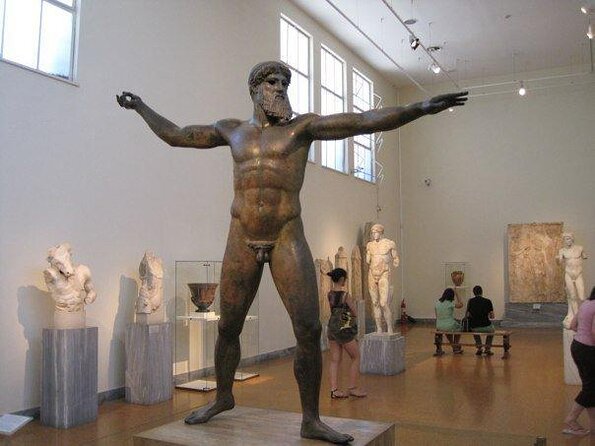
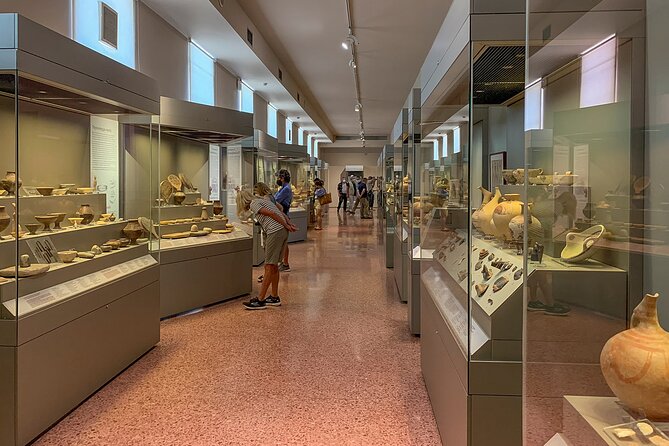
The National Archaeological Museum is not a small collection you can casually pop into between lunch and the Acropolis. Established in 1829 and housed in a renovated Neoclassical building, it holds Greek objects from many periods and places. That range is the thrill, but it can also be the problem.
You may begin with a plan to see a few famous statues and end up unsure which gallery comes next. A guide gives the visit shape. Instead of treating every display case as equally important, she can explain how the objects fit into larger changes in Greek art, religion, burial customs, technology, and daily life.
That matters even more if this is your first museum visit in Greece. The collection can provide useful context before you visit Mycenae, Olympia, Knossos, or other archaeological sites. It can also fill gaps afterward. One group had already seen several major sites around Greece, and the guide adjusted the route to concentrate on material that added something new.
You should still set your expectations correctly. Two hours is enough for a focused introduction, not a full study of the museum. The building and collection can reward a much longer visit, so think of this tour as a guided first pass or a smart highlights route.
More Private History Tours in Athens
- Private Biblical Tour Ancient Corinth & Isthmus Canal from Athens
★ 5.0 · 762 reviews - Private Tour of Apostle Paul’s Footsteps in Ancient Corinth
★ 5.0 · 275 reviews - Ancient Corinth, Epidaurus, Nafplio full day private tour from Athens
★ 5.0 · 206 reviews
Meeting your guide at 28is Oktovriou 44
The meeting point is the museum’s main entrance at 28is Oktovriou 44, Athens 106 82. Your guide is scheduled to wait there at the time you select and carry a sign with the lead traveler’s name.
That sounds straightforward, but the entrance detail matters. One participant lost time because the guide was inside while the participant waited outside, despite the stated meeting instructions. Another group began late after the guide received the wrong booking name. These were unusual problems, but they show why you should arrive early, keep your phone available, and confirm exactly where the guide will be waiting.
Allow extra time to reach the museum. Traffic delayed one party by more than 30 minutes, and another group found the ticket line added more than 20 minutes. Victoria station on the green line is mentioned as a public transport option, and the museum is near public transportation generally.
Do not plan to arrive at the exact start time after a long taxi ride from central Athens. Give yourself 30 to 60 extra minutes if your schedule matters. Arriving early protects the time you have paid for and makes the first meeting calmer.
The first ten minutes: getting oriented
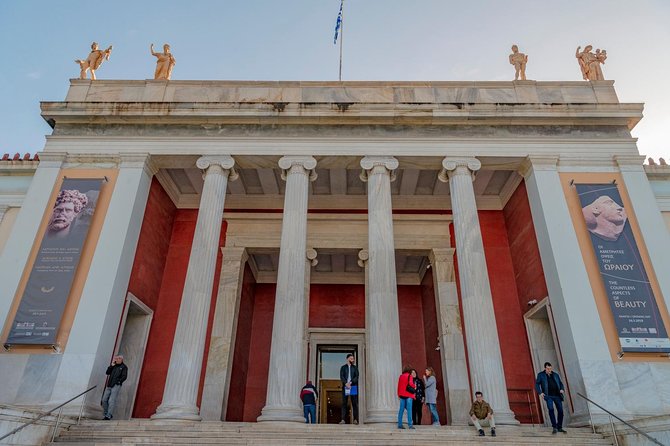
The initial meeting is listed as about ten minutes. This is not wasted time if you use it well. Tell the guide what you have already seen, what your group cares about, and how much background you want.
If you are traveling with teenagers, say so. One guide, Marissa, was especially effective with two teenagers by making Greek history easier to connect with. If you have a family member with physical limitations, mention that before the route begins. A guide has adjusted the pace for visitors who needed extra consideration.
You can also explain if you are an art specialist, a history professor, or simply hoping to see the essential photographs. The tour is built to adjust to different levels of interest. That flexibility is one of its strongest features, but it works best when you give your guide useful information at the start.
The main galleries: Greek art in a clear sequence
The museum visit lasts about two hours. Your guide will select important objects and explain why they matter, rather than attempting to cover every room.
Expect the tour to move across several periods and types of Greek art. Sculpture is likely to receive attention, since the museum offers a useful way to watch the form develop over time. One guide built the visit around themes that helped connect early sculpture with later artistic choices. That kind of explanation is more useful than a string of dates and names.
You might discuss how artists handled the human body, how ideal figures changed, or how an object’s original purpose affects the way you see it now. The exact route depends on your guide and your interests. A visitor who has already seen major sites may receive a different route from someone meeting ancient Greek art for the first time.
This is where a private tour earns its keep. In a large group, you usually follow a fixed script. Here, you can ask why a statue looks a certain way, how it was found, or what was happening in Greece when it was made. The guide can pause for an answer instead of watching the clock for a busload of people.
More Private History Tours in Greece
- The History of Athens: Greek Mythology Private Tour
★ 5.0 · 138 reviews - Ancient Corinth, Mycenae, Epidaurus, Nafplio full day private tour from Athens
★ 5.0 · 130 reviews - Ancient Corinth and Canal half day private tour from Athens
★ 5.0 · 96 reviews - Ancient Olympia full day private tour from Athens
★ 5.0 · 83 reviews
The Charioteer and the museum’s bronze treasures
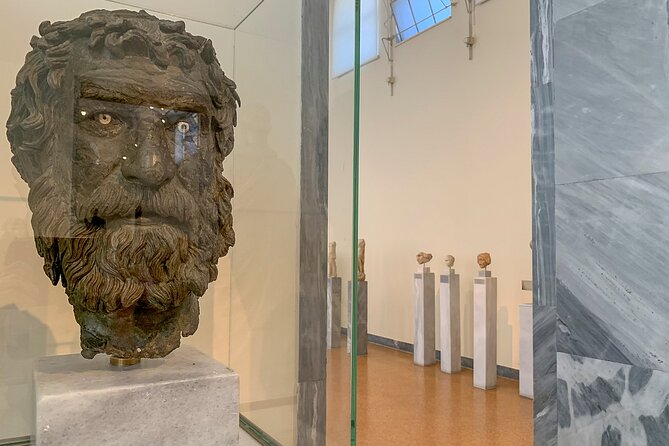
Bronze objects are among the museum’s major attractions, and the famous Charioteer is one of the pieces you should expect to see highlighted. A guide can help you look beyond the first photograph. Pay attention to the figure’s pose, expression, surface, and the technical skill needed to cast and preserve a large bronze sculpture.
The advantage of seeing this object with an expert is not just learning its name. You can ask how it relates to other Greek representations of the human figure and why bronze allowed artists to create forms that would have been difficult in stone.
The museum holds many other bronzes and sculptures, so your guide will need to make choices. That is a benefit, but it also means you should speak up if a particular period or material matters to you. The more specific your questions, the more personal the route can become.
The Antikythera mechanism, an ancient machine
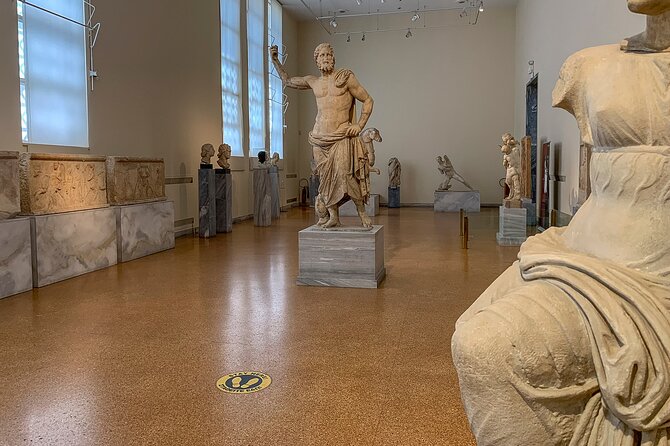
The Antikythera mechanism is another major highlight. It is often described as an early working computer, and the comparison helps explain why the object is so arresting. It was produced by ancient Greeks roughly 1,000 years before anything similar appeared in the modern record, according to the tour description.
A guide can give this complex object a place in the wider story of ancient science and technology. Without explanation, its fragments and gears can be hard to read. With context, you begin to see why this small mechanism changed how people think about the technical abilities of the ancient world.
This is a good example of why the private format helps. You can ask follow-up questions without feeling you are holding up a group. If you prefer art to engineering, your guide can keep the explanation focused and move on. If technology is your main interest, you can spend longer here.
Mycenaean gold and the tombs of Agamemnon
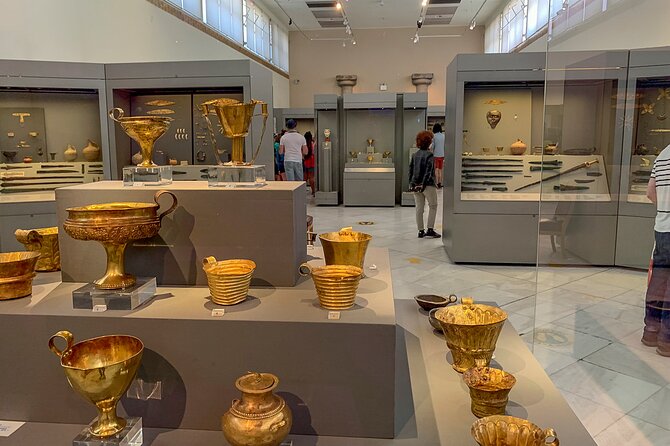
The Mycenaean gold and jewelry associated with the tombs at the citadel of Mycenae provide a very different experience from the bronze galleries. These objects connect the museum directly with the powerful world of Bronze Age Greece and with places you may visit elsewhere in the country.
The display includes gold and jewelry treasures from the tombs traditionally linked with Agamemnon. Your guide can help separate archaeological evidence from the later legends attached to these figures. That distinction is valuable. Greek mythology, epic poetry, and archaeology overlap here, but they are not the same thing.
If Mycenae is on your itinerary, tell your guide. The museum visit can give you a clearer framework for the site, its tombs, and its place in early Greek history. If you have already been to Mycenae, the guide can focus on details you may have missed outdoors.
Why a private guide helps with children
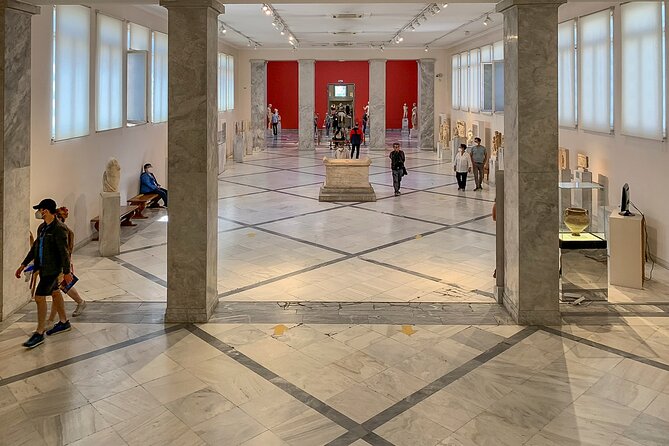
The museum has enough famous names and unfamiliar terms to test a young visitor’s patience. A private guide can help by changing the pace, using questions, and selecting objects that give children something concrete to notice.
This format is especially useful for families because children can ask basic questions without embarrassment. The guide can also avoid spending too long on objects that do not hold their attention. One past guide, Vicky, was praised for making the visit educational and enjoyable for a family, while Marissa connected well with two teenagers.
You should not expect a child-focused treasure hunt unless you arrange one in advance. The supplied details promise a guide who can adapt, not a special children’s program. Still, private attention is a major advantage over following a large fixed group.
Crowds, timing, and the two-hour limit
The museum can be crowded even outside the busiest summer months. Cruise ship groups have made the galleries particularly busy, and one party visiting in mid-October found the attraction far fuller than expected.
Crowds affect more than comfort. You may need to wait for a clear view of a major object, move slowly through narrow spaces, or listen carefully while other groups gather nearby. Guides with experience at the museum can help position you and choose a sensible order, but they cannot remove every delay.
The two-hour duration is best treated as a focused route. You will see important sections and receive explanations, but you will not inspect every period in detail. If you want a full day here, book the private tour early in your stay and return later on your own, or plan additional museum time around the tour.
Starting early in your Athens visit can also be smart. The museum may help you decide which archaeological sites and periods deserve more of your time. Starting late in a busy trip is still worthwhile, but arriving tired and rushed can reduce the benefit.
What the $188.26 price really buys
At $188.26 per person, this tour is expensive if you are comparing it with an ordinary museum admission. Admission is not included, so you need to add the ticket price to your budget. The cost makes the most sense for a small group that will actively use the guide’s attention.
For two people, the total becomes a substantial private experience. For four or five people, the per-person value can improve because the guide’s fee is spread across the group, assuming the group discount applies to your booking. You are paying for expertise, route planning, questions, and private pacing, not for a longer museum stay.
I would not recommend this purchase to someone who enjoys reading labels, already knows the collection, and has plenty of time. You can visit independently and spend hours following your own interests.
I would consider it good value if you have only two hours, feel overwhelmed by major museums, are traveling with children, or want the objects explained in relation to archaeological sites elsewhere in Greece. The high 4.8 out of 5 rating and 94 percent recommendation rate suggest consistent satisfaction, though one booking problem led to a late and shortened visit. That single complaint is a useful warning: the tour is worthwhile only if the meeting and ticket details are handled carefully.
Tickets, cancellation, and practical details
Museum admission is not part of the tour price. You should confirm the current ticket arrangement before you arrive. One participant specifically recommended having the guide pre-purchase skip-the-line tickets for a smoother start, but this should be arranged rather than assumed.
Confirmation is provided when you book. The tour is offered in English, includes a mobile ticket, and is available at several start times during the day. Service animals are allowed, and the activity is described as suitable for most participants.
You can cancel for a full refund up to 24 hours before the start time. Changes or cancellations made less than 24 hours ahead are not accepted for a refund, and the cut-off uses local Athens time.
Who should book this private museum tour?
I would choose this tour for a first visit to the National Archaeological Museum, especially if you want a clear route through an enormous collection. It also suits families, couples who prefer conversation over audio guides, and people visiting several archaeological sites who want the objects tied together.
It is a good match for a mixed group. One person can ask about sculpture, another about mythology, and a third about engineering without forcing everyone through a fixed lecture. The guide can also adjust explanations for visitors with advanced knowledge.
I would skip it if your budget is tight or if you plan to spend half a day studying every gallery at your own pace. The two-hour route will give you a strong introduction, but it cannot replace a long independent visit.
FAQ
How long does the National Archaeological Museum private tour last?
The guided museum visit lasts about two hours. There is also an estimated ten-minute meeting and orientation period at the museum entrance.
Is museum admission included in the tour price?
No. The admission ticket is not included in the stated tour price of $188.26 per person.
Where do I meet the guide?
Meet at the main entrance of the National Archaeological Museum, 28is Oktovriou 44, Athens 106 82, Greece. The guide will wait with a sign showing the lead traveler’s name.
Is this a private group tour?
Yes. Only you and your party participate in the activity.
Is the tour offered in English?
Yes. English is the listed tour language.
Can I cancel for a full refund?
Yes, if you cancel at least 24 hours before the experience’s start time. Cancellations or changes made less than 24 hours ahead are not accepted for a refund.
Should you book it?
Book this tour if you want the National Archaeological Museum to make sense rather than simply want to enter it. The private format, licensed guide, flexible route, and strong focus on objects such as the Charioteer, Antikythera mechanism, and Mycenaean gold give you a useful foundation for the rest of your time in Greece.
Before paying, confirm the meeting location, ask how admission tickets will be handled, and leave extra time for traffic and ticket lines. If you do that, this is a sensible splurge for first-time visitors, families, and anyone who wants two focused hours instead of an exhausting march through a world-class collection.
More Archaeological Site Tours in Athens
- Athens: Acropolis & up to 5 Archaeological Sites Combo Pass
★ 4.2 · 13,904 reviews - Athens: National Archaeological Museum Ticket w/ Opt. Audio
★ 4.4 · 713 reviews - Athens National Archaeological Museum E-Ticket with Audio Guide
★ 3.0 · 57 reviews - Buggy Tour in Ancient Ruins and Temples around Athens-SOUNIO Poseidon Temple
★ 5.0 · 56 reviews
Just added around Athens
- Small-Group Women History in Ancient Greece Walking Tour★ 5.0 · 38 reviews
- The original Christian tour on Paul’s footsteps in Athens and ancient Corinth★ 4.5 · 25 reviews
- Ancient Athens tour: Acropolis, Parthenon and Acropolis Museum★ 5.0 · 256 reviews
- Ancient Athens Segway Tour with Agora and Kerameikos★ 5.0 · 94 reviews
- Ancient Sparta & Mystras Private Day Tour from Athens★ 5.0 · 52 reviews
- Athens National Archaeological Museum E-Ticket with Audio Guide★ 3.0 · 57 reviews
- Ancient Corinth, Sanctuary of Hera, Blue Lake & Canal from Athens★ 5.0 · 26 reviews
- Half Day Historical Athens City Private Taxi Service Tour★ 5.0 · 79 reviews
Athens History Tours, compared.
Athens: Acropolis & up to 5 Archaeological Sites Combo Pass
Read our review →

Historical Delphi One Day Tour with Arachova Stop & Expert Guide
Read our review →
From Athens: Ancient Corinth Day Trip with Canal & VR Guide
Read our review →
Historic Athens: Small Group Electric Bike Tour
Read our review →
Acropolis, Parthenon & Athens Old City Heritage Walking Tour
Read our review →
Private Biblical Tour Ancient Corinth & Isthmus Canal from Athens
Read our review →
Athens: National Archaeological Museum Ticket w/ Opt. Audio
Read our review →Browse the lists this tour appears in