
Review · ATHENS
The original Christian tour on Paul’s footsteps in Athens and ancient Corinth
Paul’s Athens comes alive on this long day between the Areopagus and Ancient Corinth, where the New Testament story meets the wider world of Classical Greece. You’ll see the rock where Paul preached about the unknown god, then follow the road west to the canal and the ruins of the Roman-era city linked to his Corinthian ministry.
I like the private car, which keeps the day flexible and gives you hotel or cruise-port pickup. I also like the pairing of Athens’ major monuments with Corinth, since you get both the famous Acropolis and a less crowded, more explicitly Christian connection. The main catch is important: your driver explains the sites but does not accompany you inside them unless you pay extra for a licensed guide.
Key points to know
- Paul’s Athens begins at the Areopagus: See the hill tied to his sermon about the unknown god.
- The Acropolis takes center stage: Allow time for the Parthenon, Propylaea, Temple of Athena Nike, and Erechtheion.
- Ancient Corinth adds the biblical connection: Explore the city linked to Paul’s work after seeing the Corinth Canal.
- A private vehicle makes the route practical: Pickup is available at Athens hotels and Piraeus cruise port.
- The driver is not an inside guide: A licensed English-speaking guide costs extra and should be arranged in advance.
- The price works best for a small group: At $445.77 for up to three people, the cost is shared rather than charged per passenger.
Athens to Corinth in one full day
This is an eight-hour private outing built around two large ideas: the glory of Classical Athens and the Christian story of Paul. You leave Athens by private, air-conditioned vehicle, visit the Acropolis and Ancient Agora, then head across the Isthmus of Corinth to the canal and Ancient Corinth.
That is a lot for one day. You will cover major ground, and the return drive to Athens or Piraeus takes about an hour and 20 minutes. The reward is range: one trip connects the Golden Age of Athens, the Roman world, and the places associated with Paul’s preaching.
The tour is designed for a group of up to three people. That makes it a comfortable choice for a couple, a family, or a small party that wants its own car instead of a large coach. It also means you can ask for breaks or adjust the pace within the limits of the schedule.
The price is $445.77 per group, not per person. For three people, that is roughly $149 per person before entrance fees, food, and any extra guide service. For one or two people, the value is less striking, but you are paying for privacy, door-to-door transport, and a route that would be awkward to manage by public transportation in a single day.
More Ancient History Tours in Athens
- Athens: Acropolis & up to 5 Archaeological Sites Combo Pass
★ 4.2 · 13,904 reviews - Athens: Ancient Greek Theater Performance
★ 4.7 · 2,481 reviews - Historical Delphi One Day Tour with Arachova Stop & Expert Guide
★ 4.5 · 1,247 reviews
Starting at Piraeus and along the Saronic Gulf
Pickup is available at your Athens hotel or at your cruise ship pier in Piraeus. At a hotel, you meet the driver at the main entrance. At the port, you leave the terminal and look for a driver holding a sign with your name.
The opening drive follows the coastal road along the Saronic Gulf and the Athens Riviera. It is not a major sightseeing stop, but it gives you a pleasant transition from the port or city to the day’s ancient sites. The Piraeus portion lasts about 20 minutes and has no admission fee.
Cruise passengers should provide the ship name, docking time, disembarkation time, and re-boarding time when booking. That information matters here because the itinerary is long, and traffic or a slow return could affect your ship schedule. I would not book this without leaving a generous safety margin before re-boarding.
The Acropolis, from the Propylaea to the Parthenon
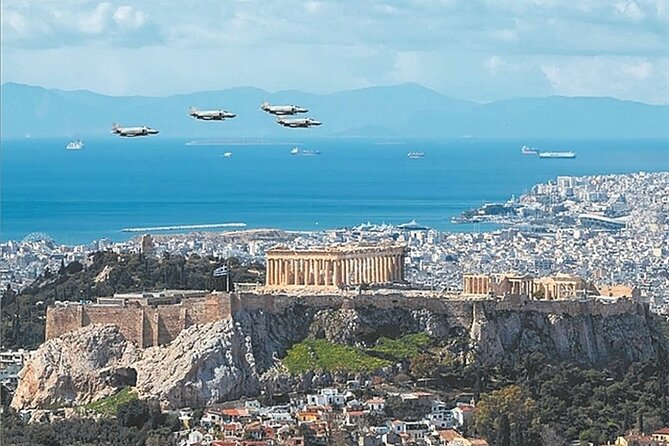
The Acropolis is the first major visit, and it deserves the bulk of your attention. The rocky citadel was the sacred center of ancient Athens, dedicated mainly to Athena, the city’s patron goddess. Its fifth-century BC monuments reflect the power and wealth of Athens during the age of Pericles.
The climb and uneven stone surfaces require moderate physical fitness. Wear practical shoes, bring water, and expect sun exposure. The listed dress code is formal, so conservative clothing is the sensible choice, especially if your plans include other religious or historic sites afterward.
Your route includes several parts of the Acropolis:
The Propylaea
The Propylaea is the monumental gateway to the sacred precinct. The structure visitors see today was begun under the Periclean building program in 437 BC and was never fully completed.
Its placement gives you a useful first lesson in how the Acropolis was approached. Rather than simply walking into a cluster of temples, you pass through a carefully designed entrance that frames the sanctuary above. The stop is brief, listed at about five minutes, so listen closely to the driver’s explanation before entering.
Entrance to the Acropolis is not included. You must buy your own admission or ask the operator to purchase tickets in advance for a small service fee. Pre-purchasing is strongly suggested because availability may be limited.
More Ancient History Tours in Greece
- From Athens: Ancient Corinth Day Trip with Canal & VR Guide
★ 4.6 · 1,073 reviews - Acropolis, Parthenon & Athens Old City Heritage Walking Tour
★ 4.5 · 876 reviews - Private Biblical Tour Ancient Corinth & Isthmus Canal from Athens
★ 5.0 · 762 reviews - Athens: Ancient Corinth & Nafplio Full Day Trip with Swim
★ 4.8 · 531 reviews
The Temple of Athena Nike
This small Ionic temple sits on a bastion at the southwest edge of the Acropolis. It was dedicated to Athena Nike, the goddess of victory, and its friezes showed gods, battles, Greeks, and Persians.
The temple is easy to overlook beside the Parthenon, but it rewards a closer look. Its position also gives you a sense of the defensive edge of the citadel. The visit is listed at about five minutes, and admission is not included.
The Parthenon
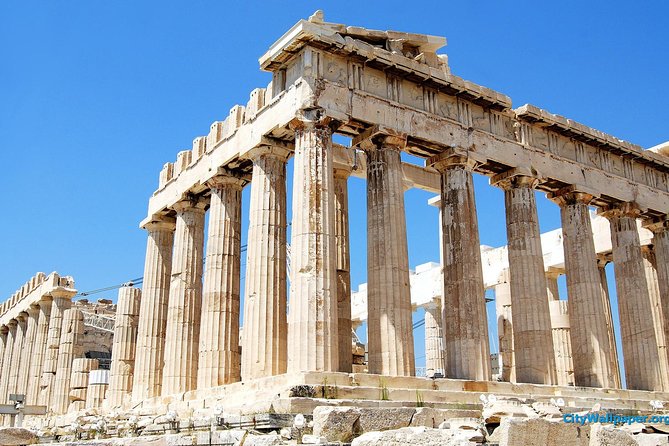
The Parthenon is the visual heart of the Acropolis. Built in the mid-fifth century BC for Athena Parthenos, it is the great example of the Doric order and the centerpiece of Pericles’ rebuilding program after the Persian sack of the Acropolis.
You have about 45 minutes here. That is enough for a good exterior visit and photographs, but not enough for a slow study of every architectural detail. The building was both a temple and a treasury of the Delian League, the alliance led by Athens.
The Parthenon is famous for good reason, but the visit works best when you place it in the larger setting. You are not just looking at an isolated monument. You are seeing the public face of a city that used religion, art, military power, and political influence together.
The Erechtheion
The Erechtheion is known for its south porch, where six maidens serve as architectural supports. Five original caryatids were moved to the Acropolis Museum in 1978 and replaced with copies. The sixth was taken by Lord Elgin and is now in the British Museum.
This is one reason a visit to the Acropolis Museum can add useful context, though the museum is not part of this tour. The missing original and the damaged sculpture in London also open the door to the ongoing debate over the removal and care of Acropolis sculptures.
The stop is short, listed at about five minutes. If you care about archaeology or the sculpture question, you will want to ask the driver for extra time or arrange a licensed guide.
The Areopagus, where Paul addressed Athens
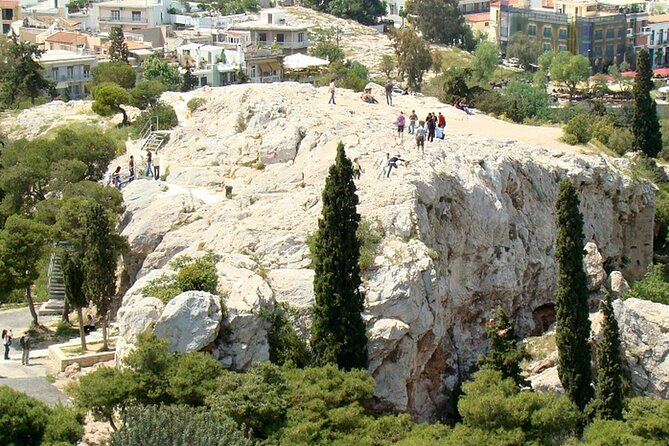
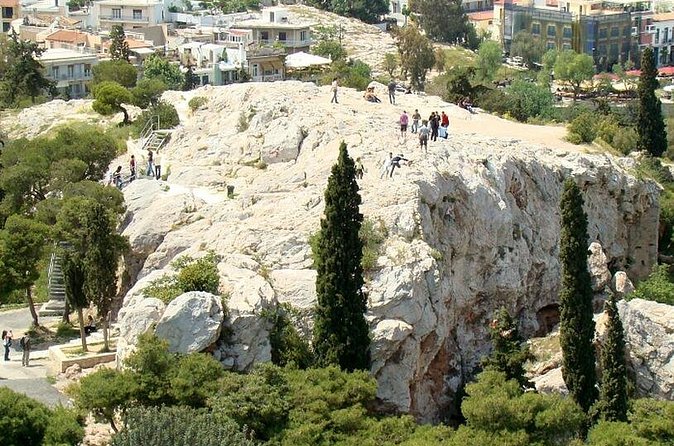
Just outside the Acropolis exit, the Areopagus is the tour’s clearest link to Paul. Also called the Hill of Ares, it served in Classical Athens as a meeting place for the Council of Nobles and a court dealing largely with homicide.
Greek mythology placed divine trials here, including the trial of Ares. In the Christian story, Paul preached at this site after noticing an altar dedicated to an unknown god. A bronze plaque near the foot of the rock commemorates the speech.
The site is free and the visit lasts about 20 minutes. The rock can be uneven and slippery, so take care with your footing. The hill is open rather than enclosed, which makes the setting feel direct and physical, but it also means the quality of the visit depends heavily on the explanation you receive.
This is where the extra licensed guide can make the largest difference. A driver can give you the basic history before leaving you to explore, but a guide standing beside you can connect the Greek religious setting, Paul’s speech, and the physical features of the hill in a more complete way.
The Ancient Agora and everyday Athenian life
After the Acropolis, you drive about 20 minutes to the Ancient Agora. The visit lasts about one hour and 20 minutes, and admission is not included.
The Agora was more than a market. It was a place for public meetings, business, political life, and ordinary daily activity. The area remained in use in different forms for about 5,000 years, so the visible ruins represent many building, destruction, and rebuilding periods.
I like this stop because it balances the grand, ceremonial Acropolis. The Parthenon shows you how Athens wanted to present itself. The Agora helps you picture how the city functioned day to day.
The driver can explain the site before you enter, but cannot legally guide you inside without an additional licensed guide. If you are especially interested in ancient civic life, the extra cost may be worthwhile here as well as at the Acropolis.
Crossing the Isthmus to the Corinth Canal
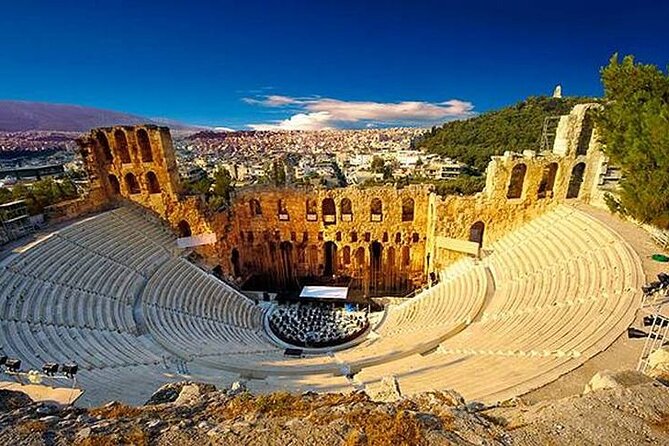
The drive to the Peloponnese follows the coast and takes about an hour. This is a travel section rather than a formal sightseeing stop, but it gives the day a strong change of setting.
The Peloponnese is connected to mainland Greece by the Isthmus of Corinth. The canal cuts through this narrow land bridge and separates the Gulf of Corinth from the Saronic Gulf. Technically, the canal turns the Peloponnese into an island.
At the Corinth Canal, you have about 15 minutes. The waterway is 6.4 kilometers long and only about 25 meters wide. It was completed in the late 19th century, but the idea goes back about 2,000 years. Before the canal, ships had to sail around the Peloponnese, adding roughly 185 nautical miles to the journey.
The ancient Corinthians used a different solution. The diolkos was a stone road that allowed ships to be moved overland on wheeled platforms. The canal stop is brief, but it is an efficient photo break and a clear explanation of why Corinth became so important.
Lunch in Ancient Corinth
Lunch is not included, and you have about one hour of free time at a traditional restaurant in Ancient Corinth. This gives you control over the cost and pace, but it also means you should budget separately for food and drinks.
The meal is described as a chance to experience Greek cuisine locally rather than as a fixed tasting menu. If you have dietary needs, ask about options before ordering. The schedule allows a proper break, which is welcome after the Acropolis and the long drive.
Ancient Corinth and Paul’s western mission
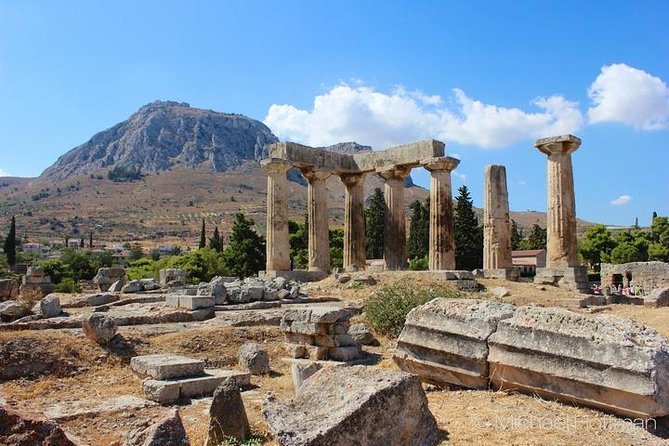
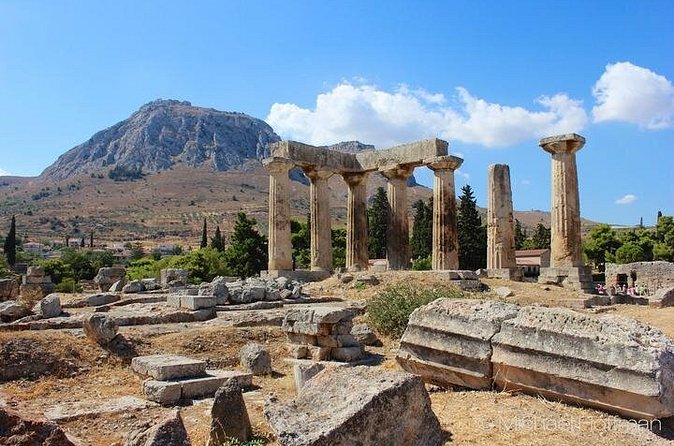
After the canal, the drive to Ancient Corinth takes about 20 minutes. The archaeological site visit lasts about one hour and 20 minutes, with admission extra.
Corinth’s location explains its success. It sat between mainland Greece and the Peloponnese, near the routes linking the western Mediterranean with the Aegean, Asia Minor, and the eastern Mediterranean. Its fertile soil supported agriculture, while its position supported trade and communication.
The city was occupied as early as the Neolithic period and became a major center by the time Corinthian colonies were founded, including Corfu and Syracuse. That background matters because Paul did not arrive at a minor settlement. He came to a wealthy, connected city where ideas, goods, and people met.
For a Christian visitor, Ancient Corinth is the emotional payoff of the day. The site connects the Biblical account to a real urban center with streets, religious buildings, commerce, and political power. You can walk through the remains while keeping in mind the very public setting in which Paul worked.
Again, the guide arrangement matters. The driver can bring you to the entrance and explain the main context, but the archaeological site must be explored independently unless you hire a licensed guide. That distinction is the most important thing to understand before booking.
What the driver adds, and what the extra guide changes
The included professional English-speaking driver is expected to have a good grasp of Greek history and culture. Drivers such as Michael and Spyros have been praised for clear explanations, comfortable vehicles, flexibility, and practical care such as keeping water available and the car cool in very hot weather.
That service is useful. You receive background during the drives, get dropped near each stop, and avoid the stress of navigation and parking. A driver can also be flexible with families. One account describes Michael accommodating a toddler and adjusting well during a day when temperatures rose above 100 degrees.
But this is not the same as a fully guided archaeological tour. The driver cannot accompany you inside the Acropolis, Agora, or Ancient Corinth. If you want detailed interpretation at the monuments, arrange the extra English-speaking licensed guide when booking. Availability is not guaranteed on the day itself.
Is $445.77 good value for three people?
For a group of three, the private price is reasonable for a full day of transport between Athens, Piraeus, and Corinth. You avoid a large bus, share the vehicle only with your own party, and receive hotel or cruise-port pickup and return.
The price does not include archaeological admission, lunch, drinks, or the licensed guide. Those extras can change the final cost substantially. The tour operator can buy entrance tickets in advance for a small service fee, which may help you avoid arriving when tickets are unavailable.
I see the best value for three people who want transport and a driver’s explanations. I see weaker value for solo visitors or couples who expect a full guided experience to be included. In that case, add the licensed guide or compare the total price with a tour that includes one from the start.
Who should book this Athens and Corinth tour?
You should consider it if you want:
- A private route for up to three people
- Pickup at an Athens hotel or Piraeus cruise port
- The Acropolis and Ancient Agora in the same day as Corinth
- A clear connection to Paul’s time in Athens and Corinth
- A comfortable car instead of public transport
- Flexibility for a small family or private group
You may want another option if you need a guide beside you at every monument, dislike long driving days, or want plenty of time inside museums. The schedule is ambitious, and the major sites are visited rather than studied at leisure.
The tour suits visitors with moderate fitness. The Acropolis involves walking on uneven surfaces, and the day includes several hours in a vehicle. Dress neatly, carry water, and buy admission tickets ahead of time.
Should you book it?
Book this tour if the combination of Classical Athens, Paul’s Areopagus, and Ancient Corinth is more important to you than a relaxed pace. It gives a small group an efficient way to connect the sites, and the private car is especially useful from Piraeus.
Before paying, decide whether you want transport with explanations or a true guided visit. If the second option matters, add the licensed guide and pre-arrange tickets. With that adjustment, the day becomes a strong choice for Christian travelers, first-time visitors who want Athens and Corinth together, and families who value a private vehicle.
FAQ
How long does the tour last?
The experience lasts approximately eight hours.
Where can pickup take place?
Pickup is available at your Athens hotel or at your cruise ship pier in Piraeus.
Where does the tour end?
Drop-off is at the same Athens hotel or Piraeus cruise port location used for pickup.
Is the tour private?
Yes. Only your group participates, with a maximum of three people.
Is a licensed tour guide included?
No. The included professional English-speaking driver provides explanations before you enter the archaeological sites and museums. A licensed guide can be arranged for an additional cost.
Are entrance fees included?
No. Admission fees to the archaeological sites and museum are not included.
Is lunch included?
No. You have free time for lunch at a traditional restaurant in Ancient Corinth, but food and drinks are extra.
Is transportation included?
Yes. Transportation is provided in a private, air-conditioned vehicle suitable for the size of your group.
Can cruise ship passengers book this tour?
Yes. Cruise passengers can be picked up and returned at the Piraeus cruise port. You must provide the ship name, docking time, disembarkation time, and re-boarding time when booking.
Can the operator arrange airport transfers?
Yes. Athens International Airport transfers can be arranged on request for an additional cost.
Just added around Athens
- Small-Group Women History in Ancient Greece Walking Tour★ 5.0 · 38 reviews
- Ancient Athens tour: Acropolis, Parthenon and Acropolis Museum★ 5.0 · 256 reviews
- Ancient Athens Segway Tour with Agora and Kerameikos★ 5.0 · 94 reviews
- Ancient Sparta & Mystras Private Day Tour from Athens★ 5.0 · 52 reviews
- Athens National Archaeological Museum E-Ticket with Audio Guide★ 3.0 · 57 reviews
- Biblical Corinth Taste Faith & History with wine & Oil Tasting★ 5.0 · 28 reviews
- Ancient Corinth, Sanctuary of Hera, Blue Lake & Canal from Athens★ 5.0 · 26 reviews
- Half Day Historical Athens City Private Taxi Service Tour★ 5.0 · 79 reviews
Athens History Tours, compared.
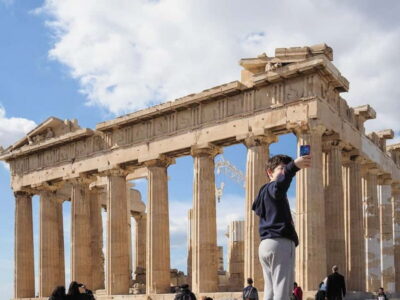
Athens: Acropolis & up to 5 Archaeological Sites Combo Pass
Read our review →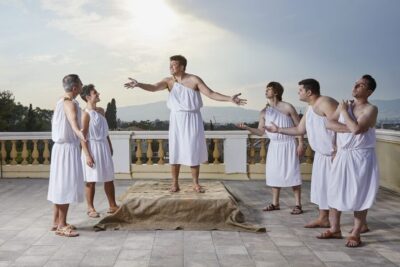
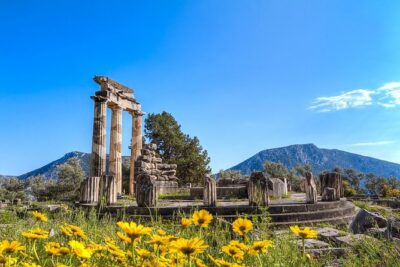
Historical Delphi One Day Tour with Arachova Stop & Expert Guide
Read our review →
From Athens: Ancient Corinth Day Trip with Canal & VR Guide
Read our review →
Historic Athens: Small Group Electric Bike Tour
Read our review →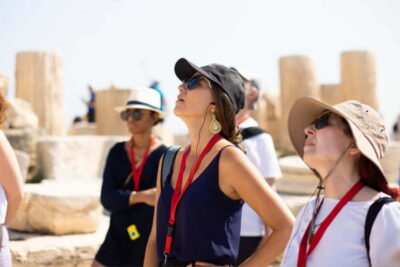
Acropolis, Parthenon & Athens Old City Heritage Walking Tour
Read our review →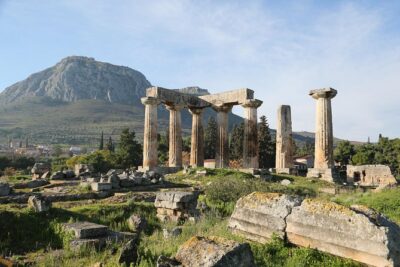
Private Biblical Tour Ancient Corinth & Isthmus Canal from Athens
Read our review →
Athens: National Archaeological Museum Ticket w/ Opt. Audio
Read our review →Browse the lists this tour appears in