
Review · SPAIN
Úbeda-Baeza historical tour with Water Synagogue
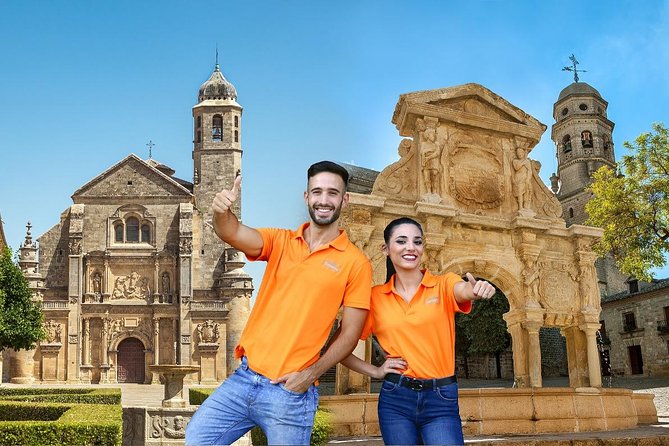
The most unusual part of this five-hour tour is the Water Synagogue in Úbeda, a rare medieval site built around a ritual bath, women’s gallery, cellar, ovens, and possible rabbi’s quarters. It adds a personal, human layer to a day otherwise filled with grand Renaissance buildings.
I like the freedom to visit Úbeda and Baeza on the same day or on separate days. I also like the mix of big monuments and smaller places, especially Antonio Machado’s preserved classroom and the final olive-oil tasting. The main catch is practical: you must arrange your own transport between the two cities.
Key points to know before booking
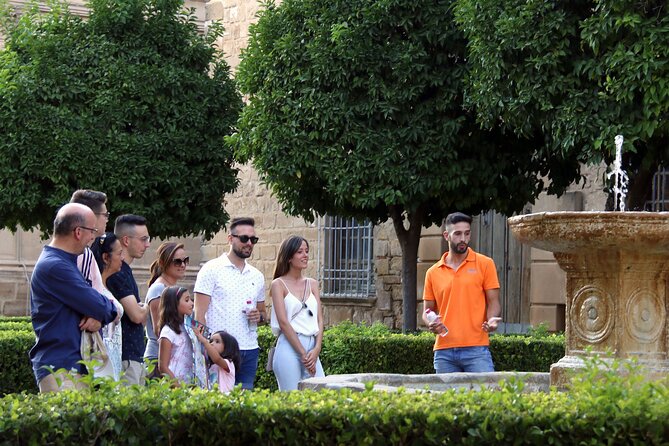
- The Water Synagogue is the tour’s special feature, with its mikveh, women’s gallery, and medieval household spaces.
- Úbeda and Baeza can be scheduled flexibly, either on the same day or on different days.
- The route covers major Renaissance architecture, including the Sacra Capilla del Salvador and Baeza’s Jabalquinto Palace.
- Baeza adds literary and academic interest, with Antonio Machado’s classroom and the old university.
- An olive-oil tasting is included, a useful way to connect the monuments with Jaén’s farming culture.
- Transport is not included, so you need a plan for getting from Úbeda to Baeza.
Why this Úbeda and Baeza tour is worth considering
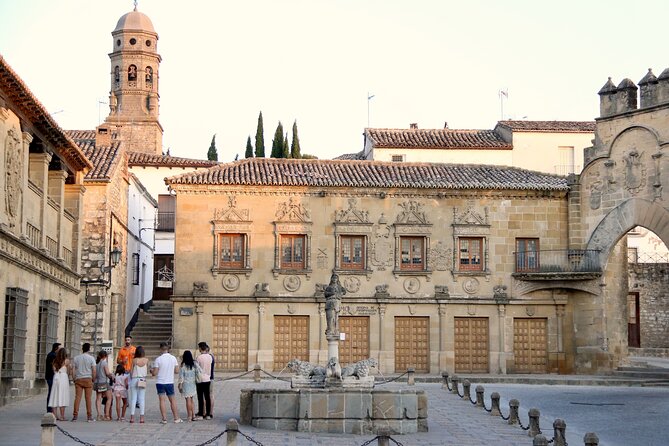
Úbeda and Baeza are among the finest places in Spain to see Renaissance architecture outside Italy. Their stone squares, churches, palaces, and civic buildings were shaped by ambitious 16th-century patrons and the architect Andrés de Vandelvira.
This experience gives you a guided look at both towns for about $40.52 per person. That is a fair price if you want historical explanation and entry to several paid sites rather than simply walking around on your own. The price includes admission to the Holy Chapel of the Saviour, the Water Synagogue, Baeza Cathedral, the olive-oil tasting, and the medieval interpretation center.
I especially like the balance between formal monuments and more intimate places. You see grand façades in Úbeda, then step into a small synagogue, an old classroom, and a working tradition tied to olive oil. The day is not just a parade of churches.
The flexible scheduling also helps. The guided visits take place at 11:00 and 17:00, and you can request the day and time for the second city. You might visit Úbeda in the morning and Baeza in the afternoon, or arrange the two city visits on separate days. Sunday afternoon visits in Baeza are excluded, so that detail matters when you plan.
The drawback is the lack of included transportation. Úbeda and Baeza are separate towns, and this experience does not move you between them. If you choose to visit both on one day, leave enough time for the transfer and confirm the meeting details for each part before you go.
More Jewish Heritage Tours in Spain:
- Private Jewish Heritage Journey by Barcelona Dreaming
★ 4.8 · 383 reviews - Girona: Jewish Heritage Guided City Tour and Museum Visit
★ 4.8 · 124 reviews - Budapest Jewish Heritage Memorial Walking Tour & Synagogue Entry
★ 5.0 · 568 reviews
Úbeda begins with Vandelvira’s Renaissance vision
The Úbeda portion opens with the Sacra Capilla del Salvador, or Holy Chapel of the Saviour. This is one of the city’s defining buildings, and the visit includes admission.
The exterior gives you the grand first impression, but the interior is where the architecture becomes easier to understand. Diego de Siloé designed the original concept, while Andrés de Vandelvira carried out the work and created the sacristy. The result reflects the period’s admiration for Italian Renaissance forms, adapted to local stone and Spanish religious life.
You have about 30 minutes here. That is enough for a focused guided visit, though not for lingering over every detail. Listen for the contrast between the chapel’s exterior design and Vandelvira’s work in the sacristy. This stop is especially useful if you want a clear introduction to the architectural style that appears throughout Úbeda and Baeza.
From there, the route passes the Palace of the Dean Ortega, now the National Tourism Parador. The building is one of Spain’s important Renaissance palaces and has been adapted as a hotel since 1929. The stop is brief, about five minutes, so expect an exterior orientation rather than a long interior tour.
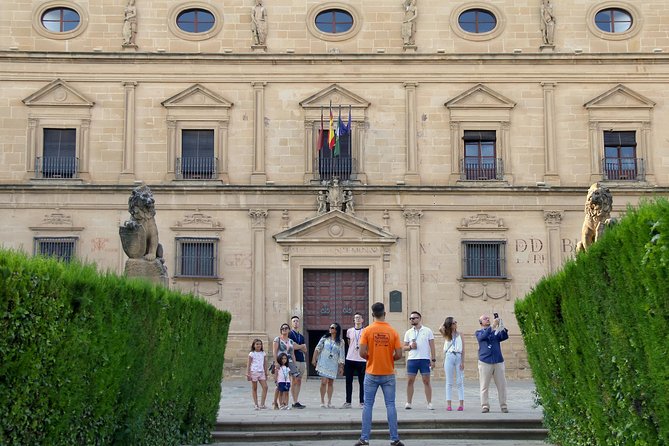
The Juan Vázquez de Molina Palace, also called the Palace of the Chains, receives a little more attention. Designed by Vandelvira in the 16th century, it now serves as Úbeda’s City Hall. Its design follows the grand house pattern used by Spanish noble families of the period.
The palace helps you see how Renaissance ideas moved beyond churches. Symmetry, proportion, and carefully ordered façades were also statements of civic power. You may not enter for a full tour, but the explanation gives the surrounding square a stronger sense of purpose.
Plaza Vázquez de Molina puts the monuments together
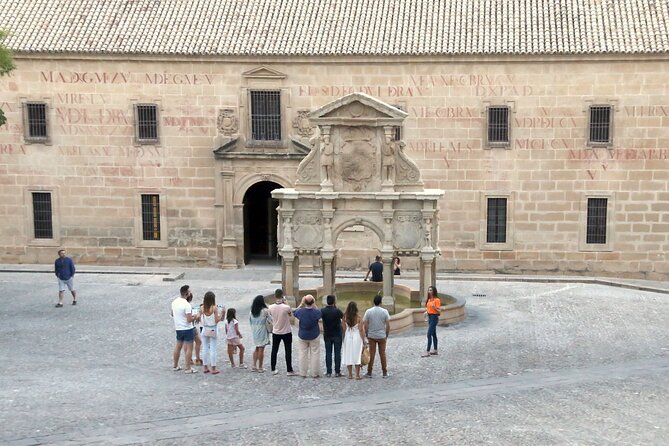
The Plaza Vázquez de Molina is one of the day’s most rewarding outdoor stops. It is often easier to understand Úbeda from this open space than from any single building. Several major monuments sit close together, creating one of Spain’s strongest examples of Renaissance city planning.
You have around 15 minutes here. Use it to look across the square rather than focusing only on one façade. The placement of the chapel, palace, and church shows how religious and political power shared the same urban stage.
The route also takes in the Parish Church of Santa María de los Reales Alcázares. This church contains several layers of Úbeda’s architectural past, including a 15th-century cloister, noble chapels from the 15th and 16th centuries, ironwork, and paintings.
The building is valuable precisely because it is not a single-style monument. Its mixture of forms reflects repeated rebuilding and changing tastes. If you prefer buildings that reveal their development over time, this may be more interesting than a church with one clean architectural identity.
Other Úbeda stops include the Palace of the Vela de los Cobos, a 16th-century noble residence designed by Vandelvira and executed by the stonemason Jorge Leal. It helps explain how local officials and wealthy families used architecture to display status.
The Church of San Pablo is another important stop. It was built in the 13th century over a neighborhood mosque and later took on its current Gothic form through restoration funded by Bishop Alonso Suárez de la Fuente del Sauce. That layered past gives the church more substance than its exterior alone suggests.
You also pass a small Neo-Renaissance church with three naves, a transept, half-barrel vaults, and a half-orange dome with a lantern. Its two-color tilework makes it one of Úbeda’s more visually distinctive smaller churches.
The Convent Museum of Saint John of the Cross brings a different tone. It occupies the place where the saint died and was buried, with relics and objects connected to his life. This stop suits you if religious history and spiritual writing interest you. If your priority is architecture alone, it may feel less essential than the main square and chapel.
The Water Synagogue adds a rare human scale
The Water Synagogue is the most distinctive stop in Úbeda. Its six spaces offer a glimpse into Jewish religious practice and medieval domestic life, rather than only public architecture.
The central feature is the mikveh, the ritual purification bath. Water, privacy, and ritual are key to understanding the space, and the guide’s explanation is important because the rooms are not as immediately self-explanatory as a palace or cathedral.
The Gallery of Women is another notable feature. Women used this screened area during ceremonies, separated from the main ritual space by latticework. The arrangement offers a concrete look at how worship was organized inside the building.
You also see the room known as the Inquisitor’s Room, together with a patio, cellar, and ovens. These areas are associated with the possible home of a medieval rabbi. That combination of religious, domestic, and food-preparation spaces makes the visit feel more grounded than a standard monument tour.
Admission is included, and the visit lasts about 30 minutes. This is not a large museum, so the value comes from the guide’s explanation and the unusual setting. Take your time with the layout, and remember that the synagogue is a compact historic site rather than a grand hall.
More History Tours in Spain:
- Madrid Essential: Historic Center, Plaza Mayor & Royal Palace
★ 5.0 · 6,416 reviews - Montserrat with Black Madonna & Medieval Winery with Tapas/Lunch
★ 5.0 · 5,209 reviews - Barcelona: Tapas Walking Tour with Food, Wine, and History
★ 4.8 · 4,261 reviews - Sevilla Food Tour: Tapas, Wine, History & Traditions
★ 5.0 · 3,468 reviews
Baeza opens with a powerful medieval square
The Baeza portion begins at the Plaza del Pópulo, one of the town’s key public spaces. The square brings together the Old Butchers, the Casa del Pópulo, the Fountain of the Lions, the Puerta de Jaén, and the Arco de Villalar.
The Casa del Pópulo now houses the tourist office, while the Old Butchers serve as courts. These changes of use show how Baeza’s old buildings have continued to serve civic purposes. The square is a good place to pause and see how defensive, administrative, and commercial functions once worked together.
Next comes the Fountain of Santa María, set between Baeza Cathedral and the former Seminary of San Felipe Neri. The Church of the Holy Cross and the old university are nearby, so this small stop gives you a useful orientation to the city’s main historic center.
The Cathedral of Baeza receives about 30 minutes and includes admission. The building has changed many times, leaving several architectural styles visible in its present form. That mixture can be more interesting than a perfectly uniform church because you can trace different periods of construction and renovation.
As in Úbeda, the guide helps connect individual buildings to the city plan. Baeza is not only about isolated monuments. Its churches, university buildings, squares, and palaces sit close enough together to form a coherent historic center.
Gothic, Romanesque, and university life in Baeza
The Church of Santa Cruz is a small but important stop. It is described as the best-preserved Romanesque church in Andalusia, an unusual survival in a region better known for later styles.
Allow about ten minutes here. The church is not large, but its importance comes from its early architectural character. This is the sort of place you could easily miss without a guide or a well-planned walking route.
The Palace of Jabalquinto brings you into the late 15th century. Its Elizabethan Gothic façade is among Baeza’s most memorable architectural sights, with a style quite different from the Renaissance buildings seen elsewhere in the tour.
The palace now serves as the international headquarters of the Antonio Machado University. That modern academic use keeps the building connected to Baeza’s long educational tradition.
The Old University of Baeza began operating in the first half of the 16th century and is now used as an institute. The stop lasts about ten minutes, followed by the Antonio Machado classroom, where the writer taught French grammar.
The classroom is preserved within the old secondary school facilities. For many readers, this is one of the most personal moments of the day. Grand churches tell you how institutions wanted to be seen, while a classroom suggests how people actually studied and worked.
You have about ten minutes for the classroom. It is a short visit, but it gives Baeza a literary connection without turning the experience into a separate literature tour. If Antonio Machado interests you, pay close attention here. If not, the building still helps explain the town’s academic identity.
Olive oil gives the day a local finish
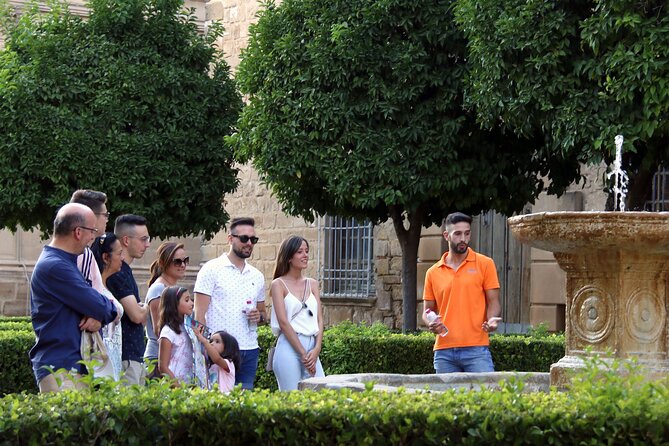
The visit ends at La Casa del Aceite, where you take part in an olive-oil tasting. This is a useful final stop because Jaén province is closely tied to olive cultivation and oil production.
The tasting lasts about 15 minutes and is included in the price. You learn about the qualities and benefits of what is often called liquid gold, though the short format means you should expect an introduction rather than a full production workshop.
I like having this at the end rather than at the start. After seeing palaces, churches, and civic buildings, you finish with a product linked to the region’s agriculture and daily life. It gives the tour a practical local note.
The final stop is the Medieval Baeza Interpretation Center, located at the highest part of the Puerta de Úbeda tower. From there, you can view the city from above and learn about its medieval period.
The tower visit lasts about ten minutes. The stairs or access arrangements are not specified, so ask the operator if you need details before booking. The viewpoint is a fitting end because it lets you see Baeza as a whole rather than as a chain of separate buildings.
Timing, group size, and practical value
The experience lasts about five hours, with a maximum group size of 20 people. Groups larger than 20 receive radio guides at no extra cost, according to the tour information, though the stated maximum for this activity is 20.
The schedule is flexible, but not open-ended. Guided visits take place at 11:00 and 17:00. You must state when you want to visit the other city in the special requirements section, and Baeza does not offer the afternoon visit on Sundays.
You receive confirmation when you book, and the visit is guaranteed with at least two people. If the minimum is not reached, you are offered another date or a full refund. Free cancellation is available up to 24 hours before the start time. Inside that window, the amount paid is not refunded and changes are not accepted.
Most people can take part, and service animals are allowed. The route includes historic churches, squares, palaces, and a tower, but no detailed accessibility information is provided. If stairs, walking distance, or monument access matter to you, ask before committing.
The itinerary can change because of weather, group needs, or other factors outside the company’s control. That is normal for a city tour with multiple historic buildings, but it means you should avoid scheduling an important connection immediately afterward.
Who should book this experience
I would choose this tour if you want a guided introduction to both UNESCO-listed towns and prefer context over a quick photo stop. It suits visitors interested in Renaissance architecture, religious buildings, Spanish literature, Jewish heritage, and olive oil.
It is also a good fit if you are short on time but do not want to reduce Úbeda and Baeza to a rushed drive-by. The route covers a lot, so the pace is purposeful. You will not have unlimited time inside each monument.
I would think twice if you want a leisurely day with long café breaks or detailed independent photography. The schedule includes many stops, and several visits last only five to 15 minutes.
The transport issue is the key decision point. If you already have a car or a reliable way to move between Úbeda and Baeza, the flexible format is useful. If you expected door-to-door transport, this is not the right product.
Should you book the Úbeda and Baeza tour?
Book it if the Water Synagogue, Vandelvira’s Renaissance architecture, and Baeza’s Antonio Machado connection all appeal to you. The combination is unusually broad for the price, and the included admissions plus olive-oil tasting improve the value.
Before booking, plan the transfer between the cities and select your preferred order and timing. If you can handle that detail, this is a well-rounded way to understand two of Jaén province’s finest historic towns without trying to piece together every monument on your own.
FAQ
How long does the Úbeda and Baeza tour last?
The experience lasts approximately five hours.
How much does the tour cost?
The listed price is $40.52 per person.
Can I visit Úbeda and Baeza on different days?
Yes. The guided visits can take place on different days or on the same day, with one visit in the morning and the other in the afternoon.
What time are the guided visits held?
Visits are held daily at 11:00 and 17:00. Baeza does not offer the Sunday afternoon visit.
Is transportation between Úbeda and Baeza included?
No. Transportation between the two cities is not included.
What is included in the admission?
Admission is included for the Holy Chapel of the Saviour, the Water Synagogue, Baeza Cathedral, the olive-oil tasting, and the Medieval Baeza Interpretation Center.
What is the Water Synagogue?
The Water Synagogue is a historic site with six spaces, including a ritual purification bath called a mikveh, a women’s gallery, and rooms linked to a possible medieval rabbi’s home.
What is the maximum group size?
The activity has a maximum of 20 participants. Radio guides are provided for groups of more than 20 people according to the tour information.
Can I cancel for a refund?
Yes. You can cancel at least 24 hours before the experience for a full refund. Cancellations or changes made less than 24 hours before the start time are not accepted for a refund.
Just added around Spain
- Visita Guiada Por El Casco Histórico De Cuenca Y Su Catedral★ 5.0 · 45 reviews
- Night Walking Tour of Medieval Cuenca★ 5.0 · 64 reviews
- Mosque of Cordoba History Tour in English Tickets included★ 5.0 · 257 reviews
- 2 Hours Tour around Cádiz: History, anecdotes and curiosities★ 5.0 · 89 reviews
- Jerez de la Frontera History and Art Walking Tour★ 4.5 · 49 reviews
- Bilbao Historical Small Group Tour★ 4.5 · 159 reviews
- The Authentic Bilbao Pintxos, Food & Wine Tour with a Local★ 5.0 · 360 reviews
- Girona, Costa Brava and Medieval Village from Barcelona★ 5.0 · 149 reviews
Spain History Tours, compared.
Madrid Essential: Historic Center, Plaza Mayor & Royal Palace
Read our review →
Montserrat with Black Madonna & Medieval Winery with Tapas/Lunch
Read our review →
Sevilla Food Tour: Tapas, Wine, History & Traditions
Read our review →
Valencia Old Town Tour with Wine & Tapas in 11th Century Historic Monument
Read our review →
Madrid Tapas & Taverns Small Group Food & History Tour
Read our review →
Barcelona Tapas Walking Tour: Food, Wine & History
Read our review →
Ultimate Seville Tapas, Wine & History Small Group Tour
Read our review →
Córdoba: Skip-the-Line Great Mosque-Cathedral History Tour
Read our review →Browse the lists this tour appears in