
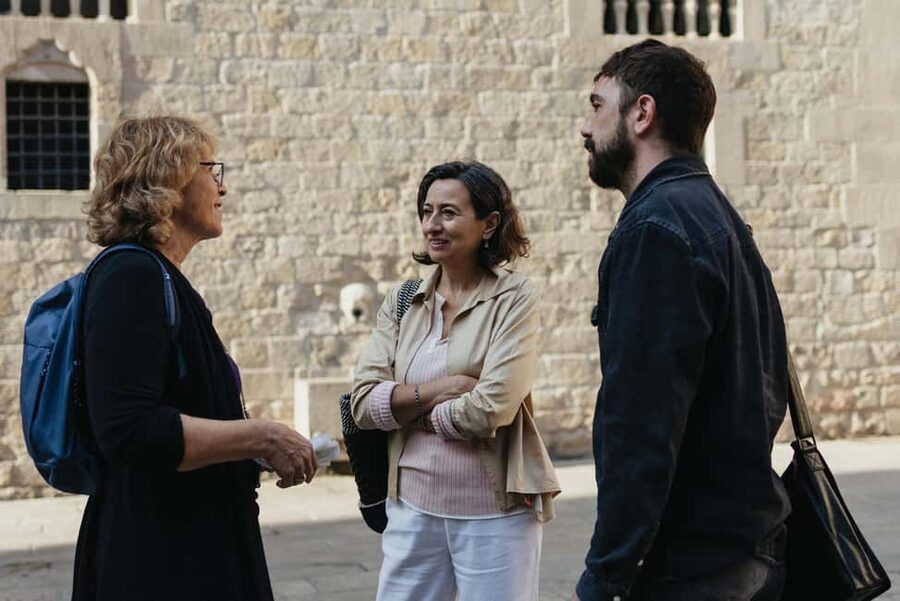
Review · BARCELONA
Private Jewish Heritage Journey by Barcelona Dreaming
Barcelona’s medieval Jewish Quarter is easy to walk through and surprisingly easy to miss. This private two-hour tour helps you read the narrow Gothic Quarter streets as the old Call, where Jewish life once shaped Barcelona’s intellectual and commercial center. You’ll visit one of Europe’s oldest synagogues and hear about a concealed medieval Mikveh.
I like the private format, which lets your guide adjust the pace and answer family-history questions without a group waiting. I also like the focus on small clues, including old symbols, overlooked buildings, and the Rashba House, rather than only the better-known Barcelona sights.
The main thing to consider is the walking surface. Cobblestones and uneven streets are part of the old city, and the Ancient Synagogue has a few steps. Most of the route works for wheelchairs and strollers, but that final access point may not suit everyone.
Key points to know before you book
- One of Europe’s oldest synagogues: Entry is included, with the site used to explain Barcelona’s medieval Jewish community.
- A private pace: Your guide can slow down for older relatives, children, mobility needs, or extended questions.
- Stories beyond famous monuments: Expect discussion of Ramban, Rashba, the Mikveh, hidden symbols, and the effects of the Inquisition.
- Several guide languages: Tours are offered in English, Hebrew, or Spanish.
- A compact city walk: The experience lasts two hours and begins near Conesa Entrepans in Plaça de Sant Jaume.
- A strong record of teaching: Guides such as Edu, Ella, Alan, Lilach, Dina, Eyal, and Leiach have been praised for clear explanations and thoughtful answers.
Why Barcelona’s Call is worth two hours
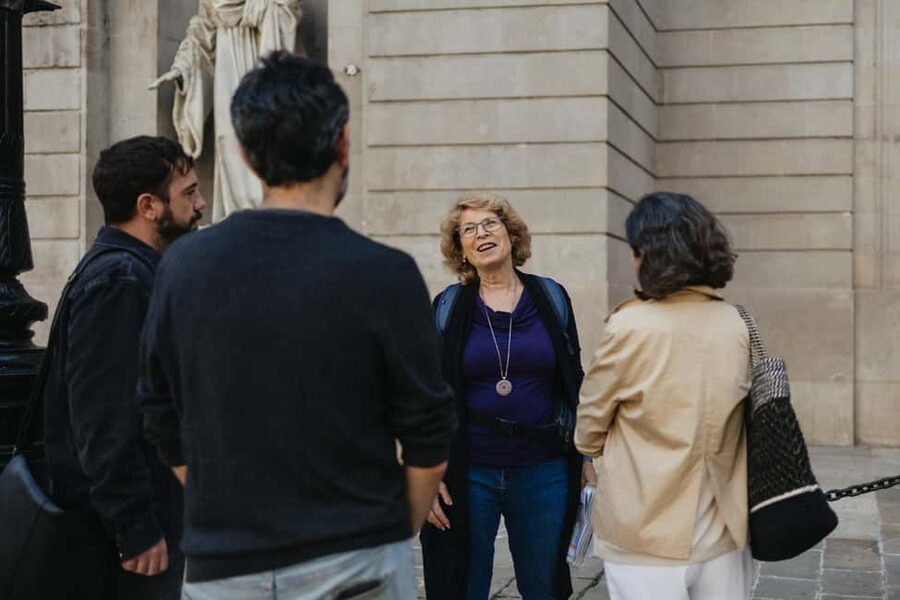
Barcelona’s Gothic Quarter can feel like a maze of handsome stone lanes, busy cafés, and grand civic buildings. The medieval Jewish quarter is woven into that same maze, but its story is not always obvious from the street.
That is the central value of this tour. You are not simply taken from one landmark to another. You are shown how to notice traces that would otherwise pass as ordinary walls, doorways, or worn stone markings.
The Jewish presence in Barcelona reaches back many centuries, and the tour places that history within the wider story of Sefarad, medieval Spain, Catalan society, religious life, scholarship, and persecution. You also get a look at the transition from a period of coexistence and achievement to the darker years surrounding the Inquisition and the expulsion of Jews from Spain.
I would not choose this experience if you only want a fast photo stop in the Gothic Quarter. It works best when you want context, conversation, and a guide who can respond to your questions. The private setting is especially useful if someone in your family is tracing Sephardic roots or wants to connect local streets with Jewish intellectual history.
More Private History Tours in Spain
- Andorra Original History and Sightseeing Tour (Private, Pickup)
★ 5.0 · 350 reviews - Barcelona 1.5h Private Old Town, Gothic & Ramblas Walking Tour
★ 5.0 · 318 reviews - Private Pre-Pyrenees Medieval Village Hike from Barcelona
★ 5.0 · 39 reviews
Meeting near Plaça de Sant Jaume
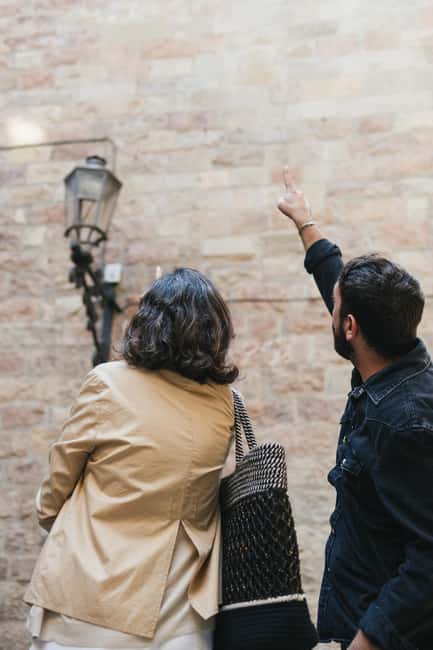
The walk begins in Plaça de Sant Jaume, next to Conesa Entrepans. This is a practical meeting point in the center of the Gothic Quarter, though the narrow old-city streets can make first meetings slightly confusing.
One useful point comes from the experience itself: a guide may contact you before the tour to confirm the meeting details. Even so, I would arrive a little early and keep the guide’s contact information available. One person specifically wished the guide had worn a more visible shirt or sign, so do not assume the first person standing near the sandwich shop is your guide.
From here, your guide sets the tone for the walk. The route is private, so you can explain your interests at the start. Tell the guide if you are researching a family name, traveling with teenagers, managing a mobility issue, or hoping to focus on scholarship, daily life, religious practice, or persecution.
The languages offered are English, Hebrew, and Spanish. The guides named in the feedback include Edu, Ella, Alan, Lilach, Dina, Eyal, and Leiach. Your assigned guide may be different, but the repeated strength of the experience is the guide’s ability to explain complex material in a friendly, conversational way.
Plaça de Sant Jaume and the old city setting
The first section takes about 15 minutes of walking toward the main historic areas. Plaça de Sant Jaume is a useful starting point because it places you directly inside Barcelona’s civic heart, rather than at a remote museum or modern visitor center.
Your guide begins to separate the present-day city from the medieval one. That change in viewpoint matters. The buildings around you are not presented only as attractive architecture. They become evidence in a story about communities, power, faith, work, and changing borders.
The walk through the old city is not strenuous in the sense of a long hike, but the ground is uneven. Wear shoes with good grip and bring water. Barcelona’s weather can change, and the tour operates in rain or sun, so check the forecast before leaving your hotel.
Families should find the private format helpful. A teenage traveler can ask direct questions without feeling that the group is being held up, while older family members can stop when needed. One family with teenagers found that the guide mixed information with conversation and kept the pace flexible.
King’s Square and the larger story of Sefarad
The route continues to King’s Square, with about 30 minutes of walking and explanation. This is one of the longer portions of the itinerary, and it gives the guide room to connect Barcelona’s Jewish community with the broader medieval city.
This is where a good guide makes a real difference. Names such as Ramban and Rashba are not just dates in a history lecture. They represent the intellectual life that once developed in these streets. You hear about scholars whose ideas traveled well beyond Barcelona, then see how their world was tied to specific lanes, houses, and religious spaces.
The discussion also covers the idea of a golden age of coexistence, while avoiding a simple story of uninterrupted harmony. Jewish life in medieval Spain included achievement and exchange, but also limits, tension, discrimination, and eventual catastrophe. The treatment of the Inquisition and the expulsion gives the walk its necessary weight.
I appreciate that the tour is not framed as a romantic story of lost medieval Spain. Its value comes from showing both the contribution of Jewish communities to Catalan culture and the forces that pushed them out. The best guides also leave room for questions, which is important here because the history can be personal as well as academic.
More Jewish Heritage Tours in Barcelona:
- Budapest Jewish Heritage Memorial Walking Tour & Synagogue Entry
★ 5.0 · 568 reviews - Budapest: Jewish Heritage Guided Tour with Synagogue Ticket
★ 4.8 · 533 reviews - 3-Hour Porto Jewish Heritage Walking Tour with Local Guide
★ 4.5 · 396 reviews - Warsaw: Jewish History Guided Walking Tour in English
★ 4.7 · 324 reviews
Entering the Ancient Synagogue
The Ancient Synagogue is the key indoor stop. Entry is included in the $94 price, and the visit gives you a physical connection to the community discussed during the earlier walk.
The synagogue is described as one of Europe’s oldest. Its scale and setting are part of the experience. Do not expect a large, formal modern place of worship. The appeal is the sense of an old religious space tucked into the medieval fabric of the city.
Your guide explains what you are seeing and places the building within Barcelona’s Jewish past. This is also where the tour’s attention to small details pays off. Instead of looking only at a famous façade, you learn how to read the remaining signs of Jewish life and how later layers of history affected the site.
There is an important practical warning. The entrance includes a few steps. Most of the overall tour is described as wheelchair and stroller accessible, but the synagogue itself may not be fully accessible. If someone in your party uses a wheelchair or has trouble with steps, contact the provider before booking so you can understand the current arrangement.
The synagogue can occasionally be closed, so access should not be treated as absolutely guaranteed on every departure. The walking tour still has value if a closure occurs, but the visit is one of the main reasons to choose this particular experience.
The Mikveh, symbols, and overlooked traces
The tour also reveals the story of a hidden medieval Mikveh. This is one of the more unusual elements because it shows how Jewish religious life existed within a dense urban setting, often out of sight of modern passersby.
The wording of the experience suggests that the guide reveals the Mikveh’s secrets as part of the route. You should confirm the exact access arrangements if entering the Mikveh is essential to your decision, since the clearly stated included admission is for the Ancient Synagogue.
You will also learn to spot symbols and faint marks on old stone walls. This changes how you walk through the Gothic Quarter afterward. A doorway that first looked like part of a restaurant or apartment block may prompt a second look, especially when your guide explains what has survived and what has been erased.
The Rashba House is another stop or point of discussion that many independent walkers would miss. These small locations are what set the tour apart from a standard Gothic Quarter history walk. The guide is not only pointing out buildings. The guide is showing you how memory survives in fragments.
Casa Adret and the final stretch
Casa Adret forms part of the route before you return to the starting area. It helps anchor the story in an actual historic building rather than leaving the Jewish quarter as an idea.
The walk back to Conesa Entrepans completes a compact loop. The supplied timing lists walking sections of about 15 minutes, 30 minutes, and 15 minutes between the main points, while the entire experience lasts two hours. The remaining time is used for explanations, questions, and time at the historic sites.
That balance is one of the tour’s practical strengths. You cover several important places without spending half a day on your feet. At the same time, the route is not a quick checklist. Guides such as Alan and Edu have been praised for allowing questions and adjusting the walking speed, while Ella and Lilach have been singled out for clear explanations and strong command of the subject.
There are not formal rest stops listed in the itinerary. One person specifically wished for more chances to sit, so older visitors should mention this before starting. Your guide can adjust the pace, but the medieval quarter does not always offer a convenient bench exactly when you want one.
What the $94 price includes
At $94 per person, this is not the cheapest way to walk through the Gothic Quarter. It is also not priced like a basic shared city stroll. You are paying for a private group, a specialist guide, entry to the Ancient Synagogue, and the chance to shape the discussion around your family.
The value depends heavily on group size and interest. For a couple or small family with a serious interest in Jewish history, genealogy, or medieval Barcelona, the private setting can justify the cost. You are not paying only for movement between sights. You are paying for interpretation, flexibility, and access to a specialist who can answer questions as they arise.
For a larger family, the per-person price still needs comparison with a shared tour, but the benefits become more practical. You can keep relatives together, set a gentler pace, and avoid the common problem of one family member feeling rushed while another waits.
Food, drinks, and transport to the meeting point are not included. That is easy to manage because the start is central, but you should budget separately for lunch or a snack. The tour finishes back at Conesa Entrepans, and your guide can offer suggestions for Kosher and local dining afterward.
How the guides shape the experience
The strongest pattern in the feedback is not a single attraction. It is the guide’s teaching style.
Edu has been praised for adjusting his pace, speaking clearly, and connecting the past with life in modern Barcelona. Alan is described as thoughtful, engaging, and able to use maps, photographs, and visual reconstructions to explain the setting. Ella is noted for her command of both Catalan and Jewish history, while Lilach and Dina have been praised for answering detailed questions.
The exact guide matters because this is a story-led experience. A guide who simply recites dates would make the two hours feel dense. A guide who listens can turn it into a conversation about family roots, religious customs, architecture, and the difficult choices faced by communities under pressure.
The private format gives you a chance to say when you want more detail. If your children are along, ask for stories and visual clues. If you are tracing ancestry, explain that at the beginning. If you have already studied medieval Jewish Spain, ask the guide to focus on Barcelona’s local evidence rather than repeating general background.
Who should book this walk?
I would recommend it to:
- Families researching Sephardic ancestry
- Visitors with a strong interest in Jewish history and religious life
- People who prefer private guides to large groups
- Multi-generational families that need a flexible pace
- Visitors who want to see the Gothic Quarter through a less familiar historical lens
- English, Hebrew, or Spanish speakers who value direct conversation
It is less suitable if you want a relaxed café walk with frequent seating, a broad overview of all Barcelona history, or a long list of major Gaudí sights. It is also not ideal for anyone who cannot manage cobblestones, uneven surfaces, or the synagogue’s steps without additional arrangements.
The tour is wheelchair accessible for much of the route, but not every part is guaranteed to work for every wheelchair or stroller. People over 95 are specifically listed as unsuitable for the activity, and anyone with serious mobility concerns should discuss the route before booking.
Cancellation is free up to 24 hours in advance, and you can reserve now and pay later. Those terms are useful when your Barcelona schedule is still changing.
Should you book the Private Jewish Heritage Journey?
Book this tour if you want Barcelona’s Jewish quarter explained by someone who can connect people, buildings, scholarship, and loss. The Ancient Synagogue and Mikveh story give the walk a clear focus, while the private format lets you shape the pace and subject matter.
I would make it an early Barcelona activity if Jewish heritage is central to your visit. The guide’s suggestions for Kosher and local dining can also help with the rest of your stay. Just wear solid walking shoes, allow for uneven streets, and confirm the synagogue access if steps are a concern.
At $94 per person, it is best viewed as a specialist private lesson in the city itself. For a family or couple that wants more than surface-level sightseeing, that is a fair exchange. If you mainly want famous landmarks, spend your budget elsewhere.
FAQ
How long does the Private Jewish Heritage Journey last?
The tour lasts two hours.
What is the price?
The listed price is $94 per person.
Where does the tour begin?
The meeting point is in Plaça de Sant Jaume, next to Conesa Entrepans in the Gothic Quarter.
Is the tour private?
Yes. It is offered as a private group experience.
Which languages are available?
The tour is available in English, Hebrew, and Spanish.
Is entry to the Ancient Synagogue included?
Yes. Entry and entrance fees for the Ancient Synagogue are included.
Is the tour wheelchair accessible?
Most of the route is accessible for wheelchairs and strollers, but the Ancient Synagogue has a few steps and may not be accessible for everyone.
What should I wear or bring?
Wear comfortable shoes for cobblestones and uneven streets. Bring water and check the weather because the tour operates in rain or sun.
Can I cancel the booking?
Yes. You can cancel up to 24 hours in advance for a full refund. You can also reserve now and pay later.
More Private History Tours in Barcelona
- Private Besalú & 3 Medieval Towns Tour with Hotel PickUp from Barcelona
★ 5.0 · 37 reviews - Private Historical Walking Tour of York
★ 5.0 · 1,324 reviews - Private Guided Historic Electric Cart Tour of St. Augustine
★ 5.0 · 1,194 reviews - Istanbul: Acemoglu Historical Turkish Bath w/Private Options
★ 4.6 · 1,190 reviews
Just added around Barcelona
- Girona, Costa Brava and Medieval Village from Barcelona★ 5.0 · 149 reviews
- Tarragona and Sitges Small Group Tour – Roman History & Culture★ 4.5 · 339 reviews
- Barcelona Tapas Food Tour, Taverns, History & Local Culture★ 5.0 · 42 reviews
- Savor Spain: Food, Wine, History & Culture Small Group Tour in Old Barcelona★ 5.0 · 140 reviews
- Private Pre-Pyrenees Medieval Village Hike from Barcelona★ 5.0 · 39 reviews
- Sip, Sites & Bites Barcelona Food, Drinks & History Tour★ 4.5 · 95 reviews
- History Museum of Catalonia & Rooftop Access Ticket★ 4.5 · 43 reviews
- Private Besalú & 3 Medieval Towns Tour with Hotel PickUp from Barcelona★ 5.0 · 37 reviews
Barcelona History Tours, compared.
Montserrat with Black Madonna & Medieval Winery with Tapas/Lunch
Read our review →
Barcelona Tapas Walking Tour: Food, Wine & History
Read our review →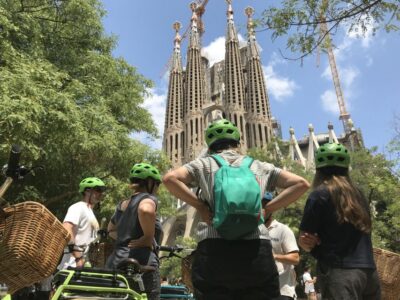
Barcelona: 2.5-Hour Bike or E-Bike Historical Tour
Read our review →
Pyrenees & Medieval Towns Small Group Tour from Barcelona
Read our review →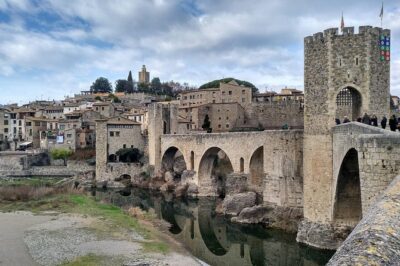
Besalu & 3 Medieval Towns Small Group Tour with Hotel Pick-Up
Read our review →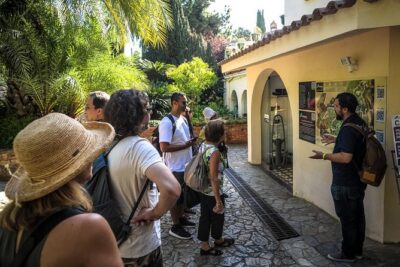
Costa Brava & Medieval Village Tour with Lunch
Read our review →
Barcelona Erotic Museum – Explore Art, History & Fun
Read our review →Browse the lists this tour appears in