
Review · BAYEUX
Full-Day Canadian Battlefields & sites Normandy Tour from Bayeux
Juno Beach is only the beginning. This full-day tour follows the Canadian advance from the shore through villages, battlefields, bunkers, cemeteries, and the hard-fought route toward Caen. Canada’s part in Normandy is the focus, not a quick stop added to a general D-Day drive.
I like the small group of up to eight, which gives you more room to ask questions and makes hotel pickup in Bayeux easy. I also like the way the day connects the Juno landing with later fighting at Authie, the Abbey d’Ardenne, Carpiquet, and Hill 67. The drawback is simple: this is a long, information-heavy day, and the minivan can feel tight when full.
Key points to know before you book
- Canada-focused history: Follow the 3rd Canadian Infantry Division from the Juno beaches toward Caen.
- Seven meaningful stops: See Juno Beach, the Juno Beach Centre, Beny-sur-Mer Canadian War Cemetery, Authie, Abbey d’Ardenne, Carpiquet, and Hill 67.
- Small-group setting: The air-conditioned minivan carries no more than eight people.
- Strong guiding: Guides such as Emmanuel, Laurent, Jeremy, Rémy, Manon, Bice, and Jeremiah have been praised for clear explanations, personal stories, and a warm manner.
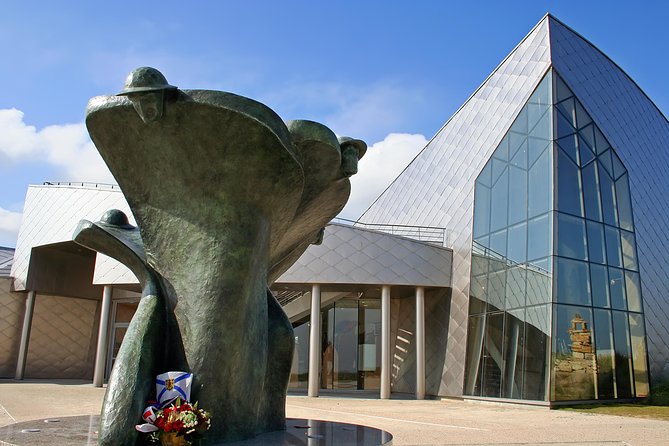
- A moving museum visit: Explore Canadian photographs, archives, first-hand accounts, artifacts, German bunkers, and the beach defenses.
- Plan for a full day: The tour begins at 8:30 am and returns to Bayeux around 6 pm, with lunch at your own expense.
Why this Canadian tour tells a fuller D-Day story
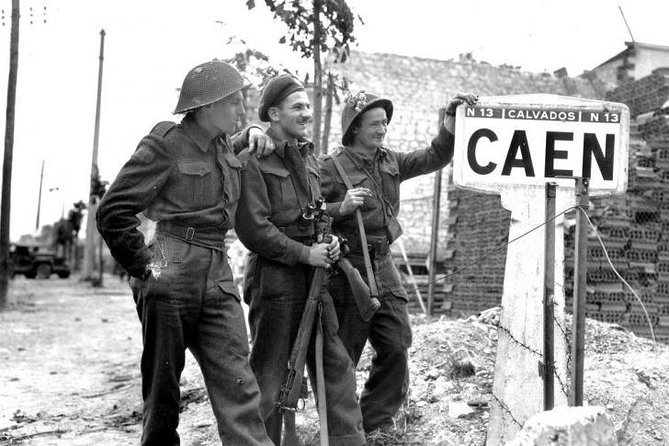
Many Normandy excursions concentrate on the American beaches, especially Omaha. This tour takes a different route. You begin with the Canadian assault at Juno Beach, then follow the fighting inland as Canadian troops tried to hold ground west of Caen and block German counter-attacks.
That wider view matters. The beach landing lasted only part of June 6, 1944. The Canadian campaign continued through weeks of difficult fighting, and the tour shows how the first assault connected to the advance toward Caen and the struggle for the Carpiquet airfield.
You will hear about the 3rd Canadian Infantry Division, the 9th Brigade advance on June 7, and the fighting around Hill 67. The guide also puts numbers to the human cost: 359 Canadians died on D-Day, about 5,500 died during the Battle for Normandy, and 45,000 Canadians lost their lives during the Second World War.
The result is not just a beach visit. You get a day built around movement, sacrifice, military decisions, and the people who carried them out.
More WWII and D-Day Tours in France
- Normandy American D-Day Beaches Full Day Tour from Bayeux
★ 5.0 · 2,103 reviews - Normandy American D-Day Experience – Group tour from Bayeux
★ 5.0 · 1,566 reviews - Normandy Beaches Half-Day Afternoon Trip from Bayeux (A2)
★ 4.5 · 1,116 reviews
Starting in Bayeux at 8:30 am
You can meet the guide at Bayeux train station, Place de Quebec, or your Bayeux hotel. Hotel pickup and drop-off are included within Bayeux, but this is not a Paris transfer and there is no pickup from a port.
The air-conditioned minivan is a practical choice for this route. It lets the guide link each stop while you travel through the Normandy countryside, rather than asking you to arrange separate taxis or depend on infrequent public transport. With a maximum of eight people, the setting is more personal than a large coach.
There is one comfort point to keep in mind. When the van is full, several people found the seating tight, and one comment noted that the air conditioning is felt most strongly in the front. The windows cannot be opened, so warm weather may feel less pleasant in the back.
The tour normally returns to Bayeux around 6 pm. That timing makes it useful for a Bayeux base, but it leaves little room for another major activity that evening. Bring water, dress for changeable weather, and wear shoes suited to standing and walking outdoors.
Juno Beach: seeing where the Canadians came ashore
The first stop is Juno Beach, with about 30 minutes at no admission cost. The guide uses the shore and nearby sections from Saint-Aubin-sur-Mer to Graye-sur-Mer to explain where Canadian assault troops landed and how they faced German machine-gun fire and fortified positions.
This is a good place to get your bearings before entering the museum. The beach itself is broad and open, but the meaning comes from the guide’s explanation of what happened here. You begin to see why the landing was only one part of a much larger operation.
The stop is fairly short. You will not have unlimited time to wander along the coast, so listen closely while the guide points out the different landing areas. Wind from the English Channel can be sharp, even in a season that feels mild inland. In winter, wear several warm layers and protect your face and hands.
The beach visit is also a useful correction to the familiar D-Day movie image. The American experience at Omaha often dominates popular culture, while the Canadian assault receives less attention. Here, Canada’s role is placed at the center from the start.
Juno Beach Centre: the day’s main museum visit
You spend about an hour at the Juno Beach Centre, with admission included. The museum follows Canada’s wartime story through photographs, archives, first-hand accounts, and artifacts. It also explains the broader Canadian contribution, rather than limiting the story to the first hours on the sand.
One of the most useful parts of this visit is the connection between military events and ordinary lives. Personal accounts help turn troop movements and casualty figures into something more immediate. You can take time with the displays, then go outside to see excavated German bunkers and parts of the beach defenses.
The museum stop gives the day structure. At the shore, you see the physical setting. Inside, you gain the political and human context. The guide may also lead you around the grounds and bunkers before giving you time to examine the indoor exhibits at your own pace.
If you want a quick photo stop and little explanation, this tour may feel too slow. If you want to understand Canada’s role in the war, the hour is well used. It is also one of the strongest parts of the experience for families with older children, provided they can handle a serious subject and stay with a long day.
More WWII and D-Day Tours in Bayeux:
- Omaha Beach D-Day Experience – Afternoon group tour from Bayeux
★ 5.0 · 1,088 reviews - Normandy Battlefields Tour – American Sites (A3)
★ 5.0 · 876 reviews - Private D-Day Experience from Bayeux
★ 5.0 · 573 reviews - From Bayeux: American D-Day Sites in Normandy Full-Day Tour
★ 4.9 · 503 reviews
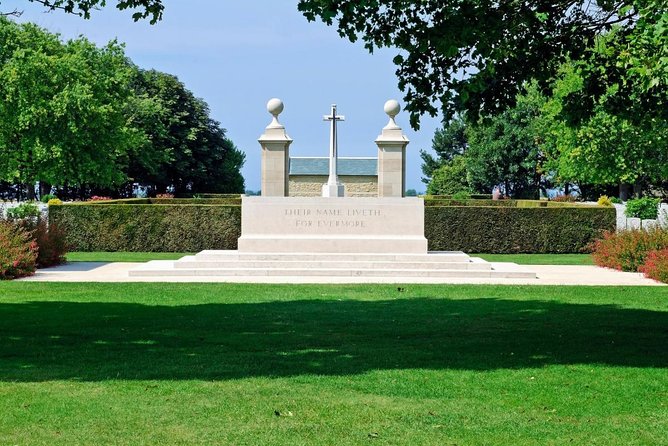
Beny-sur-Mer Canadian War Cemetery: quiet scale and personal loss
The tour then moves to Beny-sur-Mer Canadian War Cemetery, with about an hour scheduled. This is a place for quiet attention rather than hurried sightseeing. The orderly rows of graves make the cost of the Normandy campaign visible in a way that battlefield maps cannot.
The guide can help place individual deaths within the larger advance. If you are researching a relative, bring every detail you have, including a name, unit, date, or photograph. One particularly meaningful account involved a guide helping connect a guest with a great-uncle’s grave and battalion. That kind of help depends on the information available and the guide’s ability to identify the right record, but the stop gives you time to look.
An hour is generous compared with a short roadside memorial visit. You can pay respects, read inscriptions, and absorb the setting without being pushed immediately back into the vehicle.
The cemetery can be emotional. That is not a warning against the visit, but a useful expectation. The day asks you to move from battle tactics to individual loss several times.
Authie and the route toward Caen
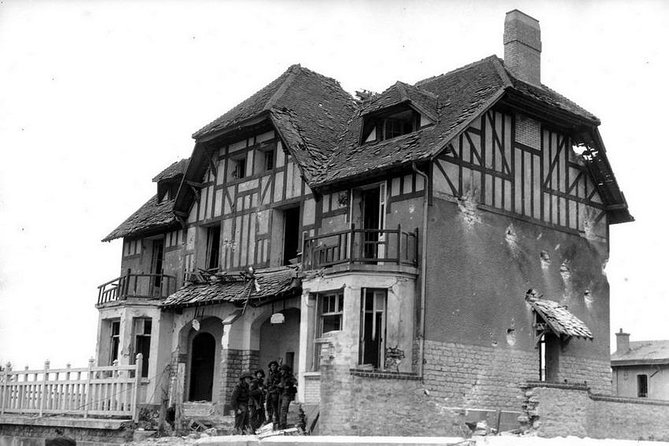
At Authie, you have about 30 minutes. The stop helps explain the fighting inland, after the beach assault. The Canadians were not finished once they reached the coast. They faced German resistance as they pushed toward Caen and attempted to hold their gains against counter-attacks.
This is where a private car or a general beach tour may fall short. You are not simply looking at a famous shoreline. You are following the route of an advance through the countryside, with the guide explaining how villages and roads shaped the battle.
The short stop means you should expect a focused explanation rather than a long walk. The value comes from the sequence: Juno Beach, the museum, the cemetery, then the inland route. Each place adds another piece to the same story.
Abbey d’Ardenne: a serious stop on June 7
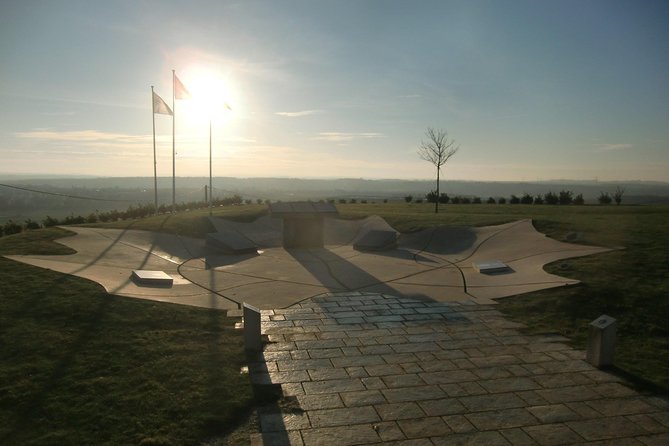
The Abbey d’Ardenne receives about an hour. The site is tied to the 9th Brigade advance on June 7, and the guide explains its place in the Canadian push toward Caen.
This stop adds weight to the day because it shows how quickly the nature of the fighting changed. The landing beaches are associated with the first assault. At the abbey, you are dealing with the dangerous and uncertain advance inland, where units tried to gain ground while German forces organized their response.
Allow the guide to set the pace here. The military details can pile up, especially after the museum and cemetery. I find it helps to keep one simple question in mind: what were Canadian troops trying to reach, and what stood in their way?
The guide’s quality matters greatly at a stop like this. Emmanuel is praised for adding extra stops and explaining the Canadian campaign in depth. Laurent, also called Wally, is noted for clear bilingual guiding and for adjusting the schedule when the group had a specific personal interest. Those qualities can make a difficult site easier to understand.
Carpiquet: following the advance toward the airfield
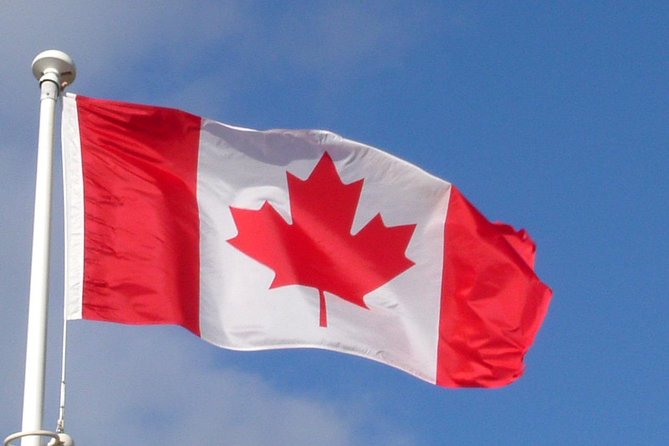
Carpiquet receives about an hour, with no separate admission charge. The tour tracks the route toward the capture of Carpiquet and its airfield, a key part of the attempt to take Caen.
The important point is continuity. Carpiquet is not presented as an isolated name on a map. You have already seen the landing area, heard about the inland fighting, and visited the cemetery. Now the route shows how Canadian troops kept pushing beyond the beachhead.
You may spend part of the hour listening from the vehicle or standing at a memorial point, depending on the day’s exact arrangement. The supplied details do not promise a particular building or interior visit here, so expect a battlefield explanation and outdoor stop rather than a museum.
This is another reason to choose the tour for its military focus. The guide is not simply pointing out attractive French villages. The route is used to explain the decisions and obstacles behind the Canadian advance.
Hill 67: ending with the fight for Caen
The final stop is the Hill 67 Canadian Memorial, with about 30 minutes. Located south of Caen, it commemorates some of the bitter fighting that followed the landing.
Ending here gives the day a clear arc. You begin on the coast, where the troops came ashore, and finish inland near the objectives that made the campaign so difficult. The brief stop is enough for a final explanation and moment of reflection, but it is not a full visit to every Canadian site in Normandy.
That limit is worth understanding. One day can give you a strong Canadian framework, but it cannot cover every unit, cemetery, memorial, and battlefield. If you want to add Vimy Ridge or First World War sites, plan a separate trip. Vimy is not nearby.
Guides make the difference on a long day
The strongest part of this experience is the guide. Names associated with the tour include Emmanuel, Laurent, Jeremy, Rémy, Manon, Bice, Jeremiah, and Woody. Their styles may differ, but the praise centers on the same useful traits: strong command of the subject, personal stories, humor, patience, and a willingness to answer questions.
A guide such as Emmanuel may add a stop when time and local knowledge allow. Laurent is described as perfectly bilingual and flexible with the route. Jeremy is praised for combining facts with poignant stories, while Bice is noted for a special focus on Canadian troops. These details give you a sense of what to hope for, without assuming you will receive a particular guide on your date.
There is one practical caution. One guest had difficulty hearing a guide who had forgotten his microphone and found the French accent hard to follow. The tour is offered in English, but accents and vehicle acoustics can affect how easily you catch every word. Sit where you can hear clearly, and ask the guide to repeat important points.
Is $161.32 a fair price?
At $161.32 per person, this is not the cheapest way to see Juno Beach. The price includes Bayeux hotel pickup and return, fuel, the driver-guide, transport in an air-conditioned minivan, and admission to the Juno Beach Centre.
The value comes from the route and the time saved. You would need to arrange transport between seven separate stops, learn the Canadian battle sequence yourself, pay for the museum, and manage the day’s timing without a local guide. The small group also gives you a better chance to ask about a family connection or a specific unit.
Lunch is not included. The supplied schedule does not give a fixed lunch stop or price, so plan to budget separately and ask the guide how the day’s meal break will work. You should also carry water and a few snacks, especially since this is an eight-hour outing with a lot to absorb.
The tour earns a 4.9 rating from 191 reviews, with 97 percent recommending it. Those figures support the idea that the service is usually strong, but the price is best justified if Canadian military history is a main reason for your Normandy visit.
Who should book this tour?
I would choose this tour if you have Canadian family connections, want more than a quick beach photograph, or prefer a guide to explain the campaign as you move between sites. It is also a good fit if you are staying in Bayeux and want one organized day without renting a car.
You should be comfortable with a full schedule and serious subject matter. The day includes a cemetery, battlefield stories, casualty figures, and repeated movement in and out of a compact vehicle. Children can participate, but they must be accompanied by an adult, and the emotional material may not suit very young children.
If you want a broad introduction to all five D-Day beaches, this is not the right choice. The focus is Canada, especially Juno Beach and the advance toward Caen. If that focus matches your interests, the tour gives you much more than a beach stop and a museum ticket.
Practical details before you reserve
The activity is offered in English and begins at 8:30 am. You can arrange pickup at your Bayeux hotel, Bayeux train station, or Place de Quebec, then return to the original starting point around 6 pm.
A maximum of eight people keeps the group small, though the minivan may feel tight when full. Service animals are allowed, and the activity is near public transportation. Most people can participate, but you should be prepared for outdoor stops, standing, and repeated entry into and exit from the vehicle.
Confirmation is sent within 48 hours, subject to availability. Cancellation allows a full refund when made at least six full days before the start time. A cancellation two to six full days before the tour receives a 50 percent refund, while cancellations less than two full days before the start time are not refunded. If the minimum number of people is not reached, the operator offers another date or experience, or a full refund.
Should you book the Canadian Battlefields tour?
Book it if you want the Canadian story told from beach to battlefield, with enough time for the Juno Beach Centre, Beny-sur-Mer cemetery, and the inland route toward Caen. The mix of museum time, memorials, bunkers, villages, and military sites gives the day real substance.
Skip it if you prefer a relaxed half-day, dislike long periods of explanation, or need a spacious vehicle. For most people staying in Bayeux who care about Canada’s role in Normandy, the combination of a small group, strong guides, and a carefully linked route makes the $161.32 cost reasonable.
FAQ
Where does the tour start?
You can meet the guide at Bayeux train station, Place de Quebec, or your Bayeux hotel.
What time does the tour begin?
The tour starts at 8:30 am.
What time does it return to Bayeux?
The tour returns to Bayeux around 6 pm.
Is hotel pickup included?
Yes, hotel pickup and drop-off are included for hotels in Bayeux. Pickup is not offered from Paris or from ports.
How many people can join the tour?
The tour has a maximum of eight travelers.
Is lunch included?
No. Lunch is not included in the price.
Is admission to the Juno Beach Centre included?
Yes, admission to the Juno Beach Centre is included.
What language is the tour offered in?
The tour is offered in English.
What happens if I need to cancel?
You receive a full refund if you cancel at least six full days before the start time. Cancellations two to six full days before the tour receive a 50 percent refund, and cancellations less than two full days before the start time are not refunded.
More Full-Day Trips in Bayeux
- Bayeux: Normandy D-Day Landing Beaches Full-Day Guided Tour
★ 4.8 · 158 reviews - Private Full day American D-Day Guided Tour in Bayeux
★ 5.0 · 133 reviews - Normandy – Utah, Omaha & U.S. D-Day Sites Full Day Tour From Bayeux
★ 4.5 · 81 reviews - Normandy WW2 Full Day Classic Jeep Tour
★ 5.0 · 30 reviews
More Battlefield and Military History Tours in Bayeux
- Normandy Battlefields D-Day Private Trip with VIP Services from Paris
★ 5.0 · 240 reviews - Private Day Tour including Normandy Landing Beaches & Battlefields from Bayeux
★ 5.0 · 172 reviews - Normandy Battlefields Half Day Tour – Canadian World War II Sites
★ 4.5 · 134 reviews - Normandy Battlefields Day Trip: Omaha, Sword & British Airborne Sector (A1B2)
★ 4.5 · 41 reviews
Just added around Bayeux
- WW2 Jeep or Dodge truck tour of the Omaha Beach site★ 5.0 · 51 reviews
- 2- to 6-hour sidecar excursion on the D-Day Landing Beaches★ 5.0 · 131 reviews
- Private Walking Guided Tour of Historic Bayeux English or French★ 5.0 · 36 reviews
- Normandy U.S. D-Day Sites Half Day Tour From Bayeux★ 5.0 · 325 reviews
- Normandy Battlefields D-Day Private Trip with VIP Services from Paris★ 5.0 · 240 reviews
- Private vintage sidecar tour of the D-Day Landing Beaches★ 5.0 · 130 reviews
- Private guided Allied D-Day Tour from Bayeux★ 5.0 · 45 reviews
- Private Full day American D-Day Guided Tour in Bayeux★ 5.0 · 133 reviews
Bayeux History Tours, compared.
Normandy American D-Day Beaches Full Day Tour from Bayeux
Read our review →
Normandy American D-Day Experience – Group tour from Bayeux
Read our review →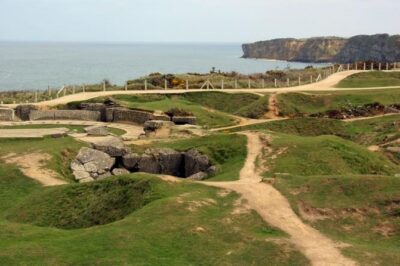
Normandy Beaches Half-Day Afternoon Trip from Bayeux (A2)
Read our review →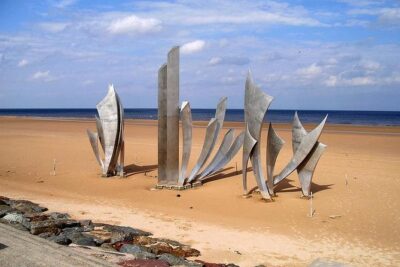
Omaha Beach D-Day Experience – Afternoon group tour from Bayeux
Read our review →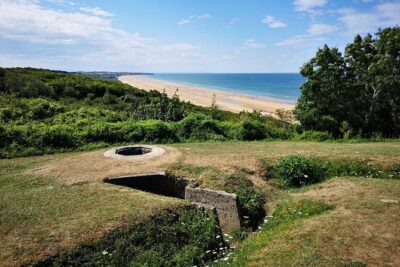
Normandy Battlefields Tour – American Sites (A3)
Read our review →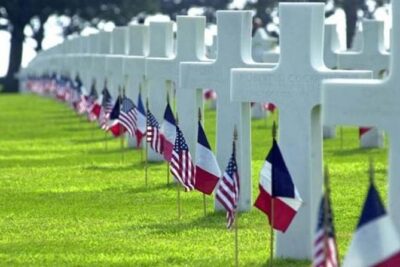
From Bayeux: American D-Day Sites in Normandy Full-Day Tour
Read our review →
Normandy U.S. D-Day Sites Half Day Tour From Bayeux
Read our review →Browse the lists this tour appears in