
Review · BAYEUX
2- to 6-hour sidecar excursion on the D-Day Landing Beaches
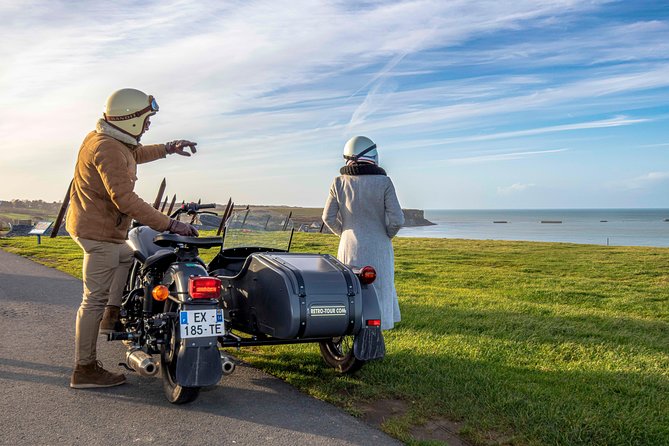
The most memorable feature here is the vintage motorcycle sidecar. From Bayeux, you ride through Normandy’s quiet country roads to the D-Day beaches, Atlantic Wall positions, cemeteries, and wartime harbors. This is history with the wind in your face, not history viewed through a coach window.
I like the way the guides, including Rémi and Philippe, mix serious military history with personal stories and humor. I also like the flexible route choices: a short British or American sector tour, a half-day outing, or a full six-hour circuit that reaches Pointe du Hoc. The main drawback is simple: weather matters. Cold, wind, and rain can make the ride uncomfortable, especially outside summer.
- Vintage sidecars from Bayeux: Ride in the basket or behind the pilot, with room for one or two passengers per motorcycle.
- Strong D-Day coverage: Visit Arromanches, Longues-sur-Mer, Omaha Beach, the American Cemetery, Port-en-Bessin, and Pointe du Hoc, depending on your chosen route.
- Good use of back roads: The ride connects major sites with scenic Normandy lanes rather than keeping you on main roads.
- Guides who add context: Rémi, Philippe, Thomas, and the other drivers explain military movements, equipment, local stories, and the events after June 6, 1944.
- Come prepared for the elements: Helmets, gloves, goggles, and rain gear are supplied, but warm layers and a scarf remain smart choices.
Why a Sidecar Works So Well in Normandy
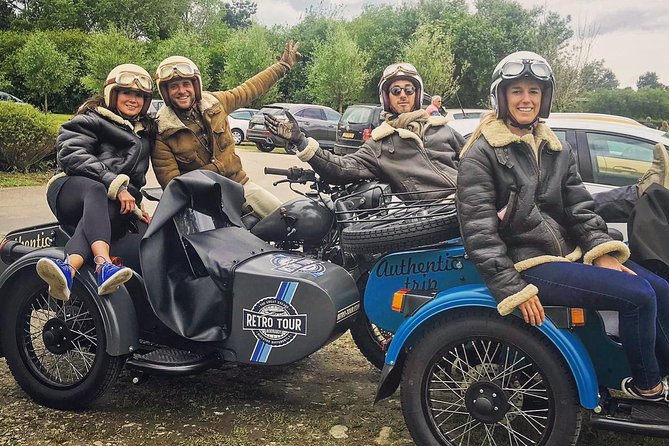
A D-Day tour usually asks you to choose between covering ground and taking your time. The beaches are spread across a long stretch of coast, and driving between them can feel like a series of disconnected stops. A sidecar helps solve that problem.
You can move quickly between sites while still feeling the countryside around you. The route includes smaller roads and coastal towns, and the open ride gives you a better sense of Normandy’s fields, villages, and changing weather. You are not sealed inside a vehicle, so the experience feels more physical and immediate.
The sidecar also makes a useful conversation space. You are close to your pilot, and questions are easy to ask as the ride continues. Guides such as Rémi and Philippe are praised for combining clear explanations with humor, which matters on a tour covering painful and complex events.
This is not a thrill ride in the amusement-park sense. The point is to connect the sites. You ride, stop, walk, listen, and then ride again. At some locations, your guide may take you to places that a standard route would skip, adding small details to the broader story of the invasion.
The tradeoff is comfort. A motorcycle leaves you exposed to wind and rain. Even a mild day near the coast can feel cold at speed. Bring a warm coat, several layers, and a scarf that covers your neck and face. Rain gear is supplied, but you will enjoy the trip more if you dress for an outdoor day from the start.
Starting in Bayeux With the Right Gear
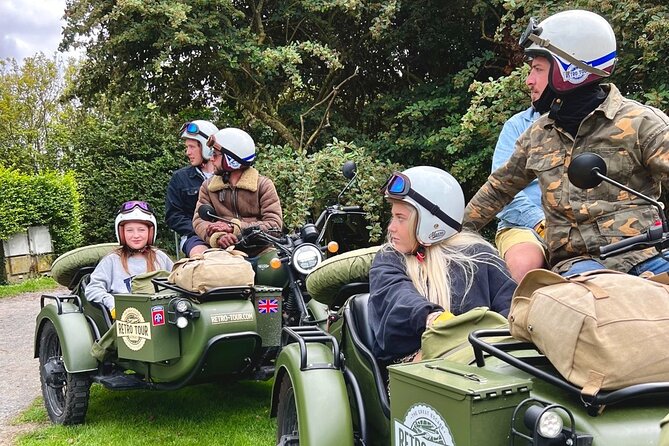
Your Gentleman Sider meets you at the pickup point you choose, at the Bayeux Battle of Normandy Museum parking lot, or at the Bayeux bus station. Pickup is useful if you are staying in Bayeux and want to avoid arranging a taxi to a separate meeting point.
Before setting off, the guide provides a helmet, gloves, and retro-style goggles. Rain gear is also available. You can ride behind the pilot or sit in the sidecar basket, and each motorcycle carries one or two passengers.
The sidecar is more spacious than some people expect. One tall couple, including a man around 6 feet 2 inches with a large build, found the arrangement comfortable for a full day. That does not guarantee every passenger will feel the same, but it is a reassuring detail if you are concerned about space.
The activity has a minimum age of four. Service animals are allowed, and most people can participate. The tour is private, with only your group taking part. Bookings normally allow up to six people, with groups of up to twelve possible on request.
More WWII and D-Day Tours in France
- Normandy American D-Day Beaches Full Day Tour from Bayeux
★ 5.0 · 2,103 reviews - Normandy American D-Day Experience – Group tour from Bayeux
★ 5.0 · 1,566 reviews - Normandy Beaches Half-Day Afternoon Trip from Bayeux (A2)
★ 4.5 · 1,116 reviews
Choosing Between Two Hours, Half a Day, and Six Hours
The route is offered in several forms, and the choice affects how much history you can absorb.
The two-hour British sector option covers Arromanches and Longues-sur-Mer. The two-hour American sector option covers Port-en-Bessin, Omaha Beach, and the American Cemetery, subject to opening hours and the selected departure time.
The half-day option gives you more breathing room and a broader combination of sites. The six-hour option adds Pointe du Hoc and is the best choice if D-Day history is the main reason you came to Normandy.
I would not choose the shortest tour simply because it costs less if you have only one chance to see the beaches. Two hours can give you a strong introduction, but the full route allows the guide to explain how the different locations fit together. It also gives you more time for walks, photographs, and questions.
At about $169.31 per person, the price is not a budget outing. The value depends on how you measure it. You are paying for a private guide, a distinctive vehicle, equipment, pickup options, and transport between scattered historic sites. A longer tour makes better use of that cost, especially for a couple or small group that wants a personal guide rather than a large coach.
Arromanches and the British Sector
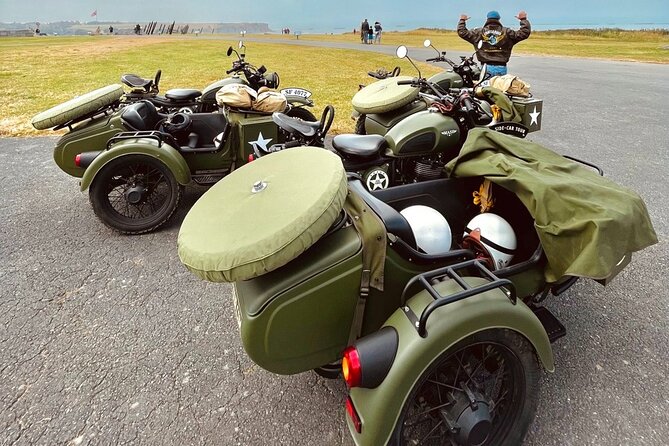
Arromanches-les-Bains is one of the clearest places to understand the Allies’ logistical problem after D-Day. The beach became the site of Mulberry B, a temporary artificial harbor built to bring in heavy equipment before the Allies captured major deep-water ports such as Le Havre or Cherbourg.
The harbor went into service on June 14, 1944. Arromanches was in the Gold Beach landing zone, but it avoided the worst fighting on June 6 because the Allies needed to preserve the beach and nearby roads for the harbor’s construction and operation.
Your guide can help you see the beach as more than a pretty coastal stop. The key story here is supply. Armies need fuel, vehicles, ammunition, and food, and this harbor helped turn the initial landings into a sustained advance.
The stop lasts about an hour in the longer British sector routes. That gives you time to look, take photographs, and consider the engineering effort involved. If your visit is focused on combat positions and infantry action, Arromanches may feel less dramatic than Omaha Beach. Its importance is practical and strategic.
Longues-sur-Mer and the Atlantic Wall
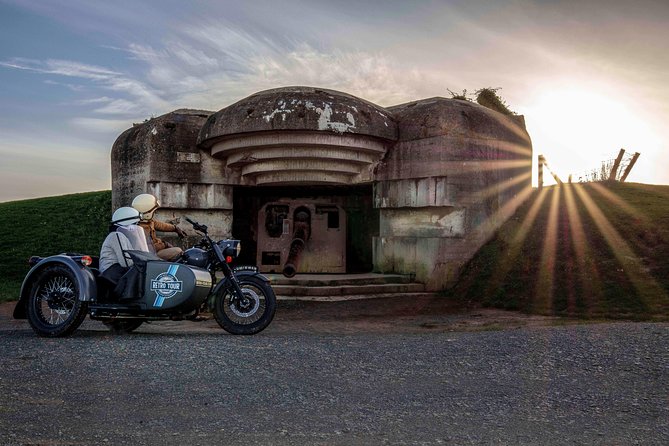
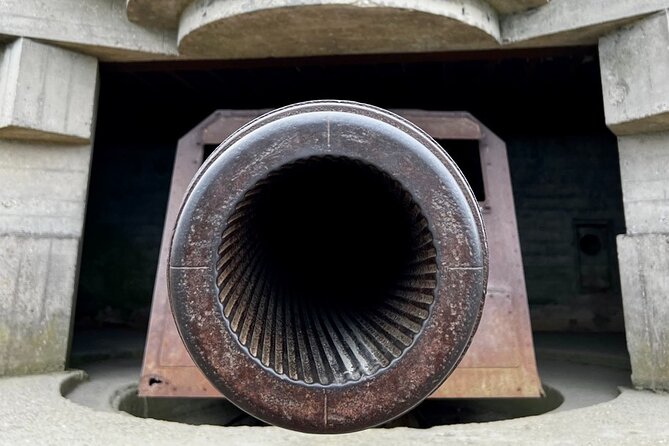
Longues-sur-Mer offers a close look at a German coastal battery. Four long-range 150-millimeter naval guns sat in reinforced concrete casemates, supported by other positions used to operate and defend the site.
The battery occupied an important position between Omaha Beach and Gold Beach. Allied aircraft and naval forces attacked it heavily, and the guns did not fully affect the landings on D-Day. British troops captured the site the next day.
The preserved concrete casemates make this one of the easiest places to picture the Atlantic Wall as a working military system. You can see the scale of the fortifications rather than relying only on a guide’s description.
Allow about an hour here on the relevant routes. Wear shoes suitable for walking, since the tour includes time outside the motorcycle. The stop is especially useful if you want to understand German defenses, not only the Allied landing itself.
More WWII and D-Day Tours in Bayeux:
- Omaha Beach D-Day Experience – Afternoon group tour from Bayeux
★ 5.0 · 1,088 reviews - Normandy Battlefields Tour – American Sites (A3)
★ 5.0 · 876 reviews - Private D-Day Experience from Bayeux
★ 5.0 · 573 reviews - From Bayeux: American D-Day Sites in Normandy Full-Day Tour
★ 4.9 · 503 reviews
Port-en-Bessin and the Fuel Network
Port-en-Bessin is a smaller harbor with an important post-landing role. British commandos liberated it on June 8, 1944, and by June 16 it had become the center of a pipeline network about 120 kilometers long.
That network supplied fuel to the advancing Allied armies. Later, Operation PLUTO expanded the system with underwater pipelines running between the Isle of Wight and Querqueville near Cherbourg.
The stop lasts about 30 minutes. It is shorter than Arromanches or the cemetery, but it adds an essential piece of the story. The invasion was not only about reaching the beach. It was also about keeping men and machines moving inland.
If you choose the American sector route, Port-en-Bessin gives your guide a chance to explain what happened after the first assault. That wider timeline is one of the best reasons to ask questions throughout the ride.
Omaha Beach and the American Cemetery
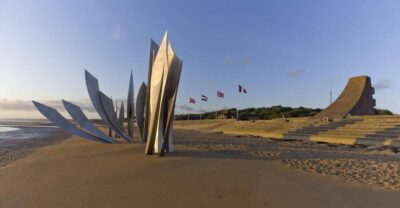
Omaha Beach is the emotional center of the American sector. Here, you stand on the sand where American troops landed under intense fire and artillery bombardment. The beach looks calm now, which can make the scale of the fighting harder to grasp.
Your guide adds meaning by explaining the conditions facing the soldiers and by pointing out memorials along the shore. The tone is respectful, but the ride does not become stiff or formal. Guides such as Rémi and Philippe are known for balancing serious detail with a human approach.
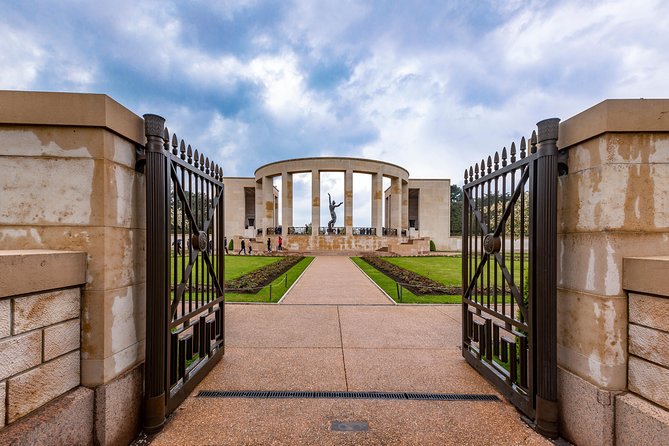
The American Cemetery at Colleville-sur-Mer sits above Omaha Beach. Rows of white marble crosses and Stars of David mark the graves, and the position overlooking the sea makes the setting especially powerful. A visit here can be quiet and personal, even as the guide explains individual stories and the wider cost of the battle.
Plan carefully if the cemetery matters to you. It may close early in the low season, and a tour beginning at 4:00 PM cannot include it. From 2026 onward, the cemetery visit cannot be guaranteed and may be replaced by WN60, another wartime position.
The cemetery stop is listed at about an hour. That is enough time to walk among the graves without treating the site as a quick photo stop. I would choose an earlier departure if this is a priority.
Pointe du Hoc on the Six-Hour Route
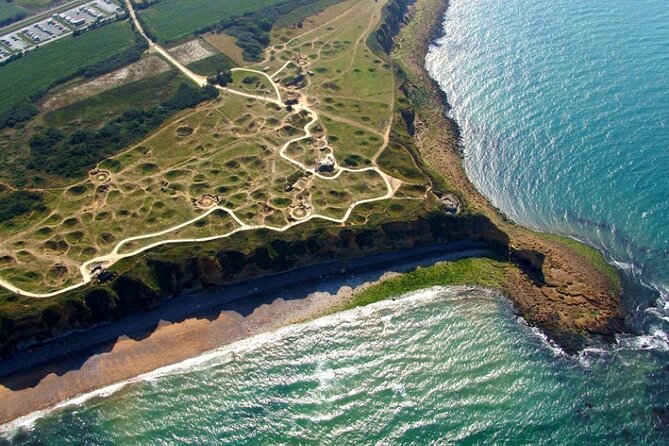
Pointe du Hoc is included only on the six-hour option. The promontory lies between Utah Beach and Omaha Beach and was heavily fortified by the Germans. Allied reconnaissance identified long-range guns there as a threat to both nearby landing areas.
The Allied plan called for the guns to be neutralized quickly. The position became a major battle site on June 6, 1944, and the terrain still carries the marks of the fighting.
This is the stop that changes the full-day excursion from a broad beach tour into a more complete account of the invasion. You see how artillery positions, cliffs, beaches, and military planning connected. The visit takes about an hour, so the day includes both riding and walking.
The full route is also the most demanding. Six hours on a motorcycle, with stops and outdoor time, requires stamina and suitable clothing. For a history-focused visitor, though, it offers the strongest value and the clearest sense of the operation’s scale.
The Guides Make the History Personal
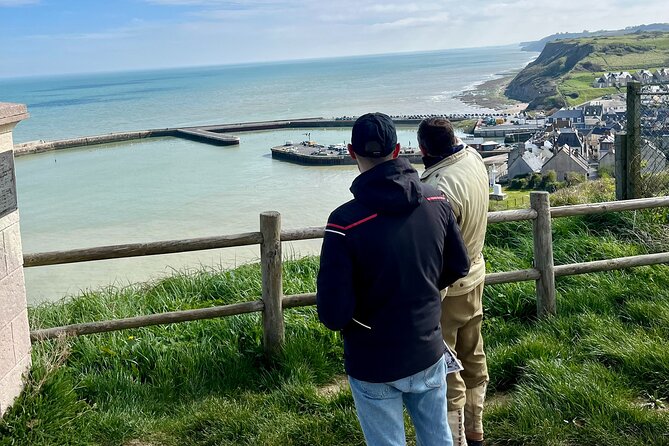
The drivers are more than motorcycle pilots. Rémi is repeatedly singled out for detailed explanations, good humor, and careful driving. Philippe brings strong knowledge of weapons, tanks, and military equipment, along with personal connections to Normandy and its wartime memories. Thomas is also part of the guiding team.
The individual guide can shape the day. Ask questions, especially about the order of events, the equipment used, and what happened after the initial landings. The guides can adjust the experience to your interests, and one guest specifically appreciated having the route tailored to what the group wanted to see.
The best explanations connect facts to places. At Longues-sur-Mer, that means discussing artillery and coastal defense beside the actual casemates. At Arromanches, it means explaining why an artificial harbor was needed. At Omaha, it means relating the beach to the cemetery above it.
Practical Advice for a Better Ride
Book early if your schedule is fixed. The experience is often reserved well ahead, with an average booking time of about 71 days. That matters most during busy periods and for groups wanting a particular departure time.
Wear warm layers in October, November, winter, and early spring. Even if the forecast looks mild, the wind can feel sharp on the motorcycle. A scarf is particularly useful, and waterproof shoes will make the walking stops easier.
Allow extra mental space for the cemetery and Omaha Beach. The ride is fun, but the subject is grave. The best day keeps both sides in view: the unusual pleasure of riding a vintage machine and the duty to treat these sites with respect.
Lunch or dinner is not included. The drivers can recommend restaurants, so plan to ask about a meal if you book a half-day or full-day outing. Do not assume a meal break is built into the price.
Free cancellation is available up to 24 hours before the start time. Changes made less than 24 hours before departure are not accepted, and late cancellations are not refunded. The experience requires good weather, so a weather cancellation brings either another date or a full refund.
Who Should Book This Sidecar Tour
I would recommend it to couples, families, and small groups who want both transportation and interpretation. It is especially well suited to people who find a standard vehicle tour too enclosed or too passive.
The two-hour option suits a short stay in Bayeux or a first look at either the British or American sector. Choose the half-day route if you want a fuller visit without committing the entire day. Choose six hours if Pointe du Hoc matters and you want the broadest historical route.
I would think twice if you dislike motorcycles, get cold easily, or need a fully sheltered vehicle. Rain gear helps, but it cannot change the basic nature of the experience. Also remember that the cemetery cannot be guaranteed on late departures or on future tours from 2026.
Should You Book It?
Book this tour if you want to cover a lot of Normandy while staying close to the road, the weather, and the history. The sidecar is more than a novelty. It makes the journey between sites part of the experience, and the guides bring the beaches, batteries, harbors, and cemeteries into one connected story.
For the best value, I would choose at least the half-day option and start early enough to protect the cemetery visit. Pack warm clothes, ask questions, and expect a serious history lesson with a playful mode of transport. If that combination sounds right, this is a memorable way to see the D-Day sites from Bayeux.
FAQ
Where does the sidecar excursion begin?
The guide can meet you at the pickup location of your choice, at the parking lot of the Bayeux Battle of Normandy Museum, or at the Bayeux bus station.
How long is the excursion?
Available options range from about two hours to six hours. Half-day and full-day choices are also offered.
Which sites are included?
Depending on the option, stops can include Arromanches-les-Bains, Longues-sur-Mer, Port-en-Bessin-Huppain, Omaha Beach, the Normandy American Cemetery, and Pointe du Hoc.
Is Pointe du Hoc included on every route?
No. Pointe du Hoc is included only with the six-hour option.
Can I visit the American Cemetery on a late tour?
The cemetery may close early in the low season, and a tour starting at 4:00 PM cannot include it. From 2026, the cemetery visit cannot be guaranteed and may be replaced by WN60.
How many people can ride in one sidecar?
Each sidecar carries one or two passengers. One person sits behind the pilot, and one person sits in the sidecar basket.
What equipment is provided?
Helmets, gloves, vintage goggles, and rain gear are provided.
What is the minimum age?
The minimum age to participate is four years old.
Is lunch included?
No. Lunch or dinner is not included, though the drivers can recommend restaurants.
What happens if the weather is poor?
The experience requires good weather. If it is canceled because of poor weather, you can choose another date or receive a full refund.
More History Tours by Bike, Segway and Tuk-Tuk in Bayeux
- Private vintage sidecar tour of the D-Day Landing Beaches
★ 5.0 · 130 reviews - Normandy WWII Private Half-day Sidecar Tour From Bayeux
★ 5.0 · 99 reviews - Bayeux: 2-hour tour of the D-Day beaches, by vintage sidecar
★ 4.9 · 64 reviews - From Bayeux: Half-Day Normandy WWII Sidecar Tour
★ 5.0 · 49 reviews
Just added around Bayeux
- WW2 Jeep or Dodge truck tour of the Omaha Beach site★ 5.0 · 51 reviews
- Private Walking Guided Tour of Historic Bayeux English or French★ 5.0 · 36 reviews
- Normandy U.S. D-Day Sites Half Day Tour From Bayeux★ 5.0 · 325 reviews
- Normandy Battlefields D-Day Private Trip with VIP Services from Paris★ 5.0 · 240 reviews
- Private guided Allied D-Day Tour from Bayeux★ 5.0 · 45 reviews
- Private Full day American D-Day Guided Tour in Bayeux★ 5.0 · 133 reviews
- Private vintage sidecar tour of the D-Day Landing Beaches★ 5.0 · 130 reviews
- Private Day Tour including Normandy Landing Beaches & Battlefields from Bayeux★ 5.0 · 172 reviews
Bayeux History Tours, compared.
Normandy American D-Day Beaches Full Day Tour from Bayeux
Read our review →
Normandy American D-Day Experience – Group tour from Bayeux
Read our review →
Normandy Beaches Half-Day Afternoon Trip from Bayeux (A2)
Read our review →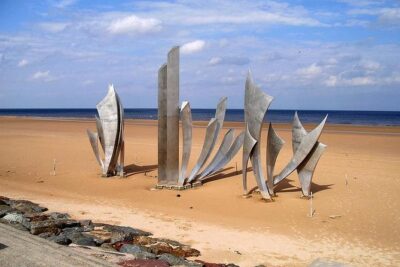
Omaha Beach D-Day Experience – Afternoon group tour from Bayeux
Read our review →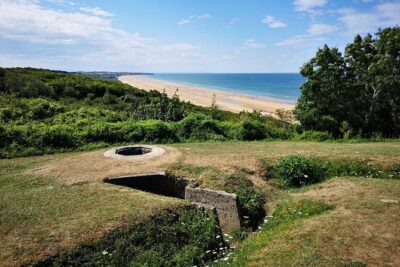
Normandy Battlefields Tour – American Sites (A3)
Read our review →
From Bayeux: American D-Day Sites in Normandy Full-Day Tour
Read our review →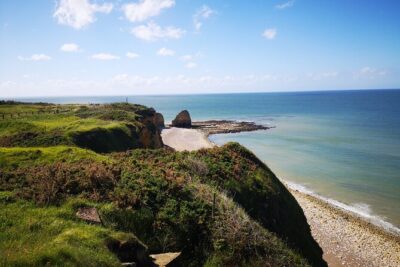
Normandy U.S. D-Day Sites Half Day Tour From Bayeux
Read our review →Browse the lists this tour appears in