
Review · SPAIN
Bilbao Historical Small Group Tour
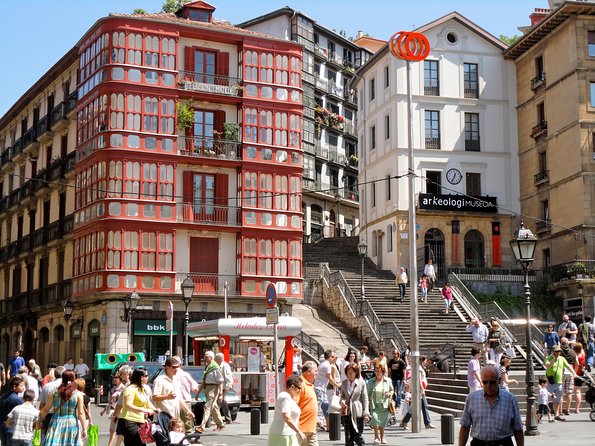
Bilbao’s best introduction may be found away from the Guggenheim, in the narrow streets and old squares of Casco Viejo. This two-hour walk links plazas, churches, the river, Ribera Market, and handsome civic buildings with the stories that explain how Bilbao grew into the modern city you see today.
I like the small-group format, with the stated maximum ranging from 10 to 12 people, and I like the way the tour mixes major sights with small details. Guides such as Samuel add Basque customs, local politics, food traditions, and practical tips. The main drawback is that the history can feel a little dense, and one guest found the guide too bookish for teenagers.
Key points to know
- Plaza Nueva begins the story: Learn about the old town, Basque culture, and the language academy in one of Bilbao’s key public squares.
- Ribera Market adds local flavor: Walk through the market and connect Bilbao’s food traditions with daily life.
- The walk stays focused: In roughly two hours, you see several historic sites without giving up most of your day.
- Samuel is a frequently named guide: His English, personal stories, and explanations of Basque customs are major strengths when he leads the tour.
- The tour suits first-time visitors best: It gives you a useful map of the old city and ideas for what to explore afterward.
- Rain and cancellation deserve attention: The walk requires good weather, and free cancellation ends 24 hours before the start.
Starting beneath the Arriaga Theater

The tour begins at Arriaga Theater, at Arriaga Plaza 1, near the center of Bilbao and close to public transportation. It returns to the same meeting point, which makes the walk easy to fit before or after another plan.
The setting is useful from the start. The theater helps place you in the old city, while the nearby streets lead into Casco Viejo, the historic quarter. You are not spending the opening minutes on a coach ride or waiting for a transfer. The experience gets moving on foot.
At about two hours, this is a brisk introduction rather than a full historical course. I see that as a strength for most first visits. You get enough background to make sense of Bilbao, then still have time to enter the Guggenheim, eat at the market, or return to a favorite street.
The pace should be manageable for most people because the tour is a city walk rather than a strenuous outing. Still, you will be on your feet for the full experience, and the route takes place outdoors. Wear shoes you can walk in and check the weather before booking.
More Small-Group History Tours in Spain:
- Madrid Tapas & Taverns Small Group Food & History Tour
★ 5.0 · 2,664 reviews - Ultimate Seville Tapas, Wine & History Small Group Tour
★ 5.0 · 1,766 reviews - Medieval Three Villages Small Group Day Trip from Barcelona
★ 5.0 · 994 reviews
Plaza Nueva and the first Basque clues
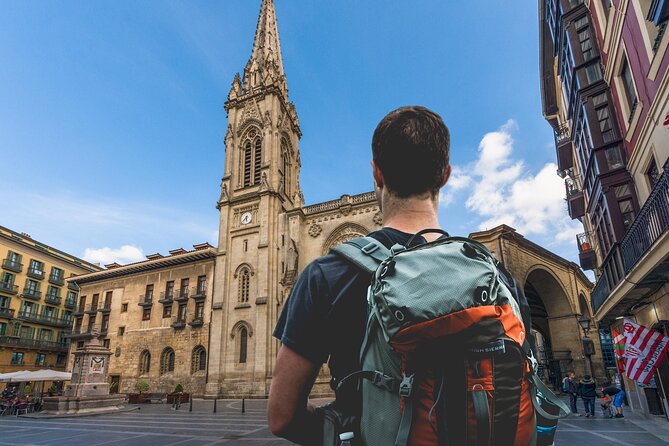
Plaza Nueva is the first major stop, with about 15 minutes devoted to its history and role in Casco Viejo. The square is a good classroom because it brings together architecture, public life, and local identity in one compact place.
Here, the guide introduces the Basque language academy and explains parts of Basque culture. You also hear about the local myth connected with La Bilbaina. These details give the tour a tone that is more personal than a simple list of dates and buildings.
I especially like beginning with language. Basque identity cannot be reduced to food, architecture, or scenery. Learning that the region has its own language, with a place in public and cultural life, helps you understand why local traditions matter so much.
The stop is short, so do not expect a full lesson in the Basque language or a long architectural lecture. The value comes from the opening context. It prepares you to notice the difference between Bilbao as a Spanish city and Bilbao as the center of a distinct Basque culture.
Miguel de Unamuno and Bilbao’s literary side
The walk continues to Plaza Miguel de Unamuno for roughly 10 minutes. The focus here is on the surrounding buildings and on Basque literature, art, and notable figures, including Miguel de Unamuno.
This stop helps correct a common first impression. Bilbao can seem defined by its food and the Guggenheim’s modern design, but the old center also has a strong intellectual and literary identity. A guide who explains the people connected with the city can make the buildings feel less anonymous.
The short timing keeps the visit moving, though it also means you should not expect to study each building in detail. If you enjoy literature and local personalities, listen closely and make a note of any names you want to explore later.
One of the tour’s better features is the guide’s conversational approach when Samuel leads. He is praised for speaking clear English, answering questions patiently, and adding personal stories. That matters here, since figures and cultural references can blur together when delivered too quickly.
Bilbao’s oldest wall and the riverfront
Another section of the walk brings you to one of the oldest walls and explains how Bilbo, the Basque name for Bilbao, began. The route then reaches the Ria de Bilbao, where the guide discusses the city’s growth and change.
This is where the tour connects old Bilbao with the city you see today. The river was not simply a pretty backdrop. It helped shape the city’s work, movement, and development. Standing near the water gives you a useful pause between the tight old streets and the wider modern city.
The route also includes San Anton Bridge and San Anton Church. These are important pieces of the old city, and the guide uses them to explain Bilbao’s early identity and the relationship between the river and the historic quarter.
I like this part because it gives the walk some breathing room. After the compact squares, you get a chance to look outward and think about how the city evolved. The phrase take a deep breath is appropriate here, though the stop remains an information-led walk rather than a long scenic break.
The guide’s storytelling makes a difference. Several comments praise the way Samuel links history, present-day culture, and personal observations. If you prefer a strict chronological account, the sequence may feel less orderly. One person wanted the history explained in a clearer order, so this is not the best choice for someone seeking a formal academic lecture.
More History Tours in Spain:
- Madrid Essential: Historic Center, Plaza Mayor & Royal Palace
★ 5.0 · 6,416 reviews - Montserrat with Black Madonna & Medieval Winery with Tapas/Lunch
★ 5.0 · 5,209 reviews - Barcelona: Tapas Walking Tour with Food, Wine, and History
★ 4.8 · 4,261 reviews - Sevilla Food Tour: Tapas, Wine, History & Traditions
★ 5.0 · 3,468 reviews
Ribera Market and Bilbao’s food culture
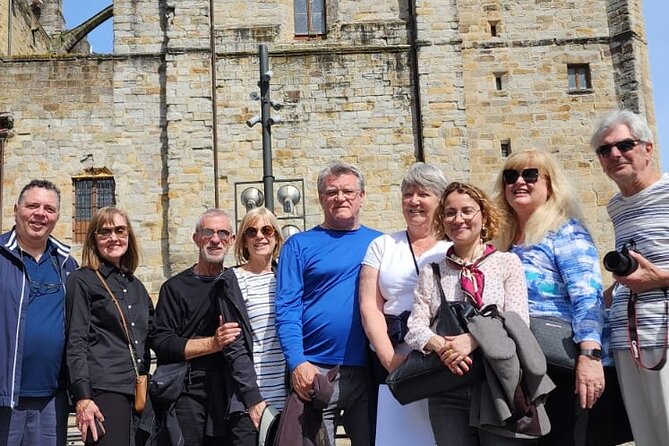
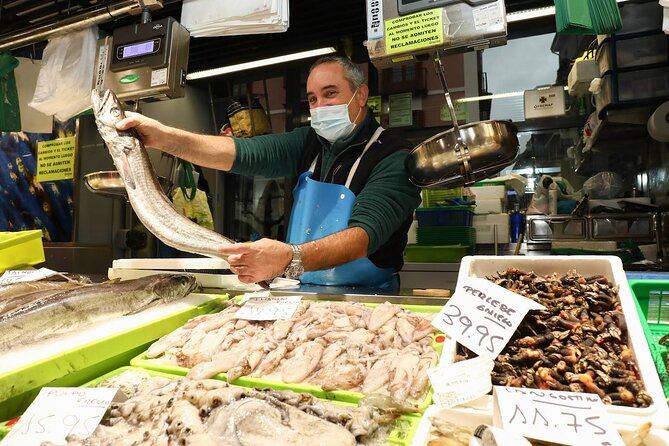
Mercado de la Ribera receives about 15 minutes. You enter the market, learn about the building, and get an introduction to popular local gastronomy.
This is one of the most useful stops for planning the rest of your stay. A market tells you what a city eats, buys, and values. It also gives the history lesson a practical edge. Instead of only hearing about Bilbao’s past, you get a setting where local food traditions are part of everyday life.
The time is enough for an orientation, not a full meal or extended tasting session. Food is discussed, but the tour information does not promise included samples or a scheduled meal. If you want to eat there, plan to return on your own after the walk.
The market visit also breaks up the architecture. Two hours of façades and dates could become tiring, especially for children. A food market gives younger members of the family something concrete to see, although one person found the tour too bookish for two teenagers. Your guide’s ability to adjust the conversation will matter.
Fuente del Perro and the txikiteros
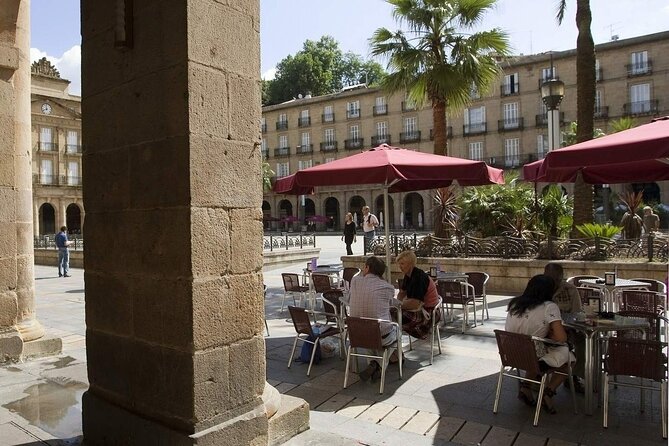
Fuente del Perro is a short stop of about 10 minutes. The guide explains the fountain’s history and introduces Bilbao traditions such as the txikiteros.
This is the kind of small detail that can make an old-town walk feel local. A fountain may not appear on your must-see list, but its story can reveal how people used public spaces and how customs formed around them.
The txikiteros tradition adds a social side to the tour. It moves the discussion away from rulers and monuments and toward ordinary local habits. That balance is important. You want enough major history to understand the city, but you also want clues about how Bilbao feels after the sightseeing ends.
This stop may appeal most to people who enjoy customs and everyday culture. If you prefer only grand landmarks, it can seem minor. I would treat it as a reminder to look closely. Old cities often hide their best stories in details that take only a few minutes to explain.
The cathedral and Bidebarrieta Library
The route also covers the cathedral and the buildings around it. The supplied information does not name the cathedral or give a separate duration, but the stop adds another layer to the old center’s religious and civic history.
The walk then spends about 15 minutes at Bidebarrieta Central Library. Here, the focus shifts to the building’s architecture and history. This is a worthwhile contrast to the churches, market, and riverfront because it shows Bilbao’s public and intellectual life.
I like including a library in a city walk. It gives you a reason to look beyond the most famous monuments and notice how a city expresses its values through public buildings. The architecture may be especially interesting if you enjoy older civic interiors and grand urban façades.
The tour does not promise entry into every building. Treat the cathedral and library as places you visit from the route, with explanations from the guide. If access changes, the historical discussion still gives the stops value.
Sailors, churches, and the Arriaga finish
The final parts of the walk connect Bilbao with Basque sailors and a church, then point out the architecture of the theater. Since the tour begins and ends near Arriaga Theater, the finish brings the experience back to its starting point.
The sailor stories add a wider perspective. Bilbao’s identity was shaped not only by local streets but also by people who worked on the water and connected the city with other places. The church and theater then return the focus to local buildings and public culture.
This closing sequence gives the tour a pleasant range. You move from language and literature to the river, food, religious buildings, civic architecture, sailors, and theater. You will not master Bilbao’s entire past in two hours, but you will have several handles for understanding it.
What the $31.03 price gets you
At $31.03 per person, the tour is priced as a low-cost orientation rather than a major day excursion. The fee covers the local tax and a professional guide. Tips are not included.
I consider the price fair if you use the walk as a first-day tool. A good guide can save you time by showing how the old center fits together and by pointing out places to return for food, architecture, or more history. Several people found the practical advice useful for the rest of their stay.
The value depends on your expectations. You are paying for about two hours of explanation and walking, not entrance tickets, a meal, or a museum visit. If you already know Casco Viejo well, the tour may repeat familiar ground. If Bilbao is new to you, the context is more useful.
The guide is the heart of the experience. Samuel is repeatedly praised for clear English, humor, local insight, personal stories, and patience. The tour can also be delivered by another professional guide, so the exact style may vary.
Who should book this walk
I would choose this tour early in a Bilbao stay, ideally before exploring the Guggenheim or spending a full afternoon in the old town. The historical and cultural background helps you read the city instead of simply moving from one sight to another.
It suits:
- First-time visitors who want a quick orientation
- People who prefer walking to buses or large groups
- Anyone curious about Basque culture and local traditions
- Couples and small families who value time for questions
- Visitors who want practical ideas about food and places to see next
Families should think about the children’s interests. The guide has been praised for handling kids well, but another person found the presentation too bookish for teenagers. The market, river, and local customs may hold their attention better than long historical explanations.
The group size is designed to stay small. The tour description gives two different limits, one saying 12 and another saying a maximum of 10. Either way, it is far more personal than a large city group, with a better chance to hear the guide and ask questions.
The tour is offered in English and includes a mobile ticket. It is near public transportation, and most people can participate. Good weather is required, so the company may offer another date or a full refund if rain or other poor conditions causes cancellation.
You can cancel for a full refund up to 24 hours before the start time. Changes or cancellations inside that window are not accepted, and the amount paid is not refunded. Also note that the experience requires a minimum number of participants, so a cancellation for that reason can lead to another date, another experience, or a full refund.
Should you book the Bilbao Historical Small Group Tour?
Book it if you want a fast, human introduction to Bilbao’s old center, especially on your first day. The combination of Plaza Nueva, Ribera Market, the river, San Anton, the cathedral area, Bidebarrieta Library, and Basque customs gives you more than a monument checklist.
I would skip it if you want long visits inside major buildings, a food tasting, or a carefully ordered lecture on every period of Bilbao’s past. The walk is short, outdoor, and guide-dependent.
For most first-time visitors, the $31.03 price is sensible. You get your bearings, hear the local stories behind the streets, and finish with enough time to follow your own interests. Just check the weather, keep the cancellation deadline in mind, and arrive ready to walk and listen.
FAQ
Where does the Bilbao Historical Small Group Tour begin?
It begins at Arriaga Theater, Arriaga Plaza 1, in Ibaiondo, Bilbao.
Where does the tour end?
The activity ends back at the meeting point near Arriaga Theater.
How long does the tour last?
The tour lasts approximately two hours.
What language is the tour offered in?
The tour is offered in English.
How much does the tour cost?
The listed price is $31.03 per person.
What places does the walk visit?
The route includes Plaza Nueva, Plaza Miguel de Unamuno, the oldest wall area, the Ria de Bilbao, San Anton Bridge, San Anton Church, Ribera Market, Fuente del Perro, the cathedral area, Bidebarrieta Central Library, a church connected with Basque sailors, and the theater area.
Is Ribera Market included?
Yes. The tour includes a walk inside Mercado de la Ribera, with information about its building and local gastronomy.
What is included in the price?
The price includes local tax and a professional guide.
Are tips included?
No. Tips are not included.
Can I cancel for a refund?
Yes. You can cancel at least 24 hours before the experience start time for a full refund. Cancellations or changes made less than 24 hours before the start are not accepted.
Can the tour be canceled because of weather?
Yes. The experience requires good weather. If poor weather causes cancellation, you will be offered another date or a full refund.
Just added around Spain
- Visita Guiada Por El Casco Histórico De Cuenca Y Su Catedral★ 5.0 · 45 reviews
- Night Walking Tour of Medieval Cuenca★ 5.0 · 64 reviews
- Mosque of Cordoba History Tour in English Tickets included★ 5.0 · 257 reviews
- 2 Hours Tour around Cádiz: History, anecdotes and curiosities★ 5.0 · 89 reviews
- Jerez de la Frontera History and Art Walking Tour★ 4.5 · 49 reviews
- The Authentic Bilbao Pintxos, Food & Wine Tour with a Local★ 5.0 · 360 reviews
- Girona, Costa Brava and Medieval Village from Barcelona★ 5.0 · 149 reviews
- Tarragona and Sitges Small Group Tour – Roman History & Culture★ 4.5 · 339 reviews
Spain History Tours, compared.
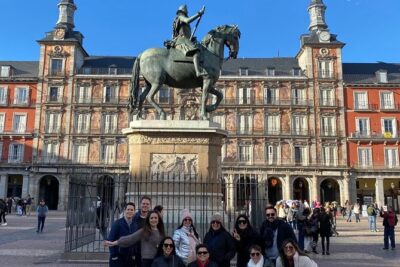
Madrid Essential: Historic Center, Plaza Mayor & Royal Palace
Read our review →
Montserrat with Black Madonna & Medieval Winery with Tapas/Lunch
Read our review →
Sevilla Food Tour: Tapas, Wine, History & Traditions
Read our review →
Valencia Old Town Tour with Wine & Tapas in 11th Century Historic Monument
Read our review →
Madrid Tapas & Taverns Small Group Food & History Tour
Read our review →
Barcelona Tapas Walking Tour: Food, Wine & History
Read our review →
Ultimate Seville Tapas, Wine & History Small Group Tour
Read our review →
Córdoba: Skip-the-Line Great Mosque-Cathedral History Tour
Read our review →Browse the lists this tour appears in