
Review · BOSTON
Boston History Tour: Scenic Walk Through Time & Landmarks
Boston’s story comes alive on foot, from the Greenway Carousel and Faneuil Hall to the graves of Paul Revere and John Hancock. In about two hours, you get a useful first look at the city’s Revolutionary landmarks, old streets, parks, and present-day character.
I like the small-group format, capped at 16 people, and the way the route mixes famous sights with details you could easily miss. I also like the local touch: guides such as Bob, Nabil, Lexie, Allison, Tim, and Molly have been praised for making the history funny, clear, and personal.
The main drawback is the pace. You cover about 4 kilometers, with several short stops, so this is an overview rather than a close visit inside every historic building. A stop in a crowded shopping area or a pub may also feel less useful if you want every minute devoted to history.
Key points to know before you book
- Faneuil Hall opens the story: Learn how Boston’s revolutionaries pushed back against British rule near Quincy Market and the old harbor.
- The route links major landmarks: You walk from the waterfront through Downtown Crossing, Boston Common, Beacon Hill, and the Public Garden.
- Guides make the difference: Bob, Nabil, Lexie, Allison, Tim, Molly, and others have been praised for humor, local pride, and strong storytelling.
- Expect a moving overview: The tour covers about 4 km in two hours, with many outdoor stops and limited time at each one.
- A small local treat is included: It may contain alcohol, so bring proper identification if you are old enough to receive it.
- The tour runs in all weather: Dress for rain, snow, heat, or cold, and wear shoes suited to city walking.
A useful first walk through Boston
This tour works best as an opening chapter to your Boston visit. You start at the Greenway Carousel on Atlantic Avenue and finish near the Boston Public Garden on Charles Street. Along the way, the guide connects political rebellion, burial grounds, churches, parks, architecture, and modern city life.
That broad route is the reason I think the tour suits first-time visitors. You do not spend the whole morning at one site. Instead, you get a mental map of central Boston and a list of places to return to at your own pace.
The price is $39.80 per person. For two hours with an English-speaking guide, a small group, local recommendations, and a surprise treat, that is a reasonable buy if you value orientation and storytelling. It is less compelling if you prefer entering historic buildings, reading displays at length, or exploring on your own.
A private upgrade is available if you want the guide’s full attention or have a family or group with a particular interest in architecture, politics, or Boston’s past. The regular group option is limited to 16 people, which keeps questions and conversation manageable without making the cost of a private walk necessary.
More History Walking Tours in Boston
- Boston: Freedom Trail History Small Group Walking Tour
★ 5.0 · 6,450 reviews - Boston: Freedom Trail History Small Group Walking Tour
★ 4.9 · 1,590 reviews - Boston Pizza Lovers Food and History Walking Food Tour
★ 4.5 · 1,082 reviews
Starting at the Greenway Carousel and Faneuil Hall
The meeting point is the Greenway Carousel at 191 Atlantic Avenue. This places you near the Rose Kennedy Greenway and the waterfront, a handy starting point if you arrive by public transportation or are already near Boston Harbor.
The carousel itself is a brief gathering point, not a major stop. Allow time to find your guide and group, especially in a busy downtown area. Once everyone is together, the walk moves toward Faneuil Hall Marketplace.
Faneuil Hall is where the tour begins its political story. Your guide explains how Boston’s revolutionaries used the hall as a place to argue against British control and push for independence. The setting helps turn broad schoolbook history into something tied to a real civic meeting place.
You also get views of Quincy Market and Custom House Tower. The tower was Boston’s first skyscraper and once marked the place where incoming goods were stored. This is a quick exterior look, but it gives you a useful way to read the waterfront: commerce, customs, shipping, and politics all shaped the city together.
Faneuil Hall Marketplace can be crowded and commercial. That is worth knowing before you book. The tour uses the area for its history, but part of your time may involve moving through retail space rather than quiet old streets.
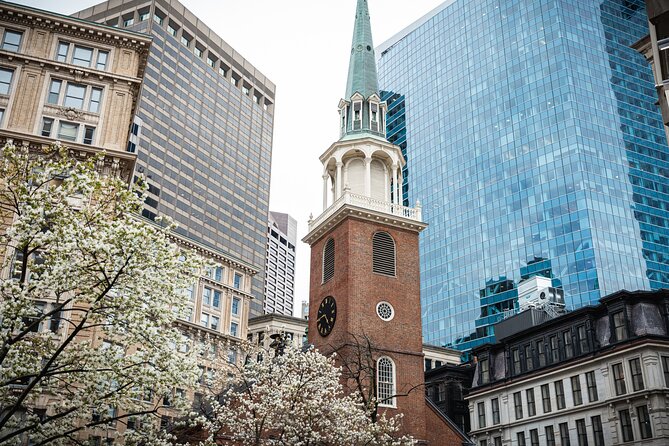
The Tea Party story at Old South Meeting House
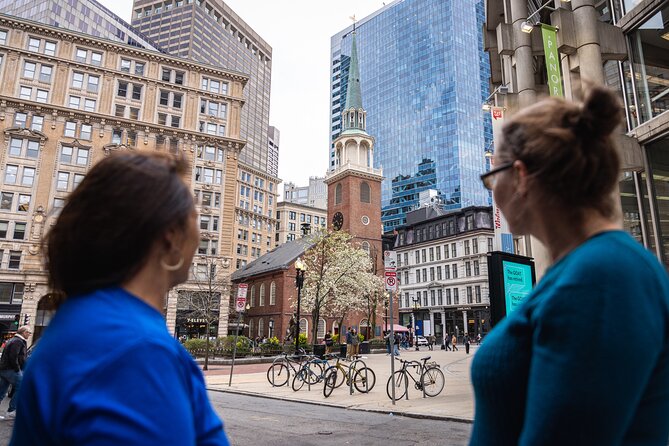
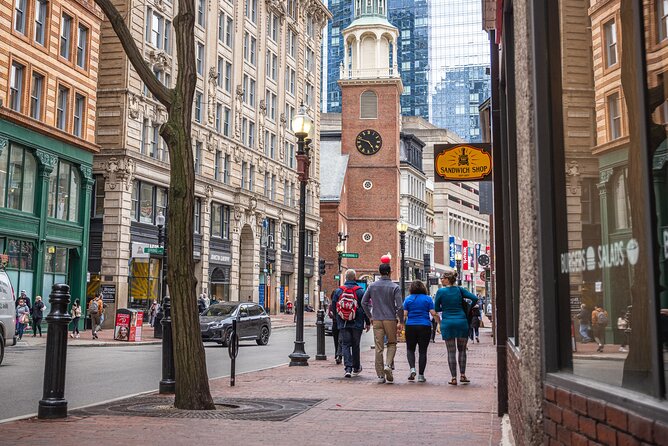
At Old South Meeting House, the guide explains how Bostonians planned the 1773 Boston Tea Party. The stop is short, about five minutes, so expect a focused explanation rather than a full interior visit.
This is one of the tour’s most useful history moments because it shows the Tea Party as an organized political act. You hear about the meeting, the arguments, and the anger over taxation and representation before the tea was dumped into Boston Harbor.
The guide may also point out the location of Boston’s first bookstore. The publishers connected with works such as Thoreau’s Walden, Hawthorne’s The Scarlet Letter, and Longfellow’s Midnight Ride of Paul Revere once worked in this part of the city.
That small detail broadens the tour beyond battles and famous politicians. Boston’s story also includes printing, publishing, ideas, and the people who spread them. Keep your eyes open here, since the stop is easy to pass without noticing anything unusual.
Old City Hall, King’s Chapel, and Downtown Crossing
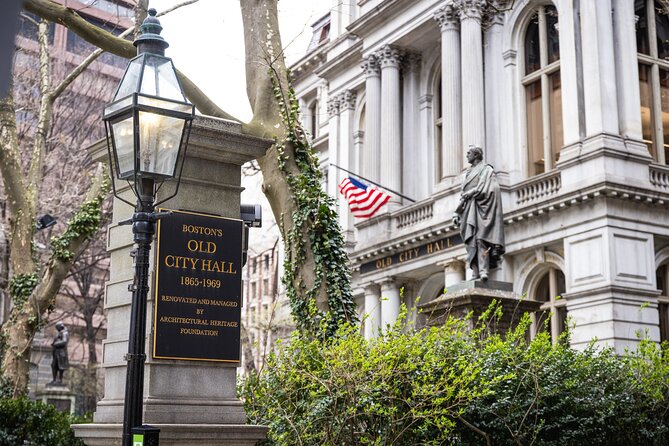
Old City Hall gives you a change of architectural mood. Its French design is striking, and the building once housed Boston’s city council and America’s first public school. You will also see the Bronze Donkey, a popular photo stop.
From here, the route passes through Downtown Crossing and toward King’s Chapel. The area shows how old Boston and present-day city life sit almost on top of each other. Shopping streets, offices, churches, and historic façades share the same few blocks.
If you are lucky, you may hear the organist at King’s Chapel. The church has the oldest church organ in the United States, making even a brief stop feel worthwhile when music is being played.
This section can feel less scenic than Boston Common or Beacon Hill. Its value is in the details: architecture, city government, religion, commerce, and the layers of daily life that remain after the grand political events have passed.
More History Walking Tours in the USA
- Boston’s North End Food and History Walking Tour
★ 5.0 · 459 reviews - Walk the Historic Freedom Trail with Costumed Guide
★ 4.5 · 329 reviews - Boston Seafood Lovers Food and History Walking Tour
★ 5.0 · 208 reviews - Downtown Freedom Trail Walking Tour – History & Architecture
★ 4.5 · 194 reviews
The Old State House and the Boston Massacre site
The Old State House is one of the tour’s main history stops. In 1776, the Declaration of Independence was announced here. Your guide also discusses the Boston Massacre, which took place nearby and helped fuel colonial anger toward British rule.
The strength of this stop depends heavily on the guide. A good storyteller can make the political tension, public reaction, and human cost clear in a few minutes. Guides such as Nabil, Alivia, Clio, and Alexander have been praised for keeping these stories engaging and answering questions without losing the group’s pace.
You should not expect a long museum visit. The focus is the street-level setting and the guide’s explanation. If you want to study the building’s interiors or exhibits, plan a separate visit.
Boston Common and the turn toward Beacon Hill
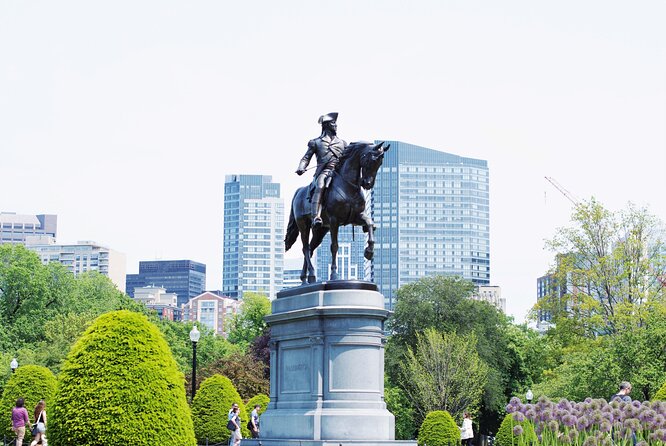
Boston Common is the oldest city park in the United States, dating to 1634. It has memorials, fountains, recreation areas, and open paths used by residents as well as visitors.
The park provides a welcome break from downtown sidewalks. You have more room to walk, and the guide can explain how the Common served Boston during the Revolution and in later periods. It is also a good place to notice how strongly the city uses its public spaces today.
The route then reaches one of Boston’s best-known neighborhoods. The guide explains how the area declined when sailors and British soldiers filled its streets, then became the polished historic district you see today.
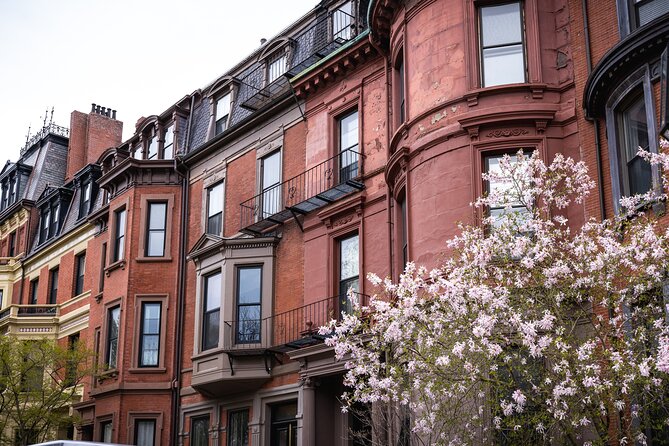
Beacon Hill is a highlight for many people because the experience shifts from public monuments to street-level atmosphere. Cobblestones, old homes, and narrow lanes make the neighborhood feel different from the commercial core.
Do not expect a long free period to wander here. You will be walking with the group, and the guide controls the pace. If you want detailed photographs or time to browse shops, return later.
The African American Civil War memorial
The tour also points out a less familiar memorial honoring one of the first African American regiments in the Civil War and its colonel, Robert Gould Shaw.
This stop matters because it widens the story beyond the Founding Fathers. Boston’s history includes the fight over slavery, military service, race, and citizenship, not only the events leading to independence.
The memorial can be easy to miss if you are moving quickly through the neighborhood. Having a guide identify it and explain its meaning gives you a reason to return for a closer look.
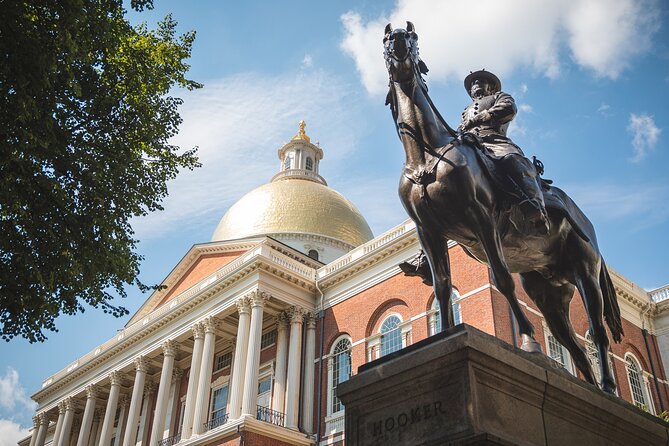
The Massachusetts State House and Granary Burying Ground
The gold-domed Massachusetts State House is an impressive sight from outside. Your guide discusses John Hancock, the original landowner, and Paul Revere, who presided over the 1795 cornerstone ceremony.
The building still serves as the state government’s home, so this stop connects early Massachusetts politics with the way the state operates now. You get context rather than a formal government-building tour.
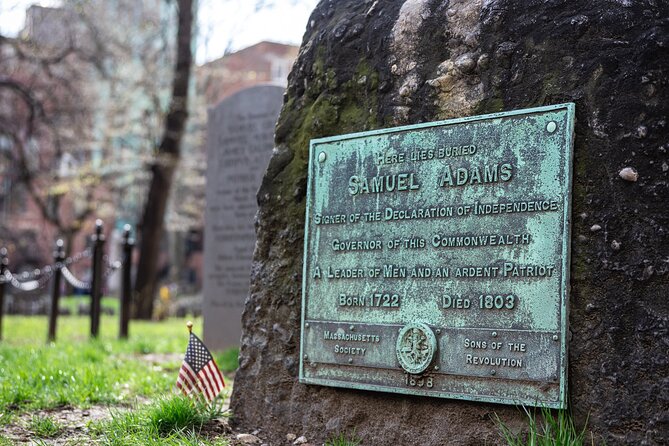
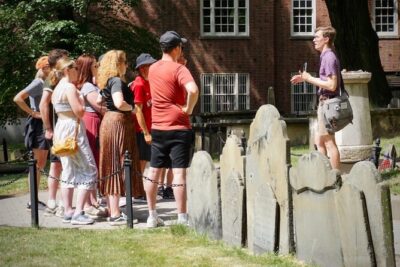
Next comes Granary Burying Ground, which dates to 1660 and was once part of Boston Common. Among those buried here are John Hancock, Paul Revere, and Sam Adams.
The cemetery is one of the most concentrated stops on the route. A few names on old stones carry enormous weight in the American story, yet the space itself is compact. You may want to return later if you enjoy reading inscriptions or taking your time among the graves.
Timing can matter here. The route and exact stops may change, and a cemetery or other site may have limited access at the time of your walk. One guide specifically suggested that the schedule should give priority to places with closing times. That is sensible advice: if a particular interior site matters to you, confirm access rather than assuming the walking tour will include it.
Finishing in the Boston Public Garden
The tour ends at the Boston Public Garden, near 4 Charles Street. The garden is the first public park in America and remains one of the nicest places in central Boston to slow down after a walking tour.
Your guide explains how the garden was used during the Revolution and in later periods. Today, it is a place for walking, exercise, and quiet time, so the ending feels less like a hard stop and more like an invitation to continue your afternoon.
This is a practical finish. From here, you can stay in the garden, walk toward Beacon Hill, or use the location as a base for your next activity. Ask your guide for suggestions on places to eat, explore, or relax. Insider tips are included, and the guides have often been especially helpful when answering questions about what to do next.
What the guides add to the walk
The guide is the heart of this experience. The route itself is easy to follow independently, but a local guide gives the landmarks order, meaning, and personality.
Bob has been praised for friendly storytelling and a dry sense of humor. Nabil has been described as generous, patient, and willing to answer a group’s questions. Lexie and Lexi have both been praised for research, energy, and a clear love of Boston. Allison is known for humor and warmth, while Tim has been singled out for professionalism and strong communication.
You may meet someone else, since guide assignment can change. The consistent pattern is the important part: the best guides keep the walk conversational, invite questions, and make sure the group stays together. One guide even led a group to continue the conversation over local beer afterward, though that was an extra choice rather than part of the scheduled tour.
A good guide also adjusts to conditions. In hot weather or crowded streets, guides have been praised for keeping the group safe and comfortable. That matters on a route with traffic, uneven paving, and busy public spaces.
Pace, weather, children, and comfort
The walk covers about 4 kilometers, or 2.5 miles. The tour is described as suitable for all ages and fitness levels, but that does not mean you should treat it as a seated sightseeing activity. You will be on your feet for about two hours, with frequent stops.
Wear comfortable shoes. Bring weather protection and dress for the forecast, since the tour runs in rain, snow, or sunshine. Boston weather can change your enjoyment of an outdoor history walk more than any single landmark.
Children under 6 can join free, but you need to mention them when booking. Children from 6 to 11 pay the adult rate and should also be noted in advance. The route is child-friendly, though younger children may find the historical explanations and steady walking a bit long.
The group size is limited to 16. That is small enough for questions and personal contact, but it is still a group walk. If you want to stop often for photos, move slowly, or follow a very specific interest, the private option will suit you better.
Price, value, and what is included
At $39.80 per person, the tour offers solid value for a first visit. You are paying for an English-speaking guide, local insight, a planned route through several central neighborhoods, a small group, and a surprise local treat.
You do not pay admission for the listed outdoor stops. Additional food and drinks are not included, and tips for the guide are extra. Alcohol may be served as part of the surprise treat, so proper identification is required if applicable.
I would book this early in a Boston visit, ideally on the first day or two. It helps you understand distances, choose where to return, and avoid spending your whole visit looking at a map. The tour is booked about 28 days ahead on average, so do not wait until the last minute if your dates are fixed.
Free cancellation is available up to 24 hours before the start time. Changes or cancellations inside that window are not accepted for a refund.
Should you book this Boston walk?
Book it if you want a friendly, efficient introduction to Boston and prefer stories over audio guides. It is especially useful for first-time visitors, families, solo visitors, and anyone who wants local suggestions before choosing restaurants and afternoon plans.
You should also book it if you like a guide who can connect the Boston Tea Party, the Old State House, a cemetery, a Civil War memorial, and a public garden in one walk. The strongest part is the combination of famous sights and small details, delivered by guides who bring humor and personal interest.
Skip it if you want long interior visits, extensive museum time, or a slow photography walk. The route covers a lot, and some stops are brief. For most people seeking a solid two-hour orientation, though, this is a sensible and enjoyable way to get your bearings in Boston.
FAQ
How long is the Boston History Tour?
The tour lasts about two hours and covers approximately 4 kilometers, or 2.5 miles, on foot.
Where does the tour start?
The meeting point is the Greenway Carousel at 191 Atlantic Avenue, Boston, Massachusetts 02111.
Where does the tour end?
The walk ends at or near the Boston Public Garden at 4 Charles Street, Boston, Massachusetts 02116.
What landmarks are included?
The route includes the Rose Kennedy Greenway, Faneuil Hall, Quincy Market, Custom House Tower, Old South Meeting House, Old City Hall, King’s Chapel, the Old State House, Boston Common, the Massachusetts State House, Granary Burying Ground, and the Boston Public Garden.
Can children join the tour?
Yes. Children under 6 can join free when noted at booking. Children aged 6 to 11 join at the adult rate, and their ages should be provided when booking.
What happens if it rains or snows?
The tour operates in rain, snow, and other weather conditions. Dress appropriately and wear comfortable walking shoes.
Just added around Boston
- Boston’s North End History + Photo Walking Tour (SMALL Group)★ 5.0 · 27 reviews
- Boston’s Architecture, History + Photo Walking Tour (SMALL Group)★ 5.0 · 91 reviews
- Freedom Trail Guided Walking Tour (SMALL GROUP)★ 4.5 · 98 reviews
- Haunted Boston’s Historic Streets Walking Guided Tour★ 4.5 · 184 reviews
- Boston: Underground Railroad History Tour of Beacon Hill★ 5.0 · 141 reviews
- Beacon Hill Boston History + Photo Walking Tour (SMALL Group)★ 5.0 · 163 reviews
- Boston: Food and History of The Freedom Trail Private Tour★ 5.0 · 159 reviews
- Beacon Hill + Back Bay History + Photo Walking Tour(SMALL Group)★ 5.0 · 60 reviews
Boston History Tours, compared.
Boston: Freedom Trail History Small Group Walking Tour
Read our review →
Tour of Historic Fenway Park, America’s Most Beloved Ballpark
Read our review →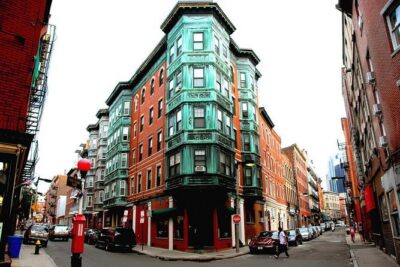
Boston Food & History: Pizza, North End & Freedom Trail
Read our review →Boston: Freedom Trail History Small Group Walking Tour
Read our review →
City Cruises Boston Historic Sightseeing Harbor Cruise
Read our review →
Boston Pizza Lovers Food and History Walking Food Tour
Read our review →
Boston Freedom Trail History Pub Crawl Small-Group Tour
Read our review →
Boston City View Bicycle Tour: History and Landmarks
Read our review →Browse the lists this tour appears in