
Review · BOSTON
Boston: Underground Railroad History Tour of Beacon Hill
Boston’s Beacon Hill is more than polished brick homes and pretty Acorn Street. This walking tour follows the people who fought slavery, sheltered freedom seekers, built schools and churches, and helped push the nation toward civil war. You visit the African Meeting House and the former Hayden safe house, while guides connect local streets to the national struggle over freedom.
I like the small group of no more than 16 and the way the tour joins Black history with the world of Boston’s wealthy Brahmins. I also like the guides’ strong storytelling. Dana, Will, Meghan, and Lin are especially praised for making difficult history clear, personal, and engaging.
The catch is simple: this is 2.5 hours of walking and standing on steep, uneven streets. Beacon Hill is not a flat museum floor. Wear good shoes, carry water, and think twice if hills or long periods on your feet are difficult.
Key points to know before you book
- Ten Black Heritage Trail landmarks: The route links schools, homes, churches, meeting houses, and memorials.
- The African Meeting House: You spend about 25 minutes at the oldest surviving Black church building in the United States, with admission included.
- A real Underground Railroad connection: The Hayden home at 66 Phillips Street was an abolitionist safe house owned by formerly enslaved people.
- A useful Boston and Civil War lesson: The tour explains how local abolitionists and Black Bostonians influenced the national fight over slavery.
- Small-group format: With a maximum of 16 people, it is easier to hear the guide and ask questions.
- Plan for hills: Acorn Street is scenic, but the walking route includes inclines, cobblestones, and frequent standing stops.
Why Beacon Hill tells a bigger story than you expect
The tour begins at the Soldiers and Sailors Monument in Boston Common, near the Boston Common Visitors Center at 139 Tremont Street. Look for the tall white granite column topped by a female figure holding a flag, with four bronze figures around its base.
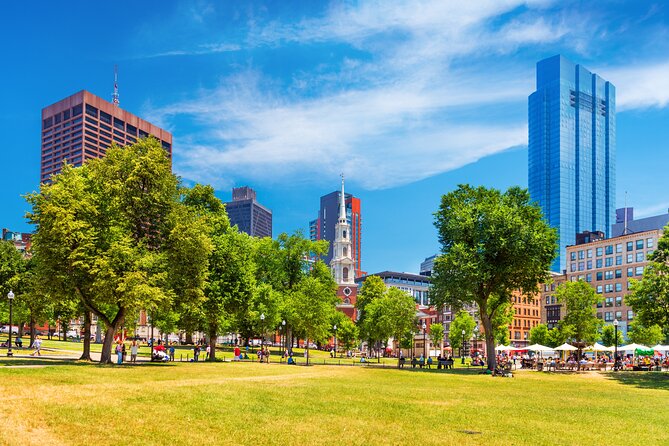
This is a sensible meeting point. Boston Common is easy to reach by public transportation, and the monument gives your group a clear landmark in a busy part of the city. The opening stop also supplies useful context: Boston Common dates to 1634 and is described as the oldest public land in the Americas. It began as a communal grazing pasture, long before Beacon Hill became an address for Boston’s elite.
From here, your guide sets up the central idea of the tour. Boston’s role in the fight against slavery did not happen in some distant southern setting. It took shape in churches, schools, homes, meeting halls, newspapers, and political offices right here in the city.
The tour works best when you listen for the connections. A handsome house may belong to the city’s Brahmin elite, while the next address belonged to an abolitionist working to challenge that same social order. The contrast is part of the point.
More History Tours in Boston:
- Boston: Freedom Trail History Small Group Walking Tour
★ 5.0 · 6,450 reviews - Tour of Historic Fenway Park, America’s Most Beloved Ballpark
★ 4.5 · 3,013 reviews - Boston Food & History: Pizza, North End & Freedom Trail
★ 5.0 · 1,772 reviews
Acorn Street and the world of the Boston Brahmins
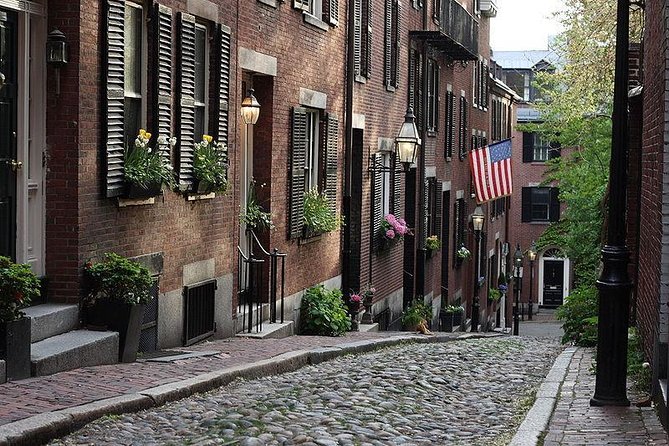
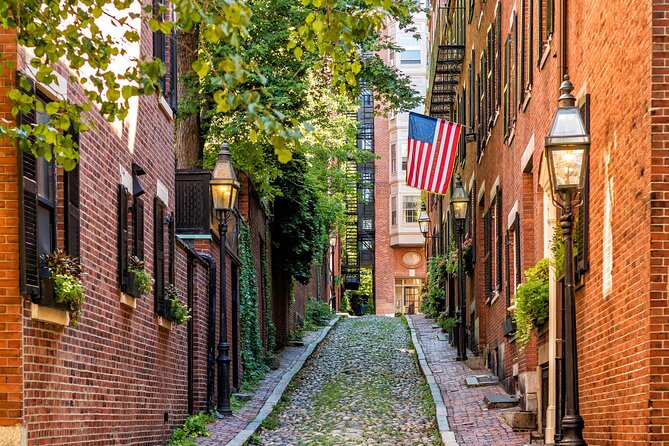
Acorn Street is one of Beacon Hill’s narrow cobblestone lanes. It is photogenic, but the tour uses it for more than a quick picture. The surrounding squares and tidy homes reflect the world of the 19th-century Boston Brahmins, the city’s old, wealthy ruling class.
I like this part because it gives the Black Heritage Trail a social and architectural frame. You see the neighborhood that tourists often admire for its brick sidewalks and elegant facades, then hear how power and wealth operated around the people whose stories are less visible on the street.
Do not expect the tour to treat Beacon Hill as a single, simple community. The route shows a neighborhood shaped by class, race, politics, religion, and reform. That makes the walk more useful than a standard architecture stroll, though anyone hoping for nonstop sightseeing may find the historical discussion takes priority.
Phillips School and the fight over education
The Phillips School was built in 1824 as a whites-only school. By 1855, it was among the first schools in Boston to integrate.
This stop brings the national argument over slavery into a very practical local question: who gets access to education, and who decides? Your guide may also place the school beside other institutions on the route, including a school founded in 1835 for Boston’s African American children.
That contrast matters. Integration did not arrive as a clean, instant change. The school story helps you see the long pressure applied by Black families, activists, and abolitionists. It also gives younger visitors something concrete to understand. Several families have found that children around the teenage years can follow the story well, while younger children may tire during the full walk.
John J. Smith’s home and the people behind the movement
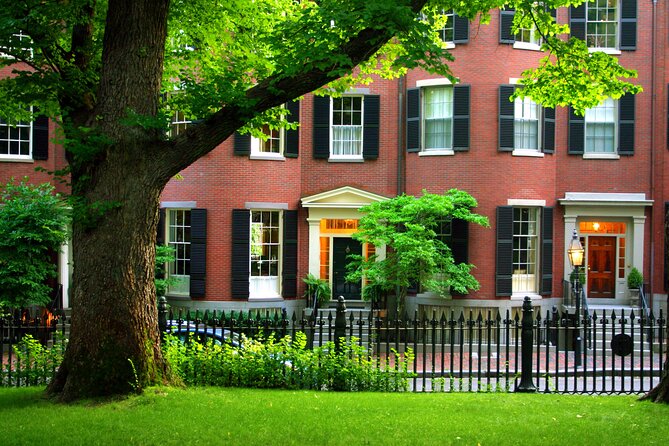
The John J. Smith House was home to a leading abolitionist, state legislator, and former barber. It is one of the addresses that turns a broad political movement into a human story.
The route also passes homes connected with African American community activists and abolitionists, including historian William Cooper Nell. Another stop recalls the home of a prominent abolitionist and US senator who was beaten unconscious in the Capitol in 1856 because of his opposition to slavery.
These details show why the tour is not only about the Underground Railroad. It covers the wider abolition movement, political resistance, education, public speaking, and the personal risks people took. I would choose this tour if you want the full network of ideas and personalities, rather than a narrow search for secret escape routes.
Same city, a different century:
- Boston: Freedom Trail History Small Group Walking Tour
★ 4.9 · 1,590 reviews - City Cruises Boston Historic Sightseeing Harbor Cruise
★ 4.5 · 1,388 reviews - Boston Pizza Lovers Food and History Walking Food Tour
★ 4.5 · 1,082 reviews - Boston Freedom Trail History Pub Crawl Small-Group Tour
★ 5.0 · 996 reviews
Charles Street Meeting House and public disagreement
The Charles Street Meeting House dates to 1807 and became a site of heated debate over racial integration. The building represents the importance of religious institutions in Boston’s reform movements, but it also points to the limits and conflicts within those movements.
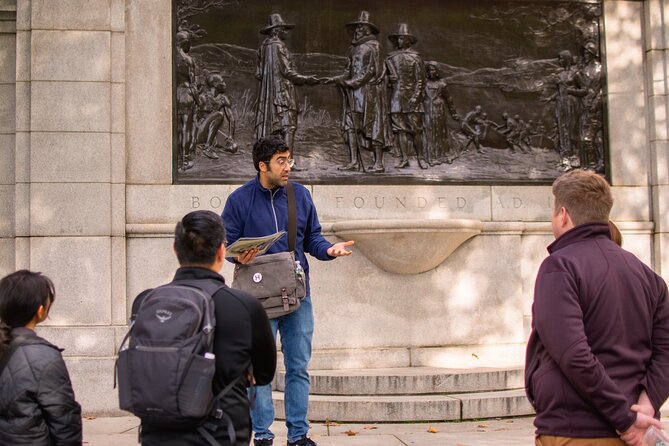
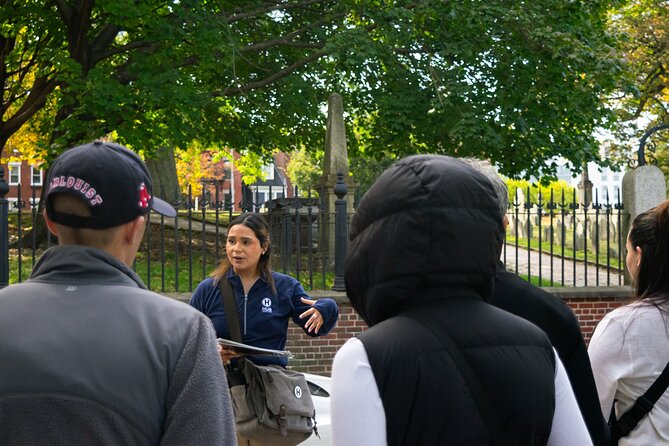
This is where a good guide makes a real difference. Dana and Will are often singled out for their enthusiasm and ability to explain cause and effect. Meghan is praised for keeping a clear pace, and Lin is noted for presenting difficult material in an engaging, relatable way.
The subject is not light. You will hear about slavery, escape, racism, political violence, and the risk faced by people who challenged the system. The tone is serious but not needlessly grim. The aim is to show how people made choices under pressure, and how local action helped shape national events.
66 Phillips Street and the Hayden safe house
One of the most important stops is 66 Phillips Street, the former home of the Haydens. The house served as an Underground Railroad safe house, and the Haydens were staunch abolitionists who had themselves been enslaved.
This address gives the term Underground Railroad a physical setting. You are standing outside a home associated with shelter, secrecy, and the movement of freedom seekers. The stop also corrects a common oversimplification: the Underground Railroad was not only the work of white reformers. Formerly enslaved people played vital roles in helping others seek freedom.
Some tours may discuss secret passages or concealed spaces connected with Beacon Hill homes. Do not expect a theatrical re-creation or guides in period costume. The experience is built around the actual streets, buildings, and documented people.
Otis House and the contrast between power and resistance
Otis House dates to 1796 and was the residence of Harrison Gray Otis, a Boston mayor and nephew of revolutionary figure James Otis Jr. It represents the political and social establishment of Beacon Hill.
The value of this stop comes from its place in the route. You are not looking only at abolitionist homes. You are also seeing the setting of the people who held influence, money, and civic authority. The tour asks you to consider how Boston’s elite shaped the city, and how Black residents and abolitionists challenged the limits of that power.
The route continues past an 1806 church designed by architect Asher Benjamin, homes associated with African American abolitionists, and the former school for Boston’s Black children. Each stop is fairly brief, often around 10 minutes, so the guide needs to keep the story moving. A clear, organized presenter helps here.
The African Meeting House, the tour’s essential interior stop
The African Meeting House receives the longest scheduled visit, about 25 minutes, and admission is included. Built in 1806, it is the oldest surviving Black church building in the United States and served as a cultural center for Boston’s African American community.
This is the tour’s strongest stop for understanding community life. The building was not merely a place for worship. It was tied to education, organizing, abolition, and public discussion. The visit gives the route an interior space after a long sequence of outdoor addresses.
I would pay close attention here, especially if you already know something about American slavery or the Civil War. One well-read participant described the tour as worthwhile even with a strong background in the period, because the local connections added material that is often left out of school lessons.
The indoor visit also offers a modest break from the streets. Still, the tour remains a walking experience, and the overall timing can run beyond two and a half hours if a guide spends extra time answering questions. That can be a benefit for history fans, but it is worth keeping in mind if you have a tight schedule.
5 Pinckney Street and the final walk to the 54th Regiment
At 5 Pinckney Street, you see the oldest surviving house in Beacon Hill, dating to 1787. It was home to an African American Revolutionary War veteran, another reminder that Black residents were part of Boston’s civic and military story from the nation’s earliest years.
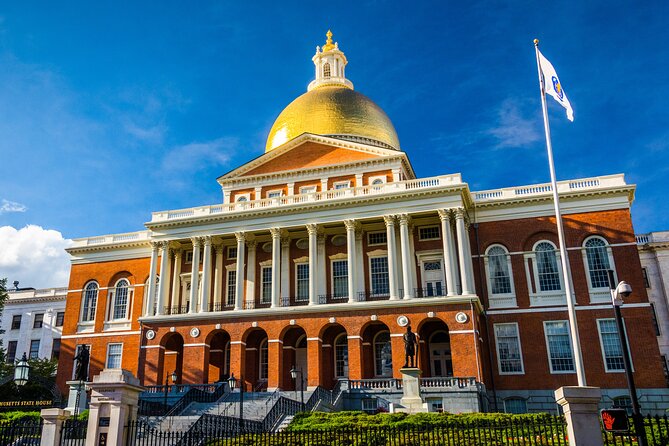
The route then passes the Massachusetts State House, built in 1798 and famously called the Hub of the Solar System. That nickname reflects Boston’s old confidence, but the tour places the State House beside the people who demanded that American ideals apply to everyone.
The walk ends at the Robert Gould Shaw and the 54th Regiment Memorial, opposite 24 Beacon Street and across from the State House. The memorial honors Colonel Robert Gould Shaw and the 54th Massachusetts Regiment, one of the best-known Black Union regiments of the Civil War.
This ending works because it brings the story forward. You begin with abolition, schools, churches, and safe houses, then finish with Black military service in the Civil War era. From the memorial, you are within roughly 0.2 miles of the starting area, so the route is convenient for continuing your Boston sightseeing.
How much value do you get for $35?
At $35 per person, this is a fair price for a 2.5-hour guided walk with a small group and admission to the African Meeting House. You are paying for a guide who organizes a large amount of history into a route you could not easily reproduce on your own.
The value is strongest if you want interpretation. You can walk Beacon Hill for free, photograph Acorn Street, and find many buildings without a guide. What you cannot easily get from a self-guided stroll is the relationship between the homes, schools, churches, political figures, and Civil War memorial.
The small-group limit of 16 also matters. It is not a private tour, but it is small enough for questions and easier listening than a large crowd. Gratuity is optional, and museums beyond the included African Meeting House admission are not included.
What to wear and who should book
Wear comfortable walking shoes with a firm sole. Beacon Hill includes hills, cobblestones, narrow lanes, and uneven surfaces. Bring water, and allow time for standing at each stop.
The tour suits:
- Adults interested in Black history, abolition, or the Civil War
- Families with older children and teenagers
- Boston residents who want a more local view of familiar streets
- History fans who enjoy detailed storytelling and questions
- Visitors who want to pair architecture with social and political history
It may not suit you if you dislike long walks, have trouble standing for extended periods, or want a quick sightseeing loop. One family found the 2.5-hour version tiring for younger children, while children around 13 and 10 were able to follow the material with an especially engaging guide. Your child’s interest in history will matter as much as age.
The tour operates in English and uses mobile tickets. Service animals are allowed, and the meeting point is near public transportation. It requires good weather, and you can cancel for a full refund up to 24 hours before the start time. If poor weather or too few bookings cancel the tour, you are offered another date or a full refund.
Should you book the Beacon Hill Underground Railroad tour?
I would book it if you want Boston history with substance. The tour does not treat the Underground Railroad as a string of dramatic escape tales. It connects freedom seekers with schools, churches, lawmakers, writers, soldiers, and ordinary homes in a neighborhood you might otherwise see only as a pretty address.
Book it early if your dates are fixed, since it is commonly reserved about 29 days ahead. Choose a day when you can walk without rushing, and leave room afterward for the State House area.
Skip it if your main goal is a short, flat introduction to Boston or if hills are a serious problem. For everyone else, the $35 price buys a focused lesson in how Black Bostonians and their allies helped change the city, Massachusetts, and the nation.
FAQ
Where does the tour begin?
It begins at the Soldiers and Sailors Monument in the center of Boston Common, near the Boston Common Visitors Center at 139 Tremont Street.
Where does the tour end?
It ends at the Robert Gould Shaw and the 54th Regiment Memorial near 26 Beacon Street, across from the Massachusetts State House.
How long does the tour last?
The scheduled duration is approximately 2 hours and 30 minutes. It can take longer if the guide spends extra time answering questions.
How much does the tour cost?
The listed price is $35 per person.
How many people can join the tour?
The maximum group size is 16 people.
Is admission to any site included?
Admission to the African Meeting House is included. Admission to other museums is not included.
Is the tour suitable for people with limited mobility?
The tour requires a moderate level of physical fitness and is not recommended for people who have difficulty standing for extended periods. Beacon Hill has hills and uneven surfaces.
What happens if the weather is poor?
The experience requires good weather. If it is canceled because of poor weather, you are offered a different date or a full refund.
Just added around Boston
- Boston’s North End History + Photo Walking Tour (SMALL Group)★ 5.0 · 27 reviews
- Boston’s Architecture, History + Photo Walking Tour (SMALL Group)★ 5.0 · 91 reviews
- Freedom Trail Guided Walking Tour (SMALL GROUP)★ 4.5 · 98 reviews
- Beacon Hill Boston History + Photo Walking Tour (SMALL Group)★ 5.0 · 163 reviews
- Haunted Boston’s Historic Streets Walking Guided Tour★ 4.5 · 184 reviews
- A Taste of the Freedom Trail: Boston’s Iconic Food & History Tour★ 5.0 · 32 reviews
- Boston: Food and History of The Freedom Trail Private Tour★ 5.0 · 159 reviews
- Beacon Hill + Back Bay History + Photo Walking Tour(SMALL Group)★ 5.0 · 60 reviews
Boston History Tours, compared.
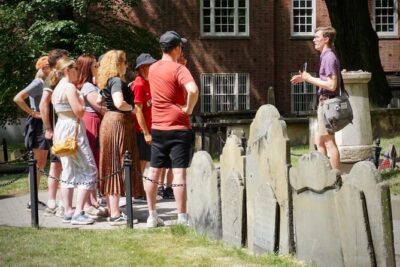
Boston: Freedom Trail History Small Group Walking Tour
Read our review →
Tour of Historic Fenway Park, America’s Most Beloved Ballpark
Read our review →
Boston Food & History: Pizza, North End & Freedom Trail
Read our review →Boston: Freedom Trail History Small Group Walking Tour
Read our review →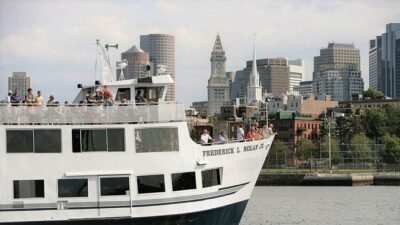
City Cruises Boston Historic Sightseeing Harbor Cruise
Read our review →
Boston Pizza Lovers Food and History Walking Food Tour
Read our review →
Boston Freedom Trail History Pub Crawl Small-Group Tour
Read our review →
Boston City View Bicycle Tour: History and Landmarks
Read our review →Browse the lists this tour appears in