
Review · CHICAGO
Chicago Walking Tour: Historic Skyscrapers
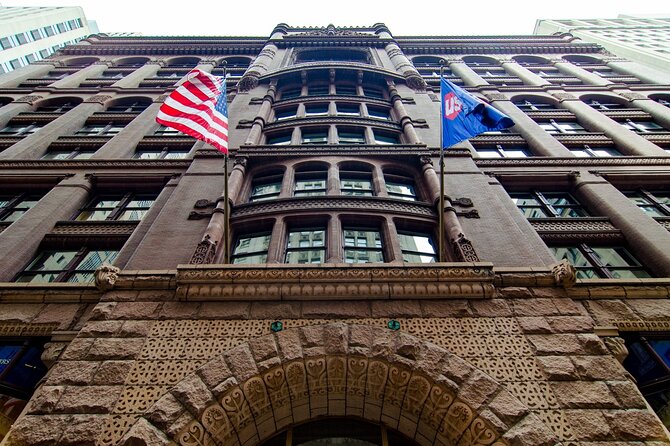
Chicago’s skyscraper story comes alive on foot, especially when you look up from the Loop’s busy streets and realize how early architects were already solving the problems of height, weight, light, and style. This 90-minute walk links the Fine Arts Building, Auditorium Building, Rookery, Board of Trade, Marquette, and Monadnock in a compact route.
I like the small group of no more than 10 people, which gives a guide room to point out details and answer questions. I also like the included Chicago Architecture Center galleries, a useful bonus for anyone who wants more than a quick look at building facades. The main drawback is that many stops are exterior views, and weekend or holiday closures can limit interior access.
Key points to know before you book
- Six major Loop landmarks in 90 minutes: You see the Fine Arts Building, Auditorium Building, Rookery, Board of Trade, Marquette, and Monadnock.
- Small groups make the commentary easier to follow: The maximum is 10 people.
- Certified Chicago Architecture Center guides lead the walk: Guides named in guest feedback include Deborah, Audrey, and Angela Platt.
- Architecture Center gallery admission is included: You can visit the galleries even though the center is not a regular stop on the walking route.
- The tour costs $35 per person: That is fair value if you care about architecture and want expert context without spending half a day.
- Sunday access can be limited: Building interiors may close on weekends, holidays, or without notice.
Why Chicago’s early skyscrapers make such a good walking tour
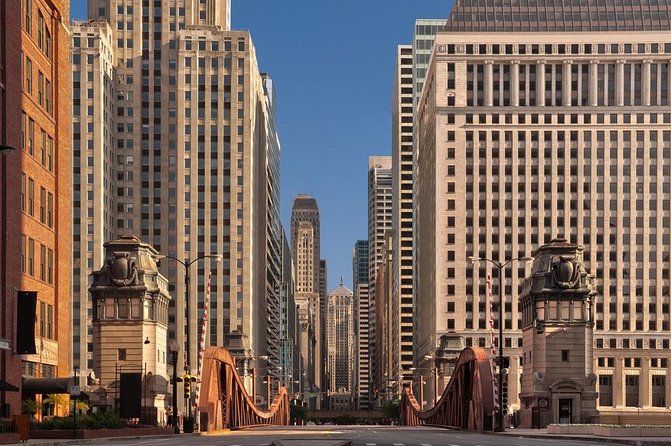
Chicago is a fine place to study tall buildings because its architecture tells a clear story. The oldest structures on this route date from the late 19th and early 20th centuries, when architects were testing new ways to build higher while keeping streets usable and interiors comfortable.
You will not simply see a row of impressive fronts. A good guide connects the buildings to their designers, construction methods, decorative styles, and role in the city’s growth. That context matters. Alone, you might admire a carved entrance or a dramatic lobby. With a guide, you are more likely to notice why the building looks that way and what problem its design was trying to solve.
I especially like the focus on the living history of the skyscraper. That phrase captures the appeal of the tour. Chicago’s tall buildings are not only old monuments. They are part of the city people work in, pass through, photograph, and still use every day.
The 10-person limit is a real advantage. At $35, you are paying for a focused walk rather than a large crowd following a guide with a flag. Guides such as Deborah, Audrey, and Angela Platt have been singled out for their passion, clear explanations, and ability to connect architectural styles with Chicago’s broader story.
More History Walking Tours in the USA
- Chicago in a Day: Food, History & Architecture Walking Tour
★ 5.0 · 1,153 reviews - Chicago Walking Tour: Historic Treasures of Chicago
★ 5.0 · 362 reviews - Historic Homes and Cottages of Wicker Park Walking Tour
★ 5.0 · 44 reviews
Starting at the Fine Arts Building on Michigan Avenue
The tour begins at the Fine Arts Building, 410 South Michigan Avenue. This is a practical meeting point in the Loop, near public transportation and easy to reach from other central sights.
The opening stop lasts about 10 minutes. Treat it as your introduction to the tour’s main theme: Chicago architecture is best understood by looking at details that are easy to miss when you are simply moving from one attraction to another.
The Fine Arts Building gives the guide a useful place to establish the period and mood of the walk. You can expect an exterior discussion here, with the guide setting up the people, design ideas, and building types you will encounter later.
Arrive ready to walk and look up. Downtown streets can be noisy, and the most interesting details may be above eye level. Comfortable shoes will help, even though the route lasts only about an hour and a half.
The Auditorium Building and Chicago’s grand public face
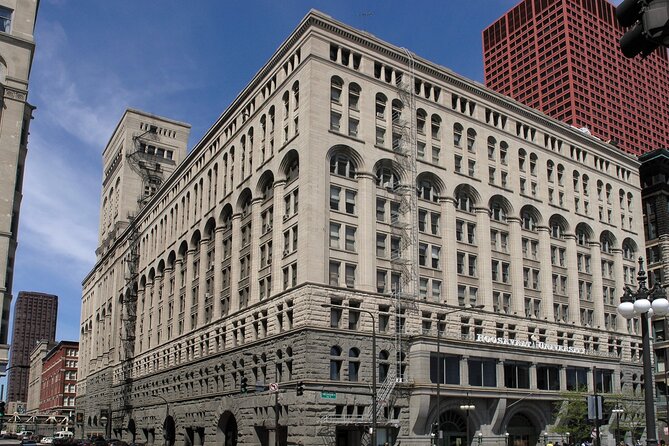
Next comes the Auditorium Building, viewed from outside for roughly 10 minutes. This stop helps show that Chicago’s early large buildings were not all commercial towers. Some were designed to serve public, cultural, and civic purposes as well.
The building’s scale and formal appearance give the guide plenty to discuss. Pay attention to the relationship between its lower levels and upper stories. On a walking tour, these transitions are often more revealing than a single wide view.
You may want to take a moment for your own photographs here, but do not let your camera distract you from the explanation. The value of this stop is not just the facade. It is the chance to understand how architecture communicated importance in a rapidly growing city.
If you are bringing young children, keep in mind that the experience is not recommended for them. The commentary is aimed at people who want to listen closely and think about design, construction, and history.
The Rookery reveals the drama of Chicago’s early skyscrapers
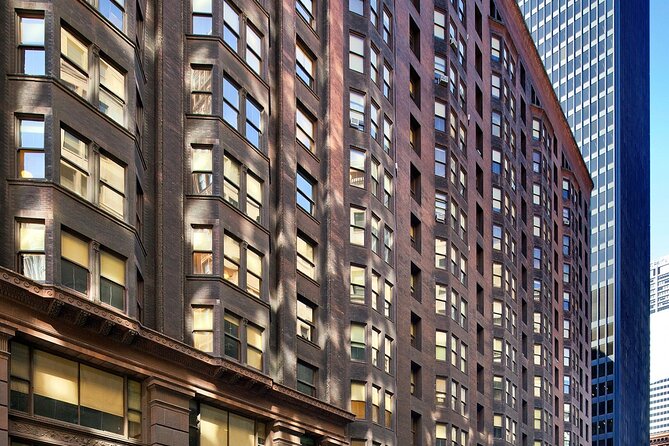
The Rookery Building is one of the tour’s major highlights. The group views it from the outside for about 10 minutes, and the guide uses it to explain another stage in Chicago’s tall-building story.
This is the sort of stop where expert commentary changes what you see. Instead of treating the Rookery as a handsome old building, you can look for the way its structure, decoration, and proportions work together. The guide may also help you compare it with buildings seen earlier on the route.
Some past tour participants specifically praised guides for taking the group inside buildings when conditions allowed and pointing out interior styles. That is worth keeping in mind, but do not book this walk expecting guaranteed interior access. The operator notes that building access can change because of weekend and holiday schedules or unexpected closures.
That limitation is most important if the Rookery is your main reason for booking. The exterior presentation remains worthwhile, but the experience may be less complete when interiors are closed.
More History Walking Tours in Chicago:
- History and Hauntings of Salem Guided Walking Tour
★ 5.0 · 14,564 reviews - Lisbon: History, Stories and Lifestyle Walking Tour
★ 4.8 · 10,902 reviews - Amsterdam: Life of Anne Frank and World War II Walking Tour
★ 4.8 · 10,467 reviews - Berlin: Third Reich & Cold War Guided Walking Tour
★ 4.9 · 8,378 reviews
The Board of Trade adds a powerful visual finish
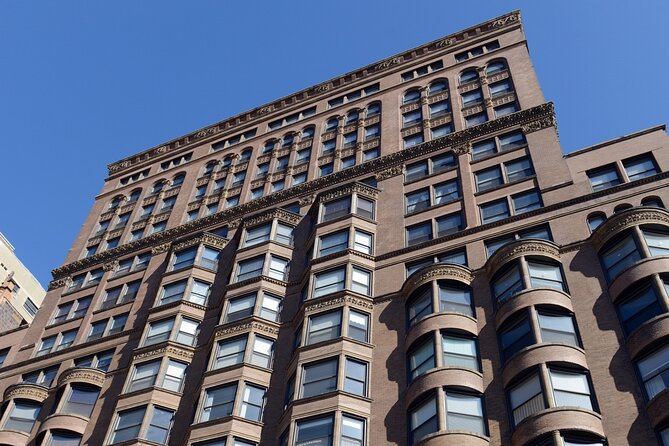
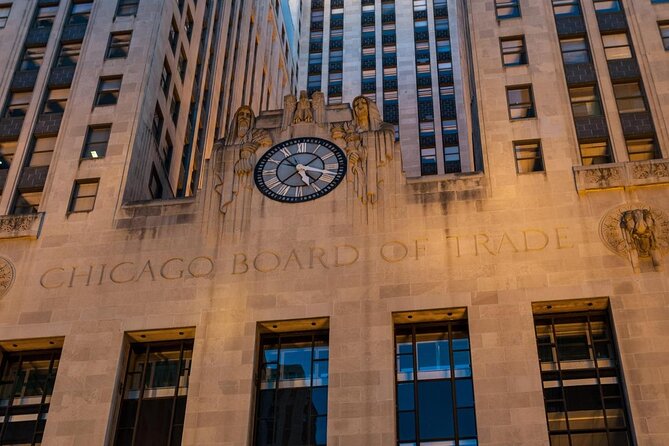
The Chicago Board of Trade Building receives about five minutes, with the group viewing the exterior. This is a short stop, but the building makes a strong visual impression and helps broaden the tour beyond early office architecture.
The guide can explain how the building fits into Chicago’s commercial identity and how its form differs from the earlier stops. Five minutes will not allow a long lecture, so think of this as a sharp comparison point within the larger route.
I like this rhythm. The tour does not linger at every building for the same amount of time. Larger stops receive more attention, while shorter pauses keep the walk moving toward the Monadnock Building.
The Marquette Building rewards close attention
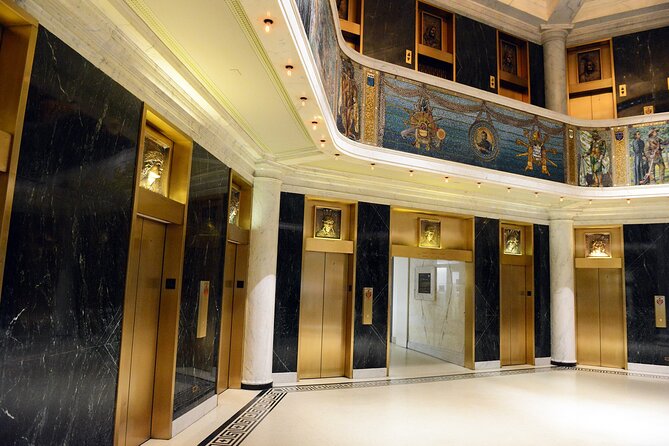
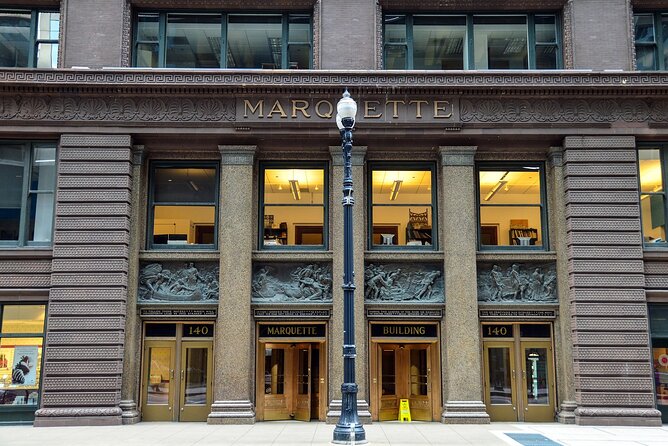
The Marquette Building gets another five-minute exterior stop. This is a good place to slow down and inspect decorative details rather than relying on a distant, full-building photograph.
A guide can point out elements that are easy to overlook from street level. You might find that the most useful part of the stop is learning how one building differs from another in style, materials, or purpose.
The tour’s strongest guides appear to be the ones who make those comparisons clear. Angela Platt, Audrey, and Deborah are named in past feedback as guides who brought energy and strong architectural insight to the walk. Since guide assignments can vary, you should think of those names as examples of the kind of leadership the Chicago Architecture Center aims to provide, not as a guarantee of who will lead your group.
The Monadnock Building ends the route in the southern Loop
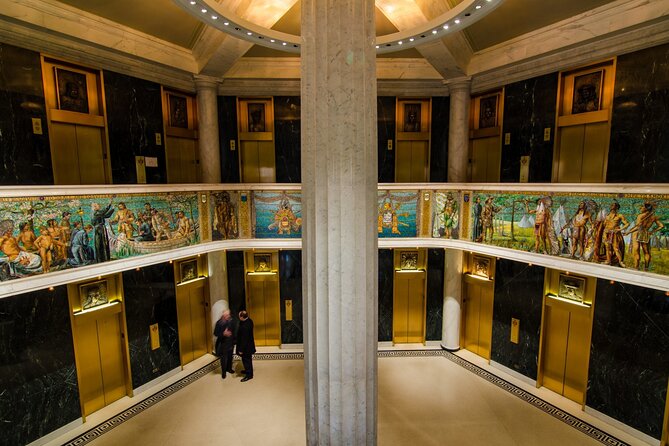
The walk ends at the Monadnock Building, 53 West Jackson Boulevard. The group views the exterior for about five minutes, and this final stop gives the route a clear endpoint in the southern part of the Loop.
The end location is useful for planning the rest of your day. You are not returned to Michigan Avenue, so check your next destination before booking. You may want to continue exploring the Loop, use public transportation, or visit another nearby sight.
Ending at the Monadnock also gives the guide a chance to bring the building sequence together. You have seen several examples of Chicago architecture from different periods and styles, and the final explanation can help you compare them rather than remember them as separate photo stops.
What the $35 price really includes
At $35 per person, this is not the cheapest way to walk around downtown. You can see the exteriors on your own for free. The question is whether the explanations and small-group setting add enough value.
For me, the answer is yes if architecture is a real interest. You receive a professional, certified guide, a planned route through six important buildings, and admission to the Chicago Architecture Center galleries. That last benefit matters because it extends the experience beyond the street walk without requiring a second admission fee.
The price is also reasonable for a visitor with limited time. One person specifically praised the tour as a good choice when time in Chicago was short. You cover a lot of ground in 90 minutes, without committing to a much longer architectural program.
The value is weaker if you want modern Chicago, lots of interior access, or a broad city tour covering food, neighborhoods, politics, and popular culture. One piece of feedback found the facts less engaging and wanted more about modern Chicago. That is a fair warning. This experience is centered on historic skyscrapers, not on every chapter of the city.
The Chicago Architecture Center galleries add useful follow-up time
The tour ticket includes admission to the galleries at the Chicago Architecture Center. The center is not directly part of the walking route, and the listed schedule allows only a minute for the stop itself, so think of the gallery visit as an included add-on rather than a guided final stop.
You can use the galleries to reinforce what you heard outside. After seeing full-size buildings in the street, displays and models may help you understand the city at a broader scale.
This included admission improves the overall value, especially if rain, cold, or tired feet make you want an indoor activity after the walk. The information provided does not specify how long you may spend in the galleries, so plan according to the center’s current operating details rather than assuming the guide will escort you through them.
Timing, access, and practical limits
The experience lasts about 90 minutes and is capped at 10 people. That is long enough to cover the route without making the tour feel like a full morning commitment.
The walk begins at the Fine Arts Building and ends at the Monadnock Building. There is no food or drink included, and the operator does not provide coat check or storage for luggage and strollers. Bring only what you want to carry through the Loop.
Service animals are allowed, and most people can participate. Pets are not allowed. The tour is near public transportation, which makes both the starting point and the final stop practical for a central Chicago itinerary.
Interior access is the main variable. Buildings featured on the walk may be closed on weekends, holidays, or because of unexpected changes. If seeing a particular lobby is essential to you, confirm current access conditions and keep your expectations flexible.
The free cancellation policy is generous: cancel at least 24 hours before the start time for a full refund. Changes or cancellations made less than 24 hours before the start time are not accepted for a refund.
Who will get the most from this walk
I would choose this tour if you enjoy architecture, city history, Art Deco, or the story of how skyscrapers developed. It is also a smart pick when you have only a short time in Chicago and want a structured introduction to the Loop.
You do not need to know architectural terms before you arrive. The guide’s job is to make the styles and building choices understandable. The small group also makes it easier to ask a question than it would be on a large coach tour.
This is less suitable for very young children, people who dislike walking, or anyone hoping for a general sightseeing tour. It is also not the best match if modern Chicago is your main interest. The route favors historic buildings and formal architectural discussion.
Should you book the Historic Skyscrapers walk?
Book it if you want a compact, well-organized introduction to Chicago’s early skyscrapers, led by a certified guide and limited to 10 people. The included Architecture Center galleries make the $35 fee easier to justify, and the route covers several important buildings without taking over your day.
Skip it if you mainly want guaranteed interior access or a tour centered on contemporary architecture. Weekend and holiday closures can change the experience, and most listed stops are exterior views.
For architecture fans, first-time Chicago visitors, and people with limited time, this is a strong choice. Go ready to walk, listen, and look above the storefronts. That is where much of the story is.
FAQ
How long does the Chicago Historic Skyscrapers tour last?
The walking tour lasts approximately 1 hour and 30 minutes.
Where does the tour begin?
It begins at the Fine Arts Building, 410 South Michigan Avenue, Chicago, Illinois 60611.
Where does the tour end?
The tour ends at the Monadnock Building, 53 West Jackson Boulevard, Chicago, Illinois 60604.
How large is the tour group?
The activity has a maximum of 10 people.
Is admission to the Chicago Architecture Center included?
Yes. Admission to the galleries at the Chicago Architecture Center is included in the ticket price, although the center is not directly part of the walking route.
Are the buildings visited inside?
Interior access may change because of weekend and holiday schedules or unexpected closures. The listed stops include exterior views of the Auditorium Building, Rookery, Board of Trade Building, Marquette Building, and Monadnock Building.
Just added around Chicago
- Historical and Architectural Chicago Fireboat River & Lake Cruise★ 5.0 · 246 reviews
- Walkin’ with Colin: Chicago History-Mystery-Comedy-Tragedy Tour★ 5.0 · 218 reviews
- Chicago River Architecture Tour Aboard a Historic Yacht★ 5.0 · 45 reviews
- African American Heritage Tour of Chicago★ 4.5 · 127 reviews
- Historic Homes and Cottages of Wicker Park Walking Tour★ 5.0 · 44 reviews
- Chicago: Historic Gangsters & Twilight Tales Night Cruise★ 4.1 · 63 reviews
- Chicago: Food, History and Architecture Tour★ 4.8 · 104 reviews
- Chicago: Historic Architecture Chicago River Small Boat Tour★ 4.6 · 26 reviews
Chicago History Tours, compared.
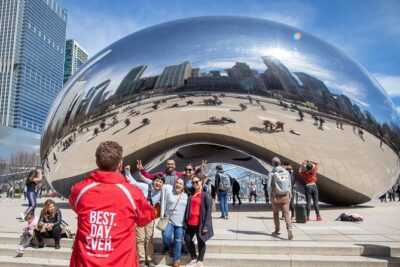
Chicago in a Day: Food, History & Architecture Walking Tour
Read our review →
Medieval Torture Museum Ticket with Audio Guide and Ghost Hunting
Read our review →
Chicago Walking Tour: Historic Treasures of Chicago
Read our review →

Historical and Architectural Chicago Fireboat River & Lake Cruise
Read our review →
Walkin’ with Colin: Chicago History-Mystery-Comedy-Tragedy Tour
Read our review →

Browse the lists this tour appears in