
Review · CHICAGO
Walkin’ with Colin: Chicago History-Mystery-Comedy-Tragedy Tour
Chicago’s finest sights are often tucked inside buildings you could easily pass without a second glance. On this two-hour, two-mile walk, Colin connects Chagall’s mosaic, Mies van der Rohe’s modern lines, the Rookery’s grand interior, Picasso’s huge sculpture, and the Tiffany dome at Macy’s into one lively story about the city.
I like the tour’s small maximum of 10 people, which gives you a better chance to ask questions and keep up with Colin’s storytelling. I also like the mix of famous landmarks and easy-to-miss interiors, especially the Marquette Building and the Rookery.
The main consideration is that this is not a flat, weather-proof stroll. Expect about two miles, stairs, elevators or escalators, indoor and outdoor sections, and a pace that requires moderate fitness. Rain or heat can affect the experience, though Colin has adapted by using underground walkways.
Key points to know before you book
- Chagall and Tiffany glass: See Chagall’s Four Seasons mosaic and the remarkable Tiffany dome inside Macy’s on State Street.
- Eight downtown stops: The route covers major art, architecture, entertainment, and retail landmarks between Dearborn Street and the Cultural Center.
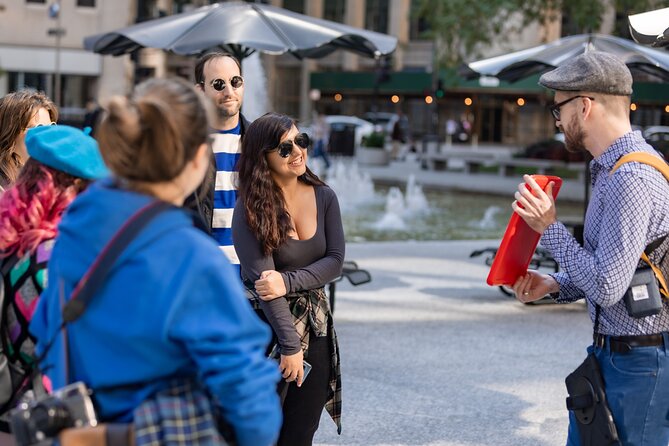
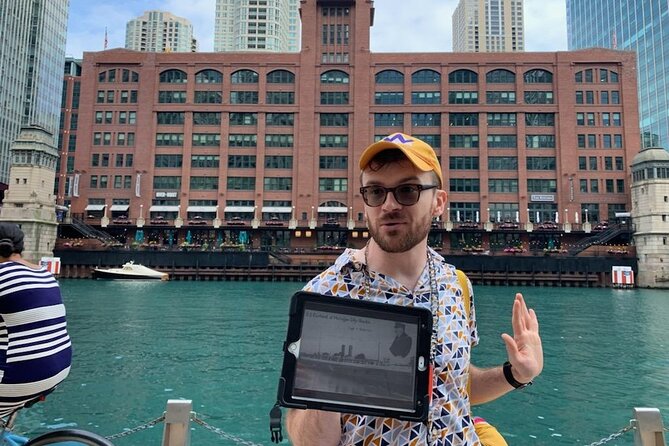
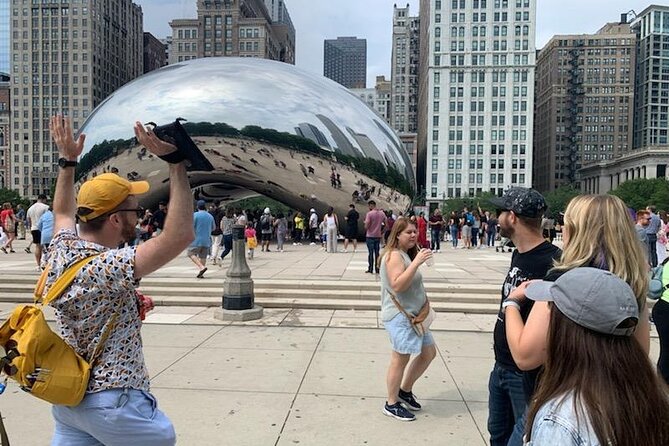
- Colin’s storytelling: Expect history mixed with comedy, mystery, tragedy, photos, and supporting images on his electronic device.
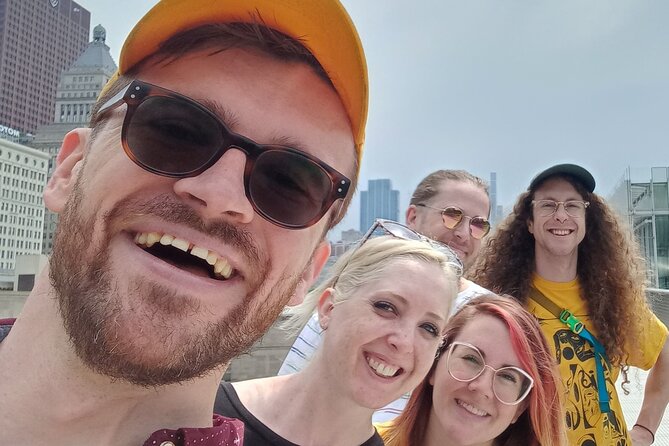
- Small-group format: The tour accepts no more than 10 people, making it easier to hear and ask questions.
- Indoor and outdoor route: The walk includes stairs, elevators or escalators, and weather exposure, so wear comfortable shoes and check the forecast.
- Good value at $44: Most stops are free to enter, and the tour packs a wide range of downtown sights into two hours.
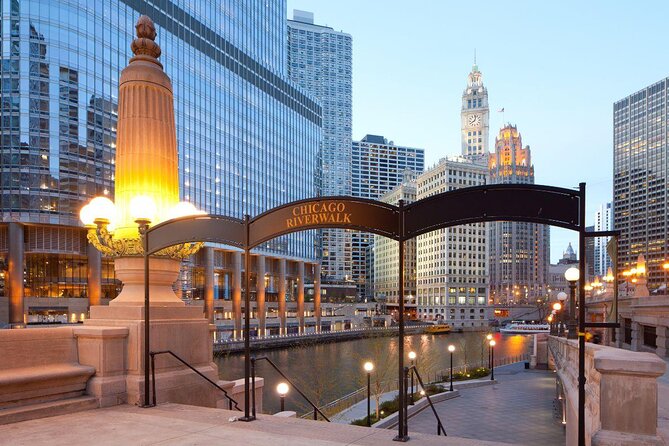
Chicago can feel like several cities at once. One block gives you polished steel and modern sculpture. The next reveals a gold-leaf lobby, a stained-glass dome, or a building that helped shape the city’s commercial power.
Walkin’ with Colin uses that contrast well. Rather than focus only on skyscraper dates and architectural labels, the tour links buildings to entertainers, artists, retailers, immigrants, designers, and the people who made Chicago famous. The tone is lively, with comedy mixed into stories of ambition, disaster, and change.
You meet at 1 North Dearborn Street and finish at the Chicago Cultural Center at 78 East Washington Street. The route is compact, but it does not feel like a single-theme architecture lecture. You get public art, interiors, department-store history, theater, modern design, and city lore in one outing.
Colin also uses photographs and video or other electronic images to support his explanations. That helps when a story involves a former look, an absent detail, or something too small to see clearly from the sidewalk.
Chagall’s Four Seasons starts the story with color

The first stop is Chagall’s Four Seasons, a large mosaic mural by Marc Chagall. It gives the tour an immediate visual jolt. You are not easing into the city with a plain street corner. You begin with color, pattern, and an artwork that asks you to look closely.
The stop lasts about 15 minutes, enough time to take in the mural and hear why it matters within Chicago’s collection of public art. Colin uses the work as an opening to show how the city brings major art into ordinary public spaces.
This is also a useful first stop because it sets the tone for the rest of the walk. You are encouraged to look upward, inspect surfaces, and notice details that a quick downtown visit might miss. If you like public art but do not want to spend a full afternoon in a museum, this is a strong start.
More History Tours in Chicago:
- Chicago in a Day: Food, History & Architecture Walking Tour
★ 5.0 · 1,153 reviews - Medieval Torture Museum Ticket with Audio Guide and Ghost Hunting
★ 5.0 · 962 reviews - Chicago Walking Tour: Historic Treasures of Chicago
★ 5.0 · 362 reviews
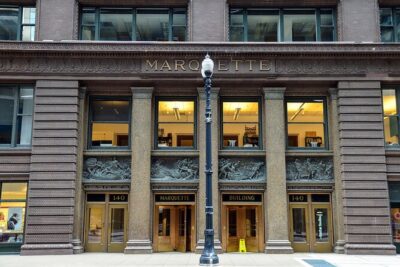
The Marquette Building reveals Chicago’s indoor drama
The Marquette Building is one of the tour’s best arguments for going inside. Its exterior is impressive, but the interior is where the visit gains force. Colin points out why this is considered one of Chicago’s early and important skyscrapers, then gives you time to appreciate the decoration and scale.
The stop lasts roughly 10 minutes. That may sound brief, but the route includes several interiors, so the short visits keep the walk moving. You get a taste of each building rather than spending the whole afternoon in one lobby.
Bring your camera, but also look beyond the obvious details. The pleasure here comes from seeing how much ornament and craftsmanship can survive inside a working downtown building. It is the sort of place many people walk past without realizing they can enter.
Calder’s Flamingo meets Mies van der Rohe
At Calder’s Flamingo, public sculpture meets modern architecture. Alexander Calder’s work brings a bright, sweeping form to the clean structural language associated with Mies van der Rohe.
The stop takes about 10 minutes and gives Colin a chance to explain how art and architecture can change the feel of a public space. You are not simply checking off a sculpture. You are looking at the relationship between the red form, the surrounding buildings, and the open area around it.
This part will appeal to you if you enjoy modern design, but it remains approachable even if you do not know much about art. Colin’s style focuses on useful context rather than jargon. You can look, ask questions, and understand why the piece belongs where it is.
The Rookery brings the grand interior

The Rookery is one of the strongest stops on the route. It is presented as Chicago’s oldest skyscraper and one of the city’s most beautiful buildings, with an interior that rewards a slower look.
The planned stop is about 15 minutes. That gives you time to appreciate the building’s central space and hear how its design fits into Chicago’s early skyscraper story. The contrast with Calder’s Flamingo is part of the fun. In a short distance, you move from bold modern sculpture to elaborate historic architecture.
This is also where Colin’s preparation matters. A building like the Rookery can overwhelm you with decoration if you do not know where to look. His explanations help organize the view, so you can notice architectural details instead of taking one quick photograph and leaving.
Same city, a different century:
- Chicago Architecture and True Crime Tour
★ 5.0 · 326 reviews - Historical and Architectural Chicago Fireboat River & Lake Cruise
★ 5.0 · 246 reviews - African American Heritage Tour of Chicago
★ 4.5 · 127 reviews - Chicago: Food, History and Architecture Tour
★ 4.8 · 104 reviews
Picasso’s 50-foot gift changes the scale
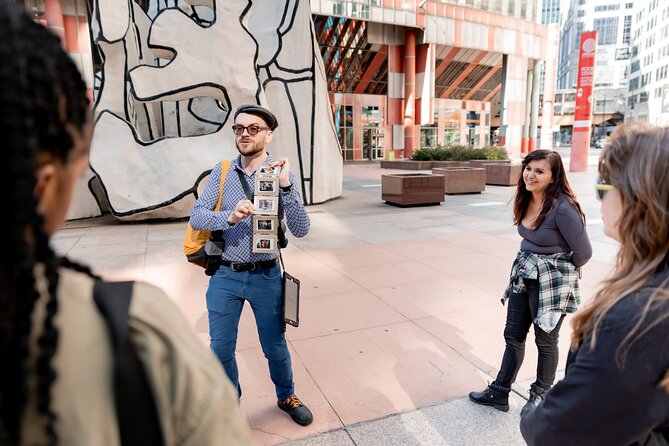
Picasso’s Untitled is a monumental sculpture, about 50 feet tall, and it gives the walk a very different kind of public-art experience. Chagall’s work rewards close inspection. Calder’s Flamingo depends on shape and space. Picasso’s piece confronts you with scale and ambiguity.
The stop takes around 10 minutes. Colin explains the sculpture’s place in Chicago and the response it has inspired over the years. You have time to study it from the outside and decide what you think it looks like. That open-ended quality is part of its appeal.
This is a good moment to remember that public art does not need to be instantly understood to be worthwhile. The tour gives you enough background to make the sculpture less puzzling, without telling you what you must see in it.
The Chicago Theatre adds entertainers and city drama
The Chicago Theatre is the route’s entertainment landmark. You pause for about 15 minutes and learn about the venue, its familiar marquee, and the entertainers linked to Chicago’s cultural life.
The theater stop helps widen the tour beyond buildings and art. Chicago’s story is also shaped by performers, audiences, popular culture, and the places where people gathered for a night out. Colin’s comedy fits naturally here, since the subject invites stories about show business and the city’s larger-than-life characters.
One practical note: admission is not included at this stop. The tour is built around looking at the theater and learning about it, not around a guaranteed interior performance or full theater visit. If you want an inside tour, check what is available separately before booking.
Macy’s on State Street tells a retail story
Macy’s on State Street is more than a shopping stop. The building was formerly Marshall Field’s, once described as the biggest department store in the world, and the tour uses it to explain Chicago’s role in the development of the modern department store.
This is one of the most useful historical sections because it connects architecture with daily life. Department stores changed how people shopped, met, browsed, and spent time downtown. The building was designed to draw people inside, and its decorative details still show that ambition.
The Tiffany dome is a particular highlight. One of the most memorable discoveries on this tour is that such a remarkable glass feature sits inside a department store. The stop lasts about 10 minutes and is free to enter, though normal store activity may make the space feel less quiet than a museum.
If you are interested in design, retail, or social history, give this stop your full attention. It explains why Chicago’s commercial buildings deserve the same care as its famous towers.
The Cultural Center closes with a grand public building
The tour ends at the Chicago Cultural Center, called the People’s Palace. It is a fitting finish because the building combines civic purpose, art, architecture, and public access.
The stop lasts about 15 minutes. Colin explains the building’s library legacy and gives you time to see its interior features. This final stop also works well as a practical end point. You finish in the center of downtown, near other sights and public transportation, rather than being left far from the main attractions.
The Cultural Center is especially valuable after the rest of the walk because you have spent two hours learning how Chicago uses public buildings. Here, the city’s civic ambitions are visible in the architecture itself.
Colin’s style: facts with a lighter touch
Colin is the main reason this tour feels different from a standard downtown walk. His approach mixes historical explanation with jokes, mysteries, tragedies, and questions. You get facts, but you also get a sense of how the stories connect.
He is especially strong at making supporting images useful. A photograph on a phone or tablet can show how a place looked in another era, clarify a person in a story, or point out a detail that is hard to see from the street.
The pace is generally easy, with stops breaking up the walking. Feedback about the tour repeatedly praises Colin’s preparation, warmth, humor, patience with questions, and ability to bring in places that are easy to miss. That does not mean the route requires no effort. You still cover about two miles and may use stairs, elevators, or escalators.
One useful caution comes from the walking format: keep the group in sight when crossing streets or stopping for photographs. A small group can spread out if some people pause to take pictures. Staying close makes it easier to hear Colin and keeps the route orderly.
What the $44 price includes
At $44 per person, this is not the cheapest way to see downtown Chicago, but the price is reasonable if you value interpretation rather than simple sightseeing. You are paying for a two-hour route with eight planned stops, a small group, and a guide who has prepared stories and visual material.
Most stops have no admission charge. That matters because the tour spends much of its time in public spaces and accessible building interiors rather than adding costly tickets. The Chicago Theatre stop does not include admission, so do not treat the $44 as a ticket to a theater performance or a complete theater tour.
The value is strongest for a first visit, a return visit when you want more context, or a local who has seen the major buildings but never entered them. It can also save you planning time. Instead of working out which lobbies are open and how to connect the sculpture, theater, retail, and civic stops, Colin handles the route.
The experience is usually booked about 18 days ahead, so reserving early is sensible if your Chicago dates are fixed. Morning and afternoon times give you some flexibility.
Weather, walking, and group size
This is an indoor and outdoor experience, not a fully covered tour. It requires good weather, and poor conditions can lead to a new date or a refund. Wear comfortable shoes and bring an umbrella if rain is possible.
The route includes downstairs and upstairs sections, plus elevator or escalator use. You should be comfortable with moderate physical activity over two hours. The walk is broken into stops, but it is still a two-mile city route.
The maximum group size is 10 people. That is small enough for a more personal feel and easier conversation, while still allowing the tour to run with a lively group. Service animals are allowed, and the meeting and ending points are near public transportation.
You receive confirmation when booking, and free cancellation is available up to 24 hours before the start time. Changes or cancellations inside that window are not accepted for a refund. The tour also requires a minimum number of people, so an operator cancellation for that reason brings an alternative date or a full refund.
Who will enjoy this Chicago walk most
I would choose this tour if you want a broad introduction to downtown Chicago without spending the day inside a museum. It suits couples, families, solo visitors, and small groups who enjoy stories as much as photographs.
It is particularly good for:
- First-time visitors who want several major downtown sights in one outing
- Repeat visitors who have never entered historic buildings such as the Marquette or Rookery
- People interested in architecture, public art, theater, or department-store history
- Families with older children or adults who enjoy humor and visual material
- Chicago residents who want a fresh look at familiar streets
You may want a different experience if you prefer a narrow architectural lecture, a bus tour, or a completely indoor route. This walk moves between topics and locations, so its strength is variety. It also asks you to keep moving and stay alert to the group.
Should you book Walkin’ with Colin?
Book it if you want Chicago explained through people, places, art, and odd details rather than reduced to a list of buildings. The combination of Chagall, Calder, Picasso, the Rookery, Macy’s, the Chicago Theatre, and the Cultural Center gives you plenty to see for $44.
I especially recommend it for visitors who appreciate a guide with personality. Colin’s humor, preparation, and visual aids give the route energy, while the small group keeps it from feeling like a march through downtown.
Think twice only if two miles, stairs, weather exposure, or a non-included Chicago Theatre admission create problems for you. For everyone else, this is a smart way to spend two hours and a useful first look at the city’s center.
FAQ
How long is Walkin’ with Colin?
The tour lasts approximately two hours.
How far do you walk?
The experience covers about two miles.
Where does the tour start?
It starts at 1 North Dearborn Street, Chicago, Illinois 60602.
Where does the tour end?
The tour ends at the Chicago Cultural Center, 78 East Washington Street, Chicago, Illinois 60602.
How many people can join the tour?
The maximum group size is 10 people.
Is the tour offered in English?
Yes. The tour is offered in English and uses a mobile ticket.
What happens if the weather is poor?
The experience requires good weather. If it is canceled because of poor weather, you will be offered another date or a full refund.
Just added around Chicago
- Historical and Architectural Chicago Fireboat River & Lake Cruise★ 5.0 · 246 reviews
- Chicago River Architecture Tour Aboard a Historic Yacht★ 5.0 · 45 reviews
- Chicago Walking Tour: Historic Skyscrapers★ 5.0 · 67 reviews
- African American Heritage Tour of Chicago★ 4.5 · 127 reviews
- Historic Homes and Cottages of Wicker Park Walking Tour★ 5.0 · 44 reviews
- Chicago: Historic Gangsters & Twilight Tales Night Cruise★ 4.1 · 63 reviews
- Chicago: Food, History and Architecture Tour★ 4.8 · 104 reviews
- Chicago: Historic Architecture Chicago River Small Boat Tour★ 4.6 · 26 reviews
Chicago History Tours, compared.
Chicago in a Day: Food, History & Architecture Walking Tour
Read our review →
Medieval Torture Museum Ticket with Audio Guide and Ghost Hunting
Read our review →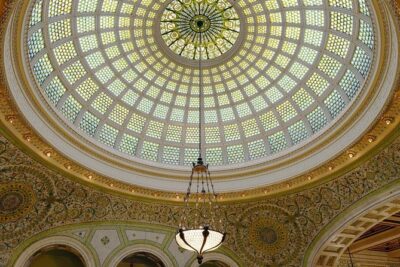
Chicago Walking Tour: Historic Treasures of Chicago
Read our review →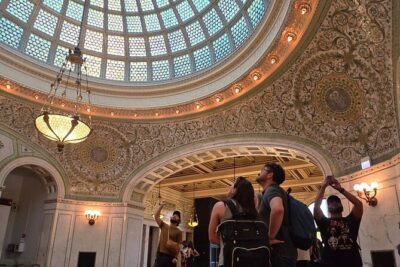

Historical and Architectural Chicago Fireboat River & Lake Cruise
Read our review →

Browse the lists this tour appears in