
Review · PORTUGAL
Conímbriga Roman Ruins & Museum | Private Tour
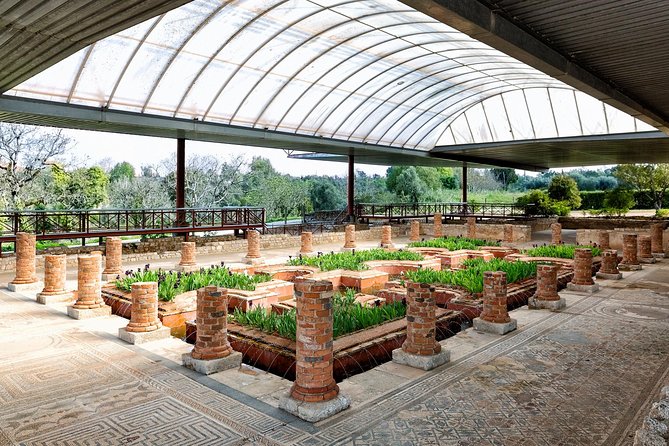
Conímbriga gives you a close look at Roman Portugal through colorful floor mosaics, wall remains, an ancient viaduct, and small objects from ordinary life. The site is less grand than Rome or Pompeii, but its well-preserved mosaics and local focus make it a useful stop for understanding Roman Coimbra.
I like the private format, since you can ask questions without waiting for a large group. I also like the air-conditioned transport and included admission, especially if you are staying in Coimbra and want the trip handled from pickup to return.
The main caution is scale. If you have already visited Rome, Pompeii, or Herculaneum, Conímbriga may feel modest. The guide matters here, and Eva has been singled out for bringing the ruins and wider region to life.
Key points to know before booking
- Conímbriga has some of Portugal’s finest Roman mosaics, along with wall paintings, intact walls, and remains of ancient water systems.
- The Monographic Museum completes the visit, showing small artifacts that explain cooking, trade, household life, and Roman customs.
- A private guide changes the pace, giving you room for questions and more personal explanations.
- The visit lasts about three hours, with roughly two hours at the museum and archaeological site.
- Pickup is offered, and transport is in an air-conditioned vehicle with entrance fees included.
- The $96.11 per-person price buys convenience and attention, but it is less compelling if you only want a quick look at ruins.
Why Conímbriga is worth the trip from Coimbra
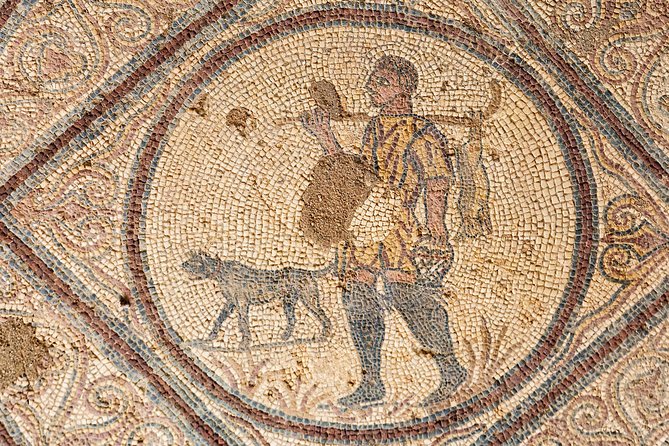
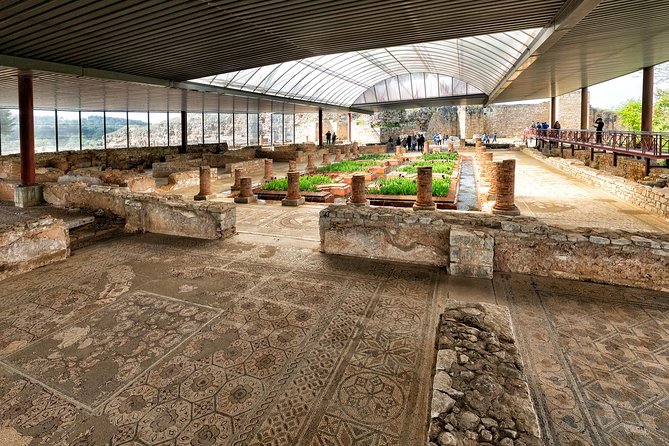
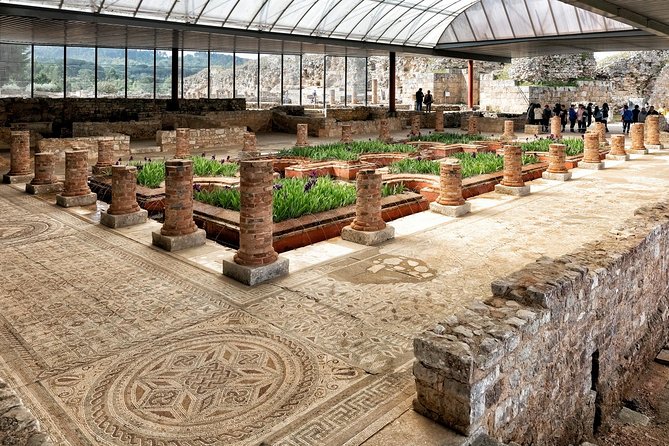
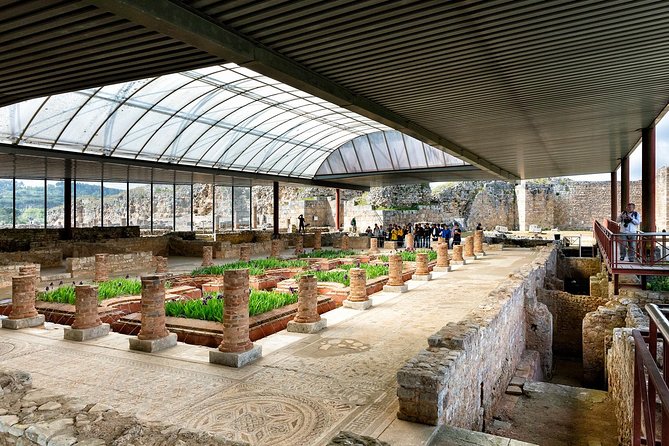
Conímbriga is one of the clearest places in Portugal to see how Roman rule shaped daily life in this part of the Iberian Peninsula. You are not simply looking at a few broken columns. The site includes residential remains, colorful mosaic floors, traces of painted walls, sturdy sections of masonry, and evidence of the water network that supported the settlement.
The appeal is local and human. You can see the kind of floors, rooms, household objects, and building materials that belonged to people living in Roman Portugal. A guide can connect those physical remains with trade, domestic routines, social status, and the region’s role on Roman routes.
I would not compare Conímbriga directly with the Colosseum or Pompeii. It does not have the same scale or theatrical impact. Instead, it offers a quieter visit with a more focused look at one Roman settlement. That difference matters. If your interest is ancient life in Portugal, the site earns its place on your schedule. If your goal is the biggest Roman spectacle possible, your expectations should be modest.
The site is also useful because the museum and ruins work together. The stones outside show the shape of the settlement, while the museum’s smaller objects help you understand how people used those spaces. Skipping the museum would leave part of the story behind.
More Private History Tours in Portugal
- Porto: Private Tour of the Historic City in a Ford T Car
★ 4.8 · 932 reviews - Historic Porto by Private Electric Tuk Tuk to Top Landmarks
★ 4.5 · 735 reviews - Private Tuk Tuk Tour Through Lisbon’s Historical Streets
★ 5.0 · 734 reviews
What the three-hour visit includes
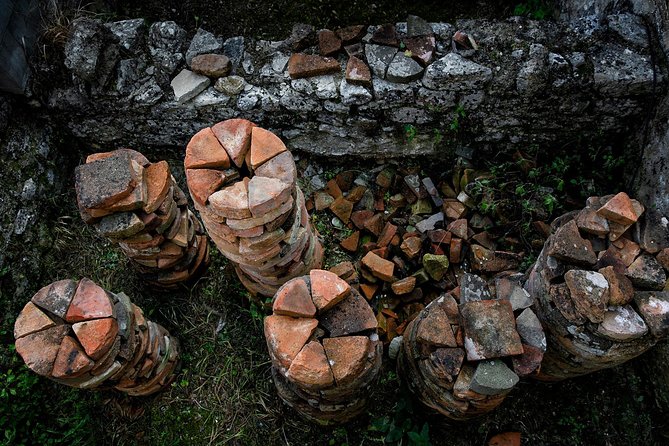
The tour is built around one main stop, the Museu Monográfico de Conímbriga, also known as the National Museum. You spend about two hours visiting the museum and the archaeological area, with the remaining time used for transport and the practical movement around the visit.
That simple structure is a strength. You are not rushed through several unrelated attractions. The guide can keep the focus on Conímbriga and adjust the explanation to your interests. If you want to ask about Roman trade, household objects, mosaics, or the province’s place in the wider empire, a private format gives you the chance to do so.
Morning and afternoon departure times are available. Choose the time that fits your Coimbra plans, but remember that the tour itself is only about three hours. It works well as a half-day addition rather than as a full-day outing.
The tour includes an air-conditioned vehicle, admission fees, and taxes. Pickup is offered, which removes one of the main hassles of arranging a visit outside Coimbra on your own. Coffee, snacks, soft drinks, and alcoholic drinks are not included, so plan around the visit rather than expecting refreshments during it.
Reading the Roman ruins at Conímbriga
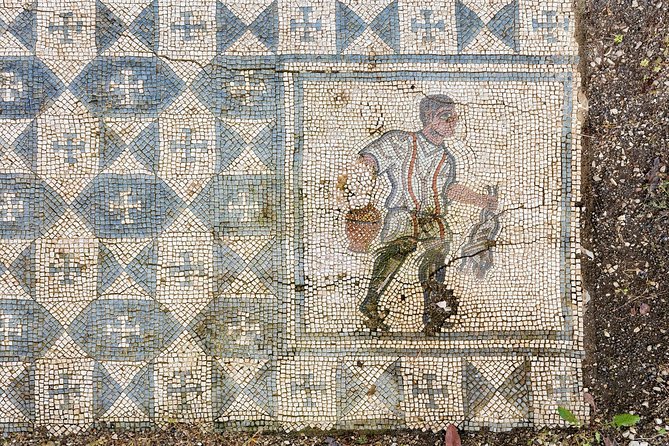
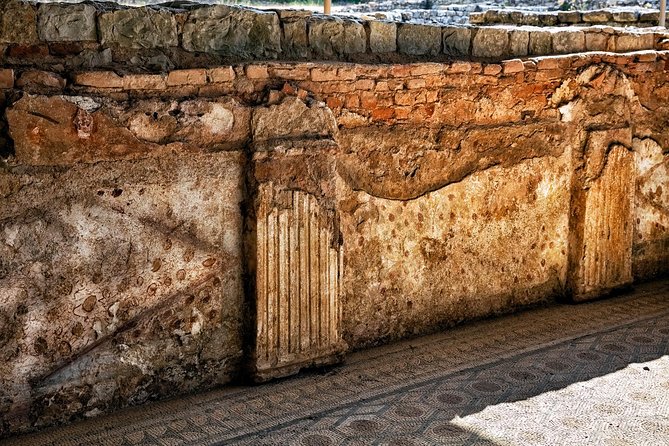
The outdoor site rewards careful looking. Colorful mosaic panels are among its strongest features, and you can see them at close range rather than viewing them only from a distant overlook. Wall paintings and sections of intact wall add a sense of the rooms that once occupied the settlement.
The remains of the viaduct and aqueduct are especially useful for explaining how a Roman town functioned. Water supply is not as flashy as a temple or amphitheater, but it tells you a great deal about planning, engineering, hygiene, and urban life. A good guide can turn those remains into practical clues about how the settlement worked.
The private setting is valuable here because Roman ruins can become a blur of stone without context. You might look at a wall and see only masonry. The guide can explain what it likely supported, how building materials were used, and how the site connected to trade and regional development.
One strong point in the available feedback is the praise for patient explanations. Eva, specifically, has been described as taking time with questions and not hurrying the visit. That is the kind of guiding this site needs. You will get more from Conímbriga if you can stop when something catches your attention.
Still, do not expect every feature to be fully reconstructed. The experience is archaeological, not theatrical. You will spend much of the time interpreting foundations, fragments, and partial walls. The mosaics provide visual drama, but the site asks you to use your imagination.
The Monographic Museum and the small objects
The museum is more than a quick room of display cases. Its artifacts give the ruins a daily-life dimension that the larger remains cannot provide on their own.
Small objects can seem less exciting than a mosaic at first glance, but they often answer the most useful questions. What did people use at home? What did they trade? What materials were common? How did Roman customs appear in a provincial settlement? The museum helps connect those questions to the rooms and buildings outside.
I especially like the balance between the two parts of the visit. The ruins show the town in broad terms. The museum narrows the view to objects and routines. Together, they make Conímbriga feel less like an abandoned set of walls and more like a place where people cooked, worked, traded, decorated their homes, and managed everyday tasks.
The museum also helps if you are less familiar with Roman archaeology. You do not need to identify every architectural fragment to enjoy the visit. The displays and guide’s commentary can provide a basic framework, while more experienced archaeology fans can ask about materials, building methods, and regional connections.
Allow enough attention for this part. The outdoor remains are usually the first attraction, but the museum is where the site’s human details become easier to grasp.
More Archaeological Site Tours in Portugal:
- Discovering the Roman Ruins of Conímbriga and the Caves of Sicó
★ 5.0 · 32 reviews - Pompeii: Entry Ticket and Guided Tour with an Archaeologist
★ 4.8 · 19,459 reviews - Athens: Acropolis & up to 5 Archaeological Sites Combo Pass
★ 4.2 · 13,904 reviews - Pompeii: Small Group Tour with an Archaeologist
★ 4.8 · 12,264 reviews
What a private guide adds
The strongest reason to choose this version of the visit is the guide, not just the vehicle. A private tour means only your group participates, so the pace can be more flexible than on a standard group outing.
You can ask for more detail about Roman life, Coimbra, Portugal, trade routes, or the archaeological site itself. You can also ask the guide to clarify points that are easy to miss, such as why a particular mosaic matters or how the water system supported the settlement.
Eva received especially warm praise for her explanations, patience, and friendly manner. One visitor also appreciated help continuing the journey afterward, including a ride to the train station. That kind of assistance may depend on the day and the agreed pickup plan, so do not treat it as a guaranteed extra, but it shows the practical value a private guide can bring.
Another useful feature is the broader regional context. The guide can place Conímbriga within Coimbra’s story rather than treating it as an isolated ruin. A visit becomes more rewarding when you understand how Roman settlement, trade, and later Portuguese identity overlap in this part of the country.
The private arrangement is not automatically better for everyone. If you enjoy reading signs at your own speed and need only admission, a self-guided visit may cost less. Here, you are paying for transport, organization, explanation, and personal attention.
Is $96.11 per person good value?
At $96.11 per person, this is not the cheapest way to see an archaeological site. The value depends on how much you would otherwise spend on transport, entrance, planning, and a guide.
For a private group, the price can make sense if you want a straightforward half-day from Coimbra. Your admission and vehicle are included, and you avoid building the outing around public transport or arranging separate transfers. The air-conditioned vehicle is also a practical benefit during warmer weather.
The price is harder to justify if you are traveling alone on a tight budget or if you are content with a short, independent visit. The site is relatively focused, and not everyone needs three hours of private explanation. It also may feel expensive if you expect a large Roman complex on the scale of Pompeii.
I would consider it a better value for couples, families, or small groups who care about context and convenience. The more people in your private group, the easier it is to see the fee as paying for a shared guide and vehicle rather than a single admission ticket.
The strong 4.7 rating and 91 percent recommendation point to a dependable experience, though the lower rating also gives you a useful warning: the destination itself will not impress everyone equally. Buy this for the guide and the chance to understand Roman Portugal, not just for spectacular ruins.
Planning your day around Conímbriga
You can choose a morning or afternoon departure. That flexibility makes it easier to fit the visit around other Coimbra plans, including the city center and university area.
Do not assume the university is part of this tour. It is not listed as an included stop. One person continued afterward to see Coimbra University independently, including its library and cabinet of curiosities, but that is a separate plan and requires its own ticket and timing.
If you are arriving in Coimbra by train, confirm the pickup details before booking. Pickup is offered, and the experience is near public transportation, but the exact meeting arrangement should be settled in advance.
Wear practical shoes for the archaeological area and bring water, since refreshments are not included. The tour requires good weather. If poor weather cancels it, you are offered another date or a full refund. A minimum number of participants is also required, and if that condition causes cancellation, you are offered another date, another experience, or a full refund.
The ordinary cancellation rule is strict: once booked, the experience is non-refundable and cannot be changed for personal reasons. Check your schedule before paying, especially because confirmation can take up to 48 hours and remains subject to availability.
Who will enjoy this private Roman tour?
I would recommend Conímbriga to people who enjoy archaeology, Roman Portugal, museums, and smaller historic sites. It is particularly well suited to anyone who wants to understand how Roman rule affected ordinary life rather than simply photograph a famous monument.
Families with older children may also appreciate the private format. Questions are easier to handle, and the guide can keep the visit moving at a comfortable pace. The activity states that most people can participate, and it is near public transportation.
This is a good choice if you are staying in Coimbra and want an organized outing without renting a car. It is also useful for a small group that values a personal guide and does not want to join strangers.
I would be more cautious if your main aim is dramatic Roman architecture. Compared with Rome, Pompeii, or Herculaneum, Conímbriga is smaller and less complete. It can still be rewarding, but you should arrive ready to study mosaics, foundations, walls, and artifacts rather than expect a grand spectacle.
Should you book Conímbriga?
Book this tour if you want a clear introduction to Roman life in Portugal, comfortable transport from Coimbra, and a private English-language guide who can answer questions. The museum, mosaics, wall paintings, viaduct, and water-system remains offer enough substance for a thoughtful half-day.
Skip it if you have little interest in archaeology or if you only want the most famous Roman ruins in Europe. The site’s appeal depends on patience and context, and the $96.11 price is mainly paying for convenience and personal guiding.
For most history-minded visitors based in Coimbra, I think the private format is the right way to approach Conímbriga. Go with realistic expectations, give the museum proper time, and let the guide explain the ordinary details. That is where this experience earns its value.
FAQ
Where does the tour take place?
The tour visits the Museu Monográfico de Conímbriga, also known as the National Museum, and the Conímbriga Roman archaeological site near Coimbra, Portugal.
How long does the experience last?
The tour lasts approximately three hours. About two hours are scheduled for visiting the museum and site.
Is this a private tour?
Yes. Only your group participates in the private activity.
Is transportation included?
Yes. An air-conditioned vehicle is included, and pickup is offered.
Is admission included?
Yes. Admission fees and all taxes are included in the price.
Can I choose the departure time?
Yes. Morning and afternoon tour times are offered.
What happens if bad weather cancels the tour?
If poor weather causes cancellation, you are offered a different date or a full refund.
Just added around Portugal
- All of Tomar’s history and loads of fun.★ 5.0 · 39 reviews
- Schist Villages and Medieval Castles Tour★ 5.0 · 30 reviews
- Discovering the Roman Ruins of Conímbriga and the Caves of Sicó★ 5.0 · 32 reviews
- Arrábida: Beach, Nature & History★ 5.0 · 89 reviews
- Albufeira Wine Tour: 2 Vineyards, 6 Tastings & Historic Silves★ 5.0 · 123 reviews
- Albufeira History Walking Tour with Wine and Tapas★ 5.0 · 47 reviews
- Albufeira Wine Tasting: Boutique Winery Tour & Historic Silves★ 5.0 · 380 reviews
- Private jeep safari with historical highlights of Silves town★ 5.0 · 33 reviews
Portugal History Tours, compared.

Lisbon: History, Stories and Lifestyle Walking Tour
Read our review →
Douro Valley: Historical Sites, Wine Experience, Lunch & Cruise
Read our review →
Lisbon: Fado Show and Wine inside Medieval Walls
Read our review →
Porto: An Intimate Fado Show in a Historical Tavern
Read our review →

Lisbon: Daytime or Sunset Boat Cruise with History and Wine
Read our review →
Porto: Private Tour of the Historic City in a Ford T Car
Read our review →
Browse the lists this tour appears in