
Review · BOSTON
Boston History & Highlights Tour: From Revolution to Today
Boston’s story comes alive best on foot, and this tour connects the waterfront, the Freedom Trail, Beacon Hill, and the Public Garden in one tidy route. You’ll move from the Boston Massacre site to red-brick Acorn Street, with local stories filling in the gaps that plaques often miss. The small group, capped at 16 people, is a major plus.
I like the way the tour links old Boston to the city you see today, including the Custom House Tower and John Hancock Tower. I also like the human touch: guides such as Bob, Molly, Allen, Nabil, and Sully have been praised for clear storytelling, patience, and local insight. The main drawback is the 4-kilometer walk, which includes hills, uneven ground, and outdoor time in rain, snow, or cold.
Key points at a glance
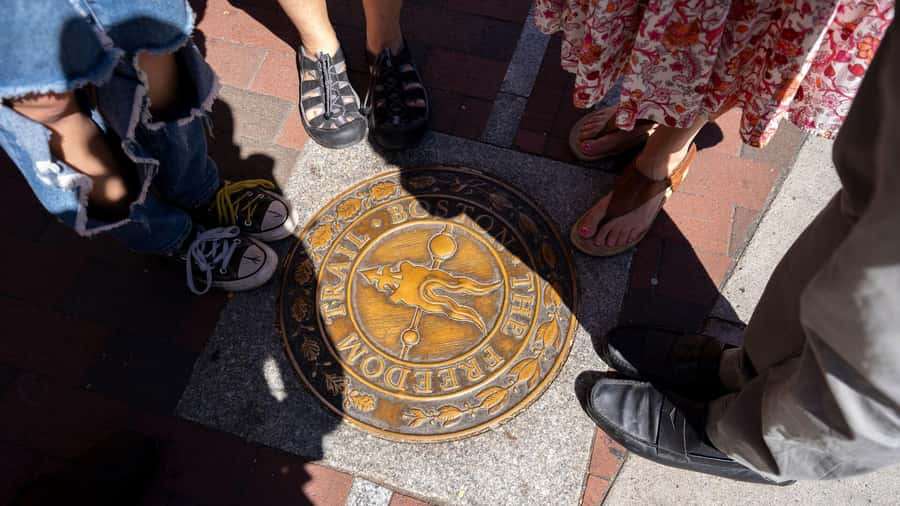
- Boston Harbor to Beacon Hill: See major sights in a logical two-hour walk rather than hopping between disconnected stops.
- A small group of no more than 16: You can hear the guide and ask questions without shouting across a crowd.
- Weekday access to the State House: The route may include a look inside this important working building on weekdays.
- Strong local storytelling: Guides including Bob, Molly, Allen, Nabil, Sully, and Dillon have brought Boston’s people and events to life.
- A local treat included: A surprise snack or drink may be offered, and alcohol can be served to adults with proper identification.
- Useful final recommendations: The tour ends at Boston Public Garden, where your guide can help shape the rest of your visit.
Why this two-hour Boston walk works

At $44 per person, this is not the cheapest way to walk Boston. It is a reasonable price if you want context, a manageable route, and a guide who can adjust the conversation to your interests.
You could walk much of the Freedom Trail on your own for free. The catch is that the red-brick path does not explain itself. You may see the Old State House, Faneuil Hall, or a burial ground, yet miss the political arguments, local personalities, and modern impact behind those places.
This tour gives you a broad first look without taking half a day. The route covers about 4 kilometers in two hours, so the pace is purposeful but not a race. Several people have appreciated the regular stops for stories, photographs, and questions. Older walkers can manage it if they are comfortable with city walking, though anyone unsteady on their feet should think carefully about the distance and uneven surfaces.
The small-group format matters here. A guide can pause for a question, make sure everyone hears, and change the emphasis for the people in front of them. Molly has been praised for keeping a comfortable pace, while guides such as Bob and Sully have been singled out for local stories and warmth. That kind of personal attention is hard to get on a large city tour.
More History Tours in Boston:
- Boston: Freedom Trail History Small Group Walking Tour
★ 5.0 · 6,450 reviews - Tour of Historic Fenway Park, America’s Most Beloved Ballpark
★ 4.5 · 3,013 reviews - Boston Food & History: Pizza, North End & Freedom Trail
★ 5.0 · 1,772 reviews
Starting at Boston Harbor and the Greenway
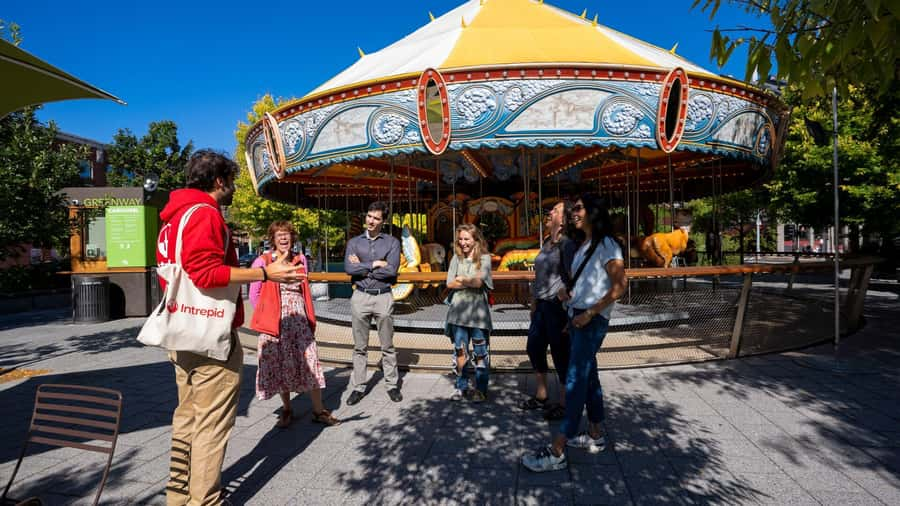
The meeting point is the Greenway Carousel, beside the carousel entrance. This puts you near Boston Harbor and the Rose Kennedy Greenway, a useful central location if you are staying downtown or arriving early to explore the waterfront.
The opening walk gives you a quick sense of Boston’s geography. You will stroll through a waterfront park, pass the Greenway, and look toward the harbor before moving into the older commercial heart of the city.
The route then takes in State Street and the Custom House Tower. Built in 1915, the tower was Boston’s first skyscraper, and its height helps explain how the city began to grow upward after centuries of lower brick buildings. It is a good early reminder that this is not only a colonial-history tour. The subject is Boston changing over time.
The waterfront portion is scenic, but it is also exposed. On a January tour, one visitor chose a 16-degree day and appreciated the guide finding indoor moments to help the group warm up. Bring the right coat, especially in winter, and do not count on Boston’s weather showing mercy simply because the tour is short.
Faneuil Hall, Quincy Market, and the city’s public voice
From the waterfront, you move toward Faneuil Hall and Quincy Market. These places are familiar names, but a guide adds value by explaining how they functioned as public spaces, trading centers, and stages for political debate.
Faneuil Hall is closely tied to Boston’s revolutionary story. It was a place where speeches and arguments helped shape public opinion before and during the American Revolution. The building you see today has changed over time, so the guide’s explanation helps separate the original events from the later layers.
Quincy Market brings a different mood. It is more commercial and social, and the contrast is useful. Boston’s past was not only made in meeting halls. It was also shaped by food, commerce, shipping, and daily city life.
Do not expect a long food stop here. Additional food and drinks are not included, and the tour keeps moving. If you want to sample Quincy Market, plan to return after the walk rather than counting on a meal during the two-hour route.
The Old State House and the Boston Massacre site
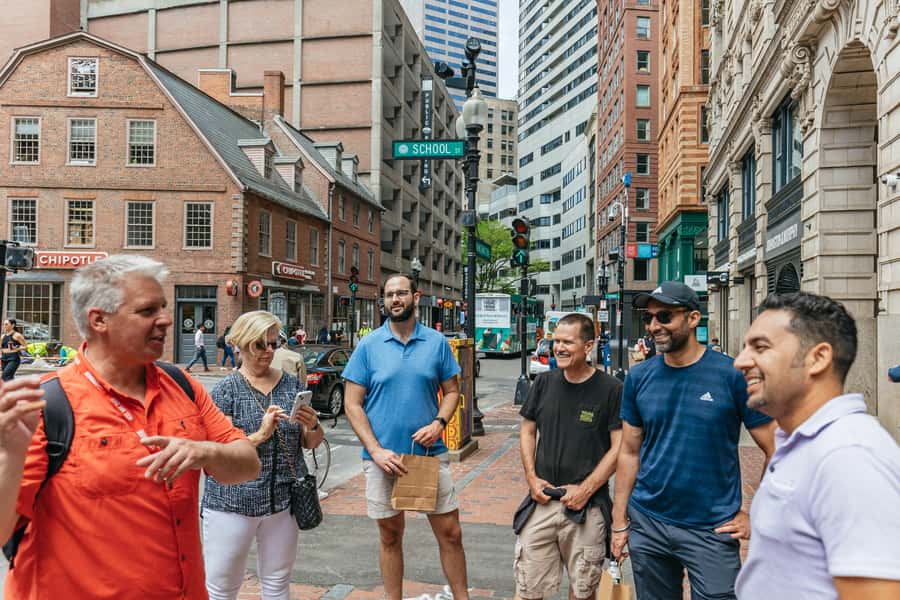
The Old State House is one of the most important stops because it brings several parts of Boston’s story together. It served as a center of colonial government and later became associated with the new American republic.
Outside, you will hear about the Boston Massacre, the 1770 confrontation that helped fuel colonial anger toward British rule. The event remains politically useful to discuss because it shows how words, images, and public memory can shape a movement. Your guide can help explain not only what happened, but how the event was presented to people at the time.
This is where strong storytelling makes the route worth paying for. Allen Pierce, for example, has been praised for making figures such as Benjamin Franklin and Samuel Adams feel like real people rather than names from a schoolbook. That approach suits Boston, where the personalities and arguments matter as much as the dates.
The walk through Downtown Crossing then changes the setting again. You leave the revolutionary landmarks behind for a busy modern shopping district, which makes the city’s growth visible under your feet.
Same city, a different century:
- Boston: Freedom Trail History Small Group Walking Tour
★ 4.9 · 1,590 reviews - City Cruises Boston Historic Sightseeing Harbor Cruise
★ 4.5 · 1,388 reviews - Boston Pizza Lovers Food and History Walking Food Tour
★ 4.5 · 1,082 reviews - Boston Freedom Trail History Pub Crawl Small-Group Tour
★ 5.0 · 996 reviews
Old City Hall and Boston’s later chapters
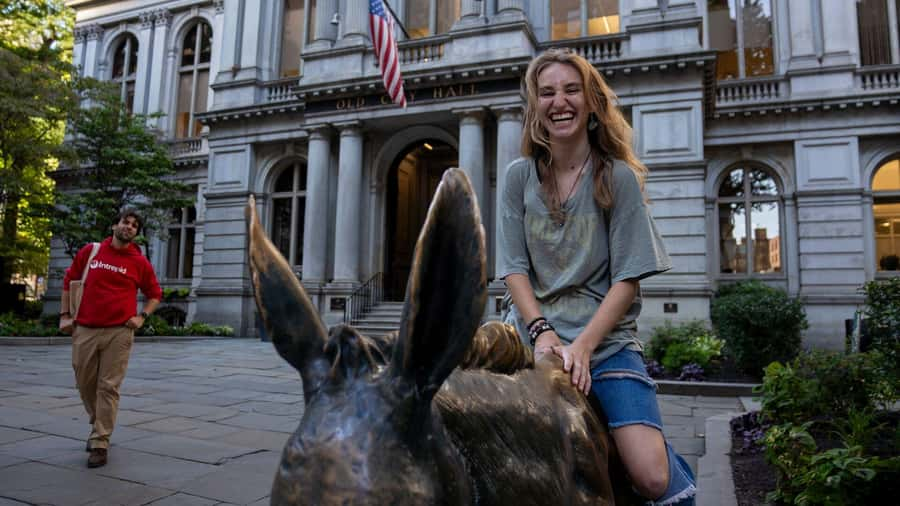
Old City Hall gives the tour a chance to move beyond the Revolution. Its grand architecture reflects a later period of civic confidence, when Boston was presenting itself as a major American city rather than a colonial port.
This transition is one of the tour’s best ideas. Many Freedom Trail walks concentrate so heavily on the 1700s that modern Boston feels like an afterthought. Here, the guide connects old sites with the city’s present-day identity and points out how landmarks still affect public life.
You will also see views toward the John Hancock Tower, a sharp contrast to the Old State House and Beacon Hill’s brick rows. The changing skyline helps you read Boston as a city built in layers, not a preserved museum.
The tour is not designed as a full architectural survey, and you will not spend long inside every building. Instead, it gives you enough context to recognize what deserves a longer visit later.
A weekday look inside the Massachusetts State House
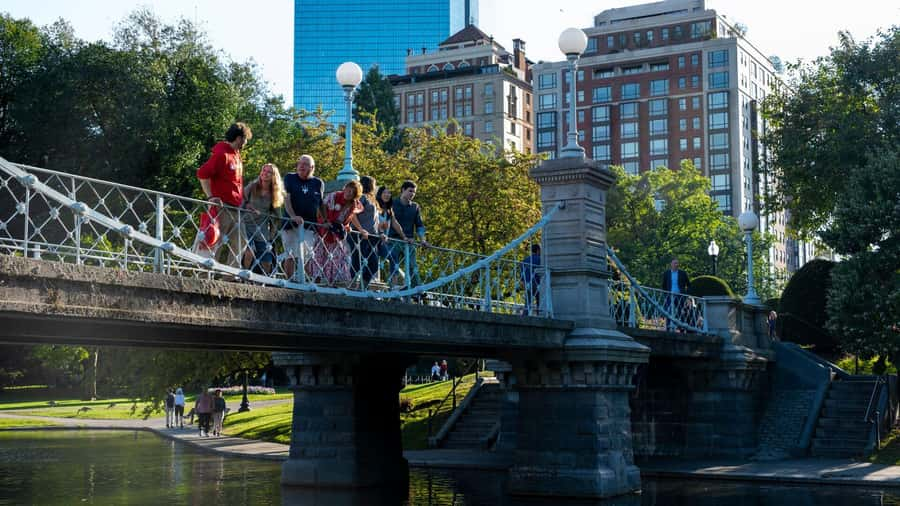
On weekdays, the route includes a visit inside the Massachusetts State House. This is an important qualification. If you book a weekend or a day when access is not available, the indoor portion may not be part of your experience.
Inside, you can expect a look at one of the state’s key political buildings, along with views across modern Boston that include the John Hancock Tower. The value is not simply the interior design. It is the chance to connect the Revolution’s political ideals with the machinery of government that followed.
Site access can change, and closures may require a similar alternative. That is worth keeping in mind if entering the State House is your main reason for booking. Treat it as a useful possibility on a weekday, not an absolute guarantee.
Beacon Hill, Acorn Street, and red-brick Boston
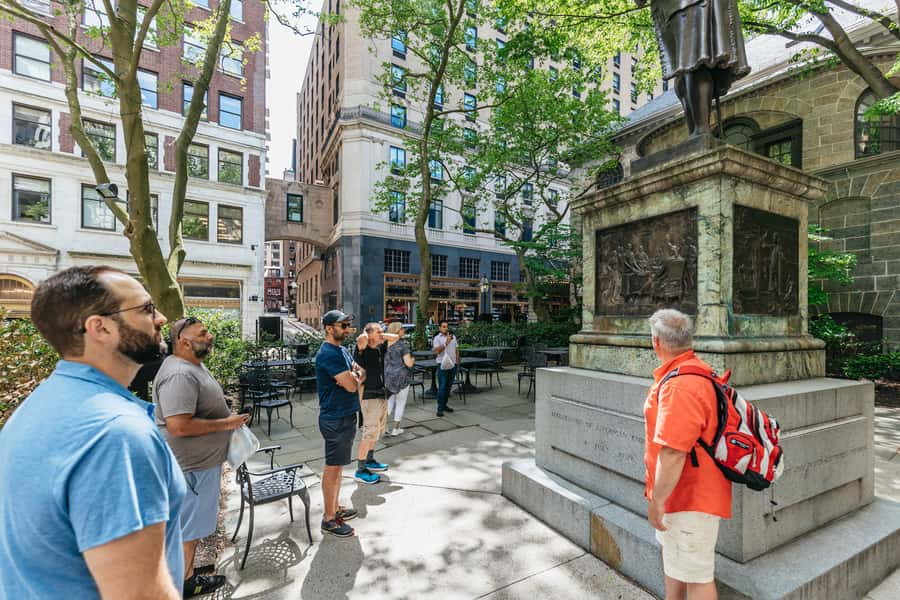
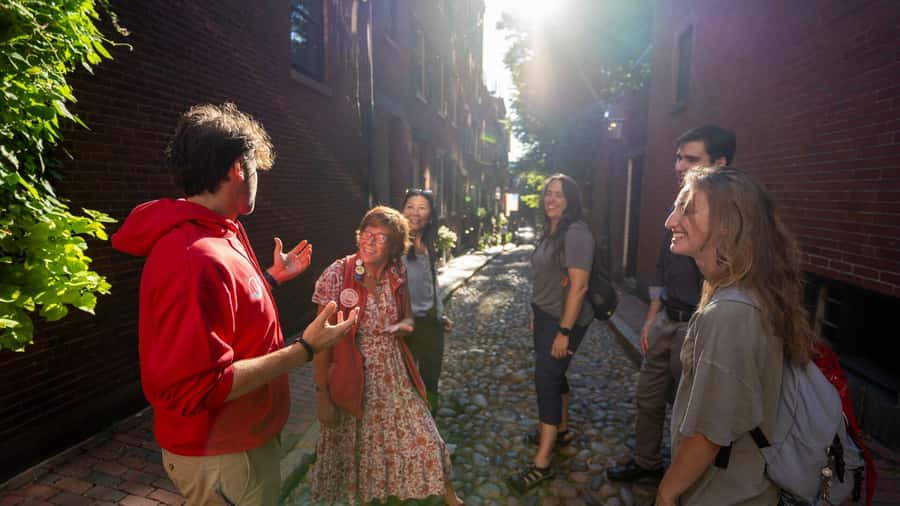
Beacon Hill is where the walk becomes especially atmospheric. Narrow streets, brick row houses, iron railings, and carefully preserved details give this part of Boston a strong sense of place.
Acorn Street is a favorite photo stop, and guides may help with pictures so you do not have to rely on a stranger or a hurried selfie. The street is small, so be respectful of residents and keep the group moving when asked.
The neighborhood also gives your guide room to discuss how Boston’s social and political life changed after the revolutionary era. The red-brick buildings are lovely, but they are not the whole story. Ask questions if you want more than architecture.
Beacon Hill includes slopes and uneven pavement. The route is suitable for all ages and fitness levels according to the activity details, but that does not mean it is flat or effortless. Comfortable walking shoes are sensible, and anyone with mobility concerns should consider the 4-kilometer distance before booking.
Finishing in Boston Public Garden

The tour ends at Boston Public Garden, one of the city’s most peaceful central spaces. This is a pleasant finish after the tighter streets of Downtown Crossing and Beacon Hill.
The Public Garden gives you a final view of Boston’s character: formal paths, open space, and a calm setting close to the city center. Your guide can also suggest what to do next, which is useful if this is your first afternoon in Boston.
The endpoint is not the same as the Greenway starting point. One visitor who made an extra stop afterward became a little turned around, so keep that in mind when planning your next activity. The end near the Public Garden is convenient for continuing into Beacon Hill or nearby central areas, but allow time to orient yourself.
Guides and the human side of the tour
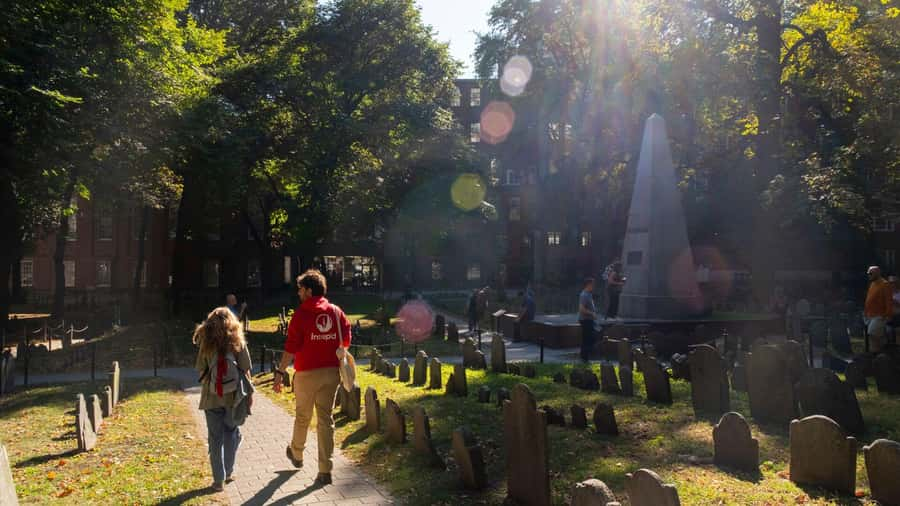
The strongest part of this experience is the guide. Names that have received especially warm praise include Bob, Molly, Allen, Nabil, Sully, Dillon, Luci, Tim, and Conor.
Their styles differ. Allen has been noted for making historical figures vivid. Molly has been described as energetic, patient, and good at keeping a comfortable pace. Sully has drawn praise for his connection to Boston as someone who grew up there. Dillon has provided a helpful follow-up summary with extra suggestions, while Bob has sometimes extended the tour beyond the scheduled two hours.
That last point is pleasant when it happens, but do not plan your day around receiving extra time. The stated duration is two hours, and the route should be treated as a compact city walk.
A surprise local treat is included. It may be food or a drink, and alcohol may be served, so bring proper identification if you are of legal drinking age and would like to take part. Additional food and drinks are not included, and the exact treat can vary.
Who will get the most from it
I would choose this tour for a first or second day in Boston. It gives you a clear map of the central sights and helps you decide which places deserve a return visit.
It also suits solo visitors. A small group gives you company without the noise and rigid feel of a large coach tour. One solo participant particularly appreciated being paired with an interested, polite group.
Families can join, and children under six are permitted to participate free of charge. The route is suitable for all ages, but parents should remember that two hours of city walking can be tiring for small children.
This is also a good choice for anyone who knows little about American history. A guide can explain why the Boston events of the 1700s mattered without assuming you already know every name and battle. One guide adjusted the discussion for visitors from Australia, making the colonial period easier to follow.
You may want something else if you prefer long museum visits, a relaxed café pace, or a tour focused on one subject only. This experience covers a lot of ground. It gives you breadth and local interpretation, not a detailed examination of each building.
Practical planning for the 4-kilometer route
The tour usually runs in the afternoon and lasts two hours. Wear shoes you can trust on pavement, brick, slopes, and uneven ground.
Boston weather can change quickly, and the tour operates in rain, snow, or shine. Bring layers, rain protection, and sun protection according to the forecast. In winter, gloves matter more than you may expect because parts of the route are outdoors.
Arrive at the Greenway Carousel meeting point early. The route is compact, but a late start can be awkward for a walking group. One guide once waited for a late participant, but you should not assume that will always happen.
You can cancel up to 24 hours before the tour for a full refund, and the reserve-now, pay-later option keeps your plans flexible. The tour is offered in English, and a private group is available if you want a more personal format.
The experience is carbon neutral and operated by a B Corp certified company. That does not change the route itself, but it may matter to you if responsible tourism is part of your booking decision.
Is the $44 price fair?
For $44, you are paying mainly for the guide, the route design, and the chance to ask questions. The buildings and public streets are not exclusive, and you can walk much of the route without a ticket.
The value improves if you use the tour as an orientation walk. Afterward, you will know where the waterfront, Freedom Trail, Downtown Crossing, Beacon Hill, and Public Garden fit together. You can then return to the places that caught your interest.
The value also improves when the group is small and the guide is strong. A large group can make a famous historic walk frustrating. With no more than 16 people, you have a better chance of hearing the details and getting a direct answer.
Should you book this Boston history tour?
Book it if you want a friendly, compact introduction to Boston with a real human guide, a manageable route, and a useful mix of revolutionary landmarks and modern city life. The 4.8 rating from 178 reviews reflects very consistent praise for guide enthusiasm, local insight, patience, and storytelling.
I would especially recommend it for first-time visitors, solo visitors, families with older children, and anyone who wants more than a self-guided walk but less than a full-day commitment.
Skip it if you dislike walking in poor weather, need step-free access, or want guaranteed entry to the Massachusetts State House. For most people who can comfortably walk 4 kilometers, though, this is a sensible way to get your Boston bearings fast and leave with better ideas for the rest of your stay.
FAQ
How long is the Boston History & Highlights Tour?
The tour lasts two hours and usually takes place in the afternoon.
How far do you walk?
The route covers about 4 kilometers, or 2.5 miles, through central Boston.
Where does the tour meet?
Meet at the Greenway Carousel, next to the carousel entrance.
Where does the tour end?
The tour ends at Boston Public Garden, not at the original meeting point.
Is the Massachusetts State House included?
On weekdays, the tour includes a visit inside the Massachusetts State House. Site closures can require a similar alternative.
Is the tour suitable for children?
Yes. The tour is child-friendly, and children under six may join free of charge.
Is food or a drink included?
A surprise local treat is included. Alcohol may be served, and proper identification is required. Additional food and drinks are not included.
Just added around Boston
- Boston’s North End History + Photo Walking Tour (SMALL Group)★ 5.0 · 27 reviews
- Boston’s Architecture, History + Photo Walking Tour (SMALL Group)★ 5.0 · 91 reviews
- Freedom Trail Guided Walking Tour (SMALL GROUP)★ 4.5 · 98 reviews
- Haunted Boston’s Historic Streets Walking Guided Tour★ 4.5 · 184 reviews
- Boston: Underground Railroad History Tour of Beacon Hill★ 5.0 · 141 reviews
- Beacon Hill Boston History + Photo Walking Tour (SMALL Group)★ 5.0 · 163 reviews
- A Taste of the Freedom Trail: Boston’s Iconic Food & History Tour★ 5.0 · 32 reviews
- Boston: Food and History of The Freedom Trail Private Tour★ 5.0 · 159 reviews
Boston History Tours, compared.
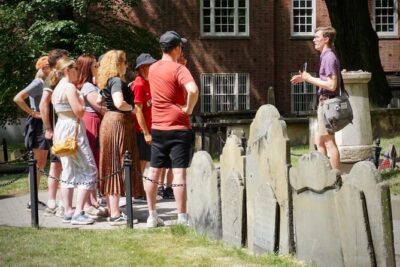
Boston: Freedom Trail History Small Group Walking Tour
Read our review →
Tour of Historic Fenway Park, America’s Most Beloved Ballpark
Read our review →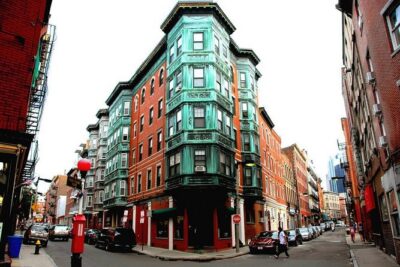
Boston Food & History: Pizza, North End & Freedom Trail
Read our review →Boston: Freedom Trail History Small Group Walking Tour
Read our review →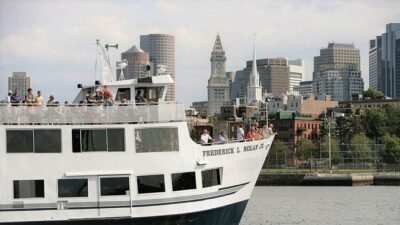
City Cruises Boston Historic Sightseeing Harbor Cruise
Read our review →
Boston Pizza Lovers Food and History Walking Food Tour
Read our review →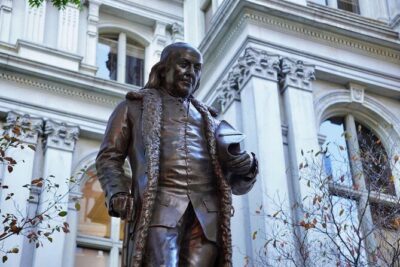
Boston Freedom Trail History Pub Crawl Small-Group Tour
Read our review →
Boston City View Bicycle Tour: History and Landmarks
Read our review →Browse the lists this tour appears in