
Review · BELGIUM
Historical Walking Tour: Legends of Gent
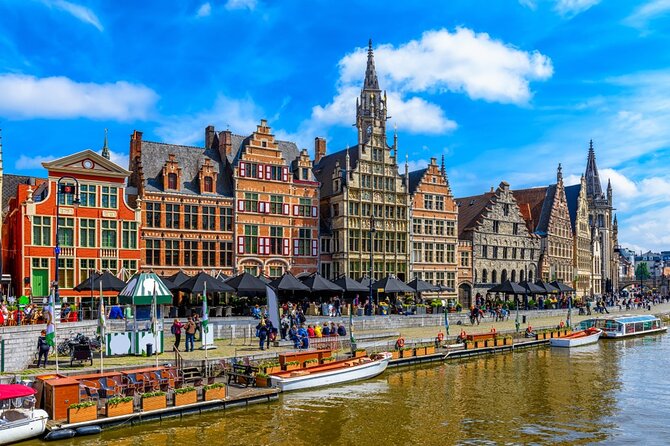
Ghent’s story comes alive through its odd details: a castle in the middle of town, a square known as both the square of death and the square of life, and a city hall that looks as if two architects argued halfway through the job. This two-hour walk links those stories with Ghent’s best-known sights, from St Michael’s Bridge to the Belfry and St Nicholas’ Church.
I like the route for two clear reasons. First, it gives you a useful city orientation without taking you inside every attraction, so you can decide where to return later. Second, the guides tend to mix dates and architecture with local legends, food tips, beer suggestions, and a little humor. The main drawback is that the walk is mostly an introduction: ten minutes at each stop is enough for context, not a full visit.
Key points to know before you go
- Ghent’s key sights fit into one compact route: You see the canals, three towers, castle, cathedral, town hall, and old market squares.
- The stories matter as much as the buildings: The guide explains rebellion, trade, punishment, religion, and the stubborn character of the people of Ghent.
- You finish near the Belfry: This is useful for planning a later visit to the tower or continuing toward St Bavo’s Cathedral and the city center.
- The walk is in English and lasts about two hours: Guides named in the feedback include Tatiana, Kasia, Kenny, Sophia, Robin, Camilla, Florian, Hans, and Liedewei.
- The price needs careful reading: The listed rate is $3.62 per person, but the format is pay what you want at the end, and the guide depends on that payment.
- The group can reach 35 people: That is manageable, but a large group can make canal-side stops and narrow streets less personal.
Starting beneath Ghent’s three towers at St Michael’s Bridge
The tour begins at Hostel Uppelink on Sint-Michielsplein, beside St Michael’s Bridge. This is one of the best places in Ghent to get your bearings because the city’s three famous towers line up in view: St Nicholas’ Church, the Belfry, and St Bavo’s Cathedral.
Your guide starts with Ghent as a medieval trading center. That opening gives the rest of the walk a clear purpose. You are not just looking at handsome stone buildings. You are learning why waterways, markets, guilds, churches, and city power all ended up packed into this small central area.
The bridge also provides a strong first photograph, with the canal, historic facades, and towers gathered in one frame. Give yourself a few minutes before the start to locate Hostel Uppelink and settle in. The meeting point is central and close to public transportation.
More History Walking Tours in Belgium
- Historical Walking Tour: Legends of Bruges
★ 5.0 · 2,541 reviews - Historical Walking Tour: Legends of Antwerp
★ 5.0 · 1,837 reviews - Brussels: Historical Walking Tour with Chocolate & Waffle Tasting
★ 5.0 · 1,165 reviews
Reading the old port at Graslei and Korenlei
From the bridge, you move toward Graslei and Korenlei, the canal-side heart of old Ghent. These quays once handled trade, and the guide points out which buildings were tied to that work.
This is where a local explanation helps. Without context, the canal frontage can look like a row of picturesque facades. With context, you begin to see warehouses, merchant buildings, and the waterway as parts of a working port.
The stop is brief, about ten minutes, so expect an overview rather than a building-by-building architectural lesson. I like this approach early in the walk. It gives you the basic economic story of Ghent before the route moves into its stranger legends and political conflicts.
Design Museum Gent and the city’s stubborn streak
The stop outside Design Museum Gent shifts from medieval trade to the character of the people of Ghent. Your guide explains how a particular aspect of the museum symbolizes the city’s rebellious and stubborn mindset.
The description does not promise museum admission, and the listed admission cost is not included. Treat this as an exterior stop and a short cultural explanation, not as a museum visit.
That distinction matters if you want to see the museum’s full collection. You would need to return separately and allow extra time. On the walking tour, the value is the connection between a modern design institution and Ghent’s long habit of resisting outside control.
A darker look at Het Groot Vleeshuis
Across the water, you see Het Groot Vleeshuis, the medieval covered Great Butchers’ Hall. Its setting is attractive, but the guide does not leave the building at the level of a pretty canal view. This is one of the stops where you hear darker details about its past.
The stop lasts around ten minutes and admission is free for the tour. Since you view the building from across the water, you should not expect an interior visit. Still, the stop shows how the route handles Ghent well: beauty comes first, then the less comfortable story behind it.
Same city, a different century:
- Ghent: 50-Minute Medieval Center Guided Boat Trip
★ 4.5 · 5,637 reviews - Brussels: Historical Tour with Chocolate & Waffle Tasting
★ 4.8 · 1,206 reviews - THE Storytelling Tour of Bruges | First Day Must | History & Tips
★ 5.0 · 925 reviews - Ghent: 40 Minute Medieval Center Guided Boat Tour
★ 4.4 · 884 reviews
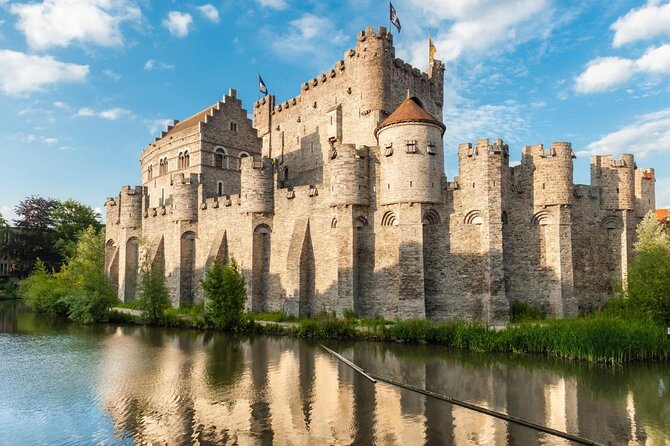
Gravensteen, a castle in the middle of town
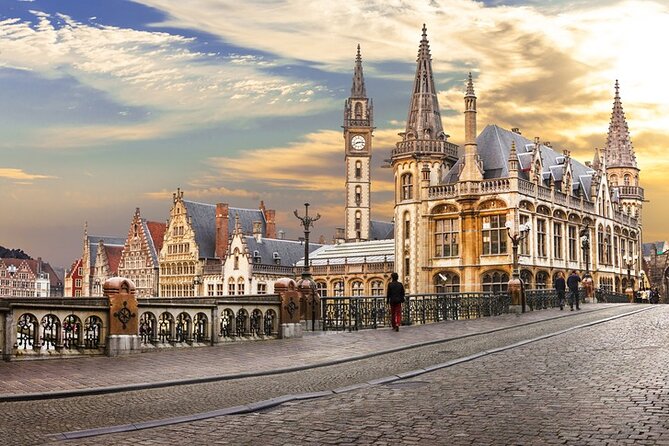
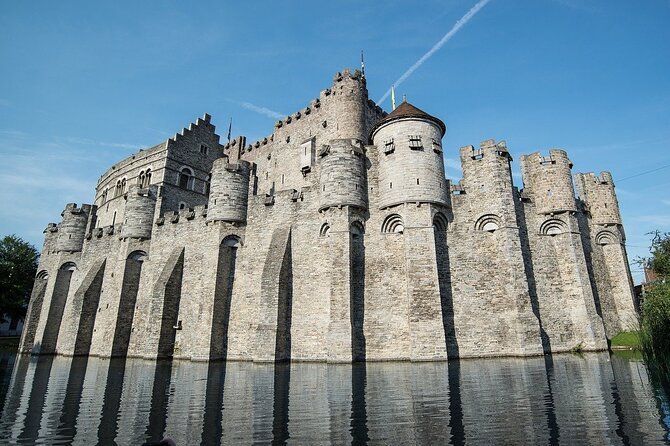
Gravensteen is the route’s most dramatic sight. The Castle of the Counts is a medieval fortress located right in the city center, and much of its structure remains well preserved.
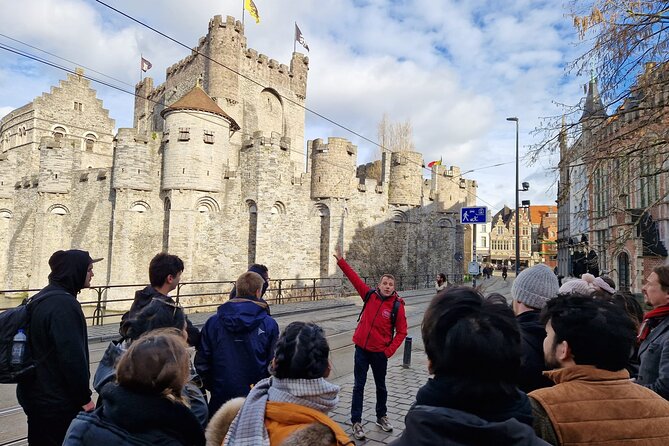
Your guide explains its past from outside. Admission is not included, so you will need a separate ticket if you want to enter. That is not a flaw in a walking introduction, but it is important to know. Ten minutes cannot cover the castle’s rooms, defenses, exhibits, and full story.
I would use the tour to decide if Gravensteen deserves more of your day. For many people, it will. The exterior alone gives you a sense of how unusual it is to find a serious medieval castle surrounded by an active city center.
St Veerleplein, where death and life share one square
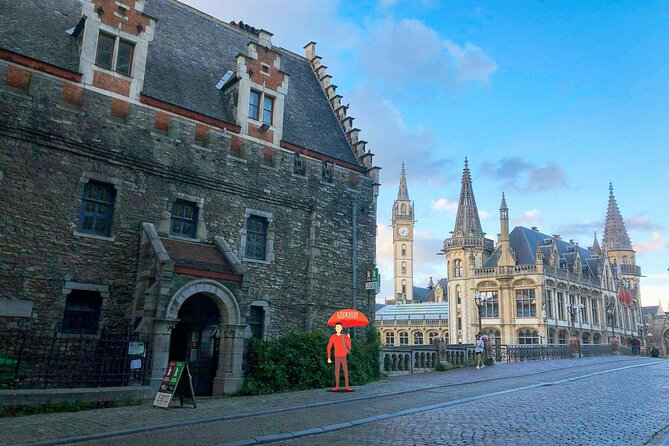
The square in front of Gravensteen is called both the square of death and the square of life. The guide explains the contrast, turning an ordinary-looking open space into one of the route’s most memorable history lessons.
This is a good example of the tour’s method. Rather than rushing from landmark to landmark, it pauses over a place whose meaning is not obvious. The explanation connects public space with punishment, community, and daily life.
Admission is free, and the stop takes about ten minutes. If you prefer a tour made only of grand monuments, this may feel like a detour. If you want Ghent’s social history, it is exactly the kind of stop that adds depth.
Huis van Alijn and Ghent’s former god house
The House of Alijn is the only remaining god house in Ghent. It once served as a hospital, and the guide tells the unfortunate story behind that change.
This stop gives you a different view of medieval and early city life. Churches and castles often dominate a first visit, but hospitals, charitable houses, and care for the sick reveal how ordinary people experienced the city.
The tour does not include a museum visit, so you hear the story from outside. It is a short stop, but one that helps balance the grand political tales with the lives of people who lived, worked, and suffered in these streets.
Vrijdagmarkt and the power of public squares
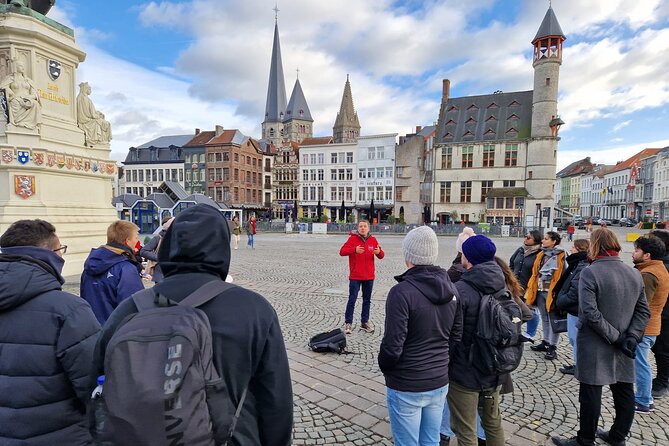
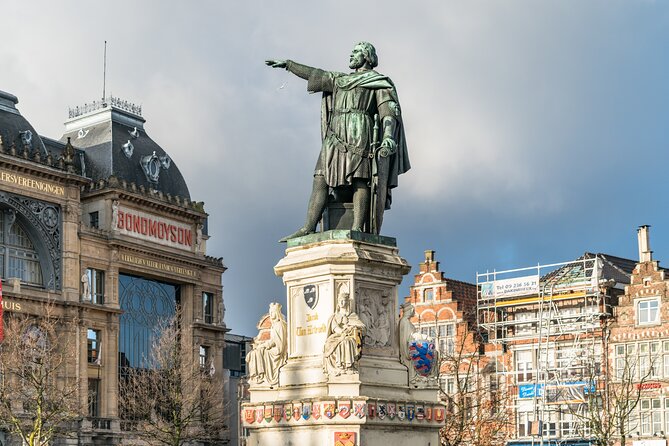
Vrijdagmarkt has played a major part in Ghent’s past. The statue in the middle of the square gives the guide a starting point for explaining its importance and the figure it honors.
Large public squares often make more sense once you know what happened there. Here, the guide places the square within the city’s political and civic story. It is another useful pause before the route turns toward modern street art and the city hall.
There is no admission fee, and the stop is about ten minutes. Since the square can be read as both a market and a political stage, listen for the way your guide connects commerce, public gatherings, and power.
Werregarenstraat, Ghent’s legal graffiti lane
Werregarenstraat offers a sharp change of mood. To protect monumental buildings from unwanted graffiti, Ghent designated a specific lane where street artists can work freely. The tour walks you through it.
This is one of the most practical and current stops on the route. You see how a historic city makes room for modern expression instead of pretending the old center can remain frozen in time.
The lane also breaks up the sequence of castles, churches, and medieval squares. I like that contrast. It reminds you that Ghent is not only a museum of old stones. It is a living city with rules, tensions, and creative work happening now.
Ghent Town Hall and the conflict behind its confused facade
The exterior of Ghent Town Hall looks as if it belongs to more than one building. Your guide explains the major conflict in Ghent’s history and why the city hall appears so visually confused.
This is a particularly effective stop for understanding local identity. Architecture here is not just decoration. It reflects competing powers, changing tastes, and a city that did not always agree with itself.
Admission is not included, so the tour focuses on the outside. That works well because the facade itself is the lesson. You get the political explanation, then can return later if the interior interests you.
St Bavo’s Cathedral and the Van Eyck masterpiece
St Bavo’s Cathedral is one of the route’s essential stops. The cathedral has a long history and houses major works of art, most famously the Ghent Altarpiece by the brothers Van Eyck.
The guide gives you the background you need before seeing the altarpiece in detail. Admission to the cathedral is listed as free for this stop, but the walking tour does not function as an extended art visit. If the Van Eyck work is a priority, plan extra time after the tour and check the cathedral’s current visiting arrangements.
This is where the route shifts from civic history to religious and artistic history. You see how Ghent’s wealth supported major churches and how the city’s past remains visible in art, stone, and ritual spaces.
The Belfry, the people’s tower
The Belfry of Ghent is the tour’s finishing point. Your guide presents it as the people’s tower, a symbol of the city’s independence, power, and stubborn spirit.
The building also once served as a prison, and its facade carries a bizarre legend. That detail gives the final stop the same story-driven flavor as the opening. You finish not with a dry date, but with a tale you are likely to remember.
Admission is not included. Since the tour ends at Sint-Baafsplein, you are well placed to visit the tower separately, continue to St Bavo’s Cathedral, or return to the central streets for food and drinks. The end point is one of the tour’s practical strengths because it leaves you near several major sights.
St Nicholas’ Church brings the route full circle
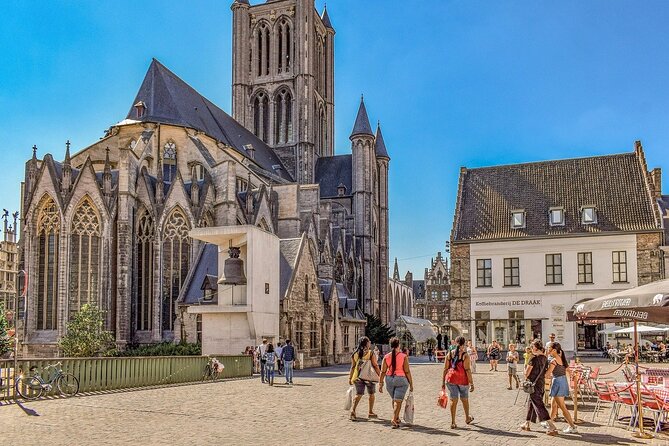
The final stop is St Nicholas’ Church, an early twelfth-century church overlooking Korenmarkt. St Nicholas is the patron saint of merchants and sailors, making the church a fitting ending for a tour that began with Ghent’s medieval trade.
The facade also illustrates a legend about its patron saint. That story brings the route back to its main theme: Ghent’s buildings are easier to remember when you connect them with people, occupations, conflict, and local tales.
Admission is free for the stop. The church is close to the starting area, so the walk forms a tidy circuit through the old center rather than leaving you far from where you began.
What the price and payment model really mean
The listed price is $3.62 per person, and the format is pay what you want at the end. That makes the tour a low-cost way to get a first look at central Ghent, but do not read the small booking price as the full social expectation. The guides depend on what you choose to pay after the walk.
The low upfront cost offers flexibility. You can see how the guide fits your interests before deciding what the experience was worth. At the same time, you should arrive understanding that the guide is not simply providing a standard paid excursion covered by the listed amount.
There is one serious payment concern in the supplied feedback. One party reported being asked for more than 200 euros for seven people outside the booking platform, despite having paid and holding confirmation. That account conflicts with the stated pay-what-you-want setup. It does not prove a normal practice, but it is enough reason to keep your booking confirmation, clarify the payment process at the start, and avoid handing over an unexpected large sum without an explanation.
Guides, group size, and the pace on foot
The tour is offered in English and can include up to 35 people. That maximum is not enormous for a city walk, but it is large enough that you may be standing toward the back at busy canal stops. A guide with a strong voice or microphone makes a real difference.
The names connected with especially strong guide feedback include Tatiana, Kasia, Kenny, Sophia, Robin, Camilla, Florian, Hans, and Liedewei. The repeated strengths are clear: warm delivery, humor, local stories, useful food advice, and the ability to keep a group interested for two hours.
You will be on your feet for roughly two hours. The pace is described as manageable, though the route is still a walking tour with frequent stops. Wear shoes suited to city streets, and consider the weather because the experience requires good conditions.
The guide may suggest places to eat, drink, buy chocolate, or explore. Most of the time, that is useful, especially at the start of a visit. One piece of feedback found repeated commercial recommendations distracting, particularly when the advice focused on buying chocolate rather than explaining Ghent’s food traditions. If you prefer history without shopping suggestions, keep that preference in mind.
Who should book this Ghent walking tour
I would choose this tour for a first visit, especially if you want to understand the old center before deciding which interiors deserve your time. It suits people who enjoy stories, architecture, local legends, and a quick sense of how the city fits together.
It also works well for visitors choosing between Ghent and Bruges. The route makes a case for Ghent through its trade, political independence, working port, castle, street art, and slightly unruly personality.
You may want something else if you prefer a small private group, long visits inside churches and museums, or a tightly academic history lecture. The group can reach 35 people, several admission fees are not included, and each stop is short.
Free cancellation is available until 24 hours before the start time. Within 24 hours, the payment is not refunded. Poor weather or failure to reach the minimum number of participants can lead to a different date, another experience, or a full refund.
Should you book Legends of Gent?
Yes, if you want a lively orientation to Ghent at a very low listed price and enjoy a guide who adds legends to the dates. The route covers nearly every major sight in the historic center, and its best feature is the way it explains why Ghent looks and feels the way it does.
Book it early if your schedule is fixed, since it is often reserved about 16 days ahead. Go in expecting an introduction, not a full sightseeing day. Keep your confirmation, understand the pay-what-you-want arrangement, and plan to return to Gravensteen, the Belfry, St Bavo’s Cathedral, or the Design Museum if one of them catches your attention.
FAQ
Where does the tour begin?
It begins at Hostel Uppelink, Sint-Michielsplein 21, 9000 Gent, Belgium.
Where does the tour end?
The tour ends at the Belfry of Ghent on Sint-Baafsplein.
How long does the walking tour last?
It lasts approximately two hours.
What language is the tour offered in?
The tour is offered in English.
How much does the tour cost?
The listed price is $3.62 per person, with a pay-what-you-want payment at the end based on your experience.
Are attraction admission fees included?
All fees and taxes are included, but admission to places such as Gravensteen, the Design Museum Gent, Ghent Town Hall, and the Belfry is not included in the individual stops.
How many people can join the tour?
The maximum group size is 35 people.
Is the tour suitable for most people?
Most people can participate, and the tour is near public transportation. You should be prepared to walk and remain on your feet for about two hours.
Are service animals allowed?
Yes, service animals are allowed.
Can I cancel for a refund?
You can cancel at least 24 hours before the start time for a full refund. Cancellations or changes made within 24 hours are not refunded or accepted.
Just added around Belgium
- Historic Battle of the Bulge Sites Tour from Brussels★ 5.0 · 31 reviews
- Historical Walking Tour: The Story of Brussels – by Legends★ 5.0 · 164 reviews
- Bruges Bites & Sights – Belgian Food, Beer & A Little Bit Of History★ 5.0 · 94 reviews
- Medieval Tour in Bruges with Chocolate Tasting★ 5.0 · 71 reviews
- 2-Hour Historical Walking Tour in Bruges with Praline Included★ 5.0 · 291 reviews
- Best of Bruges: History, Chocolate & Beer Tour★ 5.0 · 256 reviews
- Food tasting & Historical walk★ 4.5 · 47 reviews
- Bruges at Night: Murder, Mystery & Dark Stories Small Group Walk★ 5.0 · 137 reviews
Belgium History Tours, compared.
Ghent: 50-Minute Medieval Center Guided Boat Trip
Read our review →

Brussels: Historical Tour with Chocolate & Waffle Tasting
Read our review →
Brussels: Historical Walking Tour with Chocolate & Waffle Tasting
Read our review →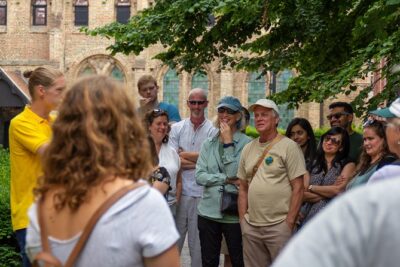
THE Storytelling Tour of Bruges | First Day Must | History & Tips
Read our review →
Ghent: 40 Minute Medieval Center Guided Boat Tour
Read our review →
Historical Walking Tour: The Story of Bruges – by Legends
Read our review →Browse the lists this tour appears in