
Review · BOSTON
Boston: Underground Railroad History Tour of Beacon Hill
Boston’s Beacon Hill holds a story that many first-time visitors miss: a free African American community lived just blocks from Boston’s richest residents while fighting for schools, equal rights, and an end to slavery. This small-group walking tour follows those struggles along the Black Heritage Trail, from Boston Common to the African Meeting House and back.
I like the focused route through real homes and meeting places, not just monuments, and I like that guides such as Will, Dana, Joe, and William bring plenty of context and welcome questions. The main drawback is physical: you walk about two miles over steep hills and uneven, non-ADA-compliant sidewalks, rain or shine.
Key points at a glance

- Follow the Black Heritage Trail: Visit ten important landmarks tied to Boston’s African American community.
- See the African Meeting House: Spend about 20 minutes at the oldest African Meeting House in the United States.
- Stand outside Underground Railroad homes: Learn about the Lewis and Harriet Hayden House, John Coburn House, and other residences linked to freedom seekers.
- Understand Boston before the Civil War: The tour connects school integration, abolition, racial politics, and the conflict that split the nation.
- Walk a practical 2-mile loop: Begin and end near Boston Common, with the Shaw and 54th Massachusetts Regiment Memorial as the final stop.
- Expect a serious history lesson: The pace is manageable, but the subject matter deals directly with slavery, racism, and resistance.
Why Beacon Hill tells a different Boston story
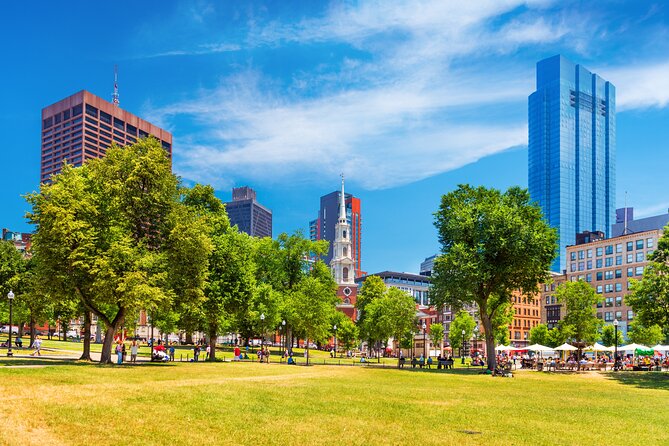
Boston Common is an easy place to begin. The city’s oldest public park is also the gateway to a part of Boston’s past that is often overshadowed by the American Revolution and the Freedom Trail.
From the Soldiers and Sailors Monument, you head toward Beacon Hill. The shift is quick. Broad park paths give way to narrow streets, brick sidewalks, old row houses, and sharp inclines. These streets once housed a free Black community that lived close to some of Boston’s wealthiest white families.
That proximity matters. This was not a distant story unfolding somewhere else. The people you learn about lived, worked, worshipped, taught, organized, and resisted in the same compact neighborhood you are walking through.
The tour focuses on the three decades before the Civil War. You hear about the fight over slavery, the growth of anti-slavery politics, education battles, and arguments over racial integration. The result is a useful correction to the simple image of Boston as uniformly opposed to slavery.
You will hear about white abolitionists, but the center of the story is the work of Black Bostonians themselves. Their leadership, risk, political activity, and community networks receive the attention they deserve.
More History Tours in Boston:
- Boston: Freedom Trail History Small Group Walking Tour
★ 5.0 · 6,450 reviews - Tour of Historic Fenway Park, America’s Most Beloved Ballpark
★ 4.5 · 3,013 reviews - Boston Food & History: Pizza, North End & Freedom Trail
★ 5.0 · 1,772 reviews
From Boston Common to Beacon Hill’s narrow lanes
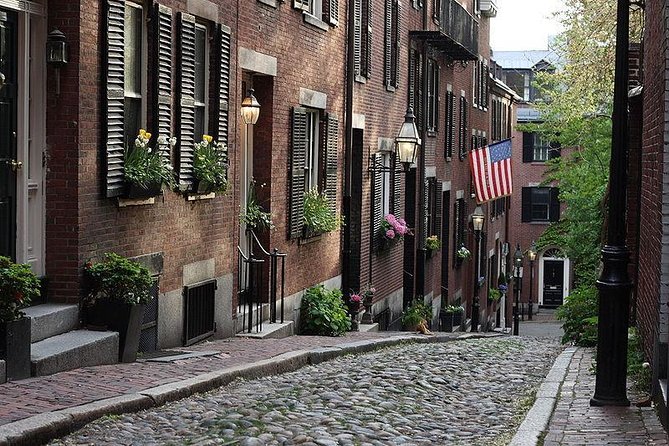
The first section covers Boston Common, Mount Vernon Street, Acorn Street, and Louisburg Square. These stops help you read the neighborhood before the tour gets into its heavier historical detail.
Acorn Street is one of Beacon Hill’s most photographed lanes, with its cobbles and old brick homes. It can be crowded during the day, so a small group is useful here. The street is more than a pretty backdrop on this tour. It helps show the tight scale of Beacon Hill and the close distance between grand residences and homes connected to Boston’s Black community.
Louisburg Square brings another layer. The address suggests wealth and status, and the guide uses the area to explain the social divisions that shaped life in 19th-century Boston. You are not simply looking at handsome architecture. You are comparing who had power, who had money, and who had to fight for access to basic rights.
Mount Vernon Street and the nearby lanes require attention to the ground. Beacon Hill has steep sections, and the sidewalks are not designed for all mobility levels. Wear shoes with good grip and expect to stop on sloping pavement.
Phillips School and the fight over education
The Phillips School is one of the most important early stops. Here, the subject shifts from geography to the long fight over public education.
The tour explains debates about separate schools, integration, and equal treatment. These arguments were not abstract policy disputes. They shaped children’s daily lives and exposed the limits of Boston’s reputation as a progressive city.
This part of the walk is especially useful if you want to understand how racial inequality operated outside the plantation South. Boston had no system identical to the slave states, but Black residents still faced exclusion, discrimination, and resistance when they pushed for equal schooling.
The stop also gives the broader tour a clear structure. You begin to see how education, voting, employment, housing, and abolition were connected. A fight over a school could become part of a much larger struggle over citizenship and belonging.
Homes tied to resistance and freedom
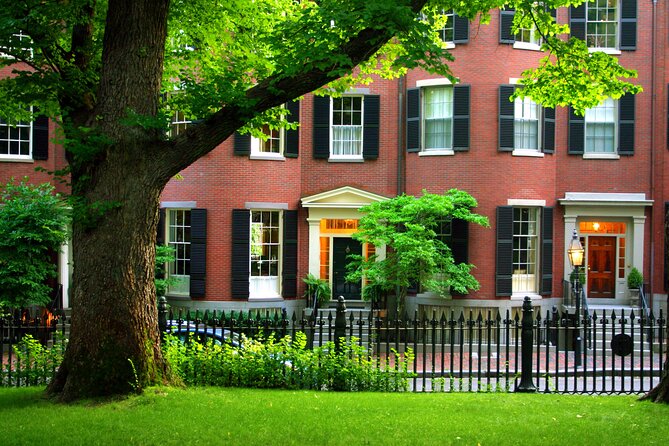
The John J. Smith House and John Coburn House bring the story into residential Beacon Hill. These are the kinds of stops I find most effective because they place political action at the scale of an ordinary street.
John J. Smith was a prominent Black Bostonian and political figure. The tour uses his home to discuss Black leadership and civic life. At the John Coburn House, you learn more about the people who helped build and defend the local community.
The Lewis and Harriet Hayden House is a major stop. The Haydens were active in Boston’s anti-slavery movement and helped freedom seekers who reached the city. The building is often associated with the Underground Railroad, but the tour does not reduce the subject to a dramatic escape tale.
That is a strength. You learn about networks, decisions, danger, and local support rather than expecting underground tunnels or a literal railroad. The term refers to the people and arrangements that helped enslaved people seek freedom, often through a chain of trusted contacts.
The tour makes clear that these homes were not only historic addresses. They were places where people faced real legal and personal risks. You are asked to think about what courage meant when helping another person could bring punishment or violence.
Same city, a different century:
- Boston: Freedom Trail History Small Group Walking Tour
★ 4.9 · 1,590 reviews - City Cruises Boston Historic Sightseeing Harbor Cruise
★ 4.5 · 1,388 reviews - Boston Pizza Lovers Food and History Walking Food Tour
★ 4.5 · 1,082 reviews - Boston Freedom Trail History Pub Crawl Small-Group Tour
★ 5.0 · 996 reviews
Charles Street Meeting House and public protest
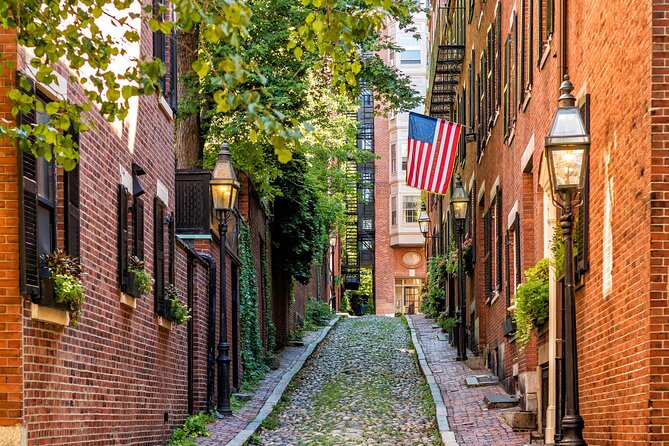
The Charles Street Meeting House marks another important change in the route. The guide discusses religion, abolition, and the use of public spaces for organizing.
Meeting houses were places of worship, but they also served as centers for debate and reform. In Boston, anti-slavery ideas could be preached, challenged, and organized through religious communities. The building’s role helps show how moral arguments became political action.
The stop also adds nuance. Abolition was not one tidy movement with universal agreement. People disagreed over tactics, race, integration, and the best route to change. A good guide can connect those disagreements to the people and buildings around you, and guides on this experience are encouraged to take questions throughout the walk.
You then continue along Charles Street before reaching more homes connected to Black Boston’s civic and abolitionist life. The route moves through active city streets, so you should stay close to the group and listen for instructions when crossing.
The African Meeting House and Smith Court
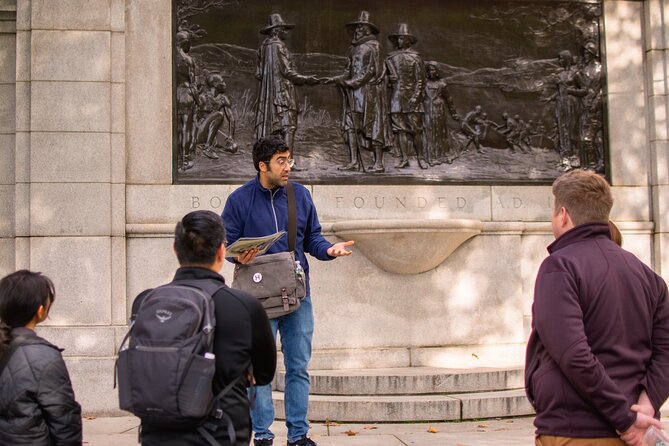
The tour reaches Smith Court, the Abiel Smith School, and the African Meeting House. This is the heart of the Black Heritage Trail.
The Abiel Smith School is tied to the struggle over Black education. Its location gives the earlier discussion at Phillips School a stronger sense of place. You can see how schools, homes, and religious institutions formed a close community network.
The African Meeting House is the key indoor landmark on the route. The tour includes a break and guided visit of about 20 minutes. Admission inside museums is not included, so check the current arrangements when booking, but the tour does include the landmark as part of the route.
This building matters because it served as a religious, educational, and community center. It gives you a physical sense of the institutions Black Bostonians built for themselves when other parts of the city excluded them.
Allow yourself time to look beyond the headline facts. The value here is not simply seeing an old building. It is understanding why a meeting house could support worship, schooling, organizing, and public resistance all at once.
George Middleton House and the return to Boston Common
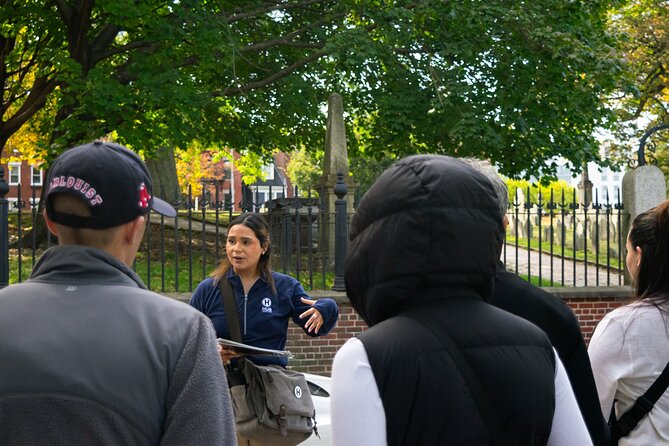
The George Middleton House follows the African Meeting House. Middleton was an important early Black Bostonian, and the stop extends the story beyond the abolition period.
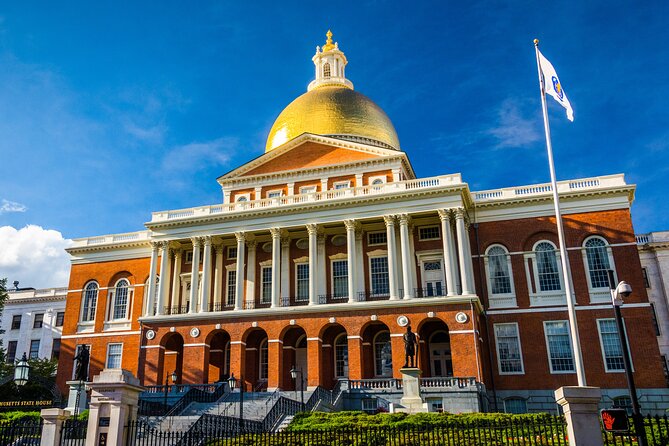
From there, the route moves past Park Street Church and toward the Massachusetts State House. These are scenic views along the way, rather than full museum visits, but they help connect neighborhood events to the city’s political center.
The final stop is the Robert Gould Shaw and the 54th Massachusetts Regiment Memorial on Boston Common. The memorial honors the famous Black regiment that fought for the Union during the Civil War, led by white officer Robert Gould Shaw.
Ending here works well. The tour begins with the decades of tension before the war and finishes with the war’s human cost and the role of Black soldiers in the Union cause. The memorial also places the story back in the open civic space where the walk began.
You should expect about 20 minutes at this final stop. The guide can tie together abolition, military service, citizenship, and the question of who was considered American.
How the guides handle the subject
This tour depends heavily on the guide. The available guide team includes Will, Dana, Joe, and William, and the experience is conducted in English.
The strongest feature is the level of preparation. Guides use clear explanations and, in at least some tours, visual aids. Will has been praised for answering many questions and for bringing scenes to life through animated storytelling. Dana is described as especially passionate about less familiar parts of the past, while Joe has used visual material to support the history.
That variety can be an advantage, but the exact guide affects the style. Expect a serious presentation, not a casual photo walk. The subject includes slavery, racial violence, discrimination, and the political crisis before the Civil War.
You can ask questions during the walk. That matters because the Underground Railroad is often presented in simplified form, while this tour deals with the wider network of people and institutions that supported freedom seekers.
Pace, crowds, and practical comfort
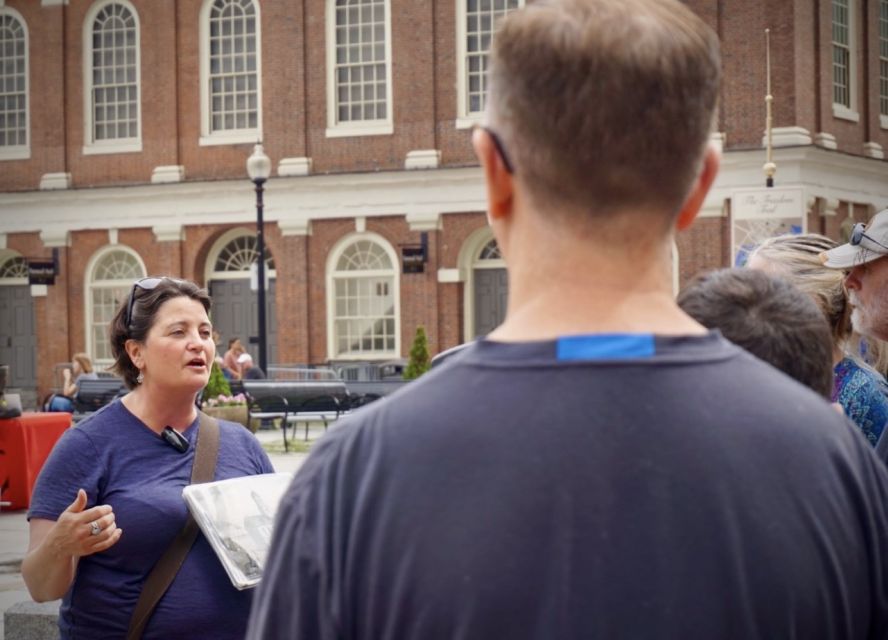
The tour lasts about 150 minutes, though it can run as long as three hours. The route covers roughly 2 miles, or 3.2 kilometers.
The pace is designed for stops and discussion rather than speed. A small group helps the guide keep people together on narrow sidewalks and makes it easier to ask questions. It also avoids some of the congestion you can encounter around Beacon Hill’s best-known streets.
Still, do not treat this as an effortless stroll. Beacon Hill has steep hills, and the sidewalks are not ADA-compliant. The tour is not suitable for wheelchair users, people with mobility impairments, children under six, or people with a low level of fitness.
Wear comfortable shoes and clothing suited to the weather. The walk operates rain or shine and is entirely outdoors except for the visit connected with the African Meeting House. Large bags and luggage are not allowed, and video recording is not permitted.
The meeting point is easy to identify: the Soldiers and Sailors Monument in the center of Boston Common, near the Boston Common Visitors Center at 139 Tremont Street. Look for the white granite column topped by a woman holding a flag, with four bronze figures around its base.
Is $35 a fair price?
At $35 per person, this is a good value if you want a focused history tour with a local guide. The price includes the Black Heritage Trail, the Beacon Hill walk, and guided interpretation at a long list of landmarks.
You are paying for context more than admission. Many stops are viewed from the street, and museum admission is not included. That is normal for a walking tour, but it means you should not expect a series of extended indoor visits.
The value improves if you are short on time. In two and a half hours, you cover schools, homes, churches, meeting houses, public monuments, and the political setting around the Massachusetts State House. You also get a clear explanation of how the years before the Civil War affected Boston.
Free cancellation up to 24 hours ahead and the option to reserve now and pay later make the booking less rigid. Gratuity for the guide is optional and not included.
Who should book this Beacon Hill walk?
I would recommend this tour to anyone who wants Boston history beyond Paul Revere, the Revolution, and the usual Freedom Trail stops. It suits adults, older children over six, history students, and people who want a direct introduction to African American history in Boston.
It is also a good choice for residents or repeat visitors. The route goes through familiar streets, but the guide gives those streets a new purpose. Even someone who has lived in Boston for years may not know the full story behind the homes and schools.
You may want a different activity if your main interest is the Underground Railroad as a literal railroad system or if you prefer indoor museums. One person on the tour wanted more detail on that specific subject, which is a fair expectation to clarify before booking. This experience is broader, covering abolition, education, Black community life, and the road to the Civil War.
Should you book it?
Book this tour if you want a serious, well-organized walk through Boston’s Black history and can manage Beacon Hill’s hills. The best reasons are the local homes, the African Meeting House, the strong guide-led storytelling, and the way the route connects neighborhood events to the Civil War.
Skip it if uneven sidewalks, rain, or two miles of walking will make the experience unpleasant. For everyone else, $35 buys a useful introduction to a side of Boston that deserves far more attention.
FAQ
How long does the tour last?
The scheduled duration is 150 minutes, or two and a half hours. The tour can vary in length but will not exceed three hours.
How far does the tour walk?
The route covers approximately 2 miles, or 3.2 kilometers.
Where does the tour begin?
Meet at the Soldiers and Sailors Monument in the center of Boston Common, near the Boston Common Visitors Center at 139 Tremont Street.
Where does the tour finish?
The walking loop ends at the Robert Gould Shaw and the 54th Massachusetts Regiment Memorial on Boston Common.
Is the tour conducted in English?
Yes. The live tour guide conducts the experience in English.
Is admission to museums included?
No. Admission inside museums is not included. The tour includes guided stops and a visit connected with the African Meeting House.
Is the tour suitable for wheelchair users?
No. The route includes steep hills and non-ADA-compliant sidewalks. It is not suitable for wheelchair users or people with mobility impairments.
What should I bring?
Wear comfortable shoes and weather-appropriate clothing. The tour operates rain or shine and is entirely outdoors. Large bags and luggage are not allowed, and video recording is prohibited.
Just added around Boston
- Freedom Trail Guided Walking Tour (SMALL GROUP)★ 4.5 · 98 reviews
- Boston’s North End History + Photo Walking Tour (SMALL Group)★ 5.0 · 27 reviews
- Boston’s Architecture, History + Photo Walking Tour (SMALL Group)★ 5.0 · 91 reviews
- Haunted Boston’s Historic Streets Walking Guided Tour★ 4.5 · 184 reviews
- Boston: Underground Railroad History Tour of Beacon Hill★ 5.0 · 141 reviews
- Beacon Hill Boston History + Photo Walking Tour (SMALL Group)★ 5.0 · 163 reviews
- A Taste of the Freedom Trail: Boston’s Iconic Food & History Tour★ 5.0 · 32 reviews
- Boston: Food and History of The Freedom Trail Private Tour★ 5.0 · 159 reviews
Boston History Tours, compared.
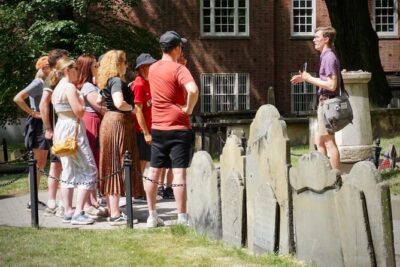
Boston: Freedom Trail History Small Group Walking Tour
Read our review →
Tour of Historic Fenway Park, America’s Most Beloved Ballpark
Read our review →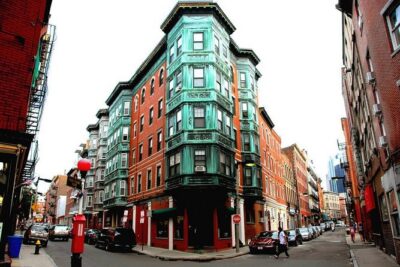
Boston Food & History: Pizza, North End & Freedom Trail
Read our review →Boston: Freedom Trail History Small Group Walking Tour
Read our review →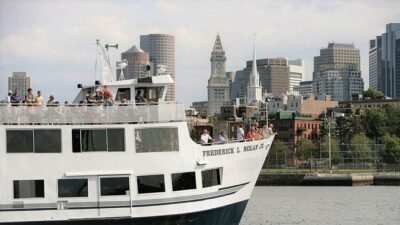
City Cruises Boston Historic Sightseeing Harbor Cruise
Read our review →
Boston Pizza Lovers Food and History Walking Food Tour
Read our review →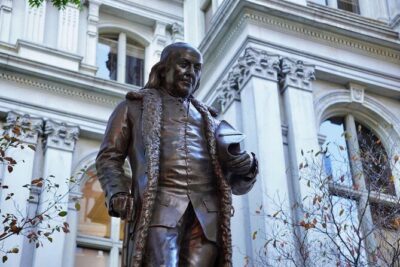
Boston Freedom Trail History Pub Crawl Small-Group Tour
Read our review →
Boston City View Bicycle Tour: History and Landmarks
Read our review →Browse the lists this tour appears in