
Review · CZECH REPUBLIC
Brno: Historic Downtown Walking Tour
Brno’s old center packs a surprising amount into a compact walk: a cathedral on a hill, a market above old cellars, a monastery crypt with mummified noblemen, and an Old Town Hall with a dragon legend. The tour gives you the story behind those sights instead of leaving you to guess what you are seeing.
I like the small group of no more than 10 people, which makes it easier to ask questions and hear the guide in busy squares. I also like the mix of major landmarks and odd details, including the cheeky sculpture high on St. James Church and the tales of the dragon and wheel.
The main consideration is pace. A few guides have taken extra time for slower walkers, while one older guide led at a gentler speed. That can suit you if you want a relaxed visit, but it may feel slow if you prefer to cover ground quickly.
Key points to know before you book
- The Capuchin crypt adds a memorable, slightly eerie stop: You see the resting place of mummified city noblemen beneath the monastery.
- The Vegetable Market has a story below street level: Its underground corridors once stored food, brewed beer, and matured wine.
- The guides bring humor to the history: Lukas, Luca, Robert, and Eliska have all been praised for clear English, local detail, and entertaining stories.
- The walk connects Brno’s best-known sights: Expect Liberty Square, the cathedral, the Old Town Hall, St. James Church, and more.
- The tour works well early in a visit: It gives you a useful layout of the center and ideas for places to eat, drink, and explore afterward.
- The $35 price buys context, not transport: You pay for a two-hour guided walk, with hotel pickup and drop-off left out.
Why this Brno walk works so well
Brno can be easy to underestimate. It is the capital of Moravia, yet its central sights are close enough to reach on foot. This tour uses that compact layout well, linking squares, churches, civic buildings, and local legends in a route that makes the city easier to understand.
You are not simply ticking off buildings. The guide explains how Brno developed as a Moravian center and places the sights in the wider story of Czech history. Several guide comments also connect Moravian events with the home countries of people in the group, which can make the past feel more personal.
The strongest part of the experience is the storytelling. Lukas has been praised for fluent English, humor, and a steady stream of unusual facts. Luca has also been singled out for turning many stops into small comic stories. If your ideal walking tour includes a joke beside a church door and a local legend at the next corner, this style should suit you.
The tour is offered in English or German. The overall rating is 3.8 from 302 ratings, so expectations should be sensible. Most of the detailed comments praise the guides, but one person found the guide’s English difficult to follow. Clear communication can vary by guide, and that matters on a history-focused walk.
More History Walking Tours in the Czech Republic
- Prague: Plague Doctor Old Town History Walking Tour
★ 4.9 · 204 reviews - Prague: World War 2 and Operation Anthropoid Walking Tour
★ 4.8 · 193 reviews - Prague: Immersive History Walking Tour and VR
★ 4.8 · 73 reviews
Starting at Grandhotel Brno
The meeting point is the reception of Grandhotel Brno at Benešova 18 to 20. This is a practical starting place near the central part of town, but you need to arrange your own way there. Hotel pickup and drop-off are not included.
Plan to arrive with comfortable shoes. The activity lasts two hours and takes place on foot, with stops in public squares and outside historic buildings. The information does not specify the exact amount of walking or the availability of seating, so anyone who needs frequent rests should consider asking about the pace before setting out.
The small group limit is one of the tour’s better features. Ten people or fewer gives the guide a chance to answer questions and adjust the walk. It also helps when the group gathers around a statue or architectural detail that is easy to miss from the back.
Liberty Square and Brno’s medieval market life
One of the first important public spaces is Liberty Square, the main market square from the Middle Ages. It gives you a useful sense of Brno as a trading and civic center rather than just a collection of attractive facades.
Your guide explains the square’s place in the city’s past and points out details you might otherwise walk past. This is where a good guide earns the fee. A building can look impressive, but knowing how the square functioned and why it mattered gives the scene a clear purpose.
The square can also help you get your bearings. Brno’s central sights are close together, and the walk shows how the main spaces connect. If you take the tour near the start of your stay, you can return later without relying on a map for every turn.
Capuchin Square and the mummified noblemen
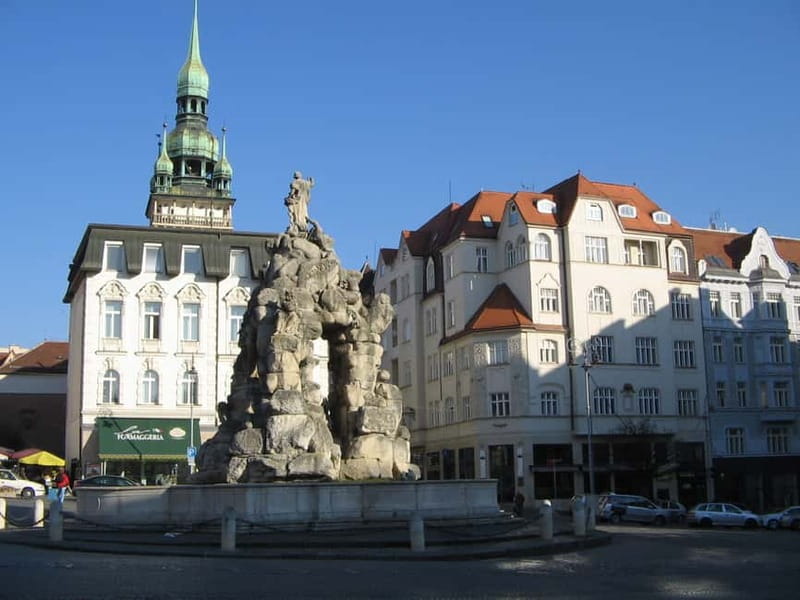
Capuchin Square leads to the Capuchin Monastery, whose crypt holds the mummified remains of city noblemen. This is one of the most distinctive stops on the route, and it gives the tour a more human and unsettling edge.
The crypt is not just another church interior. It raises questions about how important people in Brno were buried, remembered, and displayed. The mummified remains may not appeal to everyone, especially if you prefer light sightseeing, but they add a sense of place that a standard architectural walk cannot match.
The supplied details identify the crypt as part of the route, but they do not say that entry fees or a separate interior visit are included. Confirm what you will see inside when booking, particularly if the crypt is a main reason for choosing this tour.
More Old Town and Historic Centre Walks in the Czech Republic:
- Prague Old Town, Medieval Underground and Dungeon Historical Tour
★ 4.5 · 3,227 reviews - Prague: Top Sights and Historic Center Introduction Tour
★ 4.9 · 1,181 reviews - Madrid Essential: Historic Center, Plaza Mayor & Royal Palace
★ 5.0 · 6,416 reviews - Lisbon: Live Fado Show with Port Wine in Historic Center
★ 4.7 · 4,166 reviews
The Vegetable Market and the city below ground
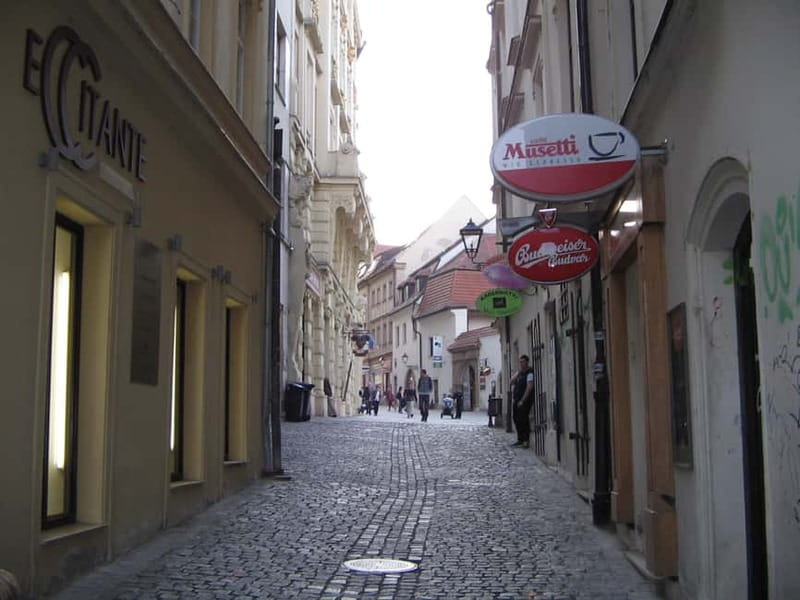
The Vegetable Market is a fine example of Brno’s layers. Above ground, it is a public square. Below ground, a labyrinth of corridors was used to store food, brew beer, and mature wine.
That contrast makes this stop especially useful. You see how everyday needs shaped the city, not just how grand buildings displayed wealth or power. The market also helps explain why underground spaces matter in older European towns, where storage and trade often took place beneath busy streets.
The route information does not promise a visit into the underground corridors. The guide does explain their former uses, and that may be enough for you if you want historical context without adding another attraction. If you specifically want to enter the cellars, ask whether access is part of the walk.
Parnassus Fountain and the Reduta Theatre
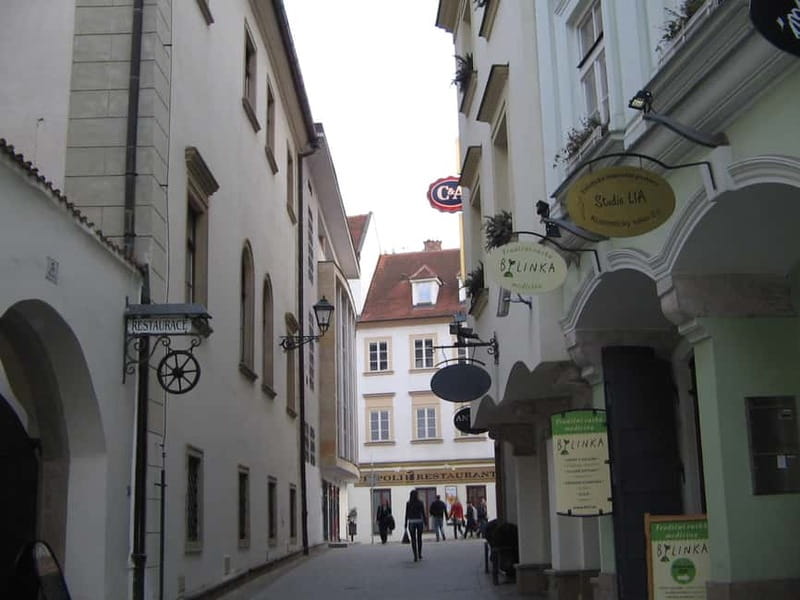
At the Vegetable Market, look for the Parnassus Fountain and its allegorical carvings. This is the kind of stop that benefits from a guide because allegorical sculpture can be hard to read without some explanation.
The carvings are not presented as simple decoration. They represent ideas through figures and symbols, giving you a chance to see how public art once communicated messages to people in the square. Your guide can help you notice those details without turning the stop into a long lecture.
Nearby, the Renaissance facade of the Reduta Theatre recalls Mozart’s visit and performance there. That detail adds a link between Brno and European music history. You do not need to be a classical music fan to appreciate the setting, since the story connects a local building with a famous touring musician.
The theatre stop is also a good reminder that Brno’s past was not only political or religious. Public entertainment, music, and social life mattered here too.
The Old Town Hall, dragon, and wheel
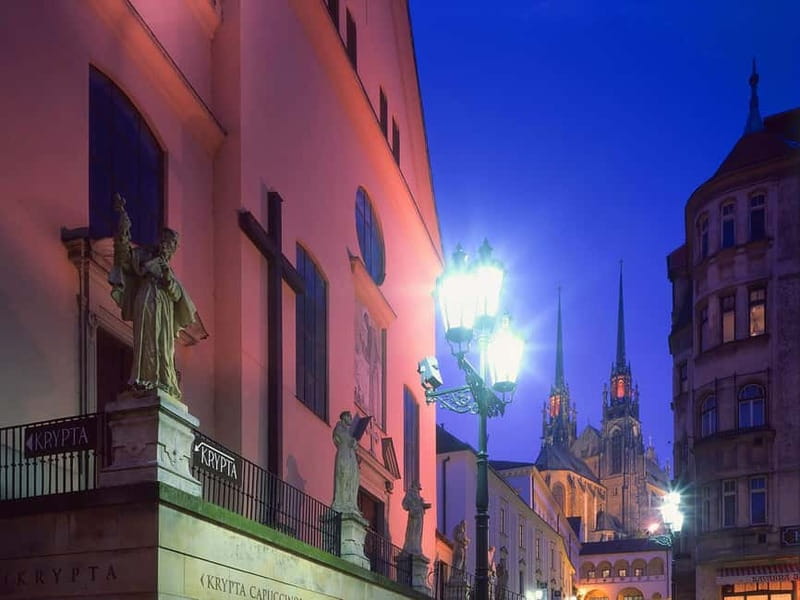
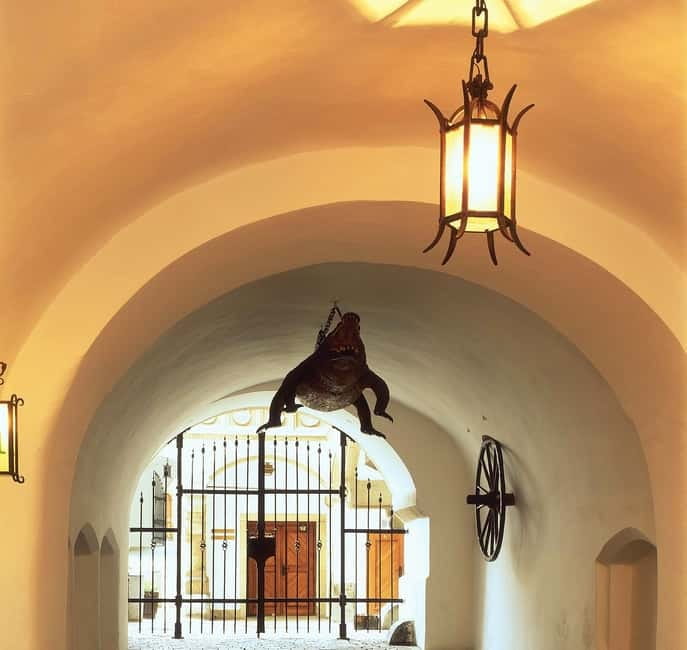
The Old Town Hall brings one of Brno’s best-known legends into the walk. The story involves a dragon and a wheel, and the guide explains why these objects became tied to the city.
This is exactly the kind of tale that helps a place stick in your memory. You may forget a date, but you are less likely to forget a dragon hanging in the city’s story. The legend also gives the guide room to discuss civic pride, local identity, and the way cities preserve unusual symbols.
The Old Town Hall is a strong point for questions. Ask the guide how much of the story is legend and how much connects to documented local history. The activity promises legends, not a formal academic lecture, so you should expect storytelling alongside historical explanation.
Cathedral of Saints Peter and Paul
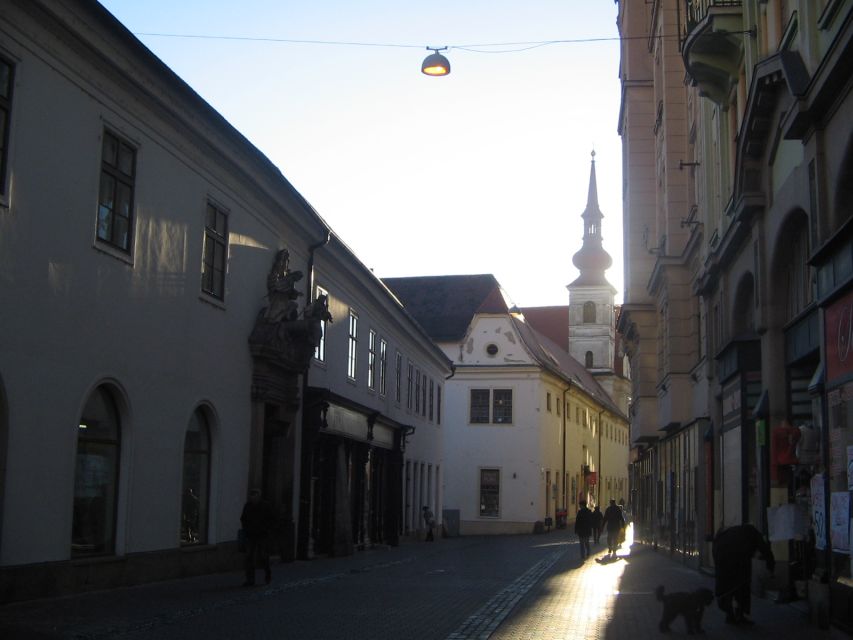
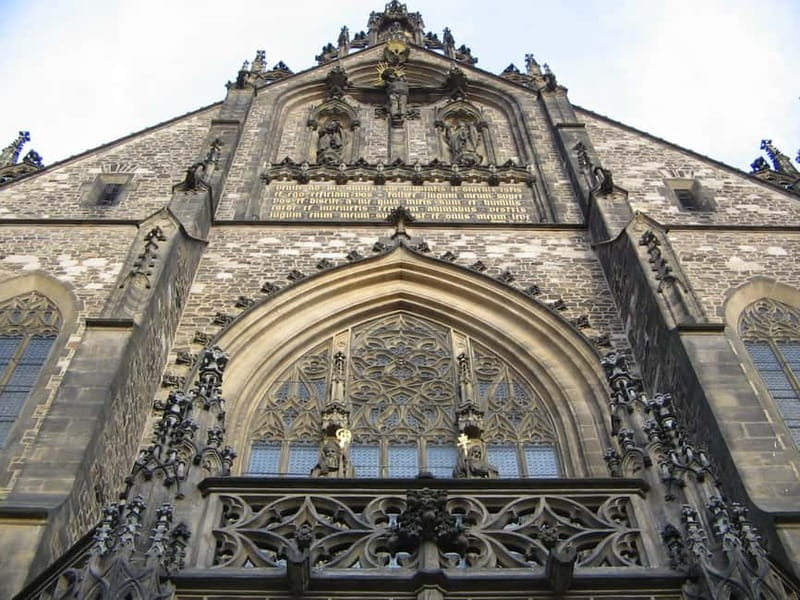
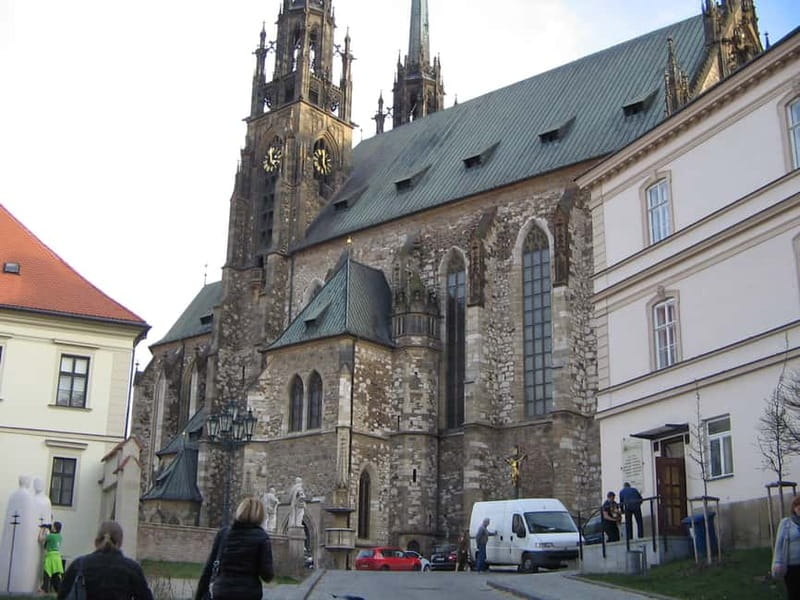
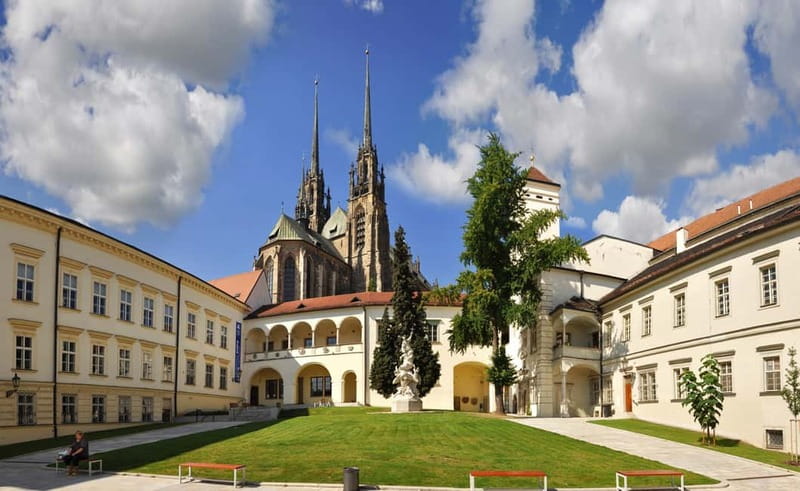
The Cathedral of Saints Peter and Paul is one of the tour’s major sights. Its position and scale make it an important part of Brno’s visual identity, and the guide places it within the story of the city and Moravia.
The walk focuses on seeing key attractions and learning about them, but the supplied details do not guarantee an extended interior visit or a special admission. If you want to explore the cathedral inside, confirm the timing and access before booking.
A useful detail from the walk concerns St. James Church. One guide advised looking upward, and high on the wall to the right of the main entrance is a sculpture of a naked child showing its backside toward the cathedral. The explanation for this cheeky gesture is one of the tour’s local stories. You will want to look up, not just ahead, as you move between the churches.
New Town Hall, House of the Noblemen of Leipa, and Joseph Street
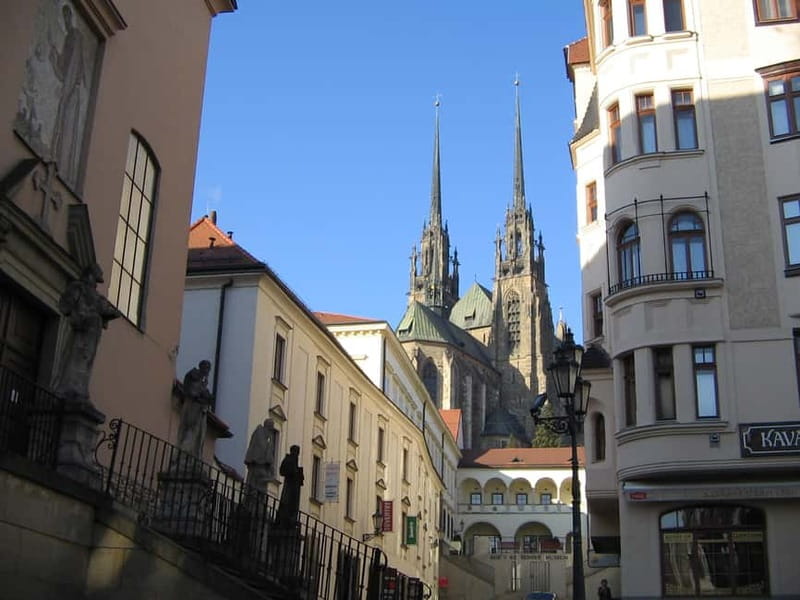
The route also passes the New Town Hall and the House of the Noblemen of Leipa. These stops broaden the tour beyond the most famous buildings and show how civic and private architecture shaped the center.
The New Town Hall helps fill out Brno’s political story, while the House of the Noblemen of Leipa adds another example of the city’s historic building stock. The exact amount of time spent at each stop can depend on the guide and the group, so you should expect a connected walking route rather than a long interior visit at every address.
The return along Joseph Street, or Josefska, gives the walk a natural finish. By this stage, you have seen religious buildings, markets, public squares, civic sites, and stories tied to local identity. The route returns you toward the central area rather than ending far from the start.
Guides who make the difference
The guide is the main variable in this experience. Strong comments describe Lukas as friendly, funny, and exceptionally fluent in English. Daniel found his English among the clearest heard on guided tours, while Charvi praised his detailed explanation of Moravian history and his willingness to spend extra time covering the main sights.
Luca has also been praised for charm, humor, and stories at nearly every stop. Robert once extended a scheduled visit by an hour, creating a three-hour experience for one participant. That kind of flexibility can be valuable, but you should treat extra time as a courtesy rather than part of the advertised two-hour schedule.
Eliska’s style suits people who enjoy a slower, personal approach to local history. She has been described as warm, witty, and full of cultural details, with useful recommendations for places to visit, eat, and drink afterward. Her pace was gentle, which worked well for a small private group but may not suit someone who wants a brisk walk.
One guide also sang the original Moravian anthem. That is not listed as a promised feature, so do not book expecting a musical performance. It does show the range of personal touches that can appear on a locally led walk.
Daytime, evening, Christmas, and Easter visits
The walk can take place by day or in the evening, depending on the available starting time. Daylight is useful for examining facades, carvings, and sculptures. An evening walk can give the old center a different mood, though you may want to ask how clearly architectural details can be seen after dark.
During Christmas and Easter, the route can include traditional markets and explanations of Czech customs. This is a good seasonal option if you want more than sightseeing. Markets give you a direct look at local holiday traditions, but they can also make public squares busier and slower to cross.
The seasonal content depends on the date of your visit. It should be treated as an added possibility, not a guaranteed feature on every departure.
Is $35 a fair price?
At $35 per person, this is a reasonable price if you value a guide who can connect the sights and answer questions. You are paying for two hours of local interpretation, not admission to a series of major attractions, private transport, food, or hotel service.
The value is strongest for a first visit to Brno. A well-led walk can save you from seeing the cathedral, market squares, theatre, and churches as unrelated points on a map. It also gives you a short list of places and stories to revisit on your own.
The value is weaker if you prefer to set your own pace, stop frequently for photographs, or enter every building. The route covers many sights in two hours, so some stops will be brief. You may also find the experience less satisfying if your guide’s English is difficult to understand.
Free cancellation up to 24 hours before the start and reserve-now, pay-later booking make it easier to fit into a changeable schedule. Those terms are helpful, but the main booking decision remains simple: decide how much you want interpretation compared with independent wandering.
Who should book this walking tour?
I would recommend it to first-time visitors who want a clear introduction to Brno, people interested in Moravian and Czech history, and anyone who enjoys local legends alongside architecture. It also suits small parties, couples, and solo visitors who prefer a more personal conversation with a guide.
History and architecture fans will get the most from the cathedral, theatre, monastery, civic buildings, and unusual sculpture details. Food and drink enthusiasts may also enjoy the Vegetable Market’s underground storage story and the guide’s possible recommendations at the end.
You should think twice if you need a fast pace or guaranteed interior access. The walk is designed around the historic center and its stories, not around long visits inside every attraction. Comfortable shoes are essential, and asking about the day’s guide and pace is sensible if walking speed matters to you.
Should you book Brno’s Historic Downtown Walking Tour?
Book it if you want a compact, story-led introduction to Brno with a small group and a chance to ask questions. The best moments are the odd ones: the Capuchin mummies, the underground market corridors, the dragon and wheel legend, and the impish sculpture at St. James Church.
Skip it if you would rather wander independently and read about the sights yourself. For most first-time visitors, though, $35 is fair for two hours of orientation, local context, and a guide who may turn a simple church or square into a memorable part of your trip.
FAQ
How long is the Brno Historic Downtown Walking Tour?
The tour lasts two hours.
What is the price?
The price is $35 per person.
Where does the tour meet?
Meet at the reception of Grandhotel Brno, Benešova 18 to 20, Brno 602 00.
Is hotel pickup included?
No. Hotel pickup and drop-off are not included.
Which languages are available?
The tour is available in English and German.
How large is the group?
The tour is limited to 10 participants.
What sights are included?
The route includes Liberty Square, Capuchin Square, the Capuchin Monastery crypt, the Vegetable Market, Parnassus Fountain, Reduta Theatre, Old Town Hall, New Town Hall, House of the Noblemen of Leipa, Cathedral of Saints Peter and Paul, and St. James Church.
Does the tour include the Capuchin crypt?
The route includes the Capuchin Monastery and its crypt, which holds mummified remains of city noblemen. The provided information does not specify separate admission arrangements.
What should I bring?
Bring comfortable shoes for the two-hour walking route.
Can I cancel the booking?
Yes. You can cancel up to 24 hours in advance for a full refund. You can also reserve now and pay later.
Just added around the Czech Republic
- Private Bohemia Wine Tour from Prague with Gourmet Tastings★ 5.0 · 31 reviews
- Prague: Communists and World War II Tour★ 4.7 · 88 reviews
- Prague: Medieval Underground Guided Tour★ 4.5 · 209 reviews
- From Prague: Medieval Dinner, Show, Castle and Brewery★ 4.3 · 48 reviews
- Prague: 3–Hour Communism and World War 2 E-Bike Tour★ 4.9 · 56 reviews
- Prague: World War II and Communist History Tour★ 4.7 · 130 reviews
- Terezin In-Depth Holocaust Tour From Prague’s Center (max 7 pax)★ 5.0 · 170 reviews
- Prague: Immersive History Walking Tour and VR★ 4.8 · 73 reviews
Czech Republic History Tours, compared.
Prague: Medieval Dinner with Unlimited Drinks
Read our review →
Prague: Oldtown, Medieval Underground & Dungeon History Tour
Read our review →
Prague: Ghosts, Legends, Medieval Underground & Dungeon Tour
Read our review →
Prague Old Town, Medieval Underground and Dungeon Historical Tour
Read our review →
Prague 5 Courses Medieval Dinner and Live Performances
Read our review →
Prague: Communism History and Nuclear Bunker Guided Tour
Read our review →
Prague: Historic City Center Bus Tour with Top Sights
Read our review →
Prague Historic Pub Tour with Drinks Included
Read our review →Browse the lists this tour appears in