
Review · HISTORY TOURS
Cape Town: Art, Culture & History Walking Tour
Cape Town’s story is written in its streets, and this tour reads it one neighborhood at a time. You begin among Bo-Kaap’s painted houses and old mosques, then walk through the city center toward District Six, tracing the links between Cape Malay culture, colonial rule, forced removals, modern art, and South African identity.
I like the local guide-led storytelling, which gives meaning to buildings you might otherwise pass without noticing. I also like the route’s variety: colorful Bo-Kaap, Long Street’s old buildings, an open-air craft market, solemn historical sites, and contemporary creative spaces all fit into one walk.
The main drawback is the pace. Two hours is enough for a strong introduction, but not for long visits inside every museum, gallery, or landmark. You should also plan your onward transport carefully after the tour, particularly if you are unfamiliar with central Cape Town.
Key points at a glance
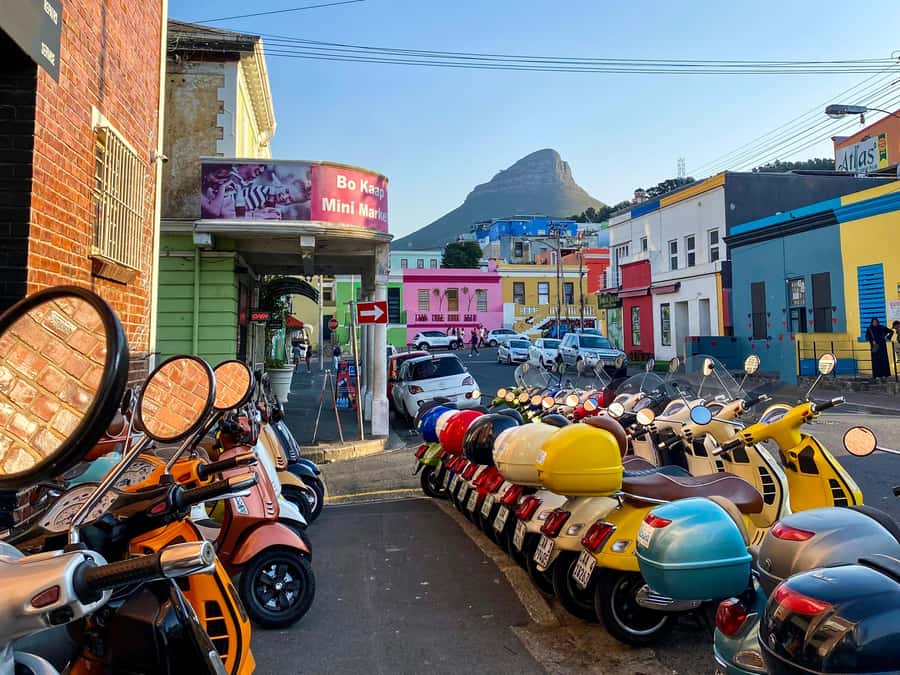
- Bo-Kaap begins the story: Learn how Cape Malay culture shaped the neighborhood, its mosques, food traditions, and community identity.
- A compact city-center route: Walk from Wale Street and Long Street to Greenmarket Square, Company’s Garden, Parliament, and District Six.
- History is handled directly: The route addresses slavery, colonial power, forced removals, protest, and the continuing work of preserving identity.
- Art is part of the city’s story: Expect references to galleries, local makers, public art, and creative work rather than a separate art museum visit.
- Guides make the difference: Mandi, Olwethu, Diego, Basil, and Sipho have all led tours, with English used throughout.
- Good first-day choice: You get street orientation, cultural context, and practical suggestions for the rest of your stay.
Why Bo-Kaap is the right place to begin
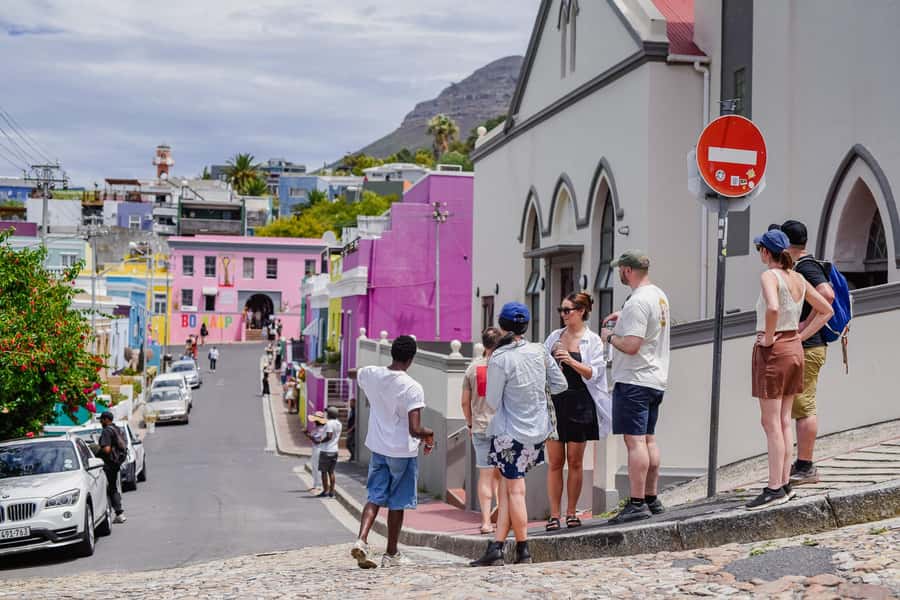
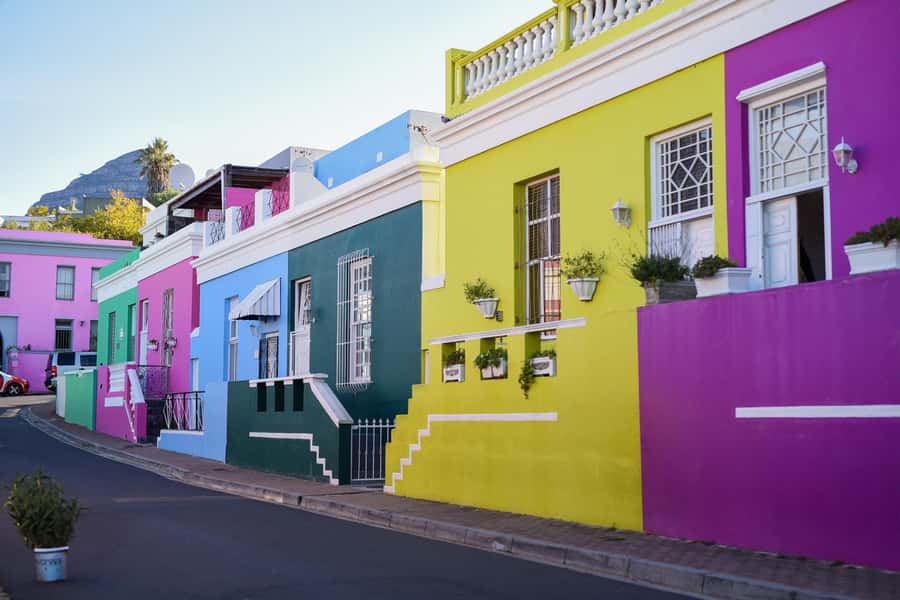
Meet at Bo-Kaap Deli, at 97 Church Street. This is a useful starting point because Bo-Kaap gives you an immediate sense of Cape Town’s layered identity. The neighborhood is famous for its painted homes, sloping streets, and mosques, but the important part is the community behind the postcard view.
Your guide explains the roots of Cape Malay culture and the role local residents have played in protecting the area’s character. The color is pleasant to photograph, but the neighborhood is not simply a backdrop. The tour places the houses within a story of faith, migration, family, and cultural continuity.
You spend about 20 minutes in Bo-Kaap, with time for photographs and a guided walk. That is enough to get oriented, though you should not expect a long neighborhood exploration. The streets are also uneven in places, so comfortable shoes are a sensible choice.
A stop at Auwal Masjid adds substance to the visit. The mosque is treated as part of the neighborhood’s cultural life, not just another photo stop. You will hear how religious and community institutions helped preserve identity through major political and social changes.
More Local Culture and Traditions Tours in the world:
- Amsterdam Food and Cultural Tour with Tastings
★ 5.0 · 4,315 reviews - Sevilla Food Tour: Tapas, Wine, History & Traditions
★ 5.0 · 3,468 reviews - Tromsø: Reindeer Camp and Sami Cultural Tour with Lunch
★ 4.7 · 3,326 reviews
Wale Street and Long Street: old buildings, new energy
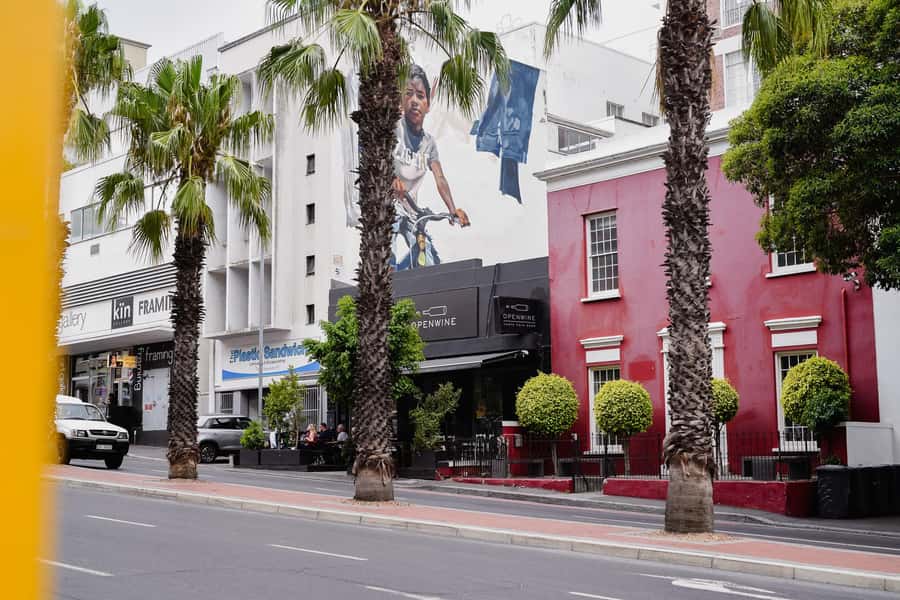
From Bo-Kaap, the walk continues along Wale Street and then toward Long Street. This section helps connect the residential neighborhood with the wider city center.
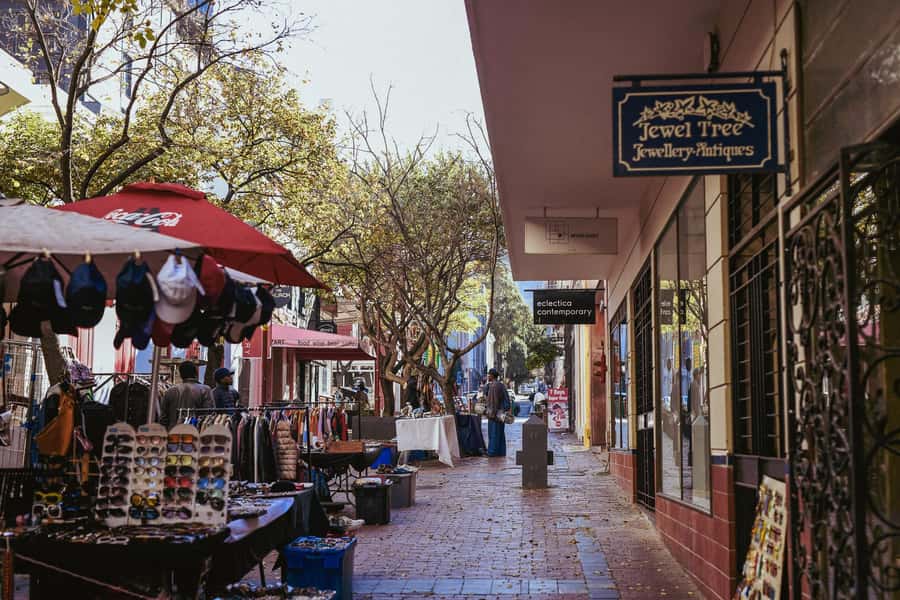
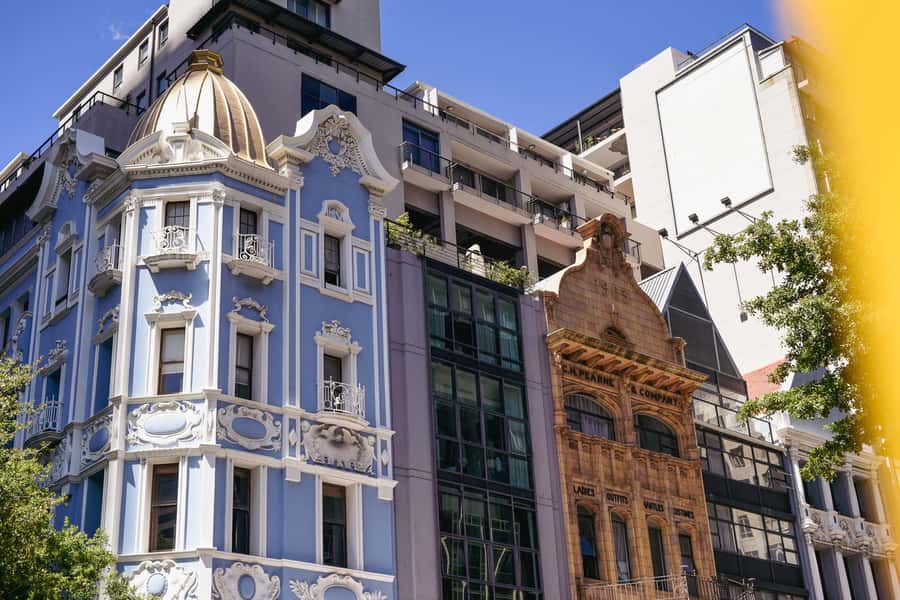
Long Street is known for Victorian-era buildings, bars, bookshops, and vintage boutiques. The tour does not present it as a frozen historic quarter. Instead, you see how older architecture now shares space with modern businesses and Cape Town’s creative scene.
The scheduled time here is around 15 minutes, so think of it as a guided orientation rather than a shopping stop. Your guide may point out details you would miss on your own, including architectural features and places worth returning to later. Several people who took the tour used these tips to plan restaurants, shops, and other city walks afterward.
This is one reason I recommend taking the tour early in your visit. You get a rough map of central Cape Town, then can return to the places that interest you most instead of trying to understand the city from a hotel or bus window.
Greenmarket Square and Cape Town’s creative side
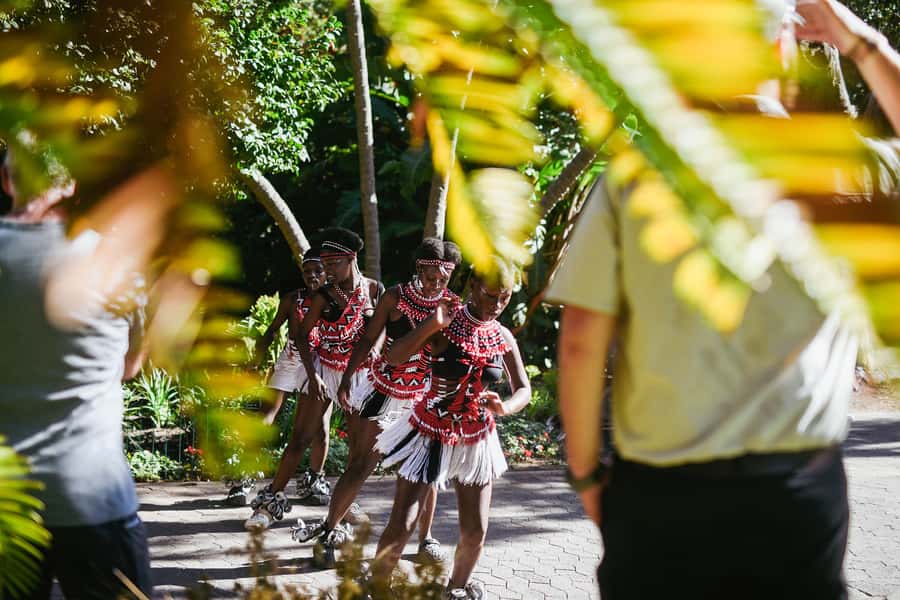
Greenmarket Square brings a different mood. Traders sell handmade goods, textiles, local art, and souvenirs, giving you a chance to see the city’s commercial and creative life up close.
The tour allows about 20 minutes here, including time for browsing. You may find this useful if you want to buy a small reminder of Cape Town, but do not treat it as a dedicated shopping excursion. The main value is the guide’s explanation of how the market fits into the city’s public life and artistic identity.
The art focus continues in smaller ways along the route. One guide was praised for showing a recycling artist’s studio, and another tour included time to look around art galleries in Bo-Kaap. The exact stops can vary, so you should not book this expecting a formal gallery tour with a fixed exhibition list.
Instead, art appears as part of daily Cape Town: handmade goods, repurposed materials, galleries, public spaces, and the creative work of local communities. That approach suits you if you want to understand how art connects with place and identity.
The Company’s Garden, the Slave Lodge, and public memory
The walk then moves through the Company’s Garden, a green public space with important links to Cape Town’s colonial past. The guide uses the area to explain how the city developed and how power was organized around it.
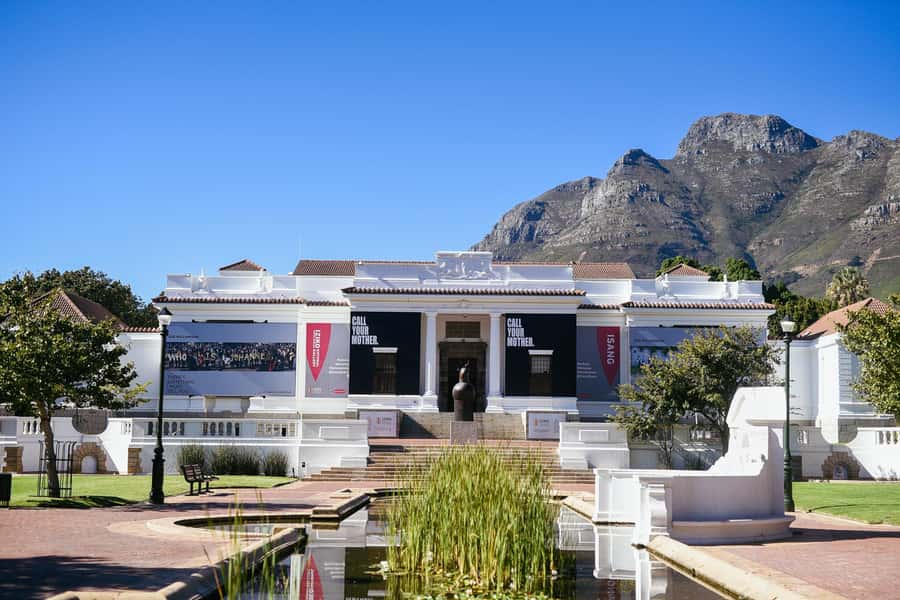
The nearby Iziko Slave Lodge is one of the more serious points on the route. The stop is listed as a guided visit and sightseeing point, but the two-hour schedule means you should not assume there will be time for a full museum visit. Its importance is clear even from outside: it forces the city’s colonial story to include the people who were enslaved and whose labor helped build it.
This is where the tour gains weight. Cape Town’s attractive architecture and easygoing street life can make the past feel distant. The guide brings that past into the present without treating it as a side note.
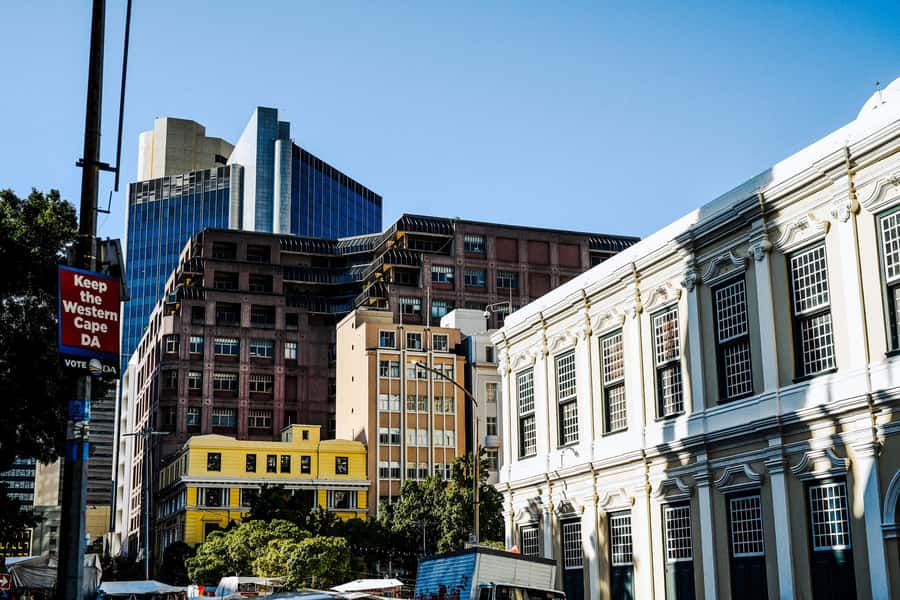
You also pass City Hall and Parliament, places linked with official power, public speeches, and protest. The route includes an opportunity to visit an exhibition on Nelson Mandela. Again, timing matters. You will receive context and may see an exhibition, but this is not a full political-history tour.
I appreciate this part of the route because it puts grand public buildings beside the less comfortable stories that shaped them. You do not get only the pretty streets or only the tragic chapters. You get both, and the contrast is useful.
More History Walking Tours in the world:
- History and Hauntings of Salem Guided Walking Tour
★ 5.0 · 14,564 reviews - Lisbon: History, Stories and Lifestyle Walking Tour
★ 4.8 · 10,902 reviews - Amsterdam: Life of Anne Frank and World War II Walking Tour
★ 4.8 · 10,467 reviews - Berlin: Third Reich & Cold War Guided Walking Tour
★ 4.9 · 8,378 reviews
District Six and the cost of forced removal
District Six is the emotional center of the walk. The area is tied to forced removals under apartheid, when residents were pushed from their homes and the community was broken apart.
The tour includes the District Six Museum area, with time for photographs, explanation, and sightseeing. The scheduled 10 minutes is brief, so you should expect an introduction rather than a detailed museum study. If District Six is a major interest, leave time on another day for a longer visit.
Still, even a short stop can change how you see Cape Town. District Six is not presented only as a historical event. The guide connects it to memory, community, cultural loss, and the continuing question of who gets to belong in a city.
That identity focus is one of the tour’s strongest features. You learn that Cape Town is not one story told from one viewpoint. Cape Malay culture, colonial rule, slavery, apartheid, forced removals, protest, and present-day creative work all overlap.
Finishing with coffee and a practical city orientation
The route ends at Truth Coffee Roasting, with a coffee stop listed as part of the final section. This gives the walk a more relaxed finish after the heavier material at District Six and the civic buildings.
The coffee stop also makes the route feel connected to present-day Cape Town. You have moved from historic streets and museums to a modern local business, showing how the city’s past and current culture sit side by side.
Do not expect a long café break or a full meal. Lunch is not included, and personal food and drink costs are your responsibility. If you need a proper meal afterward, ask your guide for suggestions before the group separates.
The guides: Mandi, Olwethu, Diego, and others
The guide is the heart of this experience. Mandi has been praised for clear explanations, energy, and her willingness to answer questions. She also keeps the conversation open, which helps the tour feel less like a lecture.
Olwethu has led tours with a friendly, patient style and has helped visitors who were running late or needed practical assistance. Diego is known for adding humor, local tips, and simple greetings in African languages such as Zulu and Xhosa. Basil and Sipho have also guided groups.
The guide assigned to your departure may vary, so do not book on the assumption that one named person is guaranteed. What you can expect is an English-speaking local guide who explains the city through history, culture, architecture, and everyday life.
This works best if you ask questions. The strongest moments come when you connect a building or street to something you have noticed elsewhere in South Africa. The guides also seem willing to adjust the conversation to the group, rather than rushing through a memorized script.
How much walking is involved?
The activity lasts two hours and takes place entirely on foot. The route includes Bo-Kaap, Wale Street, Long Street, Greenmarket Square, Company’s Garden, the Slave Lodge area, Parliament, District Six, and Truth Coffee Roasting.
The time estimates suggest a steady walk with short stops. You will want comfortable shoes, water, sunscreen, a hat, sunglasses, and a camera. Rain gear is also sensible, since the tour runs outdoors. Bring any personal medication you need, along with hand sanitizer or tissues.
The tour is listed as wheelchair accessible. If you use a wheelchair, confirm the day’s exact route and stop arrangements when booking, since historic streets and buildings can have different surfaces or access points.
There is no hotel pickup. You need to make your own way to Bo-Kaap Deli, and the tour does not include transport, lunch, or personal purchases.
Safety and the end of the tour
One practical point deserves attention. A participant reported a robbery shortly after the guided walk, after receiving a suggestion to continue along Bree Street without the guide. That incident does not describe the tour itself, but it is a useful reminder to stay alert once the group disperses.
I would arrange a taxi or rideshare in advance if you are not comfortable navigating central Cape Town alone. Keep valuables out of sight, follow your guide’s local advice, and avoid treating the end of the tour as a signal to wander without a plan.
The guide may help with onward arrangements. One guide waited after the walk to ensure a taxi collected a participant safely. That kind of help is valuable, but you should still organize your own transport rather than rely on it.
Is the $37 price good value?
At $37 per person, the tour is reasonably priced for a two-hour guided walk with a professional English-speaking guide. You are paying mainly for interpretation and local context, not admission to a long list of attractions.
The value is strongest if you are new to Cape Town and want a useful first look at the city center. In two hours, you cover several districts and gain enough background to understand later visits to Bo-Kaap, District Six, museums, galleries, and restaurants.
The value is weaker if you want extended museum time, a specialized art tour, or a slow photography walk. The route covers a lot, so each stop receives limited attention.
Free cancellation up to 24 hours before the start and the option to reserve now and pay later make it easier to fit into a changing itinerary. The tour is offered in English and is not suitable for people over 95.
Who should book this walk?
I would choose it for a first or second day in Cape Town. It gives you street knowledge, historical context, cultural background, and a list of places to revisit.
It suits:
- First-time visitors who want more than a sightseeing checklist
- People interested in apartheid, slavery, migration, and South African identity
- Art lovers who prefer local galleries, makers, and street-level creative work
- Visitors who want a short activity rather than a full-day excursion
- Solo travelers and couples who want a guide while walking central Cape Town
- Anyone who enjoys asking questions and discussing difficult history
It may not suit you if you dislike walking, need long stops at museums, or want a tour focused only on architecture and photography. The route is thoughtful but compact, and some locations are viewed from outside or visited only briefly.
Should you book the Cape Town Art, Culture & History Walking Tour?
Yes, if you want a clear introduction to Cape Town’s complicated identity in a short period. The mix of Bo-Kaap, local art, civic buildings, slavery, District Six, and Nelson Mandela gives you far more context than a simple landmark walk.
Book it early in your stay, wear practical shoes, and keep your afternoon flexible for places you may want to revisit. Just remember that the two-hour format offers a framework, not a complete museum tour. For $37, it is a good-value orientation led by a local guide, especially if you want to understand what you are seeing rather than simply photograph it.
FAQ
Where does the Cape Town walking tour start?
The tour starts at Bo-Kaap Deli, at 97 Church Street, Bo-Kaap, Cape Town, 8001.
How long does the tour last?
The walking tour lasts two hours. Starting times vary, so you need to check availability for your chosen date.
What language is the tour offered in?
The tour is offered in English with a live guide.
Does the tour include hotel pickup or transport?
No. Hotel pickup and drop-off, transport to the meeting point, and other transportation costs are not included.
Are museum entry, lunch, and personal purchases included?
Lunch and personal expenses are not included. The route includes guided stops at several historic places, but the activity does not list general museum admission as an inclusion.
Can I cancel or pay later?
You can cancel up to 24 hours before the tour for a full refund. You can also reserve your place and pay later.
Just added around the world
- Scenic Train ride to historical cities of Morretes and Antonina★ 4.0 · 188 reviews
- 6-Day Cultural Tour to Machu Picchu★ 5.0 · 76 reviews
- Jewish Heritage of Curacao★ 4.5 · 68 reviews
- The Curacao’s Colorful History Walking Tour★ 5.0 · 55 reviews
- Discover Scuba Diving Amathounta’s Ancient Port★ 5.0 · 30 reviews
- Olous – Guided Snorkelling Excursion to Discover Olous Sunken Ancient City★ 4.5 · 31 reviews
- Night Walking Tour of Medieval Cuenca★ 5.0 · 64 reviews
- Knossos & Archaeological Museum Shared Guided Tour from Chania★ 5.0 · 41 reviews