
Review · CHARLESTON
Charleston: Historical Downtown Tour by Horse-drawn Carriage
Charleston’s past is easiest to picture from a slow-moving carriage, where grand homes, church towers, gardens, and harbor views pass at street level. This one-hour ride covers the historic residential district while a licensed guide explains how the city developed over 350 years.
I like the live storytelling, which guides such as Carol, Mike Hicks, Donald, and Christina have delivered with a mix of facts and humor. I also like the calm pace and the chance to spot places for a later walk, from Rainbow Row to King Street. The main drawback is that city officials assign the route through a bingo-style system, so you cannot choose every street or guarantee a particular sequence of sights.
Key points to know before you book
- The route is chosen by the city: The carriage company does not control the exact route, and each ride may cover a different part of the historic district.
- You get a proper history lesson: Guides explain Charleston’s architecture, landmarks, floods, trees, gardens, and 350-year story as you travel.
- The one-hour length works well: You see a good slice of downtown without giving up most of your day.
- The carriage is comfortable but close: Four adults on one bench can feel tight, especially on a full carriage.
- Your guide can shape the experience: Past guides praised for humor and clear storytelling include Carol, Donald, Christina, Scott, Terry, and Mike Hicks.
- Arrive early: Check in at least 10 minutes before departure or you may lose your scheduled place and be moved to the next available carriage.
Starting at Old South Carriage Co
You begin at Old South Carriage Co in the main lobby. Enter through the front door and check in at the reception desk, where customer service staff handle the departure process. The lobby has seating, water, and restrooms, so you can arrive a little early without standing on the street.
That early arrival matters. If you have not checked in 10 minutes before departure, your reserved time can be lost. The company may place you on the next available carriage, which could disrupt a lunch reservation, museum visit, or other timed activity.
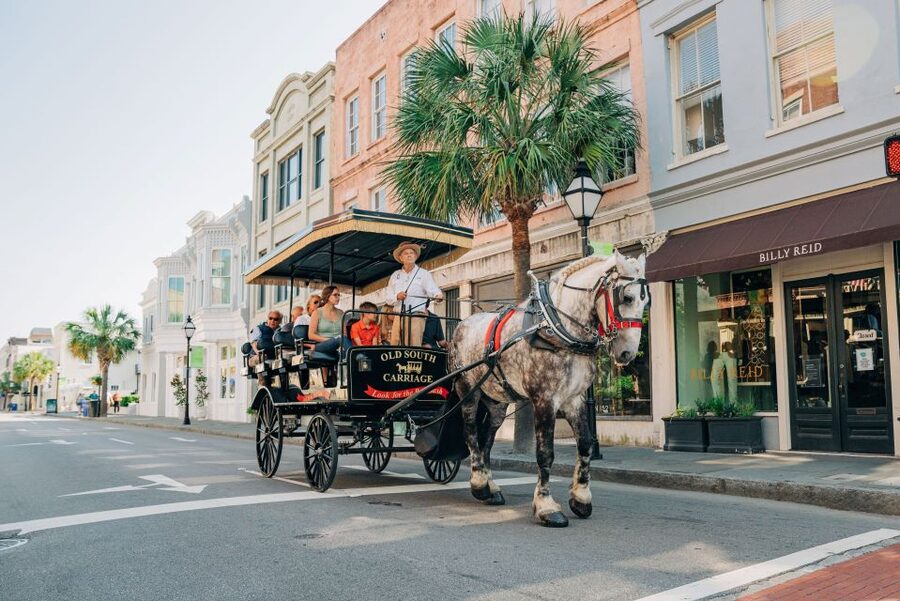
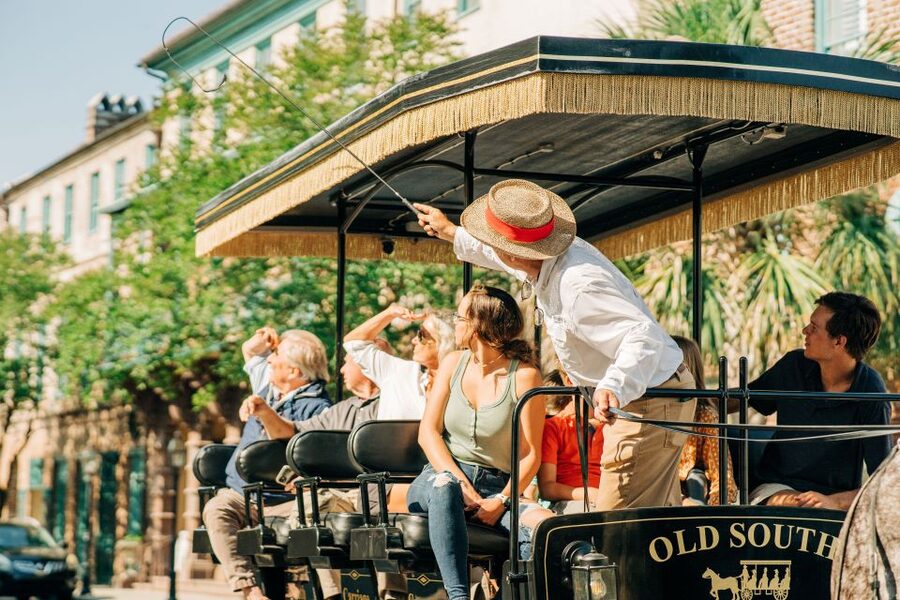
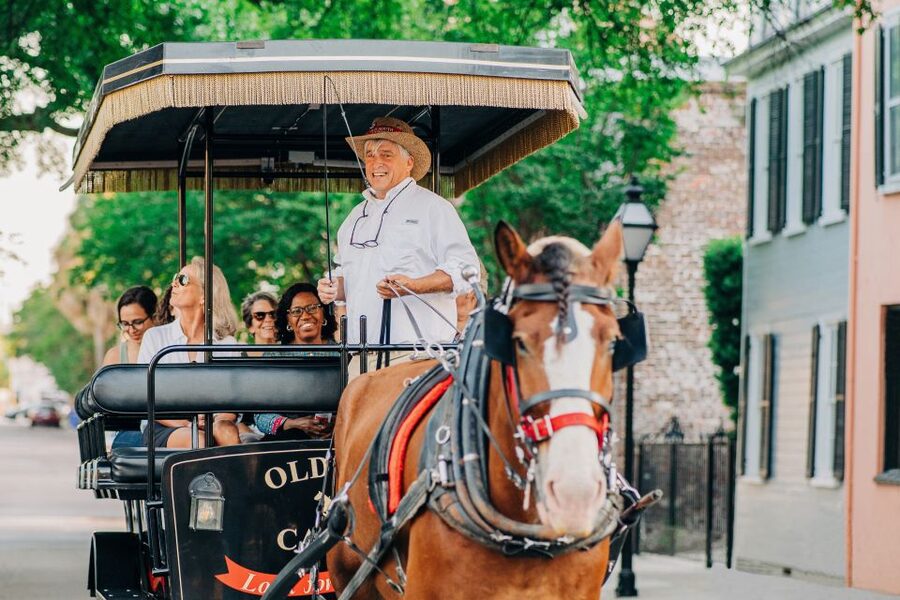
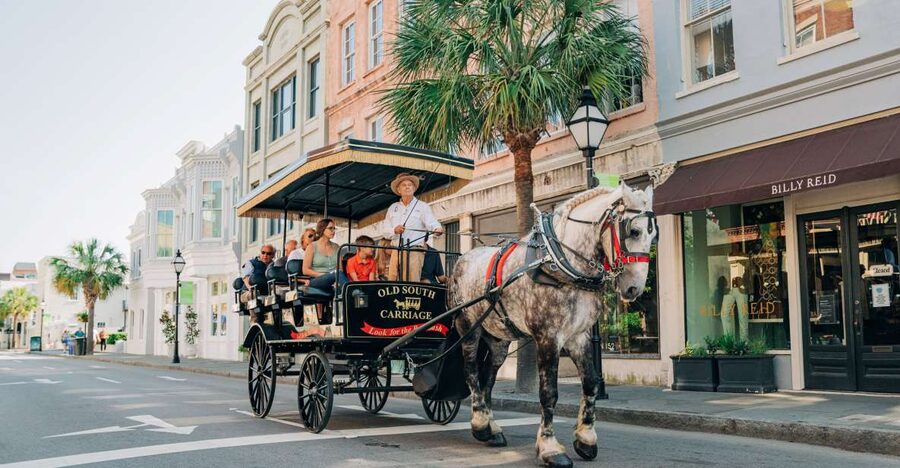
After check-in, you board a custom-built carriage and leave the stables. The ride heads toward the city gate near the Old City Market, then continues through the old downtown streets. The carriage gives you a different view from a walking tour. You are not rushing to keep up with a guide, and you can look upward at balconies, rooflines, church steeples, and large shade trees.
The horses are a noticeable part of the experience. Recent rides have featured horses with names such as Jesse, Buddy, Ace, Jordan, Milo, Mac, Roger, Winston, and Henry. Guides often explain something about the horse as well as the city. That small personal detail helps make the ride feel less like a standard vehicle tour.
More Horse Riding Days in Charleston:
- Charleston’s Old South Carriage Historic Horse & Carriage Tour
★ 5.0 · 10,023 reviews - Charleston Horse-Drawn Carriage Tour: Explore Historic Charleston
★ 5.0 · 3,561 reviews - Charleston’s Historic Residential Horse and Carriage Tour
★ 4.5 · 668 reviews
How the city-assigned route works
Charleston uses a system that assigns carriage routes through the historic district. The route is selected by a bingo-style process, rather than chosen by the individual driver or the company. This is useful to understand before you reserve.
You may pass several of the major sights listed for the tour, but the exact streets and order can change. One ride might spend more time near the Battery and the harbor. Another may show more residential blocks, King Street, or the French Quarter. You should book this as a broad introduction to downtown, not as a private tour built around one specific house.
I see two benefits here. First, the system keeps the city’s carriage traffic spread across different streets. Second, it means repeat riders may see a different route each time. The tradeoff is less control. If Rainbow Row is your only priority, you should not assume the carriage will stop there or give it the most time.
The guides make the route work by filling the ride with stories tied to what you are passing. You might hear about architecture, city floods, local streets, gardens, trees, or the people who shaped Charleston. The best guides add humor without letting the facts get lost. Donald, for example, was praised for being both funny and packed with information, while Carol was singled out for explaining landmarks, architecture, trees, vines, and the scent of flowers in spring.
Charleston Harbor and the Old City Market
The early part of the route points you toward the Old City Market and the harbor area. The market sits within the old city gate area and provides useful orientation. From the carriage, you begin to understand how compact the historic center is and how its commercial streets connect with the residential blocks.
Charleston Harbor gives the ride a wider sense of place. The city’s story is tied to the water, trade, shipping, defense, and storms, so the harbor is more than a scenic backdrop. Listen for the guide’s explanation of how the waterfront shaped the city and its fortunes.
Because you are moving through active city streets, traffic noise can sometimes make the commentary hard to hear. One person specifically noted that street sounds occasionally swallowed parts of the narration, and another wished for a portable microphone. If hearing every word matters to you, sit where you have a clear line to the guide and ask politely if you miss something.
Rainbow Row and Charleston’s residential streets
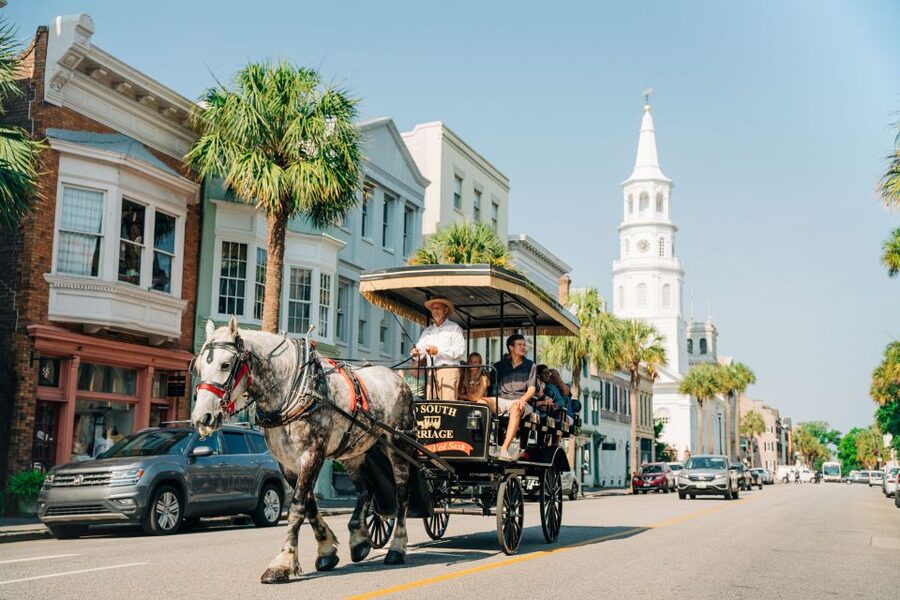
Rainbow Row is one of Charleston’s most recognizable stretches of historic homes. The colorful facades make it an easy landmark to photograph, but the wider value of the carriage ride is seeing how this row fits into the surrounding old neighborhood.
The residential district is where the tour earns its keep. You pass elegant homes, narrow streets, gardens, porches, and details that are easy to miss from a car. A walking tour lets you stop and study one building, while the carriage lets you cover more ground with less effort. Several riders found this especially useful as a first look at areas they could return to later on foot.
The guide may point out architectural features and local stories as you pass. If you want more house-by-house detail, keep your expectations measured. One person hoped for more information about the homes, suggesting that the emphasis can vary by guide and by route. Some guides focus on architecture, while others give more time to political events, floods, personalities, or local customs.
That variety is part of the appeal, but it also means the experience is not a fixed script. Carol, for example, was praised for covering architecture, landmarks, trees, vines, and seasonal flowers. Another guide may take a different angle.
More History Tours in Charleston:
- Historic Charleston Guided Sightseeing Walking Tour
★ 5.0 · 6,216 reviews - Charleston Harbor History Day-Time or Sunset Boat Cruise
★ 4.5 · 2,788 reviews - Hidden Alleyways and Historic Sites Small-Group Walking Tour
★ 5.0 · 2,335 reviews - Charleston: Daytime or Sunset Historic Harbor Cruise
★ 4.5 · 1,352 reviews
Four Corners of Law and King Street
Four Corners of Law is a useful stop in the city’s civic story. The name refers to the area where major government and legal buildings sit near one another. From the carriage, you get a quick lesson in how Charleston’s public life was arranged around this central district.
King Street brings a change of mood. It is one of the city’s best-known streets and helps connect the historic core with Charleston’s modern shops, restaurants, and daily traffic. From a carriage seat, you can note places to revisit later instead of trying to take in every storefront while walking.
This is one reason I recommend taking the carriage ride early in your Charleston visit. You get a broad orientation, then you can return to the streets that caught your eye. The ride will not replace a close look at a historic house or a slow meal on King Street, but it helps you decide where to spend your limited time.
The carriage also moves at a pace that suits photography, though you will not always have a long, still view. Keep your camera ready, but listen too. The guide’s narration is the part that turns a pleasant ride into a useful city introduction.
White Point Gardens and the Charleston Battery
White Point Gardens and the Charleston Battery are among the most scenic portions of the route. White Point Gardens is an open public park at the southern end of the historic district, while the Battery follows the waterfront edge. Together, they give you a look at Charleston’s tree-lined public spaces, waterfront defenses, and grand homes.
The carriage offers an easy way to see this area without a long walk in heat or rain. You can take in the views from a shaded seat, depending on the carriage and conditions, while the guide explains what you are seeing. The pace also makes it easier to notice the relationship between the park, the water, and the houses nearby.
Weather can affect this part of the ride and the tour as a whole. If bad weather prevents departure, you are offered a refund or another date. Light rain has not always stopped tours, but you should dress for the day and understand that conditions may change the comfort of an open-air carriage ride.
The guides make or break the hour
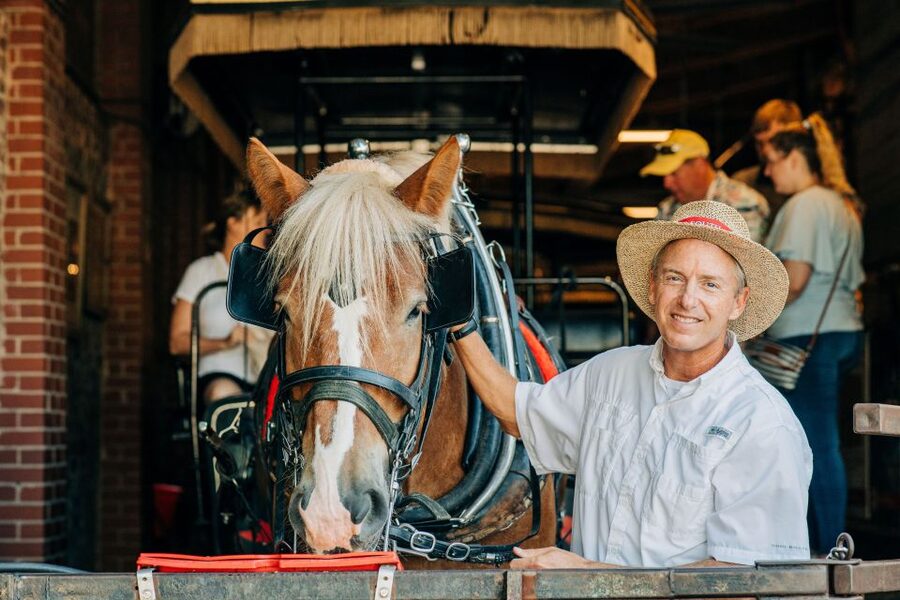
A horse-drawn carriage is pleasant on its own, but the guide determines how much you take away. The strongest guides combine clear facts with a relaxed delivery. Names praised for this mix include Mike Hicks, Donald, Carol, Christina, Scott, Terry, Madison, Hunter, and Skylar.
Terry was especially appreciated for making the French Quarter entertaining while still explaining the city’s past. Scott was described as both funny and informative. Christina was praised for friendly storytelling, and Hunter was remembered for humor and clear commentary. These examples point to the tour’s central strength: you are not listening to a recorded track.
Guides also have to manage the horse, traffic, timing, and narration at once. Several rides were praised for the calm handling of the horses in busy streets. One guide was noted for adjusting the presentation for a group of younger children, keeping the material suitable and engaging.
The quality can still vary from guide to guide. A live tour is more personal than an audio recording, but it is also less uniform. If the carriage is full or the street is noisy, some details may be difficult to catch. I would treat the hour as a lively introduction rather than a scholarly lecture.
Horses, seating, and comfort
The horses are generally described as calm, well cared for, and well matched with their drivers. People have praised horses including Jesse, Ace, Milo, Mac, Roger, Winston, Bob, Henry, and Buddy. The repeated attention to the animals is a good sign for anyone who wants the ride to feel respectful and relaxed.
The carriage itself is easy to board and leave, thanks to the system used by the company. It is a practical point if you have mobility concerns, and the activity is listed as wheelchair accessible. Still, I would confirm any specific needs with the provider before booking, since the available carriage setup may matter.
Seating deserves an honest warning. Four adults across one bench can feel cramped, particularly for a full hour. A couple or small family will likely find it easier, while a group of four adults should be prepared for close quarters. If you have a choice of seating, ask the staff about the arrangement at check-in.
Street noise is the other comfort issue. You are sharing downtown roads with ordinary traffic, so the guide’s voice may not always carry perfectly. The ride is slow and relaxed, but it is not silent.
Is $50 a fair price?
At $50 per person, this is not the cheapest way to see Charleston. You can walk through the historic district for free, and self-guided sightseeing costs little beyond your time. The carriage earns its price through convenience, live interpretation, and the amount of ground covered in one hour.
I think the value is strongest if this is your first visit, if you have limited time, or if walking in heat is not appealing. You get a guided overview, a comfortable seat, and a list of streets and landmarks to explore later. Families may also find the horse and carriage format easier to sell to children than a conventional history walk.
The value is weaker if you want a private route, detailed access to individual houses, or complete control over the sights. The city-assigned route means you are buying a well-run overview, not a custom itinerary. You should also account for downtown parking costs, which one rider found expensive.
Free cancellation up to 24 hours before departure and reserve-now, pay-later booking make it easier to fit the ride into changing plans. The tour lasts one hour and is conducted in English.
Who should book this carriage ride?
I would choose this for first-time visitors who want a quick orientation before exploring Charleston on foot. It also suits families, older adults, and anyone who wants to cover the historic district without committing to a long walk.
History fans will enjoy the guide’s stories, though the depth depends on the person leading the carriage and the route assigned that day. Photography fans should see it as a moving introduction rather than a series of guaranteed photo stops.
I would think twice if you dislike shared seating, need complete control over your route, or have difficulty hearing in city traffic. In those cases, a smaller walking tour may offer more detail and easier conversation.
Should you book it?
Book it if you want a pleasant, efficient first look at Charleston’s historic center, especially at the start of your stay. The strongest reasons are the live guide, the calm horses, the slow view of the residential streets, and the useful sense of where to walk next.
Skip it if your main goal is an exact list of landmarks or a detailed inspection of individual houses. The route is assigned by the city, seating can be tight, and traffic may affect the narration.
For most visitors, $50 buys a worthwhile hour of orientation and storytelling. Arrive early, expect a shared carriage, and treat the route as part of the adventure rather than a fixed checklist.
FAQ
How long is the Charleston horse-drawn carriage tour?
The tour lasts one hour.
How much does the carriage tour cost?
The listed price is $50 per person.
Where do I check in?
Check in at the Old South Carriage Co main lobby. Enter through the front door and speak with a customer service specialist at the desk.
How early should I arrive?
You must check in at least 10 minutes before departure. If you miss that cutoff, you may lose your scheduled reservation and be placed on the next available carriage.
What landmarks might the tour include?
The route can include Charleston Harbor, Rainbow Row, Four Corners of Law, King Street, White Point Gardens, and the Charleston Battery.
Can I choose the exact route?
No. Charleston assigns the carriage route through a bingo-style system, so the route can differ from one ride to another.
Is the tour conducted in English?
Yes. The tour has a live English-speaking guide.
Is the carriage tour wheelchair accessible?
Yes, the activity is listed as wheelchair accessible.
What happens if bad weather stops the tour?
If inclement weather prevents departure, you are offered a refund or a new date for the tour.
Just added around Charleston
- Charleston’s Historic Pubs, Taverns, and Taprooms Tour★ 4.5 · 33 reviews
- Small-Group Tour: Charleston Old Walled City Historical Walking Tour★ 4.5 · 283 reviews
- Charleston’s Strong Women of the South History Tour★ 4.5 · 27 reviews
- Private Sunset Sail BYOB Dolphin/History Tours on 43ft Mystique★ 5.0 · 42 reviews
- Sip History In a Secret Speakeasy Cocktail Class★ 5.0 · 40 reviews
- Sip History in The Sun Cabana Covered Cocktail Class★ 5.0 · 332 reviews
- Charleston History and Hops Tour: Bar and History Walk★ 5.0 · 316 reviews
- Private Walking Tour of Historic Charleston★ 5.0 · 38 reviews
Charleston History Tours, compared.
Charleston’s Old South Carriage Historic Horse & Carriage Tour
Read our review →
Historic Charleston Guided Sightseeing Walking Tour
Read our review →
Charleston Harbor History Day-Time or Sunset Boat Cruise
Read our review →
Hidden Alleyways and Historic Sites Small-Group Walking Tour
Read our review →
Charleston: Daytime or Sunset Historic Harbor Cruise
Read our review →
Charleston historical walking tour with a Professor of History at The Citadel
Read our review →
Undiscovered Charleston: Half Day Food, Wine & History Tour with Cooking Class
Read our review →
Charleston: Historic City Highlights Guided Bus Tour
Read our review →Browse the lists this tour appears in