
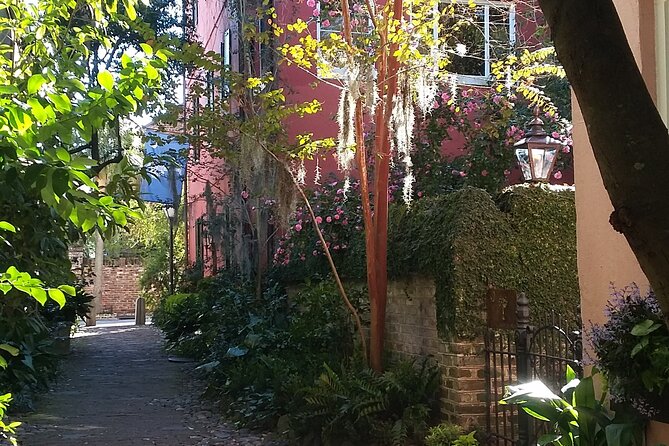
Review · CHARLESTON
Small-Group Tour: Charleston Old Walled City Historical Walking Tour
Charleston’s past is packed into a surprisingly walkable stretch of streets. This two-hour outing links the French Quarter, colonial churches, Rainbow Row, the Battery, and sites tied to slavery and the Civil War, giving you a useful first look at the old peninsula without hills or a bus ride.
I like the small maximum group of 15, which gives a guide a fair chance to answer questions. I also like the range of subjects: architecture, religion, political history, slavery, military events, and local life all appear in one walk. The main caution is that the quality depends heavily on the guide’s speaking pace and communication. Several strong guides are named, including Al, Bruce, Eric, and Linda, but some guests found the narration hard to follow.
Key points to know before booking
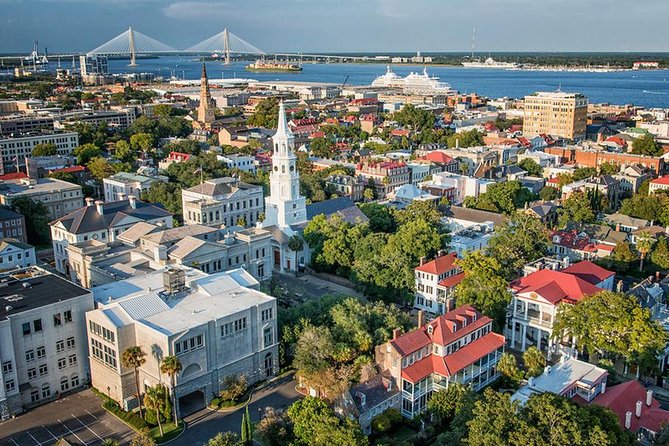
- The route covers major landmarks: You see the French Quarter, Broad Street area, Rainbow Row, the Battery, and several historic churches.
- The history is broad, not narrow: Expect colonial Charleston, the Revolutionary period, slavery, the Civil War, architecture, and local stories.
- The walk is flat: Charleston’s old city is easy to cover on foot, though comfortable shoes still matter.
- Most stops are viewed from outside: The tour enters the garden at Nathaniel Russell House, but interior admission is not included.
- Guide style can vary: Al is praised for architecture and local detail, while Bruce, Eric, and Linda are also noted for friendly, clear storytelling.
- Plan for weather: The tour operates in all conditions, so sun, rain, heat, or cool weather can shape your experience.
What this Charleston walk does well
The best feature here is the route. You do not spend two hours looking at one type of building or hearing one slice of Charleston’s past. A graveyard leads to a gunpowder storehouse, then to churches, a former slave market, a Revolutionary-era exchange, pastel commercial buildings, waterfront mansions, and a Civil War viewpoint.
That variety helps you understand Charleston as a real city rather than a collection of pretty façades. The elegant streets also carry difficult stories. The Old Slave Mart Museum addresses the buying and selling of enslaved people, while the Battery and Fort Sumter viewpoint bring the approach of the Civil War into view.
I especially like the local flavor reported from guides such as Al and Bruce. Al is praised for explaining architecture and offering restaurant suggestions, while Bruce is known for taking small groups through side streets and alleys connected to his own Charleston upbringing. Those personal details can make a familiar building easier to remember.
The route is also practical for a first visit. You cover much of the old peninsula quickly, then can return later to the places that deserve more time. The tradeoff is pace. Fourteen listed stops in about two hours leaves limited time at each one, and the tour does not include transportation, museum entry, or extended indoor visits.
More History Walking Tours in Charleston
- Historic Charleston Guided Sightseeing Walking Tour
★ 5.0 · 6,216 reviews - Hidden Alleyways and Historic Sites Small-Group Walking Tour
★ 5.0 · 2,335 reviews - Charleston historical walking tour with a Professor of History at The Citadel
★ 5.0 · 1,284 reviews
Starting among tombstones and colonial churches
The walk begins at 108 Meeting Street and first reaches Circular Congregational Church. The congregation has worshipped on this site since 1681, and its graveyard contains a striking collection of legible slate tombstones from the 1700s.
This is a useful opening stop because the stones put names and dates onto Charleston’s early years. You are not just hearing about colonial residents in the abstract. You are looking at the markers they left behind. Allow roughly 20 minutes here, the longest scheduled stop on the route.
From there, the Powder Magazine takes only about five minutes. Built by 1713 for a city under repeated threat, it is described as the oldest surviving public building between St. Augustine and Williamsburg. The narration takes place from the sidewalk, so do not expect a full museum visit as part of this tour.
St. Philip’s Church follows, with about ten minutes devoted to the church and graveyard. Founded in 1680, it became associated with planters and politicians. Signers of both the Declaration of Independence and the Constitution are buried here, giving the stop a strong national connection.
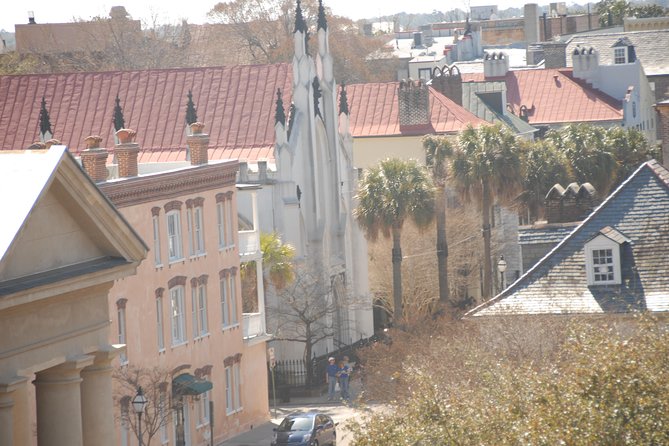
The French Huguenot Church adds another layer. Its Gothic Revival design is easy to contrast with the older colonial buildings, and the congregation has worshipped on this site since 1706. It remains the only active French Calvinist congregation in North America, according to the tour information.
The French Quarter’s buildings and public life
Dock Street Theater is a short stop, but its story is unusually good. The current building was created in 1937 as a Works Progress Administration project in an eighteenth-century style. It occupies the site of the first playhouse built in British North America, dating to 1736.
This is a good example of Charleston’s habit of preserving the feel of an older city even when a structure is newer than the surrounding buildings. You get the story from outside, so the appeal here is historical context rather than a theater performance or interior tour.
At the Four Corners of Law, the guide explains how four forms of public authority meet at one intersection. The corners represent religious, municipal, state, and federal power. The location has been used for public purposes since 1680, and the tour also covers the playful claim that it is the only intersection in the world where these four laws meet.
The point is less about proving a superlative and more about understanding Charleston’s civic center. Churches, courts, city offices, and government buildings all sit close together, making the intersection a useful lesson in how the old city functioned.
You then reach the Old Slave Mart Museum. The building is described as the only surviving structure in Charleston that was used as a showroom for slave sales. Its museum presents the history of slavery in the South Carolina Lowcountry.
This stop matters, but five minutes is not enough for a full museum visit. Treat the visit as an introduction and return independently if you want time with the exhibits. The subject deserves attention, and the tour is right to place it alongside the city’s churches and grand homes rather than treating Charleston as only a pretty architectural destination.
Revolutionary history at the Old Exchange

The Old Exchange and Provost Dungeon is connected to events surrounding the founding of the United States. George Washington was entertained there four times in 1791, and the building later served as a Revolutionary War museum.
The tour provides sidewalk narration, with about seven minutes allotted. That makes it another orientation stop rather than a detailed museum visit. I like the way it connects Charleston’s local streets to national political events, but you should plan a separate visit if you want to explore the building itself.
St. Michael’s Church receives about seven minutes of attention. Built in 1761, it is described as Charleston’s oldest surviving church. It was targeted during the British siege of 1780 and again during the Federal siege from 1863 to 1865. Two signers of the Constitution are buried in its graveyard.
The church helps tie together the Revolutionary and Civil War sections of the tour. You also get a chance to compare it with the earlier churches on the route. If church interiors are important to you, confirm what is open on your own after the walk, since the scheduled experience focuses on sidewalk and graveyard narration.
More History Walking Tours in the USA
- Charleston: Old Walled City Historical Walking Tour
★ 4.7 · 705 reviews - Historic Charleston Walking Tour: Rainbow Row, Churches, and More
★ 5.0 · 691 reviews - Charleston: History and Architecture Guided Walking Tour
★ 4.8 · 349 reviews - Charleston History and Hops Tour: Bar and History Walk
★ 5.0 · 316 reviews
Rainbow Row and Charleston’s pastel face
Rainbow Row is the route’s most instantly recognizable stretch. These eighteenth-century commercial buildings are painted in soft pastel colors, reflecting Charleston’s early connections with Barbados, Antigua, and Nevis.
The color makes for easy photographs, but the commercial origin is the more useful detail. These were not simply decorative homes created for modern visitors. Their design and history reflect trade, the Caribbean, and the working life of the old waterfront city.
This is also where a guide’s architectural skill can add real value. Al has been praised for explaining Charleston’s building styles, and several guides have been described as adding local stories to the structures. That kind of commentary helps you see details that can disappear when you are focused only on taking pictures.
The Battery, harbor views, and Fort Sumter

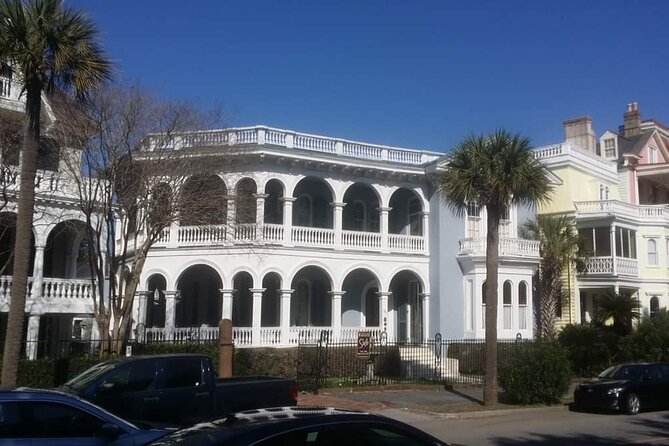
The Battery is the most scenic section of the walk. Grand waterfront houses line the edge, many built during the first half of the nineteenth century as winter-season party homes for wealthy residents.
The area also carries a direct connection to the Civil War. From one of these houses, General Pierre Beauregard gave the order to fire on Fort Sumter, beginning the first battle of the conflict. The tour uses the waterfront to explain how Charleston’s civilian city and military story were linked.
At the High Battery seawall, you look toward Fort Sumter and hear about the bombardment of both the fort and Charleston’s civilian population. The tour also covers the city’s dramatic fall after a 587-day siege. Eight minutes is scheduled here, so expect a clear overview rather than a long military lecture.
The view is valuable because Fort Sumter is not an isolated boat excursion in this context. You see it from Charleston itself and learn how the fort, harbor, homes, and city defenses fit together. If you later choose to take a boat to the monument, this stop gives you a useful base of understanding.
A garden stop at Nathaniel Russell House
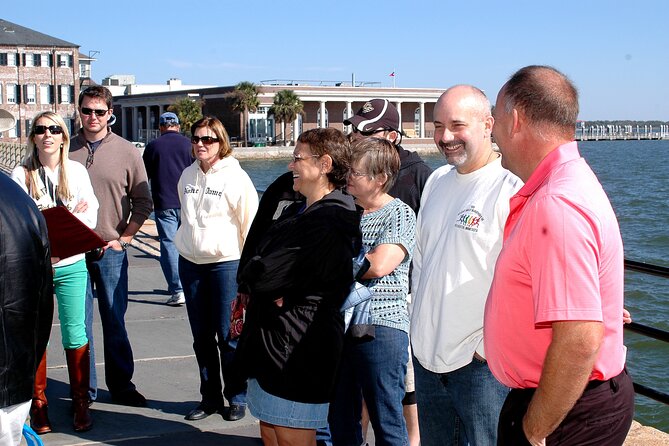
The final listed stop is the garden at Nathaniel Russell House, built in 1808. The guide discusses horticulture, garden design, and the layout of an eighteenth-century Charleston property.
You do not enter the house. That distinction matters if you are choosing this tour mainly to see historic interiors. The garden visit still adds something different after so many churches, streets, and exterior façades. You get a sense of how a Charleston property was organized, including the story of the joggling board, a local seating feature designed to rock gently when used.
With ten minutes here, the stop is long enough for a concise explanation and a look at the garden. It is a pleasant way to finish because it shifts attention from public buildings and war to domestic design and everyday comfort.
Guide quality and group size
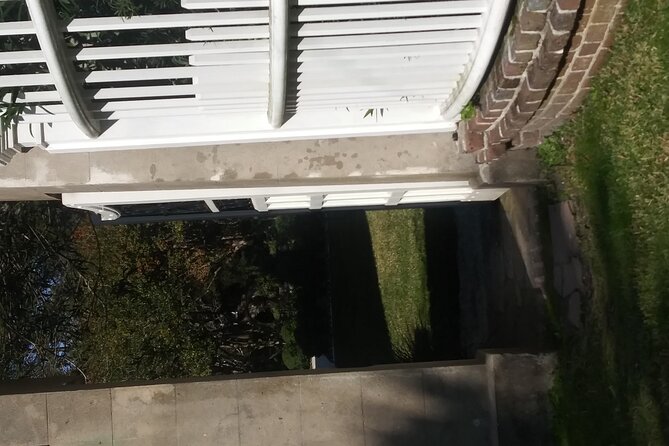
The tour allows up to 15 people, which is a sensible size for narrow streets and graveyards. A small group also lets you ask about architecture, family connections, church history, or places to eat. One account describes a much larger group of 19, so I would confirm the group size at booking if a quiet, intimate walk is important to you.
Guide style is the biggest variable. Al is repeatedly associated with local stories, architecture, history, and restaurant advice. Bruce is described as a friendly Charleston native who may show lesser-known walkways and places connected to his childhood. Eric is praised for an easy pace and a small-group style, while Linda is described as a strong storyteller who answered questions well.
There is also a clear warning to keep in mind. Some guides have spoken too quickly or faced buildings instead of the group while talking. If you have hearing difficulty, stand close to the guide and ask for repetition when needed. The tour’s historical content is only useful if you can follow the narration.
Timing, walking comfort, and value
Two hours is a good length for a first orientation. You see a lot without giving up an entire morning or afternoon, and the route is flat enough for most active visitors. The listed stops total about 102 minutes before walking time, which suggests that the schedule allows short transitions between sites.
You need comfortable shoes. Charleston’s old streets are easy in terms of elevation, but you will still spend the full tour on foot, with outdoor narration at most stops. Dress for the forecast because the tour operates in all weather. There is no hotel pickup, drop-off, or transport between attractions, so arrange your own way to 108 Meeting Street and note that the tour ends elsewhere.
The value depends on what you want. If you want a broad introduction with a local guide and no museum admission, the route packs a lot into two hours. If you prefer long interior visits, in-depth military detail, or time for quiet photography, you may find the schedule too tight.
The tour includes taxes, fees, handling charges, and a local guide. Since no price is supplied here, I would judge the cost against the alternative of exploring alone. You can walk these streets for free, but you will not automatically understand why the buildings matter, where the difficult parts of the city’s past fit, or which small details deserve your attention.
Who should book this walk
I would choose this for a first visit to Charleston, especially if you have only one day and want an efficient introduction. It suits history-minded families, couples, and active visitors who prefer to learn while walking rather than riding in a vehicle.
It is also a good choice if architecture interests you. The churches, pastel commercial buildings, waterfront houses, and garden design give the route visual variety, while guides such as Al can add useful explanations of building styles.
Families should note that children must be accompanied by an adult. Most people can participate, and service animals are allowed. The flat route helps, but the outdoor format and two-hour walking time still call for sensible planning.
I would be more cautious if your top priority is guaranteed guide consistency, a slow pace, or extensive time inside museums. The tour has received a 4.7 rating from 283 ratings, with 93 percent recommending it, but the occasional no-show and communication complaints are serious enough to keep in mind. The operator is Charleston Old Walled City Tours, and free cancellation is available until 24 hours before the start time.
Should you book the Charleston Old Walled City tour?
Book it if you want a compact, wide-ranging introduction to Charleston’s old peninsula. The strongest reasons are the route, the mix of beautiful and difficult history, the flat walking terrain, and the chance to hear local stories from guides such as Al, Bruce, Eric, or Linda.
Skip it if you want a museum-heavy experience or cannot tolerate outdoor walking in changing weather. For most first-time visitors, I would take the tour early in a Charleston stay, use it to get oriented, then return to the Old Slave Mart Museum, Old Exchange, churches, or Fort Sumter with more time.
FAQ
How long is the walking tour?
The tour lasts approximately two hours.
Where does the tour begin?
The meeting point is 108 Meeting Street, Charleston, South Carolina 29401.
Does the tour end where it starts?
No. The activity ends at a different location. The supplied information does not specify the exact end point.
How large is the group?
The tour has a maximum of 15 travelers.
Is transportation included?
No. Transportation to and from the attractions, along with hotel pickup and drop-off, is not included.
Are museum and attraction admission tickets included?
The listed stops show no admission ticket charge, but the tour mainly provides exterior and sidewalk narration. The Nathaniel Russell House visit includes the garden, not admission to the house.
Is the route suitable for most people?
Most people can participate, and the old city is described as hill-free. Comfortable walking shoes are recommended because the experience takes place on foot.
What happens if I need to cancel?
You can receive a full refund if you cancel at least 24 hours before the local start time. Cancellations or changes made less than 24 hours in advance are not accepted for a refund.
More Small-Group History Tours in Charleston
- Small Group Ghost Tour Charleston: 60min of True Haunted History
★ 4.5 · 272 reviews - Semi-private SMALL group Historic Walking Tours w/certified guide
★ 5.0 · 224 reviews - Small Group Historic Charleston walking Tour
★ 5.0 · 62 reviews - Pompeii: Small Group Tour with an Archaeologist
★ 4.8 · 12,264 reviews
Just added around Charleston
- Charleston’s Historic Pubs, Taverns, and Taprooms Tour★ 4.5 · 33 reviews
- Charleston’s Strong Women of the South History Tour★ 4.5 · 27 reviews
- Private Sunset Sail BYOB Dolphin/History Tours on 43ft Mystique★ 5.0 · 42 reviews
- Sip History In a Secret Speakeasy Cocktail Class★ 5.0 · 40 reviews
- Sip History in The Sun Cabana Covered Cocktail Class★ 5.0 · 332 reviews
- Charleston History and Hops Tour: Bar and History Walk★ 5.0 · 316 reviews
- Private Walking Tour of Historic Charleston★ 5.0 · 38 reviews
- Small Group Historic Charleston walking Tour★ 5.0 · 62 reviews
Charleston History Tours, compared.
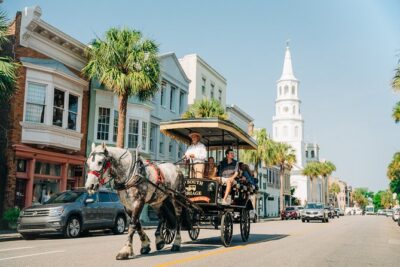
Charleston’s Old South Carriage Historic Horse & Carriage Tour
Read our review →
Historic Charleston Guided Sightseeing Walking Tour
Read our review →
Charleston Harbor History Day-Time or Sunset Boat Cruise
Read our review →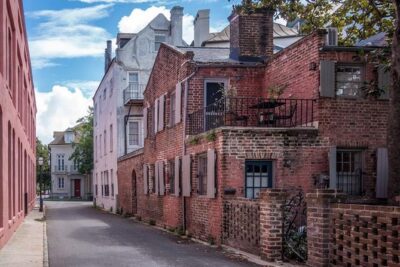
Hidden Alleyways and Historic Sites Small-Group Walking Tour
Read our review →
Charleston: Daytime or Sunset Historic Harbor Cruise
Read our review →
Charleston historical walking tour with a Professor of History at The Citadel
Read our review →
Charleston: Historical Downtown Tour by Horse-drawn Carriage
Read our review →
Undiscovered Charleston: Half Day Food, Wine & History Tour with Cooking Class
Read our review →Browse the lists this tour appears in