Review · USA
Discover Alexandria: Historic Homes, Churches, and Taverns!
Alexandria’s old streets hide more than pretty brick facades. This 90-minute walk connects George Washington’s homes, early taverns, churches, fire history, Civil War hospitals, and the events at Carlyle House that helped push the colonies toward independence. It turns a pleasant stroll into a readable map of American history.
I like the way the tour looks beyond famous plaques, especially at fire marks and quirky house details that are easy to miss on your own. I also like the personal scale: guides such as Tim, Wayne, and Eileen have adjusted the walk for heat, cold, shade, and the pace of the group.
The main limitation is time. Ninety minutes covers a lot, so some places receive a short explanation rather than a full visit. You will also be outdoors for most of the walk, which makes summer heat and winter cold worth planning for.
Key points at a glance

- George Washington’s Alexandria: See both homes connected with Washington and learn where he celebrated the end of the Revolutionary War.
- Fire marks in plain sight: Understand the unusual marks on Old Town buildings and what they reveal about Alexandria’s fires.
- Captain’s Row: Learn why one cobblestone street carries its famous name and why it makes a fine family-photo stop.
- Carlyle House and the road to independence: Hear about events in Alexandria roughly 20 years before Lexington and Concord.
- Civil War Alexandria: Locate a famous prison site and several places connected with the city’s 30 Civil War hospitals.
- Flexible, personal guiding: The tour is in English, wheelchair accessible, and designed for questions.
Starting at 221 King Street
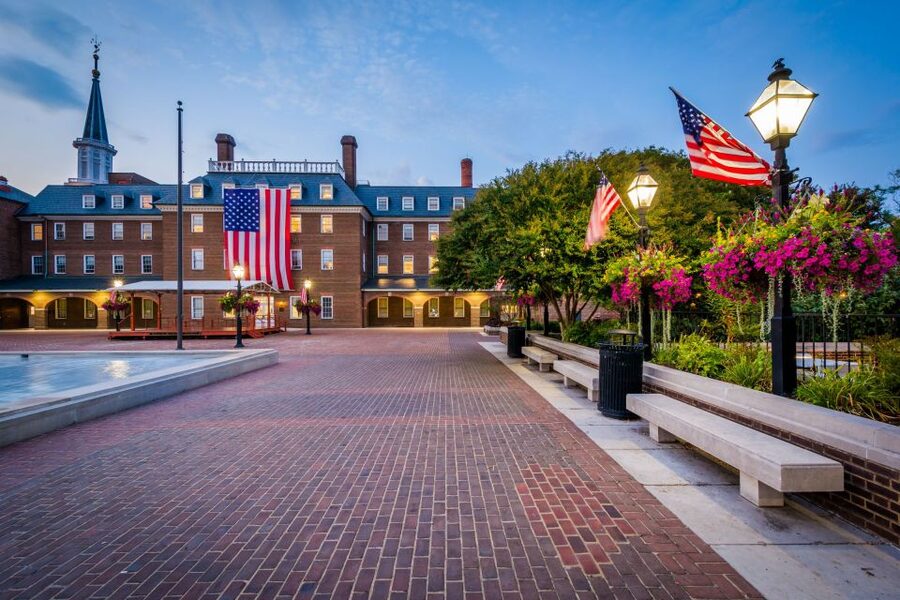
The walk begins at the Visitor Center at 221 King Street, a practical meeting place in the middle of Old Town. Your guide meets you on the porch or inside, and the building has a bathroom downstairs, water, and tourist information.
That setup matters. You can arrive early, use the facilities, refill your water, and get oriented before the walk begins. It is also a useful spot if you want local information after the tour, since the visit may leave you with more places to investigate.
The tour costs $30 per person. For 90 minutes of guiding, that is a fair price, especially if you want an introduction before exploring Old Town on your own. The value comes less from entering grand interiors and more from learning how separate buildings and streets fit together.
You are paying for interpretation. Without a guide, you can admire old houses, churches, and cobblestones, but you may not know why a small architectural feature matters or how a building connects to Washington, the Revolution, or the Civil War.
The tour is offered in English, and cancellation is free up to 24 hours before departure. You can also reserve now and pay later, which helps if your plans around Alexandria are still shifting.
More History Tours in the USA:
- History and Hauntings of Salem Guided Walking Tour
★ 5.0 · 14,564 reviews - Charleston’s Old South Carriage Historic Horse & Carriage Tour
★ 5.0 · 10,023 reviews - Beneath The Streets Underground History Tour
★ 4.5 · 8,006 reviews
Washington’s two homes in Alexandria
George Washington’s connection with Alexandria provides the tour’s central thread. Washington did not have only one house in town. The walk points out both homes associated with him and explains how Alexandria fit into his life.
That detail gives the tour a useful local focus. Washington is often presented through Mount Vernon or national monuments, but Alexandria shows him in a town setting, among business contacts, friends, neighbors, and fellow citizens.
You will also see where Washington celebrated the end of the Revolutionary War with friends and neighbors. That moment brings the Revolution down to street level. Instead of treating independence as something that happened only on battlefields and in government halls, the tour shows how the news and meaning of the war reached an ordinary community.
I find this one of the strongest parts of the walk because it adds social context. You are not simply looking at a Washington-related address. You are hearing how the town marked a major turning point together.
The guide’s approach appears especially well suited to people interested in Washington and military history. Tim, in particular, has led walks with a strong focus on those subjects, while also keeping the discussion accessible to people who do not arrive as specialists.
Taverns, churches, and early Alexandria
The tour introduces Alexandria as a working colonial town, not just a collection of preserved residences. Taverns played a major part in early American public life, and the walk explains what those places meant to the community.
A tavern was more than a spot for food or drink. It could be a meeting place, a social center, and a place where news and political ideas circulated. That background helps you read Alexandria’s streets with more purpose.
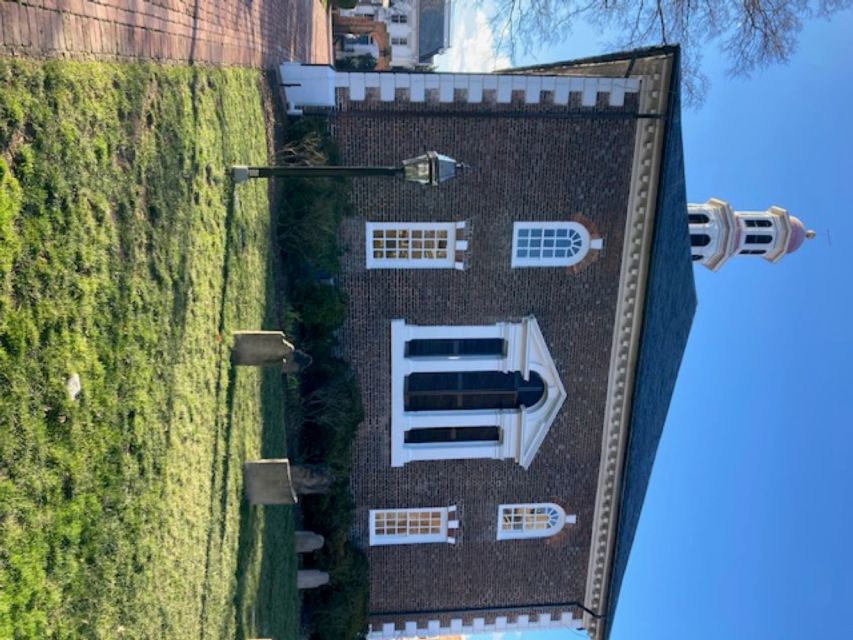
The route also includes churches and homes that pre-date the Revolutionary War. Their age matters, but the guide adds the human stories and local connections that a date on a sign cannot provide.
You will see how different buildings sit close together, creating a record of Alexandria’s early growth. Some details are easy to pass without notice. That is where a walking guide earns the fee, pointing out features that may look ordinary until you know what they mean.
The tour also explores the city’s founding and its early connection to George Washington. This is useful context before you explore King Street shops, restaurants, and side streets on your own. You get a framework for understanding why Old Town has the shape and character it does.
Fire marks and Alexandria’s fragile buildings
One of the more unusual themes is Alexandria’s fire history. The guide explains the marks found on some houses and tells you what lies behind those odd details.
This is a good example of the tour’s value. You might notice a mark on a wall but have no idea whether it is decorative, accidental, or historical. Once the guide explains it, the building becomes part of a larger story about risk, construction, and the difficulty of protecting an old town from fire.
Fire also helps explain why preservation requires attention to small features. Old houses are not just attractive backdrops. They carry evidence of repairs, changes, and past emergencies.
The topic adds variety to the Washington and Revolutionary War material. If you enjoy architecture, you will likely appreciate this section most. It asks you to look closely rather than simply move from one famous address to another.
Same city, a different century:
- Big Island in a Day: Volcanoes Waterfalls Sightseeing and History
★ 5.0 · 6,569 reviews - Boston: Freedom Trail History Small Group Walking Tour
★ 5.0 · 6,450 reviews - Historic Charleston Guided Sightseeing Walking Tour
★ 5.0 · 6,216 reviews - Charleston Horse-Drawn Carriage Tour: Explore Historic Charleston
★ 5.0 · 3,561 reviews
Alexandria’s tiny houses and overlooked architecture
Alexandria was an early example of the small-house idea. The walk points out two tiny houses, one famous and another that people often pass without noticing.
That contrast is a nice touch. A tour that shows only celebrated landmarks can make a historic district feel predictable. Here, you are encouraged to notice scale, placement, and the less obvious structures that reveal how people lived.
The small houses also offer a change of pace from Washington’s larger story. They help you think about ordinary residents and practical urban life. Not every piece of history comes with a famous name attached to it.
Because the tour is guided on foot, you can stop close enough to examine details that would be easy to miss from a vehicle. The tradeoff is that the walk does not promise lengthy interior visits. The emphasis is on streetside interpretation and the stories connected to each place.
Captain’s Row and the character of Old Town
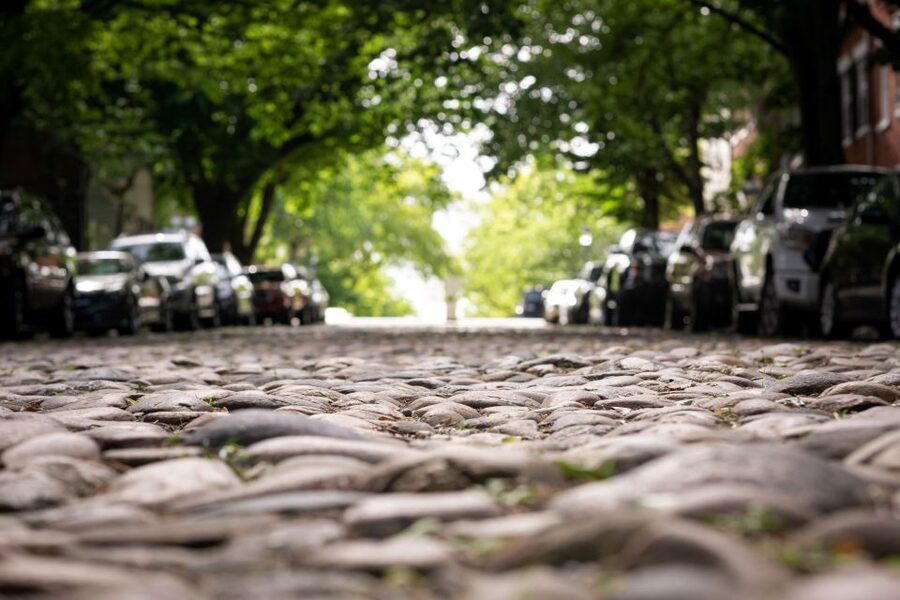
One cobblestone street on the route is known as Captain’s Row. The guide explains the source of the name and points out why the street has become a popular place for family photographs.
This is one of the tour’s more visual stops. The cobblestones and historic buildings create a memorable scene, but the explanation gives it more value than a quick photo stop. You learn the local meaning behind the name instead of treating the street as a picturesque background.
It is also a practical place to pause and take pictures. If you are planning a family card or a group photo, you may want to have your camera ready here.
The street offers a good reminder that Old Town works on two levels. It is attractive enough for photographs, but it also preserves clues about Alexandria’s past. The best moments on this walk do both jobs at once.
Carlyle House and the road toward independence
The tour makes a striking claim about Alexandria and the American Revolution: important events connected with independence were taking place here about 20 years before the battles at Lexington and Concord.
Carlyle House is the key stop for this part of the story. The guide explains what happened there and why those events helped move the American colonies toward declaring independence.
This section is valuable because it broadens the usual Revolution story. Many people know the familiar sequence of Lexington and Concord, the Declaration of Independence, and the war that followed. Alexandria offers an earlier chapter, showing that political conflict and colonial resistance were developing well before open fighting began.
You will not just hear dates. The guide connects a specific building to the larger movement toward independence. That makes the subject easier to remember and gives Carlyle House a place in the political story of the colonies.
If early American history is your main interest, pay close attention here. This may be the most important stop on the route for understanding why Alexandria mattered beyond its local streets.
Civil War prison and hospital sites
The walk then moves into Alexandria’s Civil War story. You will learn where one of the city’s best-known Civil War prisons was located and see places connected with some of Alexandria’s 30 hospitals from that period.
The exact scale of the hospital network is easy to underestimate. Thirty hospitals indicate how strongly the war shaped daily life in the city. Alexandria was not only a place where soldiers passed through. It also dealt with the medical, logistical, and social effects of the conflict.
The prison site adds another difficult layer. A location that may now look ordinary once held people during wartime. The guide’s job is to make that change in meaning clear without asking you to rely only on a marker or plaque.
This section may appeal most to people with an interest in military history, but it also gives the general visitor a more complete picture of Alexandria. The town’s story did not end with the Revolution. It remained tied to national conflicts long afterward.
The guides make the difference

The experience depends heavily on the person leading it. Tim is frequently associated with the walk and is described as prepared, friendly, and especially strong on Washington and military subjects. Wayne has also led the tour, bringing humor and a lively manner, while Eileen has been praised for combining warmth with strong command of local stories.
You should feel comfortable asking questions. The tour specifically invites them, and that matters in a place with several historical periods layered into a small area.
The guiding style is personal rather than formal. Tim has led walks for very small groups, including on unusually hot or cold days, and has adjusted the pace and location to keep people in shade or indoors when possible. That does not remove the need to dress for the weather, but it suggests a guide who pays attention to conditions.
One useful detail is that even people who live in the area have learned new things on the walk. That is a good sign for repeat visitors to Alexandria who already know the main streets but want the stories behind them.
How to prepare for the 90-minute walk
Wear comfortable shoes. The tour covers several Old Town locations on foot, and the historic streets may include cobblestones or uneven surfaces.
Bring water, especially in warm weather. A visitor described taking the tour in 97-degree heat, and another account involved a very cold day. The guides can adapt, but the weather remains part of the experience.
The walk is wheelchair accessible. You should still consider the historic street surfaces when deciding what clothing and footwear will be most comfortable.
Arrive at 221 King Street a little early so you can locate the guide and use the visitor facilities if needed. Since the guide may be on the porch or inside, check both areas rather than assuming the group has not arrived.
At $30, the tour works best as an introduction. Afterward, you will have a clearer sense of which houses, streets, and historical subjects deserve more of your time. It is less suited to someone seeking a long museum visit or a slow architectural survey of every building.
Who should book this tour
I would recommend it to first-time visitors who want their Old Town sightseeing to have a clear historical shape. It is also a good fit for people interested in George Washington, early American politics, military history, architecture, or local stories that are not printed on building plaques.
Families may like Captain’s Row and the changing subjects. The tour moves from Washington to taverns, fires, tiny houses, the Revolution, and the Civil War, so younger visitors are not asked to focus on one long lecture.
Local residents can also get value from it. The walk is built around details that are easy to overlook, and even familiar streets may look different once you know their connections.
You may want to skip it if you dislike walking, need a very slow pace, or want extensive indoor access. Ninety minutes is enough for a strong overview, but not enough for every house, church, or Civil War site to receive equal attention.
Should you book it?
Book this tour if you want Alexandria explained through people, buildings, and small clues rather than a list of dates. The combination of Washington’s two homes, fire marks, Captain’s Row, Carlyle House, tiny houses, and Civil War sites gives you a broad view in a manageable 90 minutes.
The best reason to go is the guiding. Tim, Wayne, and Eileen bring different personalities, but the experience is built around clear stories and room for questions. At $30, it is a sensible way to get your bearings before exploring Old Town independently.
Plan around the weather, wear good shoes, and expect a fast-moving outdoor walk. If that sounds right for you, this is a strong introduction to Alexandria’s streets and the long American story held within them.
FAQ
How long does the Alexandria history tour last?
The tour lasts 90 minutes.
How much does the tour cost?
The price is $30 per person.
Where does the tour meet?
The meeting point is the Visitor Center at 221 King Street in Alexandria. The guide will be on the porch or inside.
What language is the tour offered in?
The live tour is conducted in English.
Is the tour wheelchair accessible?
Yes, the activity is wheelchair accessible.
What George Washington sites are included?
You will see two homes connected with George Washington and learn about his relationship with Alexandria. The tour also visits the place where he celebrated the end of the Revolutionary War with friends and neighbors.
Does the tour cover Civil War history?
Yes. You will learn where one famous Civil War prison was located and see places connected with some of Alexandria’s 30 Civil War hospitals.
Can I cancel for a full refund?
Yes. You can cancel up to 24 hours in advance for a full refund. You can also reserve now and pay later.
Just added around the USA
- Red Rocks Amphitheatre Historical Walking Tour★ 5.0 · 74 reviews
- 1-Hour Segway Tour of Cheyenne Cañon Art, History and Nature★ 5.0 · 36 reviews
- Colorado Springs – Guided Walking Ghost / History Tour★ 5.0 · 168 reviews
- Ancient Landscapes Private Geology Hike at Garden of the Gods★ 5.0 · 31 reviews
- Village Food Tours Lunch & History Tour★ 5.0 · 80 reviews
- 2.5 Hour Kayaking with Manatee and History Tour in Tarpon Springs★ 5.0 · 24 reviews
- Safety Harbor Ghost Tour★ 5.0 · 60 reviews
- Historical Bicycle Tour of Dunedin★ 5.0 · 44 reviews
USA History Tours, compared.

History and Hauntings of Salem Guided Walking Tour
Read our review →
Charleston’s Old South Carriage Historic Horse & Carriage Tour
Read our review →
Boston: Freedom Trail History Small Group Walking Tour
Read our review →
Historic Charleston Guided Sightseeing Walking Tour
Read our review →
Savannah History and Haunts Candlelit Ghost Walking Tour
Read our review →
Tour of Historic Fenway Park, America’s Most Beloved Ballpark
Read our review →