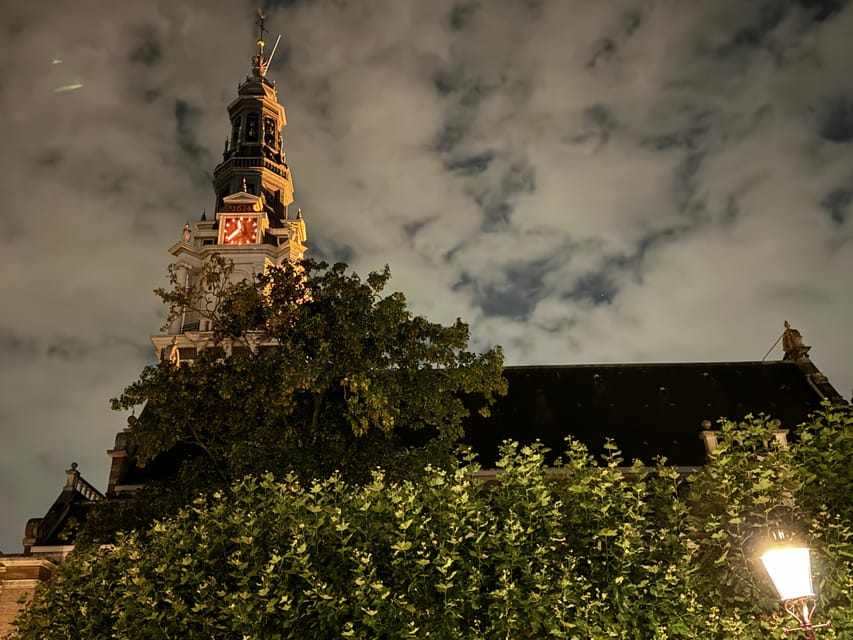
Review · AMSTERDAM
Amsterdam: Ghost Walking Tour and Dark History
Amsterdam’s old center changes character after dark. On this two-hour walk, you move from Dam Square into narrow lanes and canal-side streets tied to executions, disappearances, and restless spirits. The stories mix documented events with local legends, so the city itself becomes the stage.
I like the tour’s balance of ghost tales and ordinary Amsterdam history. I also like that guides such as Maria and Pilar make room for questions and adjust the pace to the group. The main consideration is that this is a walking tour with several stops, and the operator’s information both calls it wheelchair accessible and says it is not suitable for people with mobility impairments. Confirm that point before booking.
Key points to know before you go
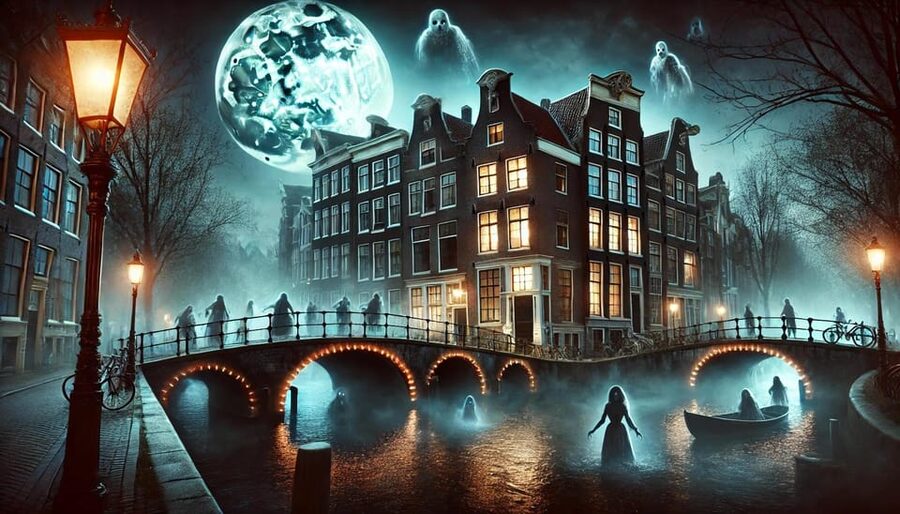
- The route covers seven dark-history stops: You walk from Nieuwe Kerk and Dam Square through Begijnhof, Kalverstraat, the Oudezijds Achterburgwal, Bloedstraat, Spooksteeg, and Prins Hendrikkade before finishing at the Weeping Tower.
- Maria and Pilar are praised for storytelling: They explain the historical background clearly, answer questions, and keep the group together.
- It is more than a ghost-story hour: You also get general facts about Amsterdam, its old streets, sailors, crimes, executions, and mysterious deaths.
- The small-group feel can be a real advantage: A very small departure may allow the guide to shape the stories around your interests, though it can feel less lively if you expected a large crowd.
- The $29 price covers the guide, not attractions: There are no food, drinks, or entry tickets included, but the route focuses on outdoor storytelling.
- Bring warm clothing at night: A January departure was described as cold, yet the two-hour walk remained comfortable for the participant who shared that experience.
Why Amsterdam’s dark side works best on foot
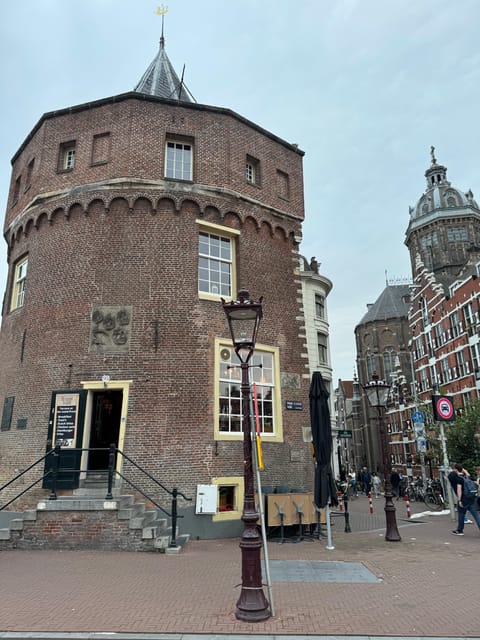
Amsterdam is often sold through canals, grand merchant houses, museums, and cheerful café terraces. Those are real parts of the city, but they tell only the polished half of the story. This tour turns your attention toward what happened in the same streets after sundown: crimes, deaths, vanished sailors, executions, and stories of spirits that never quite left.
I like this approach because the ghost stories give you a reason to notice small details. An alley that might otherwise be a shortcut becomes part of a local tale. A canal turns into a place connected with danger and loss. The history feels closer when you hear it beside the buildings and waterways tied to it.
The tour does not depend on theatrical effects or attraction admissions. Its impact comes from the guide’s voice, timing, and knowledge of the route. That makes the guide especially important. Maria is repeatedly praised for her warmth, clear explanations, and ability to answer questions. Pilar receives similar praise for combining facts with strong storytelling. One account also refers to a guide named Marie, so your guide may vary by departure.
This is a good fit if you want an evening activity with a historical backbone. It is less suitable if you are looking for jump scares, actors, props, or a haunted-house production. The mood is eerie, but the format remains a guided city walk.
More History Walking Tours in Amsterdam
- Amsterdam: Life of Anne Frank and World War II Walking Tour
★ 4.8 · 10,467 reviews - Amsterdam: Haunted History and Ghost Walking Tour
★ 4.5 · 488 reviews - Amsterdam History Walking Tour
★ 5.0 · 281 reviews
Starting at Nieuwe Kerk and Dam Square
The meeting point is the main entrance of the Nieuwe Kerk in Dam Square, close to the Naked Expresso café. This is a central location, but Dam Square can be busy and distracting, so give yourself enough time to find the church entrance and guide.
The tour begins around one of Amsterdam’s most recognizable public spaces. Here, the guide sets the tone by linking familiar landmarks with the city’s more troubling past. You can expect about 15 minutes of explanation at this stop, followed by short walks between the other locations.
That opening matters. A ghost walk works better when the guide explains the real city first. You get a sense of how Amsterdam grew, how people moved through it, and why certain streets became associated with danger or tragedy. The supernatural stories then have a clear historical setting instead of floating free as disconnected legends.
Because the tour starts in a major square, the first few minutes may feel less mysterious than the later sections. That is not a flaw. It gives you a useful introduction before the route turns into smaller streets and darker corners.
Begijnhof and the shift into older Amsterdam
The next stop is Begijnhof, with about 15 minutes of guided commentary. This enclosed historic area offers a strong contrast to Dam Square. The atmosphere is quieter, and the change in setting helps the tour move from public Amsterdam into more intimate stories.
The value here is not simply the spooky angle. The guide can show how old communities, buildings, and religious life shaped the city’s past. That broader context helps you understand why Amsterdam’s ghost stories often grow out of ordinary human events: grief, fear, punishment, illness, and sudden loss.
You should listen for the line between fact and folklore. One of the tour’s strengths is that the guides do not need to pretend every tale is proven. In one especially useful example, a guide admitted she had tried to research a story connected with the Weeping Tower but could not verify it. That kind of honesty improves the experience. You can enjoy the legend without confusing it with established history.
Kalverstraat and the familiar street with a darker edge
Kalverstraat is better known as a shopping street, but the tour uses it to show how Amsterdam’s past survives beneath modern daily life. The guide spends about 15 minutes here, pointing out the darker side of a place many visitors simply cross while shopping.
I like this part of the route because it challenges the idea that haunted history belongs only to gloomy ruins. Amsterdam’s old center is layered. A busy street can sit on top of stories about death, crime, and fear, even when today’s scene is bright and commercial.
This stop also gives the tour a practical rhythm. You are not walking through one continuous sequence of narrow lanes. Instead, the route moves between familiar public areas and less obvious side streets. That variety helps keep the two hours from feeling repetitive.
If you are taking the tour during a busy period, the guide’s ability to keep the group together becomes important. Maria is praised for making sure nobody is left behind and for speaking clearly enough for the group to hear. Stay close, especially when the walk passes through crowded central streets.
More History Walking Tours in the Netherlands
- Amsterdam: Highlights & History Walking Tour
★ 4.8 · 266 reviews - Anne Frank and Amsterdam Jewish History Walking Tour
★ 5.0 · 259 reviews - Amsterdam: Iconic Canals & Historic Sights Walking Tour
★ 4.5 · 90 reviews - Amsterdam: Anna Frank and World War II History Walking Tour
★ 4.8 · 86 reviews
Oudezijds Achterburgwal and stories beside the canals
The Oudezijds Achterburgwal brings the route closer to Amsterdam’s canal-side core. This is one of the places where the city’s waterways become part of the storytelling rather than just scenery.
The guide discusses Amsterdam’s more sinister moments here, including mysterious deaths, disappearances, and tales of sailors who never returned. These stories work particularly well beside the canals because the setting gives the past a physical shape. You are not just hearing about water, darkness, and uncertainty in the abstract. You are standing beside the channels that made Amsterdam a trading city and also created risks for people who lived and worked around them.
Do not expect every account to end with a solved mystery. The unresolved quality is part of the appeal. The guide’s job is to explain what is known, what has been passed down, and what remains uncertain. The best moments come when the story leaves you with a question rather than a forced answer.
This is also a useful stop for anyone who wants more than supernatural material. Several guides are praised for adding general facts about Amsterdam, so you gain a clearer sense of the city’s development along with the darker tales.
Bloedstraat and the weight of Amsterdam’s past
The name Bloedstraat, or Blood Street, gives this stop an immediate sense of menace. The guide spends roughly 15 minutes here, using the location to discuss Amsterdam’s history of punishment, violence, and executions.
This is where the tour’s dark-history side may appeal most to history-minded visitors. Ghost stories can be entertaining, but the real human events behind them are often more disturbing. The guide places the legends beside actual events and explains how fear and memory can shape a city’s stories over time.
I appreciate that the tour does not treat the past as a collection of cheap scares. The strongest material comes from understanding who suffered, why the events happened, and how later generations remembered them. You may find some accounts grim, so this is not the right activity if you want a light, family-style city walk with only mild folklore.
The stop also shows why a live guide matters. A written description cannot easily adjust its tone to the group. Maria and Pilar are praised for making the material understandable and engaging, while also answering questions rather than rushing through a prepared script.
Spooksteeg and Amsterdam’s narrow lanes
Spooksteeg translates as Ghost Alley, making it one of the clearest matches between name and theme on the route. The guide gives you about 15 minutes here, focusing on strange occurrences and stories linked to one of Amsterdam’s less obvious passages.
This is likely to be one of the most atmospheric parts of the walk. The route leaves the city’s broad public spaces and takes you into a place where the name itself encourages you to look more closely. You might find that the story matters as much as the physical alley: why people began telling it, what details changed, and how a place earned such a reputation.
The tour is not presented as proof that spirits exist. Instead, it treats ghost stories as part of the city’s cultural memory. That makes the experience work for both supernatural enthusiasts and visitors who prefer history. You can enjoy the tension without having to accept every claim literally.
A small group helps here. One participant described being the only two people on a departure and found that the guide tailored the walk to their interests. That can make the experience more personal, though people expecting a lively crowd may find a very small group quieter than anticipated.
Prins Hendrikkade and the final stretch
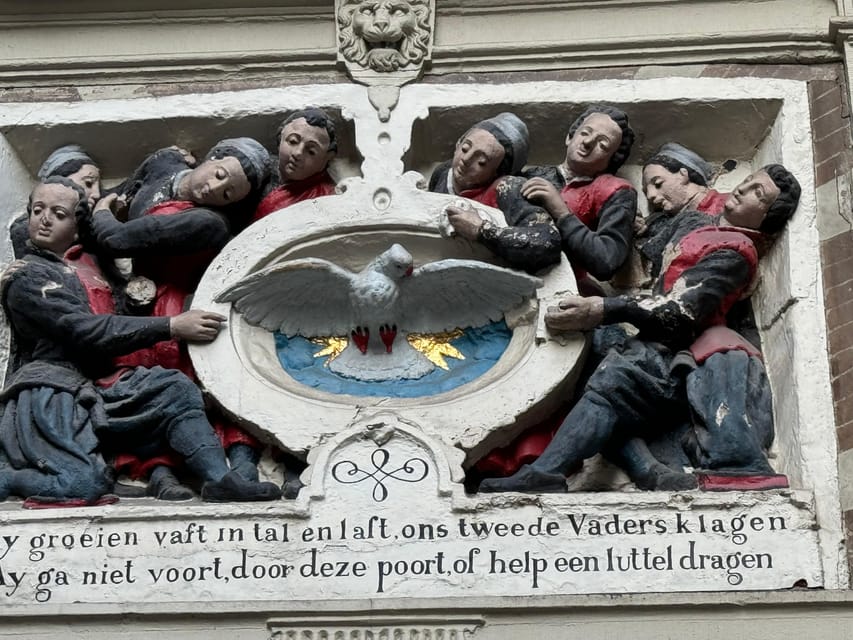
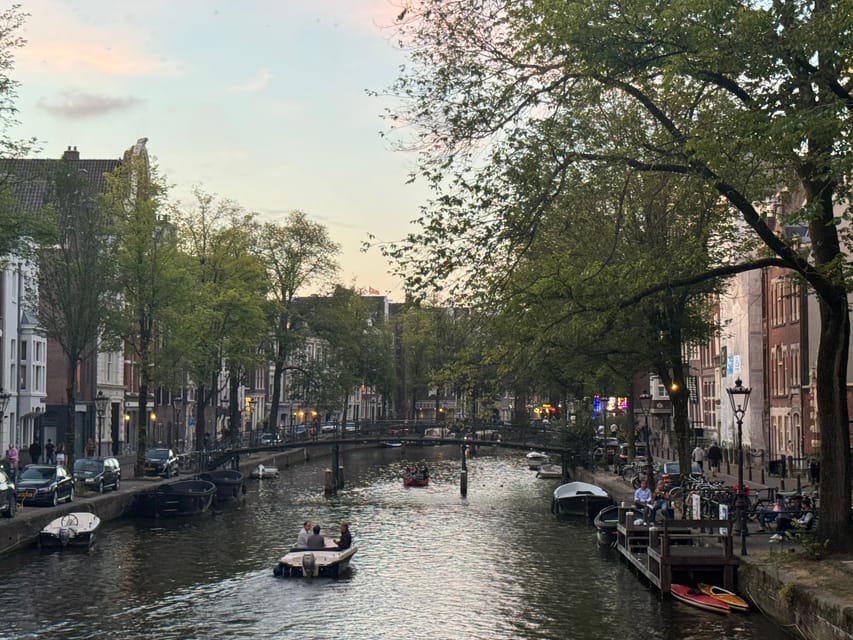
At Prins Hendrikkade, the tour continues its focus on Amsterdam’s waterways, sailors, travel, and unexplained disappearances. This part of the route helps connect individual ghost stories with the wider life of the port city.
The historical setting is important. Amsterdam’s canals and waterfront brought wealth, trade, and contact with the wider world, but they also brought accidents, conflict, long absences, and uncertain news. A sailor who failed to return could become a real loss, a mystery, or eventually a legend.
You will also notice how the tour keeps blending standard city history with darker material. Several people valued this balance, saying the walk showed them streets and places they had not noticed in ordinary guidebooks. That is one of the tour’s best reasons to book: you see a different side of central Amsterdam without giving up the basic story of the city.
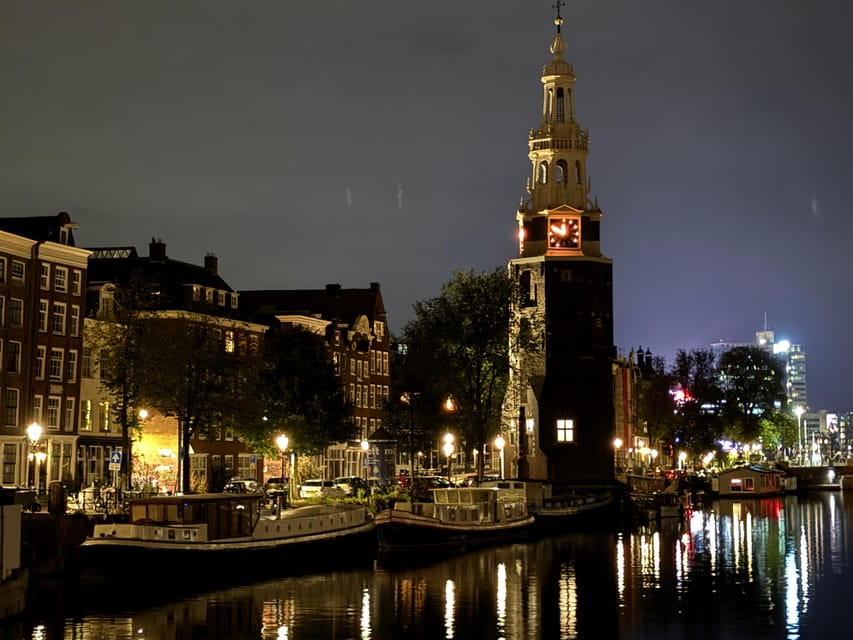
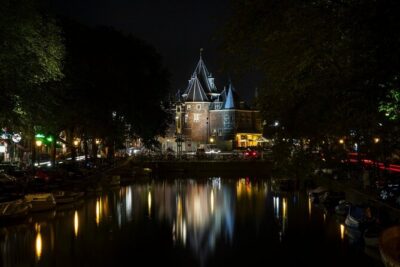
The route finishes at the Weeping Tower. The exact tale attached to it may be told as legend, and one guide was careful to say she could not verify every detail. That distinction is worth remembering. The ending works best if you enjoy atmosphere and unanswered questions, not if you need a firm historical conclusion.
What the $29 price delivers
At $29 per person, this tour offers a reasonably priced way to spend two hours in central Amsterdam. You are paying for a live English-speaking guide and a themed walk through several historic areas. There are no attraction admissions to add because the experience centers on outdoor stops and storytelling.
The value depends on what you want from a city tour. If you want a museum visit, transport, food, or entry to historic interiors, this price does not cover those extras. If you want a guide to give meaning to streets you might otherwise pass without noticing, the cost is easier to justify.
I would compare it with a standard walking tour rather than with a theatrical ghost attraction. The route gives you general Amsterdam history, but its main advantage is the unusual angle. You get a structured evening walk, several distinct locations, and stories that are difficult to find in a basic sightseeing circuit.
The tour has a 4.8 rating from 118 ratings, with especially strong praise for the guides’ storytelling, warmth, and ability to answer questions. That does not guarantee that every departure will feel identical, but it does point to the guide as the main reason people value the experience.
Timing, clothing, and walking comfort
The activity lasts two hours, and starting times vary, so check the available departure when booking. After dark, the subject matter feels more natural, but the city can also be colder and busier depending on the season.
Wear warm layers for an autumn or winter departure. A January walk was described as quite cold, though still worth doing. Comfortable shoes are sensible because the experience moves through several parts of the old center rather than staying in one location.
The operator describes the tour as wheelchair accessible but also lists it as unsuitable for people with mobility impairments. Those statements do not fully agree. If you use a wheelchair, have difficulty walking, or need a specific route surface, contact the provider before paying and ask exactly what access is available at each stop.
No food or drinks are included. You can plan a café or meal before or after, but do not count on a refreshment break during the two-hour walk.
Who will enjoy this ghost walk most
I would recommend it to you if you like:
- Local legends connected to real streets and buildings
- History that includes crime, punishment, and difficult subjects
- Small-group walks where you can ask questions
- Evening activities that do not require an admission ticket
- A different view of Amsterdam beyond the usual canal photographs and museums
Families with older children may enjoy it if they are comfortable with stories about death, executions, and disappearances. The material is not described as a children’s attraction, so parents should decide based on the age and sensitivity of their group.
It is also a good choice for repeat visitors. The route can show you side streets and lesser-known places that you might miss on a first pass through the city. First-time visitors can use it as a general orientation walk, though it should not replace a daytime tour focused on Amsterdam’s major museums and landmarks.
You may want to skip it if you dislike walking at night, prefer verified history only, or expect actors and dramatic special effects. This is a spoken tour, and the guide’s storytelling carries most of the experience.
Should you book the Amsterdam Ghost Walk?
Book it if you want a two-hour, English-language walk that combines Amsterdam history with ghost stories and dark local legends. The route is central, the price is moderate, and the strongest part of the experience is the guide’s ability to connect real events with the places where they happened.
I would give it extra credit for its honest approach to uncertain stories. Guides such as Maria and Pilar are praised for making the walk friendly, interactive, and easy to follow, while still admitting when a tale cannot be confirmed.
Skip it if you want a polished attraction with sets, actors, or guaranteed supernatural encounters. For everyone else, this is a useful way to see familiar Amsterdam from a less comfortable and more memorable angle. Meet at Nieuwe Kerk, dress warmly, stay close to the group, and let the old streets do some of the storytelling.
FAQ
How long does the Amsterdam Ghost Walk last?
The tour lasts two hours.
Where does the tour meet?
Meet at the main entrance of Nieuwe Kerk in Dam Square, close to the Naked Expresso café.
Where does the tour finish?
The walk finishes at the Weeping Tower.
What language is the tour conducted in?
The live tour guide speaks English.
Is food or drink included?
No. Food and drinks are not included, and entry tickets to attractions are also not included.
Can I cancel the booking?
You can cancel up to 24 hours in advance for a full refund. The activity also offers a reserve-now, pay-later option.
More Dark History and Haunted Tours in Amsterdam
- Amsterdam Haunted History and Ghost Walking Tour
★ 5.0 · 47 reviews - Ghost Walking Tour and Dark History in Amsterdam
★ 5.0 · 32 reviews - Guided Walking Tour Amsterdam – Legends, History & Ghost Stories
★ 5.0 · 28 reviews - Normandy D-Day Sites & Cemetery Day Trip from Paris with Lunch
★ 5.0 · 6,877 reviews
Just added around Amsterdam
- Amsterdam Walking Tour: Urban Legends & History with local guide★ 5.0 · 39 reviews
- Amsterdam: Luxury Canal Cruise with Historic VR Experience★ 5.0 · 305 reviews
- Amsterdam: Anne Frank and World War II Walking Tour (TOP RATED)★ 4.5 · 72 reviews
- Small Group Tour to Nazi WWII concentration camp from Amsterdam★ 5.0 · 112 reviews
- Amsterdam 3 hrs Bike Tour – live guide En/Fr/De/Nl/Sp★ 4.5 · 138 reviews
- Guided Walking Tour Amsterdam – Legends, History & Ghost Stories★ 5.0 · 28 reviews
- LGBTQI+ History Tour of Amsterdam★ 5.0 · 123 reviews
- Amsterdam Haunted History and Ghost Walking Tour★ 5.0 · 47 reviews
Amsterdam History Tours, compared.

Amsterdam: Life of Anne Frank and World War II Walking Tour
Read our review →
Amsterdam: Dutch WWII Resistance Museum Entry Ticket
Read our review →
Amsterdam: Haunted History and Ghost Walking Tour
Read our review →
Amsterdam High-End Dutch Food & History Tour – Up to 8 guests
Read our review →
Amsterdam: Historic City Sightseeing Canal Cruise
Read our review →
Amsterdam: National Holocaust Museum Entry Ticket
Read our review →