
Review · ATHENS
Athens: Kotsanas Ancient Greek Technology Museum Guided Tour
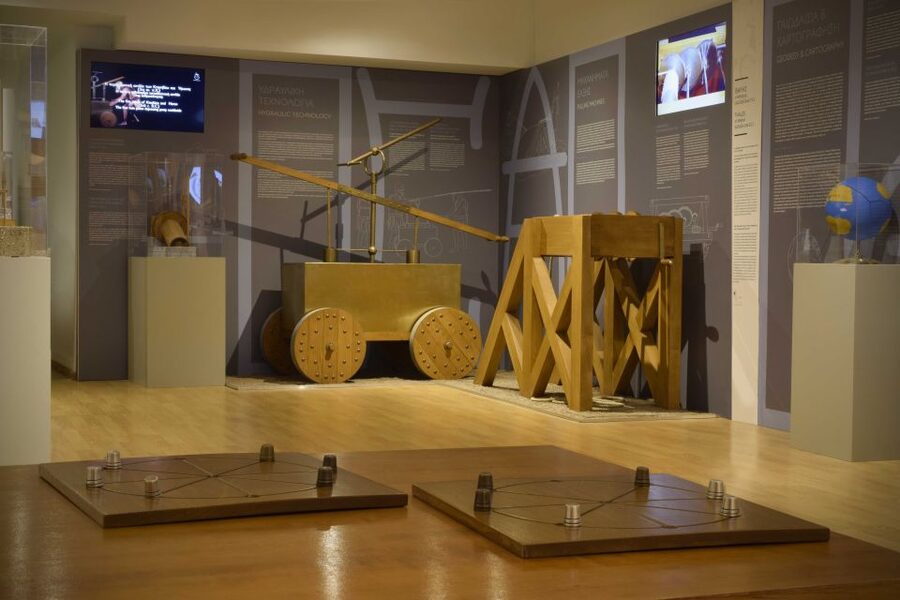
The most surprising part of this Athens experience is seeing ancient Greek technology operate in front of you. At the Kotsanas Museum, the Antikythera calculating mechanism, hydraulic clocks, robots, and automata are not just displayed behind glass. Many are working models, and your private guide explains how they function. I especially like the one-hour private format and the way the museum turns a technical subject into something you can watch and test.
I also like the location, just a five-minute walk from Syntagma Metro Station, and the excellent value for a group of up to four at $54. The main consideration is that one hour goes quickly, and the museum is not suitable for people with mobility impairments. If you want plenty of time with every exhibit, use the free time after the tour to look around again.
Key Points at a Glance
- See ancient machines work: Explore operating models of the Antikythera mechanism, hydraulic clocks, robots, and other inventions.
- Ask a private guide questions: Your English-speaking guide may be an engineer, archaeologist, historian, or museologist.
- Visit a compact central museum: The Kotsanas Museum is five minutes on foot from Syntagma Metro Station.
- Connect ancient ideas with modern technology: Learn how Greek inventors used gears, hydraulics, automation, and mechanical calculation.
- Bring children and curious adults: The interactive exhibits make this a strong family stop, especially for children who enjoy machines.
- Keep extra time afterward: Your ticket includes entry and free time to revisit exhibits and study the diagrams and videos.
Why This Small Athens Museum Deserves Your Time
Athens is filled with famous temples and archaeological sites, but the Kotsanas Museum shows a less familiar side of ancient Greek culture. Here, the focus is not on statues, pottery, or battles. It is on machines, mechanical ideas, scientific instruments, and clever tricks that made ancient life more efficient and more entertaining.
The museum occupies a historic Art Nouveau building on Pindarou Street. Its total area is about 700 square meters, large enough for a serious collection but compact enough to visit without losing your way. You will find around 300 artifacts in the museum, with the guided exhibition presenting about 100 selected examples from ancient Greek technology.
I like this scale. You can see a lot in one hour without spending half a day in a vast museum. At the same time, the subject matter has enough depth to reward a second look, especially if you enjoy engineering, archaeology, astronomy, or the practical side of ancient life.
The tour costs $54 for a private group of up to four people. For one person, that is a fairly high museum price. For four people, it works out to $13.50 each, which is strong value for a private guide and museum admission. Families and small groups get the best deal.
More Ancient History Tours in Athens
- Athens: Acropolis & up to 5 Archaeological Sites Combo Pass
★ 4.2 · 13,904 reviews - Athens: Ancient Greek Theater Performance
★ 4.7 · 2,481 reviews - Historical Delphi One Day Tour with Arachova Stop & Expert Guide
★ 4.5 · 1,247 reviews
Meeting the Guide Near Syntagma
You meet at Pindarou 6, Athens 106 71, and the museum is about five minutes from Syntagma Metro Station. That makes this an easy addition to a central Athens day. You do not need a hotel transfer, and food and drinks are not included or allowed inside.
Your guide speaks English and leads a private group rather than combining you with strangers. The guide may be an experienced engineer, archaeologist, historian, or museologist. That range matters because the visit can lean toward mechanical detail, ancient culture, or the way museums explain complex objects, depending on who leads your tour.
Specific guides praised by name include Vasilis, Irina, and Maria. If you happen to receive one of them, expect an involved explanation rather than a quick walk past the displays. The private format also gives you room to ask questions. If a gear system makes sense to you but the historical setting does not, or vice versa, you can ask the guide to slow down and explain it in a different way.
The tour lasts one hour. Check the available starting times when you book, since the exact schedule is not fixed in the information provided. After the guided portion, you can continue exploring on your own.
The First Machines: A Hands-On Introduction
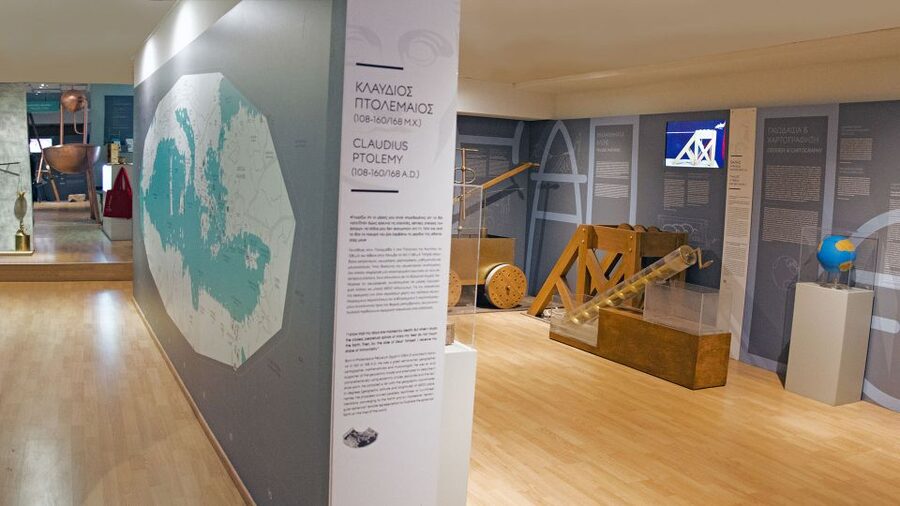
The museum uses interactive displays to explain mechanisms rather than relying only on text panels. You may see diagrams, photographs, giant posters, video stations, animations, and documentaries in Greek and English. These tools are useful because ancient machines can be hard to understand from a static drawing.
Your guide explains how the devices worked and what they were used for. The point is not simply to admire an old object. You are learning how a mechanism transfers motion, measures time, creates sound, moves a figure, or carries out a calculation.
This approach also helps if you are not an engineer. One of the strongest reasons to choose the private tour is that you do not need a technical background to follow it. The guide can connect the mechanism to familiar ideas from modern technology. You might recognize the basic logic of gears, automation, hydraulics, or programmed movement even when the device is centuries old.
That connection is the museum’s central pleasure. Ancient Greek technology can feel unexpectedly close to early modern machinery. The materials and tools were different, but the questions were familiar: How can a machine measure time? How can a figure move without a person pushing it? How can gears represent a calculation?
The Antikythera Mechanism and Ancient Calculation
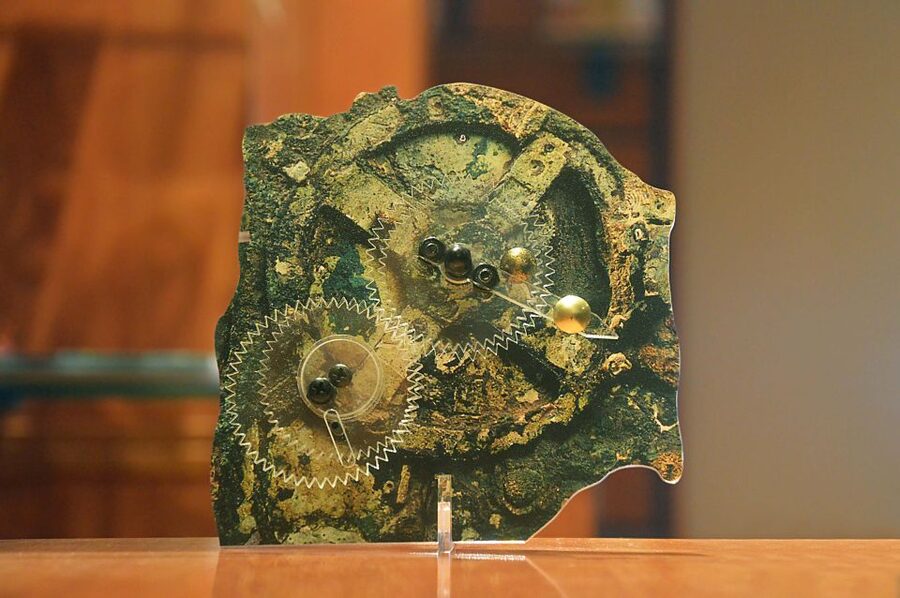
The Antikythera calculating mechanism is one of the key sights. It is often described here as the oldest analog computer in the world. The museum presents an operating model, allowing you to understand the relationship between its moving parts instead of seeing only a worn archaeological fragment.
This is an important distinction. The original mechanism is famous, but a model that operates can make the idea much clearer. Your guide can show how the gears work together and explain why this device represents such a major achievement in ancient mechanical thought.
You should give this section your full attention, even if you are not drawn to machines at first. It shows that ancient Greek science was not limited to abstract ideas or observations made with the naked eye. It also involved precise mechanical systems designed to calculate and display information.
The museum’s diagrams and videos help fill in the gaps. You can study the parts visually, then watch a demonstration of the mechanism in motion. The private guide is valuable here because the subject can become confusing quickly if you try to decode every gear alone.
More Ancient History Tours in Greece
- From Athens: Ancient Corinth Day Trip with Canal & VR Guide
★ 4.6 · 1,073 reviews - Acropolis, Parthenon & Athens Old City Heritage Walking Tour
★ 4.5 · 876 reviews - Private Biblical Tour Ancient Corinth & Isthmus Canal from Athens
★ 5.0 · 762 reviews - Athens: Ancient Corinth & Nafplio Full Day Trip with Swim
★ 4.8 · 531 reviews
Clocks, Hydraulics, and the Power of Water
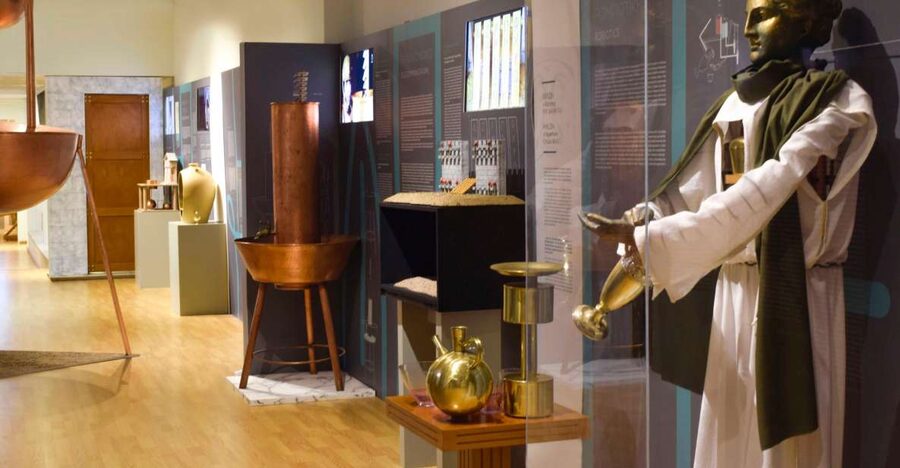
The hydraulic clock of Ktesibios is another major example. Its operation shows how water could be used to measure time through a controlled flow. This is a simple concept to describe but much easier to understand when you see a working model.
The display also gives you a sense of the practical problems ancient inventors had to solve. A clock needs a steady process, a way to mark changes, and a system that can be read by the user. Hydraulic devices are a good reminder that ancient technology often grew from careful observation of natural forces.
You will also encounter other mechanisms linked to ancient Greek engineering. The museum presents these inventions through working models, labels, diagrams, and audio-visual material. The displays are designed to show both the mechanism and its use, which keeps the visit from becoming a list of difficult names.
For me, this is where the museum earns its place in an Athens itinerary. It makes technical history visible. Instead of simply hearing that ancient engineers understood hydraulics, you can watch a model carry out the basic task.
Robots, Servants, and Mechanical Theater
The exhibition includes the robot-servant of Philon, the automotive-puppet show of Heron, and other automated devices. These machines bring a lighter side to the museum. Ancient technology was not only used for clocks, measurements, or scientific work. It could also entertain, surprise, and imitate living movement.
The robot-servant is especially effective for showing how mechanical actions can be arranged in sequence. The puppet theater demonstrates how movement and storytelling can work together. You may find these displays easier to grasp than the more complex calculating devices because their purpose is immediately visible.
This section is also a strong reason to bring children. The museum does not ask them to stand quietly in front of a row of objects. Moving models and interactive mechanisms give them something to watch and think about. One guide, Vasilis, was singled out as particularly good with families, and the museum is repeatedly described as a must-see for children.
Still, the experience is not only for children. Adults who enjoy theater, invention, or old mechanical tricks will find plenty to consider. The machines raise a useful question: how much of entertainment depends on technology that appears simple only after someone has solved the hard problem?
How the Exhibition Explains Difficult Ideas
The museum offers explanatory labels in Greek and English, along with large posters, detailed diagrams, photographs, bibliographical references, videos, animations, and documentaries. This matters because the objects do not always explain themselves. A box of gears may look impressive, but without context you may not know what it did.
The audio-visual stations let you see the function and use of the mechanisms. The guide then adds the human explanation, pointing out details you might miss alone. Because the group is private, you can ask for another demonstration or spend longer with an invention that catches your interest.
One hour is enough for an introduction to the selected exhibits, but not for a slow study of every display. That is why I recommend treating the guided tour as your framework rather than your entire museum visit. Once the guide finishes, use the included free time to return to the Antikythera model, the clocks, or the automata that made the strongest impression.
The museum has about 300 artifacts overall, while the exhibition highlights approximately 100 selected exhibits. You should not expect to study all 300 in detail during a short visit. The benefit of the tour is that a qualified guide helps you focus on the most important and understandable examples first.
What the One-Hour Format Feels Like
The compact schedule makes this easy to fit between larger Athens sights. You can visit before or after time around Syntagma Square, and the central location means you do not lose much of your day in transit.
The tradeoff is pace. A private guide can explain the exhibits efficiently, but one hour still passes quickly. If your group asks many questions, you may cover fewer displays. That is not a fault, but it is worth knowing before you arrive.
I would choose this tour over a self-guided visit if you are genuinely curious about how the machines work. The museum’s labels and videos are useful, but a guide gives the visit a clear path. You are less likely to look at a model, nod politely, and move on without understanding its purpose.
The free time afterward softens the time limit. You can keep exploring at your own speed, revisit the interactive stations, and read the longer explanations. Plan for more than the one-hour guided portion if you want to make full use of the museum.
Who Will Get the Most from This Visit
This experience suits small families, couples, friends, and anyone interested in ancient science. Children can respond to the robots, moving figures, and hands-on displays, while adults may prefer the calculating mechanism, clocks, and engineering explanations.
You do not need to be an engineer. The tour is designed for general visitors, and the guides can explain the mechanisms through demonstrations and visual material. If you already know a great deal about ancient technology, you may want to use the guided hour to ask detailed questions and then spend extra time with the exhibits.
The museum is less suitable if you want a traditional archaeological collection focused on sculpture, temples, or everyday objects. Its subject is narrower and more specialized. It is also not suitable for people with mobility impairments, so consider that before booking.
Food and drinks are not allowed. Since the visit is short and central, this is easy to manage, but plan any snack or coffee stop before or after the museum.
Is the $54 Private Tour Good Value?
The price makes most sense when four people share it. At $54 per group of up to four, you receive museum entry, a one-hour private guided tour, and free time to explore further. The private format is the main value, not just the admission ticket.
For a solo visitor, the price is harder to justify if you only want a quick look. For a family or group of friends, it becomes much more reasonable. You get direct access to a guide who can explain the mechanisms at your group’s pace, and you avoid the uncertainty of a large shared tour.
The strongest value comes from the combination of a qualified guide and operating models. Seeing the Antikythera mechanism, hydraulic clock, and automata work gives you something a standard display may not provide. If the subject interests you, the price buys understanding as much as entry.
The free cancellation policy also gives you flexibility. You can cancel up to 24 hours before the activity for a full refund, and the reserve-now-pay-later option lets you hold a place without paying immediately. Keep those terms in mind when arranging a busy Athens schedule.
Should You Book the Kotsanas Museum Tour?
Book it if you want a short, central Athens activity that shows ancient Greek invention from a practical angle. The private English-language guide, working models, and interactive displays make the museum much more engaging than a room of static objects.
I would especially recommend it to families and groups of up to four, since the shared price is attractive. It is also a good choice for anyone who has already seen the major archaeological sites and wants a different view of Greek culture.
Skip it if your interest is limited to classical art or if you need a fully accessible museum visit. Also, remember that one hour is an introduction, not a complete study of every artifact. For the right audience, though, the Kotsanas Museum offers a memorable look at ancient ideas that feel surprisingly close to modern machines.
FAQ
Where is the Kotsanas Ancient Greek Technology Museum?
The museum is at Pindarou 6, Athina 106 71, Greece. It is about a five-minute walk from Syntagma Metro Station.
How long does the guided tour last?
The private guided tour lasts one hour. Afterward, you have free time to explore the museum further.
What is included in the tour price?
The price includes entry to the museum, a one-hour private guided tour, and free time to continue exploring.
How much does the private tour cost?
The listed price is $54 per private group of up to four people.
What language is the tour in?
The live guided tour is in English. The museum also provides audio-visual material, labels, and explanatory information in Greek and English.
What can I see at the museum?
The museum presents about 300 artifacts overall, with approximately 100 selected exhibits in the main exhibition. These include the Antikythera calculating mechanism, the hydraulic clock of Ktesibios, the robot-servant of Philon, and the automotive-puppet show of Heron.
Is the tour suitable for children?
Yes. The interactive exhibits and working models make it suitable for children, particularly those interested in machines and inventions.
Is the museum suitable for people with mobility impairments?
The activity is listed as not suitable for people with mobility impairments.
Can I cancel the booking?
Yes. You can cancel up to 24 hours in advance for a full refund. A reserve-now-pay-later option is also available.
Just added around Athens
- Small-Group Women History in Ancient Greece Walking Tour★ 5.0 · 38 reviews
- The original Christian tour on Paul’s footsteps in Athens and ancient Corinth★ 4.5 · 25 reviews
- Ancient Athens tour: Acropolis, Parthenon and Acropolis Museum★ 5.0 · 256 reviews
- Ancient Athens Segway Tour with Agora and Kerameikos★ 5.0 · 94 reviews
- Ancient Sparta & Mystras Private Day Tour from Athens★ 5.0 · 52 reviews
- Athens National Archaeological Museum E-Ticket with Audio Guide★ 3.0 · 57 reviews
- Biblical Corinth Taste Faith & History with wine & Oil Tasting★ 5.0 · 28 reviews
- Ancient Corinth, Sanctuary of Hera, Blue Lake & Canal from Athens★ 5.0 · 26 reviews
Athens History Tours, compared.

Athens: Acropolis & up to 5 Archaeological Sites Combo Pass
Read our review →

Historical Delphi One Day Tour with Arachova Stop & Expert Guide
Read our review →
From Athens: Ancient Corinth Day Trip with Canal & VR Guide
Read our review →
Historic Athens: Small Group Electric Bike Tour
Read our review →
Acropolis, Parthenon & Athens Old City Heritage Walking Tour
Read our review →
Private Biblical Tour Ancient Corinth & Isthmus Canal from Athens
Read our review →
Athens: National Archaeological Museum Ticket w/ Opt. Audio
Read our review →Browse the lists this tour appears in