
Review · USA
Austin: Downtown History Walking Tour
Austin’s past gets especially interesting when you see it block by block. This 2-hour downtown walk moves from an old vice district to music clubs, grand hotels, and the city’s proudly odd cultural identity. The stop inside the Driskill Hotel is a highlight, with its Romanesque halls and tales of the people who shaped Austin.
I like the way the tour connects famous places to lesser-known stories, and I like that guides such as Emily, Caroline, and Kim bring a personal feel to the walk. You also get useful local advice on food and attractions. The main drawback is the limited seating, along with Austin’s heat and sun, so comfortable shoes, water, and a hat matter.
Key points to know before you book
- The Driskill Hotel gives the tour its grandest setting: Step inside Austin’s oldest operating hotel and hear stories tied to its unusual characters and past.
- You cover 1.1 miles in two hours: This is more talk than speed walking, with plenty of time for stories and questions.
- Austin’s music story gets real context: Antone’s and Sixth Street help explain how the city earned its music reputation.
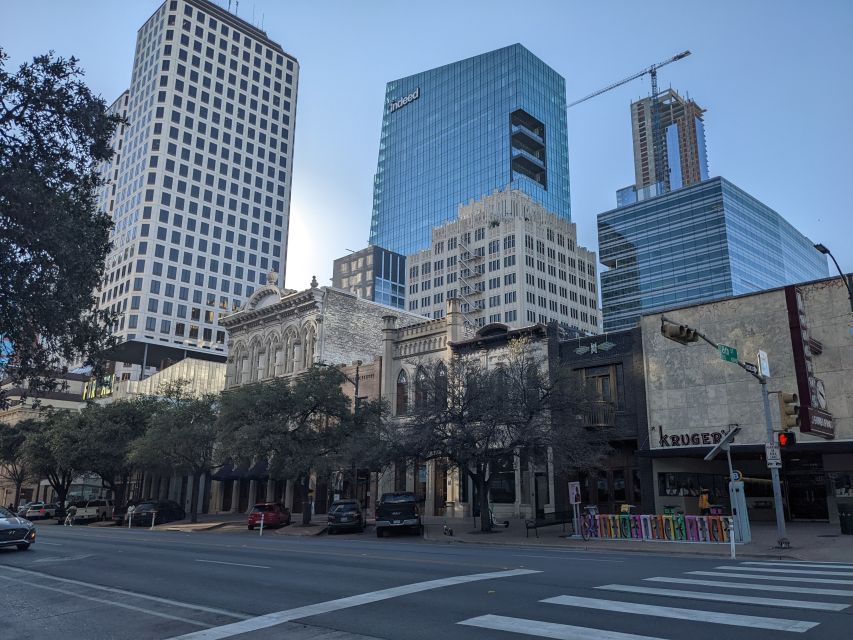
- The route starts in an old vice district: Downtown’s polished blocks once had a rougher reputation before major change in 1913.
- Guides add useful personal advice: Food suggestions, local tips, and answers to questions are part of the experience.
- Plan for sun and little sitting: The tour runs rain or shine, and there are only limited chances to rest.
Why this Austin walking tour is worth your time
At $29 per person, this is a sensible way to get your bearings in central Austin while learning what you are looking at. You are not paying for transport or admission to a long list of attractions. You are paying for two hours of interpretation, local stories, and access to the interior of the Driskill Hotel.
That distinction matters. Downtown Austin can look like a mix of office towers, bars, restaurants, and preserved facades unless someone explains how the pieces fit together. A good guide turns a street corner into a chapter in the city’s story.
The strongest part of this experience is the storytelling. Guides are expected to cover serious history, local folklore, architecture, eccentric residents, musicians, artists, and the free spirits behind Keep Austin Weird. The tone is not simply a list of dates. You get stories about people and places, with enough humor to keep the pace lively.
The format also works well for a first visit. Several guides, including Emily and Caroline, are praised for keeping the walk interactive and answering questions. You can use the tour to shape the rest of your stay, especially since guides share suggestions for food and nearby attractions.
More History Walking Tours in the USA
- History and Hauntings of Salem Guided Walking Tour
★ 5.0 · 14,564 reviews - Boston: Freedom Trail History Small Group Walking Tour
★ 5.0 · 6,450 reviews - Historic Charleston Guided Sightseeing Walking Tour
★ 5.0 · 6,216 reviews
Starting at Halcyon and entering Austin’s old vice district
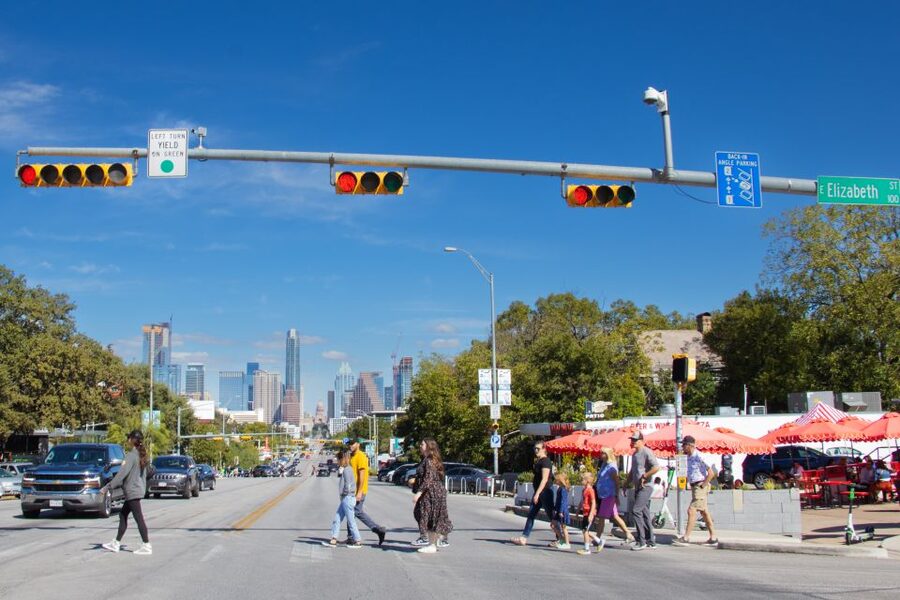
Meet your guide outside Halcyon Coffee on 4th Street, at the corner of Lavaca Street. This is a practical meeting point because you can arrive early for coffee, use the restroom, and get ready for the walk.
The first section looks at the Warehouse District and the area that was once a rowdy vice district. Its later transformation in 1913 gives you an early lesson in how Austin changed from a rough frontier town into a more organized city center.
Expect about 20 minutes of walking and explanation here. This opening is useful because it gives the rest of the tour a frame. Instead of seeing downtown as a finished product, you begin with a place that has repeatedly changed its role.
The route covers city growth, buildings, streets, and the people linked to them. One guide has been praised for pointing out details as small as the appearance of limestone on building walls. That is the kind of observation that makes an ordinary walk more rewarding. Look up, look down, and pay attention to the blocks between the headline attractions.
Antone’s and the road to Austin’s music identity
Antone’s Nightclub is one of the most important stops for understanding Austin’s music culture. The tour includes a visit here and spends about 20 minutes on the stop.
You will learn how Austin developed its reputation as the Live Music Capital. The point is not simply that the city has many clubs. The guide connects the music scene to Austin’s wider character, including its artists, independent-minded residents, and appetite for unusual ideas.
Antone’s also breaks up the architectural portion of the walk with a place tied to living culture. You are not only looking at old buildings. You are learning how music helped define the modern city.
The exact experience inside a working nightclub can depend on the day and the venue’s schedule, so think of this as a guided visit rather than a guaranteed live performance. Still, it gives the music discussion a physical setting, which is more useful than hearing the subject discussed from a sidewalk alone.
Downtown Austin in a 30-minute story session
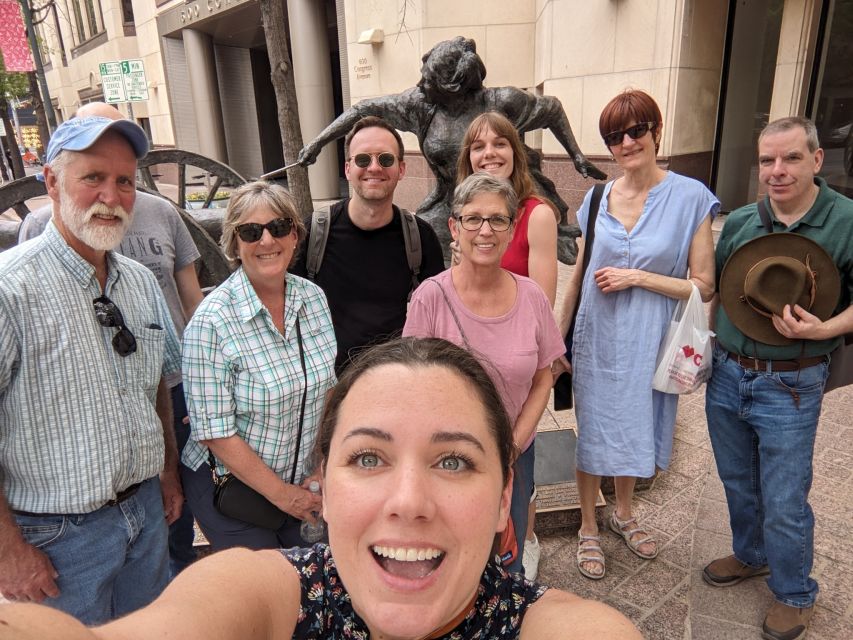
The main downtown section lasts about 30 minutes and is likely where you receive the broadest account of Austin’s development. The guide links the city’s early years with its later growth, architecture, music, and unusual civic personality.
This portion is described as more talking than walking by some participants, and that is worth knowing. If you want a fast march past many sights, this may feel slow. If you prefer time to listen, ask questions, and understand what you are seeing, the pace works well.
The strongest guides make this section feel like a conversation rather than a speech. Emily, Caroline, and Kim have all been singled out for enthusiasm, friendly delivery, and strong command of local stories. Some tours have continued beyond the planned two hours when there were more questions or a good discussion underway, though you should plan around the stated duration.
You may hear both serious and funny stories. That mix suits Austin. The city’s identity is not built only on official milestones. It also comes from odd characters, local legends, artists, and people who resisted making the city too tidy or predictable.
Same city, a different century:
- Charleston’s Old South Carriage Historic Horse & Carriage Tour
★ 5.0 · 10,023 reviews - Beneath The Streets Underground History Tour
★ 4.5 · 8,006 reviews - Big Island in a Day: Volcanoes Waterfalls Sightseeing and History
★ 5.0 · 6,569 reviews - Charleston Horse-Drawn Carriage Tour: Explore Historic Charleston
★ 5.0 · 3,561 reviews
Sixth Street and the idea behind Keep Austin Weird
The 10-minute stop in the Sixth Street Historic District is short, but it helps place Austin’s nightlife and music reputation on a recognizable street.
Here, the guide explains how the city’s cultural identity developed and why the phrase Keep Austin Weird carries such weight. You will hear about the artists and free spirits who helped shape Austin’s public image, along with the forces that changed the downtown core.
Do not expect this stop to cover every bar, club, or music venue. Its value is context. Sixth Street is easy to photograph on your own, but it is harder to understand without a sense of how entertainment, commerce, and Austin’s independent streak fit together.
The district may also be busy, depending on the time of day. Stay close to your guide and listen for traffic. The tour is designed for walking through city streets, not for standing in a quiet museum setting.
Inside the Driskill Hotel
The Driskill is the tour’s most distinctive interior stop. It is Austin’s oldest operating hotel, and its Romanesque-style halls offer a sharp contrast to the modern downtown blocks outside.
The visit and guided explanation take about 20 minutes. You will hear stories about eccentric and visionary figures connected to Austin, along with tales that give the hotel a sense of personality. This is where the tour’s interest in local legends and unusual characters feels most at home.
I like this stop because it adds texture to the walk. You are not just told that Austin has an older past. You step into one of the places where that past remains visible.
The Driskill is also a welcome pause from the open sidewalk, though it is not a guaranteed long rest stop. Seating across the full tour is limited, so do not count on the hotel visit to solve the need for a break.
Angelina Eberly, the Koppel Building, and the final block
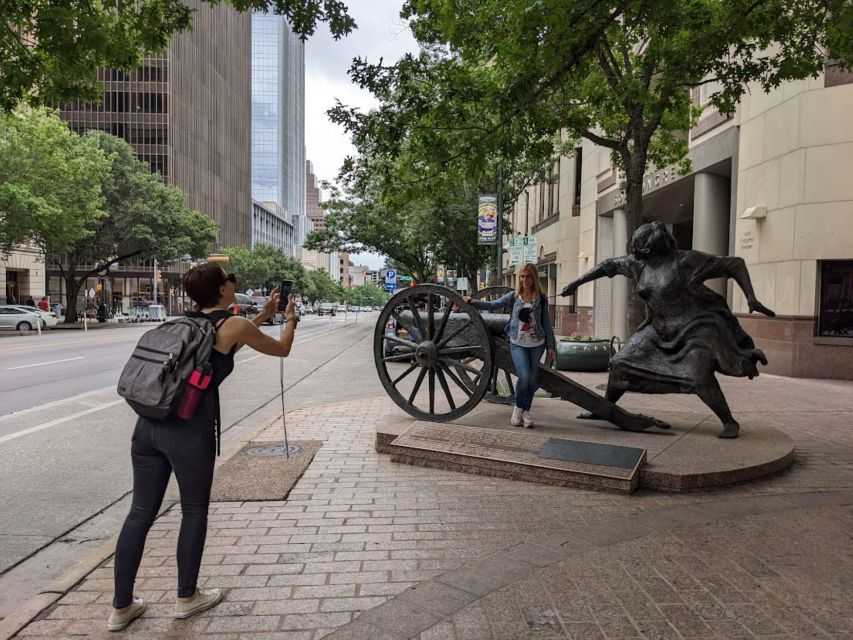
After the Driskill, the route continues to the Angelina Eberly Statue for about 10 minutes. This stop brings a particular local figure into the story and shows how Austin’s history is often tied to individuals whose actions affected the city’s direction.
The tour then reaches the Koppel Building, another 10-minute stop. Here, the guide continues the architectural and social story of downtown, connecting a specific building to the larger changes around it.
These final stops are useful because they keep the focus on actual places rather than broad claims about Austin. You get the chance to see where stories happened and to understand why certain corners matter.
The walk finishes at 320 Congress Avenue. That endpoint is convenient for continuing around downtown, though no onward transport is included. Before leaving, ask your guide for any last food or attraction suggestions. Local recommendations are one of the practical bonuses of taking the tour early in your stay.
Pace, comfort, weather, and accessibility
The total distance is about 1.1 miles, but the tour feels longer than a simple stroll because the guide stops often to talk. Most of the time is spent standing, with limited opportunities to sit.
Wear shoes you can comfortably use on city sidewalks. Bring water, dress for the weather, and consider a hat for sunny days. Austin heat can make even a short route tiring, and one early morning tour worked well because the temperature was easier to manage.
The tour operates rain or shine. That means you should check the forecast before setting out and bring weather protection rather than assuming the walk will be moved indoors.
The activity is listed as wheelchair accessible, but it is also listed as not suitable for people with mobility impairments. Those two details do not fully agree, so contact the provider before booking if you need a wheelchair or have difficulty standing and walking. The route includes city streets, limited seating, and frequent stops on foot.
An English-speaking guide leads the tour. If you need a voice amplifier at every stop, tell the guide when you arrive. Video recording is not allowed.
The suggested age is 13 and older because some historical themes are mature. That age suggestion is not strictly enforced, but the content is intended more for teenagers and adults than young children. Unaccompanied minors are not allowed.
How the guides shape the experience
The guide makes a large difference on a story-based tour, and this experience has several recurring strengths. Emily is often described as enthusiastic, clear, funny, and especially good at bringing local history to life. Caroline is praised for her energy, friendly style, and ability to point out places you might otherwise miss. Kim is noted for a warm approach and strong historical background.
You may not get one of those specific guides on your date, but the named guides show the tone to expect: personal, conversational, and interested in Austin rather than simply reciting prepared facts.
Good questions improve the walk. Ask about a building you noticed, a neighborhood you plan to visit, or a restaurant for later. The guides are encouraged to respond to the group, and the experience can feel especially personal when the booking is small. A solo booking has sometimes gone ahead rather than being canceled, but group size can vary and is not specified in advance.
Who should book this tour
I would choose this walk if you are visiting Austin for the first time and want the city to make more sense before exploring on your own. It is also a good fit if you like local characters, architecture, music history, and folklore more than a checklist of famous photo stops.
The tour suits adults, older teenagers, history fans, and people who enjoy asking questions. It works well for a short Austin stay because two hours gives you a useful orientation without taking up an entire day.
You may want something else if you dislike standing, struggle in hot weather, or want a fully seated presentation. It is also not a substitute for a dedicated music tour, a food tour, or a ghost tour. Music is part of the story, but the focus remains downtown history.
Book early in your stay if possible. The food and attraction suggestions can then help you plan the days that follow. If your schedule is tight, the 1.1-mile route and central finish make it easy to fit into a morning or afternoon.
Cancellation, price, and practical booking details
The cost is $29 per person. Given the two-hour duration, central route, live guide, Driskill interior visit, and amount of explanation, I consider it fair value for someone who wants context rather than a self-guided walk.
You can cancel up to 24 hours before the start for a full refund. A reserve-now, pay-later option is also available, which helps if your Austin plans are still shifting. Check the available start times before booking, since the tour’s schedule varies.
Use the restroom at Halcyon before setting out if needed. Another restroom is available near the end of the route, but there are not many chances to stop during the walk.
Should you book the Austin Downtown History Walking Tour?
Book it if you want Austin’s streets to tell a story. The Driskill Hotel, Antone’s, Sixth Street, Angelina Eberly, and the Koppel Building give the route plenty of variety, while the guides add the local voices and odd details that are hard to find on your own.
I would skip it only if heat, standing, or walking are serious concerns, or if you want a tour focused mainly on food or live music. For most first-time visitors who enjoy history with humor and practical local advice, $29 buys a useful and personable introduction to downtown Austin.
FAQ
Where does the Austin Downtown History Walking Tour start?
Meet your guide outside Halcyon Coffee on 4th Street, at the corner of Lavaca Street.
Where does the tour finish?
The tour finishes at 320 Congress Avenue, Austin, Texas 78701.
How long is the walking tour?
The scheduled duration is two hours.
How far do you walk?
The route covers about 1.1 miles.
What language is the tour offered in?
The tour is conducted in English by a live guide.
Is the Driskill Hotel included?
Yes. The tour includes a visit and guided explanation inside the Driskill Hotel.
Is the tour suitable for children?
The suggested age is 13 and older because some historical themes are mature. The age suggestion is not strictly enforced, but unaccompanied minors are not allowed.
What should I bring?
Bring comfortable shoes, water, comfortable clothing, and clothing suited to the weather.
Does the tour run in bad weather?
Yes. The tour takes place rain or shine.
Can I cancel my booking?
You can cancel up to 24 hours in advance for a full refund. A reserve-now, pay-later option is also available.
Just added around the USA
- Red Rocks Amphitheatre Historical Walking Tour★ 5.0 · 74 reviews
- 1-Hour Segway Tour of Cheyenne Cañon Art, History and Nature★ 5.0 · 36 reviews
- Colorado Springs – Guided Walking Ghost / History Tour★ 5.0 · 168 reviews
- Ancient Landscapes Private Geology Hike at Garden of the Gods★ 5.0 · 31 reviews
- Village Food Tours Lunch & History Tour★ 5.0 · 80 reviews
- 2.5 Hour Kayaking with Manatee and History Tour in Tarpon Springs★ 5.0 · 24 reviews
- Safety Harbor Ghost Tour★ 5.0 · 60 reviews
- Historical Bicycle Tour of Dunedin★ 5.0 · 44 reviews
USA History Tours, compared.
History and Hauntings of Salem Guided Walking Tour
Read our review →
Charleston’s Old South Carriage Historic Horse & Carriage Tour
Read our review →
Boston: Freedom Trail History Small Group Walking Tour
Read our review →
Historic Charleston Guided Sightseeing Walking Tour
Read our review →
Savannah History and Haunts Candlelit Ghost Walking Tour
Read our review →
Tour of Historic Fenway Park, America’s Most Beloved Ballpark
Read our review →
Oahu: Mauka Warriors Luau Honoring Polynesia’s Forgotten History
Read our review →Browse the lists this tour appears in