
Review · BARCELONA
Barcelona: 3-Hour Esoteric, Spiritual & Historical Tour
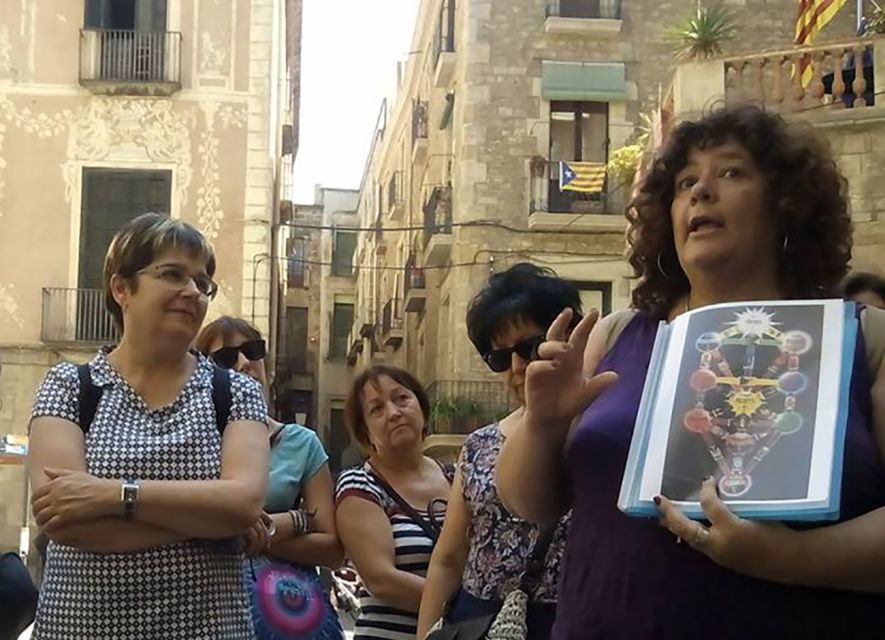
Barcelona has a second face beyond Gaudí, tapas, and beach bars. This three-hour walk with Sandra Burela follows the city’s Roman, medieval, Jewish, Templar, Masonic, and Kabbalistic threads, with special attention to symbols that are easy to miss when you are simply hurrying between major sights.
I like the small group of eight and the chance to ask serious questions rather than listen to a fixed speech. I also like that the tour connects physical places, such as the Gothic cathedral and old Jewish quarter, with Western esoteric traditions. The main consideration is its subject: you need to enjoy interpretation, symbolism, and spiritual history. If you want only dates, architecture, and hard documentary facts, parts of the walk may feel too speculative.
Key points at a glance
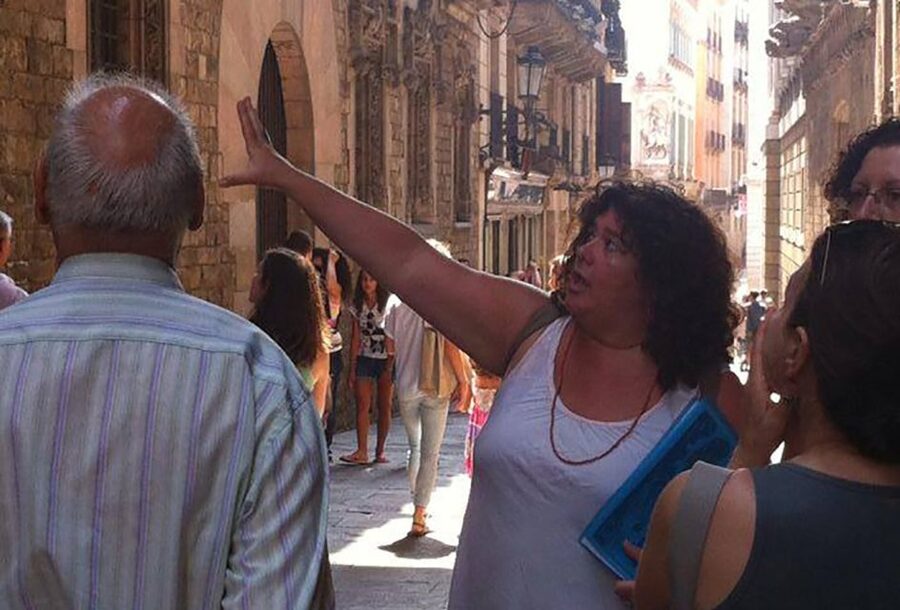
- Follow 2,000 years of spiritual history: Move from Roman Barcino and a temple dedicated to Jupiter toward medieval Christianity, Jewish scholarship, Freemasonry, and modern Barcelona.
- Search the Gothic cathedral for symbols: Sandra points out Templar and Masonic details that are easy to overlook.
- Explore the old Jewish call: Learn about Catalonia’s Jewish community, famous rabbis, and the growth of Kabbalah in the region.
- See Barcelona through esoteric traditions: The walk links sacred buildings, alchemy, hermetic ideas, dragons, and city design.
- Ask questions in a group of eight or fewer: The format suits curious participants who want discussion rather than a rushed lecture.
- Plan for a real walking tour: Wear comfortable shoes, carry belongings securely, and bring water in summer.
Barcelona’s hidden layer begins in the Gothic Quarter
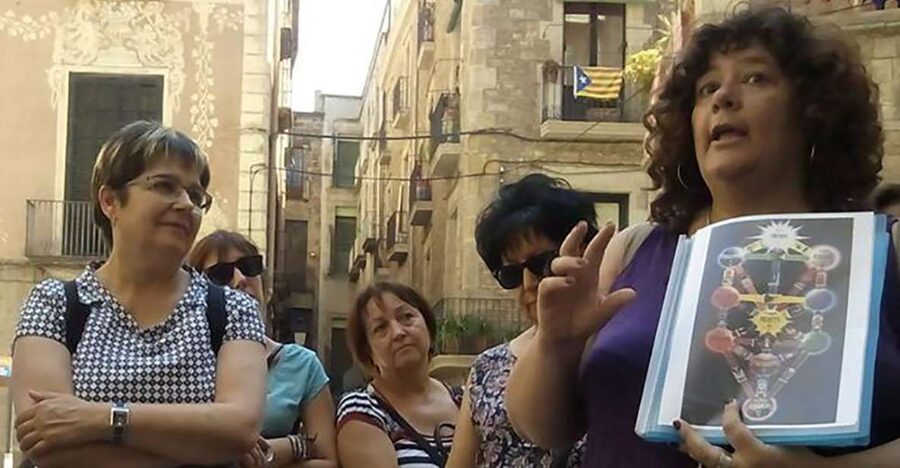
The tour starts in front of Zurich Cafe at Plaça Catalunya. Look for Sandra beside the newsstand between the two metro entrances. This is a practical meeting point at the top edge of the Gothic Quarter, but Plaça Catalunya is busy, so arrive with enough time to locate the correct newsstand.
From here, the walk moves into the oldest parts of central Barcelona. The point is not simply to admire old walls. You are asked to consider how different communities used the same streets, and how religious, political, and philosophical ideas left marks on the city.
Barcelona’s past here includes Romans, Visigoths, Jews, counts, sailors, merchants, and people arriving from across the Mediterranean. That range gives the tour its shape. Sandra uses the city itself as a kind of lesson, moving through buildings and lanes while explaining how Western esoteric traditions developed alongside more familiar religious and civic institutions.
I would take this tour early in your stay if you like learning how a city works. One participant described it as a way to orient themselves for the rest of their visit, using the streets walked with Sandra as a guide to further exploration. That is a useful benefit: after the tour, you may begin noticing symbols and architectural details that standard sightseeing leaves behind.
More Three-Hour Tours in Barcelona:
- Barcelona Historical 3-Hour Bike Tour
★ 4.7 · 222 reviews - Barcelona: 3-Hour Sips, Sites & Bites Food & History Tour
★ 4.8 · 33 reviews - Berlin: 3-Hour World Heritage Cruise to Potsdam
★ 4.5 · 1,569 reviews
Roman Barcino and the old city beneath your feet
Barcelona’s Roman beginning is part of the opening story. The ancient settlement known as Barcino provides the first layer in a long sequence of beliefs and buildings. The tour also reaches back to a temple dedicated to Jupiter, connecting the city with the religious world of Roman antiquity.
The important point is the time scale. You are not seeing isolated monuments. You are considering how a city can carry older ideas into later centuries, sometimes by reusing sites and sometimes by preserving symbols in new forms.
The supplied information does not give a fixed list of every Roman stop, so you should not expect an archaeology tour with a detailed excavation schedule. Instead, the Roman material works as a foundation for the broader discussion. If you enjoy seeing how ancient religion, medieval Christianity, Jewish thought, and later esoteric movements overlap, this approach should hold your attention.
If you prefer a tightly timed route with a named monument at every ten minutes, you may find the discussion slower than expected. The walk is built around connections and questions, not just a checklist of sights.
The Jewish call and the rise of Kabbalah
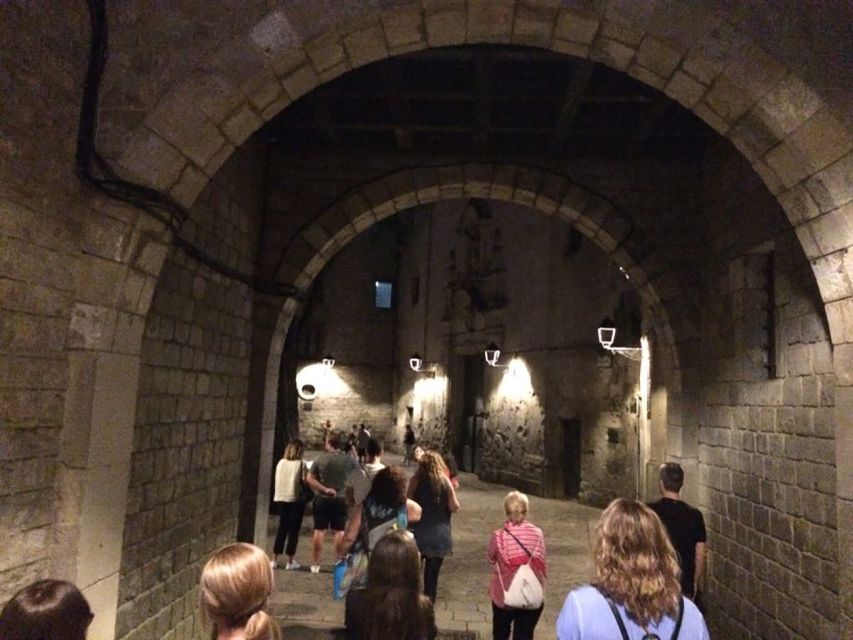
One of the most distinctive parts of the route is the old Jewish call, the Catalan term for a Jewish quarter. Here, Sandra explains the Jewish community of medieval Barcelona, its famous rabbis, and the Kabbalistic schools that developed in Catalonia.
This section gives the tour more substance than a simple hunt for mysterious symbols. Kabbalah is presented as part of a historical intellectual tradition, connected with people, study, and place. You are not just told that Barcelona was mystical. You learn about the community and schools that helped make the city important within Jewish spiritual thought.
I find this especially valuable because the Jewish story can disappear when visitors focus only on Gothic churches and royal buildings. The old call adds a necessary change of viewpoint. It shows medieval Barcelona as a meeting point for different communities, faiths, and systems of learning.
The tour’s emphasis is Western esoterica and spirituality, so this is not a complete history of Jewish Barcelona. Still, it offers a useful introduction to the city’s Kabbalistic past, particularly if you have little background in the subject. Come ready to ask questions. Sandra’s format allows the discussion to follow the interests of the group, and one participant specifically encouraged asking deeper questions when a new idea comes up.
Templars, cathedral symbols, and medieval power
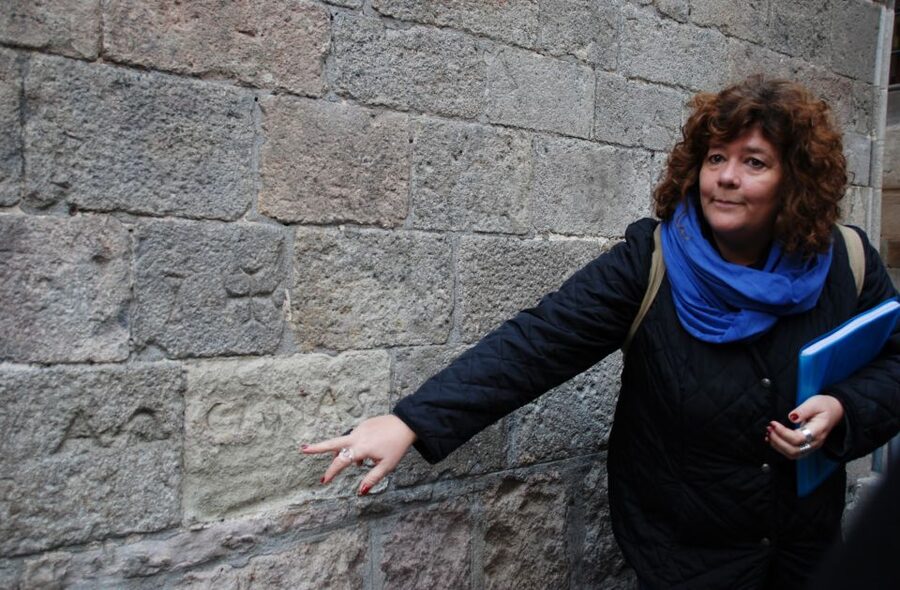
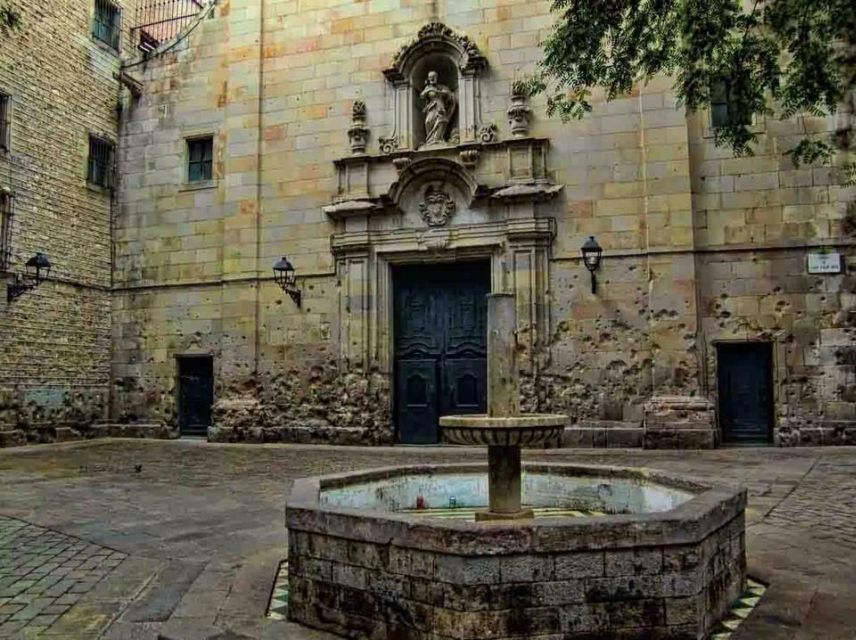
The Gothic Quarter is at its best when you look up, slow down, and let someone point out what the street itself does not explain. The tour includes remains connected with the Knights Templar and examines Templar and Masonic symbols in the Gothic cathedral.
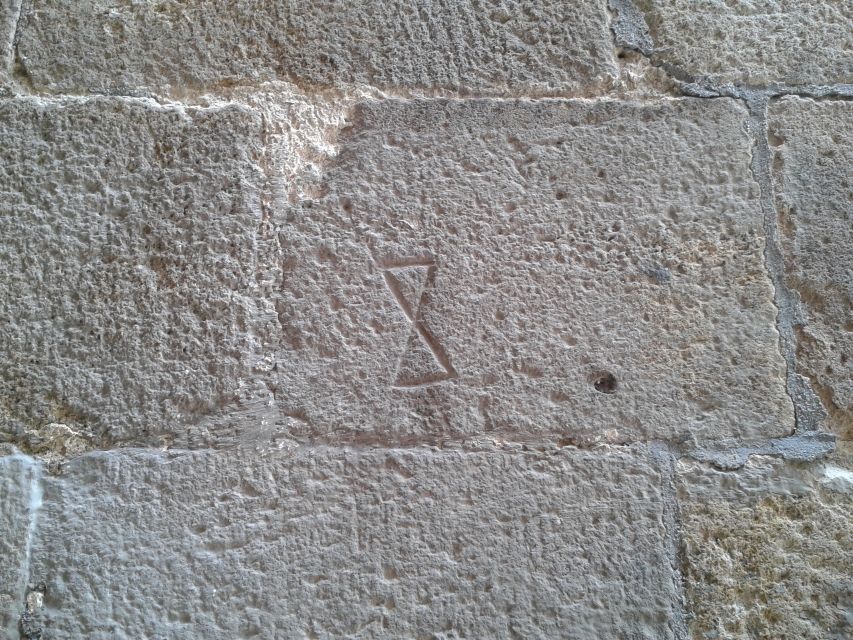
That does not mean every carving is presented as proof of a secret organization. The attraction lies in learning how symbols can be read, how religious and civic power used images, and how later traditions attached new meanings to older buildings. Sandra’s role is to explain the links between the visible architecture and the Western esoteric ideas surrounding it.
The cathedral section should appeal to anyone who has already walked through Barcelona’s medieval center and felt they had seen only the obvious. It gives you a reason to revisit familiar buildings with more care. You might notice dragons, geometric forms, or other symbols differently after hearing how hermetic and alchemical ideas are interpreted within the city.
Keep your expectations sensible. The information provided promises Templar and Masonic symbolism, but it does not promise access to restricted rooms, archaeological remains closed to the public, or an inside visit to every site discussed. Much of the value comes from the guide’s explanation while you walk through the quarter.
More History Tours in Barcelona:
- Montserrat with Black Madonna & Medieval Winery with Tapas/Lunch
★ 5.0 · 5,209 reviews - Barcelona: Tapas Walking Tour with Food, Wine, and History
★ 4.8 · 4,261 reviews - Barcelona Tapas Walking Tour: Food, Wine & History
★ 4.5 · 1,928 reviews - Barcelona: 2.5-Hour Bike or E-Bike Historical Tour
★ 4.5 · 1,262 reviews
A basilica, alchemy, and the city of symbols
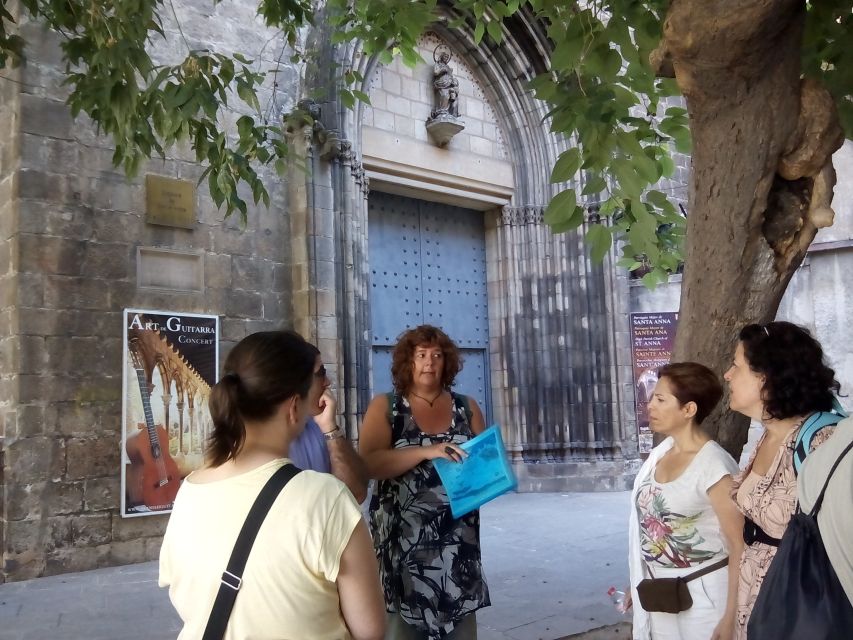
The route also includes what is described as an esoteric basilica with an alchemical touch. The precise name is not supplied, so you should treat this as part of the themed route rather than plan around a specific church visit.
This is where the tour shifts from institutional history to the language of symbols. Hermetic traditions, alchemy, dragons, and sacred imagery become tools for reading Barcelona. The subject may sound unusual, but it gives you a different way to approach architecture. Instead of asking only when a building was made or who paid for it, you also consider what its images were intended to suggest.
Some participants will find this the most memorable part. Others may want clearer lines between established historical evidence and interpretation. That is a fair concern, and it is worth asking Sandra how she distinguishes documented history from esoteric readings. The tour is strongest when you remain curious without treating every legend as settled fact.
Sandra’s background as a specialist in the Western esoteric tradition matters here. Her appeal is not simply that she knows unusual stories. She connects them to the physical city and explains their development across time. Several comments describe her as warm, witty, passionate, and able to make a complex subject accessible.
Freemasonry and modern Barcelona
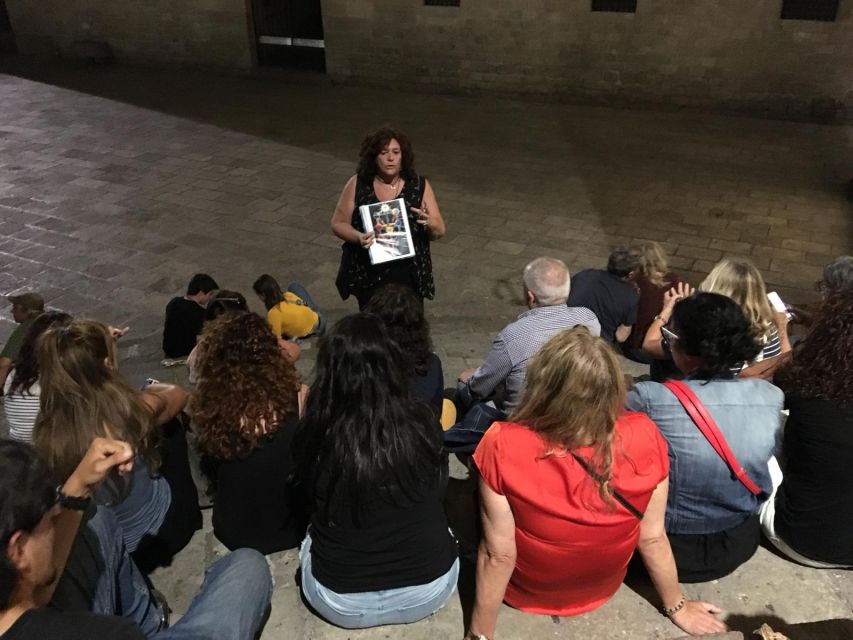
The walk continues into the nineteenth century, when Freemasonry became part of Barcelona’s story. One of the tour’s provocative questions is whether modern Barcelona was designed by a Freemason, and whether Antoni Gaudí himself was one.
Those questions are useful because they encourage you to examine the relationship between architecture and belief. Barcelona is often reduced to Gaudí’s famous curves and colorful surfaces. This tour asks you to consider whether there are other intellectual or symbolic systems behind the city’s modern design.
Be aware that the supplied details do not state the tour’s final conclusions about Gaudí or the designer of modern Barcelona. Do not book expecting a simple yes-or-no revelation. The value is in hearing how Freemasonry, mystery schools, architecture, and urban identity are discussed together.
This portion also helps connect the Gothic Quarter to the Barcelona you see elsewhere. The tour does not treat medieval esoterica as a sealed-off curiosity. It suggests that symbolic thinking continued into modern homes, public spaces, and architectural movements.
Sandra Burela’s style and the small-group advantage
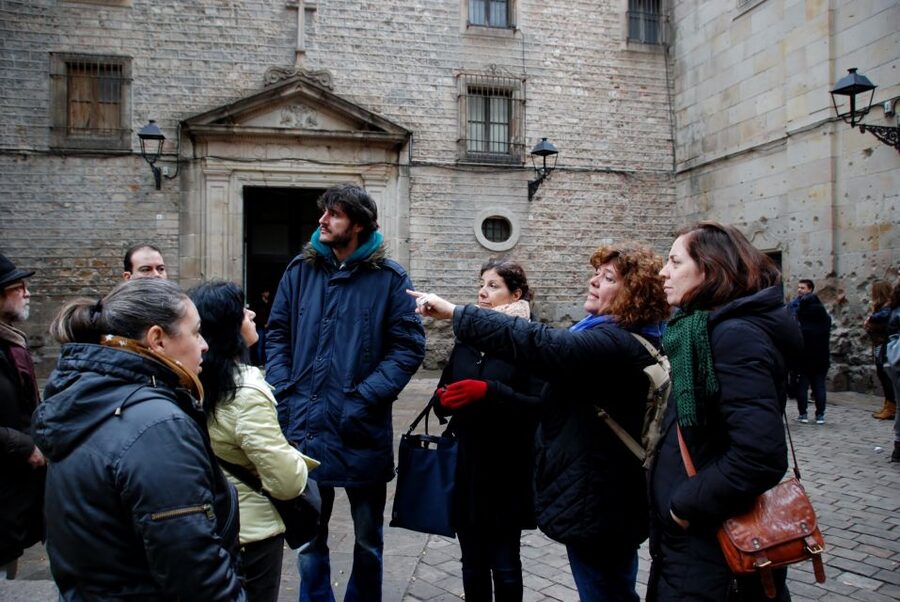
Sandra Burela is the named guide, and the experience is limited to eight participants. That small size is important for this particular subject. Esoteric history can raise questions, and a group of eight gives you a better chance to stop, ask for clarification, and follow an interesting thread.
Her style appears to be conversational rather than theatrical. The strongest descriptions emphasize her warmth, humor, passion, and ability to explain difficult material clearly. She is also described as tailoring the discussion to what participants hope to learn, which is helpful when a group includes both newcomers and people who already study astrology or esoteric subjects.
The tour suits a mixed audience. You do not need prior knowledge of astrology, Kabbalah, Freemasonry, or Western esoterica. At the same time, people with some background can ask more advanced questions and make use of Sandra’s broader historical context.
One useful extra is that Sandra may follow up with resources after the experience. That matters because three hours is not enough to cover every tradition or answer every question. The walk can function as an introduction, then give you material for further reading.
Is $88 a fair price for three hours?
At $88 per person, this is not the cheapest Gothic Quarter walk in Barcelona. You are paying for a specialist-led experience, a small group capped at eight, and a subject that ordinary city tours rarely cover.
The price makes the most sense if you want interpretation rather than basic orientation. A standard Gothic Quarter tour may identify churches, lanes, and medieval buildings. This one asks you to look at those same places through Templar, Masonic, Jewish, Kabbalistic, hermetic, and alchemical ideas.
Value depends heavily on your interest. If you are drawn to spirituality, symbolism, religious history, astrology, or the relationship between architecture and belief, $88 can be reasonable for three hours with a specialist. If you are mainly seeking Barcelona’s famous sights, food recommendations, or a broad introduction to Catalan history, you may get better value from a general walking tour.
The small group also changes the calculation. You are not paying for a large crowd and a microphone. You are paying for room to discuss the subject and ask Sandra to explain what catches your attention.
Practical advice before you book
Wear comfortable walking shoes. The experience is a three-hour stroll through the Gothic Quarter and other historic parts of central Barcelona, so standing and walking are central to the plan.
In summer, bring a bottle of water. Carry your belongings securely, as recommended for the city, and avoid bringing anything you do not need. The meeting point at Plaça Catalunya is easy to reach, but the square can be confusing if you arrive at the last minute. Look specifically for the newsstand between the two metro entrances, beside Zurich Cafe.
The tour is in English and has a live guide. Starting times vary, so check availability for your date. Free cancellation is available up to 24 hours in advance for a full refund, and you can reserve now and pay later. Those terms are useful if your Barcelona schedule is still changing.
The walk is best for adults and older teens who enjoy discussion, although no age restriction is provided. The subject can become abstract, so I would not choose it for someone who wants constant visual spectacle or a fast-moving sightseeing route.
Who should choose this Barcelona tour?
Book it if you want to see the Gothic Quarter through an unusual lens, especially if you are interested in Jewish history, Kabbalah, the Knights Templar, Freemasonry, alchemy, hermetic symbolism, or Gaudí’s possible connections with esoteric thought.
It is also a good fit if you have visited Barcelona before and want a fresh way to read familiar streets. Sandra’s explanations may help you notice details that you would otherwise pass without a second look.
Skip it if you want only firmly documented political history, a conventional architecture tour, or a list of the city’s major monuments. The experience blends history with spiritual traditions and interpretation. That blend is its purpose, but it will not suit every sightseeing style.
I would book this tour for a curious visitor who enjoys asking why a symbol appears on a building, how different faiths shaped one city, and where history ends and legend begins. Bring comfortable shoes, an open mind, and questions. The more actively you engage, the more you are likely to get from the three hours.
FAQ
How long is the Barcelona esoteric tour?
The tour lasts three hours.
What does the tour cost?
The price is $88 per person.
Where does the tour meet?
Meet in front of Zurich Cafe at Plaça Catalunya. The guide waits beside the newsstand between the two metro entrances.
Who leads the tour?
Sandra Burela leads the experience. She specializes in the Western esoteric tradition and Barcelona.
What language is the tour in?
The live tour is conducted in English.
How many people are in the group?
The group is limited to eight participants.
What parts of Barcelona does the tour explore?
The walk explores the Gothic Quarter, Roman Barcino, the old Jewish call, medieval churches, the Gothic cathedral, and places connected with modern Barcelona.
What historical subjects are covered?
The tour discusses Romans, Visigoths, the medieval Jewish community, Kabbalistic schools, the Knights Templar, Freemasonry, hermetic traditions, alchemy, and possible esoteric connections with modern architecture.
Should I bring water?
Yes. A bottle of water is recommended in summertime.
Can I cancel the booking?
You can cancel up to 24 hours in advance for a full refund. You can also reserve now and pay later.
Just added around Barcelona
- Girona, Costa Brava and Medieval Village from Barcelona★ 5.0 · 149 reviews
- Tarragona and Sitges Small Group Tour – Roman History & Culture★ 4.5 · 339 reviews
- Barcelona Tapas Food Tour, Taverns, History & Local Culture★ 5.0 · 42 reviews
- Savor Spain: Food, Wine, History & Culture Small Group Tour in Old Barcelona★ 5.0 · 140 reviews
- Private Pre-Pyrenees Medieval Village Hike from Barcelona★ 5.0 · 39 reviews
- Sip, Sites & Bites Barcelona Food, Drinks & History Tour★ 4.5 · 95 reviews
- History Museum of Catalonia & Rooftop Access Ticket★ 4.5 · 43 reviews
- Private Besalú & 3 Medieval Towns Tour with Hotel PickUp from Barcelona★ 5.0 · 37 reviews
Barcelona History Tours, compared.
Montserrat with Black Madonna & Medieval Winery with Tapas/Lunch
Read our review →
Barcelona Tapas Walking Tour: Food, Wine & History
Read our review →
Barcelona: 2.5-Hour Bike or E-Bike Historical Tour
Read our review →
Pyrenees & Medieval Towns Small Group Tour from Barcelona
Read our review →
Besalu & 3 Medieval Towns Small Group Tour with Hotel Pick-Up
Read our review →
Costa Brava & Medieval Village Tour with Lunch
Read our review →
Barcelona Erotic Museum – Explore Art, History & Fun
Read our review →Browse the lists this tour appears in