Review · BARCELONA
Barcelona: Cemetery Tour – Gothic Graves & Local History
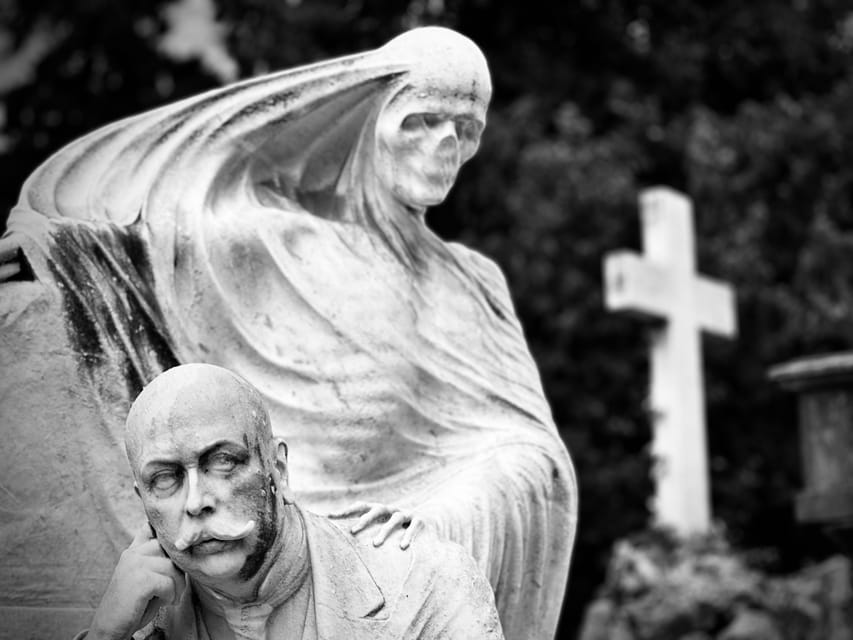
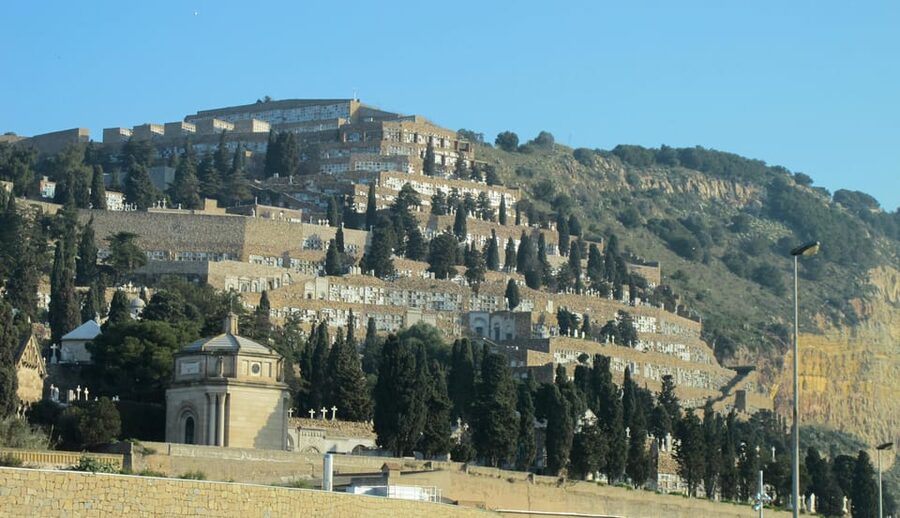
Montjuïc Cemetery is Barcelona’s city of the dead, built into a hillside above the sea and filled with mausoleums that look like tiny churches. You’ll see angels, skeletons, obelisks, a pyramid, and elaborate family tombs while learning how Barcelona’s story is written through the people buried here.
I like the peaceful setting and the fact that a guide such as Onno can lead you through a huge cemetery without wasting time on ordinary graves. I also like the mix of art and local history, from city planner Ildefons Cerdà to Joan Miró and anarchist leader Buenaventura Durruti. The drawback is practical: expect stairs and repeated climbs, so this is not suitable for wheelchair users or anyone with serious mobility, knee, pregnancy, or recent-surgery concerns.
Key points to know before you book
- Gothic tombs above the sea: Expect church-like mausoleums, dramatic sculptures, obelisks, a pyramid, and striking hillside views.
- A guide matters here: Montjuïc Cemetery is large enough that you could easily miss its most important and unusual graves alone.
- Barcelona through its citizens: Stories connect the cemetery with writers, politicians, artists, city planners, and Civil War figures.
- A quiet change of pace: The cemetery is far removed from Barcelona’s busiest sights, and the route can feel almost empty.
- Transport is included: You meet at Portal de Santa Madrona and return there after the visit.
- Allow for stairs: The walking is broken into sections rather than one nonstop climb, but comfortable shoes are essential.
Why Montjuïc Cemetery feels unlike a normal cemetery visit
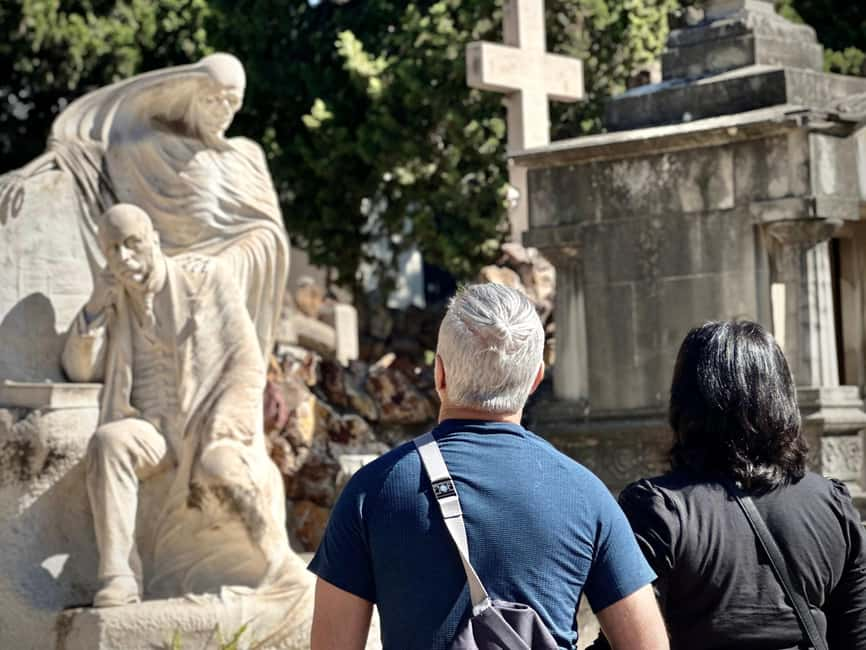
Barcelona’s famous attractions can be noisy and tightly packed. Montjuïc Cemetery offers the opposite experience. Its roads and paths climb a broad hillside, with the Mediterranean opening out below and rows of marble tombs rising around you.
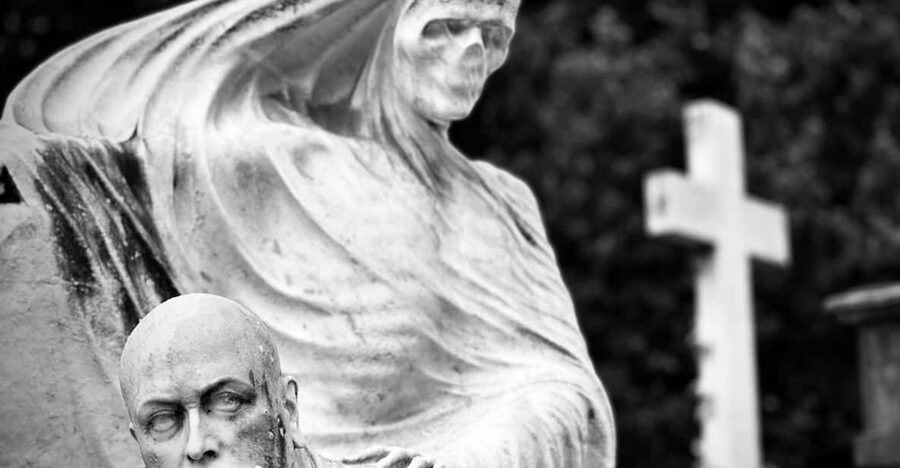
This is not simply a stroll past gravestones. The cemetery is an outdoor museum of funerary art. Some graves are modest, but others have columns, domes, angels, carved skeletons, obelisks, and full mausoleums with the visual weight of chapels. The setting gives the place a solemn beauty without turning it into a gloomy haunted-house attraction.
I find the contrast especially useful for understanding Barcelona. The city’s wealth, artistic taste, political conflicts, and social divisions all appear here in stone. A grand family mausoleum tells one story. A plain grave connected with political struggle tells another.
The cemetery dates from the 19th century, and its hillside design means you see it in layers. Starting high and walking down lets you take in the views first, then move through sections filled with more elaborate monuments. That downhill direction also helps make the route manageable, though you will still encounter stairs and uneven paths.
More Dark History and Haunted Tours in Barcelona
- Barcelona: Dark History Night Walking Tour
★ 4.8 · 344 reviews - Barcelona’s Dark History Night Tour
★ 5.0 · 181 reviews - Barcelona Dark History Night Walking Tour With Drinks
★ 5.0 · 153 reviews
Meeting at Portal de Santa Madrona
The tour begins at Portal de Santa Madrona, beside the wooden doors or gate of the old city wall. Your guide waits with a white umbrella, a useful marker in a busy part of Barcelona.
The meeting point is central, but the cemetery itself is outside the main old-town sightseeing circuit. That short transfer matters because reaching Montjuïc on your own can take more effort than the visit first suggests. The experience includes transport from the city and back again, with the transfer listed at about 10 minutes each way.
The transport description refers to city transport, while the route details identify a black cab for the short transfer. Either way, the important point is that you are not left to work out the connection on your own. Stay alert at the meeting point and arrive early enough to identify the guide and white umbrella.
The short ride to Montjuïc
The ride takes you away from the dense streets of central Barcelona and toward the cemetery’s hillside entrance. It is not the main event, but it makes the outing feel like a small expedition outside the standard city route.
The transfer is also one reason the tour works well in a half-day plan. You spend most of the time at the cemetery rather than dealing with connections, maps, and a large site that can be hard to read on your own.
The tour lasts about 2.5 hours. The cemetery section is the heart of the visit, followed by brief stops at the Fossar de la Pedrera, Durruti’s grave, and Joan Miró’s tomb. Since the published route assigns about 2.5 hours to the main cemetery visit and then lists several short stops, confirm the exact timing when you book.
Walking the Gothic mausoleums
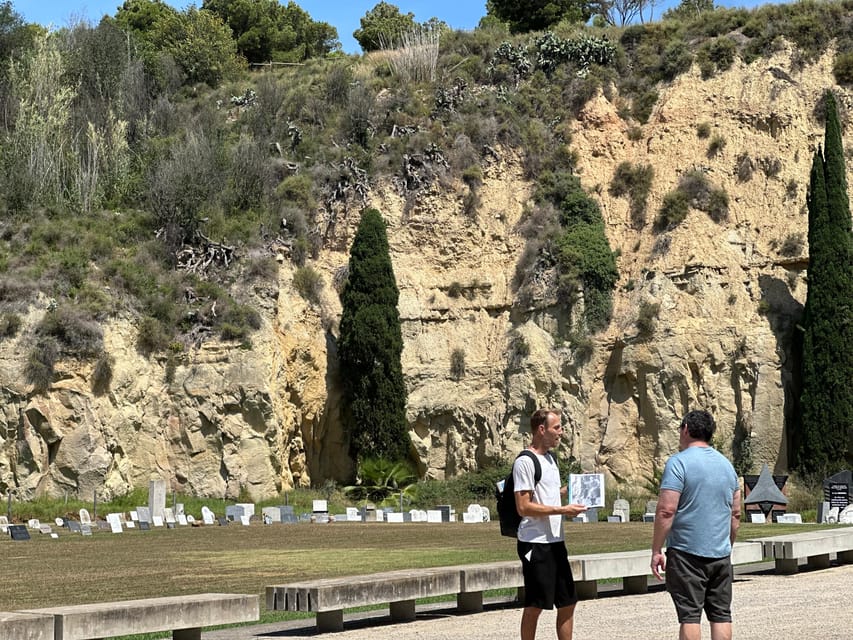
Once inside, the scale becomes clear. Montjuïc Cemetery is large, and the most attractive tombs are spread across different paths and levels. A guide earns the fee here by choosing a sensible route and pointing out details you could easily walk past.
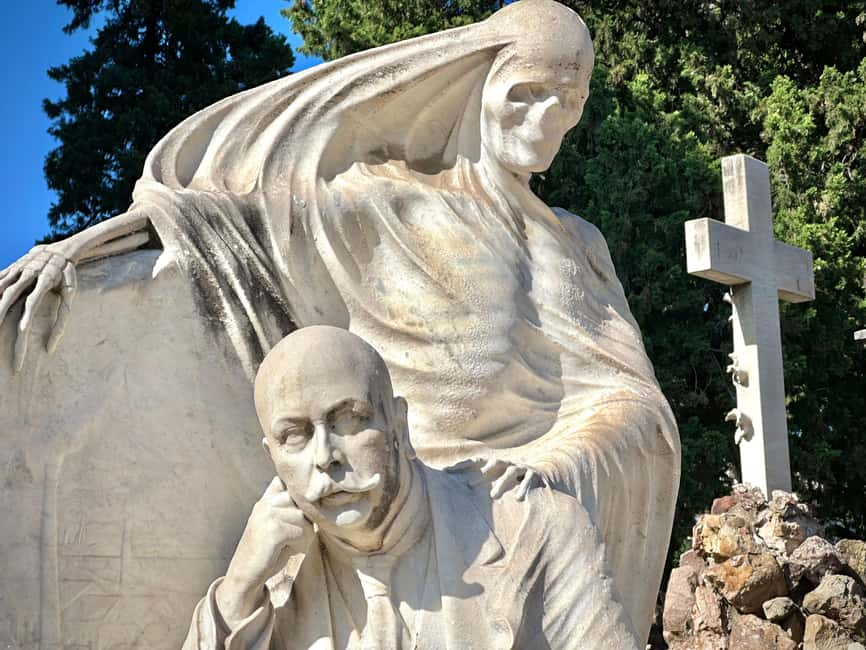
Look for the architectural variety. Some tombs are narrow vertical structures, while others resemble miniature churches. Sculptures of angels create a solemn mood, and carved skeletons add a more unsettling note. Obelisks and pyramid shapes break up the rows of conventional graves.
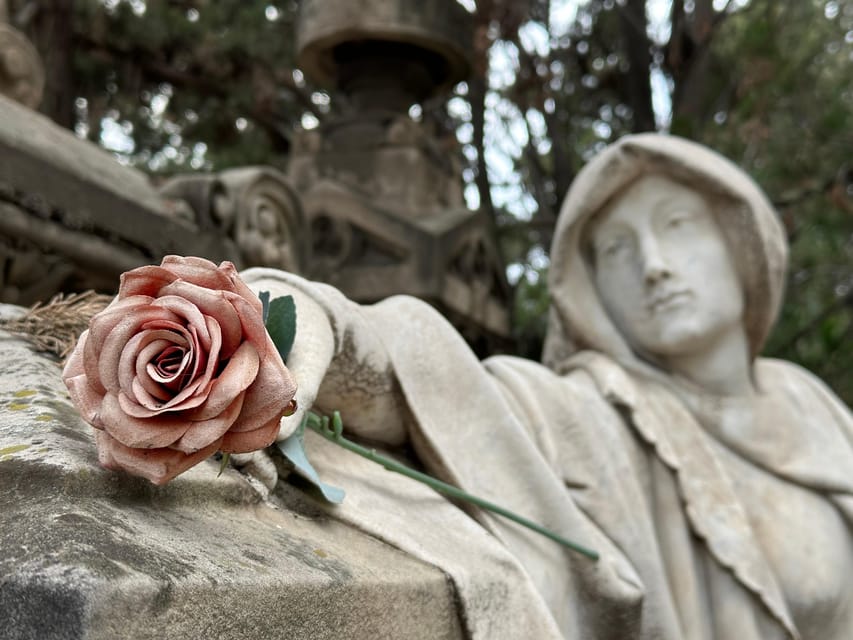
The art is often at its best when you look closely. A photograph can show the overall monument, but the smaller details explain how families wanted to be remembered. You might notice expressions, gestures, religious symbols, or unusual decorative choices that would mean little without someone to explain them.
The hillside also creates good photo opportunities. From several points, the cemetery looks out toward the sea, giving you a wide view that contrasts with the enclosed tombs and narrow paths. Bring a phone or camera, but remember that this is an active cemetery. Keep the mood respectful and avoid treating every grave as a prop.
More Dark History and Haunted Tours in Spain
- Barcelona El Raval Dark History Walking Tour
★ 5.0 · 70 reviews - Barcelona: Gothic Quarter Tour Dark History & Ghosts Tour
★ 4.8 · 64 reviews - Montjuïc Cemetery Walking Tour – Hidden Art, History & Views
★ 5.0 · 62 reviews - Barcelona Ghosts of a Dark Past Gothic Walking Tour
★ 5.0 · 55 reviews
Barcelona history told through its buried citizens
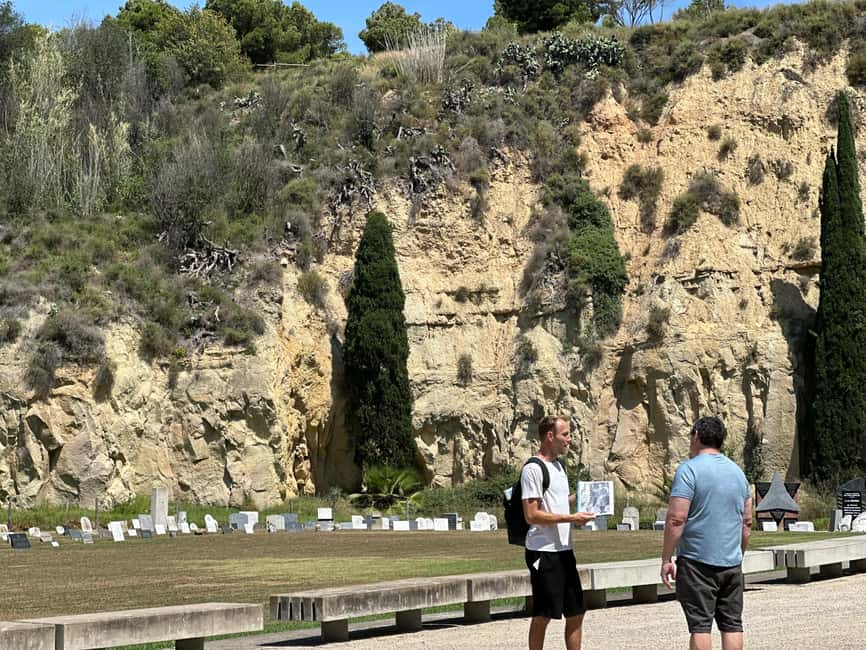
The strongest part of the tour is the way personal stories connect with the wider city. You do not just hear dates and names. You learn why certain people mattered and how their lives fit into Barcelona’s development.
One notable figure is Ildefons Cerdà, the planner associated with Barcelona’s Eixample district. His grave gives the city’s famous grid a human connection. After seeing his tomb, the broad, ordered blocks of the modern city feel less like an abstract planning idea and more like the work of a real person.
The route also includes figures linked with art, politics, literature, and social change. The exact emphasis can vary with the guide and the group, but the aim is consistent: to read Barcelona’s past through its residents rather than through a list of monuments.
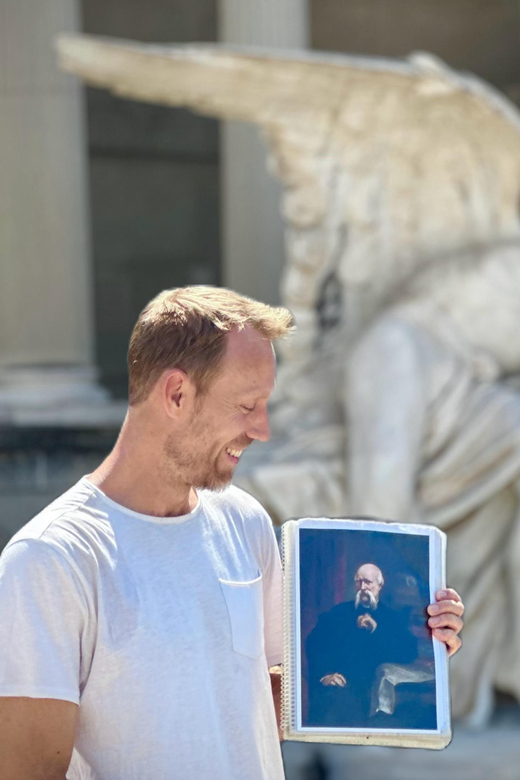
Onno, the English-speaking guide named for this tour, is described as relaxed, well prepared, and good at adding small facts and questions to keep the walk active. That style suits the cemetery. A stiff lecture would make the visit feel heavy, while a casual approach allows the stories to unfold naturally.
You may also hear about anarchist and Civil War history, an area that gives the tour more political depth. The cemetery is not only a display of wealthy families and ornate stonework. Its graves also reflect conflict, ideology, and the difficult parts of Barcelona’s past.
Fossar de la Pedrera and the city’s harder memories
The route continues to Fossar de la Pedrera, a site connected with wartime and political memory. This is a more serious stop than the decorative mausoleums, and it helps balance the visual beauty of the cemetery.
You spend about 15 minutes here for a guided visit and photographs. The stop gives you a chance to consider how Barcelona remembers people caught up in violence and political upheaval. It also prevents the outing from becoming only an architecture tour.
The mood can change quickly. One moment you are looking at elaborate marble work; the next, you are hearing about the people and causes tied to the city’s 20th-century struggles. If you prefer light sightseeing only, this section may feel more solemn. If you want context, it is one of the most meaningful parts of the route.
Durruti and Miró: two very different graves
The next brief stop is the tomb of Buenaventura Durruti, an anarchist leader associated with the Spanish Civil War. You have about five minutes for the visit and explanation. It is a small stop in terms of time, but it adds an important political thread to the tour.
The final named stop is Joan Miró’s tomb, also scheduled for about five minutes. Miró is one of Barcelona’s best-known artists, so this visit brings the tour back to the city’s artistic identity. You see how the cemetery holds both public figures whose work shaped Barcelona and people whose stories are tied to conflict or civic life.
These stops are short, so do not expect a long standalone presentation on each person. Their value comes from the way they fit into the larger walk. The cemetery becomes a place where architecture, art, politics, and personal memory meet.
Why going with a guide is worth the $28 price
At $28 per person, this is not an expensive Barcelona activity, but its value depends on what you want from a tour. If you only want to wander among attractive tombs, you could try visiting independently. The problem is that the cemetery is large, and you would likely miss the more important graves, the best route, and the stories behind the monuments.
The price includes roundtrip transport, an English-speaking guide, and roughly 2.5 hours of focused touring. That makes the cost reasonable if you value interpretation and want to avoid spending time finding your way around.
The small-group feel is another advantage. At times, you may be the only person on the tour, especially in quieter seasons or on a rainy day. That does not guarantee a private tour every time, but the experience is designed to avoid the feel of a large sightseeing procession.
A personal guide can also adjust the tone. Onno has been described as taking photographs for participants and adding unusual facts to keep the visit interactive. Do not book solely for photography, since that is an extra kindness rather than a listed service. Still, it is a useful bonus if you want a few pictures of the walk without constantly stopping to take your own.
Walking conditions, weather, and what to wear
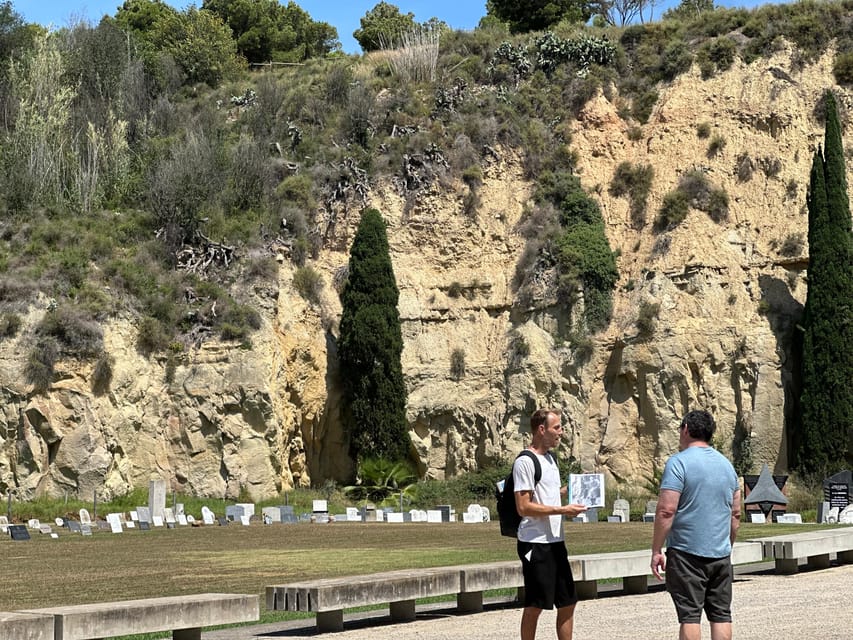
Wear comfortable shoes with good grip. The route includes stairs and walking up and down the hillside, although the climbing is not continuous. People with knee problems or limited mobility may struggle even if they can manage ordinary city sightseeing.
The tour is not suitable for wheelchair users, people with mobility impairments, pregnant women, children under 12, people with recent surgeries, or people over 70 according to the stated restrictions. Those limits are unusually specific, so take them seriously rather than assuming the guide can adjust the route easily.
Weather will shape the mood and the photographs. A rainy day can make the cemetery quieter and more atmospheric, but slippery paths and stairs may become less comfortable. Bring suitable clothing and avoid carrying anything that makes climbing awkward.
Because the site is open and exposed in places, the sea views are part of the appeal but also mean you should prepare for changing conditions. The cemetery’s beauty comes from its outdoor setting, not from a warm indoor museum environment.
Who will enjoy this unusual Barcelona tour?
I would recommend this experience to you if you like:
- Cemetery art and unusual architecture
- Local history told through individual lives
- Civil War and political history
- Photography and quiet viewpoints
- Small-group or low-crowd activities
- Barcelona experiences beyond the usual churches and museums
It is especially good for repeat visitors who have already seen the central sights. It also suits a first-time visitor who wants one activity that feels different from the standard Gaudí circuit.
I would not choose it if you want a relaxed, flat walk or a cheerful sightseeing outing. The subject is death, memory, and political conflict, and the route has stairs. It is beautiful, but not carefree.
The experience also works best for someone who enjoys listening. The tombs are striking, yet their real value comes from the stories attached to them. Without the guide, you would still see the stonework, but much of the meaning would remain out of reach.
Booking details and the final decision
You can cancel up to 24 hours before the start for a full refund, and reserve now while paying later. The activity is conducted in English, begins and ends at Portal de Santa Madrona, and includes transport to and from Montjuïc Cemetery.
I would book this tour if you want Barcelona history without crowds, enjoy Gothic funerary art, and can comfortably manage stairs. The $28 price is fair because it covers transport and, more importantly, gives you a clear route through a huge site where independent visitors can easily miss the best material.
Skip it if you need step-free access, dislike graveyards, or want a major landmark with a fast, polished presentation. For everyone else, this is one of Barcelona’s more unusual outings: quiet, visual, and full of stories that connect the cemetery to the city beyond its tourist center.
FAQ
How long does the Montjuïc Cemetery tour last?
The activity lasts about 2.5 hours. The route includes the main cemetery visit, transport each way, and short stops at Fossar de la Pedrera, the tomb of Buenaventura Durruti, and the tomb of Joan Miró.
Where does the tour begin?
The tour begins at Portal de Santa Madrona. The guide waits with a white umbrella in front of the wooden doors or gate of the old city wall.
Where does the tour end?
The tour ends back at Portal de Santa Madrona after the return transfer.
Is transport included?
Yes. Roundtrip transport from the central meeting point to Montjuïc Cemetery and back is included. The route lists transfers of about 10 minutes each way.
What language is the tour conducted in?
The live tour is conducted in English.
Is the tour suitable for people with mobility issues?
No. The route includes walking up and down stairs, and it is not suitable for people with mobility impairments or wheelchair users. It is also listed as unsuitable for people with recent surgeries.
Can children join the tour?
Children under 12 are not permitted on this activity.
Can I cancel the booking?
Yes. You can cancel up to 24 hours in advance for a full refund. You can also reserve now and pay later.
More Medieval History Tours in Spain
- From Barcelona: Medieval Villages Day Tour
★ 4.8 · 482 reviews - Barcelona 1.5h Private Old Town, Gothic & Ramblas Walking Tour
★ 5.0 · 318 reviews - From Barcelona: Besalú & Medieval Towns Tour w/ Hotel Pickup
★ 4.8 · 258 reviews - Barcelona: Tipsy Tapas & History Tour in the Gothic Quarter
★ 4.8 · 227 reviews
More Medieval History Tours in Barcelona
- Montserrat with Black Madonna & Medieval Winery with Tapas/Lunch
★ 5.0 · 5,209 reviews - Pyrenees & Medieval Towns Small Group Tour from Barcelona
★ 4.5 · 669 reviews - Besalu & 3 Medieval Towns Small Group Tour with Hotel Pick-Up
★ 5.0 · 562 reviews - Costa Brava & Medieval Village Tour with Lunch
★ 5.0 · 520 reviews
Just added around Barcelona
- Girona, Costa Brava and Medieval Village from Barcelona★ 5.0 · 149 reviews
- Tarragona and Sitges Small Group Tour – Roman History & Culture★ 4.5 · 339 reviews
- Barcelona Tapas Food Tour, Taverns, History & Local Culture★ 5.0 · 42 reviews
- Private Pre-Pyrenees Medieval Village Hike from Barcelona★ 5.0 · 39 reviews
- Sip, Sites & Bites Barcelona Food, Drinks & History Tour★ 4.5 · 95 reviews
- Savor Spain: Food, Wine, History & Culture Small Group Tour in Old Barcelona★ 5.0 · 140 reviews
- History Museum of Catalonia & Rooftop Access Ticket★ 4.5 · 43 reviews
- Private Besalú & 3 Medieval Towns Tour with Hotel PickUp from Barcelona★ 5.0 · 37 reviews
Barcelona History Tours, compared.

Montserrat with Black Madonna & Medieval Winery with Tapas/Lunch
Read our review →
Barcelona Tapas Walking Tour: Food, Wine & History
Read our review →
Barcelona: 2.5-Hour Bike or E-Bike Historical Tour
Read our review →
Pyrenees & Medieval Towns Small Group Tour from Barcelona
Read our review →
Besalu & 3 Medieval Towns Small Group Tour with Hotel Pick-Up
Read our review →
Costa Brava & Medieval Village Tour with Lunch
Read our review →