
Review · CHARLESTON
Book Charleston’s Most Educational History Tour!
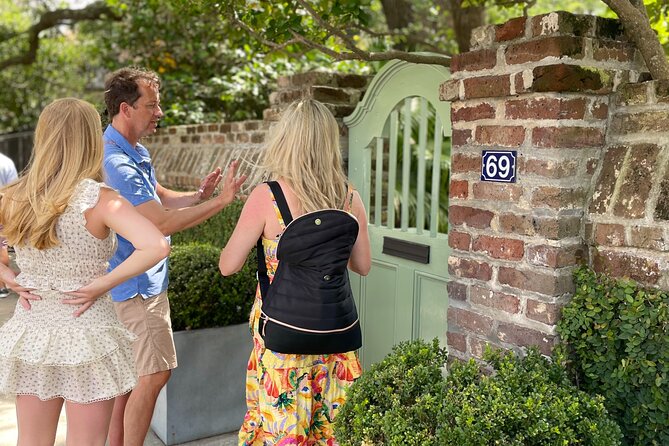
Charleston’s past comes alive best on foot, where old streets, waterfront views, grand homes, and live oaks share the same few blocks. This tour adds real depth through Cooper, a retired history professor who explains not only what happened here, but how the city’s people, politics, architecture, slavery, and Civil War shaped one another.
I like the slow pace and frequent chances to rest, especially in Charleston’s heat. I also like the mix of famous places and small details, from Tradd Street to the story of George Washington’s stay in the city. The main drawback is simple: this is a long walk on uneven sidewalks, and Charleston’s humidity can make two and a half hours feel longer than expected.
Key points to know before you book
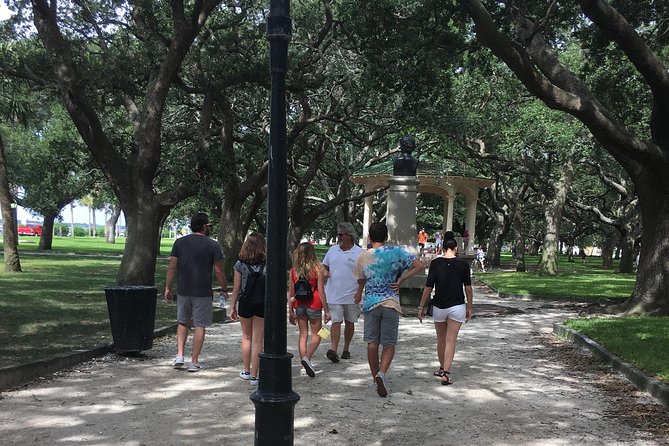
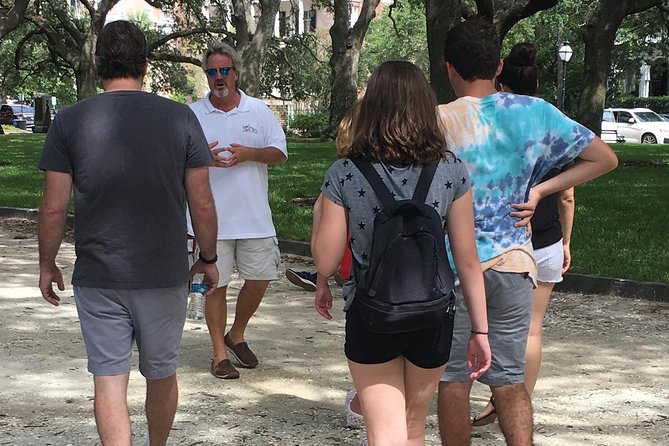
- Cooper brings an academic background: He is described as a retired history professor and professional historian, with a gift for dates, context, anecdotes, and quick humor.
- The walk takes about two and a half hours: Some outings may run longer when the group is engaged and the conversation keeps going.
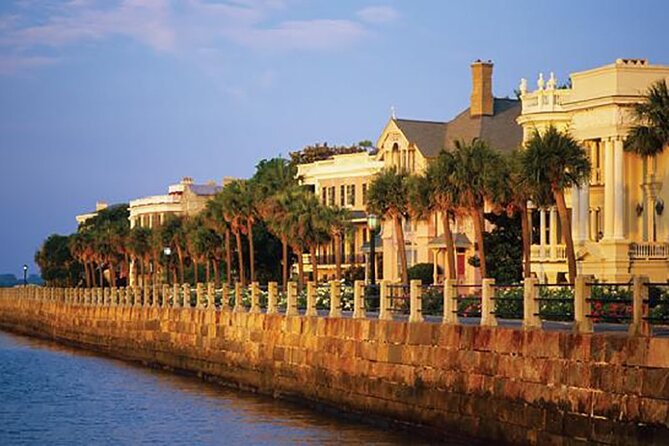
- The route begins at Waterfront Park: You walk through the historic center, along waterfront streets, past cobblestones, the Battery, White Point Gardens, and historic homes.
- The pace is deliberately gentle: Breaks are built into the walk, and the guide encourages people to sit when needed.
- The group is capped at 15 people: That keeps the discussion more personal and makes questions easier.
- Comfort matters: Wear good walking shoes and carry water. Wheelchairs and walkers are not recommended because of Charleston’s narrow, uneven sidewalks, though strollers are fine.
Why this tour works for history lovers
Many city walks give you a string of dates, names, and façades. This one aims for connections. You may hear about Charleston’s founding, its famous residents, the origins of the slave trade, the Civil War, Memorial Day, and the city’s architecture in one continuous story.
That approach matters because Charleston can look almost too polished at first glance. Beautiful streets and restored houses tell only part of the story. A strong guide helps you read the city more carefully, asking who built these places, who benefited from them, and what events shaped the people who lived here.
Cooper appears to be the main personality behind the experience. His background as a former professor gives the walk a classroom quality, but the tone is not stiff. The tour includes jokes, personal touches, and plenty of back-and-forth discussion. I especially like that balance. You get serious history without feeling trapped in a lecture.
The guide also tailors the conversation to the group’s interests. That can make a big difference if you already know the basics of Charleston and want to ask about a specific person, period, or event. Several accounts describe Cooper as able to handle questions across a wide range of subjects, including famous residents and the city’s complicated past.
More History Tours in Charleston:
- Charleston’s Old South Carriage Historic Horse & Carriage Tour
★ 5.0 · 10,023 reviews - Historic Charleston Guided Sightseeing Walking Tour
★ 5.0 · 6,216 reviews - Charleston Horse-Drawn Carriage Tour: Explore Historic Charleston
★ 5.0 · 3,561 reviews
Starting at Waterfront Park and the Cooper River
The meeting point is Waterfront Park, at Vendue Range and Concord Street. The tour begins at 10:00 a.m., a useful time for seeing the city before the strongest afternoon heat. You start near the water, with some shade along the route and room to settle into the walk.
The opening section is not a race to the first landmark. The guide sets a relaxed rhythm, takes breaks, and allows time for questions. That is important in Charleston, where heat and humidity can sap your energy even when the distance looks modest on a map.
You should arrive ready to walk rather than expecting a vehicle-based sightseeing tour. The route ends back at the starting point, so you do not need to arrange a ride from another part of the city at the finish.
Waterfront Park also gives the tour a useful opening frame. Charleston’s history is tied closely to the water, trade, shipping, immigration, and slavery. Beginning beside the harbor helps connect the city’s handsome streets to the commercial forces that made Charleston wealthy and influential.
Cobblestones, the first fish market, and Charleston’s working past
One early stop takes place on beautiful cobblestone streets, where the group pauses at Charleston’s first fish market. It is a small location, but it offers the sort of detail that makes a walking tour worthwhile.
A guide can point out how a market functioned as part of daily city life, rather than presenting Charleston as a collection of grand houses. You get a glimpse of the working city, with commerce and food at street level. That contrast helps keep the tour from focusing only on wealthy families and impressive architecture.
The cobblestones are also a practical warning. They look charming, but they are not easy walking for everyone. You will want shoes with secure soles, and you should expect the route to feel uneven in places. The tour provider does not recommend wheelchairs or walkers for this reason, although service animals are allowed and strollers are considered suitable.
Tradd Street and Charleston’s surviving street plan

Tradd Street dates to 1720, making it one of the oldest streets on the route. The value here is not simply the age of the buildings. It is the chance to see how the historic street plan still shapes the city around you.
As you walk, look beyond the prettiest façades. Notice the narrow sidewalks, old surfaces, house fronts, and the way the street directs your view. The guide’s job is to turn those details into a story about how Charleston grew and how parts of its early layout remain visible today.
This is one of the places where the tour’s pace helps. You are not being hurried past a row of houses while trying to hear a guide over traffic. You can pause, look up, and ask why a street or building matters.
Tradd Street also reinforces one of the tour’s central ideas: history is not confined to a museum. It is still built into the route you take for a morning walk. That makes the city easier to understand later, when you explore on your own.
Same city, a different century:
- Charleston Harbor History Day-Time or Sunset Boat Cruise
★ 4.5 · 2,788 reviews - Hidden Alleyways and Historic Sites Small-Group Walking Tour
★ 5.0 · 2,335 reviews - Charleston: Daytime or Sunset Historic Harbor Cruise
★ 4.5 · 1,352 reviews - Charleston historical walking tour with a Professor of History at The Citadel
★ 5.0 · 1,284 reviews
The Battery and White Point Gardens under live oaks

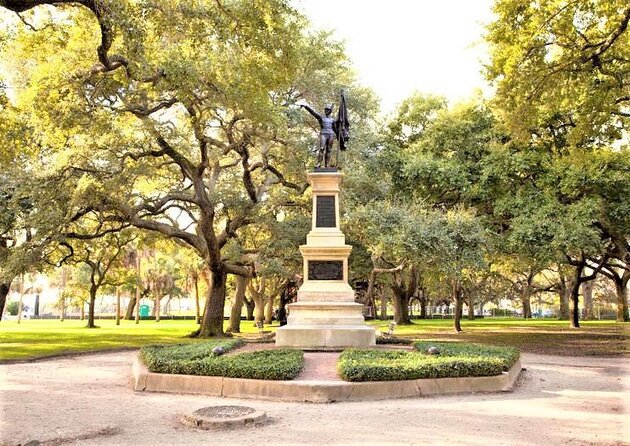
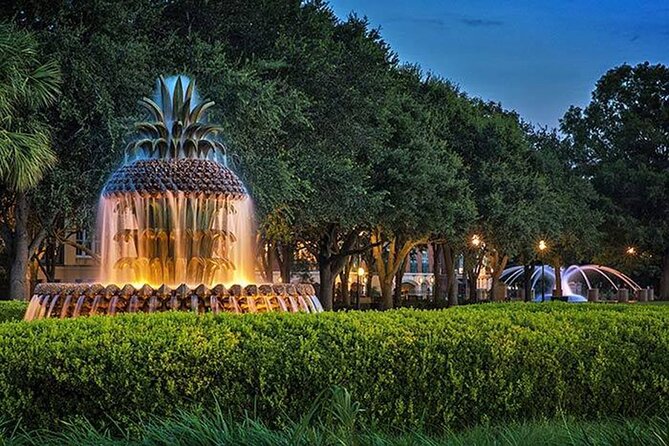
The Battery and White Point Gardens provide the most scenic pause on the route. Huge live oaks shade the gardens, and the setting opens toward the water. After several urban streets, this stretch gives you space to breathe and take in Charleston’s famous combination of greenery, old architecture, and harbor views.
The stop lasts about 20 minutes, which is enough time to appreciate the setting without turning the whole tour into a photo stop. You will hear history here, but the visual appeal matters too. This is one of those places where Charleston’s beauty can distract from the harder stories beneath it, and a good guide helps hold both ideas together.
I would plan to use this stop as a natural reset. If the morning is hot, the shade and seating can make the second half more comfortable. The guide specifically allows people to rest, and the walk is designed for a measured pace rather than a brisk march.
For many people, the Battery will be the most memorable scenery of the morning. It is also a good example of the tour’s balance: you are not choosing between history and architecture. You get the trees, waterfront, houses, and the larger story at the same time.
The Heyward-Washington House and a famous Charleston connection
The tour pauses near the Heyward-Washington House. The point is not simply to identify another historic building. George Washington lived here during his time in Charleston, which gives the stop a strong personal connection to the early United States.
That detail can easily be lost if you only walk past the house with a guidebook. The tour places it within Washington’s visit and the city’s wider political world. It also adds another layer to the discussion of the people who passed through Charleston and left their mark on its story.
The stop itself is listed at about five minutes, so do not expect an interior visit or a long house tour. Think of it as a focused exterior stop within the larger walk. The building becomes a prompt for history rather than the sole attraction.
The stories that make the tour different
The most praised feature of this experience is the guide’s storytelling. Cooper is repeatedly described as funny, warm, and able to turn facts into a clear narrative. That matters because Charleston has a huge amount of information packed into a small area.
You may hear about the city from its founding through the present day, along with stories of notable residents, architecture, slavery, the Civil War, and Memorial Day. The subject range is broad, but the tour is not presented as a dry list of facts. The guide uses anecdotes and questions to keep the group involved.
I also like the emphasis on uncomfortable parts of the past. A Charleston tour that discusses only beautiful homes and famous politicians gives you an incomplete picture. The history of slavery and the origins of the slave trade are essential to understanding the city’s wealth and development. This experience makes room for those subjects.
At the same time, you should know that the exact balance can depend on the questions asked and the interests of the group. Some outings may spend more time on architecture, while others may focus on social history or the Civil War. That flexibility is a strength if you enjoy conversation, though it means the tour may not feel identical every time.
The humor helps, too. The provider promises dad jokes and plenty of laughs, and the guide’s style seems to include a Southern drawl, quick wit, and a personal approach. I would choose this tour if you want serious content delivered by someone who enjoys talking with people, not reading from a script.
Time, group size, and walking conditions
The stated duration is about two hours and 30 minutes, but some tours can run longer. If you have a reservation immediately afterward, leave extra time. A particularly engaged group may continue for three hours or more because of questions and discussion.
The maximum group size is 15 people. That is small enough for the guide to hear questions and adjust the talk. It also helps you stay connected to the group while moving through narrow streets.
The route is not described in exact mileage, so I would judge it by conditions rather than distance. Uneven sidewalks, cobblestones, heat, humidity, and standing at several stops all add to the effort. Good walking shoes are essential, and bottled water is a smart choice.
Most people can take part, but the accessibility limits are clear. Wheelchairs and walkers are not recommended because Charleston’s sidewalks are narrow and uneven. Strollers are fine, though young children may need close attention near tight sidewalks. Service animals are allowed.
Is the $45 price a good value?
At $45 per person, this is not the cheapest way to see Charleston’s historic center, but the value depends on what you want from a tour. You are paying for a small-group walk led by a professional historian, not just transportation between landmarks.
I think the price is fair for visitors who want context and conversation. The tour covers several important parts of the historic center, and the guide’s academic background adds substance that you may not get from a general sightseeing walk. You also get a route that combines scenery, architecture, waterfront history, and difficult subjects.
The value is weaker if you mainly want a quick orientation or a list of photo stops. This is a slow, talk-centered experience. You need to enjoy listening, asking questions, and stopping often. If that sounds good, the group limit and guide-led interpretation make the fee reasonable.
The strong 4.9 rating from 127 ratings and a 98 percent recommendation rate also suggest that the format works well for its intended audience. I would still focus on the details rather than the score: this is a history-first walking tour with humor, not a fast highlights loop.
Who should book this Charleston walk?
I would recommend it to first-time visitors who want a strong introduction to the city. It also suits repeat visitors. One long-time Charleston visitor found that the tour filled in gaps and pointed out details that had gone unnoticed over many years.
History fans will get the most from it, especially those interested in the Civil War, slavery, famous residents, politics, and architecture. Couples, solo visitors, and families can all fit the format, provided everyone is comfortable walking and standing for several hours.
It is also a good choice if you want practical suggestions beyond the tour. Cooper has offered restaurant recommendations to participants, which can be useful during a short stay. That kind of local guidance is a pleasant extra, though it should not be the main reason you book.
I would be cautious if you dislike long explanations, hot weather, uneven pavement, or flexible timing. Families with young children should also consider whether a two-and-a-half-hour history discussion will hold their attention.
Booking, weather, and cancellation details
You receive confirmation when you book, and the tour is offered in English with a mobile ticket. It is commonly booked about 18 days ahead, so reserving early is sensible if your Charleston dates are fixed.
The tour requires good weather. If poor weather cancels it, you can choose another date or receive a full refund. The same applies if the minimum number of participants is not reached.
You can cancel for a full refund up to 24 hours before the local start time. Cancellations or changes within 24 hours are not accepted for a refund. The tour begins at 10:00 a.m. at Waterfront Park and returns there.
Should you book Chucktown Walking Tours?
Book this tour if you want Charleston explained by a historian who can connect the city’s grand buildings to its difficult past. Cooper’s combination of academic detail, humor, local insight, and an unhurried pace is the main reason to choose it.
Skip it if you want a short, fast overview or if uneven sidewalks and hot weather will make a long walk unpleasant. For everyone else, this is a strong morning introduction to Charleston, especially when you arrive ready with water, good shoes, and a willingness to ask questions.
FAQ
How long does the Charleston walking tour last?
The advertised duration is approximately two hours and 30 minutes. Some outings may last longer when the group spends extra time on questions and discussion.
Where does the tour begin?
The tour begins at Waterfront Park, near Vendue Range and Concord Street in Charleston, South Carolina.
Where does the tour end?
The activity ends back at the meeting point at Waterfront Park.
What time does the tour start?
The stated start time is 10:00 a.m.
What places does the walking tour visit?
The route includes Waterfront Park, cobblestone streets near Charleston’s first fish market, Tradd Street, the Battery and White Point Gardens, and the Heyward-Washington House.
Who leads the tour?
The experience includes a professional historian with a PhD. Cooper is identified as a retired history professor and is the guide most often associated with this tour. Some tour information also refers to the guide as Chuck.
How large is the group?
The tour has a maximum of 15 participants.
Is the tour suitable for people using wheelchairs or walkers?
Wheelchairs and walkers are not recommended because Charleston has narrow, uneven sidewalks and cobblestone surfaces. Strollers are fine, and service animals are allowed.
What is the cancellation policy?
You can cancel at least 24 hours before the local start time for a full refund. Cancellations or changes made less than 24 hours before the start are not refunded. If bad weather or an insufficient number of participants cancels the tour, you can receive a full refund or choose another option.
Just added around Charleston
- Charleston’s Historic Pubs, Taverns, and Taprooms Tour★ 4.5 · 33 reviews
- Small-Group Tour: Charleston Old Walled City Historical Walking Tour★ 4.5 · 283 reviews
- Charleston’s Strong Women of the South History Tour★ 4.5 · 27 reviews
- Private Sunset Sail BYOB Dolphin/History Tours on 43ft Mystique★ 5.0 · 42 reviews
- Sip History In a Secret Speakeasy Cocktail Class★ 5.0 · 40 reviews
- Sip History in The Sun Cabana Covered Cocktail Class★ 5.0 · 332 reviews
- Private Walking Tour of Historic Charleston★ 5.0 · 38 reviews
- Charleston History and Hops Tour: Bar and History Walk★ 5.0 · 316 reviews
Charleston History Tours, compared.
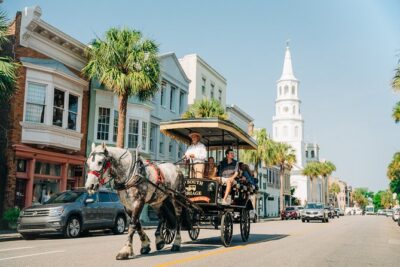
Charleston’s Old South Carriage Historic Horse & Carriage Tour
Read our review →
Historic Charleston Guided Sightseeing Walking Tour
Read our review →
Charleston Harbor History Day-Time or Sunset Boat Cruise
Read our review →
Hidden Alleyways and Historic Sites Small-Group Walking Tour
Read our review →
Charleston: Daytime or Sunset Historic Harbor Cruise
Read our review →
Charleston historical walking tour with a Professor of History at The Citadel
Read our review →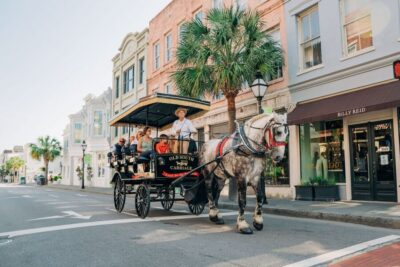
Charleston: Historical Downtown Tour by Horse-drawn Carriage
Read our review →
Undiscovered Charleston: Half Day Food, Wine & History Tour with Cooking Class
Read our review →Browse the lists this tour appears in