
Review · BOSTON
Boston History and Freedom Trail Private Walking Tour
Boston’s past comes alive on foot, especially when you move from the market stalls of Faneuil Hall to the graves of Paul Revere and John Hancock, then on toward the State House and Boston Public Garden. This private tour gives your group room to ask questions and adjust the pace.
I like the small-group format, which keeps you out of the large tour crowds, and the way guides such as Molly Mitchell, Alex, Michael, and Dillion have mixed solid history with humor and personal stories. The main drawback is that the route and exact stops can vary, and one meeting-point error caused a serious problem for a booked group.
Key points at a glance
- Private walk for up to 12 people: Your group gets its own English-speaking guide rather than joining a large public tour.
- Two to four hours on foot: The shorter two-hour version can work well as a first look at central Boston, while a longer walk allows more time for questions and neighborhood detail.
- Strong guide feedback: Molly Mitchell, Allison, Alex, Michael, Trey Petrella, Lexie, and Dillion are named in especially positive comments.
- Major Revolutionary-era sights: Expect history connected with the Boston Massacre, Boston Tea Party, Paul Revere, Old North Church, and the Battle of Bunker Hill.
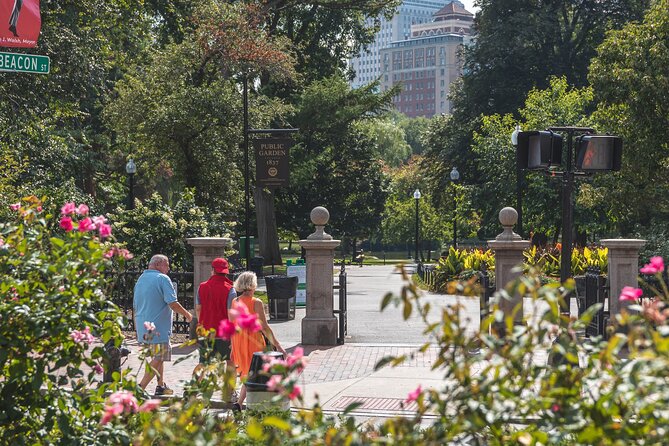
- Useful route through central Boston: The walk begins near Faneuil Hall Marketplace and ends around Boston Public Garden, with public transport nearby.
- Comfortable shoes matter: This is a real city walk, not a quick set of roadside stops.
Why this Boston walk works as a first introduction
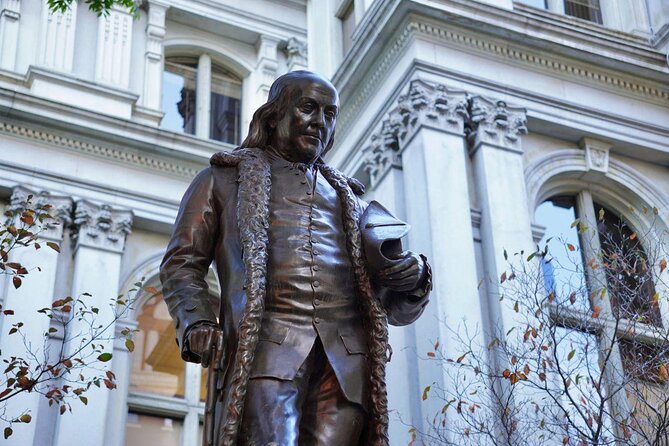
The Freedom Trail is easy to follow in theory, but Boston’s past is spread across streets, churches, graveyards, civic buildings, and old neighborhoods. A guide gives you the thread connecting those places. Instead of simply checking off a red-brick path, you can ask why a location mattered, how the city changed, and how colonial Boston became the modern city around you.
The private format is the strongest reason to choose this experience. You pay $245 for the group, not per person, for as many as 12 people. A couple will pay more per head than a full family group, but a group of six or more can find the price quite reasonable compared with separate tickets or a private guide arranged independently.
You also have more control than on a standard group walk. The guide can respond to your interests, spend more time on the Revolution, focus on architecture, or keep the pace moving if you have another plan afterward. Alan, for example, adjusted the walk around what his small group most wanted to see. That kind of flexibility is hard to get with a fixed public tour.
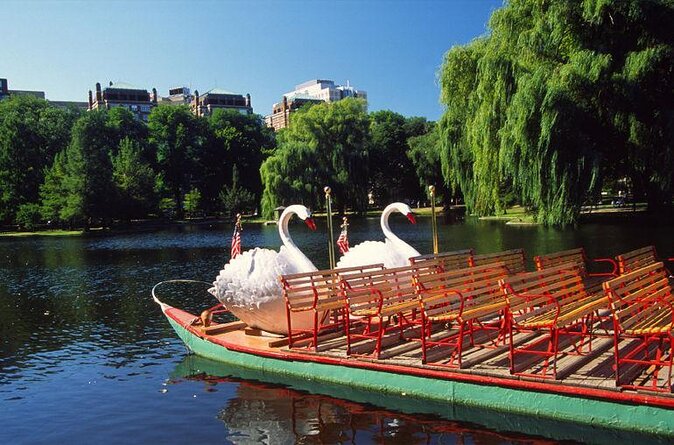
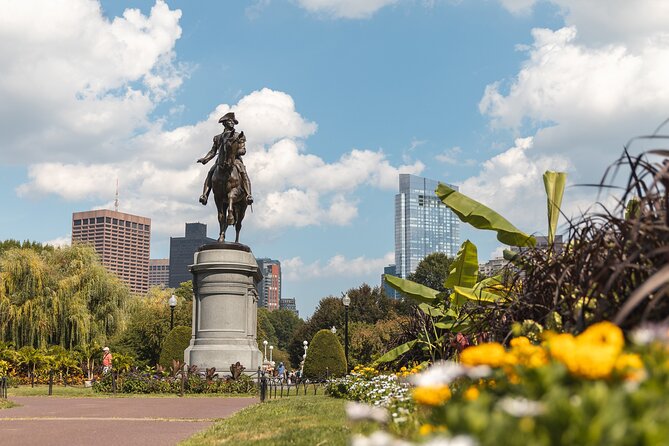
The tour begins at 1 p.m. near 191 Atlantic Avenue, close to the central waterfront and Faneuil Hall area. It ends in central Boston near Boston Public Garden, so you finish in a useful part of the city rather than returning to the starting point. Since the walk is point to point, plan your onward route before you set off.
More History Walking Tours in Boston
- Boston: Freedom Trail History Small Group Walking Tour
★ 5.0 · 6,450 reviews - Boston: Freedom Trail History Small Group Walking Tour
★ 4.9 · 1,590 reviews - Boston Pizza Lovers Food and History Walking Food Tour
★ 4.5 · 1,082 reviews
Faneuil Hall and the streets of central Boston
Faneuil Hall Marketplace provides a lively starting point, but the important thing here is the older building at its core. Faneuil Hall began as a market house and assembly room. It later became a place for major speeches and public debate, which makes it a fitting place to begin a walk about political change.
The marketplace around it now includes food stands, chain shops, and independent businesses. That mix can feel touristy, but it also helps you see how an old civic center has been adapted for modern city life. Your guide can help separate the historic Faneuil Hall from the commercial setting around it.
From here, the route moves through downtown streets and nearby historic districts. You will see how old brick buildings, narrow lanes, formal civic spaces, and modern towers share a fairly small area. This is one reason a walking tour works better than a bus tour in Boston: the transitions happen in front of you.
The exact sequence can change. Not every place named in the tour description is guaranteed to be a formal stop, so ask at the start which sights your guide plans to cover. That small conversation can help you set realistic expectations.
Granary Burying Ground and Boston’s Revolutionary names
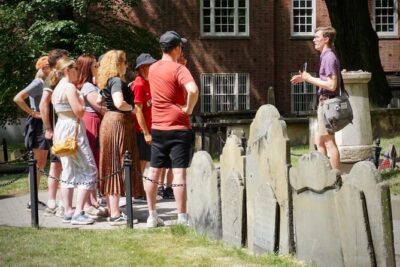
Granary Burying Ground dates to 1660 and was once part of Boston Common. It is a compact cemetery, but its importance is out of proportion to its size. The site includes the graves of John Hancock, Paul Revere, and Samuel Adams, along with other figures tied to the American Revolution.
You get about 10 minutes here as a listed stop, which is enough to see the main markers and hear the basic story. Do not expect a long, quiet cemetery visit. The cemetery sits in the middle of the city, and the surrounding streets remain part of the experience.
This is also a useful place to see how Boston turns history into a walkable sequence. A name from a schoolbook is no longer abstract when your guide points to a grave and connects it with the buildings and events you will see later.
I particularly like this stop for first-time visitors who know the famous names but not the people behind them. A good guide can add personality to the figures, including the less polished sides of men often presented as simple heroes. One particularly well-received explanation concerned John Hancock’s real personality, rather than the tidy version usually taught in class.
The North End, Paul Revere, and Old North Church
The North End brings a different mood. This historic neighborhood includes Paul Revere’s home and Old North Church, but it is also Boston’s Italian district, with cafes, restaurants, and locally roasted Beantown coffee. The mix of colonial buildings and food businesses gives the area more life than a row of museum facades.
Paul Revere’s home is a major connection to the famous midnight ride, although the tour does not promise admission inside. You should think of this part as a neighborhood walk with historical context, not a guaranteed interior visit to every building.
Old North Church dates to 1723 and is the oldest standing church building in Boston. Its role before the American Revolution makes it one of the most important stops on the route. The familiar story of lanterns in the church tower is only part of the setting. Your guide can place the church within the tense political climate of colonial Boston.
The North End is one of the best places to ask for food advice. The tour does not include meals or drinks, but the area offers plenty of choices before or after your walk. Some guides have included an informal pub stop or a drink at Beantown Pub, but treat that as a possible extra rather than a promised part of the experience.
More History Walking Tours in the USA
- Boston History Tour: Scenic Walk Through Time & Landmarks
★ 5.0 · 627 reviews - Boston’s North End Food and History Walking Tour
★ 5.0 · 459 reviews - Walk the Historic Freedom Trail with Costumed Guide
★ 4.5 · 329 reviews - Boston Seafood Lovers Food and History Walking Tour
★ 5.0 · 208 reviews
The Boston Massacre and the Old State House
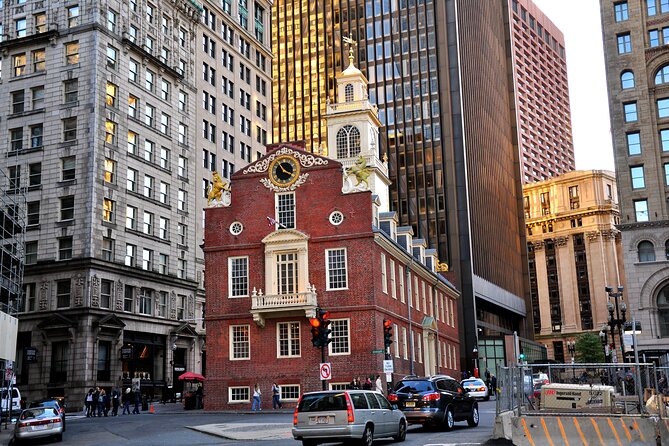
In the center of downtown, the walk reaches the Old State House and the site of the Boston Massacre. The Old State House is one of the country’s oldest public buildings and one of Boston’s most recognizable historic structures.
This stop rewards careful listening because the location carries several layers of meaning. It was a center of government, a symbol of British authority, and later a visual reminder of the growing conflict between colonists and the Crown. The nearby Boston Massacre site also shows how public memory changes. The marker was moved to keep it out of traffic, a small practical detail that makes the history feel part of a living city.
A guide is especially useful here because the modern streets can make the original setting hard to imagine. You will be standing among traffic, office buildings, and pedestrians, not inside a preserved eighteenth-century town. The best commentary helps you picture the crowd, the soldiers, and the political arguments without pretending the modern city has disappeared.
Several people have praised guides for explaining these events without piling on too many dates. Alex was noted for keeping the pace comfortable and the information manageable. That matters on a long walking tour, when a nonstop lecture can make even an interesting subject tiring.
The Massachusetts State House and Beacon Hill views
The Massachusetts State House is easy to spot by its glittering dome. Designed by Federalist architect Charles Bulfinch and completed in 1798, the building gives the walk a strong visual link between the Revolution and the early American republic.
The tour views the State House from outside. From this area, you can also look toward modern downtown, the Financial District, and the John Hancock Tower, the tallest building in New England according to the tour information. The contrast is sharp: eighteenth-century political power on one side, glass and steel on the other.
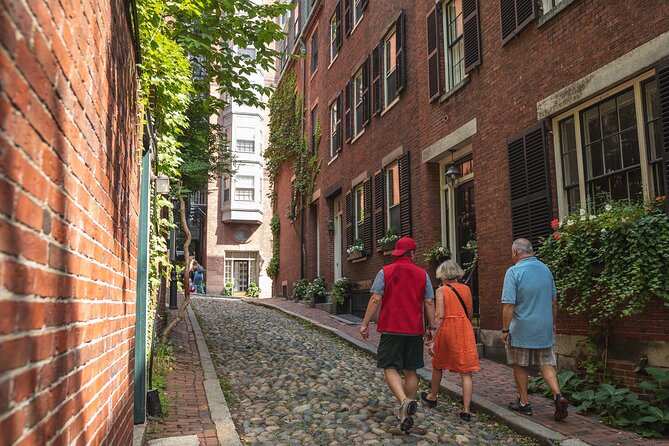
Beacon Hill adds some of Boston’s most attractive residential streets. Its brick sidewalks and carefully preserved buildings make it a favorite part of the walk, especially if you want more than military and political history. One especially pleased participant singled out the neighborhood after wanting to see it for a long time.
Beacon Hill can also slow the walk. Uneven surfaces, brick paths, and the general length of the route make good footwear important. The advice to wear comfortable shoes is not filler. You should take it seriously, particularly if you select the longer version or plan to keep exploring afterward.
The Boston Tea Party and literary Boston
The Boston Tea Party receives attention as part of the story of resistance to British rule. The tour connects that event with a church that was the largest building in Boston in 1773. That detail helps explain why churches and civic buildings mattered so much in a smaller colonial city.
You should ask your guide exactly where the group will stop for this part. The supplied route mentions the historical site, but not every location is guaranteed as a formal stop. The value here comes from the explanation and the way the event connects to the other places along the walk.
The route also passes the site of Boston’s first bookstore and a publishing connection involving Thoreau’s Walden, Hawthorne, and Longfellow. Paul Revere’s famous midnight ride enters the story again through Longfellow’s writing. This gives the tour a welcome literary turn after its focus on war and politics.
These details work best for people who like the broader story of a city. Boston is not only a place of battles and revolutionary speeches. It has also been shaped by publishing, public debate, religion, trade, food, and neighborhoods that changed use over time.
What the walk really covers
The tour promises several major subjects: the Boston Massacre, the Boston Tea Party, the Battle of Bunker Hill, Paul Revere’s home, Old North Church, and the historic center. It also refers to Long Wharf, Beacon Hill, the Seaport District, and the Boston Public Garden.
The route described in practice follows much of the Freedom Trail rather than every foot of it. That is not a problem if you want an efficient introduction, but it matters if your goal is to cover the entire official trail or visit every site inside.
The Seaport mention deserves a little caution. The experience includes city views and the food and art scene of the Seaport District in its description, yet the stated route begins near Faneuil Hall and ends at Boston Public Garden. Since the exact stops are not guaranteed, ask your guide at the beginning if Seaport is part of your planned route.
The listed duration is two to four hours. A two-hour walk can give you a clear orientation and several major sites. Four hours allows a slower pace, more questions, and extra neighborhood detail. The length may also depend on your group’s interests and the guide’s route.
Guides, pace, and the private advantage
The strongest pattern in the feedback is the quality of individual guides. Molly Mitchell is repeatedly praised for clear speaking, lively stories, and an ability to keep the group engaged while walking. Allison is described as an expert on Boston’s past who made the tour fun. Dillion is noted for humor and unusual anecdotes, while Michael is praised for covering more sights than expected in two hours.
Other named guides include Alan, Alex, Lexie, and Trey Petrella. The descriptions of these guides differ, but the useful point is that the experience depends heavily on who leads your group. A private walk gives that guide more freedom to respond to your questions, which can turn a standard route into a better fit for your group.
The pace seems suited to ordinary walkers, and one account specifically notes a comfortable two-hour timeframe. Still, this is not a seated activity. You should be ready for steady city walking and changing surfaces. Most people can take part, and service animals are allowed, but the information provided does not promise a fully step-free route.
A small private group also makes it easier to hear. You will not need to compete with a crowd or lose sight of your guide at every corner. That alone can make the history easier to follow, especially around busy downtown streets.
Price, timing, and practical value
At $245 per group of up to 12, this is a better deal for a family or friend group than for one or two people. A group of 10 pays $24.50 per person, before any optional food or drink. Two people pay $122.50 each, so they should value privacy and flexibility more than simple cost.
The tour is booked about 29 days ahead on average, which suggests that planning early is sensible for a fixed Boston visit. Confirmation arrives when you book, and the mobile ticket is convenient for a phone-based trip.
The meeting point is listed as 191 Atlantic Avenue, Boston, Massachusetts 02111, at 1 p.m. Check the current meeting details carefully before leaving your hotel. One booking went wrong because an older location appeared in the app and on the website, while the operator had changed the start point. That group received a refund, but the problem cost them the experience.
Free cancellation is available up to 24 hours before the start time. Changes or cancellations inside that window are not accepted for a refund, and the cut-off uses Boston local time.
Who should book this Freedom Trail tour?
I would choose this tour for a family, couple, or group of friends who want a private introduction to Boston without spending a full day inside museums. It is also a good first-day activity because it connects several central neighborhoods and helps you decide where to return later.
History fans will get the most from the political stories, cemetery, church, and old civic buildings. Food-focused visitors will appreciate passing through the North End, even though meals are not included. Architecture fans should enjoy the contrast between Beacon Hill, the State House, old downtown buildings, and modern towers.
I would think twice if you want guaranteed entry into every attraction, a complete end-to-end walk of the official Freedom Trail, or the lowest possible price for one or two people. In those cases, a self-guided walk or a public group tour may cost less, though you give up the chance to shape the experience around your own questions.
Should you book it?
Book this private walk if you value a flexible route, direct access to a guide, and a comfortable way to connect Boston’s most important historic sites. The strongest guides bring humor, clear storytelling, and local detail, while the small group keeps the experience personal.
Before booking, confirm the Atlantic Avenue meeting point and ask which stops are planned, especially if the Seaport or a full Freedom Trail route matters to you. With that check made, the tour offers good value for a medium-sized group and a useful first look at Boston’s old center.
FAQ
How much does the Boston History and Freedom Trail Private Walking Tour cost?
The tour costs $245 per group, with up to 12 people included.
How long does the tour last?
The walk lasts approximately two to four hours. A two-hour version has been described as a comfortable way to cover the central sights.
What time does the tour start?
The stated start time is 1 p.m.
Where does the tour begin?
The listed starting point is 191 Atlantic Avenue, Boston, Massachusetts 02111, near central Boston and the Faneuil Hall area.
Where does the tour end?
The tour ends in central Boston near Boston Public Garden.
Is this a private tour?
Yes. Only your group takes part, with up to 12 people included in the group price.
What sights are included?
The experience includes historical locations connected with the Boston Massacre, Boston Tea Party, and Battle of Bunker Hill. It also includes Paul Revere’s home and Old North Church in the North End, along with central Boston sights.
Are food and drinks included?
No. Additional food and drinks are not included. A pub or drink stop may occur, but it is not presented as a guaranteed inclusion.
Can I cancel for a full refund?
Yes, if you cancel at least 24 hours before the local start time. Cancellations or changes made less than 24 hours before the start are not accepted for a refund.
More Private History Tours in Boston
- Private Historical Walking Tour of York
★ 5.0 · 1,324 reviews - Istanbul: Acemoglu Historical Turkish Bath w/Private Options
★ 4.6 · 1,190 reviews - From Cairo: Private Full-Day Tour of Historical Alexandria
★ 4.1 · 1,155 reviews - Porto: Private Tour of the Historic City in a Ford T Car
★ 4.8 · 932 reviews
More Private History Tours in the USA
- Boston: Food and History of The Freedom Trail Private Tour
★ 5.0 · 159 reviews - Private Guided Historic Electric Cart Tour of St. Augustine
★ 5.0 · 1,194 reviews - Private Tour of Savannah’s Historic/Victorian Districts & Bonaventure Cemetery
★ 5.0 · 418 reviews - Gettysburg: Private Tour with Licensed Battlefield Guide
★ 5.0 · 362 reviews
Just added around Boston
- Boston’s North End History + Photo Walking Tour (SMALL Group)★ 5.0 · 27 reviews
- Boston’s Architecture, History + Photo Walking Tour (SMALL Group)★ 5.0 · 91 reviews
- Freedom Trail Guided Walking Tour (SMALL GROUP)★ 4.5 · 98 reviews
- Haunted Boston’s Historic Streets Walking Guided Tour★ 4.5 · 184 reviews
- Boston: Underground Railroad History Tour of Beacon Hill★ 5.0 · 141 reviews
- Beacon Hill Boston History + Photo Walking Tour (SMALL Group)★ 5.0 · 163 reviews
- A Taste of the Freedom Trail: Boston’s Iconic Food & History Tour★ 5.0 · 32 reviews
- Boston: Food and History of The Freedom Trail Private Tour★ 5.0 · 159 reviews
Boston History Tours, compared.
Boston: Freedom Trail History Small Group Walking Tour
Read our review →
Tour of Historic Fenway Park, America’s Most Beloved Ballpark
Read our review →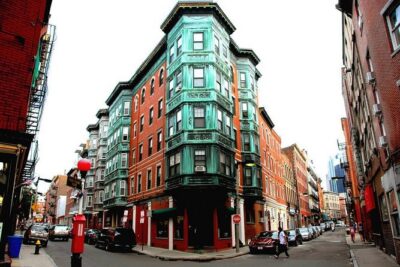
Boston Food & History: Pizza, North End & Freedom Trail
Read our review →Boston: Freedom Trail History Small Group Walking Tour
Read our review →
City Cruises Boston Historic Sightseeing Harbor Cruise
Read our review →
Boston Pizza Lovers Food and History Walking Food Tour
Read our review →
Boston Freedom Trail History Pub Crawl Small-Group Tour
Read our review →
Boston City View Bicycle Tour: History and Landmarks
Read our review →Browse the lists this tour appears in