
Review · BOSTON
Boston: Tour of The Freedom Trail with Historic North End
Boston’s Freedom Trail makes more sense when a lively guide connects the red-brick path to the people, arguments, and risks behind the American Revolution. This 1.3-mile walking tour starts at Boston Common, covers the central trail, then continues into the North End, a useful addition that many shorter walks skip.
I like the costumed interpreters and the strong storytelling. Guides such as Elena, known as Mother Goose, Jeremiah Poole, Steve, Ben, and Catherine have been praised for keeping history light, clear, and entertaining. I also like the price: at $26 per person, you get nearly two hours of live narration without paying admission fees for attractions you may not wish to enter.
The main trade-off is time. A guide who tells a full story at every stop may leave less time for the final North End sights. One account also noted that Paul Revere’s House was missed, so confirm the day’s route and keep your expectations flexible.
Key points to know before you book
- The North End is the special addition: This walk goes beyond the standard central Freedom Trail and continues toward Paul Revere’s House and Paul Revere Mall.
- Costumed guides make the past easier to follow: Historical interpreters use character, humor, and live narration rather than simply pointing out buildings.
- You see the central Boston landmarks in one compact walk: Boston Common, the State House, burial grounds, the Old State House, the Boston Massacre Site, and Faneuil Hall all fit into the route.
- The tour is mostly about listening outdoors: You walk between stops, then pause for stories, so comfortable shoes and weather-ready clothing matter.
- It is not the full Freedom Trail: Charlestown is not included, and admission inside museums or historic buildings costs extra.
- Plan for up to two hours: The stated duration is 105 minutes, but the activity notes that it can last longer.
Starting at Boston Common with a colonial guide
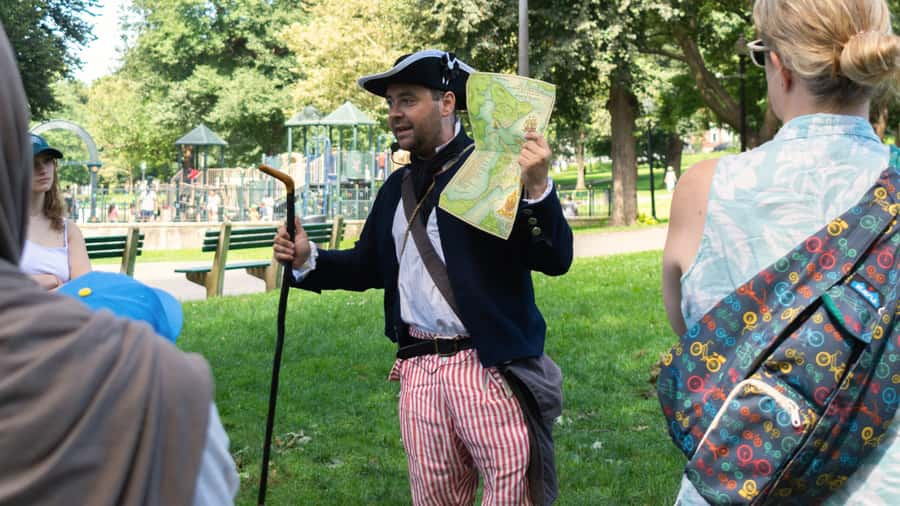
Meet at 139 Tremont Street, the Boston Common Visitor Center. Arrive 15 minutes early. The group leaves on time, and the central location is easy to pair with a day in downtown Boston.
Your guide appears in colonial dress and leads the group into Boston’s early story. The costume is not just decoration. It gives the tour a clear voice and helps separate this walk from a self-guided stroll along the painted trail markers.
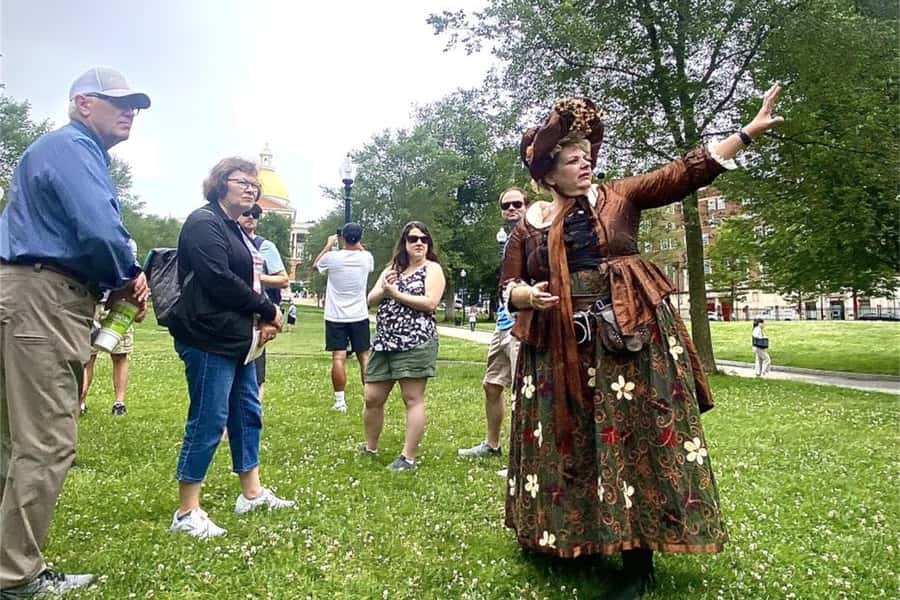
The strongest guides bring humor and a sense of theater to the job. Steve has been praised for staying in character even on a cold day. Elena, called Mother Goose, uses expressive storytelling. Jeremiah Poole is known for keeping a large group engaged, while Catherine has handled small groups with warmth and attention.
That range matters. A tour with 50 people needs a strong voice and careful positioning. A small group can feel more personal, but the experience depends heavily on who leads it that day. The company uses several interpreters, so you cannot choose a particular guide unless the booking system says otherwise.
More History Tours in Boston:
- Boston: Freedom Trail History Small Group Walking Tour
★ 5.0 · 6,450 reviews - Tour of Historic Fenway Park, America’s Most Beloved Ballpark
★ 4.5 · 3,013 reviews - Boston Food & History: Pizza, North End & Freedom Trail
★ 5.0 · 1,772 reviews
Boston Common and the Massachusetts State House
Boston Common is a fitting starting point. This first public park gives you room to gather before the narrow streets and crowded historic sites begin. The guide uses the opening section to set up Boston’s colonial story and explain how the major places ahead fit together.
From here, the walk passes the Massachusetts State House. You get a photo stop and an outside account rather than an interior visit. The gleaming gold dome is one of Boston’s easiest landmarks to recognize, but the value of the stop comes from linking the current seat of state government to the city’s older political life.
The tour then reaches Park Street Church. You will hear about its place in the city and see how closely modern Boston sits beside its colonial-era core. The route is short, but the stop-and-listen format means you are not simply marching from one attraction to the next.
Granary Burying Ground and the people behind the story
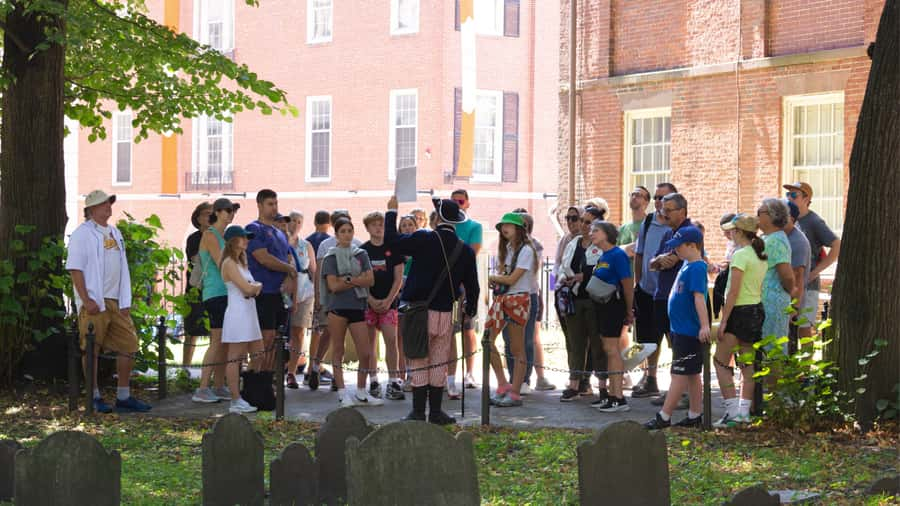
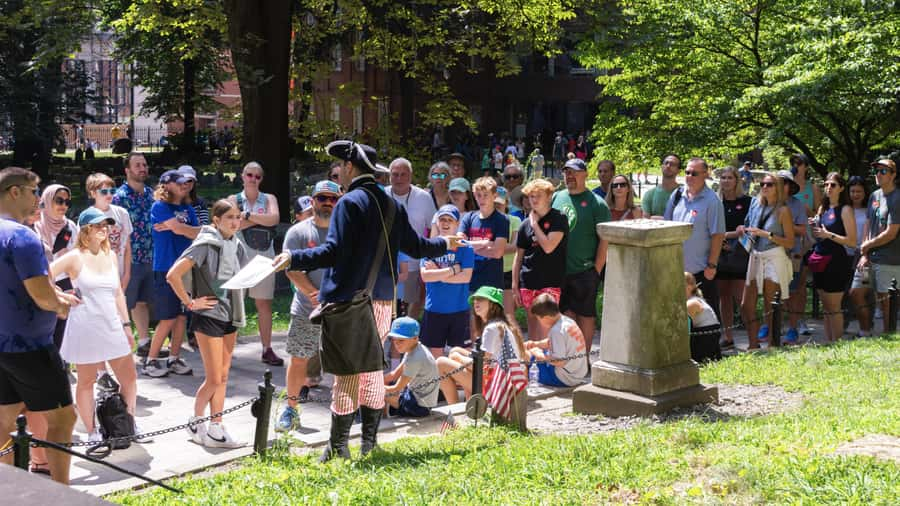
Granary Burying Ground is one of the most important stops for understanding the people attached to Boston’s revolutionary period. The tour discusses the American forefathers buried there, giving names and personal stories more weight than a quick look at the old stones would provide.
This is also where the walking format helps. A guide can point out the burial ground, frame its importance, and explain why the site matters before you continue. You do not need to enter a museum to get a useful historical introduction.
The route also passes King’s Chapel Burying Ground. Some visitors may find the number of names and dates hard to sort out, especially if American colonial history is new to them. The guide’s job is to make those connections clear, but one account found the material easier for Americans already familiar with the basic story than for visitors from abroad.
If you are new to the subject, listen for the broad thread first: Boston’s religious disputes, political arguments, and public protests all fed into the larger conflict with Britain. You can fill in names and dates later.
Boston Latin School and Franklin’s young-city story
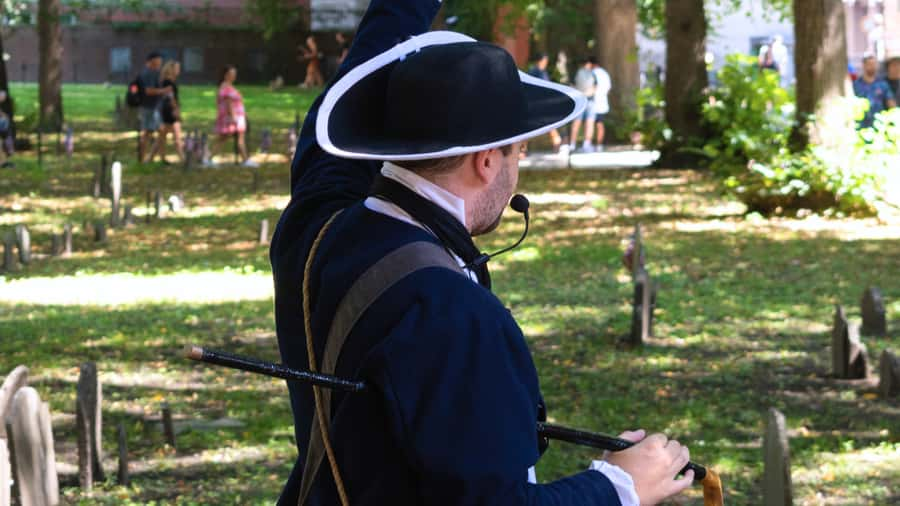
The next section includes Boston Latin School and the statue of Benjamin Franklin. You receive a photo stop, an outside visit, and more guided explanation.
These sights are useful because they broaden the tour beyond battles and famous speeches. The Freedom Trail is also about education, civic life, and the people who shaped Boston before independence. Benjamin Franklin’s statue gives the guide a natural opening to discuss ambition, learning, and the city’s role in colonial America.
The stop is compact, so do not expect a long visit or a museum-style presentation. Its value comes from the connections your interpreter draws between the places you see.
Same city, a different century:
- Boston: Freedom Trail History Small Group Walking Tour
★ 4.9 · 1,590 reviews - City Cruises Boston Historic Sightseeing Harbor Cruise
★ 4.5 · 1,388 reviews - Boston Pizza Lovers Food and History Walking Food Tour
★ 4.5 · 1,082 reviews - Boston Freedom Trail History Pub Crawl Small-Group Tour
★ 5.0 · 996 reviews
Old Corner Book Store and the Old South Meeting House
The Old Corner Book Store adds another layer to the route. You see the historic building from outside and hear why it belongs on this walk through Boston’s past. It is an easy stop to overlook when you are focused on larger landmarks, which is one reason a guide helps.
The Old South Meeting House carries more direct revolutionary importance. It was a gathering place for colonists, including the large meeting that preceded the Boston Tea Party. The guide explains the pressure building in the city and the public arguments that led to action.
This is one of the better places to slow down and listen. The story is not just a list of events. It shows how protest grew from meetings, speeches, and disputes over authority. If your guide spends extra time here, you may gain a clearer picture of why Boston became such a powerful symbol of resistance.
The possible drawback is pacing. Some guides tell long stories at each landmark, and that can leave less time for later stops. I would rather hear a good account than rush past the meaning of the place, but you should know that the full North End portion may feel tighter if the group lingers.
Old State House and the Boston Massacre Site
The Old State House is one of the route’s most striking buildings. The tour visits the exterior and explains its role in Boston’s colonial government. Its position among modern streets makes the city’s layers easy to see: old political power surrounded by a busy downtown.
Just outside is the Boston Massacre Site. Here the guide deals with one of the events used by revolutionary leaders to turn public anger against British rule. The physical marker is small, so the story does much of the work.
This stop shows why a live interpreter can be worth paying for. A plaque gives you the date and basic event. A strong guide explains how the event was presented to the public and why the story had such force. The best interpreters keep the account lively without losing the serious side of the subject.
Crowds and street noise can affect this part of the walk. One account noted that some locations were too crowded to hear every word. Stay near the guide, and do not hesitate to ask for a repeat if the group moves on before you catch an important detail.
Faneuil Hall and the turn toward the North End
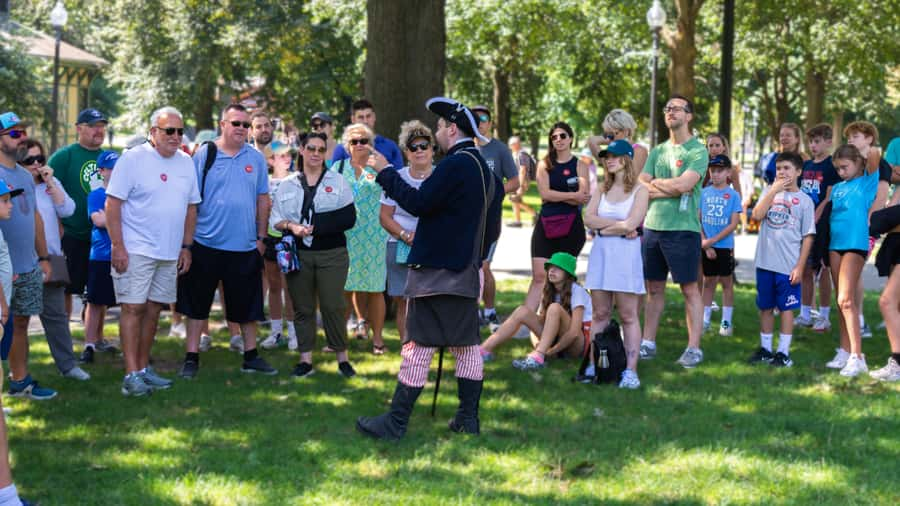
Faneuil Hall is the central section’s grand finish. The tour includes a photo stop and guided visit, but admission inside attractions is not included. The building is one of Boston’s best-known public meeting places, and the guide uses it to bring the earlier political story toward the revolution itself.
Faneuil Hall can be crowded, especially around the market area. It is worth keeping your group in sight and listening carefully before the route turns toward the North End.
This is where the tour earns its extra value over a basic central Freedom Trail walk. Many short versions finish around Faneuil Hall. This experience continues into the North End, where the streets become narrower and the revolutionary story moves closer to Paul Revere.
Paul Revere’s House and Paul Revere Mall
The North End section leads toward Paul Revere’s House and Paul Revere Mall. You receive outside commentary and photo opportunities, but the entry fee for Paul Revere’s House is not included. If you want to go inside, plan to pay separately.
The neighborhood adds a more personal feel to the route. Instead of only hearing about public speeches and major protests, you get closer to the homes and streets tied to an individual figure of the revolution. The walk ends in the Paul Revere Mall area according to the route description.
There is an important practical wrinkle here. The itinerary lists Paul Revere’s House and Paul Revere Mall, while the meeting information says the activity ends back at the meeting point. One account also reported not reaching Paul Revere’s House, likely because the guide spent longer at earlier stops. Ask your guide at the start where the group will finish that day, especially if you have dinner plans in the North End or need to return to Boston Common.
The stated duration is 105 minutes, but the activity advises allowing up to two hours. That is sensible. You are walking, stopping, listening, regrouping, and dealing with busy public spaces. Do not schedule a train, show, or restaurant reservation immediately afterward.
What the $26 price really buys you
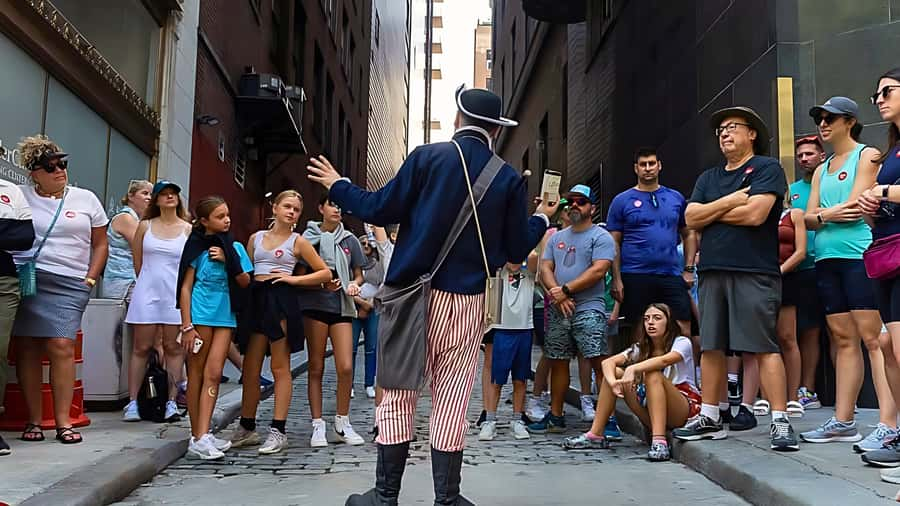
At $26, this is a fair buy for a first visit to Boston. The price covers the costumed colonial guide, historical interpretation, and live English narration. It does not cover entry into museums or historic buildings, so you are paying for the guided route and storytelling rather than a package of admissions.
I see the main value in the context. You can walk much of the Freedom Trail on your own, but you may miss why one site follows another. A good guide turns a string of buildings into a connected story and points out details you might otherwise pass without noticing.
The value is strongest if you are visiting Boston for the first time, traveling with children or teenagers, or prefer history delivered aloud rather than read from signs. It can also help visitors from outside the United States who want the basic revolutionary story explained in plain language.
The value is less clear if you want to enter several attractions, move at your own pace, or spend a long time photographing each site. Since admissions are extra, a museum-focused day will cost more. This tour works best as an orientation, followed by independent visits to the places you most want to see inside.
Walking comfort, weather, and group size
The route covers about 1.3 miles, but distance is only part of the effort. You stand while the guide speaks, sometimes for several minutes at a time. One account found the walking manageable but warned that people who have trouble standing may find the tour tiring.
Wear comfortable shoes. Bring clothing suited to the weather. The tour runs in rain, and guides have continued through wet conditions, but a rainy day can make listening and photography less pleasant.
The activity is wheelchair accessible, though the practical experience can still be affected by crowded sidewalks and historic surroundings. If you need specific route details, ask before booking.
Group size can vary. Some departures may feel almost private, while others can be large. One large group still heard the guide well because Jeremiah made an effort to project his voice, but another account found street crowds made parts of the talk hard to hear. If you prefer quiet, close access to the guide, a smaller departure is worth seeking when available.
Who should book this Freedom Trail walk?
I would choose it for a first Boston visit, especially if you want the major central sights plus a taste of the North End in one sitting. Families may appreciate the humor and costumes, and history fans will enjoy the extra stories about the revolutionary period.
It also suits anyone who finds self-guided historic walks a little flat. The guides use character, jokes, period clothing, and sometimes musical touches such as the fife playing one guide brought to the route. Those details make the experience easier to remember.
I would think twice if you dislike group tours, need to control every minute, or want a full visit inside Paul Revere’s House and the other landmarks. This is an outdoor storytelling walk, not an admission-heavy museum tour.
Should you book it?
Book this tour if you want a lively introduction to Boston’s central Freedom Trail and the North End for $26. The strongest reason to choose it is the guide: interpreters such as Elena, Jeremiah Poole, Steve, Ben, and Catherine have shown that a good storyteller can make familiar landmarks feel new.
Keep the timing flexible, arrive early, wear good shoes, and confirm the final stop. If Paul Revere’s House is essential to your plans, ask directly whether that stop will be reached and allow up to two hours. With those expectations, this is a practical, fairly priced way to get your bearings and hear the human stories behind Boston’s most famous historic sites.
FAQ
Where does the tour start?
It starts at 139 Tremont Street, Boston, Massachusetts 02108, at the Boston Common Visitor Center.
How early should I arrive?
Arrive 15 minutes before the activity begins. The tour leaves on time.
How long does the tour last?
The stated duration is 105 minutes. You should allow up to two hours because the actual timing can vary.
What language is the tour conducted in?
The live tour is conducted in English.
Is the tour guided?
Yes. A costumed colonial guide provides live narration and historical interpretation throughout the walk.
Does the tour enter the historic attractions?
Admission inside museums and attractions is not included. The tour provides guided visits, outside commentary, and photo stops along the route.
Does the tour include Paul Revere’s House?
The route is designed to continue toward Paul Revere’s House and Paul Revere Mall, but one account reported that the house was missed because of pacing. Confirm the day’s exact route with the guide.
Does the tour include Charlestown?
No. The activity covers the standard central section of the Freedom Trail and continues into the North End, but it does not cover Charlestown.
Is the tour wheelchair accessible?
Yes, the activity is listed as wheelchair accessible.
What should I bring?
Bring comfortable shoes and clothing suited to the weather. This is an outdoor walking tour with periods of standing while the guide speaks.
Just added around Boston
- Boston’s North End History + Photo Walking Tour (SMALL Group)★ 5.0 · 27 reviews
- Boston’s Architecture, History + Photo Walking Tour (SMALL Group)★ 5.0 · 91 reviews
- Freedom Trail Guided Walking Tour (SMALL GROUP)★ 4.5 · 98 reviews
- Haunted Boston’s Historic Streets Walking Guided Tour★ 4.5 · 184 reviews
- Boston: Underground Railroad History Tour of Beacon Hill★ 5.0 · 141 reviews
- Beacon Hill Boston History + Photo Walking Tour (SMALL Group)★ 5.0 · 163 reviews
- A Taste of the Freedom Trail: Boston’s Iconic Food & History Tour★ 5.0 · 32 reviews
- Boston: Food and History of The Freedom Trail Private Tour★ 5.0 · 159 reviews
Boston History Tours, compared.
Boston: Freedom Trail History Small Group Walking Tour
Read our review →
Tour of Historic Fenway Park, America’s Most Beloved Ballpark
Read our review →
Boston Food & History: Pizza, North End & Freedom Trail
Read our review →Boston: Freedom Trail History Small Group Walking Tour
Read our review →
City Cruises Boston Historic Sightseeing Harbor Cruise
Read our review →
Boston Pizza Lovers Food and History Walking Food Tour
Read our review →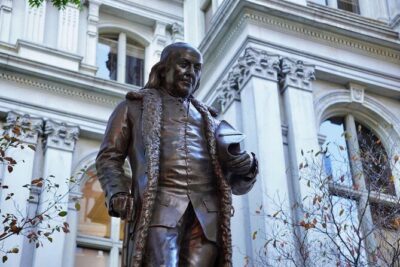
Boston Freedom Trail History Pub Crawl Small-Group Tour
Read our review →
Boston City View Bicycle Tour: History and Landmarks
Read our review →Browse the lists this tour appears in