
Review · HISTORY TOURS
Buenos Aires: La Boca Art and History Walking Tour
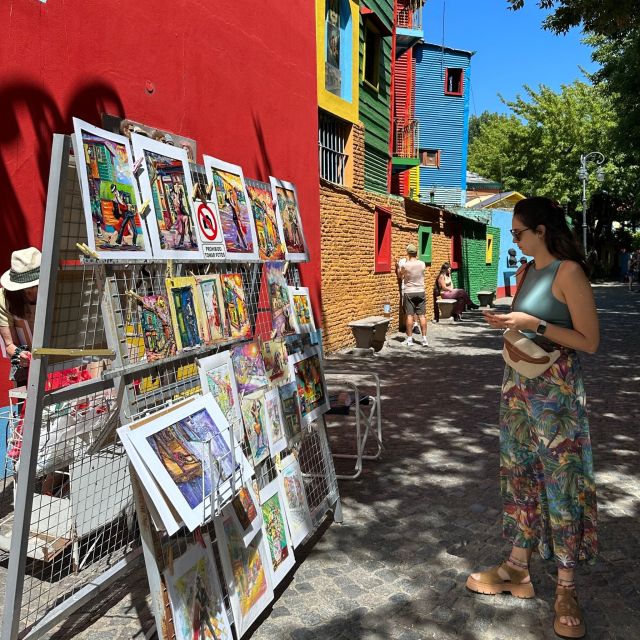
La Boca is more than colorful walls and tango poses. This 150-minute walk connects the neighborhood’s working-class roots, immigrant communities, Benito Quinquela Martín’s art, and the emotional force of Boca Juniors football. I like that it looks past the famous painted streets, and I like the way the tour links art with ordinary neighborhood life. The main drawback is that La Boca’s appeal is concentrated in a fairly small area, so travelers wanting a broad Buenos Aires walking tour will need something else.
I also like the human scale of the experience. Guides such as Facundo, Laura, Rafa, Dani, Frani, and Francisco have been praised for clear storytelling and friendly help, with strong English reported more than once. You should confirm your date at least 24 hours ahead, especially if you are traveling alone, since solo bookings require direct confirmation with Baires Experience.
Key points at a glance
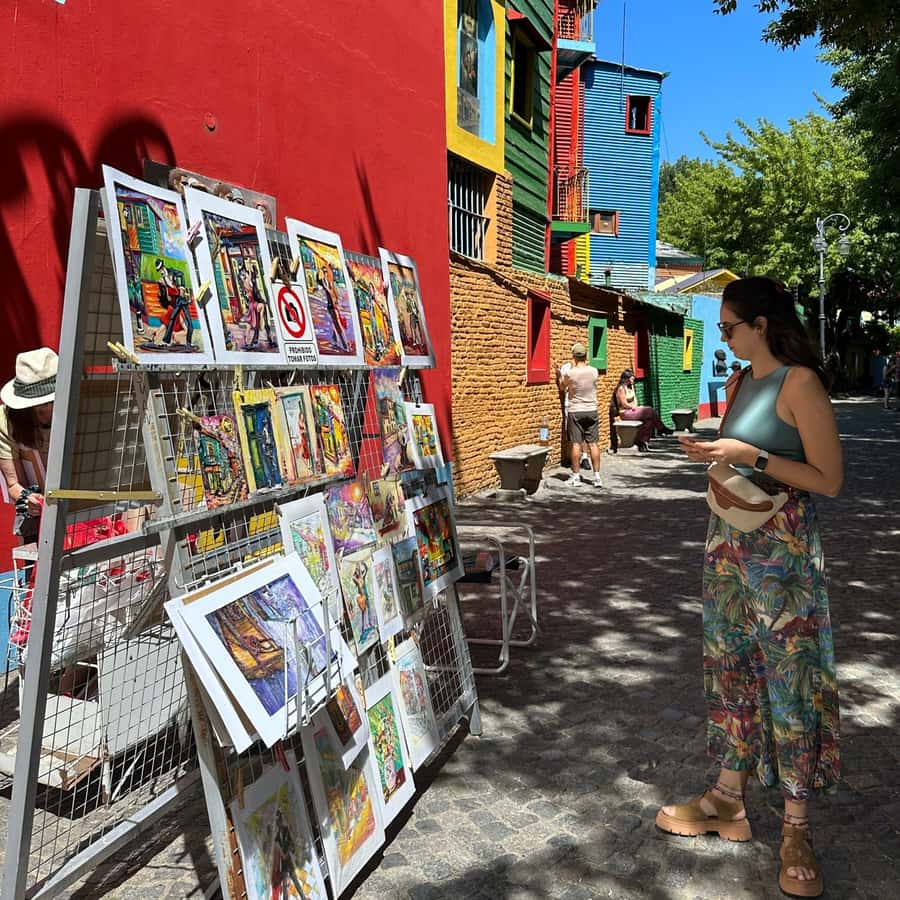
- Quinquela Martín’s La Boca: Learn how one local artist shaped the neighborhood’s public image and supported its cultural life.
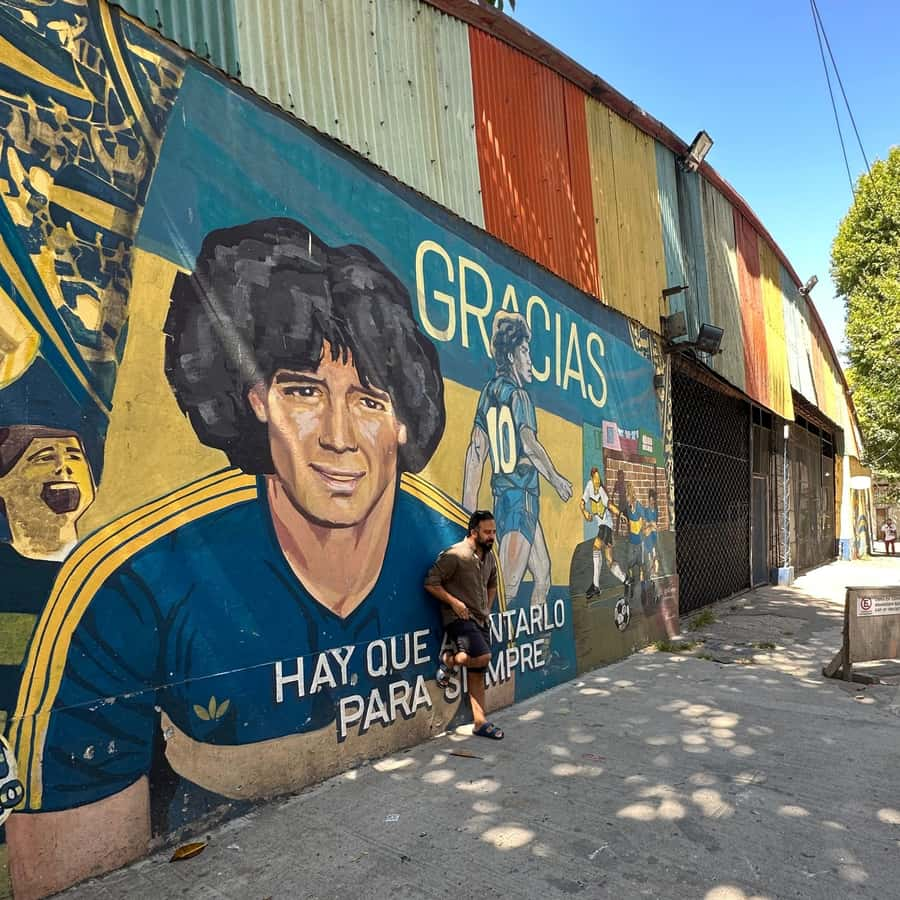
- Football at La Bombonera: Stop outside Boca Juniors’ famous stadium for photographs and an introduction to Argentina’s football passion.
- A working-class story: Look beyond the painted façades to immigration, labor, and the social roots of La Boca.
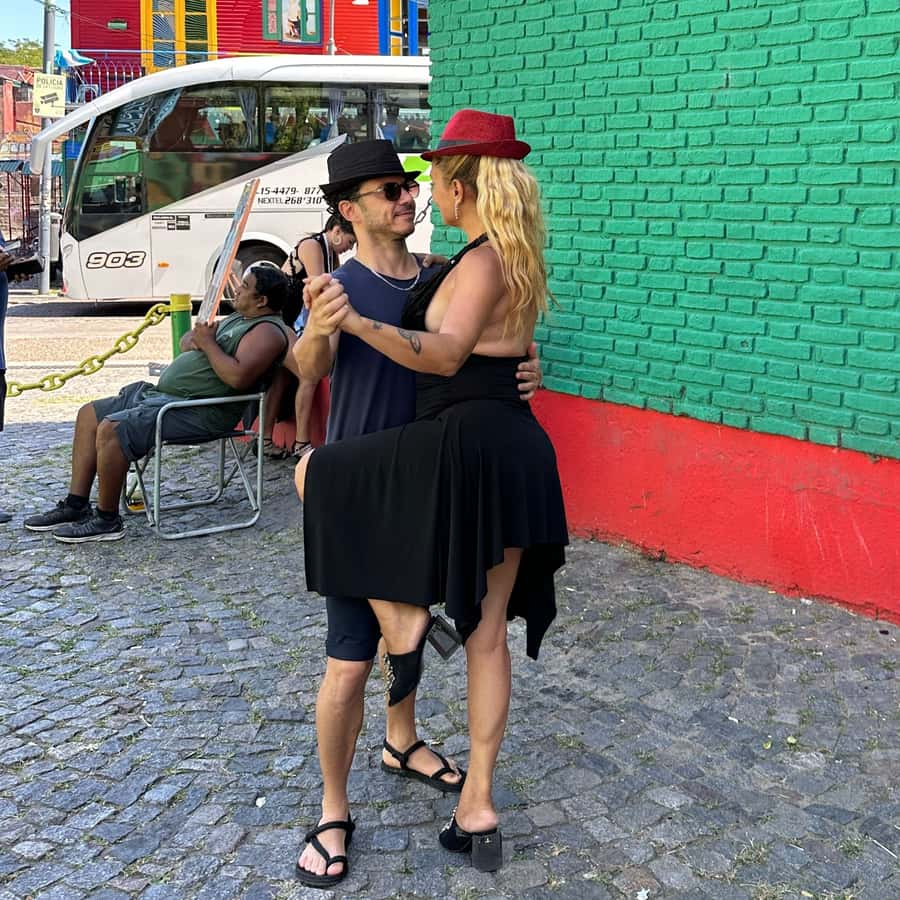
- Tango in its setting: See how dance, music, street life, and the neighborhood’s identity fit together.
- Two included extras: The $46 price includes the walking tour, guide, and two of three options: museum admission, wine tasting, or dulce de leche tasting.
- Short, focused format: The route lasts 150 minutes, making it easy to fit into a Buenos Aires itinerary.
Why La Boca deserves more than a quick photo stop
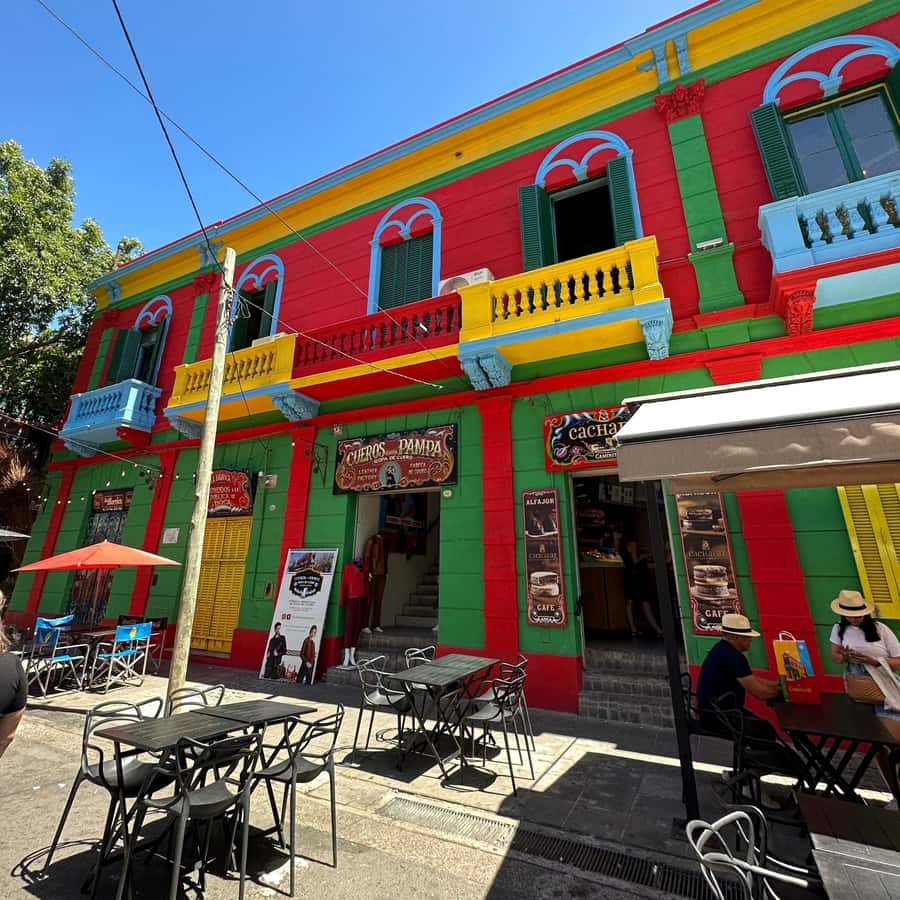
Many people first meet La Boca through its bright buildings, tango performers, and football references. Those sights are memorable, but they can make the neighborhood seem like a decorated stage. I value this tour because it gives you the background needed to read what you are seeing.
La Boca grew from working-class and immigrant roots, and the walk places those stories alongside its art. You will hear about the people and forces that shaped the area, not just the colors that now draw visitors. That gives the streets more meaning.
The tour also helps you understand why Benito Quinquela Martín matters. He was not simply an artist whose paintings happen to appear in a museum. His connection to La Boca and his effect on its public identity are central to the experience. The route introduces his work and the Riachuelo Art movement as part of the neighborhood’s wider cultural story.
I would choose this tour if you want context, not just photographs. If your interest is limited to tango shows or football stadium visits, the walk may feel broader than you need.
More History Walking Tours in the world:
- History and Hauntings of Salem Guided Walking Tour
★ 5.0 · 14,564 reviews - Lisbon: History, Stories and Lifestyle Walking Tour
★ 4.8 · 10,902 reviews - Amsterdam: Life of Anne Frank and World War II Walking Tour
★ 4.8 · 10,467 reviews
Meeting the guide at the Benito Quinquela statue
The walk begins at the Benito Quinquela statue on Avenida Don Pedro de Mendoza 1921. This is a useful starting point because the artist gives the tour an immediate theme, rather than beginning with a generic neighborhood introduction.
Your guide speaks Spanish, English, or Portuguese. The individual guides named in the feedback include Facundo, Juan, Rafa, Laura, Dani, Frani, Francisco, Loli, Ludmila, and Danielle. The strongest pattern is not one particular guide but the care taken with explanation, timing, and communication. Facundo was praised for excellent English, Rafa for helping with the meeting point, and Francisco for keeping the information well paced.
That matters on a walking tour. La Boca has plenty of visual distractions, and a guide who simply lists dates can lose you quickly. The best part of this format is the chance to ask questions as you go and connect the buildings, paintings, and stories in front of you.
Bring your passport or identity card. The tour is listed as wheelchair accessible, though the experience still takes place on foot and lasts two and a half hours.
Reading La Boca through immigration and working life
The first main part of the walk explores La Boca itself. Expect a guided stroll through streets and points of interest tied to immigration, working-class life, art, and local identity.
I like this part because it corrects a common mistake. It is easy to treat La Boca as a color palette. The tour instead explains why the neighborhood developed its particular character and how people, work, and movement shaped it.
You should expect the guide to use the streets as a classroom. That means the experience is more about interpretation than entering a long list of major monuments. You may spend time looking at façades, public art, shops, and landmarks while the guide explains their place in the neighborhood.
The route is also a good setting for learning about tango. The advertised focus is not a full tango lesson or a stage performance. Instead, you get a sense of tango as part of La Boca’s atmosphere and cultural identity. The promise of feeling the motion of tango is best understood as a connection between the dance and the streets around you.
The colorful conventillo and everyday La Boca
A visit to Museo Conventillo El Rincon de Lucia adds a more intimate stop to the walk. The word conventillo is tied to the shared housing associated with immigrant and working-class life, so this visit helps put the neighborhood’s social story into a physical setting.
This is one of the more useful stops for anyone who wants to understand how La Boca became what it is. Paint and public art can make the area look cheerful and simple. A conventillo points toward the crowded, communal, and practical side of neighborhood life.
The exact details of the museum visit are not specified, so I would not expect a long formal museum tour. Think of it as one stop within a larger walking experience. Its value comes from contrast: you move from outdoor color and football references to a place connected with daily life and housing.
If you have limited mobility, the activity is advertised as wheelchair accessible. Still, you may want to confirm the specific access arrangements for each stop before booking, since the tour includes streets and multiple venues.
More History Tours in the world:
- Prague: Medieval Dinner with Unlimited Drinks
★ 4.4 · 19,847 reviews - Pompeii: Entry Ticket and Guided Tour with an Archaeologist
★ 4.8 · 19,459 reviews - Athens: Acropolis & up to 5 Archaeological Sites Combo Pass
★ 4.2 · 13,904 reviews - Colosseum: Underground and Ancient Rome Tour
★ 4.7 · 12,691 reviews
Benito Quinquela Martín and the Riachuelo Art movement
The Benito Quinquela Martín Museum is the artistic heart of the route. The visit gives you a chance to connect the artist’s work with the neighborhood he helped define.
Quinquela Martín’s importance here is both artistic and civic. The tour presents his effect on La Boca and introduces the Riachuelo Art movement, allowing you to see local art as something rooted in place rather than as an isolated museum subject.
I especially like this stop for visitors who have already seen Caminito and want to know why the imagery of La Boca became so powerful. The museum gives that visual identity a human source and a local setting.
The package includes the walking tour and guide, plus two of three options: Benito Quinquela Museum admission, a free wine tasting, or a dulce de leche tasting. Because the wording does not state which two are assigned to every booking, confirm the exact combination before you pay. If the museum is your priority, ask directly whether admission is part of your booking.
That small bit of planning matters. At $46 per person, the price is reasonable when your two extras match your interests. It is less compelling if you expect all three options, so do not assume that museum entry, wine, and dulce de leche are all included.
La Bombonera and the emotional side of football
The stop at La Bombonera is listed as a photo stop and sightseeing visit. You should expect to see Boca Juniors’ stadium from the route, not a full stadium tour or match experience.
Even so, this stop adds an important piece of La Boca. Football here is not treated as a side note. It is part of the neighborhood’s identity, and the guide can explain the passion surrounding Boca Juniors in a way that a quick photograph cannot.
Rafa was specifically praised for including soccer in his explanations, and several guides were valued for connecting local details with the wider story of Argentina. I would treat the stadium stop as a short but useful counterpoint to the art museums and tango references.
The stadium may be the most immediately exciting sight for football fans. For everyone else, it still helps explain why La Boca has such a strong public identity. Just keep your expectations realistic: this is a sightseeing stop with time for photographs, not a match-day experience.
How the 150-minute pace works
Two and a half hours is enough time to cover the main themes without turning the outing into an exhausting half-day walk. The route begins at Avenida Don Pedro de Mendoza 1921 and finishes nearby at Avenida Don Pedro de Mendoza 1835, so it remains focused on La Boca.
I see the compact route as an advantage. You spend less time moving between distant parts of Buenos Aires and more time on the neighborhood’s art, buildings, football, and social story. The tradeoff is that the tour will not cover the whole city or provide a broad introduction to Buenos Aires.
The pace also depends on your guide. The strongest comments about this experience point to guides who tell stories clearly, answer questions, and time their explanations well. Francisco was praised for keeping the information engaging and well paced, while several guests described the guide as feeling like a friendly local companion.
For the best experience, wear comfortable shoes and arrive at the statue with your identification. The supplied information does not state group size, so ask Baires Experience if that affects your choice. The tour operates only for bookings made at least 24 hours in advance.
What the $46 price really covers
At $46 per person, this is not the cheapest way to see La Boca. You are paying for more than a self-guided walk, though. The cost includes a live guide, a planned route, museum or tasting benefits depending on the two selected options, and interpretation that ties separate sights together.
I think the price makes the most sense for first-time visitors who want a clear explanation of the neighborhood. It is also useful if you are uneasy about missing the meeting point or want support in English, Portuguese, or Spanish.
The value is weaker for independent travelers who are happy to see only the colorful streets, take photographs, and visit La Bombonera from outside. You could spend less by walking on your own, but you would lose the explanations about immigration, Quinquela Martín, the Riachuelo Art movement, and the social meaning of the area.
The tastings can add a pleasant local flavor, but they should not be the reason you book. The tour’s real value is the guide’s interpretation. Wine and dulce de leche are extras, while the art and neighborhood stories are the main event.
Which guide style suits you best
The guide names vary by date, so you cannot safely choose the experience based on one particular person. Still, the available feedback points to a consistent style: warm, approachable guides who explain La Boca in clear language and adjust their presentation to the group.
Facundo was praised for excellent English and an easy manner. Rafa helped with meeting-point directions before the walk. Laura was described as friendly and strong on the neighborhood’s art and history, while Frani was especially valued for placing La Boca within the wider story of Argentina.
That range is useful if you are comparing tours. You are not simply buying access to a place. You are choosing a guided interpretation, and the guide’s ability to tell stories will shape the day.
Solo visitors should contact Baires Experience by email or WhatsApp before or after booking to confirm that the tour will operate on the chosen date. The same advice is sensible for anyone with a tight schedule.
Who should book this La Boca walk
I would recommend it to first-time visitors who want more than the standard colorful-street photograph. It suits art lovers, football fans, and anyone curious about immigration and working-class Buenos Aires.
It also works well for visitors who prefer a compact cultural activity. The 150-minute duration leaves room for other plans, and the route stays centered in La Boca.
Families and mixed-interest groups may also find the combination useful. One person can focus on football, another on art, and another on tango or local food. The walk gives each theme a place without making the entire experience about just one of them.
I would hesitate if you want a long museum visit, a football stadium tour, or a full tango performance. None of those is the central promise here. This is a neighborhood walk with short visits and a broad cultural focus.
Should you book it?
Book this tour if you want La Boca explained rather than simply photographed. The strongest reasons are the Quinquela Martín focus, the visit to Conventillo El Rincon de Lucia, the La Bombonera stop, and the chance to connect art, immigration, tango, and football in one compact route.
At $46, it is good value when you use the included guide and two extras, especially if you want help in English, Spanish, or Portuguese. Confirm which two extras are included, and contact Baires Experience at least 24 hours ahead if you are traveling alone.
Skip it if your only goal is a quick visit to the colorful streets or a stadium photo. For everyone else, this is a thoughtful way to see the social and artistic side of La Boca, not just its postcard surface.
FAQ
How long does the La Boca Art and History Walking Tour last?
The tour lasts 150 minutes, or two and a half hours.
How much does the tour cost?
The listed price is $46 per person.
Where does the tour begin?
Meet your guide at the Benito Quinquela statue at Avenida Don Pedro de Mendoza 1921.
Where does the tour finish?
The walk finishes at Avenida Don Pedro de Mendoza 1835.
Which languages are available?
The live guide is available in Spanish, English, and Portuguese.
Which places are visited?
The route includes La Boca, La Bombonera for a photo stop, Museo Conventillo El Rincon de Lucia, and the Benito Quinquela Martín Museum.
What is included in the price?
The price includes the walking tour, a guide, and two of three options: Benito Quinquela Museum admission, a free wine tasting, or a dulce de leche tasting.
Is hotel pickup included?
No. Hotel pickup and drop-off are not included.
Can I cancel for a full refund?
Yes. You can cancel up to 24 hours in advance for a full refund.
Do solo travelers need to confirm availability?
Yes. Solo travelers must contact Baires Experience directly by email or WhatsApp to confirm that the tour operates on their chosen date.
Just added around the world
- Scenic Train ride to historical cities of Morretes and Antonina★ 4.0 · 188 reviews
- 6-Day Cultural Tour to Machu Picchu★ 5.0 · 76 reviews
- Jewish Heritage of Curacao★ 4.5 · 68 reviews
- The Curacao’s Colorful History Walking Tour★ 5.0 · 55 reviews
- Discover Scuba Diving Amathounta’s Ancient Port★ 5.0 · 30 reviews
- Olous – Guided Snorkelling Excursion to Discover Olous Sunken Ancient City★ 4.5 · 31 reviews
- Night Walking Tour of Medieval Cuenca★ 5.0 · 64 reviews
- Heraklion Highlights: Knossos, Museum & Historic City Drive★ 5.0 · 64 reviews