
Review · COLOMBIA
Cartagena: Historic Center and Getsemaní Shared Walking Tour
Cartagena’s past comes alive when the route moves from the Clock Tower and old slave market toward Getsemaní’s music, murals, and street life. This is not just a photo walk. You hear how conquest, forced labor, independence, African traditions, salsa, and champeta shaped the city you see today.
I like the strong mix of history and present-day culture, and I like that guides such as Dani, Legacy, Robert, Álvaro David, and Ingrid bring local pride and practical advice into the walk. The main drawback is the heat. You spend about two and a half hours outdoors, and even a shaded route can feel demanding in Cartagena’s sun.
Key points
- A useful first-day orientation: See the Walled City, Getsemaní, major plazas, bastions, and parks before choosing where to return.
- History with human context: Learn about Indigenous communities, Spanish conquest, slavery, independence, San Pedro Claver, and Afro-Caribbean traditions.
- A lively cultural finish: The walk ends near Calle San Juan with salsa and champeta, and some guides add short dance lessons.
- Strong guide-to-guide variation: Dani and Legacy are especially playful and interactive, while Robert and Álvaro David are noted for practical tips and clear historical explanations.
- Good value at $12: The fee includes the guide, both neighborhoods, and the expected tip, with no extra gratuity required.
- Plan for the weather: Wear light clothing, comfortable shoes, sunscreen, and carry water. Shade matters.
From Plaza Cervantes to the Clock Tower
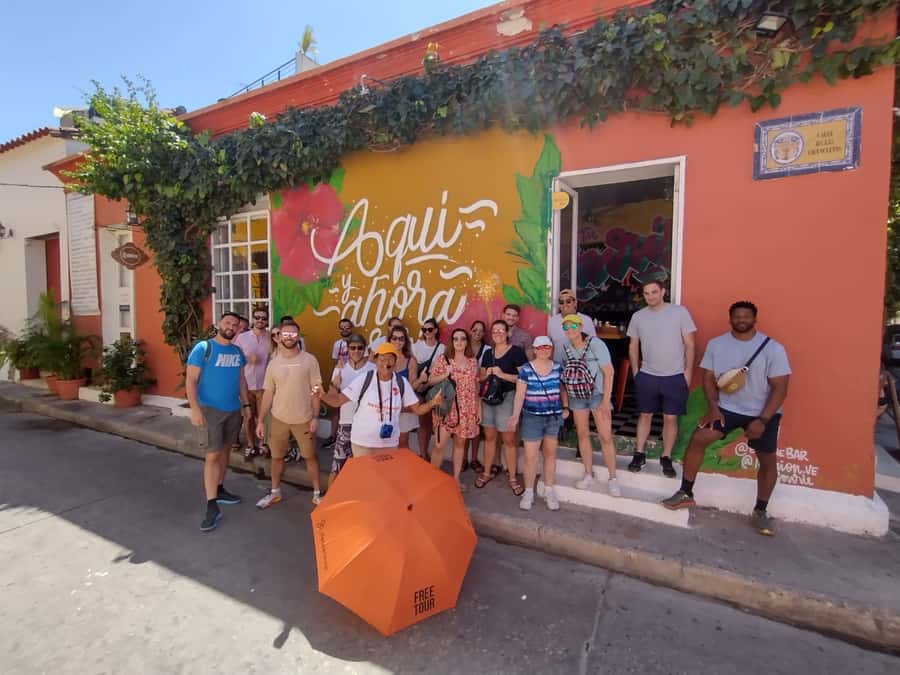
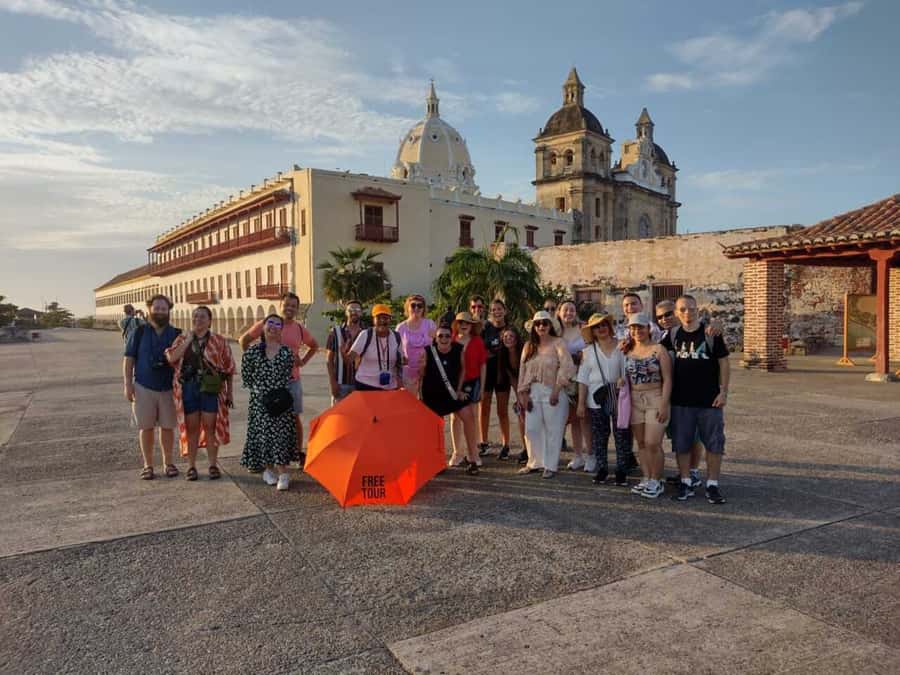
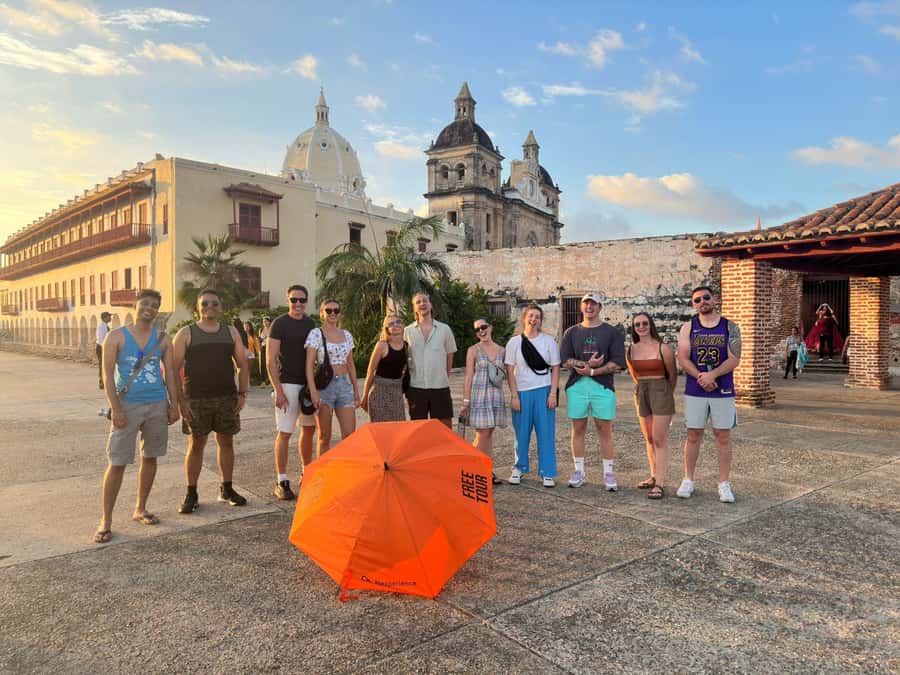
The meeting point is Plaza Cervantes, also called the Camellón de los Mártires, directly in front of the Clock Tower. Look for the orange umbrella. This central location makes sense for a first look at Cartagena because the plaza sits at the threshold between the modern city and the old walls.
The opening talk covers the Indigenous people who lived here before and during the arrival of the Spanish. That early context matters. Cartagena can look like a polished colonial postcard, but its story begins well before the stone buildings and defensive walls.
From there, you move toward the Clock Tower, known as the Golden Key of Cartagena. The route enters Plaza del Ecuador, formerly linked with the Plaza del Esclavo, then follows streets such as Porto Carrero and Candilejo. These names and spaces introduce the route taken by enslaved people and goods through the old city.
Pedro de Heredia, the Spanish founder of Cartagena, enters the story here. The guide explains the conquest without treating it as a simple tale of heroic founders. You get a more useful picture of competing powers, forced labor, commerce, and the people whose lives were changed by Spanish rule.
More Old Town and Historic Centre Walks in Colombia:
- Shared Tour of Bogota’s Historic Downtown (La Candelaria)
★ 4.7 · 100 reviews - Cali: Walking tour of the historic center
★ 5.0 · 69 reviews - Madrid Essential: Historic Center, Plaza Mayor & Royal Palace
★ 5.0 · 6,416 reviews
Portal de los Dulces and the old slave trade
Portal de los Dulces is one of the route’s more vivid stops. Today, it is associated with sweets and small food businesses, but the guide connects it to women’s work during the era of slavery. Descendants continue some of those food traditions, giving the stop a link between painful history and living culture.
That connection is one of the best features of the tour. You are not only told what a building used to be. You are shown how old customs can survive in altered form, especially through food, family work, and public spaces.
The walk then reaches Plaza de la Aduana, once a key center for the sale and movement of goods, including enslaved people. The Municipal Hall and other major buildings surround the square. This is a good place to pay attention to the contrast between elegant façades and the exploitation that helped finance colonial Cartagena.
The subject matter is serious, and the route does not avoid it. If you prefer a tour that sticks to architecture and pretty streets, some of this history may feel heavy. I consider it necessary. Cartagena’s beauty makes more sense when you understand who built it, who profited from it, and who was denied freedom within it.
Museums, churches, and Cartagena’s many identities
The route passes several cultural institutions, including the Museum of Modern Art, the Gold Museum, and the Emerald Museum. You do not get a full museum visit as part of the walking tour, so think of these as orientation stops rather than extended indoor tours.
The Museum of Modern Art presents Caribbean and Latin American art from the 1950s onward. The Gold Museum focuses on Indigenous pieces from the Colombian Caribbean. The Emerald Museum connects Cartagena to Colombia’s famous green stones and the luxury market around them.
These stops help widen the story beyond Spanish colonial architecture. Cartagena is also Indigenous, African, Caribbean, modern, commercial, and artistic. You may want to return to one of the museums after the walk if a particular subject catches your attention.
San Pedro Claver provides the route’s main religious and moral focus. The church and monastery named for him are tied to the man known as the Slave of the Slaves, because of his work among enslaved Africans. The complex also serves as a human rights headquarters.
The church’s architecture is worth seeing, but the larger value is the chance to discuss faith, slavery, resistance, and the way public memory works in Cartagena. The guide may also connect this history to later cultural traditions, including African hairstyles and the freedom and identity they came to represent.
San Ignacio Bastion and Cartagena’s defensive walls
At the San Ignacio Bastion, the tour turns toward military history. The bastion was built to protect the Bay of Souls from pirate attacks, and it gives you a clear example of Spanish defensive planning.
This is where stories of pirates and corsairs fit naturally. The guide explains how the walls, bastions, and military positions worked together, rather than treating them as attractive old stone. Cartagena’s defenses were built to protect a valuable port, and the city’s wealth made it a target.
Walking along or near the walls helps you understand the city’s shape. The fortifications separated the protected colonial center from the water and surrounding areas, while also showing how trade and warfare controlled daily life.
Do not expect a long, formal fort tour. This is a broad city walk, not a dedicated visit to the Castillo San Felipe de Barajas. The bastion stop gives you the main idea and places the walls into the city’s wider story.
More History Walking Tours in Colombia:
- Medellin Historic Walking Tour
★ 4.9 · 86 reviews - History and Hauntings of Salem Guided Walking Tour
★ 5.0 · 14,564 reviews - Lisbon: History, Stories and Lifestyle Walking Tour
★ 4.8 · 10,902 reviews - Amsterdam: Life of Anne Frank and World War II Walking Tour
★ 4.8 · 10,467 reviews
Plaza Bolívar and a brief pause in the shade
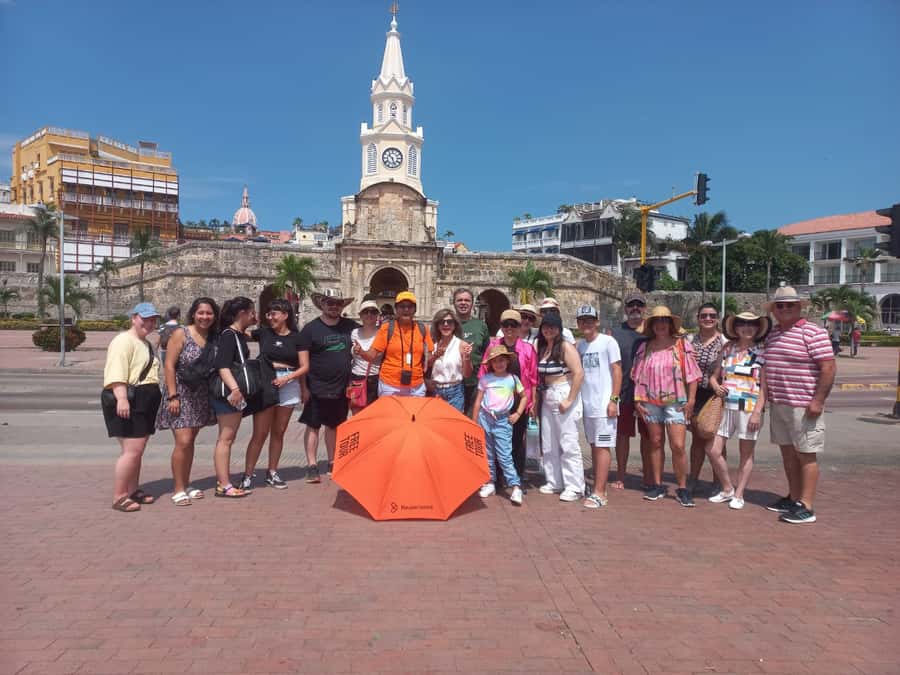
Plaza Bolívar offers a natural pause after the early historical stops. It honors Simón Bolívar, a leading figure in the independence movement, and gives the group a chance to refresh.
The exact amount of free time may depend on the guide and group pace. Still, this is a useful point in the route because the first section covers a lot of ground and information. Guides such as Robert and Álvaro David have been especially good at adding practical advice about restaurants, drinks, street food, and typical vendor prices.
That kind of advice can save you money later. Cartagena has plenty of appealing places to eat, but knowing how prices work before you buy from a street seller is useful. Treat any recommendation as a starting point, then choose based on your own plans and budget.
Centennial Park and Cartagena’s unexpected wildlife
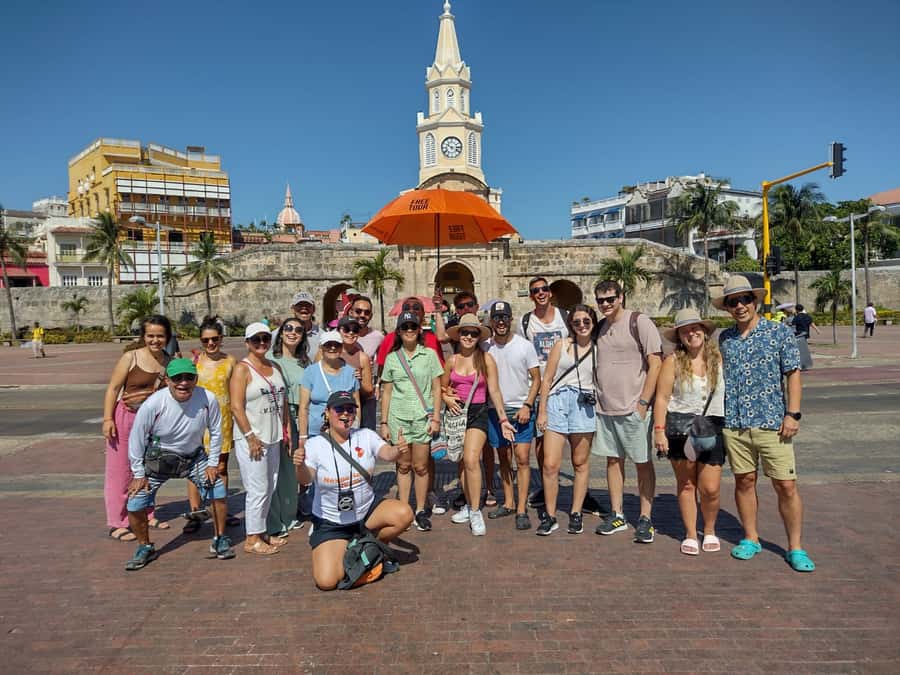
Centennial Park is one of the most memorable changes of pace. The park occupies the site of a former railway station and preserves part of Cartagena’s tropical dry forest. It is also one of the city’s important green spaces.
You may see sloths, squirrels, and iguanas here. The park has even been described as a kind of city zoo because of the animals that live among the trees. These sightings are not guaranteed, so do not book the tour as a wildlife outing, but the chance to spot urban animals adds a welcome surprise.
The shade is valuable. Several guides make a point of keeping groups out of direct sun when possible, and the park provides a cooler break before the walk continues. If you are traveling with a small child, this section may also help. One guide, Legacy, was praised for checking on a two-year-old during the route and making sure the family had what they needed.
Still, bring water. The tour is active, and the combination of heat, paved streets, and frequent stops can wear you down even when the pace is reasonable.
Getsemaní’s umbrellas, graffiti, and street life
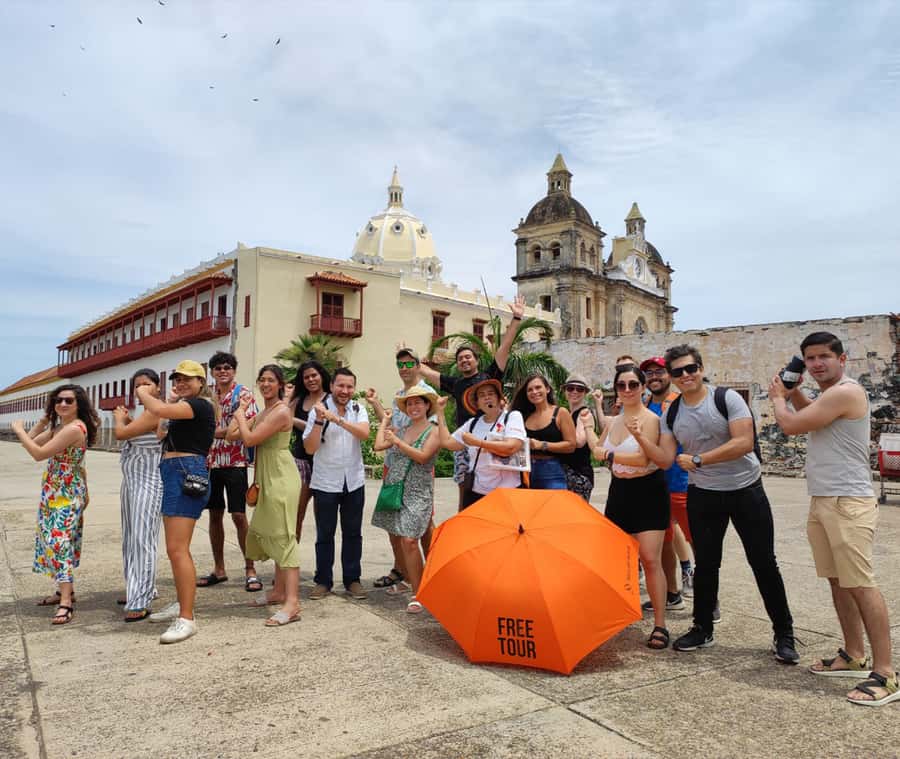
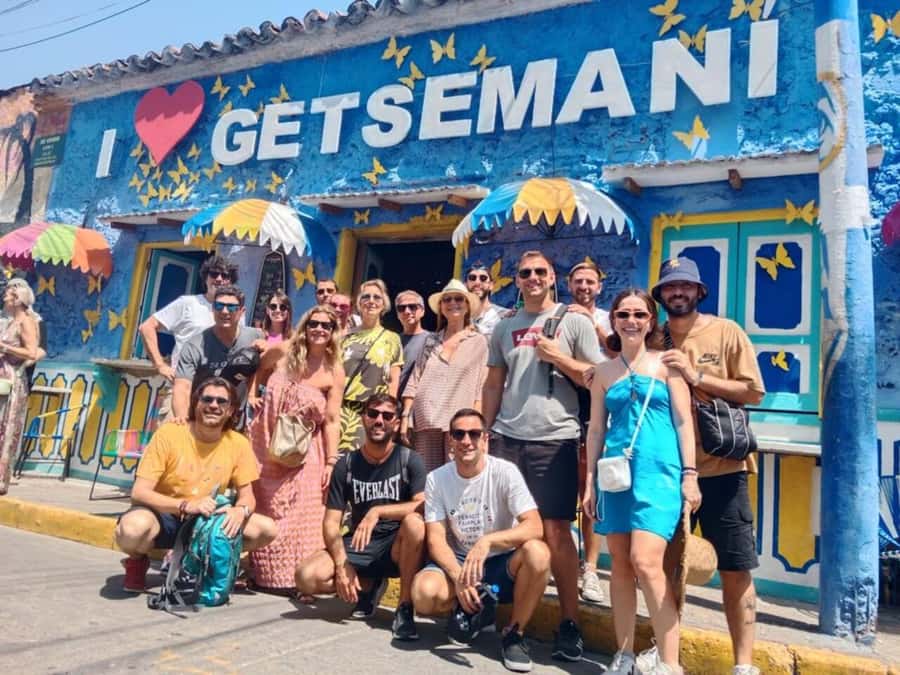
The Getsemaní section changes the tone. Instead of grand colonial plazas and formal façades, you see colorful cultural corridors, umbrella decorations, graffiti, and a more informal neighborhood character.
The route gives you a useful comparison between the Walled City and Getsemaní. Both are central to Cartagena, but they present different sides of the city. The old center emphasizes colonial power, trade, religion, and defense. Getsemaní brings forward neighborhood identity, Afro-Caribbean influence, public art, music, and everyday social life.
The guide also discusses the new social order in the city and the role of salsa and champeta. Champeta carries strong African and Caribbean roots, while salsa connects Cartagena to a broader Latin music tradition. The final stretch toward Calle San Juan is meant to be heard as much as seen.
Several guides add dancing during the walk. Dani is particularly associated with teaching short traditional dance steps, and some groups danced several times along the route. This is not a formal dance class, so you can take part lightly or simply watch. The activity works best if you are willing to be a little playful in public.
The route ends near Calle San Juan to the sound of salsa and champeta. That finish gives the tour a useful sense of movement. Cartagena is not a museum frozen in Spanish colonial time. Its music and social customs continue to reshape the city.
Guide style, language, and group experience
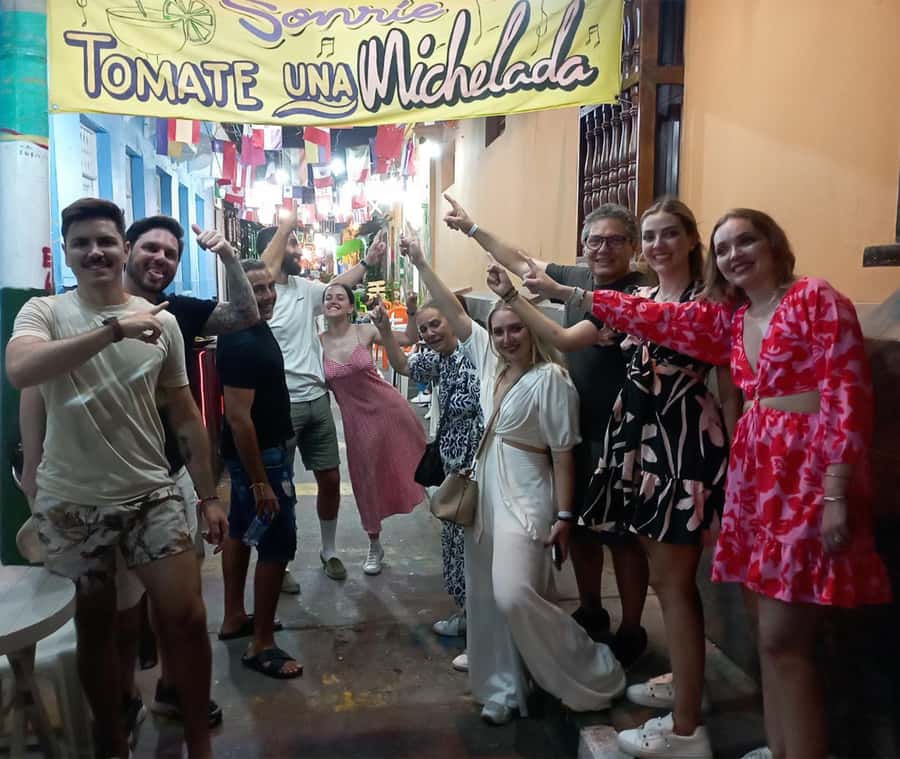
The tour runs in English or Spanish, with a live guide. Guide quality matters a great deal on a history walk, and the named guides bring different strengths.
Dani and Daniela are warm, energetic, and proud of Cartagena, with a habit of adding dance and personal perspective. Legacy is known for humor, strong historical detail, and keeping groups engaged. Robert tends to combine history with restaurant and visitor advice, while Álvaro David is noted for clear explanations and useful price guidance.
Ingrid has been praised for patience and for answering questions about both Cartagena’s past and present. Rebeca is a good choice for a Spanish-language experience, with an easy, friendly style. One practical point: English ability and speaking speed can vary between guides. If a guide begins speaking too fast, ask for a slower pace. That small request can make a major difference.
Group size is not specified, so expect a shared walking tour rather than a private experience. The guide has to balance different interests, ages, and walking speeds. You get the social energy of a group, but not the freedom to stop everywhere or set your own pace.
Price, timing, and what to bring
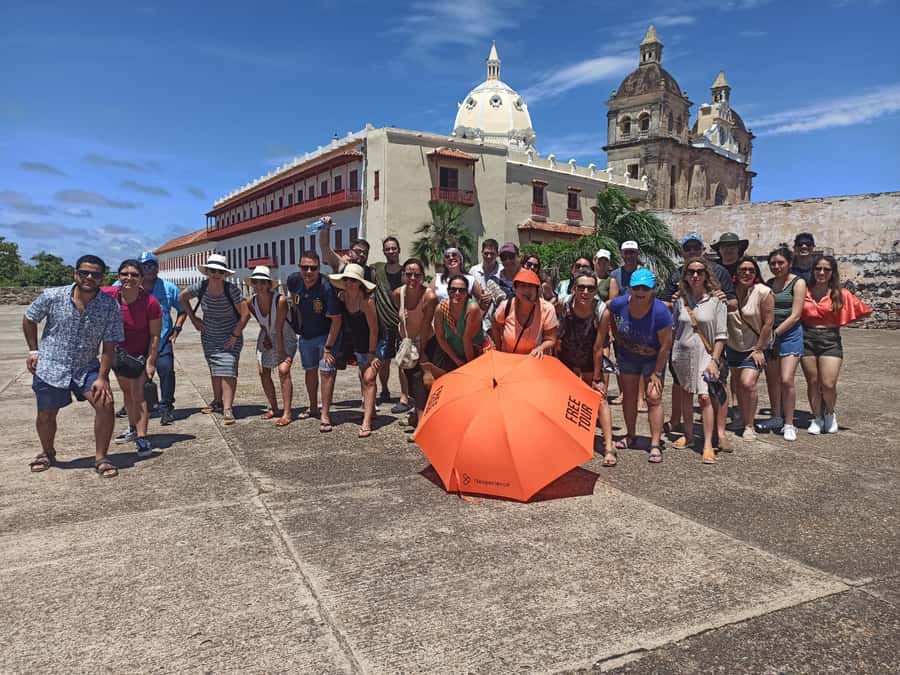
At $12 per person, this is strong value. The fee covers the professional guide, the Walled City route, Getsemaní, and the tip. It is presented as a free walking tour with the tip already paid, so you should not need to budget for an expected gratuity on top of the listed amount.
The advertised duration is 150 minutes. The route breakdown describes about two hours in the Historic Center and one hour in Getsemaní, which adds up to three hours. Allow roughly two and a half hours or a little more, and check the exact start time when booking.
There is no hotel pickup or drop-off, and food and drinks are not included. Meet at Plaza Cervantes instead. The route is wheelchair accessible, but the heat and distance still matter for anyone who needs regular breaks.
Bring:
- Comfortable walking shoes
- Sunscreen
- Water
- Light, comfortable clothes
- Weather-appropriate clothing
An afternoon start may give you softer light, but it does not guarantee cool conditions. One guide kept a group in shaded areas, and that made a clear difference. Rain can also affect the experience. The route can continue in wet weather, but it will be less pleasant, so check the forecast and dress sensibly.
Free cancellation is available up to 24 hours in advance for a full refund. You can also reserve now and pay later, which helps if your Cartagena schedule is still changing.
Who should book this Cartagena walk?
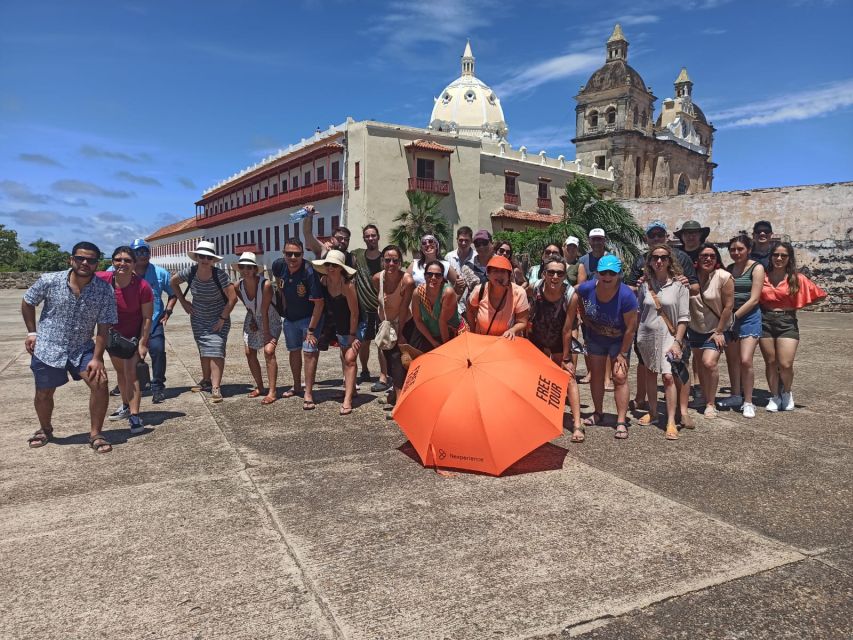
I would choose this tour early in a Cartagena stay. It gives you a map in your head, explains the landmarks you will keep passing, and points you toward museums, restaurants, music, and neighborhoods worth revisiting.
It suits first-time visitors, history fans, families who can manage a long walk, and anyone who wants more than postcard views. It is especially useful if you want colonial history presented alongside slavery, African heritage, local customs, and modern music.
You may want something else if you dislike group walks, hot weather, public dancing, or a fast stream of historical information. This is also not the right choice if you want long indoor museum visits or a dedicated fort excursion.
Should you book it?
Book it if you want a low-cost, broad introduction to Cartagena with a serious look at conquest and slavery, followed by music, street art, and Getsemaní’s social energy. The guides are the real strength, and names such as Dani, Legacy, Robert, Álvaro David, Ingrid, and Rebeca suggest a strong local team with different personalities.
Wear sensible shoes, carry water, and start with realistic expectations about the heat. At $12, the tour offers an unusually full first look at Cartagena, especially if you choose it near the beginning of your visit.
FAQ
Where does the Cartagena walking tour begin?
It begins at Plaza Cervantes, also called Camellón de los Mártires, in front of the Clock Tower. Look for the orange umbrella.
How long does the tour last?
The advertised duration is 150 minutes. The route is described as about two hours in the Historic Center and one hour in Getsemaní, so check the exact timing when you book.
What neighborhoods does the tour visit?
It visits Cartagena’s Historic Center, also called the Walled City, and the Getsemaní neighborhood.
What languages are available?
The live tour guide speaks English or Spanish.
Is the tip included?
Yes. The tour is described as a free walking tour with the tip already paid.
Does the tour include hotel pickup?
No. You must make your own way to the meeting point at Plaza Cervantes.
Are food and drinks included?
No. Food and drinks are not included.
Is the tour wheelchair accessible?
Yes, the activity is listed as wheelchair accessible.
What should I bring?
Bring comfortable shoes, sunscreen, comfortable clothes, and clothing suitable for the weather. Water is also a sensible choice for this outdoor walk.
Just added around Colombia
- Cartagena Instagrammable History★ 4.5 · 29 reviews
- Premium Pirate Beach Adventure, Open sea Rope Swing, Drinks+Lunch★ 5.0 · 64 reviews
- Chiva Private Cultural Tour with Audio Guide in Buga★ 5.0 · 49 reviews
- Cali: Walking tour of the historic center★ 5.0 · 69 reviews
- Historical tour Bogota★ 5.0 · 72 reviews
- Bogota scooter tour★ 5.0 · 46 reviews
- Shared Tour of Bogota’s Historic Downtown (La Candelaria)★ 4.7 · 100 reviews
- Santa Marta A Historical & Street food Experience★ 4.7 · 41 reviews
Colombia History Tours, compared.
Shared Medellín Downtown Tour with Wireless Audio
Read our review →
Historical Shared Tour Salsa, Graffiti & Resistance in Cali
Read our review →
Shared Tour of Bogota’s Historic Downtown (La Candelaria)
Read our review →
From Medellín: Private Pablo Escobar History Tour
Read our review →

Browse the lists this tour appears in