
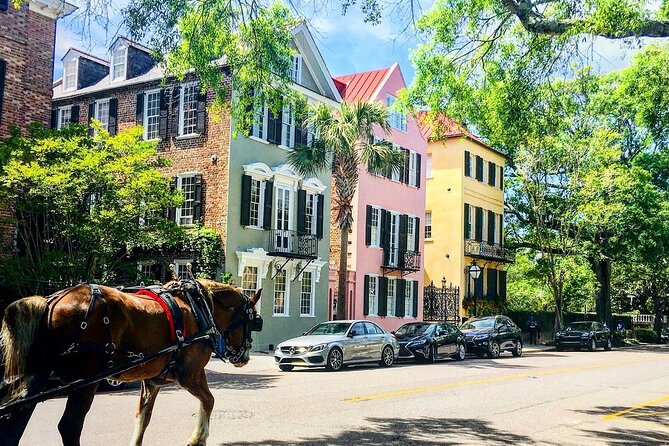
Review · CHARLESTON
Charleston Horse & Carriage Historic Sightseeing Tour
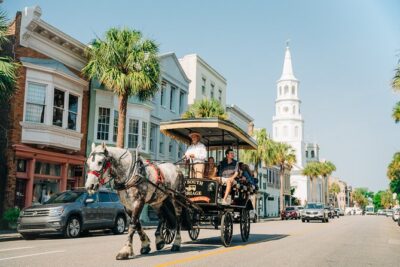
Charleston’s old streets make the most sense from a slow-moving carriage. You ease past grand houses, church steeples, gardens, and the waterfront rather than rushing from one sight to the next. The guide supplies the story, while the horse supplies the rhythm.
I like the easy one-hour introduction and the fact that the ride starts and ends at the Historic City Market. I also like the chance to meet the horse before or after the tour, a small touch that helps families and animal lovers feel part of the experience.
The main catch is that you do not choose the route. The City of Charleston assigns the route before departure, so The Battery, Rainbow Row, or Nathaniel Russell House may be included, but none is guaranteed. Sound can also be a problem if your guide does not project well over carriage wheels, traffic, construction, and church bells.
Key points to know before you book
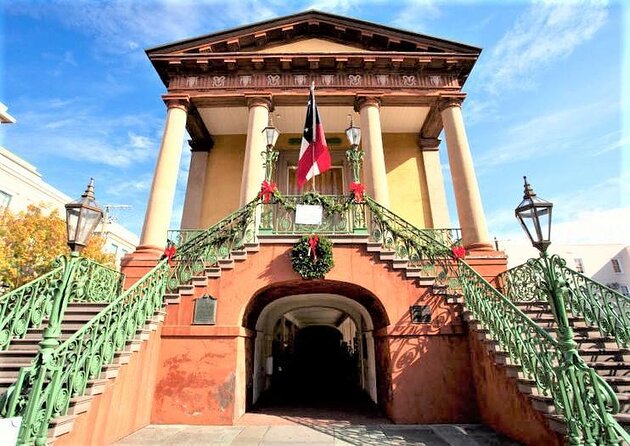
- Routes are assigned by the City of Charleston: You may see The Battery, Rainbow Row, St. Philip’s Church, or other historic sights, but the exact path is decided before departure.
- The ride begins at 45 Pinckney Street: This is at Charleston’s Historic City Market, a useful place to continue exploring after the carriage returns.
- Departures are roughly every 30 minutes: Check in on the day of your tour and receive a specific departure time on a first come, first served basis.
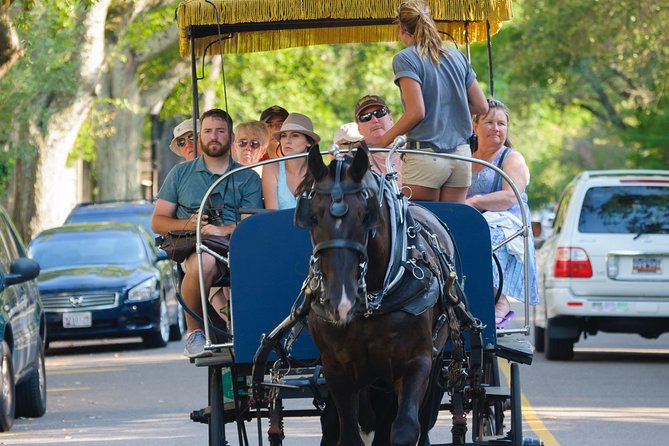
- The carriage holds no more than 16 people: That keeps the group fairly small, though your ability to hear still depends on the guide and street noise.
- Guides shape the experience: Caroline, Daniel, Ricky, and other guides have been praised for humor, local suggestions, horse handling, and Charleston history.
- Bring a little cash for a tip: One recent rider wished they had money available to thank the guide, especially after a strong presentation.
Why a carriage is a smart first look at Charleston
Charleston rewards slow travel. Its historic center is compact, but the best details are easy to miss when you are watching traffic, checking a map, or trying to keep up with a walking group. From a carriage, you can look up at balconies, ironwork, church towers, and carefully kept façades while someone else handles the route.
This is not a hop-on, hop-off outing. You remain on the carriage for the ride, with no scheduled stops to enter buildings or walk through gardens. That makes the tour simple and restful, but it also means you should treat it as an introduction rather than a full visit to each landmark.
I would put this near the start of a Charleston stay. An hour gives you a sense of the old district and helps you decide where to return on foot. If the carriage passes a house or church that catches your eye, make a note of it and come back later with more time.
The carriage also moves at a useful pace for photographs. You will not have unlimited time to frame every shot, but the open view gives you a better chance than a closed vehicle. Ask your guide questions as you go. The best guides, including Caroline and Daniel in the feedback provided, turn the ride into a conversation rather than a recorded speech.
More Horse Riding Days in Charleston:
- Charleston’s Old South Carriage Historic Horse & Carriage Tour
★ 5.0 · 10,023 reviews - Charleston Horse-Drawn Carriage Tour: Explore Historic Charleston
★ 5.0 · 3,561 reviews - Charleston: Historical Downtown Tour by Horse-drawn Carriage
★ 4.8 · 1,009 reviews
Beginning at Charleston City Market
The meeting point is 45 Pinckney Street, at the Historic City Market. All tours begin and finish here, so you do not need to arrange a separate return ride. That is particularly handy if you plan to continue with lunch, shopping, or another activity in the center.
The check-in system is worth understanding. Carriages leave approximately every 30 minutes from about 9:30 a.m., but departure is first come, first served. When you arrive, you receive a specific departure time for that day. I would not treat the listed opening window as a guarantee that you can walk in seconds before closing and board immediately.
The stated operating hours run from 9:30 a.m. to 4 p.m. during the listed 2026 period. The final departure is scheduled for 4 p.m. during the non-daylight-saving period, from November through March, and 5 p.m. during daylight-saving time, from March through November. One family arrived shortly after closing and had to return the next day, although the company honored the tickets. Check the time carefully, especially if your day is packed.
The market is also a practical place to meet your group. Carriages, pedestrians, and street activity create noise, so arrive with enough time to check in without hurrying. If you want a particular seat, early arrival may help, though seating is not described as guaranteed.
The Battery and White Point Gardens
One possible route passes The Battery, the broad historic area at Charleston’s southern tip. White Point Gardens provides the sort of open park setting that gives the carriage ride a welcome change from narrow streets and tightly packed buildings.
The stop description allows about 10 minutes in the route plan, but the experience is still a moving tour. You should not expect to climb down for a guided walk through the gardens. Instead, listen as the guide points out the setting and explains how it fits into Charleston’s past.
This is one of the places where weather matters. A carriage is more comfortable than a long walk in strong heat, and one rider specifically found the ride a better choice than walking in summer. Still, the carriage is not an air-conditioned vehicle. Wear light clothing, bring water, and remember that even a relaxed hour outdoors can feel hot.
Rainbow Row and Charleston’s famous façades
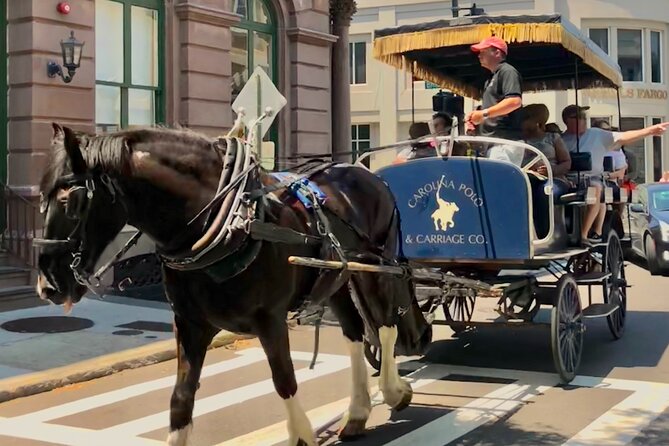
Rainbow Row is among the possible sights and one of Charleston’s most recognizable stretches of colorful historic houses. A carriage gives you a quick look at the façades and lets you connect the row to the surrounding streets rather than seeing it as an isolated photo stop.
The drawback is the same as with every optional highlight on this tour: city route assignments control the path. If Rainbow Row is a must-see for you, plan a separate visit on foot instead of relying only on the carriage. That way, you can slow down, take photographs, and look closely at the buildings.
I like this arrangement because it prevents disappointment. Think of the ride as a broad introduction to the historic district, not a promise to visit every named sight. The exact route can change, while the general experience remains a moving lesson in Charleston’s architecture and civic story.
More History Tours in Charleston:
- Historic Charleston Guided Sightseeing Walking Tour
★ 5.0 · 6,216 reviews - Charleston Harbor History Day-Time or Sunset Boat Cruise
★ 4.5 · 2,788 reviews - Hidden Alleyways and Historic Sites Small-Group Walking Tour
★ 5.0 · 2,335 reviews - Charleston: Daytime or Sunset Historic Harbor Cruise
★ 4.5 · 1,352 reviews
Nathaniel Russell House and historic homes
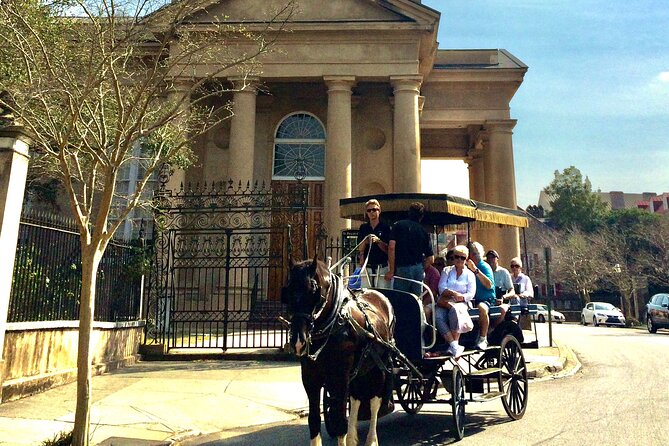
The Nathaniel Russell House is another possible highlight. The tour does not include admission or an interior visit, so the value here is the exterior setting and the guide’s explanation as the carriage passes.
This distinction matters when you compare the price with a house museum visit. The $45 cost covers a one-hour carriage ride and guide, not entry into historic homes. If you want to see rooms, staircases, or furnishings, you will need a separate ticket and more time.
Still, the passing view can help you choose what deserves a return visit. Charleston is full of stately homes, gardens, and churches, and a good guide connects those buildings to the people and events that shaped the city. Several guides have been praised for adding restaurant and sightseeing suggestions, which can be useful after the carriage returns to the market.
St. Philip’s Church and the Holy City’s steeples
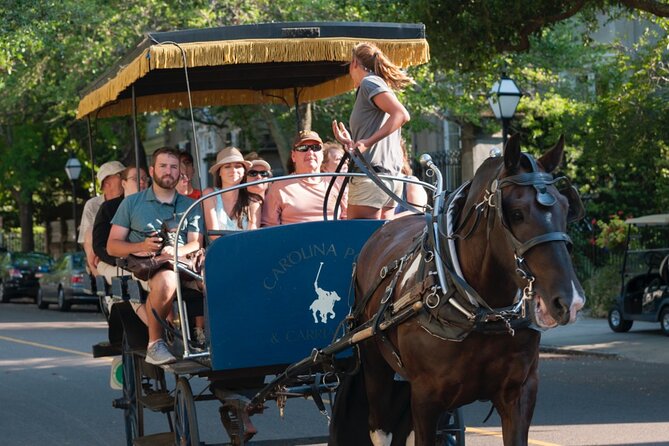
St. Philip’s Church may appear on your route, adding a religious landmark to the tour’s mix of houses, gardens, and public spaces. Charleston’s nickname, the Holy City, reflects the large number of historic churches visible in the center. The guide uses sights such as St. Philip’s to explain more than dates and façades.
Again, this is an exterior viewing opportunity. You remain aboard the carriage, and no admission is included. That keeps the tour moving and helps explain how so much can fit into one hour, but it limits how closely you can examine each place.
Church bells, traffic, airplanes, construction, and the carriage itself can all compete with the narration. One family found the guide too quiet to hear clearly. This is the most important quality-control issue in the feedback. If hearing every word matters to you, sit as close to the guide as possible and ask politely for louder delivery if needed.
The horses are part of the experience
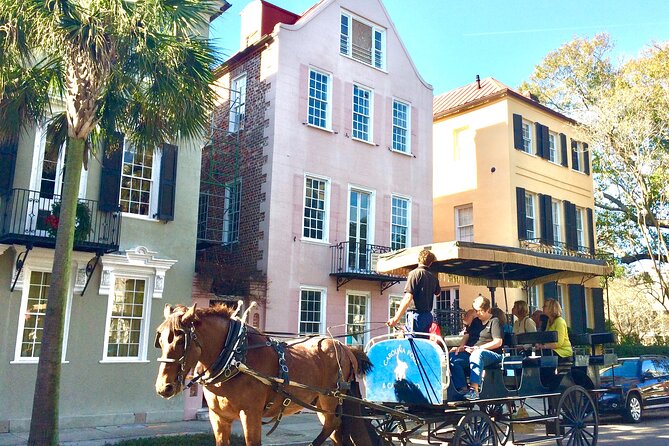
The horse is not just transportation. The company gives you an opportunity to engage with the animal before or after the ride and take photographs. Several guides have introduced their horses by name, including Amigo, Ironsides, Grayman, Chico, and others.
That personal connection adds warmth, especially for children. Families described the horses as sweet and well cared for, and guides explained that the animals are treated well. One rider began the tour uneasy about horse-drawn transport but felt better after hearing about the horses’ care.
I appreciate that the horse becomes part of the lesson. You can ask about the animal, meet it close up, and then see how calmly it works through the historic streets. Conditions can vary, and one person found the carriage itself less well kept than expected, so do not expect a polished luxury vehicle. This is an old-fashioned city ride, with the practical wear that comes with regular use.
Guides, storytelling, and the sound problem
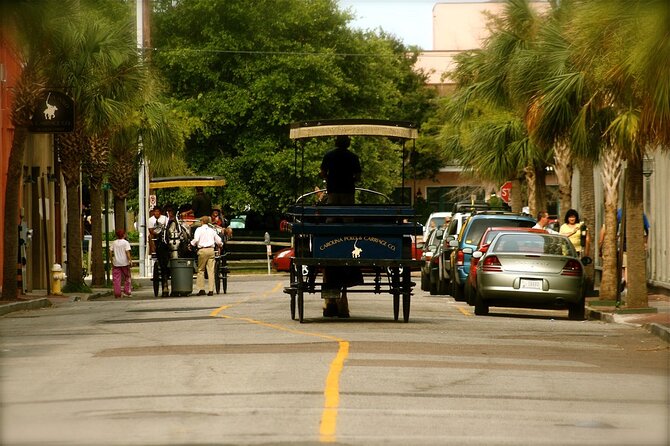
The guide makes or breaks this kind of tour. The strongest accounts describe funny, friendly, well-informed people who answer questions and offer useful ideas for restaurants and additional places to visit. Daniel was praised for an engaging style, Caroline for a personal approach and horse handling, and Ricky for a strong command of Charleston’s story.
You may also get a guide who wanders into side stories. One account described a funny and informed guide whose talk sometimes lacked a clear order. That can be charming if you like conversational storytelling, but less satisfying if you want a tight chronological account.
The bigger issue is volume. There is no guarantee of a microphone, and the sound of hooves, wheels, engines, construction, bells, and aircraft can drown out a soft voice. Sit toward the front if possible. The front position also helps with photographs and gives you a clearer connection with the guide and horse.
The carriage carries up to 16 people. That is small enough to feel personal, but not so small that every seat offers the same view. Keep your expectations practical: this is a shared public tour, not a private carriage and guide.
Is $45 a fair price?
At $45 per person, the tour is not the cheapest way to see Charleston’s center. You can walk through the historic district for free. The price pays for the horse, carriage, guide, organized route, and the chance to cover a useful amount of ground without doing all the walking yourself.
I see the best value for first-time visitors, families, couples, and anyone visiting in hot weather. The ride gives you orientation, a history lesson, and a relaxed way to view the architecture. It can also save energy for a house museum, meal, or evening activity.
The value is weaker if you want guaranteed access to specific landmarks or detailed interior visits. Since the city chooses the route, you should not buy this solely for Rainbow Row, The Battery, or Nathaniel Russell House. Use the tour to see what interests you, then explore those places separately.
Free cancellation is available when you cancel at least 24 hours before the start time. Changes or cancellations inside that window are not refunded. Service animals are allowed, the meeting point is near public transportation, and most people can participate, but the supplied information does not describe specific carriage accommodations.
Who should book this Charleston carriage ride?
I would choose it for a first morning or early afternoon in Charleston. It gives you a broad view before you spend time inside museums or walking down side streets. Families get an activity that feels special without demanding a full day, and couples get the romance of a horse-drawn ride without committing to a long excursion.
It also suits solo visitors who want an easy way to learn the city. The one-hour length leaves plenty of time for your own plans, and the carriage returns to the same central meeting point.
I would hesitate if you need a guaranteed route, a quiet audio system, or a deep architectural lecture. In that case, confirm your priorities before booking and consider pairing this ride with a walking tour or house museum visit.
FAQ
Where does the Charleston horse and carriage tour begin?
The tour begins at 45 Pinckney Street in Charleston, South Carolina, at the Historic City Market.
Where does the tour finish?
The carriage returns to the Historic City Market and ends at the same meeting point.
How long does the carriage tour last?
The ride lasts approximately one hour.
Which landmarks will the carriage tour visit?
Routes vary. Possible sights include White Point Gardens and The Battery, Rainbow Row, Nathaniel Russell House, and St. Philip’s Church. The City of Charleston assigns the route before departure, so no specific landmark is guaranteed.
What time do the tours depart?
Tours depart approximately every 30 minutes starting at 9:30 a.m. Check in on the day of travel, and you will receive a specific departure time on a first come, first served basis. The last departure is at 4 p.m. during non-daylight-saving time and 5 p.m. during daylight-saving time.
How many people can join one tour?
The maximum group size is 16 people.
Can I cancel for a full refund?
Yes. You can cancel at least 24 hours before the experience start time for a full refund. Cancellations or changes made less than 24 hours before the start time are not accepted for a refund.
Should you book it?
Book this tour if you want a pleasant first look at Charleston, enjoy local stories, and like the idea of meeting the horse after the ride. The combination of a central meeting point, manageable one-hour length, and strong guide performances makes it a useful introduction for many visitors.
Just keep the limits in mind. The route is assigned by the city, the ride stays on the carriage, and street noise may affect how clearly you hear the narration. Arrive early, sit near the front, and treat the tour as your orientation to Charleston, not your only chance to see its famous sights. That approach gives you the best value from the $45 fare.
Just added around Charleston
- Charleston’s Historic Pubs, Taverns, and Taprooms Tour★ 4.5 · 33 reviews
- Charleston’s Strong Women of the South History Tour★ 4.5 · 27 reviews
- Small-Group Tour: Charleston Old Walled City Historical Walking Tour★ 4.5 · 283 reviews
- Private Sunset Sail BYOB Dolphin/History Tours on 43ft Mystique★ 5.0 · 42 reviews
- Sip History In a Secret Speakeasy Cocktail Class★ 5.0 · 40 reviews
- Sip History in The Sun Cabana Covered Cocktail Class★ 5.0 · 332 reviews
- Charleston History and Hops Tour: Bar and History Walk★ 5.0 · 316 reviews
- Private Walking Tour of Historic Charleston★ 5.0 · 38 reviews
Charleston History Tours, compared.
Charleston’s Old South Carriage Historic Horse & Carriage Tour
Read our review →
Historic Charleston Guided Sightseeing Walking Tour
Read our review →
Charleston Harbor History Day-Time or Sunset Boat Cruise
Read our review →
Hidden Alleyways and Historic Sites Small-Group Walking Tour
Read our review →
Charleston: Daytime or Sunset Historic Harbor Cruise
Read our review →
Charleston historical walking tour with a Professor of History at The Citadel
Read our review →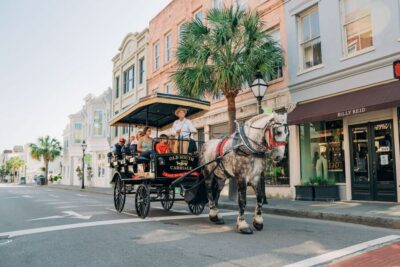
Charleston: Historical Downtown Tour by Horse-drawn Carriage
Read our review →
Undiscovered Charleston: Half Day Food, Wine & History Tour with Cooking Class
Read our review →Browse the lists this tour appears in