
Review · HANOI
Coffee, History, and Architecture of the French Quarter
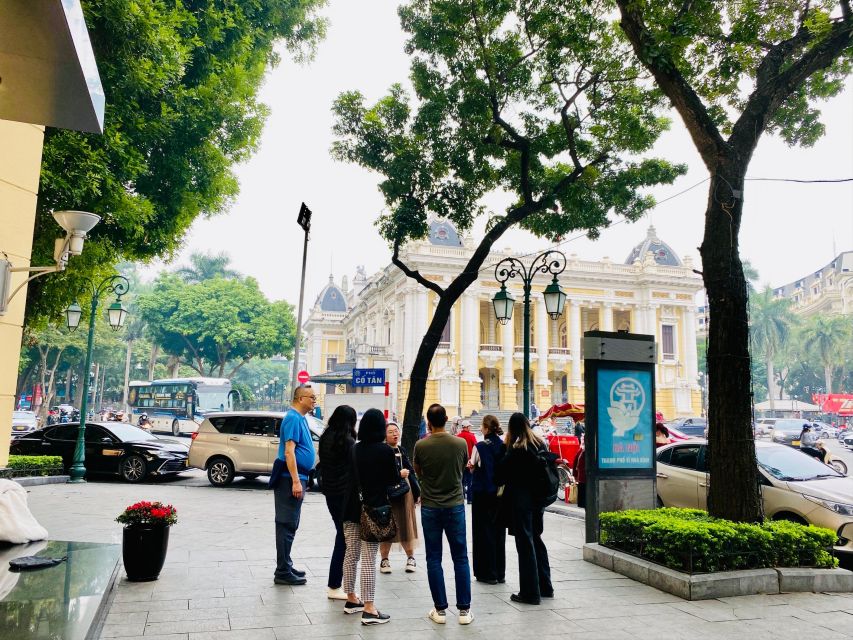
Hanoi’s French Quarter makes the most sense when you connect its grand buildings with the people and events that shaped them. This 2.5-hour walking tour does that over coffee in an old French villa, then links St. Joseph’s Cathedral, the Opera House, Hoan Kiem Lake, the Metropole Hotel, and Trang Tien Street through stories rather than a dry list of dates.
I like two things here: the conversation-first style, which leaves room for questions, and the small local treats, especially Vietnamese coffee and Trang Tien ice cream. The main consideration is simple: this is an outdoor walking tour in Hanoi, so heat, rain, traffic, and uneven city sidewalks are part of the deal.
What makes this Hanoi walk worth your time
- Coffee comes first: Begin with Vietnamese coffee or tea in a local café set inside an old French villa.
- More than 15 sights: The route covers major French Quarter landmarks, including the cathedral, Opera House, lake, post office, Metropole Hotel, and Trang Tien Street.
- History without the classroom feel: The guide discusses French rule, social change, Vietnamese resilience, and the Vietnam War in an open question-and-answer style.
- Two memorable tastes: Coffee, including egg or coconut coffee on some departures, and famous Trang Tien ice cream are included.
- Guides who personalize the walk: Mina and Dung are praised for clear English, humor, patience, and useful advice about food and Hanoi.
- Good first-day orientation: You finish with a better sense of southern Hanoi and several ideas for places to explore afterward.
Coffee before colonial Hanoi
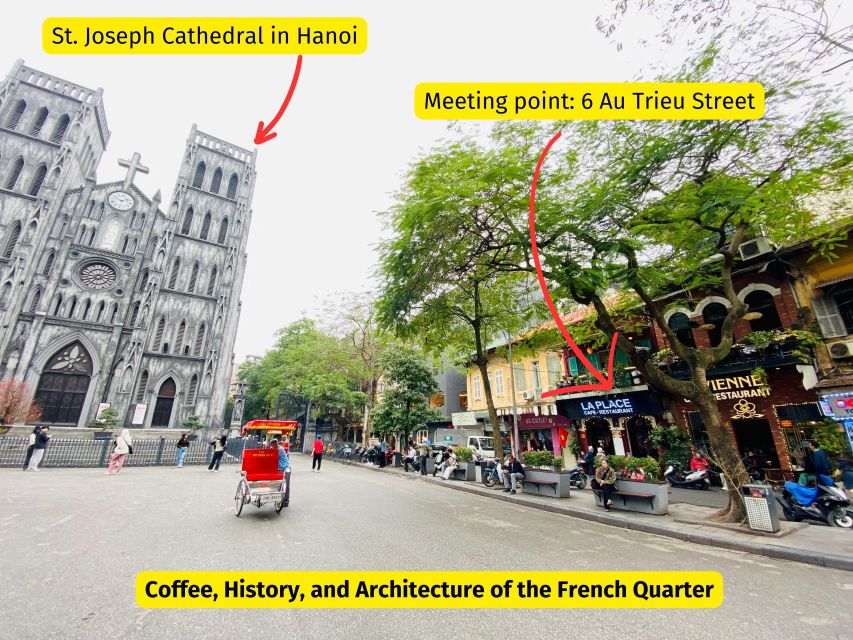
The meeting point is at 6 Au Trieu Street, right beside St. Joseph’s Cathedral. That is a handy place to begin because the cathedral is both easy to recognize and central to the story of Hanoi’s French Quarter.
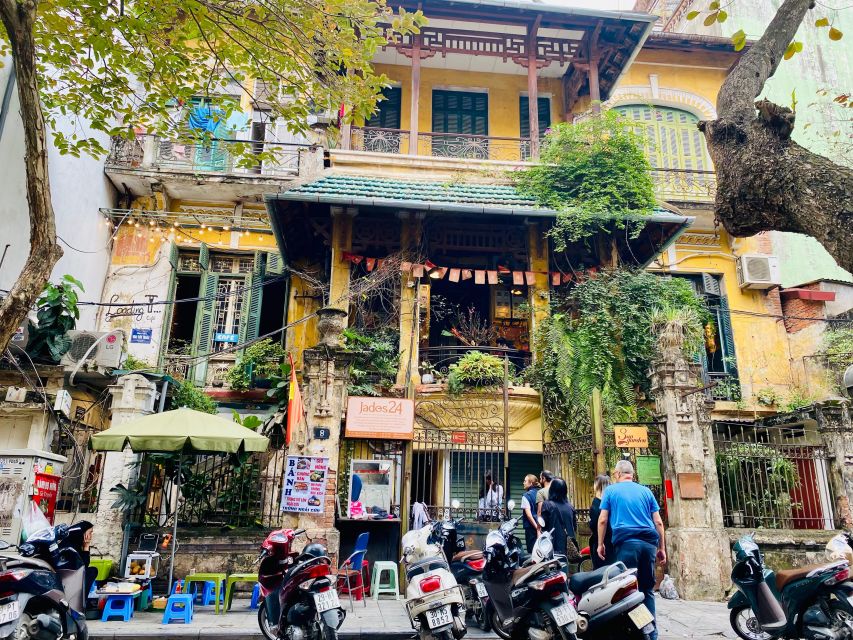
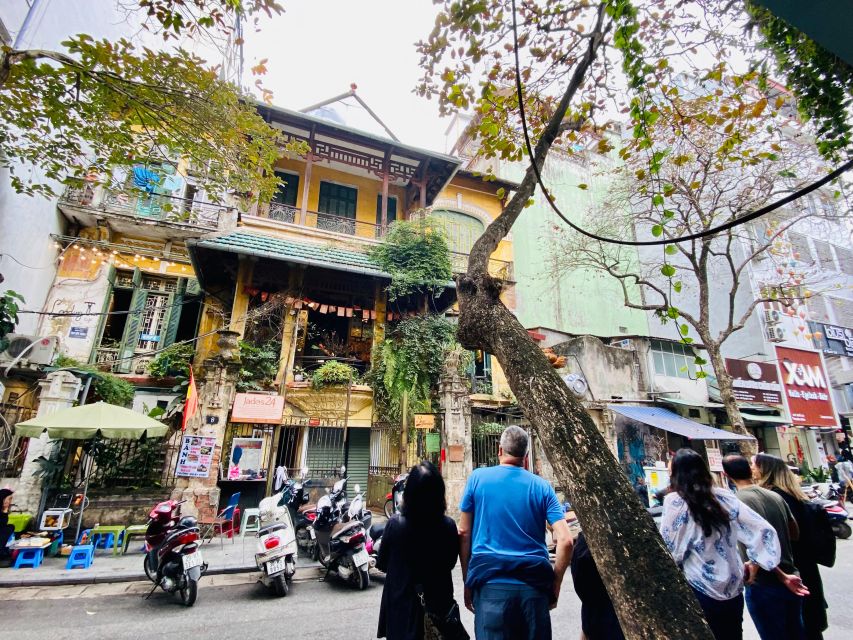
The experience starts with a general explanation of Vietnamese history in a local coffee shop inside an old French villa. This is more than a drink stop. Coffee gives the guide a relaxed way to explain how Vietnam changed under French rule, how coffee became part of local life, and how the city developed around imported European ideas and Vietnamese habits.
Your coffee or tea is included. Depending on the guide and café, you might try egg coffee or coconut coffee. These drinks are useful introductions to Hanoi’s café culture because they are distinctly local in style, even though coffee arrived during the French period.
I like this opening because it gives you context before the buildings begin. You are not simply told that a structure is French colonial. You can ask why it was built, what it represented, and how Vietnamese society changed around it.
The café portion lasts about 30 minutes. That is long enough for a proper introduction, but not so long that the walk loses momentum. If you prefer a fast sightseeing tour with little discussion, this may feel slow. If you want to ask questions about Vietnamese history, food, pronunciation, or everyday life, the opening sets the right tone.
A few more history tours around Vietnam worth a look
- Kona Shore Excursion: Sea Turtles, Historic Kona & Coffee
★ 4.5 · 324 reviews - Kona Tour: Bee Farm, Kona Coffee, and National Historical Parks
★ 4.5 · 78 reviews - Colima Volcano Cultural Tour: Coffee Plantation, Hacienda and Comala Magic Town
★ 5.0 · 30 reviews
St. Joseph’s Cathedral and the first look at French influence
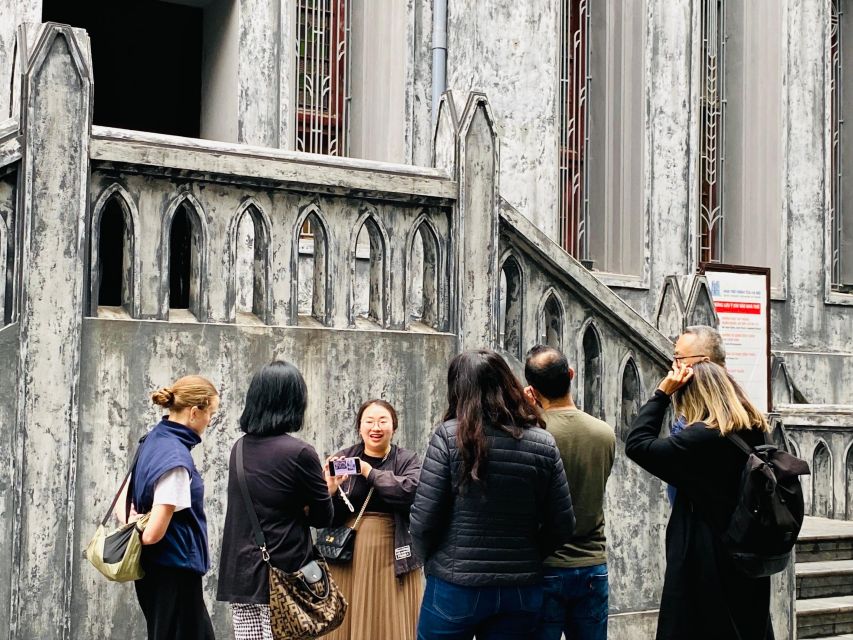
After meeting near the cathedral, you spend roughly 15 minutes looking at St. Joseph’s Cathedral and its surroundings. The building provides an immediate visual lesson in Hanoi’s colonial past, but the value of the stop comes from the explanation around it.
The guide places French influence within the larger story of Vietnam. You hear about the benefits and costs of the colonial period, rather than receiving a one-sided architectural tour. That balance matters. Grand façades can look impressive, but they also belong to a period of foreign control and major social change.
The tour uses historical photographs on a phone or similar visual aid. These images help connect today’s streets with earlier events, especially when discussing the Vietnam War and changes in Hanoi. For me, this is more useful than a long string of dates because you can compare the old view with what you see in front of you.
St. Joseph’s is also a practical meeting point. Tell your guide if you have trouble locating 6 Au Trieu Street, and look for the person waiting near the cathedral.
A French Quarter route with plenty of landmarks
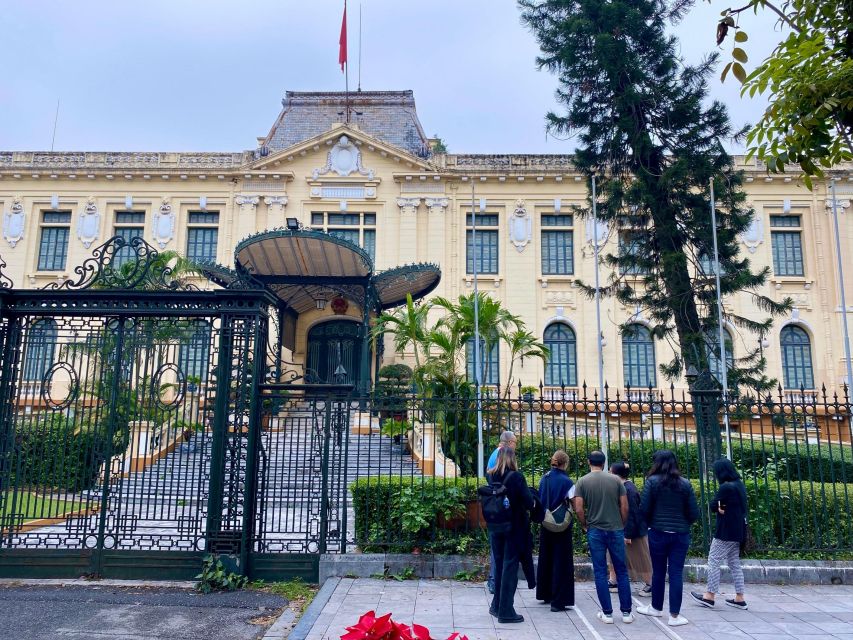
From the cathedral, the walk moves into the French Quarter, the southern part of central Hanoi. The area feels different from the narrow streets associated with the Old Quarter. Here, the architecture and street plan reflect another period of the city’s development.
The route includes more than 15 top sights, though the named stops give you a clear sense of the main focus:
- St. Joseph’s Cathedral
- A local café in an old French villa
- Hanoi Opera House
- Hoan Kiem Lake
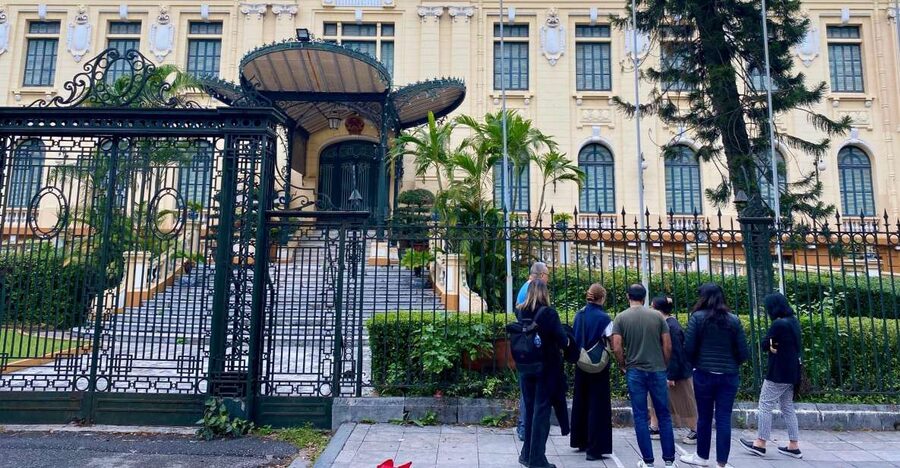
- Hanoi Post Office
- Trang Tien Street
- Sofitel Legend Metropole Hanoi
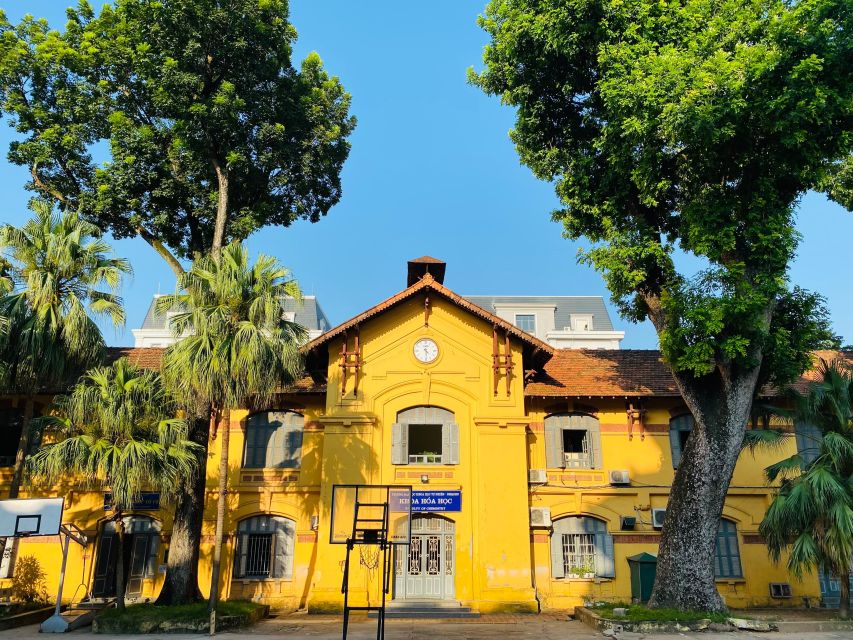
- The first university in French Indochina
- Hanoi University of Pharmacy
The exact pace depends on the group and the guide’s discussion. Each named stop is listed at about 15 minutes, with the café receiving more time. That makes this a route for seeing and understanding rather than entering every building.
You should not book this expecting interior access to all the landmarks. The supplied plan describes guided sightseeing from the route, not a series of museum admissions. That is a fair trade for the price, but it is worth knowing before you go.
Hanoi Opera House: architecture with a political past
The Hanoi Opera House is one of the route’s major architectural stops. Its European design makes the French imprint on Hanoi easy to see, especially when placed beside the city’s local buildings and daily street life.
Your guide explains the building as part of the wider colonial project, not simply as a pretty façade. That turns the stop into a discussion of power, culture, and who the city was designed to serve. You also get a chance to ask how French architectural ideas were adapted to Vietnam.
The tour does not treat colonial buildings as isolated monuments. Their meaning changes when you learn how Vietnamese society responded to foreign rule and how the city later reused and reinterpreted these places.
This is one reason an informed guide adds value. On your own, you can photograph the Opera House in a few minutes. With the right questions, you can use it to understand Hanoi’s past more clearly.
More History Tours in Vietnam:
- Ninh Binh Heritage Full Day Tour with Buffet Lunch and Limousine
★ 5.0 · 2,692 reviews - Hanoi Heritage Premium Daily Tour
★ 5.0 · 914 reviews - Halong Heritage Luxury Day Cruise-Buffet lunch&Limousine transfer
★ 5.0 · 846 reviews - Hoi An: Ancient Town Guided Walking Tour
★ 4.9 · 766 reviews
Hoan Kiem Lake and the city beyond the buildings
Hoan Kiem Lake gives the walk a change of pace. After streets lined with formal architecture, the lake provides open space and a chance to consider Hanoi as a living city rather than a collection of colonial landmarks.
The stop also helps tie the French Quarter to the wider center of Hanoi. You are not only studying French influence. You are looking at how different periods overlap in one compact area.
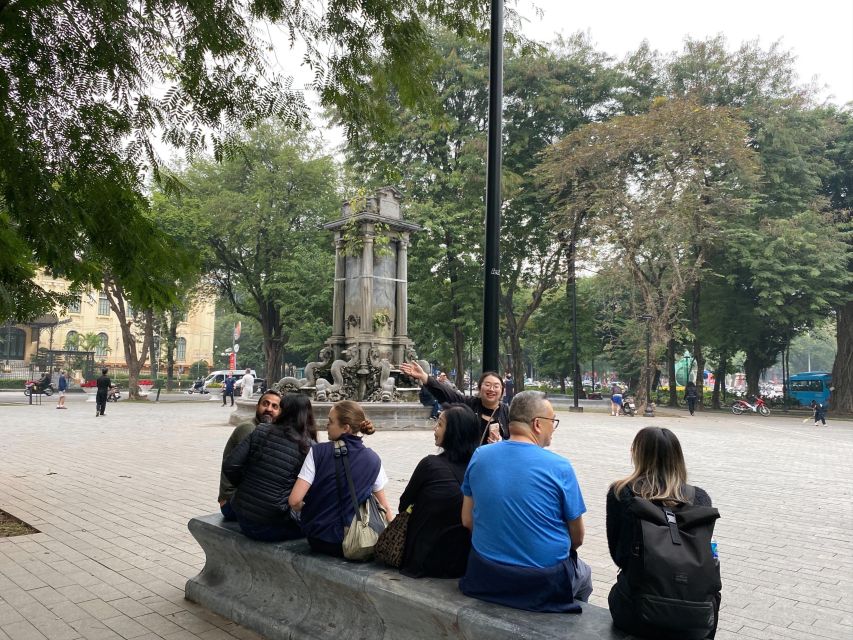
The guide discusses history and present-day life in a relaxed way. This is where the conversational format can be especially helpful. You can ask about local customs, the city’s development, or places to eat after the tour.
Several people who took the walk found the food suggestions useful, including recommendations for banh mi and hotpot. Those tips are not a formal part of the route, but they can help you plan the rest of your stay.
The Metropole and the weight of modern history
Sofitel Legend Metropole Hanoi is another important stop. The hotel links French colonial Hanoi with the city’s later twentieth-century history, including the Vietnam War.
The guide uses the area to explain how Hanoi changed through conflict and political upheaval. Historical photos help make the discussion clearer. You are encouraged to ask questions, so you can spend more time on wartime history if that interests you, or focus on architecture and social life if it does not.
This flexibility is one of the tour’s best features. Guides such as Mina are praised for breaking complicated events into clear points and answering questions without turning the walk into a lecture. Dung is also described as warm and enthusiastic, with strong local knowledge.
The subject matter can be serious, but the tone remains friendly. Mina is often described as humorous, with enough personality to keep the history from feeling heavy. That mix of humor and care suits Hanoi, where old buildings and difficult memories sit close together.
Trang Tien Street and the ice cream stop
Trang Tien Street gives you another view of the French Quarter’s design and commercial life. It also leads to the famous Trang Tien ice cream parlor, where the tour includes a serving of local ice cream.
This is a smart stop near the end of a walking route. Hanoi can be hot, and a cold treat gives you a proper pause. Seating and a restroom are available, so you can take a short break before the final portion of the walk.
The ice cream is not just a sugary extra. Like the coffee, it adds a piece of local food culture to a history tour. You leave with more than photographs of façades. You have tried two everyday Hanoi specialties linked to the city’s social life.
If you have dietary needs, tell the guide early. One guide is specifically praised for adjusting parts of the experience around dietary needs and energy levels, though the supplied details do not list every ice cream flavor or ingredient.
Why the guide matters more than the route
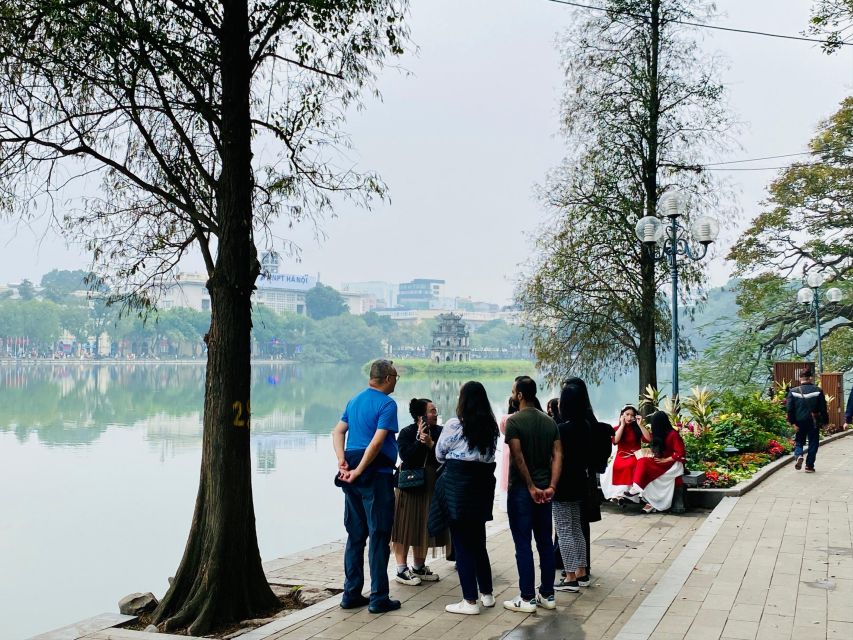
The buildings are attractive, but the guide determines how much you get from them. Mina receives particular praise for clear English, humor, detailed explanations, and a willingness to answer many questions. Dung is also described as friendly and full of enthusiasm.
The strongest part of the guiding style is the balance between structure and conversation. You get a planned route, but you are not expected to stand quietly while someone recites a script. You can ask about French colonial architecture, the Vietnam War, Vietnamese coffee, pronunciation, restaurants, or daily life in Hanoi.
The guides also use photographs to show historical events. That helps when the subject is difficult to picture from a modern street. A city changes quickly, and old images can show what no longer exists.
Group size is not specified as a fixed number. One departure described a small group made up of a couple and a family with two teenage girls. The small-group feel made it easy to stay involved, but you should not assume every departure will have the same size.
Walking conditions, timing, and what to bring
The tour lasts about 2.5 hours. The walk is described as easy-paced, but you should still wear comfortable shoes. You will be outside for most of the experience, with stops for coffee and ice cream.
Hanoi’s weather can change quickly. The tour operates rain or shine, so check the forecast the day before and bring an umbrella or raincoat if needed. Sunscreen, breathable clothing, and a hat are sensible choices.
There is no transport included in the experience description. Plan on walking between the listed sights. You should also allow a little extra time to find the meeting point at 6 Au Trieu Street, beside St. Joseph’s Cathedral.
The route information lists Hanoi University of Pharmacy as the finish, while the meeting-point details say the activity ends back at the meeting point. Because those details differ, confirm the exact ending point when you book or meet your guide.
The tour is conducted in English. People assisting visitors with disabilities can join free of charge. The information provided does not describe step-free access or the precise surface of every street, so contact the provider if you need specific mobility arrangements.
Is $31 a good value in Hanoi?
At $31 per person, the tour offers a reasonable package for someone who wants history, a local guide, coffee, ice cream, and a planned route through several major sights.
You are not paying for admission to a long list of museums or for private transport. The value is in the guide’s interpretation and in the way the stops fit together. A coffee in an old French villa, an English-language history discussion, historical images, and Trang Tien ice cream give the experience more character than a standard architecture stroll.
The price makes the most sense if you are new to Hanoi or want a clear introduction early in your visit. You can use the guide’s restaurant suggestions and historical pointers to shape the next few days.
If you already know Hanoi well, the tour may feel familiar in places. Its appeal then depends on how much you enjoy asking questions and seeing known landmarks through a local guide’s perspective.
Cancellation is free up to 24 hours before the start for a full refund, and you can reserve now and pay later. Those terms are useful when Hanoi’s weather or your schedule is uncertain.
Who should book this experience?
I would recommend it to first-time visitors who want a practical introduction to Hanoi’s French Quarter without spending half a day inside a museum. It also suits history-minded visitors, architecture fans, couples, families with older children, and anyone curious about Vietnamese coffee.
You will get the most from it if you enjoy conversation. Ask questions. Bring up the parts of Vietnamese history that interest you. The guide’s strength is not simply moving you from one monument to the next. It is helping you connect architecture, colonial rule, war, food, and present-day life.
This is less suitable if you want a fully private tour, guaranteed access inside every landmark, or a route with little walking. It is also not ideal for ignoring the weather. Hanoi heat and rain are real parts of the experience.
Should you book the French Quarter walk?
Book it if you want Hanoi’s major French Quarter sights explained by a local English-speaking guide, with coffee and ice cream built into the experience. Mina is a particularly strong choice if you value detailed history, humor, and patient answers, while Dung is known for an enthusiastic and welcoming approach.
The best reason to go is the combination of serious history and ordinary pleasures. You can discuss French rule and the Vietnam War, then sit with Vietnamese coffee and finish with Trang Tien ice cream. That mix gives you a more human sense of Hanoi than a quick photo stop at the Opera House.
Skip it if you prefer to sightsee independently or need a fully confirmed accessibility plan. For most visitors who want a relaxed, useful introduction to the French Quarter, $31 is a fair price for the context, local advice, and two-and-a-half hours of guided walking.
FAQ
How long does the Hanoi French Quarter walking tour last?
The experience lasts 2.5 hours. Starting times vary, so check availability when booking.
How much does the tour cost?
The listed price is $31 per person.
Where does the tour begin?
Meet at 6 Au Trieu Street, right beside St. Joseph’s Cathedral of Hanoi.
What language is the tour conducted in?
The tour is conducted in English with a live guide.
Is coffee included?
Yes. You receive a cup of Vietnamese coffee or tea in a local café located in an old French villa.
Is Trang Tien ice cream included?
Yes. The experience includes ice cream at the famous Trang Tien ice cream parlor. Seating and a restroom are available there.
Which sights are included?
The route includes St. Joseph’s Cathedral, the French Quarter, Hanoi Opera House, Hoan Kiem Lake, Hanoi Post Office, Trang Tien Street, Sofitel Legend Metropole Hanoi, the first university in French Indochina, and other nearby sights.
What should you bring?
Bring sunscreen, breathable clothing, a hat, and comfortable shoes. If rain is forecast, bring an umbrella or raincoat because the tour operates rain or shine.
Can I cancel the booking?
You can cancel up to 24 hours in advance for a full refund. You can also reserve now and pay later.
Just added around Vietnam
- Hue: 3 Best Royal Tombs Tour and Ancient Pagoda★ 4.9 · 100 reviews
- Ho Chi Minh City Tour with Colonial Heritage and Chinatown★ 4.6 · 48 reviews
- Ho Chi Minh City: Half-day History And Culture Tour★ 4.5 · 33 reviews
- Hanoi City Highlights Walking Tour – Landmarks & History★ 5.0 · 34 reviews
- Hanoi: Historic Jeep Tour★ 4.9 · 30 reviews
- Hanoi: Cho Gioi Vietnam War History Walking Tour★ 5.0 · 102 reviews
- From Ho Chi Minh City: Heritage & Culture Half-Day Tour★ 4.7 · 37 reviews
- From Hanoi: Trang An eco-tourism – Hoa Lu ancient & Mua Cave★ 4.7 · 51 reviews
Hanoi History Tours, compared.
Ninh Binh Heritage Full Day Tour with Buffet Lunch and Limousine
Read our review →
Halong Heritage Luxury Day Cruise-Buffet lunch&Limousine transfer
Read our review →
Heritage Binh Chuan 2 Days 1 Night discovery in Lan Ha Bay
Read our review →
Hanoi: Cho Gioi Vietnam War History Walking Tour
Read our review →
From Hanoi: Trang An eco-tourism – Hoa Lu ancient & Mua Cave
Read our review →
Hanoi City Highlights Walking Tour – Landmarks & History
Read our review →
Browse the lists this tour appears in