
Review · DUBROVNIK
Dubrovnik: Red History Museum Regular Ticket
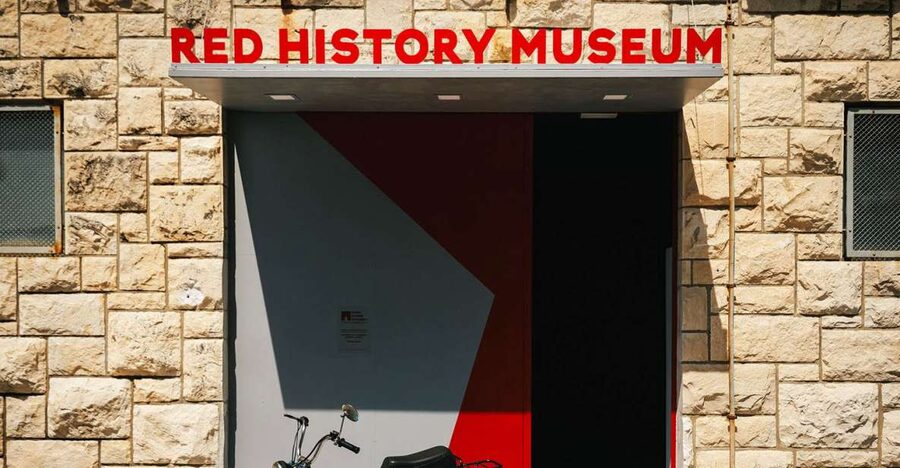
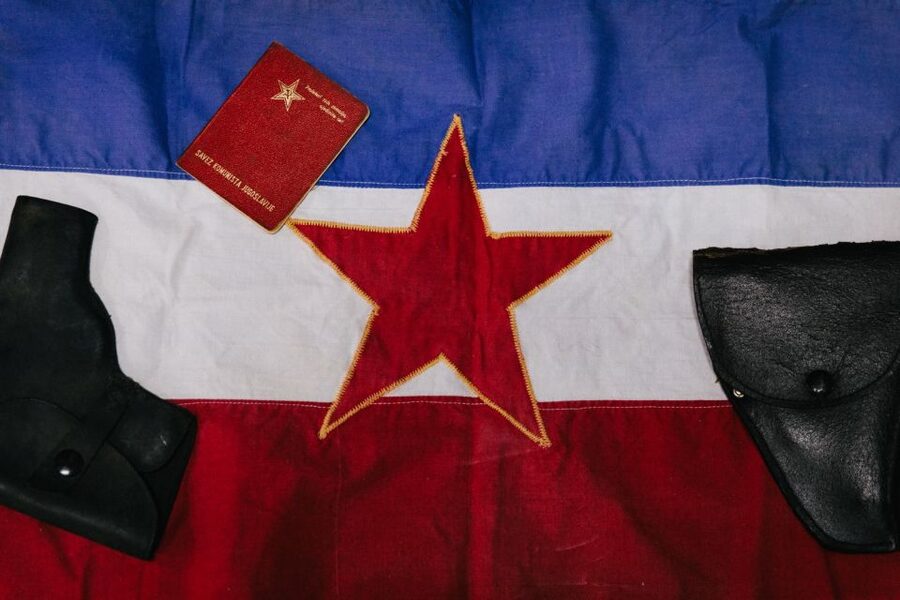
Dubrovnik’s Red History Museum looks at the recent past that shaped modern Croatia. Set inside the former T.U.P. factory complex from 1953, it uses furniture, music, photographs, political material, and interactive displays to show daily life under Yugoslav communist rule.
I like the mix of serious history and playful detail, especially the chance to sit in a Yugo 45 and see old household objects in a reconstructed home. I also like that the museum covers both politics and pop culture, so the subject does not feel like one long school lesson. The main drawback is its small size, and some digital displays may need clearer instructions.
Key points to know before you go
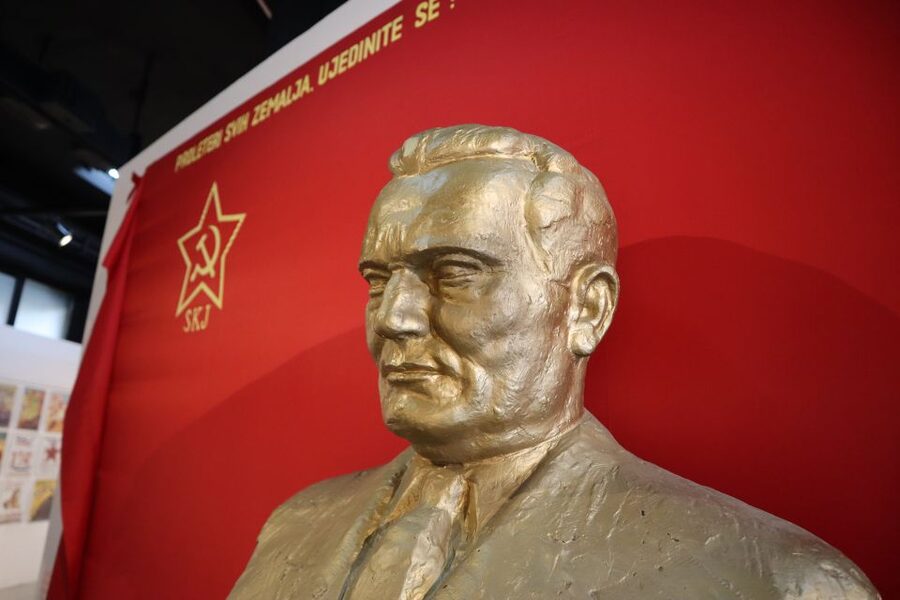
- A 1953 factory setting: The museum occupies the last factory complex in Dubrovnik, giving the subject a fitting industrial home.
- Daily life, not just politics: You see how people lived, listened to music, decorated homes, and consumed popular products.
- A hands-on Yugo 45 photo stop: The famous car adds a light, memorable moment to a serious visit.
- Goli Otok and secret agencies: Political repression and state control receive attention alongside ordinary home life.
- Communist-era food and drink: Finish with popular sweets and drinks modeled on products such as Coca-Cola and Fanta.
- A $11 history lesson: The modest entry price makes this a useful stop for anyone who wants context beyond Dubrovnik’s medieval walls.
Why this museum matters in modern Dubrovnik
Dubrovnik is famous for stone streets, sea views, and its medieval past. That story is important, but it can leave out the much more recent period that shaped the lives of parents, grandparents, and many Croatian residents today.
The Red History Museum fills that gap. It explores Yugoslavia, the communist system, and the years before Croatia became an independent country. You are not simply looking at old objects. You are being asked to connect political decisions with everyday routines.
That connection is the museum’s main strength. A political system can sound distant when explained through dates and official titles. It becomes easier to understand when you see the furniture people used, hear the music they enjoyed, and consider which products were available in local shops.
The museum also helps explain why present-day Croatia cannot be understood through its older Venetian, Austro-Hungarian, or medieval layers alone. The Yugoslav period is recent, personal, and sometimes difficult. This visit gives you a way to approach it without needing a background in Balkan history.
More Tickets in Dubrovnik:
- Pompeii: Entry Ticket and Guided Tour with an Archaeologist
★ 4.8 · 19,459 reviews - Edinburgh: Edinburgh Castle Guided History Tour with Tickets
★ 4.8 · 9,933 reviews - Taormina: Ancient Theater Skip-the-Line Ticket & Audio Guide
★ 4.5 · 2,412 reviews
Entering the old T.U.P. factory complex
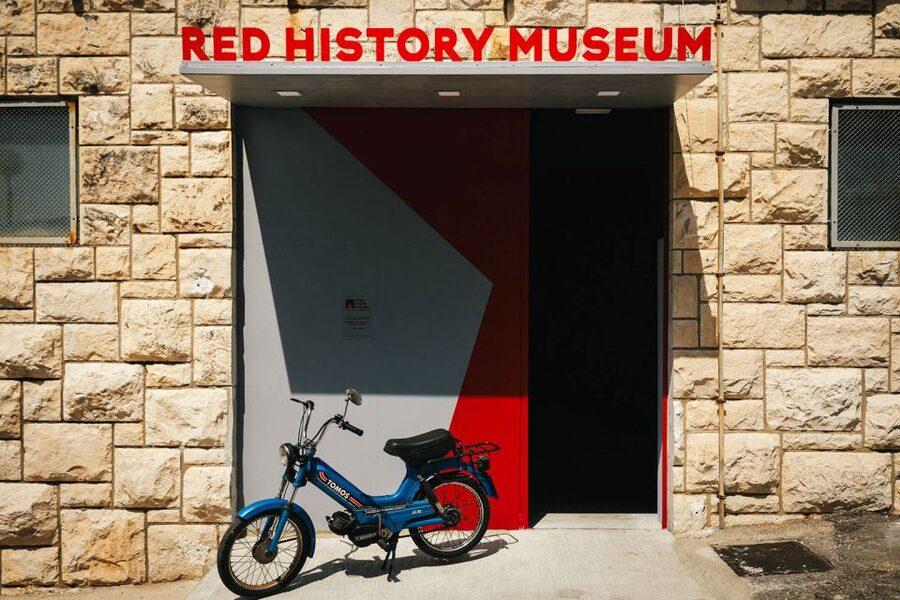
The setting is part of the experience. The museum sits in Dubrovnik’s port area inside the T.U.P. factory complex, built in 1953. It is described as the last factory complex in Dubrovnik, so you are entering a building with a direct link to the industrial and working life of the period.
That location makes more sense than a polished modern gallery would. The subject is not only political theory. It is also about workers, production, consumer goods, and the practical surroundings of ordinary life.
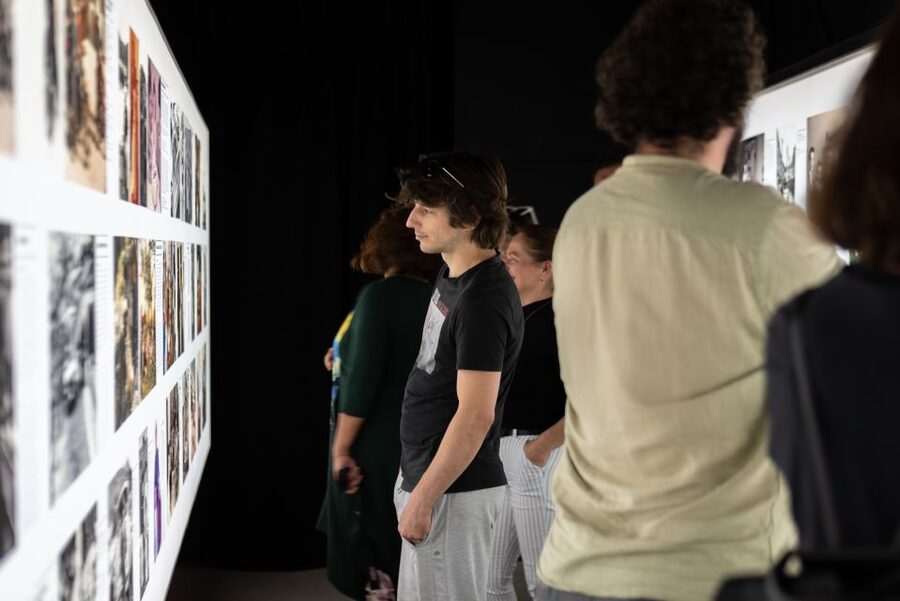
The museum uses both older objects and newer technology. The result is less formal than a conventional display of paintings or archaeological finds. You move through rooms and scenes that ask you to look, listen, and sometimes interact.
Do not expect a huge institution that takes an entire day. The museum is small, but its layout makes good use of the space. Plan it as a focused cultural stop rather than the main event of your day in Dubrovnik.
A reconstructed home from the 1970s and 1980s
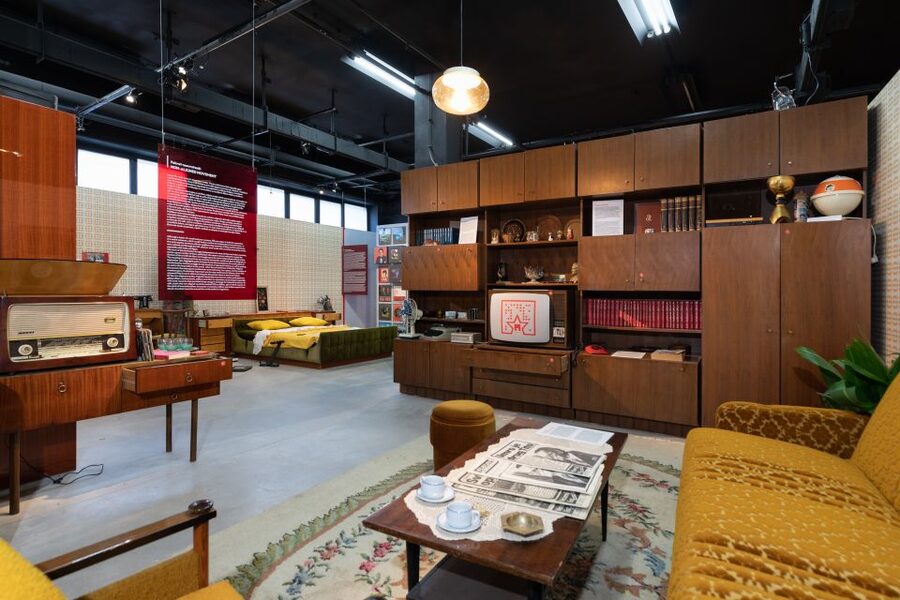
One of the most useful parts is the reconstruction of a Yugoslav home. Old furniture and household objects give the political story a human scale. Instead of imagining communism only through party offices and government buildings, you can consider how it felt inside a living room.
The furniture is especially helpful for visitors who want a sense of the 1970s and 1980s. Design, domestic objects, and room layouts show the visual language of the period in a way that written explanations cannot.
This section should appeal to anyone interested in social history, not just politics. You can pay attention to what is displayed, how rooms are arranged, and how the home setting differs from the public world of slogans and state institutions.
The reconstruction also keeps the museum from becoming too heavy. Serious material is easier to absorb when it is placed beside familiar objects from daily life. You may recognize the basic shape of a home even if the details belong to another country and another political system.
Politics, secret agencies, and the Non-Aligned world
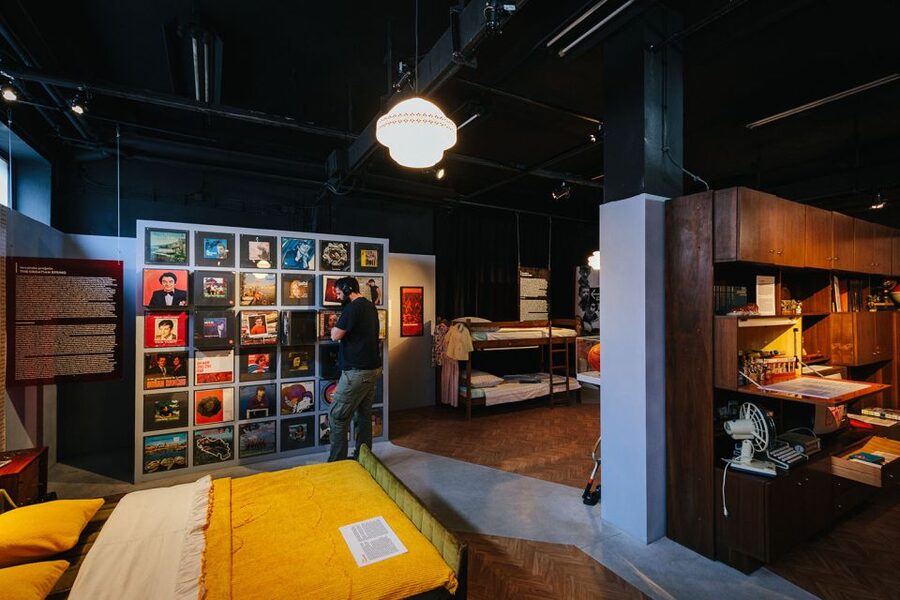
The museum moves beyond decoration and nostalgia. It addresses politics, secret agencies, and the way of the Non-Aligned movement. These sections help explain Yugoslavia’s unusual position during the Cold War.
You get a look at a country that did not fit neatly into the usual division between the Soviet bloc and the West. That broader setting matters because it shaped Yugoslavia’s political identity, international links, and public life.
The museum also presents the watchful role of the Communist Party and the pressure that political control could place on ordinary people. This prevents the visit from becoming a simple celebration of retro furniture and old products.
One area behind curtains deals with Goli Otok, the notorious prison island. Its placement gives the subject a more private, revealing feel. The museum also includes photographs connected with this material, offering a visual record after the initial display.
You should give this section time. The lighter exhibits may catch your attention first, but the political material provides the reason to visit. It shows the cost of the system as well as the daily routines that made it familiar.
More History Tours in Dubrovnik:
- Dubrovnik Old Town History Walking Tour
★ 5.0 · 1,684 reviews - Dubrovnik: Ancient City Walls & Wars Walking Tour
★ 5.0 · 1,270 reviews - Dubrovnik Combo: Old Town & Ancient City Walls
★ 5.0 · 1,019 reviews - Game of Thrones & History of Dubrovnik Tour
★ 5.0 · 628 reviews
Music, design, and the pop culture of Yugoslavia
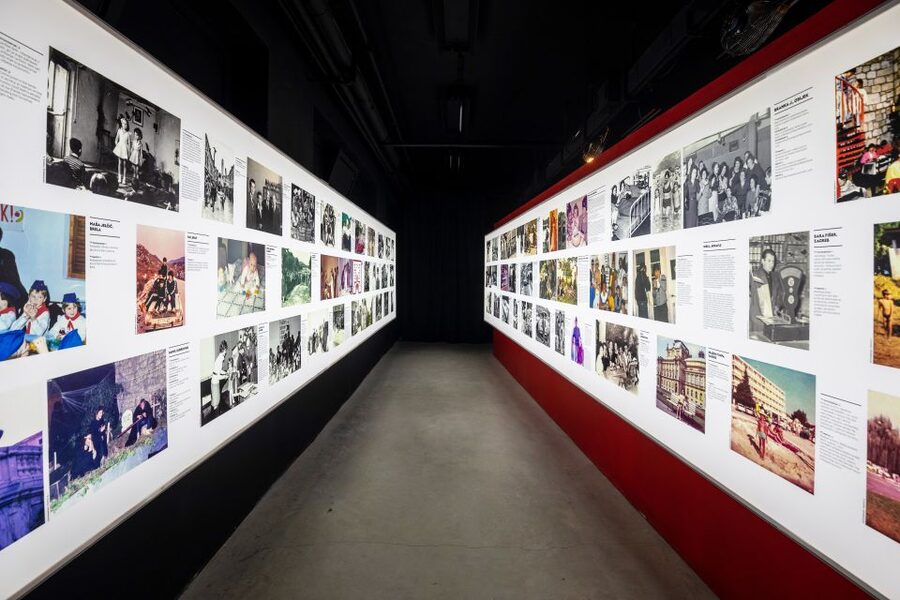
A useful feature of the museum is its attention to pop culture. You can listen to major music hits from the period and see how design shaped the look of everyday Yugoslavia.
This approach makes the museum accessible even if political history is not your favorite subject. Music often brings back a period faster than a wall of text. It can show what people shared, enjoyed, and recognized across the country.
The pop culture displays also add balance. Yugoslav life was not only restrictions, surveillance, and political slogans. People had favorite songs, familiar brands, home styles, and small pleasures. Showing those things beside the more troubling material creates a fuller picture.
The museum is at its best when it lets these different parts sit together. You might move from an ordinary household scene to a display about party control, then hear music associated with the period. That contrast helps you see how public power and private life existed side by side.
The Yugo 45 and the museum’s lighter moments
The Yugo 45 is one of the most memorable stops. You can take a photograph in the small car, often described as the worst car ever. The joke is part of the appeal, but the car also says something about Yugoslav consumer life.
For many people, this will be the easiest object to remember. It gives you a physical sense of the products that represented mobility and modern life for families in the period. It also provides a welcome pause after the more serious political material.
The museum does not treat every object with solemn ceremony. That is a good choice. A visit built only around grim subjects could feel demanding, especially for children or visitors with limited interest in twentieth-century politics.
At the same time, you should not mistake the humor for a lack of seriousness. The car, old furniture, and familiar products are evidence of how people experienced the system in practice. The museum uses humor to draw you in, then gives you more difficult questions to consider.
Communist versions of Coca-Cola and Fanta
Near the end, you can try popular drinks and candies from the period, including communist versions of Coca-Cola and Fanta. This is a small feature, but it explains consumer culture better than a long description might.
The idea of a familiar Western-style product recreated under a different system points to the complicated relationship between Yugoslavia and the outside world. It also makes the visit tangible. You do not only look at the past behind glass. You get a taste of the products associated with it.
This stop works well for families and younger visitors, who may connect with food and branding faster than with political displays. It also gives adults a chance to compare modern products with their older counterparts.
Treat it as a finishing touch, not the main reason to come. The sweets and drinks are fun, but the museum’s value comes from how they fit into the wider story of politics, industry, home life, and identity.
Interactive displays and how to use them
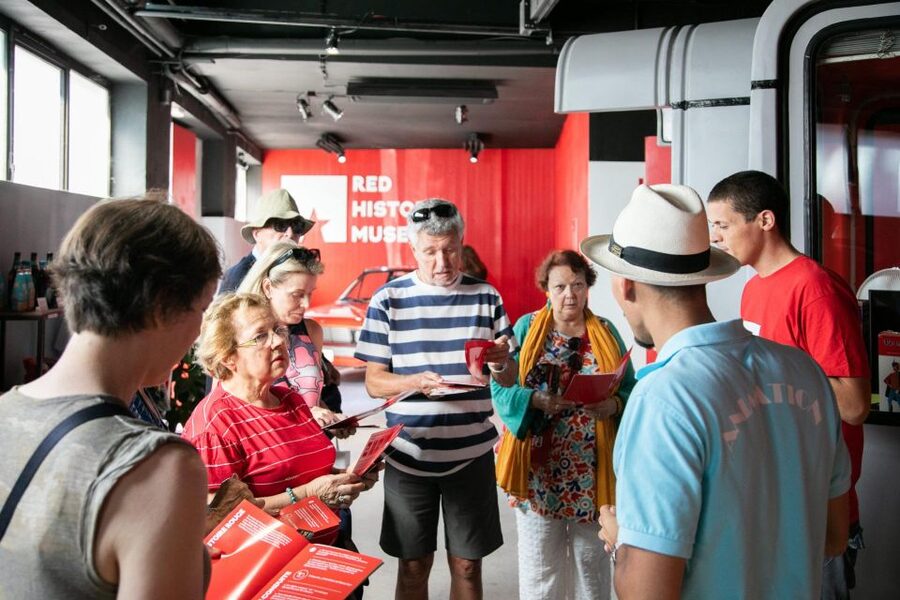
The museum combines old objects with digital and interactive material. This gives you more ways to approach the subject and helps break up the reading.
Some displays use scanned images or virtual elements. Take a moment to follow the instructions rather than rushing past them. The guidance may not always be obvious, and a display that seems inactive may require a particular action or scan.
That small issue is worth knowing before you go. Interactive technology can add a lot when it works clearly, but it can also distract when visitors are unsure what to do. If something does not respond, ask a staff member rather than assuming you have missed the point.
The staff can add context as well. Viktor is specifically noted as an informative member of the team, and speaking with staff can help you place an object or political reference in context. The visit is primarily a museum entry rather than a formal guided tour, so do not assume you will have a guide at every stage, but assistance may be available.
How long should you allow?
A precise visit length is not provided, and the museum is described as small. I would treat it as a compact stop that fits easily into a Dubrovnik sightseeing day, rather than scheduling it as a half-day outing.
Your timing will depend on how much you read, how long you spend with the interactive displays, and whether you stop to listen to the music or examine the photographs. History fans may want to take their time, while families may move more quickly and focus on the car, home reconstruction, and products.
Because the subject is recent and sometimes personal, rushing would be a mistake. Give yourself enough time to look beyond the obvious retro objects and read the sections about political control and Goli Otok.
Is $11 good value?
The regular entry price is $11 per person. For a small museum, that is not an automatic bargain, but the value is strong if you want to understand Croatia beyond its famous old town.
You are paying for a focused experience with original-period objects, reconstructed domestic space, audio, photographs, interactive elements, and a clear subject. The Yugo 45 and communist-era sweets add memorable details, while the political sections provide substance.
The price is less attractive if you only want a quick photo stop or have no interest in twentieth-century history. The museum cannot replace a full course in Yugoslavia, and its compact size limits how much it can cover.
For most visitors who want cultural context, $11 is a fair price. It is especially useful before or after other Croatian history sites because it gives you a recent reference point. You can also reserve now and pay later, and cancellation is allowed up to 24 hours before the visit for a full refund.
Who will enjoy the Red History Museum most?
I would recommend this museum to adults interested in political history, families looking for a break from churches and fortifications, and anyone who wants to understand the generation that lived through Yugoslavia.
It also suits visitors who prefer museums with objects and scenes instead of long walls of text. The reconstructed home, music, photographs, car, and consumer products keep the subject active and varied.
Children may enjoy the interactive parts and the Yugo 45, though the political material about state control and Goli Otok may need explanation. Teenagers with an interest in design, cars, advertising, or modern European history may find more here than they expect.
You might skip it if your Dubrovnik schedule is extremely tight or if your only goal is medieval architecture. The museum is not a substitute for the city walls, churches, or historic streets. It tells a different story, one that begins much closer to the present.
Should you book this museum?
Book the Red History Museum if you want a clear, compact look at Yugoslav life and the political past behind modern Croatia. The strongest reasons are the combination of home life, music, consumer culture, and difficult subjects such as Goli Otok.
I especially like that the museum does not force you to choose between a serious history lesson and a fun stop. You can sit in a Yugo 45, inspect old furniture, listen to period music, and try old-style drinks, then consider how party control shaped the lives of real people.
Skip it only if you have no room for recent history in your Dubrovnik plans. At $11, it offers good value for a focused museum visit, and its small size makes it easy to add to a day in the port area.
FAQ
Where is the Red History Museum located?
It is in Dubrovnik’s port area, inside the T.U.P. factory complex built in 1953.
What does the Red History Museum focus on?
It explores Croatia’s communist history and life under the Yugoslav regime, including politics, design, music, secret agencies, consumer products, and home life.
How much does regular entry cost?
The regular entry ticket costs $11 per person.
Is this the first museum in Croatia about communist history?
The museum is described as the first museum in Croatia to explore the country’s communist history.
Can I sit in a Yugo 45?
Yes. The experience includes the chance to take a photo in a Yugo 45, the well-known Yugoslav car.
Does the museum include a reconstruction of a home?
Yes. You can walk through a reconstructed home that helps show what life was like in Yugoslavia during the 1970s and 1980s.
Does the museum cover Goli Otok?
Yes. Information about Goli Otok is presented behind curtains, along with a collection of related photographs.
Are there interactive displays?
Yes. The museum combines older objects and displays with newer technology, including virtual scanned images.
Can I try communist-era drinks and sweets?
Yes. At the end of the visit, you can try popular drinks and candies from the period, including communist versions of Coca-Cola and Fanta.
Can I cancel for a refund?
You can cancel up to 24 hours in advance for a full refund. You can also reserve your place and pay later.
Just added around Dubrovnik
- Dubrovnik Old Town: Night tour with History, Wine & Bites★ 4.7 · 59 reviews
- Dubrovnik History and Game of Thrones Locations Tour★ 4.8 · 49 reviews
- Dubrovnik: Historical Tour with Game of thrones details★ 4.9 · 43 reviews
- Dubrovnik: Small-Group Guided Old Town History Walking Tour★ 4.9 · 37 reviews
- Dubrovnik: Game of Thrones & History Tour★ 4.7 · 72 reviews
- Dubrovnik: Game of Thrones and History Small Group Tour★ 5.0 · 76 reviews
- Dubrovnik Jewish Heritage Private Walking Tour★ 5.0 · 121 reviews
- Dubrovnik: Old Town History Walking Tour★ 4.9 · 474 reviews
Dubrovnik History Tours, compared.

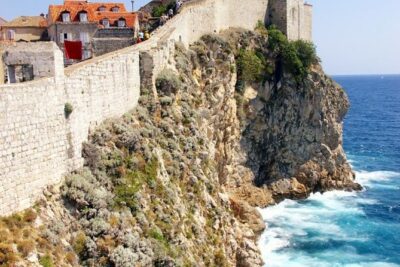
Dubrovnik: Ancient City Walls & Wars Walking Tour
Read our review →
Dubrovnik Combo: Old Town & Ancient City Walls
Read our review →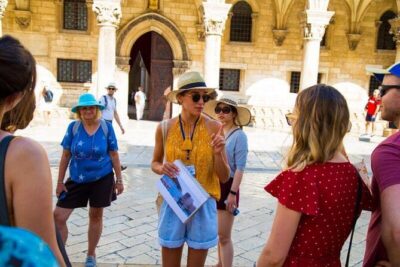
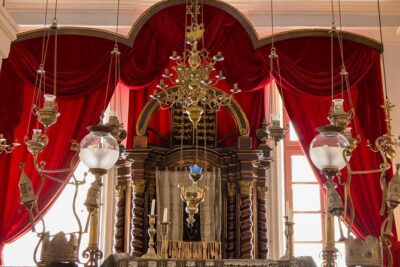

Dubrovnik: Game of Thrones and History Small Group Tour
Read our review →
Browse the lists this tour appears in