Review · USA
Experience Birmingham – The Historic Highlights
Birmingham’s story shifts quickly from boomtown skyscrapers to civil rights history, antebellum architecture, baseball, food, and industry. The Historic Highlights tour connects those pieces by car, so you can cover far more ground than on foot and still have time at the places that matter. Guide David is known for lively explanations, personal insight, and adjusting the day to your interests.
I especially like the tiny group size, capped at three people, and the mix of stops: Morris Avenue and the Alabama Peanut Company bring local character, while Vulcan Park and 16th Street Baptist Church give the day its larger historical frame. The main consideration is the vehicle. Several people found it less comfortable than ideal, and one noted pet hair and odor, so anyone with allergies or mobility concerns should ask about the car before booking.
Key reasons to consider this Birmingham tour
- See four eras in one outing: Downtown’s skyscraper boom, Victorian Birmingham, the antebellum South, and the civil rights struggle all have a place on the route.
- Visit 16th Street Baptist Church: This deeply moving stop connects Birmingham directly to the events that helped drive the Civil Rights Act of 1964.
- Ride between scattered sights: Air-conditioned transport saves your energy and lets you reach Vulcan, Arlington, downtown, and the Civil Rights District in one morning.
- Keep the group very small: With no more than three people, David can answer questions and change the focus to match your interests.
- Enjoy local touches: Roasted peanuts, bottled water, and snacks add a little comfort without turning the tour into a food excursion.
- Expect a flexible schedule: The tour lasts about three to four hours, though David has sometimes started early or stayed longer when the day allows.
Why this half-day tour works in Birmingham
Birmingham is not a city you understand from one central walking route. Its important places are spread across downtown, the south side, historic neighborhoods, and former industrial areas. That makes a vehicle tour practical, especially during a first visit.
This experience begins at Vulcan Park and Museum at 10:00 a.m., though pickup is available from a downtown hotel or bed-and-breakfast. The route ends back at the meeting point. You spend much of the time riding in air-conditioned comfort, with snacks and bottled water provided.
The maximum group size of three is a major advantage. A small group gives you room to ask about difficult subjects, pause over a detail, or request more time at a place that catches your interest. David has also shown flexibility with couples, solo visitors, families, and friends who wanted different versions of Birmingham.
The tour costs $100 per person. That is not the cheapest way to see a city, but the price makes more sense when you consider the private-feeling format, transport, entry to Vulcan Park and Arlington Antebellum Home, and the amount of ground covered. A self-guided day would require more planning, parking, and driving. A walking tour would miss several major stops.
Still, you should not expect a polished luxury vehicle. One person specifically asked for a more comfortable van, while another described the vehicle as dirty and unsuitable for someone with pet allergies. The company has considered a larger bus-style vehicle, but you should confirm current transport details if comfort is a serious concern.
More History Tours in the USA:
- History and Hauntings of Salem Guided Walking Tour
★ 5.0 · 14,564 reviews - Charleston’s Old South Carriage Historic Horse & Carriage Tour
★ 5.0 · 10,023 reviews - Beneath The Streets Underground History Tour
★ 4.5 · 8,006 reviews
Heaviest Corner and Birmingham’s early skyscrapers
The first stop is the Heaviest Corner on Earth, at 20th Street and 1st Avenue North. The name refers to the near-simultaneous arrival of four tall buildings that changed Birmingham’s skyline in the early 1900s.
The Woodward Building appeared in 1902 at ten stories. The Brown Marx Building followed in 1906 and the Empire Building in 1909, both at sixteen stories. The American Trust and Savings Bank Building reached twenty-one stories in 1912.
You spend about ten minutes here, and there is no admission charge. That sounds brief, but it gives you a useful opening lesson: Birmingham was a young, ambitious industrial city competing for attention in the modern South. Look up at the buildings and you can see how commercial confidence reshaped the center.
This is primarily a stop for context rather than a long interior visit. David’s explanations help connect the architecture to Birmingham’s growth, so listen for the way he frames the city as a place built quickly around business, industry, and movement.
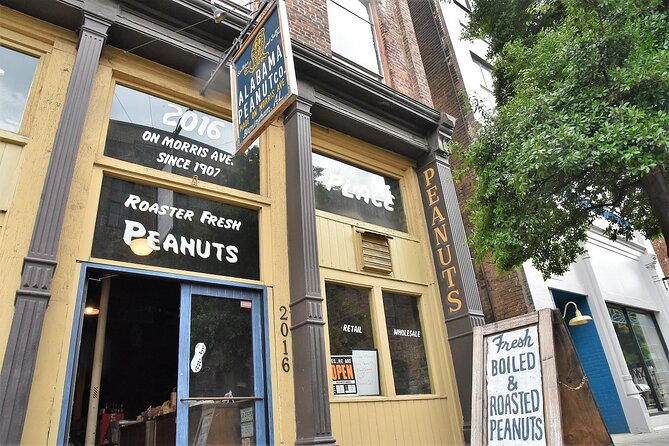
Morris Avenue and the Alabama Peanut Company
Morris Avenue supplies a sharp change of mood. Its preserved Victorian district includes cobblestones and gaslights, details that make the street feel separate from the larger commercial center. You spend about twenty minutes here, free of charge.
I like this part of the route because it slows the pace. The street is not just another photo stop. It gives you a feel for Birmingham’s older building scale and everyday character, after the tall downtown structures have established the city’s ambitions.
The route also includes the Alabama Peanut Company, where you stop for about five minutes and pick up a bag of roasted peanuts. The business occupies a building with a mysterious past, adding a small local story to the visit.
Do not expect a full tasting tour or a long shopping break. The appeal is the simple, distinctly Southern snack and the chance to see a preserved part of the city through a local business. It is the sort of detail that can make a city tour feel less like a checklist.
Food culture, changing neighborhoods, and a controversial artwork
Between the named stops, David points out an area at the center of Birmingham’s food scene. The tour uses that drive to explain how the city is becoming a major destination for food.
The exact amount of time here can vary, since this is a passing section rather than a formal admission stop. That flexibility is useful if food interests you. You can ask David for more context about the area, though the tour does not include a sit-down meal.
You also pass an intriguing and controversial work of art. The information provided does not identify the piece, so I would not book this tour expecting a specific artwork as a main attraction. Its value is in the discussion, and in seeing how Birmingham continues to argue with its past and present through public spaces.
Same city, a different century:
- Big Island in a Day: Volcanoes Waterfalls Sightseeing and History
★ 5.0 · 6,569 reviews - Boston: Freedom Trail History Small Group Walking Tour
★ 5.0 · 6,450 reviews - Historic Charleston Guided Sightseeing Walking Tour
★ 5.0 · 6,216 reviews - Charleston Horse-Drawn Carriage Tour: Explore Historic Charleston
★ 5.0 · 3,561 reviews
Vulcan Park gives you Birmingham from above

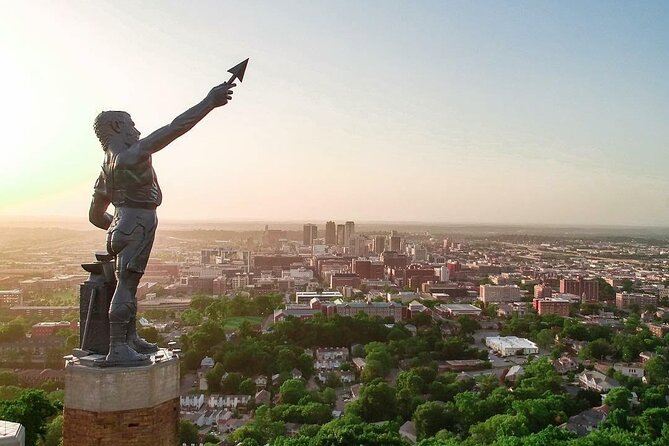
Vulcan Park and Museum is one of the tour’s main stops. You spend about thirty minutes here, with admission included.
The centerpiece is Vulcan, described as the largest cast iron statue in the world. The Roman god of fire and metalworking is a fitting symbol for a city shaped by iron, steel, furnaces, and industrial labor. From the park, you also get a broad view of Birmingham.
The tour’s phrase about the moon that never sets points to a local story or feature David explains on site. Since this is a guided visit, you can ask him to unpack that reference rather than simply taking a photograph and moving on.
Thirty minutes is enough for a look at the statue, the view, and the museum setting, but it is not a long museum session. If Vulcan is your main interest, tell David early. The small group makes that possible, although the overall route still has several places to cover.
This stop helps you see Birmingham as a physical place. The downtown buildings, surrounding hills, industrial past, and spread-out neighborhoods make more sense from above. It also gives the morning a welcome open-air pause.
Arlington Antebellum Home and Gardens
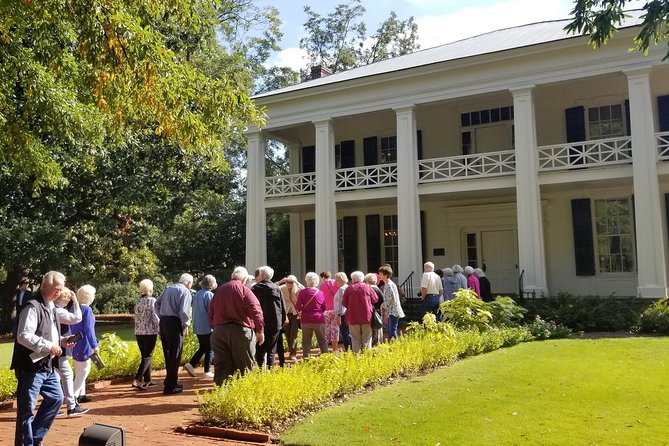
Arlington Antebellum Home and Gardens is the tour’s only remaining Southern plantation house. Admission is included, and you spend about forty-five minutes here, making it one of the longer stops.
The house adds a different and more difficult layer to Birmingham’s story. Its architecture and gardens offer a look at the antebellum South, but a responsible visit also requires attention to the people whose labor made that world possible. David’s role is important here because the tour presents Birmingham’s positive and negative history rather than only its attractive buildings.
Forty-five minutes gives you enough time to take in the property without allowing it to swallow the entire day. If you care about architecture, gardens, or the social history of the South, this may be one of the most useful portions of the route.
You should also expect a moderate level of physical activity. The tour is not a strenuous hike, but you will be getting in and out of the vehicle and visiting several sites. People who need extra time should tell David at the start.
Baseball, the Negro Leagues, and changing access
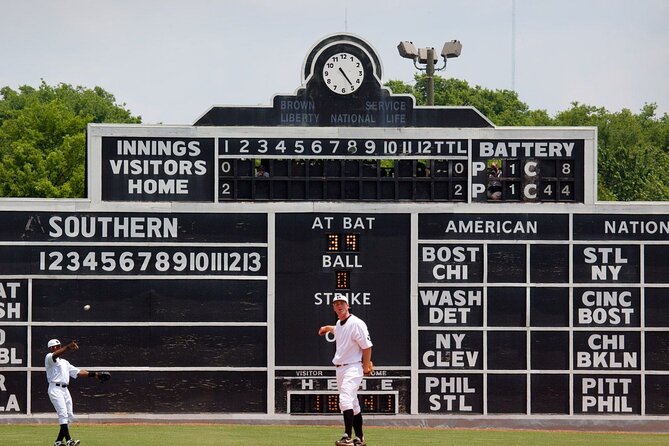
The route passes America’s oldest ballpark, a site connected to both White and Negro League teams and several movie locations. At the time of the tour information, the ballpark was closed to visitors while undergoing renovations for a major league game in 2024.
That means you should treat this as a drive-by explanation, not a guaranteed interior visit. It is still an important stop because baseball reveals another side of Birmingham’s social history. The connection to Negro League teams opens a conversation about segregation, talent, and the limited opportunities available to Black athletes.
One particularly memorable version of the tour has included the Negro League Players Museum, but the supplied tour details do not list it as a regular stop. Ask David about current access rather than assuming it is included. The same advice applies to the ballpark, since renovation schedules can change.
Kelly Ingram Park and the Civil Rights District
The final major section moves into the area that helped define Birmingham’s civil rights struggle in the 1960s. The route passes through the district around Kelly Ingram Park and 16th Street Baptist Church.
This is where the tour becomes most emotionally serious. The city’s civil rights story is not treated as a distant chapter. The events still shape Birmingham, and the tour connects the past to issues that continue today.
You should allow yourself time to listen. This is not a place for a rushed photo stop or a light historical anecdote. David’s strength, according to the information provided, is his ability to explain both the city’s achievements and its painful failures. His first-hand experiences have also helped bring the subject closer to the present.
16th Street Baptist Church and four lives lost
The tour spends about thirty minutes at 16th Street Baptist Church, with admission included. This is the most powerful stop for many people.
The church was bombed, killing four children, in an attack that became a defining moment in the civil rights movement. The tragedy helped build support for the Civil Rights Act of 1964. The site asks you to confront the human cost behind the political change.
The value of a guide is especially clear here. A short label cannot fully explain the church’s place in Birmingham, the atmosphere of the surrounding district, or the way local events affected national law. David’s approach is described as engaging but respectful, and you should expect the tone to be thoughtful rather than entertaining.
The half-hour allocation is sensible. It gives you time to absorb the church and its meaning without forcing the whole tour into a memorial visit. If this is the part of Birmingham you most want to understand, say so when you meet David.
Flexibility, comfort, and the real value of $100
The strongest feature of this experience is its personal scale. David has adjusted the route for people interested in architecture, civil rights, food, baseball, or general city history. If you are the only person booked, or part of a pair, you may have more control over the pace.
The tradeoff is that a flexible tour can make the schedule less exact. One outing started early and continued well beyond the expected finish. That can be generous, but it may not suit you if you have a fixed lunch reservation or afternoon plans. Ask about timing at the beginning.
At $100 per person, I see the best value for solo visitors, couples, and small groups who want an introduction without renting a car or researching several separate sites. The entry fees, pickup option, refreshments, and guide attention help justify the cost.
The value is weaker if you prefer to spend hours inside one museum, walk slowly, or choose every stop yourself. You are paying for a guided overview, local interpretation, and transport between places. It is not designed as a long, leisurely visit to each attraction.
The tour is generally well regarded, with a 4.7 rating from 38 reviews and 95 percent of customers recommending it. The most consistent praise centers on David’s flexibility, enthusiasm, and ability to cover a surprising amount without making the day feel rushed. The repeated criticism concerns vehicle comfort, so keep that in mind before booking.
Who should book this tour?
Book it if you have only a morning or half-day in Birmingham and want the broadest useful introduction. It suits first-time visitors, solo visitors who want company, couples marking a special occasion, and anyone who wants civil rights history placed alongside architecture and local culture.
It is also a good choice if you dislike rigid group tours. With a maximum of three people, David can respond to your questions and adjust the emphasis. The pickup option is handy if you are staying downtown.
Skip it if your priority is a large, polished bus, a long museum visit, or a fully walking-based experience. Also ask about the vehicle before paying if you have pet allergies, need extra comfort, or have trouble getting in and out of a van.
You can cancel without a charge up to 24 hours before the 10:00 a.m. start time. The experience depends on good weather, and poor conditions may lead to a new date or full refund.
FAQ
Where does the Birmingham Historic Highlights tour begin?
The tour begins at Vulcan Park and Museum, 1701 Valley View Drive, Birmingham, Alabama. Pickup is also offered from downtown Birmingham hotels and bed-and-breakfasts.
What time does the tour start?
The scheduled start time is 10:00 a.m.
How long does the experience last?
The tour lasts approximately three to four hours and ends back at the meeting point.
How many people can join?
The maximum group size is three people.
Is admission included at the main paid attractions?
Admission is included at Vulcan Park and Museum and Arlington Antebellum Home and Gardens. The Heaviest Corner on Earth and Morris Avenue are free stops.
Can I cancel for a full refund?
Yes. You can cancel at least 24 hours before the experience start time for a full refund. Cancellations or changes made less than 24 hours before the start are not accepted for a refund.
Just added around the USA
- Red Rocks Amphitheatre Historical Walking Tour★ 5.0 · 74 reviews
- 1-Hour Segway Tour of Cheyenne Cañon Art, History and Nature★ 5.0 · 36 reviews
- Colorado Springs – Guided Walking Ghost / History Tour★ 5.0 · 168 reviews
- Ancient Landscapes Private Geology Hike at Garden of the Gods★ 5.0 · 31 reviews
- Village Food Tours Lunch & History Tour★ 5.0 · 80 reviews
- 2.5 Hour Kayaking with Manatee and History Tour in Tarpon Springs★ 5.0 · 24 reviews
- Safety Harbor Ghost Tour★ 5.0 · 60 reviews
- Historical Bicycle Tour of Dunedin★ 5.0 · 44 reviews
USA History Tours, compared.
History and Hauntings of Salem Guided Walking Tour
Read our review →
Charleston’s Old South Carriage Historic Horse & Carriage Tour
Read our review →
Boston: Freedom Trail History Small Group Walking Tour
Read our review →
Historic Charleston Guided Sightseeing Walking Tour
Read our review →
Savannah History and Haunts Candlelit Ghost Walking Tour
Read our review →
Tour of Historic Fenway Park, America’s Most Beloved Ballpark
Read our review →