
Review · USA
Historic Bike Tour in Tucson
Tucson’s story comes into focus quickly from a bicycle seat. You’ll pedal past adobe homes, old shrines, murals, churches, and public buildings while Lorraine connects each place to Spanish settlers, outlaws, bank robbers, artists, and everyday city life. The ride crosses the unusual Rattlesnake Bridge, shaped like a diamondback.
I like the small groups of no more than eight and the easy pace, with frequent stops for photos, water, and short history talks. I also like the way the route mixes major sights with quieter streets and colorful neighborhoods that are easy to miss from a car.
The main thing to weigh is Tucson’s heat. Several riders recommend the morning departure, especially in warmer months. Parking near the start at 215 N Hoff Avenue can also take some planning, so allow extra time before the ride.
Key points to know before you ride
- Rattlesnake Bridge: Cross a 28-foot downtown bridge shaped like a diamondback rattlesnake.
- Barrio Viejo: See painted adobe homes, murals, shrines, and old residential streets.
- Lorraine’s guiding: Expect local history, architecture, safety reminders, and plenty of short stops.
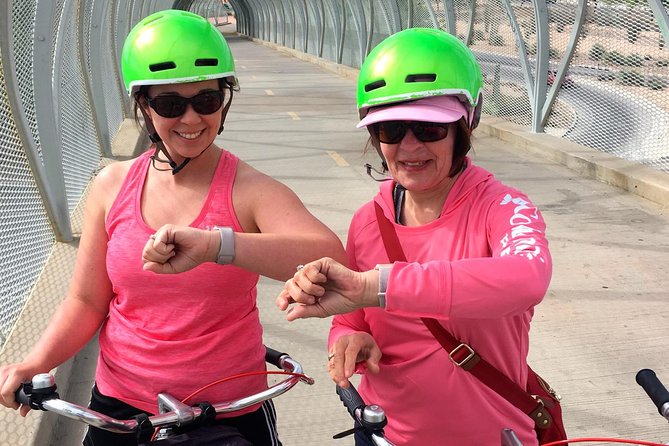
- Gentle cycling: The route is mostly easy, with quiet streets, bike lanes, and a short stretch of the Santa Cruz River Trail.
- Morning or afternoon: You can choose the departure that fits your schedule, though mornings are the safer bet in hot weather.
- Practical limits: Riders must be 4 feet 8 inches to 6 feet 6 inches tall, weigh no more than 260 pounds, and wear closed-toe shoes.
Why a bicycle is a smart way to see central Tucson
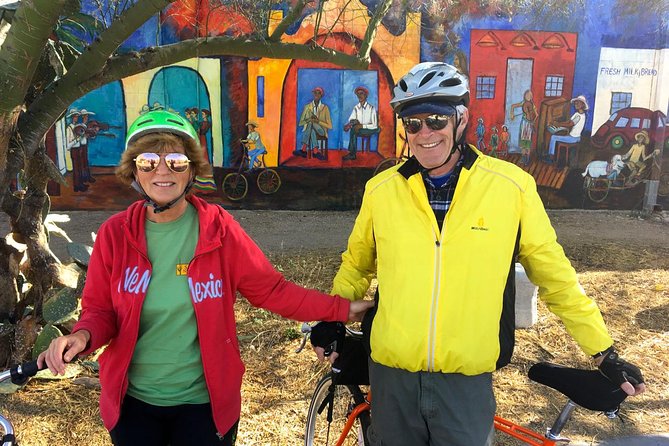
This is not a hard cycling workout. It is a sightseeing ride with enough movement to cover more ground than you could on foot, but not so much that the route becomes a test of endurance.
The city’s central districts are spread across a useful mix of streets, lanes, paths, and neighborhood roads. A bicycle lets you move from the Southern Arizona Transportation Museum to the courthouse, cathedral, Barrio Viejo, Mercado San Agustin, and the river corridor without spending the day climbing into and out of a vehicle.
I also like the pauses built into the route. You stop often, hear a short explanation, take pictures, and then ride on. That format works well in Tucson, where a building, shrine, mural, or street corner may not look important until someone explains what you are seeing.
The group size matters, too. With a maximum of eight riders, Lorraine can pay attention to different riding speeds and stop when someone needs a break. The route is designed for ordinary visitors, not serious cyclists. Several riders have described the bikes as light and easy to handle, and the ride as mostly flat.
You still need to feel comfortable on a bicycle. You will ride through city streets and university bike lanes, not only on a protected path. The guide places a strong focus on safety, but closed-toe shoes are required, and the height and weight limits are firm.
More History Tours by Bike, Segway and Tuk-Tuk in the USA:
- Charlotte’s Ultimate Southern Charm Historical City Cart Tour
★ 5.0 · 1,347 reviews - Asheville Historic Downtown Guided Electric Bike Tour with Scenic Views
★ 5.0 · 1,234 reviews - Private Guided Historic Electric Cart Tour of St. Augustine
★ 5.0 · 1,194 reviews
Starting at the Southern Arizona Transportation Museum
The tour begins at 215 N Hoff Avenue, near the historic Southern Pacific train station. This is a useful first stop because rail travel helped shape Tucson’s growth and connected the city to the wider Southwest.
The museum itself receives only a brief look from the outside, with about five minutes allotted. You should not expect an interior museum visit as part of the ride. The value here is the setting and the introduction to Tucson’s transportation past before the route turns toward the older center of town.
Arrive with enough time to check in, receive a bicycle suited to your height, put on a helmet, and listen to the safety briefing. The operator offers morning and afternoon departures, and the tour lasts about 2 hours 15 minutes.
The start is near public transportation, but parking is less simple. One rider spent a long time searching and ended up parking some distance away. I would not cut this close. Tucson’s heat makes a rushed walk to the meeting point less pleasant, especially if you have already been driving around looking for a space.
Rattlesnake Bridge and Tucson’s outlaw stories
The first memorable riding feature is Rattlesnake Bridge, a 28-foot crossing completed in 2002. Its design resembles a real diamondback rattlesnake, so you pedal through the body of the snake rather than across an ordinary concrete span.
It is an entertaining piece of public design and an easy photo stop. Keep both hands on the handlebars as you cross, especially if you are more interested in looking around than riding straight.
Lorraine uses this part of the route to tell stories about bank robbers and outlaws who once lived in the area. That detail gives the ride some color without turning the tour into a lecture. Tucson’s past includes more than missions and historic buildings, and these stories help explain the rougher side of the old city.
The bridge is not the biggest attraction by itself. Its real value is that it gets you moving and gives the tour a memorable early landmark. You will hear a story, see a quirky piece of city design, and then continue into the historic districts.
El Presidio, the courthouse, and the cathedral
The route continues toward the Tucson Museum of Art and Historic Block in the El Presidio area. This neighborhood marks one of the city’s older centers, and the tour uses a short stop to point out the buildings and street pattern.
You will also pass the Pima County Courthouse, often regarded as one of Tucson’s finest buildings. The stop is brief, about two minutes, so you should think of it as an exterior introduction rather than an architectural tour.
The courthouse is a good example of a stop that benefits from a guide. You can admire the design on your own, but Lorraine adds the local setting and explains why the building matters. The same applies to St. Augustine Cathedral, the spiritual center of town, where the group pauses for another short look.
Do not book this tour expecting extended visits inside these buildings. The route is built around seeing several sites from the outside and connecting them with stories. If you want long museum visits, church interiors, or detailed architectural study, you will need to return on foot later.
That limitation is also what lets the tour cover so much ground. You get a useful first look, then decide which places deserve more of your own time.
More Cycling Trips in the USA:
- Savannah: Historical Bike Tour with Tour Guide
★ 4.8 · 140 reviews - History Ride: The Best of Buffalo by Bike
★ 5.0 · 94 reviews - Savannah: History, Culture, & Scenic Views E-Bike Tour
★ 5.0 · 69 reviews - Savannah: Historic District Guided Bike Tour
★ 4.8 · 47 reviews
Barrio Viejo’s adobe houses and personal shrines
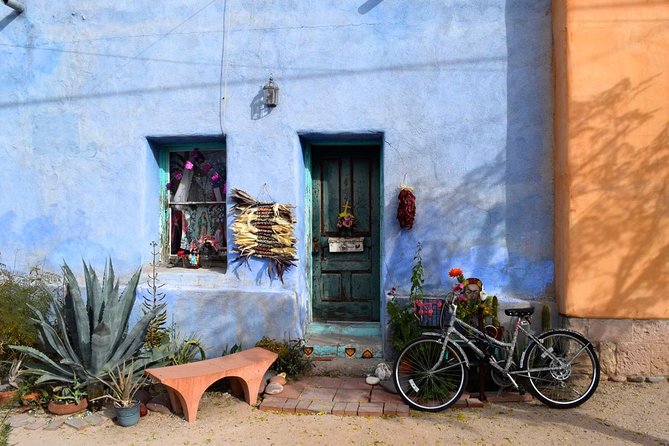
Barrio Viejo is the heart of the ride. The older streets, colorful adobe homes, murals, and small shrines give you a stronger feel for Tucson than a list of monuments ever could.
This is where the bicycle becomes especially useful. You can move slowly through residential streets, pause beside a painted wall, and look at details that would be easy to miss through a car window. The neighborhood has a lived-in quality, not just a parade of official sights.
El Tiradito Shrine is one of the more unusual stops. It is a Barrio Viejo landmark with a story of its own, and Lorraine uses it to add a human scale to the tour. Small religious sites such as this can tell you as much about local tradition as a grand cathedral.
The historic homes and shrines are also among the tour’s best photo opportunities. Bring a phone or camera, but listen first. The route includes many short stops, and the explanations are part of what makes the buildings worth noticing.
A practical point: the ride does not give you a long period to wander Barrio Viejo independently. You will see a good cross-section, but you should return later if you want to explore galleries, shops, or individual buildings at a slow walking pace.
Mercado San Agustin and the city’s everyday side
Mercado San Agustin provides a change of mood. This outdoor public space is a lively place to pause and see how Tucson’s older districts connect with present-day city life.
The scheduled stop is short, around five minutes. That is enough to get your bearings and hear about the area, but not enough for a full meal or relaxed browsing. One useful suggestion from past riders is to allow extra time before or after the bike tour if you want to sample food.
This is one of the few places where the tour’s schedule may leave you wanting more. The route focuses on history and sightseeing rather than food. If you are choosing between a bike tour and a food tour, this experience clearly favors city context, architecture, and outdoor riding.
Still, Mercado San Agustin works well as part of the larger route. It shows that Tucson’s historic center is not frozen in the past. You see old neighborhoods, newer public spaces, and the connections between them.
The Santa Cruz River Trail and Barrio Kroger Lane
The ride then reaches Barrio Kroger Lane and the Santa Cruz River Trail. You spend about ten minutes on a portion of The Loop, Tucson’s 55-mile bike path system.
This section gives you a break from city streets and a different view of Tucson. The river corridor is not treated as a long nature excursion. It is a short ride that shows how the city uses its trail network and gives you room to settle into the pedals.
The route has varied terrain, but the overall ride is described as relaxed and mostly flat. You should not expect dramatic elevation changes or a strenuous climb. The combination of quiet streets, bike lanes, and trail riding makes this a good first cycling activity in Tucson.
The river stop also helps explain why Tucson works well for casual bicycling. You get a taste of the broader trail system without committing to a full-day ride. If you plan to cycle on your own later, the tour can help you understand how the central streets and trail sections fit together.
Lorraine’s style and the value of frequent stops
Lorraine is the main reason the experience feels personal rather than mechanical. She gives the history in short pieces, points out architecture and murals, and adjusts the pace to the group. She also leaves time for photographs and offers suggestions for places to visit or eat later.
Her style suits riders who want context without sitting through a long classroom talk. She covers Spanish settlement, local architecture, neighborhood history, artists, famous figures, bank robbers, and Tucson’s modern identity. The stories give each district a reason to remember it.
Safety is another clear part of her approach. She watches the group, chooses quieter routes when possible, and helps riders who are nervous or out of practice. One family even included a 76-year-old rider who had not ridden for two decades, and the guide adjusted the experience to keep it comfortable.
That does not mean every rider will find the route effortless. You should be able to control a bicycle and pay attention around other road users. But if you can manage a casual ride, the frequent stops make the experience forgiving.
Is $83 a fair price?
At $83 per person, this is not the cheapest way to see downtown Tucson. You could walk through some of the same districts for free, and many buildings can be viewed from public streets.
The price makes more sense when you count what the bicycle adds. You receive a bike, helmet, guide, route planning, safety support, local stories, and a compact trip through several parts of the city. In a little over two hours, you cover ground that would take longer on foot and learn how the neighborhoods connect.
The small group also improves the value. A group capped at eight is easier to manage than a large cycling pack. You can ask questions, hear the explanations, stop for pictures, and receive more direct help from Lorraine.
I would consider the tour good value for a first visit to Tucson, particularly if you want an overview before deciding where to spend the rest of your day. It is less useful for you if you already know central Tucson well, prefer long museum visits, or mainly want a serious workout.
The activity is offered in English. Confirmation arrives when you book, and cancellation is free up to 24 hours before the start time. The tour can be canceled for poor weather or if the minimum number of riders is not met, with a choice of another date or a full refund.
Choosing the right departure and preparing well
Choose the morning ride if you have flexibility. Tucson can be hot, and the morning gives you a better chance of cooler conditions. The afternoon option works if your schedule requires it, but you should take the heat seriously.
Wear closed-toe shoes. The operator requires them, and they are the sensible choice for pedals and city riding. Bring water, sun protection, and a camera, though the supplied information specifically confirms the bike and helmet rather than other equipment.
The tour accepts riders from 4 feet 8 inches to 6 feet 6 inches, with a maximum weight of 260 pounds. Riders 5 feet and taller are recommended. Most people can participate if they meet these limits and can ride a bicycle comfortably.
You do not need to be an experienced cyclist. You do need to pay attention, follow the guide’s directions, and be ready for a mix of quiet roads, bike lanes, and a short trail section.
Should you book the Historic Bike Tour in Tucson?
Book it if you want a friendly overview of central Tucson, enjoy gentle exercise, and like learning the story behind ordinary streets and buildings. The strongest parts are Lorraine’s local guidance, the small group, Barrio Viejo, the murals and adobe homes, and the mix of city roads with the Santa Cruz River Trail.
Choose the morning departure if the weather is warm. Allow time to find parking, and do not expect long interior visits or a full food experience. For most first-time visitors, this is a practical way to get oriented and see Tucson as a living city rather than a string of isolated sights.
FAQ
How long does the Historic Bike Tour in Tucson last?
The tour lasts approximately 2 hours and 15 minutes.
How much does the tour cost?
The price is $83 per person.
Where does the tour start?
It starts at 215 N Hoff Avenue, Tucson, Arizona 85705.
Where does the tour finish?
The ride ends back at the original meeting point.
What is included with the bike tour?
A bicycle and helmet are included, along with the guided ride.
Is the tour offered in English?
Yes. The tour is offered in English.
How many people can join the tour?
The maximum group size is eight travelers.
What height and weight limits apply?
Riders must be between 4 feet 8 inches and 6 feet 6 inches tall, or 142 to 198 centimeters. The maximum weight is 260 pounds, and riders 5 feet and taller are recommended.
Are morning and afternoon departures available?
Yes. You can choose either a morning or afternoon departure.
What happens if I need to cancel?
You can receive a full refund if you cancel at least 24 hours before the local start time. Cancellations or changes made less than 24 hours before the start time are not refunded or accepted.
Just added around the USA
- Red Rocks Amphitheatre Historical Walking Tour★ 5.0 · 74 reviews
- 1-Hour Segway Tour of Cheyenne Cañon Art, History and Nature★ 5.0 · 36 reviews
- Colorado Springs – Guided Walking Ghost / History Tour★ 5.0 · 168 reviews
- Ancient Landscapes Private Geology Hike at Garden of the Gods★ 5.0 · 31 reviews
- Village Food Tours Lunch & History Tour★ 5.0 · 80 reviews
- 2.5 Hour Kayaking with Manatee and History Tour in Tarpon Springs★ 5.0 · 24 reviews
- Safety Harbor Ghost Tour★ 5.0 · 60 reviews
- Historical Bicycle Tour of Dunedin★ 5.0 · 44 reviews
USA History Tours, compared.
History and Hauntings of Salem Guided Walking Tour
Read our review →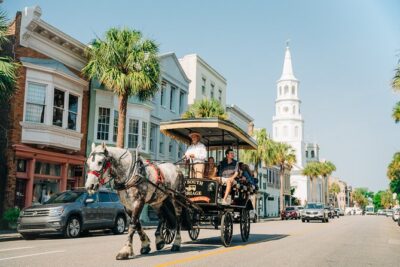
Charleston’s Old South Carriage Historic Horse & Carriage Tour
Read our review →
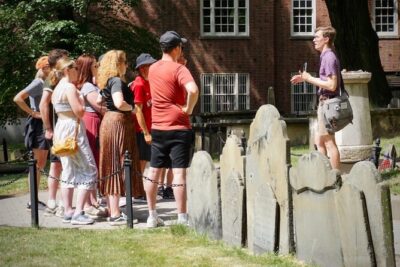
Boston: Freedom Trail History Small Group Walking Tour
Read our review →
Historic Charleston Guided Sightseeing Walking Tour
Read our review →
Savannah History and Haunts Candlelit Ghost Walking Tour
Read our review →
Tour of Historic Fenway Park, America’s Most Beloved Ballpark
Read our review →
Oahu: Mauka Warriors Luau Honoring Polynesia’s Forgotten History
Read our review →Browse the lists this tour appears in