
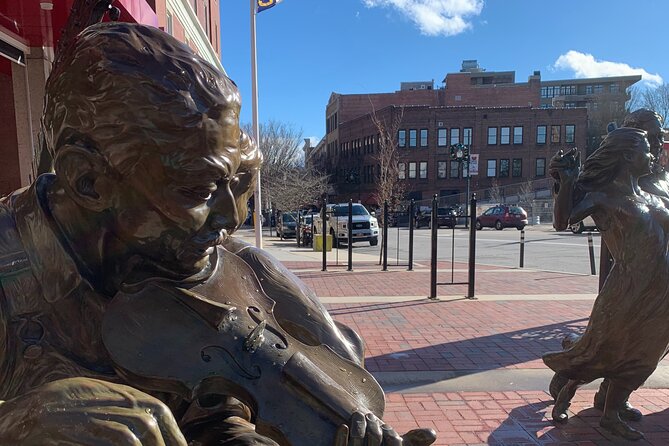
Review · USA
Historic Music Scene Walking Tour in Asheville
Asheville’s music story is best understood on foot, where recording studios, old theaters, clubs, and public event spaces sit within the downtown grid. This $30 walking tour connects those places with stories about the musicians, venues, and local forces that shaped the city.
I like two things right away: guide David brings both music and Asheville history into the walk, and the group is limited to 15 people. The discounted Moogseum entry is another useful bonus. The main drawback is that this is an outdoor walk, so poor weather can cancel it, and the Moogseum admission itself is not included.
Key points
- David’s local stories cover Asheville’s music scene as well as the city’s wider past.
- Citizen Vinyl and The Orange Peel give the tour two especially strong music-history stops.
- The small group limit of 15 makes it easier to hear the guide and ask questions.
- The route ends at the Moogseum, where you receive discounted admission rather than free entry.
- The tour lasts about two to three hours, with a start at 11 a.m. from Harrah’s Cherokee Center.
- The $30 price is fair if you want context for Asheville’s venues, musicians, and downtown spaces.
Why Asheville’s music story works best as a walking tour
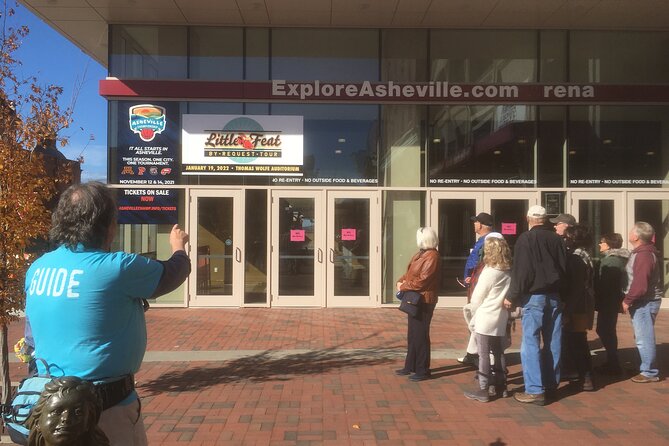
This is not a concert ticket with a little background attached. It is a guided walk through the places that helped make Asheville a music town. You move between active venues, former performance spaces, recording-related sites, theaters, and gathering places used for festivals and city events.
That format matters. Music history can feel scattered when you read about it in a museum or search for venues one at a time. Here, the streets provide the connecting thread. You hear about a building, then see where it sits in relation to the next stop. You begin to understand how downtown Asheville functions as a compact stage for different kinds of music.
David also places the music within Asheville’s larger story. That is one of the strongest parts of the experience. His explanations do not stop with names and dates. He relates artists and venues to the city around them, giving you a better sense of why certain places mattered.
The walk is offered in English and uses a mobile ticket. It begins at 11 a.m. at Harrah’s Cherokee Center, at 87 Haywood Street, and finishes at the Moogseum on Broadway Street. Plan for two to three hours, depending on the pace of the group and the amount of discussion.
More History Walking Tours in the USA
- History and Hauntings of Salem Guided Walking Tour
★ 5.0 · 14,564 reviews - Boston: Freedom Trail History Small Group Walking Tour
★ 5.0 · 6,450 reviews - Historic Charleston Guided Sightseeing Walking Tour
★ 5.0 · 6,216 reviews
Starting at Harrah’s Cherokee Center at 11 a.m.
The meeting point at Harrah’s Cherokee Center makes a practical starting place. You do not have to hunt for an obscure doorway or wait inside a private business. The address is 87 Haywood Street in downtown Asheville, and the meeting information is provided when you book.
David has a reputation for being easy to find at the agreed meeting point and for reaching out before the walk so questions can be addressed. That small bit of preparation is useful, especially if you want to ask about a particular musician, venue, or part of Asheville’s past.
Because the tour is limited to 15 people, you should get a more personal experience than you would on a large city walk. A small group also helps when the guide is speaking outdoors, where traffic and city noise can interfere. You still need to stay close to the group and pay attention at street crossings, but the format should feel manageable rather than crowded.
The tour is described as suitable for most people and is near public transportation. Service animals are allowed. No special fitness level is listed, but you should be comfortable walking downtown for two to three hours and spending much of the time outside.
The Moogseum connection and its 20-minute stop

The Moogseum is part of the experience and also serves as the end point. You are allowed discounted entry, but admission is not included in the $30 tour price. That distinction matters when you set your budget.
The visit is listed at about 20 minutes. This is enough time to add a focused museum stop to the walk, though it is not a full afternoon at the museum. If electronic music, sound technology, and Asheville’s connection to Bob Moog interest you, you may want to allow extra time after the tour ends.
Ending at the Moogseum is convenient. You finish near a clear attraction rather than being left at a random downtown corner. It also gives you the option of continuing your music-themed day on your own schedule. You can use the discount immediately, or simply treat the guided walk as the main activity.
Since the ticket is not included, ask about the discounted admission at the start or end of the tour. The supplied details do not state the exact discount amount, so you should not assume it covers entry.
Citizen Vinyl and the sound of a working building
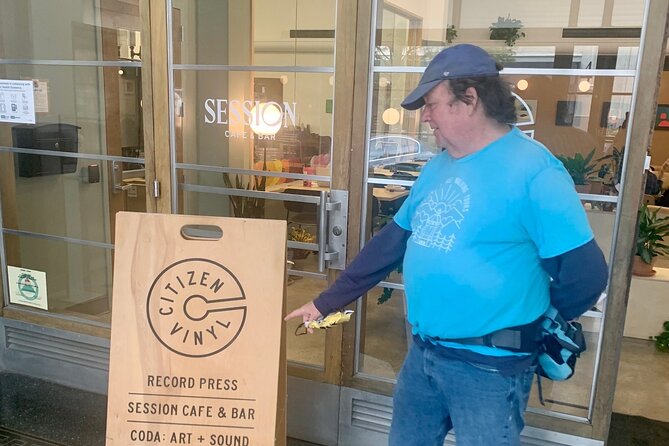
One of the most distinctive stops is Citizen Vinyl. You pass the building while David explains its earlier story and how vinyl records are pressed there today.
That combination of past and present is exactly what makes the stop useful. You are not only hearing about an old music site. You are learning how a downtown building has been tied to music and continues to serve the medium in a current way.
For anyone interested in the physical side of recorded music, Citizen Vinyl adds something that a standard city history walk might skip. Vinyl pressing is a concrete process, and the building gives the discussion a place to land. You can connect the guide’s explanation with an actual site instead of imagining it from a paragraph in a brochure.
The stop is viewed from the route rather than presented as a full production tour. The information provided says you will pass by the building and learn about its history and current vinyl work. If you want an in-depth look at pressing equipment or studio operations, this walk may not go that far.
Same city, a different century:
- Charleston’s Old South Carriage Historic Horse & Carriage Tour
★ 5.0 · 10,023 reviews - Beneath The Streets Underground History Tour
★ 4.5 · 8,006 reviews - Big Island in a Day: Volcanoes Waterfalls Sightseeing and History
★ 5.0 · 6,569 reviews - Charleston Horse-Drawn Carriage Tour: Explore Historic Charleston
★ 5.0 · 3,561 reviews
Asheville’s bluegrass stop
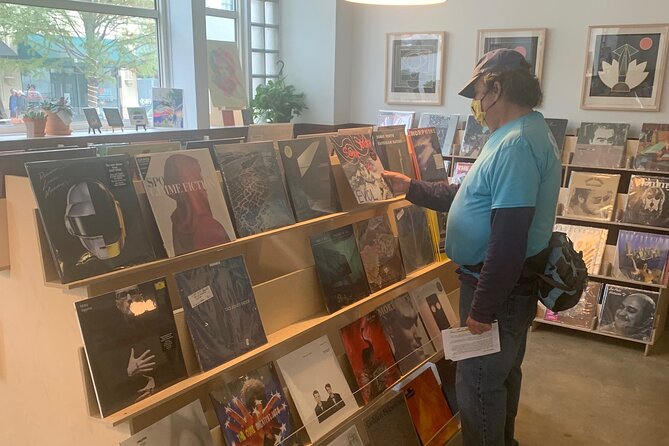
The route also includes a site known for local bluegrass. David talks about musicians who have played there and who is expected to play in the near future.
This is a good reminder that Asheville’s music identity is not limited to famous touring acts. Local bluegrass is part of the city’s working music culture, and a venue-based conversation can show you how that tradition stays active.
The exact venue name is not supplied in the tour details, so you should think of this as a stop built around local performance history rather than a guaranteed concert visit. You will hear about the place and its performers, but the walking tour does not include a show ticket.
If you are hoping to catch live music during your stay, this part of the route may help you choose what to investigate later. The schedule changes, so treat the discussion of upcoming performers as useful direction, not as a promise that a particular act will be playing during your visit.
A current venue and the practical side of seeing a show
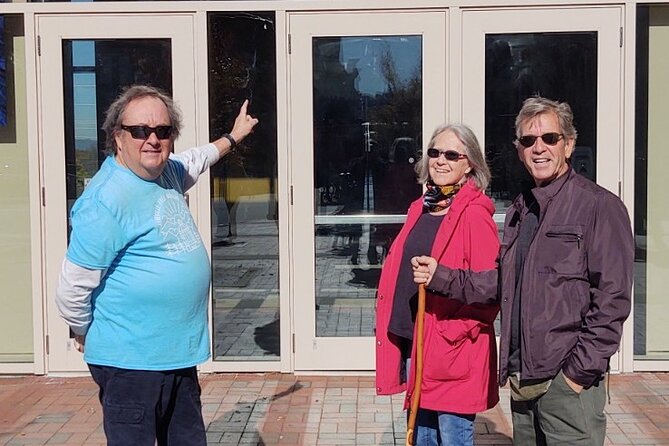
Another stop focuses on an active music venue. David explains which major names have played there, what makes the space notable, and how you can get the most from a visit.
This is helpful because a venue can look ordinary in daylight. A guide can give you the missing context: who played there, what kind of music the room is suited for, and why it matters in Asheville’s current scene.
The tour does not include admission to a performance, and no specific event ticket is provided. You are learning how to read the place and use it as part of your own Asheville plans.
I like this practical angle. If you are choosing among evening concerts, a little information about the room can help you decide. The details supplied do not promise that the venue will be open for an interior visit, so expect the emphasis to remain on exterior context and guided explanation unless the route says otherwise.
The Orange Peel and its 1960s and 1970s past
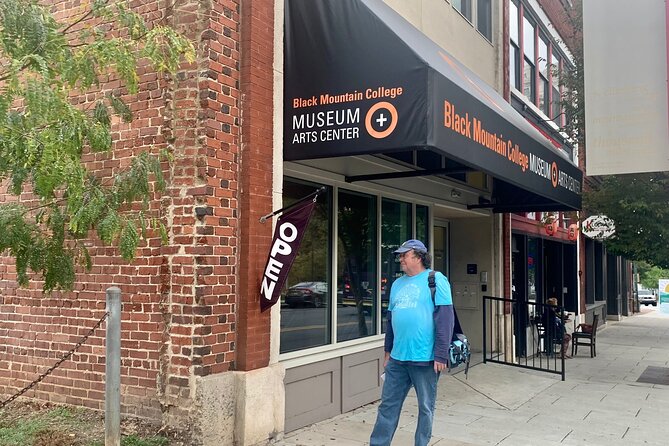
The Orange Peel is the featured stop, and it gives the tour one of its clearest links to national music history. The building was part of R&B and soul tours in the 1960s and 1970s, and David explains its earlier role along with what you can visit there now.
The stop itself is listed at about five minutes, with free admission. That short time does not mean it is unimportant. The value comes from the story attached to the building and the way David places it in Asheville’s larger music timeline.
The Orange Peel is also a current venue, so this is not only a look backward. You can connect its earlier R&B and soul identity with its present role as a place for major performances. If you plan to attend a show there, the walk gives you useful background before you return at night.
Do not expect a full concert-venue tour or a long indoor visit based on the information provided. The Orange Peel segment is brief. Its strength is the concentrated explanation of what happened there and why the site still matters.
The theater with good acoustics
The route includes a theater and music venue noted for its seating and acoustics. It remains active, so David can discuss the space as a working performance site rather than only a historic building.
Good seating and sound affect how you choose an event. A venue may have an impressive name, but your experience depends on whether you can hear the performers and sit comfortably. A short stop that addresses those points gives you information you can use later.
The details do not identify the theater by name, so this part of the walk is best approached as a venue lesson. You will learn why the room matters and how it functions as an active theater and music space. You should not expect a ticketed performance to be part of the tour.
For music lovers, this is one of the more practical parts of the route. You are not simply collecting old facts. You are learning how Asheville’s performance rooms differ and where you might want to return.
Festival grounds and Asheville’s public music life

The walk also passes a place used for many Asheville festivals and city events. This shifts the focus from permanent clubs and theaters to temporary stages and public gatherings.
Festival grounds can seem unremarkable when empty. With David’s context, you can picture how the same space changes when music, food, crowds, and performances fill it. The stop helps explain how Asheville presents music outside formal venues.
The experience does not include a festival ticket or guarantee that an event will be taking place during your walk. You are visiting the setting and hearing how it is used. That makes the stop more valuable for planning than for immediate entertainment.
I appreciate this wider view. A city’s music life is not built only by famous clubs. It also depends on public spaces where festivals and community events bring different audiences together.
What David adds to the experience
The guide is the heart of this tour. David is described as personable, funny, and exceptionally well informed about Asheville’s music and local past. He has a way of connecting artists to places so the story feels less like a list of names.
Several useful details come through in the guide style. He can answer questions, add small facts that are easy to miss, and explain the relationship between Asheville’s music scene and its broader development. You are likely to get more than a basic route description.
That said, the quality of a walking tour always depends partly on your interests. If you only want to enter venues or attend live music, this may feel too talk-focused. If you enjoy stories, local context, and the reasons behind a city’s cultural identity, the format should suit you well.
The small group helps David adjust the conversation. With no more than 15 people, you have a better chance to ask about a musician or venue that interests you. A larger group might cover the same ground, but it would be harder to make the walk feel personal.
Is $30 a fair price?
At $30 per person, the tour is reasonably priced for a two to three hour guided city walk, particularly with a group cap of 15 and a discount at the Moogseum.
The value comes from access to local context rather than expensive admissions. You are paying for David’s time, route planning, music knowledge, and ability to connect several downtown sites. The Orange Peel stop has no admission charge, and the Moogseum discount helps, but the Moogseum ticket itself costs extra.
I would book this for the first part of an Asheville visit. It can help you decide which venues to revisit, which shows to investigate, and how the city’s music story fits together. If you already know the downtown music scene well, the price may be less compelling unless you want David’s particular perspective.
The walk is also a good value for people who enjoy history but do not want a long museum visit. You get a guided route, a short museum connection, and several music-related places in one morning.
Who should book this walk?
I would choose this tour if you enjoy:
- Music history, especially R&B, soul, bluegrass, and live performance
- Local stories that connect artists with actual buildings
- Small-group tours with time for questions
- Active venues as well as older music sites
- Walking around downtown instead of riding between attractions
- Planning your own concerts after learning more about Asheville’s rooms
I would think twice if you want a fully indoor experience, a live performance, or extensive admission access at every stop. The route is mainly a guided outdoor walk, and the Moogseum entry is discounted rather than included.
Wear comfortable walking shoes and check the weather before you go. The experience requires good weather, and a cancellation caused by poor conditions may result in a new date or a full refund.
Should you book the Historic Music Scene Walking Tour?
Book it if you want Asheville’s music story explained by someone who knows the city and can connect venues, artists, buildings, and festivals. David’s local detail is the main reason to choose this walk, while the 15-person limit keeps it from feeling like a large crowd following a script.
The best plan is to take it early in your stay, then use the information to choose an evening show or return to the Moogseum. At $30, it is a sensible purchase for music fans and curious first-time visitors who value context over a packed list of admissions.
Skip it if you want a concert or a long indoor museum visit. This is a conversation-led city walk, and its reward is seeing Asheville’s music places with a clearer sense of why they matter.
FAQ
Where does the tour start?
The tour starts at Harrah’s Cherokee Center at 87 Haywood Street in Asheville, North Carolina.
What time does the tour begin?
The scheduled start time is 11 a.m.
Where does the tour end?
The tour ends at the Moogseum at 56 Broadway Street Front in Asheville.
How long does the walking tour last?
The experience lasts approximately two to three hours.
How much does the tour cost?
The listed price is $30 per person.
Is Moogseum admission included?
No. You receive discounted entry to the Moogseum, but the admission ticket is not included.
How large is the group?
The experience has a maximum of 15 travelers.
Can I cancel for a full refund?
Yes. You can cancel at least 24 hours before the start time for a full refund. Cancellations or changes made less than 24 hours before the experience are not refunded or accepted. If poor weather or an insufficient minimum number causes the tour to be canceled, you are offered another date or experience, or a full refund.
Just added around the USA
- Red Rocks Amphitheatre Historical Walking Tour★ 5.0 · 74 reviews
- 1-Hour Segway Tour of Cheyenne Cañon Art, History and Nature★ 5.0 · 36 reviews
- Colorado Springs – Guided Walking Ghost / History Tour★ 5.0 · 168 reviews
- Ancient Landscapes Private Geology Hike at Garden of the Gods★ 5.0 · 31 reviews
- Village Food Tours Lunch & History Tour★ 5.0 · 80 reviews
- 2.5 Hour Kayaking with Manatee and History Tour in Tarpon Springs★ 5.0 · 24 reviews
- Safety Harbor Ghost Tour★ 5.0 · 60 reviews
- Historical Bicycle Tour of Dunedin★ 5.0 · 44 reviews
USA History Tours, compared.
History and Hauntings of Salem Guided Walking Tour
Read our review →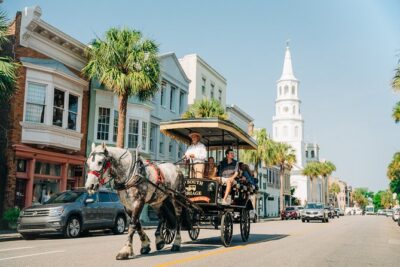
Charleston’s Old South Carriage Historic Horse & Carriage Tour
Read our review →
Boston: Freedom Trail History Small Group Walking Tour
Read our review →
Historic Charleston Guided Sightseeing Walking Tour
Read our review →
Savannah History and Haunts Candlelit Ghost Walking Tour
Read our review →
Tour of Historic Fenway Park, America’s Most Beloved Ballpark
Read our review →
Oahu: Mauka Warriors Luau Honoring Polynesia’s Forgotten History
Read our review →Browse the lists this tour appears in