Review · USA
National Museum of American History: Guided Tour
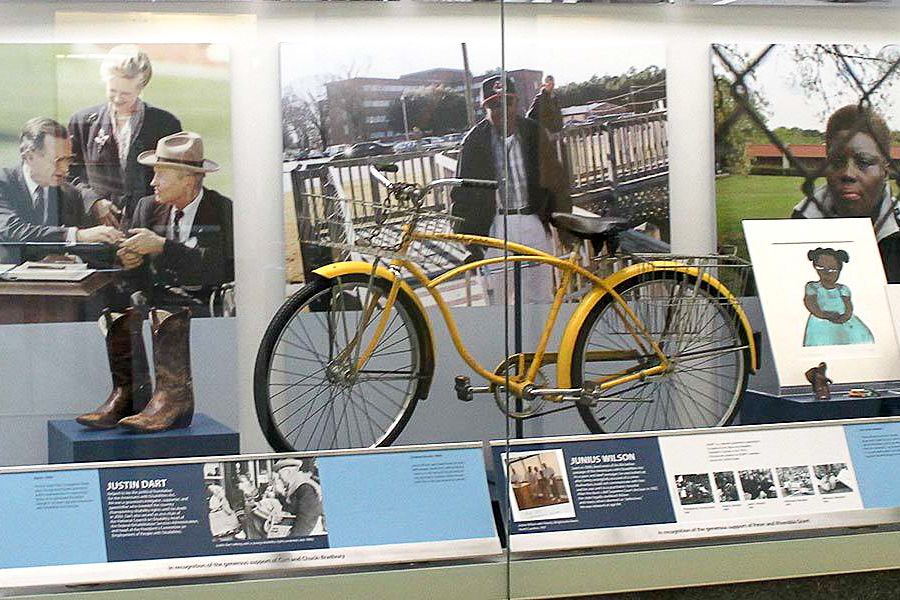
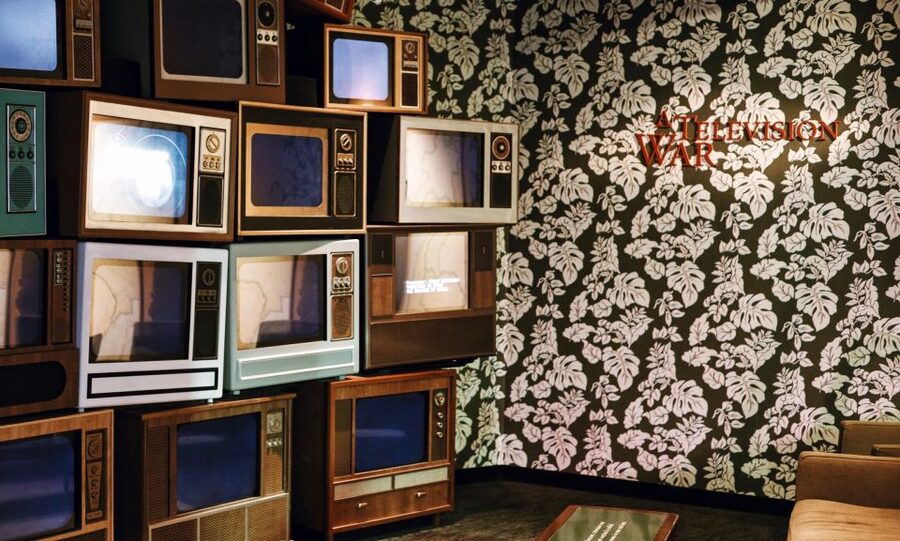
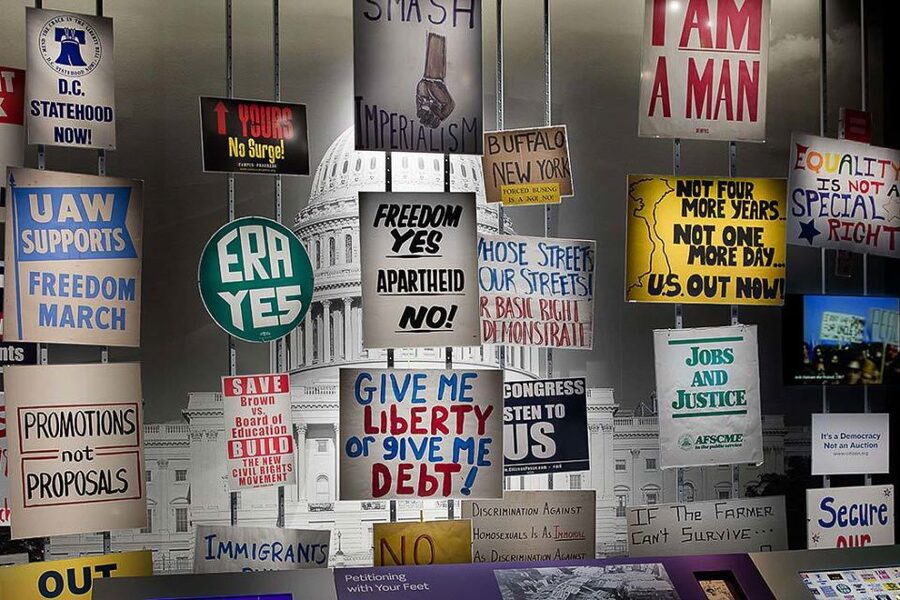
The National Museum of American History holds more than three million objects, so the best part of this tour is having someone choose a clear path through the collection. You’ll move from George Washington and the nation’s early years to Hollywood, women’s political roles, and the Civil Rights Movement without spending half your visit wondering which hall to enter next. I like the chance to see the actual Star-Spangled Banner and Dorothy’s ruby slippers, two objects that connect schoolbook history with popular culture.
I also like the small size, capped at eight people, and the way the guides add historical, scientific, cultural, social, and political context. Maureen is described as energetic and engaging, while Leigh brings enthusiasm and a strong command of the subject. The drawback is time: 2.5 hours goes quickly in a museum this large, and temporary exhibits, food, drinks, and transport are not included.
Key points to know before booking
- The original Star-Spangled Banner: See the flag that inspired the national anthem, not a modern copy.
- A small group of up to eight: You can ask questions and keep close to the guide more easily than in a large tour.
- America beyond presidents: The route links Washington’s sword and Jefferson’s desk with Hollywood, First Ladies’ gowns, and Civil Rights history.
- A strong guide-led overview: Maureen and Leigh are named as engaging, enthusiastic guides who bring extra stories to the objects.
- A focused 2.5-hour visit: You’ll cover major displays, but you will not see every part of a museum holding millions of items.
- Plan light: Large bags and suitcases are not allowed, and some rooms require quiet or limited speaking.
Why a guide helps in a museum this large
The National Museum of American History is not a quick room full of famous souvenirs. Its collection contains more than three million historical items, covering politics, science, technology, culture, social change, and daily life. That scale is exciting, but it can also be tiring. Without a plan, you may spend more time choosing a gallery than looking at objects.
A guide gives the visit shape. Instead of treating each display as an isolated curiosity, your guide can explain how the pieces fit into the larger American story. The tour moves through several periods and themes, so you get a broad introduction rather than a single narrow subject.
I would choose this format if you have limited time in Washington, DC, or if you want more than labels beside glass cases. A guide can point out details you might otherwise pass, explain why an object matters, and answer questions as they come up. The personal approach is especially useful here because the museum mixes political history with entertainment, fashion, technology, and social movements.
The tradeoff is that a guided route cannot match the freedom of an all-day museum visit. You may pass galleries that interest you, and the guide has to keep the group moving. Think of this tour as a well-planned introduction. You can return afterward to explore your favorite section at your own speed, if time and museum access allow.
More Guided Tours in the USA:
- History and Hauntings of Salem Guided Walking Tour
★ 5.0 · 14,564 reviews - Historic Charleston Guided Sightseeing Walking Tour
★ 5.0 · 6,216 reviews - Historic Savannah Guided Walking Tour
★ 5.0 · 2,918 reviews
The Star-Spangled Banner and the early republic
The actual Star-Spangled Banner is the emotional center of the visit for many people. This is the flag associated with the national anthem, not simply a later reproduction used to represent it. Seeing the real object gives the story a physical presence that a textbook cannot provide.
Your guide can place the flag in the story of the young United States and explain why it became such a strong national symbol. The value is not only the flag itself. It is the chance to connect an object with the way a new country created shared symbols and stories.
The tour also includes George Washington’s sword. Washington appears in many museums, but a personal object such as a sword can make the first president feel less abstract. It gives your guide a starting point for discussing the Revolutionary period and the formation of the new government.
Thomas Jefferson’s desk adds another personal link to the early republic. A desk may seem quieter than a sword or flag, but it brings attention to the work of writing, planning, and governing. These objects help keep the tour grounded in real things rather than a long chain of dates.
You should expect interpretation rather than a full political biography of Washington or Jefferson. The guide is working within a larger route, so the emphasis is on the objects and the ideas they introduce. If early American history is your main interest, ask questions during this section, since the group will later move toward other periods.
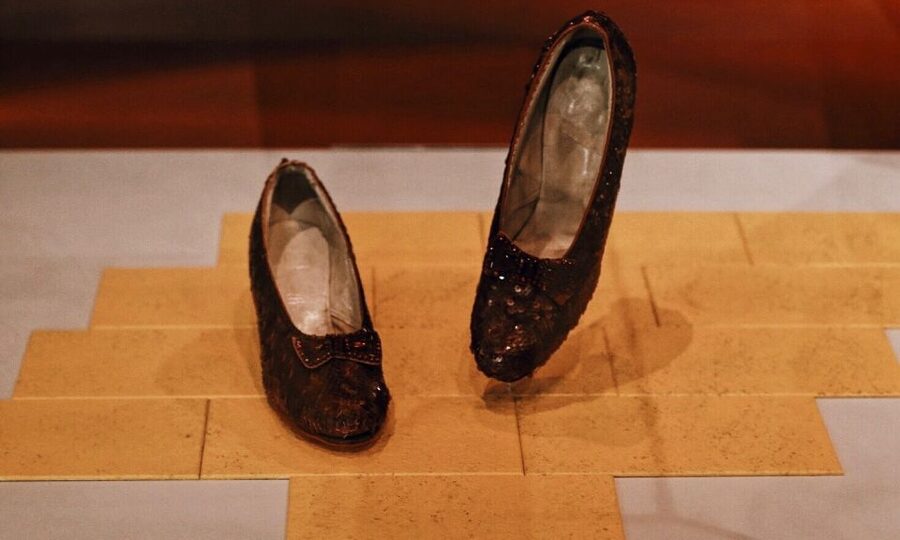
Dorothy’s ruby slippers and the American screen
Dorothy’s ruby slippers from The Wizard of Oz shift the mood from national politics to popular culture. They are a useful reminder that American identity has been shaped not only by presidents and wars, but also by films, characters, music, and shared entertainment.
The slippers are small compared with the stories attached to them. Your guide can use them to discuss how Hollywood helped shape the country’s image of itself and how film turned certain symbols into part of everyday culture. This is one of the tour’s strongest changes of pace. After looking at objects tied to government and war, you see how a fictional character became part of the national imagination.
The display may be particularly appealing if your group includes people with different interests. A history enthusiast can connect the slippers to media and social change, while a film fan has a familiar object to look forward to. Children and teenagers may also respond more quickly to this part of the tour than to a formal political display.
Keep your expectations sensible. The tour is not a dedicated film-history visit, and the slippers are one stop among several. You will get context about Hollywood, but not a full study of American cinema. If this is your favorite topic, make a note to spend extra time with related displays after the guided portion.
First Ladies’ gowns and women’s public roles
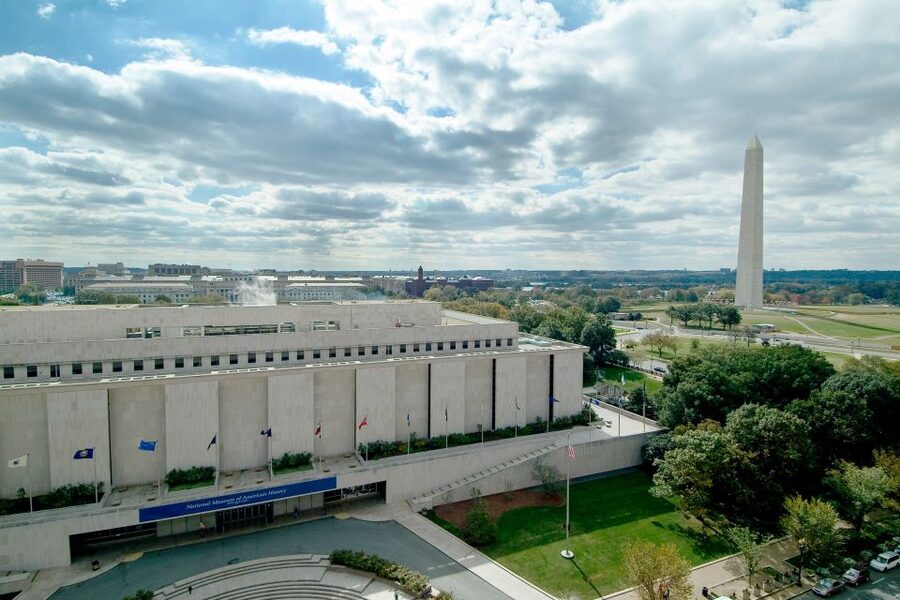
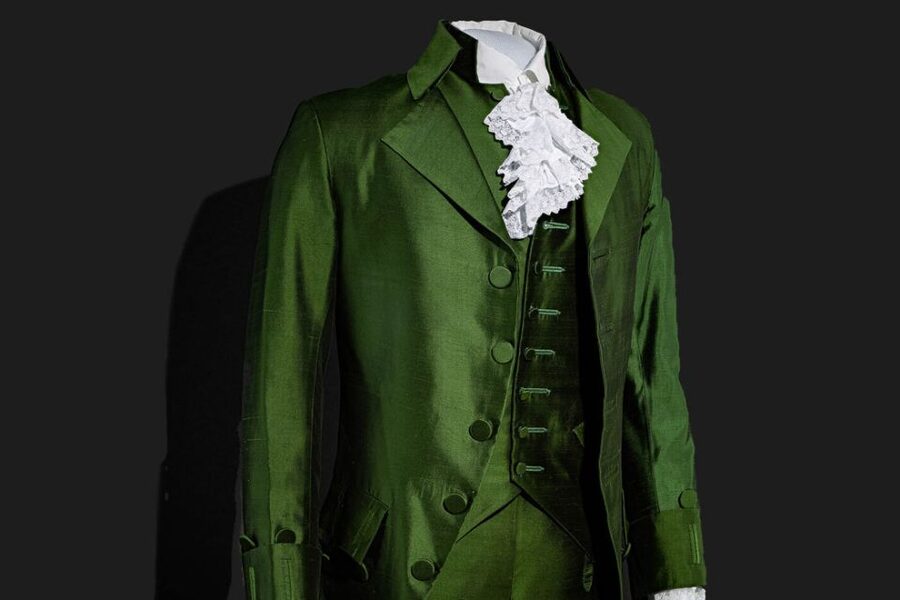
The collection of gowns worn by First Ladies offers a different way to consider political history. Clothing can show how women were expected to present themselves in public, how the role of First Lady changed, and how fashion became part of political communication.
A gown may appear less formal than a presidential document, but it can open useful questions. Who was being represented? What did the public expect from a president’s wife? How did women use visibility, style, and ceremonial occasions to shape their public roles?
This stop broadens the tour beyond a story centered only on male officeholders. You get to consider women’s influence through public image and social position, even when the office of First Lady is not an elected role. The clothing also gives the museum a more personal and visual way to discuss changes across different periods.
The collection is not a complete history of American women, so you should not expect every major movement or figure to receive equal attention. Still, it adds welcome balance to the presidential and military objects. I find this kind of display most useful when the guide explains the social meaning behind the clothing rather than treating each gown as a fashion item alone.
More History Tours in the USA:
- Charleston’s Old South Carriage Historic Horse & Carriage Tour
★ 5.0 · 10,023 reviews - Beneath The Streets Underground History Tour
★ 4.5 · 8,006 reviews - Big Island in a Day: Volcanoes Waterfalls Sightseeing and History
★ 5.0 · 6,569 reviews - Boston: Freedom Trail History Small Group Walking Tour
★ 5.0 · 6,450 reviews
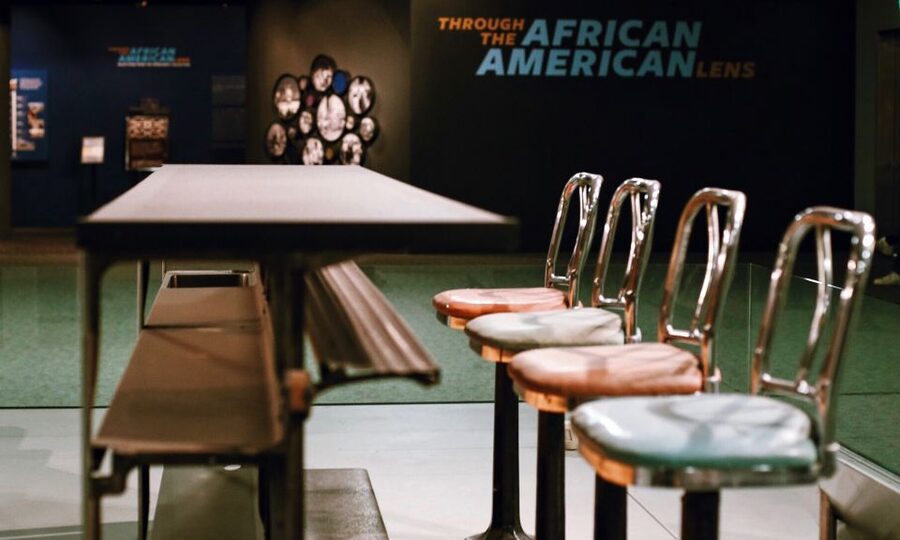
The Greensboro Lunch Counter and Civil Rights
The Greensboro lunch counter is one of the tour’s most serious stops. It connects the museum to the Civil Rights Movement through a place where segregation and protest met in everyday life. A lunch counter may look ordinary, but that is precisely its force. It shows how discrimination shaped routine public spaces, not just courtrooms or major government buildings.
Your guide can discuss segregation and the role of protest in challenging it. The object gives the subject a clear physical focus. Instead of hearing only about laws and speeches, you are looking at the kind of setting where people were denied equal treatment and where acts of resistance took place.
This section may feel more direct and uncomfortable than the lighter displays about Hollywood or clothing. That is appropriate. A tour of American history should not reduce the past to national achievements and famous objects. The Greensboro counter helps show the conflict, exclusion, and struggle that also shaped the country.
Because some rooms require quiet or restrict speaking, your guide may give background before you enter or limit discussion inside. Follow those instructions and save questions for a suitable point. The rule is not meant to make the visit less useful. It protects the atmosphere around material that deserves attention.
What the small-group format changes
You can book a private tour or a small group with no more than eight people. That limit matters in a museum where some displays are crowded and where a soft-spoken guide can be hard to hear in a larger gathering.
With eight or fewer, you can usually stay closer to the objects and ask for clarification without holding up a long line of people. The guide can also adjust the explanation slightly when the group has a shared interest, such as film, presidential history, or Civil Rights.
The private option gives you the most control over the pace and questions, but the small-group option may offer better value if you are comfortable sharing the guide. At $86 per person, the price is not low for a museum visit, especially since museum entry extras, food, drinks, and transport are not included.
The fee makes more sense if you value interpretation and efficient use of time. You are paying for a professional English-speaking guide, a planned route, and the chance to see key objects without building your own museum strategy. If you enjoy reading every label and spending hours with one subject, a self-guided visit may suit you better.
The strongest guide experiences here depend on the person leading your group. Maureen is noted for an energetic, engaging style, while Leigh is described as enthusiastic and a pleasure to learn from. Those qualities matter in a museum with so much information. A guide who can tell a good story keeps the route from becoming a march between display cases.
Timing, bags, clothing, and access
The tour lasts 2.5 hours. That is long enough for a serious introduction, but short enough to fit into a busy day in Washington, DC. Starting times vary, so check availability when you choose your date.
The activity begins and ends at the meeting point, and the exact starting location may vary according to the option booked. There is no hotel pickup or drop-off. Plan your route to the meeting point before the day of the tour, and allow time for security and finding the correct entrance.
Travel light. Large bags and suitcases are not allowed inside, while handbags and small, thin backpacks may pass through security. This is an easy rule to overlook, especially if you are carrying belongings for a full day of sightseeing. Bring a passport or ID card, as required, and wear appropriate clothing for entry into some sites on the route.
If you need a wheelchair-accessible tour, advise the operator when booking. The information provided also lists the activity as not suitable for wheelchair users, so you should confirm the current arrangement before paying. Do not assume that a standard booking will meet your access needs.
Museum rooms can sometimes require quiet or limited speech. Your guide will explain content before entering such spaces, then adjust the presentation inside. Collections can also change, and occasional museum closures may happen without advance warning. If opening is delayed by more than an hour, an alternative is provided, but the stated terms do not promise a refund or discount.
Is $86 per person a fair price?
At $86 per person, this tour is best judged against the time it saves and the quality of the explanation, not against the cost of entering a museum on your own. The museum’s size creates the main value. You get a planned visit centered on major objects, with a guide who can connect them across different parts of American life.
The price is easier to justify for a first visit, a short stay, or anyone who dislikes wandering through a very large collection without a plan. It is also useful for families and mixed-interest groups, since the route includes military history, politics, film, fashion, and Civil Rights.
The cost may feel high if you already know the museum well, want to focus on one gallery, or prefer a slow visit with no fixed route. Temporary exhibits are not included, and you will need to arrange your own transportation and meals.
Free cancellation up to 24 hours before the tour and the option to reserve now and pay later add useful flexibility. They do not change the basic value calculation, but they make it easier to fit the tour into a changing Washington schedule.
Who should book this Smithsonian tour?
I would book this for a first-time visitor who wants a sharp introduction to American history without spending an entire day inside one museum. It also suits curious adults, families with older children, and anyone who prefers stories and context over reading dozens of labels alone.
The tour works well for people drawn to famous objects. The Star-Spangled Banner, Washington’s sword, Jefferson’s desk, Dorothy’s slippers, First Ladies’ gowns, and the Greensboro lunch counter give you memorable reference points. The mix also means the experience does not stay stuck in one century or one type of history.
I would hesitate if you need a fully accessible route without prior confirmation, dislike group timing, or want to cover every gallery. The 2.5-hour schedule is a guided overview, not an exhaustive museum study.
Should you book it?
Book this tour if you want the museum’s major stories organized by an engaging guide and you value seeing important objects with context. The small group limit, the named guides Maureen and Leigh, and the broad mix of subjects make it more personal than a standard walk-through.
Skip it if you are happy to explore independently, have a tight budget, or want to spend most of your day with one specialized collection. For everyone else, $86 buys a focused start in a huge museum. You will leave with a clearer sense of how American politics, entertainment, fashion, technology, and social conflict shaped the country together.
FAQ
How long does the guided tour last?
The tour lasts 2.5 hours. Starting times vary, so check availability for the date you want.
How large is the tour group?
The tour is private or offered to small groups of no more than eight people.
What language is the tour conducted in?
The live tour guide speaks English.
Which major objects are included?
The route includes the original Star-Spangled Banner, George Washington’s sword, Dorothy’s ruby slippers from The Wizard of Oz, First Ladies’ gowns, the Greensboro lunch counter, and Thomas Jefferson’s desk.
Is museum admission included?
The provided tour details include a professional guide and a 2.5-hour walking tour, but they do not separately state an admission-ticket inclusion. Temporary exhibits are not included.
Can I bring a suitcase or large backpack?
No. Large bags and suitcases are not allowed. Only handbags or small, thin backpacks may pass through security.
Can I cancel the booking?
Yes. You can cancel up to 24 hours in advance for a full refund. Reserve-now, pay-later booking is also available.
Just added around the USA
- Red Rocks Amphitheatre Historical Walking Tour★ 5.0 · 74 reviews
- 1-Hour Segway Tour of Cheyenne Cañon Art, History and Nature★ 5.0 · 36 reviews
- Colorado Springs – Guided Walking Ghost / History Tour★ 5.0 · 168 reviews
- Ancient Landscapes Private Geology Hike at Garden of the Gods★ 5.0 · 31 reviews
- Village Food Tours Lunch & History Tour★ 5.0 · 80 reviews
- 2.5 Hour Kayaking with Manatee and History Tour in Tarpon Springs★ 5.0 · 24 reviews
- Safety Harbor Ghost Tour★ 5.0 · 60 reviews
- Historical Bicycle Tour of Dunedin★ 5.0 · 44 reviews
USA History Tours, compared.

History and Hauntings of Salem Guided Walking Tour
Read our review →
Charleston’s Old South Carriage Historic Horse & Carriage Tour
Read our review →
Boston: Freedom Trail History Small Group Walking Tour
Read our review →
Historic Charleston Guided Sightseeing Walking Tour
Read our review →
Savannah History and Haunts Candlelit Ghost Walking Tour
Read our review →
Tour of Historic Fenway Park, America’s Most Beloved Ballpark
Read our review →