
Review · UK
Portsmouth: The D-Day Story Entry Ticket
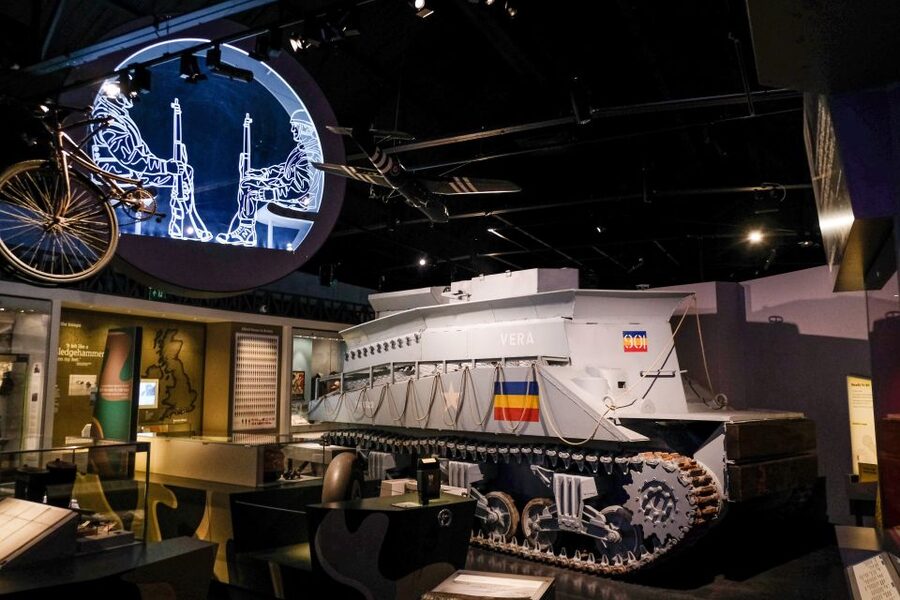
The most memorable part of Portsmouth’s D-Day Story is the chance to walk aboard LCT 7074, the last surviving landing craft tank used to carry vehicles toward Normandy. With a Sherman tank and a Churchill tank inside, the cramped vessel helps you picture the pressure facing crews before the landing ramps opened.
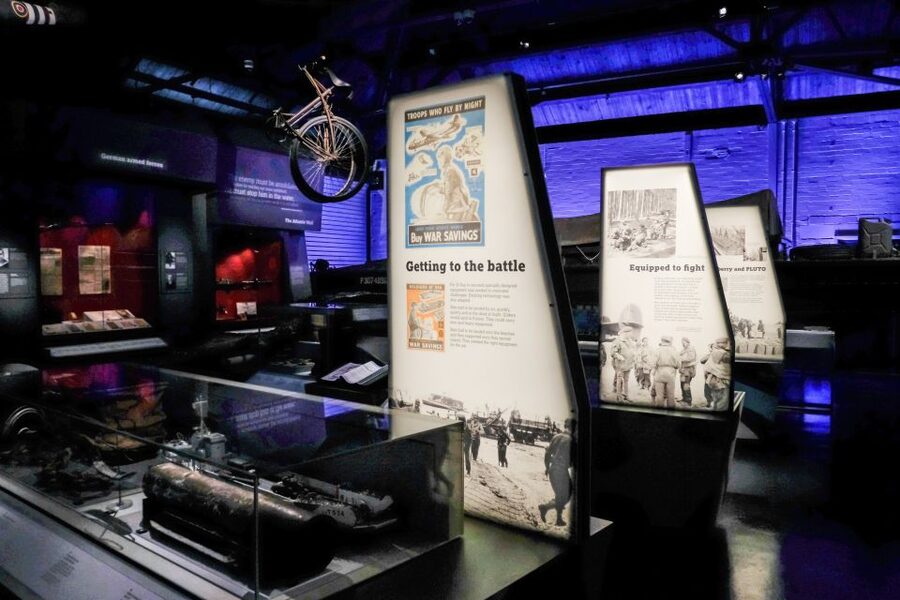
I like the museum’s focus on both military planning and ordinary lives. You learn how secrecy, deception, timing, and geography shaped the operation, then hear from men, women, and children who experienced it. The main drawback is simple: two hours can feel rushed, and the museum can take two to three hours if you stop for the films and personal accounts.
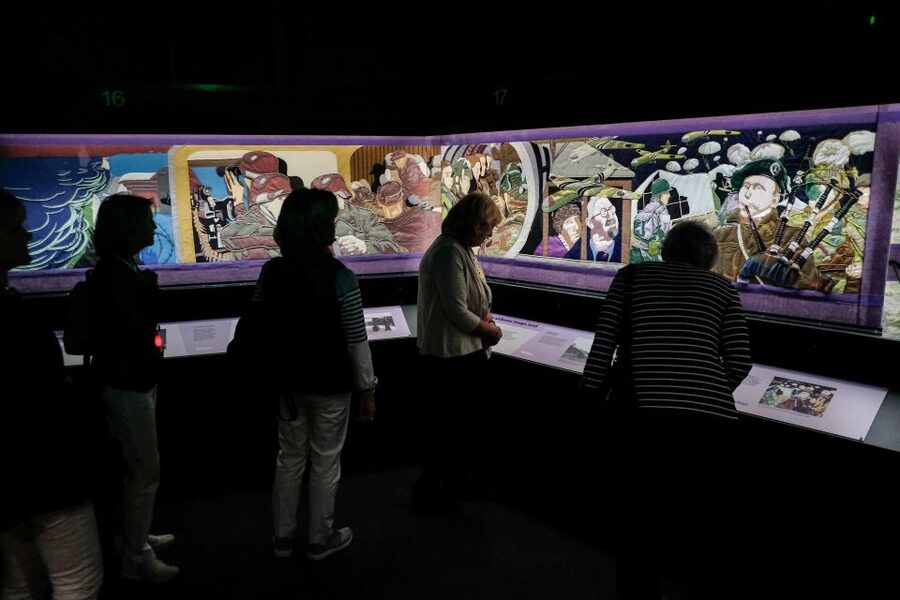
I also like the strong finish provided by the Overlord Embroidery, 34 hand-stitched panels telling the story of D-Day and the Battle of Normandy. The lighting is low, which helps protect the work but can make some details harder to see.
Key points to know before you go
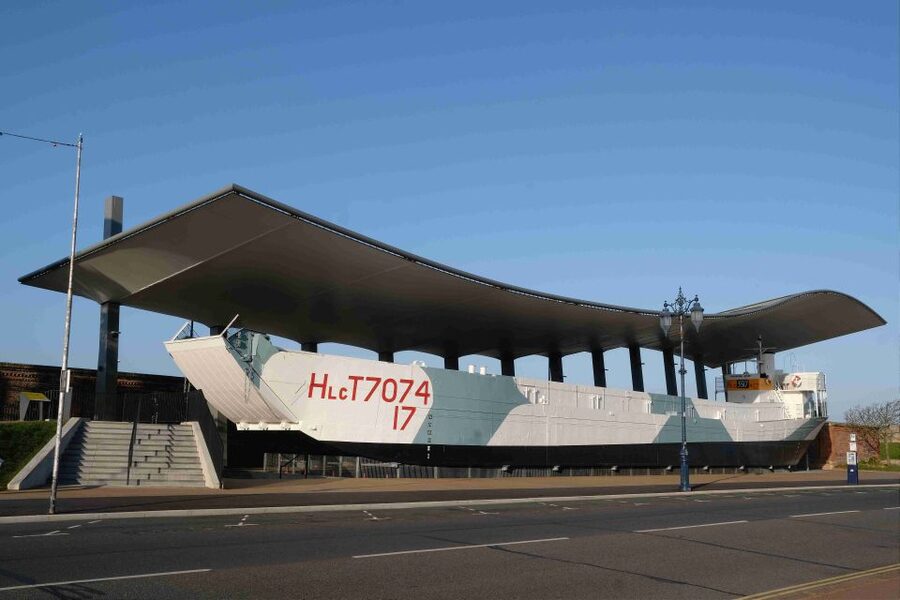
- Board LCT 7074: See the last surviving landing craft tank and two full-size tanks inside it.
- Follow the invasion plan: Learn how commanders chose the crossing time and place, and how secrecy helped protect the operation.
- Hear firsthand accounts: Film clips and recorded stories add personal detail beyond dates and battle maps.
- See more than 10,000 objects: The collection includes military equipment, personal possessions, documents, and other D-Day items.
- Save time for the final gallery: The Overlord Embroidery needs patience, especially in its subdued lighting.
- Allow at least two hours: Three hours is more comfortable if you want to read the displays and watch the films.
Why Portsmouth is the right place for this museum
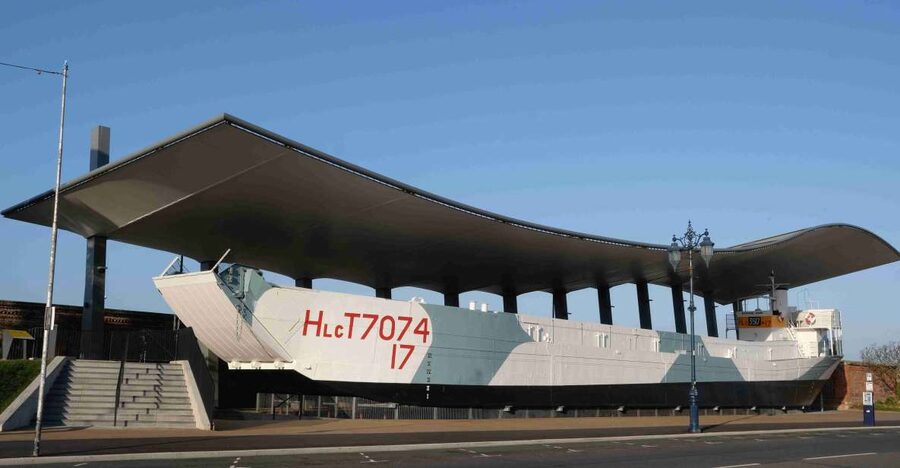
The D-Day Story sits on Clarence Esplanade in Southsea, Portsmouth, a fitting setting for a museum about the 6 June 1944 invasion. This is not a broad museum about all of the Second World War. Its subject is narrower and clearer: the Allied Invasion and the people who planned, supported, fought in, and endured it.
That focus helps you follow the story. Instead of bouncing between distant campaigns, you move through the preparation for D-Day, the crossing, the landings, and the Battle of Normandy. The result is easier to understand than a large general war museum, especially if your knowledge of the invasion is limited.
The museum also avoids treating D-Day as only a military achievement. You see the enormous planning effort, but you also encounter the human cost. Personal belongings, recorded memories, photographs, and film clips show that the invasion affected soldiers, sailors, civilians, resistance workers, and families on both sides of the Channel.
More WWII and D-Day Tours in the UK
- WW2 London Walking Tour & Churchill War Rooms Entrance Ticket
★ 4.5 · 933 reviews - London: Westminster WW2 Tour & Churchill’s War Rooms Ticket
★ 4.5 · 925 reviews - London in WW2 Walking Tour with Churchill War Rooms Visit
★ 5.0 · 721 reviews
Start with the plan behind 6 June 1944
One of the strongest parts of the museum explains The Plan. This section looks at the decisions behind the invasion, including when to cross the Channel, where to land, and how to move such a huge force into Normandy.
That matters because D-Day can seem like a single dramatic morning. The museum shows it as the result of careful preparation, difficult choices, and a high level of risk. Weather, tides, transport, troop movements, and secrecy all had to work together.
You also learn about deception. The Allies had to make German commanders believe the main attack might come somewhere else. This was not just a clever side story. It was part of the military plan, designed to delay the German response and give the landing forces a better chance.
I like this section because it gives context before you reach the more familiar images of landing craft and beaches. You understand why the date mattered, why the operation could not simply be postponed without consequences, and why every decision carried serious danger.
The displays are detailed. If you read every panel and watch every film, you will need more time than a quick museum visit. The amount of information is a strength for serious history fans, but it can feel tiring if you are trying to fit the museum into a packed Portsmouth day.
Walk aboard LCT 7074 with two tanks inside
LCT 7074 gives the visit its most physical and memorable element. This landing craft tank carried ten tanks to Normandy on D-Day. Today, you can go aboard and see a Sherman tank and a Churchill tank positioned inside, giving you a much clearer idea of how crowded and demanding the journey must have been.
The vessel is valuable because it turns military history into a question of space. A photograph of a landing craft can look abstract. Standing inside one, beside large armoured vehicles, makes the loading problem easier to grasp. You can picture men working around heavy machinery, equipment packed tightly, and crews waiting for the landing ramp to open.
The landing craft is also a useful counterpoint to the museum galleries. The displays explain the operation. LCT 7074 shows the machinery that made it possible.
Allow extra time for this part, especially if staff or volunteer guides are available to answer questions. Visitors have found the people on the landing craft particularly helpful, and their explanations can add practical detail that a label cannot. No named guide is specified for the experience, but staff are described as friendly and willing to answer questions.
The ship is outdoors and separate from the main galleries, so make sure you do not leave it until the final few minutes. The last entry aboard LCT 7074 is 4pm from April through September, and 3:30pm from October through March. Those cutoffs come earlier than the museum’s closing time.
Meet the people behind the operation
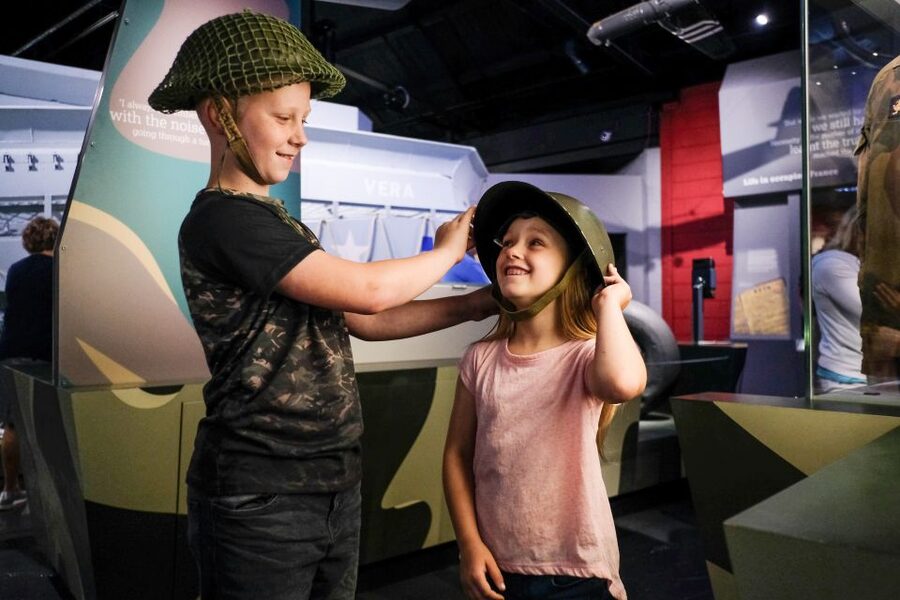
The D-Day Story works best when it moves away from commanders and battle plans. Film clips of veterans describe what happened in their own words, while other displays show the role of women, children, resistance members, and civilians.
These personal accounts slow the pace in a useful way. You are not simply collecting facts about troop numbers or landing zones. You are hearing about fear, uncertainty, preparation, and the strain of waiting for news.
The museum also uses personal possessions and everyday objects. More than 10,000 items are included in the collection, so you will see much more than weapons and uniforms. The objects help connect the enormous scale of the invasion with individual lives.
I would pay close attention to the films. They are easy to skip when you are focused on display cases, but they provide some of the most direct insight into what people experienced. The audio guide is free and adds useful information, so it is worth using if one is available during your visit.
This personal side makes the museum suitable for families with older children and teenagers, especially those studying the Second World War. It may be less successful for very young children, since much of the value comes from reading, listening, and reflecting rather than from fast-moving entertainment.
Same city, a different century:
- London Small Group Tour of Historical Pubs
★ 5.0 · 10,422 reviews - Edinburgh: Edinburgh Castle Guided History Tour with Tickets
★ 4.8 · 9,933 reviews - A History of Terror – Belfast City Centre Walking Tour
★ 5.0 · 2,883 reviews - Edinburgh: Whisky Tasting with History and Storytelling
★ 4.9 · 2,451 reviews
See how the museum presents the invasion
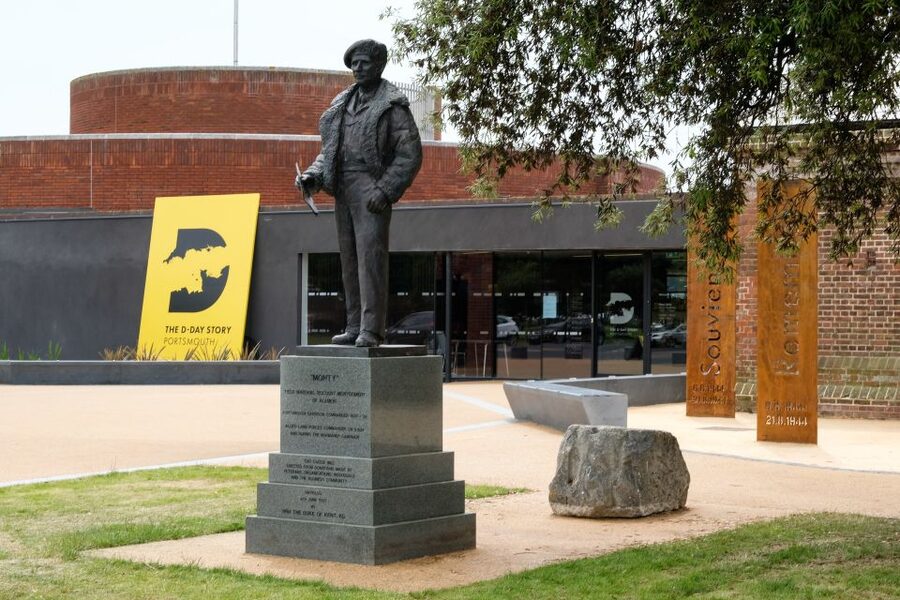
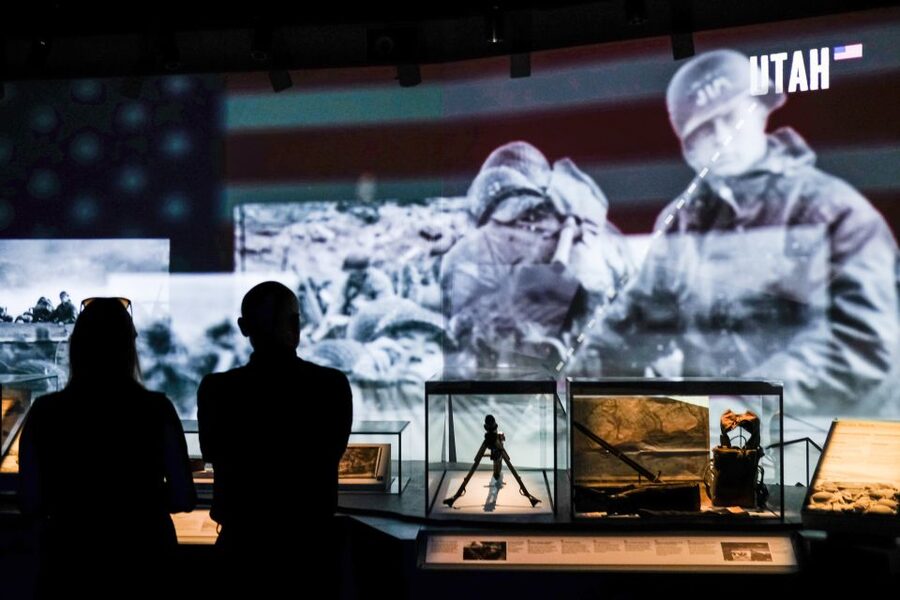
The galleries are well organized and guide you through the story in a logical order. You can expect displays about the preparations, the crossing, the landing, and the aftermath, with objects and film clips placed alongside explanatory text.
There is a lot to read. Some visitors find repeated rows of numbered display cases tiring after a while, particularly if they try to examine every item. You can avoid that fatigue by choosing a few objects in each section and using the films and larger displays to keep the story moving.
The museum is informative without requiring advanced military knowledge. Names, decisions, and events are explained in a way that helps first-time visitors. If you already know the history, you will still find value in the personal objects, recorded memories, and physical access to the landing craft.
The balance between military detail and human experience is one of the museum’s best features. You learn how the invasion worked, but you also see what it meant to the people involved.
Some visitors have found the building cold, so bring a light layer even in warmer months. That is a small practical point, but it can affect how long you want to linger over the displays.
Finish with the Overlord Embroidery
The Overlord Embroidery is displayed as a series of 34 hand-stitched panels covering D-Day and the Battle of Normandy. It was commissioned to remember those who took part in the invasion.
Although it is often casually called a tapestry, it is technically an appliqué work. The distinction matters less than the effect: the panels use fabric, stitching, shape, and color to tell a complicated wartime story in a form quite different from the objects in the main galleries.
I recommend saving enough energy for this final section. It is not something to glance at and leave. The panels reward close attention, and their position at the end of the museum gives you a chance to reflect on the events you have just followed.
The low lighting protects the artwork but makes some details difficult to see. If your eyesight is limited, take your time and move closer where permitted. The embroidery is a highlight for many visitors, but it works best when you are not rushing toward the exit.
How long should you allow?
The ticket is valid for one day, but you do not need to spend the entire day inside. Two hours is possible if you move briskly and choose only the main displays. I would plan on two to three hours for a satisfying visit.
Allow closer to three hours if you want to:
- Watch several veteran film clips
- Read the planning displays carefully
- Spend time aboard LCT 7074
- Study the Overlord Embroidery
- Use the free audio guide
- Pause at the personal accounts and objects
Several people have underestimated the time needed. The museum is not enormous in the way a national museum can be, but its information is dense. A short visit can give you the outline, while a longer visit gives you the human detail.
Check the seasonal hours before setting out. From 1 April to 30 September, the museum is open from 10am to 5:30pm. From 1 October to 31 March, it is open from 10am to 5pm.
The last entry to the main galleries is 4:30pm in the warmer season and 4pm in the colder season. The last entry aboard LCT 7074 is earlier, at 4pm from April to September and 3:30pm from October to March.
Is the $19 ticket good value?
At about $19 per person, the ticket offers good value if you are interested in D-Day or the Second World War. You get access to the main museum, the large collection, the Overlord Embroidery, and LCT 7074 rather than paying separately for each section.
The value also depends on your pace. If you spend only an hour looking at a few cases, the price may feel less convincing. If you allow two or three hours, listen to the accounts, and explore the landing craft, the admission gives you a substantial museum visit.
This is not a flashy attraction built around spectacle. Its strengths are its subject, its careful presentation, the physical landing craft, and the human voices. If you want rides, large-scale reenactments, or a broad collection of tanks, this may feel restrained.
If you want a focused account of D-Day with enough detail to understand the planning and enough personal material to feel the human cost, the price is fair.
Getting there and making the visit easier
The address is The D-Day Story, Clarence Esplanade, Southsea, Portsmouth PO5 3NT. Parking is available right outside, and it has been described as inexpensive, which is useful if you are driving.
The museum is wheelchair accessible. The landing craft is reached as part of the visit, but the supplied information does not give detailed access notes for every part of the ship, so check directly with the museum if you need specific assistance.
There is a café for a drink or something to eat, plus a gift shop with books and other items connected to the Second World War. These are useful additions if you want to make the museum a longer stop rather than a quick visit.
Bookable tickets allow cancellation up to 24 hours before the visit for a full refund, and you can reserve now and pay later. Check the available start times and seasonal hours before booking, particularly if you want to see LCT 7074.
Who should visit The D-Day Story?
I would recommend this museum to:
- Anyone with a strong interest in D-Day or the Second World War
- Families with school-age children and teenagers
- Visitors who prefer personal stories alongside military facts
- People who want to see a real landing craft rather than only photographs
- Anyone visiting Portsmouth and looking for a focused indoor attraction
It may not suit very young children, since the visit depends on reading, listening, and understanding serious wartime events. It can also feel slow if you prefer a short attraction with only a few headline exhibits.
The museum is especially useful before or after a visit to Normandy because it explains the preparation and machinery of the invasion. You do not need to have visited the beaches first, though. The displays provide enough background to make sense of the operation.
Should you book the Portsmouth D-Day Story?
Book it if you want a focused, thoughtful museum rather than a quick photo stop. The combination of LCT 7074, the Sherman and Churchill tanks, veteran film clips, personal possessions, planning displays, and the Overlord Embroidery gives the visit real range.
Plan for at least two hours, and three if you want to read carefully. Arrive early enough to board the landing craft before its seasonal last-entry time, then take your time in the galleries and save the Overlord Embroidery for a quiet finish.
Skip it only if your schedule allows less than an hour or if your group has little interest in military history. For everyone else, the $19 admission is a sensible way to understand both the planning behind D-Day and the people who lived through it.
FAQ
Where is The D-Day Story located?
The museum is at Clarence Esplanade, Southsea, Portsmouth PO5 3NT, in South East England.
What does the admission ticket include?
The ticket includes admission to The D-Day Story, including the museum galleries, the Overlord Embroidery, and access aboard LCT 7074.
Can I see tanks at the museum?
Yes. LCT 7074 contains a Sherman tank and a Churchill tank, showing how the landing craft was used to carry vehicles to Normandy.
How long does a visit take?
You can see the main highlights in about two hours, but two to three hours is a better allowance if you want to read the displays, watch films, use the audio guide, and study the Overlord Embroidery.
What are the museum’s opening hours?
From 1 April to 30 September, the museum is open from 10am to 5:30pm. From 1 October to 31 March, it is open from 10am to 5pm.
Is the museum wheelchair accessible?
Yes, The D-Day Story is wheelchair accessible. For detailed information about access aboard LCT 7074, contact the museum before your visit.
Just added around the UK
- Private tour of the stunning Cotswolds with an expert local guide★ 5.0 · 45 reviews
- Medieval Walking Tour of Chester★ 5.0 · 155 reviews
- Curious Cambridge – The History Tour that’s FUN!!!★ 5.0 · 80 reviews
- 2.5-Hours Walking Tour of Birmingham into Black Heritage Madiba★ 5.0 · 49 reviews
- Birmingham Gangs Nighttime Historical Walking Tour with Pub Stops★ 5.0 · 53 reviews
- Award Winning Private 2 Hour Belfast Political Black Taxi Tour★ 5.0 · 53 reviews
- Private Political History & Murals Tour Belfast★ 5.0 · 182 reviews
- Belfast Walking Tour: City Centre History, Troubles & Stories★ 5.0 · 39 reviews
UK History Tours, compared.

Edinburgh: Edinburgh Castle Guided History Tour with Tickets
Read our review →
A History of Terror – Belfast City Centre Walking Tour
Read our review →
Edinburgh: Whisky Tasting with History and Storytelling
Read our review →
Edinburgh: Old Town History and Tales Walking Tour
Read our review →
Old Town Walking Tour History and Tales in Edinburgh
Read our review →
Edinburgh: Old Town and Underground Historical Tour
Read our review →Browse the lists this tour appears in