
Review · BELGIUM
Private Antwerp’s Diamonds and Jewellery Old City Center Historic Tour
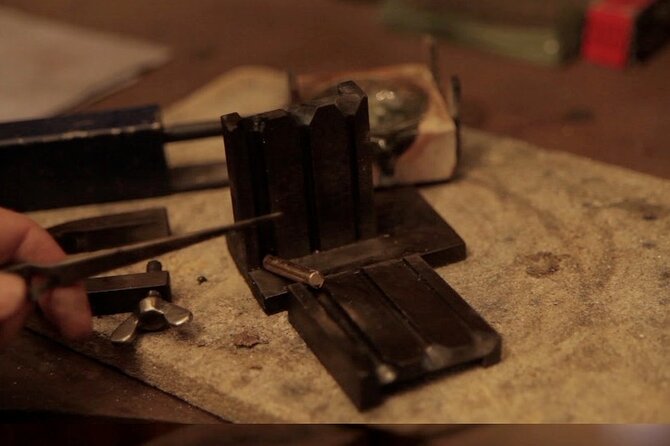
Antwerp’s diamond story begins well away from the modern diamond district. This private walk traces the older trade through the medieval center, where merchants exchanged money, silversmiths formed guilds, and early cutters shaped the city’s future. The best moments come inside working ateliers, including Pascale Masselis’s studio and the gallery-workshop of Rembrandt Jodan.
I like the small-group format, which lets your guide adjust the pace and explain details without a crowd getting in the way. I also like the mix of craft, architecture, and local history: you are not simply window-shopping, but learning why these streets mattered.
The main consideration is expectation. This is a historical old-center tour, not a visit to Antwerp’s modern diamond district and not a demonstration by working diamond cutters. The two-hour route includes designer studios and jewelry shops, but the focus is on the city’s past and present creative makers.
Key points to know before booking
- Private for your group: The price is $234.93 for up to 15 people, so the value improves sharply with several participants.
- A walking tour with real workshop visits: Pascale Masselis and other local designers add a personal craft element.
- The old diamond quarter, not the modern station district: You learn about Antwerp’s earlier trade before the diamond business shifted in 1905.
- A useful introduction to DIVA: The walk starts at Antwerp’s diamond, jewelry, and silversmithing museum, though museum admission is not included.
- English only: The tour is offered in English, with guides such as Margaret, Viviane, Catherine, Maria, and others having led it.
- Good for families and history fans: Guides can adapt the conversation, and the route has worked well for groups with children and adults.
Why Antwerp’s diamond story starts in the old center
Most people connect Antwerp diamonds with the area around Central Station. That is understandable, but it leaves out an earlier chapter. This tour takes you through the older center, where trade, money exchange, religious institutions, and skilled metalwork were closely linked.
You begin at DIVA, the city museum devoted to diamonds, jewelry, and silver. Your guide gives you the basic framework before leading you into the surrounding streets. That opening matters because the tour is easier to follow once you understand that Antwerp’s diamond trade was never only about stones. It also depended on merchants, banks, guilds, workshops, transport, and buyers from abroad.
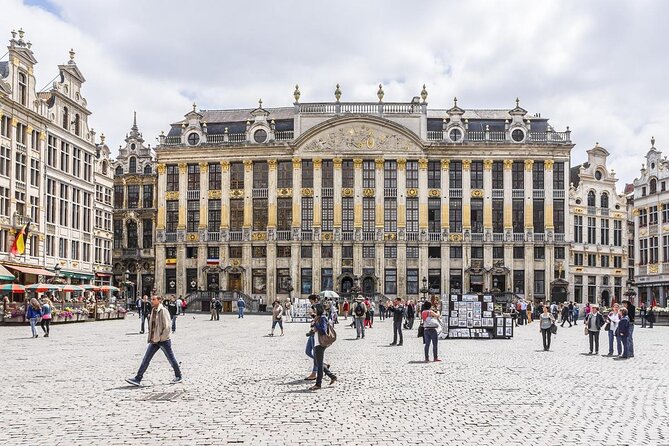
The walk then reaches Grote Markt, where annual fairs brought foreign merchants to buy and trade jewelry and precious stones. It is an attractive square, but the useful part here is the connection between public space and commerce. The city’s diamond identity grew through regular trading events rather than appearing overnight.
At Wisselstraat, the subject turns to money. The name refers to exchange, and your guide explains how overseas buyers changed money here. You also hear the less polished side of trade, including the origin of the word bankrupt. That small detail gives the story a human edge. Precious goods and international commerce have always carried risk.
More Private History Tours in Belgium
- Private Historical Tour: The Highlights of Bruges
★ 5.0 · 315 reviews - Private tour: Highlights & History of Antwerp
★ 5.0 · 299 reviews - Bruges: Private Historical Highlights Walking Tour
★ 4.7 · 191 reviews
Saint Paul’s Church and the craft behind the trade
Saint Paul’s Church adds a different layer. Its connections with silversmithing and jewelry remain visible in the church treasury, which contains more than 3,000 diamonds. The stop lasts about 15 minutes, long enough for your guide to explain why religious institutions played an important part in commissioning and preserving fine metalwork.
This is not presented as a separate church tour, so you should think of it as a focused stop within the wider story. One guide has also added an impromptu visit to Antwerp Cathedral, but that is not a promised part of the route. Treat any extra stop as a bonus, not something to plan around.
The route continues along Zwartzustersstraat. Today, you may not guess that this was once a busy shopping street, with jewelry shops at ground level and diamond-cutting workshops above. That detail helps you picture the older working city. The craft was close to daily commerce, not hidden in a remote industrial zone.
On Zirkstraat, you hear about the first diamond cutter who lived there in the 15th century. The stop is brief, but it anchors Antwerp’s cutting tradition in a real street. You are not just hearing that the city has a long connection with diamonds. You are being shown where that story took place.
The important limit: Antwerp no longer does all the cutting
A useful part of the tour is its honest explanation of change. Much of the cutting work is no longer done in Antwerp because it costs less elsewhere. Your guide may also discuss competition from Russia and other diamond-producing or processing centers.
This context keeps the tour from presenting Antwerp as if its old trade works exactly as it did centuries ago. The city remains important for diamond dealing, design, and jewelry, but the work has shifted. For me, this is one of the strongest reasons to choose the walk. You get a more accurate picture of a trade shaped by global prices and changing business patterns.
If you expect to watch a diamond being cut during the walk, you should adjust your plan. The experience includes visits to jewelry ateliers and designer spaces, not a confirmed visit to an operating diamond-cutting workshop. One past participant was disappointed by this distinction, and the provider has clarified that the route is historical and centered on the old city.
Pascale Masselis: the most personal workshop stop
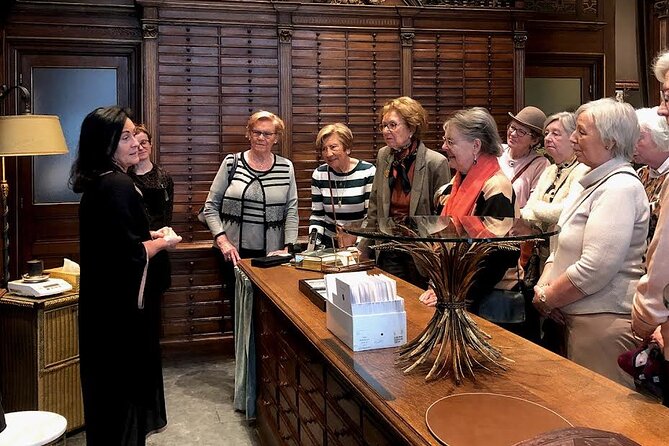
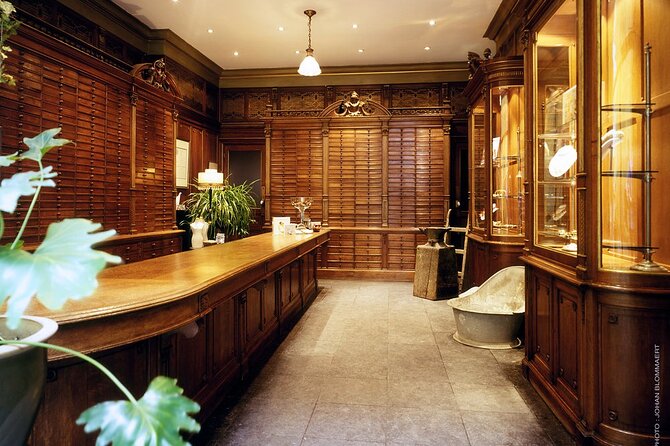
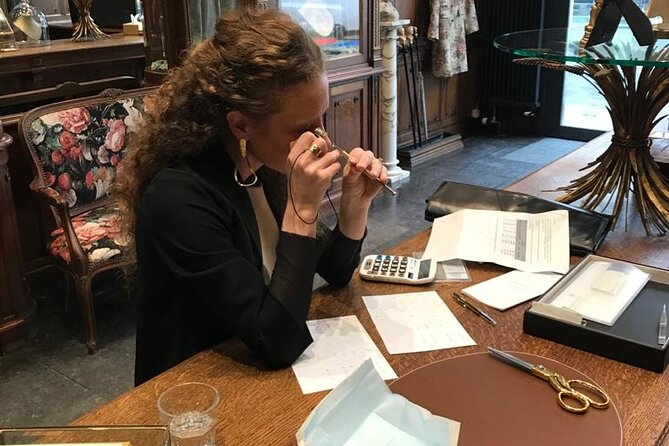
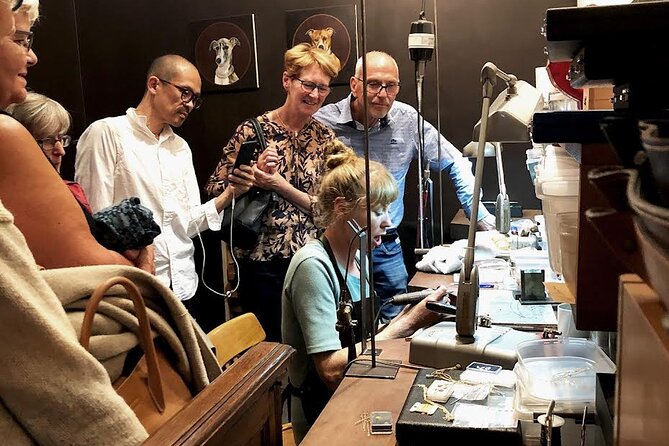
The visit to Pascale Masselis’s atelier is likely to be the tour’s most direct encounter with a maker. Masselis graduated from Antwerp’s Royal Academy in 1983 and works only with 18-carat gold. Each piece is handmade in her own atelier, and she can create work to order or remake an old piece of jewelry into something more current.
That last service makes the stop especially useful if you are interested in jewelry as a personal object rather than a luxury purchase. You can ask about design, materials, and the process of changing an inherited or outdated piece. The visit is not simply a shop stop. It connects Antwerp’s older metalworking traditions with a modern independent business.
The atelier visit lasts about 15 minutes. That is enough for an introduction and conversation, but not a long technical class. The exact welcome may depend on the studio schedule, so I would approach it as a chance to meet a designer, not as a guaranteed private consultation.
More Old Town and Historic Centre Walks in Belgium:
- Antwerp: Historical Walking Tour in the Old City
★ 4.8 · 373 reviews - Historical Walking Tour in Antwerp Old City
★ 5.0 · 277 reviews - Brussels on Foot: Historic Center with a Local Guide in 2 hours
★ 4.3 · 36 reviews - Madrid Essential: Historic Center, Plaza Mayor & Royal Palace
★ 5.0 · 6,416 reviews
Lange Koepoortstraat and the old silversmith organization
Lange Koepoortstraat marks another shift in the story. This was once the site of the nation house of Antwerp’s goldsmiths and silversmiths. Your guide explains why such an institution was needed and how the trade was organized.
For anyone interested in guilds, regulations, and professional standards, this can be one of the more rewarding historical stops. It shows that jewelry making was not only an artistic activity. It was also a regulated profession with shared rules and commercial interests.
The stop takes about 10 minutes. The value comes from the explanation, since the street itself may not announce its former role. Listen for the link between the city’s craft workers and the need to protect standards, business rights, and the reputation of local makers.
Wijngaardstraat and Antwerp’s independent designers

Wijngaardstraat is the creative center of the route. This picturesque street contains five jewelers, each with a different style and approach. Instead of rushing through a chain of similar shops, you get a quick look at several independent design visions.
Gerda De Vrij studied in Pforzheim under Klaus Ullrich, an important figure in modern jewelry. She later settled in Antwerp and opened her own atelier with Emile Henry. Their two daughters eventually joined the business, giving the studio a family continuity that is unusual in a rapidly changing retail world.
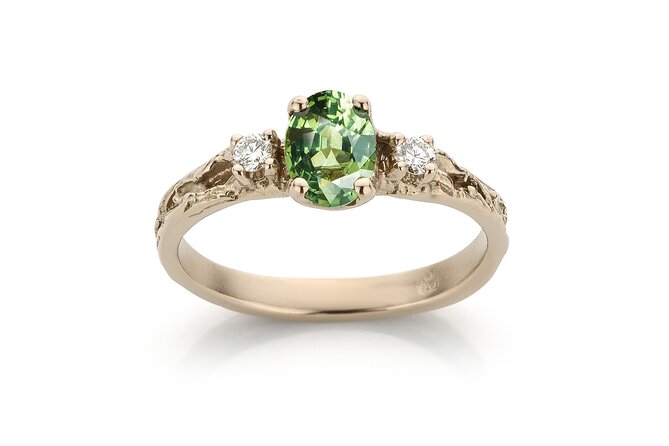
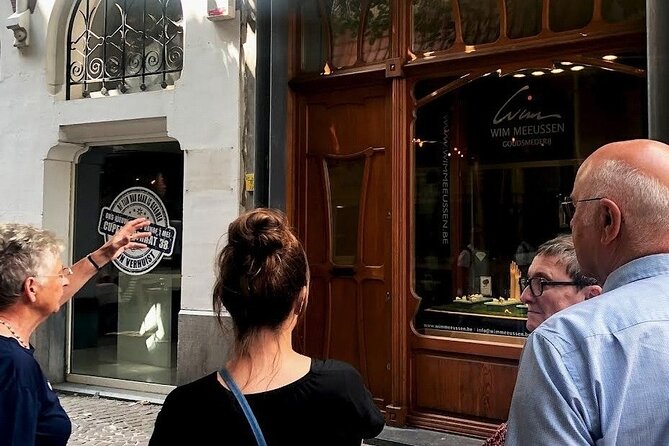
Wim Meeussen is known for jewelry and wedding rings. His nearby second location focuses on silver, making the design style available at a lower price point. This is a helpful stop if you like the look of independent jewelry but do not plan to buy a high-value gold piece.
Hanne Schoofs keeps experimenting with new techniques, so her collection changes over time. Eva Crauwels has worked as an independent goldsmith for more than 15 years, with a collection described as retro-romantic and feminine. Together, these studios show how broad Antwerp’s jewelry scene can be. It is not one house style.
The walking time here is about 20 minutes, but the actual experience depends on which spaces are open and ready to receive the group. You may browse, ask questions, and compare methods, though buying is entirely optional.
Rembrandt Jodan’s gallery, atelier, and shop
The final stop is Rembrandt Jodan at Wijngaardstraat 18. Jodan’s space combines an art gallery, atelier, and jewelry shop. That combination makes a fitting ending because it blurs the line between jewelry and small-scale art.
You can expect the guide to explain Jodan’s role as an artist and goldsmith, then give you time to look around the multidisciplinary space. The visit lasts about 20 minutes and is the last scheduled stop, so it is a natural place to continue browsing or ask final questions.
The tour ends here rather than returning to DIVA. That is convenient if you want to keep exploring central Antwerp, but remember that the route is one-way. Wear comfortable shoes and allow for a short walk back to your next destination if needed.
Price, timing, and group value
The price is $234.93 per group of up to 15 people. For one or two people, that can feel expensive for a two-hour walk. For a family or larger private group, the calculation changes. At the full group limit, the cost works out to roughly $16 per person, before any museum admission.
The private format is the main reason to pay more than you would for a standard group walk. You can ask about design, trade history, church treasures, or Antwerp’s business past without waiting for a large crowd to move along. Guides have also adjusted the pace and subject matter to suit different interests, including families with children aged 12 and 17.
Two hours is enough for a clear introduction, but it is not enough to study every shop or museum exhibit. DIVA admission is not included, and I would strongly consider visiting the museum separately after the walk. The tour gives you useful background, while DIVA can provide a longer look at objects and exhibitions.
The experience is offered in English. Confirmation is sent within 48 hours, subject to availability. It is near public transportation, service animals are allowed, and most people can take part. Since the experience requires good weather, check the forecast before setting your plans. Free cancellation is available until 24 hours before the start time, while later cancellations are not refunded.
Who will enjoy this Antwerp walk
I would choose this tour if you want more than the standard Grote Markt, cathedral, and riverfront circuit. It works particularly well for:
- Jewelry buyers who want to understand independent design before shopping
- History fans interested in guilds, trade, money, and urban change
- Families who prefer a focused walk with regular visual stops
- Visitors who want a private guide rather than a large group
- Repeat visitors looking for streets they may have missed on earlier trips
- Anyone planning to visit DIVA and wanting background first
I would hesitate if your main goal is to see active diamond cutters at work or visit Antwerp’s modern diamond district near Central Station. The route does not promise either. It is also not a jewelry appraisal session, though Pascale Masselis’s studio can discuss transforming older jewelry.
Should you book the Diamonds and Jewellery Old City Center Historic Tour?
Book it if you want to connect Antwerp’s diamond reputation with the streets, institutions, and makers that shaped it. The strongest parts are the private guide, the old-center setting, the explanation of how the trade moved after 1905, and the chance to enter independent ateliers.
Before paying, be clear about the format. You will see jewelry designers and goldsmiths, not a guaranteed diamond-cutting demonstration. If that suits you, the $234.93 group price can be fair, especially for a family or group of friends. Pair it with a separate visit to DIVA, and you will have a fuller picture of Antwerp’s diamond and jewelry culture.
FAQ
Where does the tour begin?
The tour begins in front of DIVA, the museum of diamonds, jewelry, and silver, at Suikerrui 17/19 in Antwerp.
Where does the tour end?
The scheduled route ends at Rembrandt Jodan, Wijngaardstraat 18, in Antwerp.
How long does the tour last?
The tour lasts approximately two hours.
Is the tour private?
Yes. Only your group participates, with a maximum group size of 15 people.
What language is the tour offered in?
The tour is offered in English.
Is admission to DIVA included?
No. The tour starts at DIVA, but museum admission is not included. A separate visit after the walk is recommended.
Will I see diamond cutters at work?
No diamond-cutting visit is promised. The route focuses on the history of Antwerp’s older diamond trade and includes jewelry designers, goldsmiths, boutiques, and atelier spaces.
Can I cancel for a full refund?
Yes, if you cancel at least 24 hours before the experience begins. Later cancellations are not refunded. If poor weather causes the tour to be canceled, you will be offered another date or a full refund.
Just added around Belgium
- Historic Battle of the Bulge Sites Tour from Brussels★ 5.0 · 31 reviews
- Historical Walking Tour: The Story of Brussels – by Legends★ 5.0 · 164 reviews
- Bruges Bites & Sights – Belgian Food, Beer & A Little Bit Of History★ 5.0 · 94 reviews
- Medieval Tour in Bruges with Chocolate Tasting★ 5.0 · 71 reviews
- 2-Hour Historical Walking Tour in Bruges with Praline Included★ 5.0 · 291 reviews
- Bruges at Night: Murder, Mystery & Dark Stories Small Group Walk★ 5.0 · 137 reviews
- Best of Bruges: History, Chocolate & Beer Tour★ 5.0 · 256 reviews
- Food tasting & Historical walk★ 4.5 · 47 reviews
Belgium History Tours, compared.
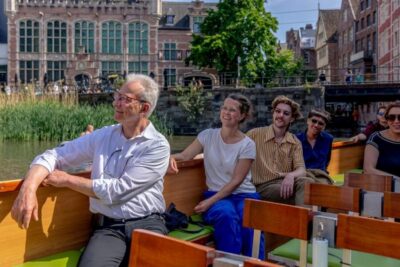
Ghent: 50-Minute Medieval Center Guided Boat Trip
Read our review →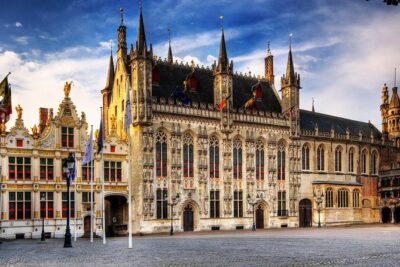
Brussels: Historical Tour with Chocolate & Waffle Tasting
Read our review →
Brussels: Historical Walking Tour with Chocolate & Waffle Tasting
Read our review →
THE Storytelling Tour of Bruges | First Day Must | History & Tips
Read our review →
Ghent: 40 Minute Medieval Center Guided Boat Tour
Read our review →Browse the lists this tour appears in