
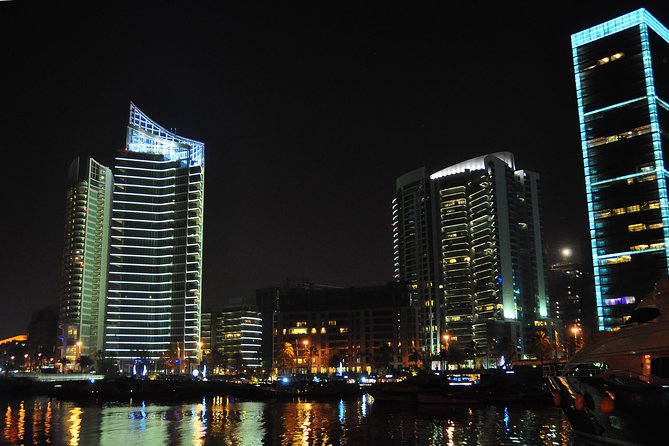
Review · HISTORY TOURS
PRIVATE Beirut Historical Walking Half Day Tour
Beirut’s past is the real star here. In a few hours, you move from the National Museum to war-damaged and rebuilt downtown, then out to the sea at Pigeon Rocks. Guide David, also called Dave, uses maps, audio material, and personal memories of growing up in Beirut to explain a city shaped by ancient empires, religious variety, civil war, and constant change.
I like two things right away: door-to-door transport removes the hassle of getting around Beirut, and the private format lets you ask questions or adjust the pace. The strongest part is the downtown walk, where Roman baths, mosques, churches, restored souks, and public squares sit close together. The main drawback is that the schedule is ambitious. You cover a lot, but museum time and walking time may feel short if you want to study every exhibit or shop.
Key points to know before booking
- Private touring with David or Dave: You get a driver-guide for your own group, with plenty of room for questions and discussion.
- National Museum first: The museum gives you a useful introduction to Lebanon’s long story before you walk through central Beirut.
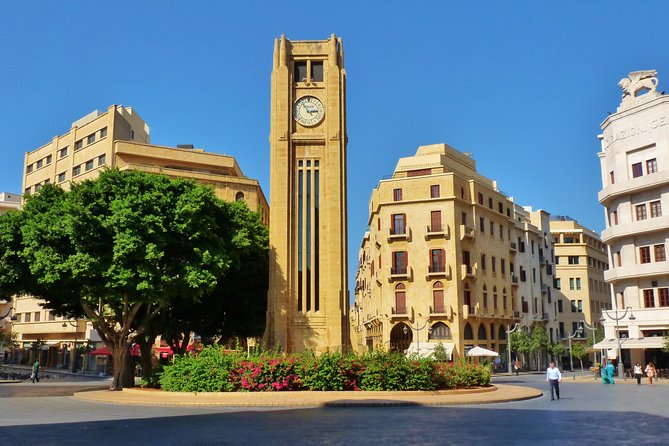
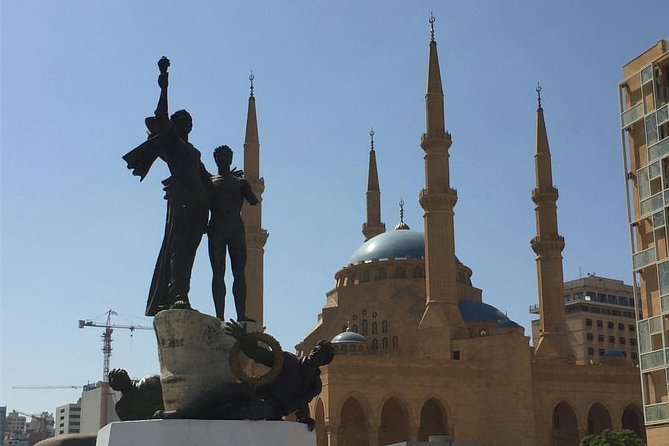
- Downtown combines many eras: See Place des Martyrs, the Mohammad Al-Amin Mosque, St. George’s Cathedral, Roman baths, Star Square, Parliament, and the Government Palace.
- A city rebuilt after war: Solidere and the Beirut Souks show how central Beirut was restored after severe destruction.
- Two quick seaside stops: Pigeon Rocks and the Corniche provide a change from monuments and city streets.
- Good use of a short visit: The tour lasts about 3 to 4 hours and includes pickup, drop-off, an air-conditioned vehicle, and listed fees.
A useful first look at Beirut’s complicated past
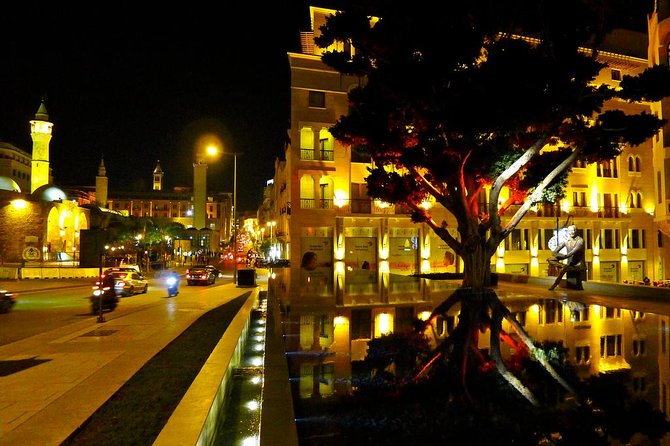
This is not just a checklist of famous buildings. The tour is built around the story of a city repeatedly destroyed and rebuilt. Beirut has suffered natural disasters through its long history, and the civil war from 1975 to 1990 left major parts of the city badly damaged.
That context matters. Without it, restored downtown can look like a polished shopping district with a few ancient stones scattered around. With it, the Parliament, rebuilt souks, religious buildings, Roman remains, and empty or altered urban spaces become part of a larger story.
The experience begins at 9:00 am, with pickup from Beirut city. Your vehicle is air-conditioned, which is useful before and after the walking section. Since this is a private activity, you are not tied to a large group’s pace. If you want to ask about Lebanese politics, architecture, religion, or daily life, the format gives you space to do so.
David’s approach appears especially suited to people who want explanation rather than a quick photo stop. The tour starts with a briefing about Beirut, a map, and an audio presentation covering the city’s history and present-day complexities. That preparation is valuable because Beirut can be hard to read at street level. Its layers are close together, but they are not always obvious.
More Private History Tours in the world:
- Private Historical Walking Tour of York
★ 5.0 · 1,324 reviews - Private Guided Historic Electric Cart Tour of St. Augustine
★ 5.0 · 1,194 reviews - Istanbul: Acemoglu Historical Turkish Bath w/Private Options
★ 4.6 · 1,190 reviews
The National Museum puts the whole city in context
The National Museum of Beirut is the logical first stop. It was built in the 1940s, suffered serious damage during the civil war, and was revived in the 1990s. That history gives the building itself a place in the tour’s central theme: Lebanon’s past has had to be protected, repaired, and explained.
Inside, you can expect a broad introduction to Lebanese archaeology and history. The museum is particularly useful before the downtown walk because it gives you a framework for understanding the civilizations that shaped Beirut and the surrounding region.
The supplied tour details list admission as included, along with all fees and taxes. Still, I would not expect a long museum study session. The entire experience is marketed as a half-day outing, and the downtown section has several stops. If museums are your main reason for visiting Beirut, you may want extra time on another visit.
The opening briefing and audio material also help here. They are not a substitute for seeing the displays, but they can make the visit easier to follow. You begin with a sense of place rather than walking in cold and trying to connect each object to the city outside.
Downtown Beirut shows restoration beside ancient remains
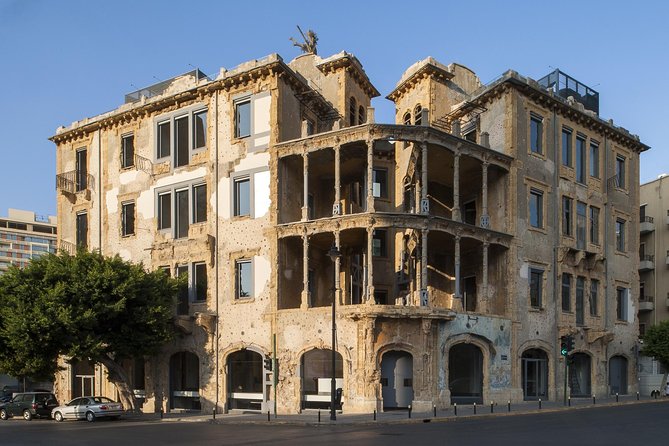
After the museum, the tour moves toward central Beirut, often referred to as Solidere. This area was badly damaged during the civil war and later restored. The result is an unusual mixture of reconstructed streets, formal public buildings, historic religious sites, archaeological remains, and commercial spaces.
The walking portion is the heart of the experience. You may see the Lebanese Parliament, the Government Palace, Roman baths, Star Square, Place des Martyrs, and major religious buildings. The value is not simply counting stops. It is seeing how different communities and periods share the same compact center.
Place des Martyrs
Place des Martyrs is one of the key public spaces in downtown Beirut. Its name points to an important chapter in Lebanon’s political history, and its position makes it a useful place to discuss the city’s changing public life.
From here, the Mohammad Al-Amin Mosque and St. George’s Maronite Cathedral help show Beirut’s religious diversity. The mosque’s prominent form and the cathedral’s presence nearby make a strong visual pair. You do not need to be an architecture expert to understand the point: different traditions are not separated into distant suburbs here. They occupy the same central stage.
The tour also includes the Roman baths. These remains are easy to overlook when surrounded by newer buildings, so a guide adds real value. David’s explanations are intended to connect the stones to Beirut’s older urban life rather than treating them as a stray archaeological photo opportunity.
Star Square adds another layer, with its central position and surrounding streets. The exact amount of time at each point can vary, especially because this is a guided walk rather than a fixed audio route. That flexibility is useful if a particular subject catches your interest, but it also means you should not expect a long, formal stop at every site.
More History Walking Tours in the world:
- History and Hauntings of Salem Guided Walking Tour
★ 5.0 · 14,564 reviews - Lisbon: History, Stories and Lifestyle Walking Tour
★ 4.8 · 10,902 reviews - Amsterdam: Life of Anne Frank and World War II Walking Tour
★ 4.8 · 10,467 reviews - Berlin: Third Reich & Cold War Guided Walking Tour
★ 4.9 · 8,378 reviews
The Beirut Souks reveal the city’s modern commercial face
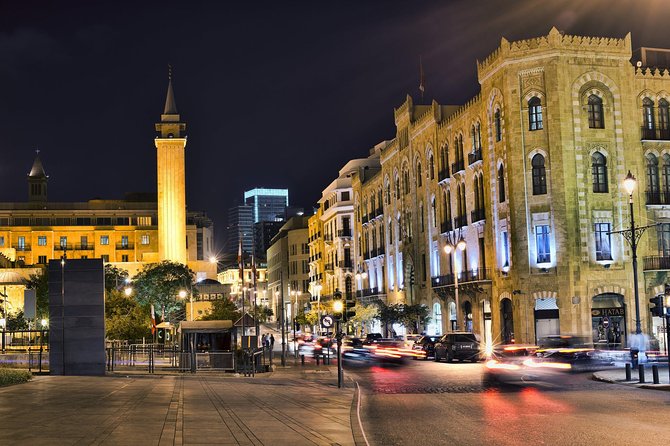
The Beirut Souks were demolished during the wars of Lebanon and rebuilt in the 1990s as an open-air shopping center in the central district. They are a useful contrast to the museum and Roman remains.
Here, the story is about reconstruction and modern Beirut. The souks are not an untouched old market, so you should not arrive expecting a maze of traditional stalls. Think of them as a planned commercial area that reflects the city’s attempt to restore its downtown economy and public identity.
The stop is listed as about an hour, with no separate admission charge. You may have time to look around, take a break, or browse shops, though the main purpose of the visit is to understand the area’s rebuilding. If shopping is not your priority, this part may feel less rewarding than the Roman and religious sites. If you are interested in how cities recover after conflict, it adds an important piece to the day.
This is also one reason the private format helps. You can ask David how the area changed, rather than simply passing through it on the way to the next monument.
Pigeon Rocks gives the tour a dramatic finish
The drive to Raouche shifts the mood completely. After the museum and dense downtown walking route, you reach the coast to see Pigeon Rocks, one of Beirut’s best-known symbols.
The stop is short, listed at about 15 minutes, so treat it as a scenic viewpoint rather than a long coastal outing. You will have time for photographs and for a look at the rock formations from the waterfront. The contrast is welcome: ancient archaeology and war history give way to open sea and a simple natural landmark.
The Corniche follows, also listed at about 15 minutes. The schedule notes sunset, though the start time is 9:00 am, so the exact lighting and timing may depend on the day’s route and season. It is safest to view this as a brief waterfront stop rather than a guaranteed sunset experience.
These final stops also show why the tour works well as an introduction. You do not spend the entire morning indoors or among monuments. You finish with a recognizable view of Beirut’s coast, giving you a visual memory that balances the heavier historical material.
What the guide adds to the experience
The most consistent strength of this tour is the guide’s explanation of Beirut’s past and present. David is described as having lived through the city’s difficult recent decades, and that first-hand connection gives the political and social material a personal angle.
That does not mean every minute is a personal story. The tour still covers archaeology, architecture, religion, public spaces, and urban rebuilding. But when a guide can explain how the city changed through lived experience, facts about the civil war and reconstruction are easier to place.
The early map and audio presentation are useful tools. They help you understand Beirut geographically before the walking tour begins, and they set out the political background without forcing you to piece everything together from disconnected sights.
I would choose this tour if you enjoy asking questions and discussing what you see. It seems less suited to someone who wants a silent, photo-focused outing with minimal commentary. The guide’s style is a major part of the value, so the experience will be strongest if you are open to history, current affairs, and local perspective.
Is $93.34 per person good value?

At $93.34 per person, this is not the cheapest way to see Beirut. The price makes more sense when you count what is included: private transportation, hotel pickup and drop-off within Beirut city, a driver-guide, an air-conditioned vehicle, and listed fees and taxes.
You are also paying for efficiency. In a half day, you reach the National Museum, central Beirut, the souks, and Raouche without arranging separate taxis or working out how to connect the sites. For a first visit or a short stay, that convenience has real value.
The private format matters most for couples, families, and small groups. Group discounts are available, though the exact saving is not provided. Larger private groups may find the per-person price easier to justify, while a solo visitor should compare it with the cost of arranging transport and a guide separately.
Lunch is not included. That is not a major problem because the tour lasts only about 3 to 4 hours, but you should plan your meal around the 9:00 am start and the end of the route.
The one value question is depth. You get broad coverage rather than a long visit at one place. If you want an intensive museum tour or several hours in the souks, this is not the right format. If you want a guided overview with transport and a strong historical explanation, the price is easier to defend.
Who will enjoy this Beirut walking tour?
I would recommend it most strongly to:
- First-time visitors who want a clear introduction to Beirut
- People with only half a day available
- History-minded visitors interested in archaeology and the civil war period
- Couples and families who prefer a private guide
- Cruise or short-stay visitors who want transport arranged
- Anyone who wants to combine central sights with Pigeon Rocks
You should think twice if you dislike guided discussion or want to spend a full day at the museum. The itinerary moves between several areas, and the walking section involves city streets, public squares, and multiple stops. Comfortable shoes are sensible, even though the exact walking distance is not specified.
The tour is listed as suitable for most people, but no detailed accessibility information is provided. If mobility access is important to you, ask the provider about the walking route and museum arrangements before booking.
Booking and cancellation details
Pickup is offered from Beirut city, and the stated start time is 9:00 am. Confirmation is normally received at booking, unless you book within 12 hours of departure, in which case confirmation depends on availability.
A minimum number of guests may be required for the activity to operate, despite the tour being private. Only your group participates once it is running.
Free cancellation is available if you cancel at least 24 hours before the start time. Cancellations or changes made less than 24 hours before departure are not accepted for a refund, and the cut-off is based on local time.
Should you book this tour?
Book it if you want Beirut explained, not just photographed. The combination of the National Museum, downtown’s Roman and religious sites, rebuilt commercial district, and Pigeon Rocks gives you a useful first look at the city in a short window.
The best reason to choose it is the guide-led context, especially if David or Dave is available. His use of maps, audio material, and personal knowledge of Beirut’s recent past can help you understand sights that might otherwise seem disconnected.
Skip it if you want a slow museum visit, a full shopping day, or a long coastal outing. For most first-time visitors with only a few hours, though, this is a practical and thoughtful way to meet Beirut.
FAQ
How long does the Beirut Historical Walking Half Day Tour last?
The tour lasts approximately 3 to 4 hours.
What time does the tour start?
The stated start time is 9:00 am.
Is hotel pickup included?
Yes. Pickup and drop-off are offered from hotels in Beirut city.
Is this a private tour?
Yes. This is a private activity, so only your group participates.
What sites are included?
The tour includes the National Museum of Beirut, downtown Beirut, Place des Martyrs, the Mohammad Al-Amin Mosque, St. George’s Maronite Cathedral, the Roman baths, Star Square, the Beirut Souks, Pigeon Rocks in Raouche, and the Corniche.
Is transportation included?
Yes. An air-conditioned vehicle and driver-guide are included.
Is museum admission included?
The tour information lists admission as included, along with all fees and taxes.
Is lunch included?
No. Lunch is not included.
Can I cancel for a full refund?
Yes, if you cancel at least 24 hours before the experience start time. Cancellations or changes made less than 24 hours before the start time are not accepted for a refund.
Just added around the world
- Scenic Train ride to historical cities of Morretes and Antonina★ 4.0 · 188 reviews
- 6-Day Cultural Tour to Machu Picchu★ 5.0 · 76 reviews
- Jewish Heritage of Curacao★ 4.5 · 68 reviews
- The Curacao’s Colorful History Walking Tour★ 5.0 · 55 reviews
- Discover Scuba Diving Amathounta’s Ancient Port★ 5.0 · 30 reviews
- Olous – Guided Snorkelling Excursion to Discover Olous Sunken Ancient City★ 4.5 · 31 reviews
- Night Walking Tour of Medieval Cuenca★ 5.0 · 64 reviews
- Heraklion Highlights: Knossos, Museum & Historic City Drive★ 5.0 · 64 reviews