
Review · NETHERLANDS
Rotterdam: Highlights, Gems, Architecture & History Walk
Rotterdam’s best story is its reinvention. This walk links the medieval city on the Rotte River with the port, the WWII destruction, the modern skyline, and the daring buildings that make Rotterdam unlike any other Dutch city. Yoreh, a local guide who grew up here, uses photographs and visual aids to show what disappeared, what replaced it, and what may come next.
I like the mix of architecture and personal storytelling, rather than a walk that simply points at famous buildings. I also like the practical finish: you end at the Markthal with restaurant suggestions, photo tips, and a better sense of where to go next. The main consideration is physical. You cover about 5 kilometers, or roughly 11,000 steps, and often keep moving, so good shoes matter.
Key points to know before you book
- Two routes, one clear difference: The 2-hour option gives you a useful city overview, while the 3-hour version adds more stories, context, and time in the central districts.
- A local guide makes the difference: Yoreh and Elmer bring Rotterdam’s past and future to life with personal knowledge, humor, and visual material.
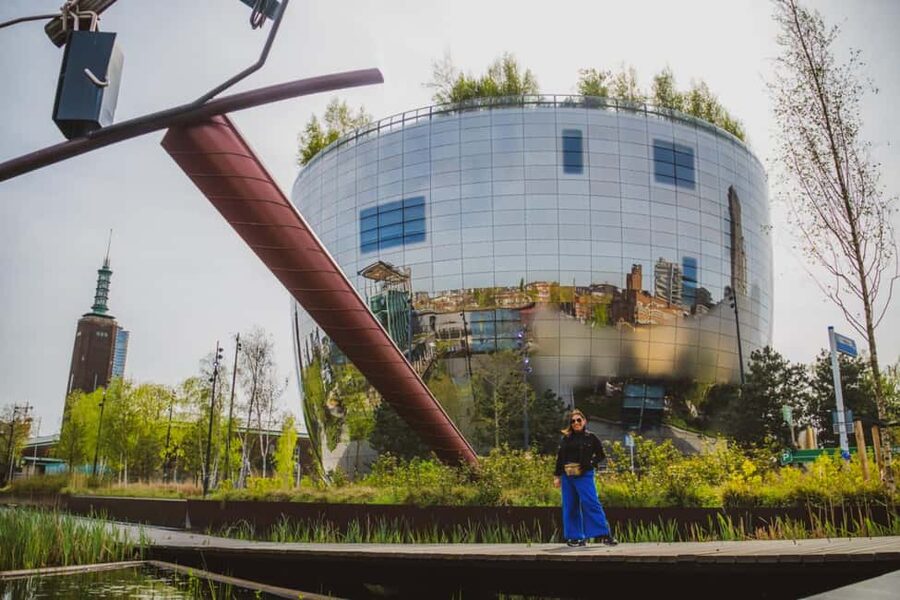
- The route connects major sights: You pass the Depot Boijmans Van Beuningen, Erasmus Bridge, Maritime District, Old Harbor, Cube Houses, and Markthal.
- WWII is part of the story: The walk explains how bombing reshaped Rotterdam and why rebuilding produced such an experimental city.
- Small details make the walk personal: Expect a Dutch stroopwafel, photo advice, toilet and sitting breaks, and suggestions for food after the tour.
- Come ready to walk: The route is wheelchair accessible with stairs avoidable, but standing and walking for long periods can be tiring.
Why Rotterdam makes such a good walking-tour subject
Rotterdam can confuse first-time visitors. Amsterdam presents its story through canals, old houses, and a familiar historic center. Rotterdam gives you a much less tidy puzzle: a medieval beginning, a major port, wartime destruction, postwar rebuilding, glass towers, old harbor buildings, and bold projects still under discussion.
That contrast is exactly why a guide helps. You are not just looking at a Cube House or a bridge. You are learning why the city accepted unusual architecture, why so much of the center feels modern, and how Rotterdam’s working port shaped its identity.
The route begins with the city’s origins beside the Rotte River in the 13th century. From there, the story moves toward shipping, trade, industrial growth, and the port’s rise to international importance. WWII is not treated as a small footnote. The bombing and invasion changed Rotterdam so completely that the city had to decide what kind of place it would become afterward.
I find that context especially useful here. Without it, Rotterdam’s modern buildings can look like a collection of clever design experiments. With it, they become part of a larger argument about survival, progress, and how a city chooses to rebuild.
More History Walking Tours in the Netherlands
- Amsterdam: Life of Anne Frank and World War II Walking Tour
★ 4.8 · 10,467 reviews - Amsterdam: Haunted History and Ghost Walking Tour
★ 4.5 · 488 reviews - Amsterdam: Historical Highlights Walking Tour with Tasting
★ 4.6 · 381 reviews
Choosing between the 2-hour and 3-hour walks
The shorter tour is the sensible choice if you want orientation before exploring on your own. You still see important parts of central Rotterdam and get the main story of the port, war, rebuilding, architecture, and present-day city.
The 3-hour walk is better if Rotterdam is a main stop on your trip or if you care about buildings and urban planning. It allows more time for the less obvious corners, longer explanations, historical photographs, and discussion of future plans. The route may be ambitious, but the guide keeps a steady pace rather than turning it into a race.
You should not expect a museum-style tour with long indoor visits. Most of the time is spent outside, looking at buildings, streets, water, and public spaces. The Depot Boijmans Van Beuningen is passed rather than entered, and the inside of a Cube House is not included during the walk. You can visit a Cube House after the tour, only about a minute from the route.
From the Museum Quarter to Veerhaven
One possible starting point is near Melkkoppad, though the meeting point depends on the option you book. The first part brings you toward the Museum Quarter and the Depot Boijmans Van Beuningen.
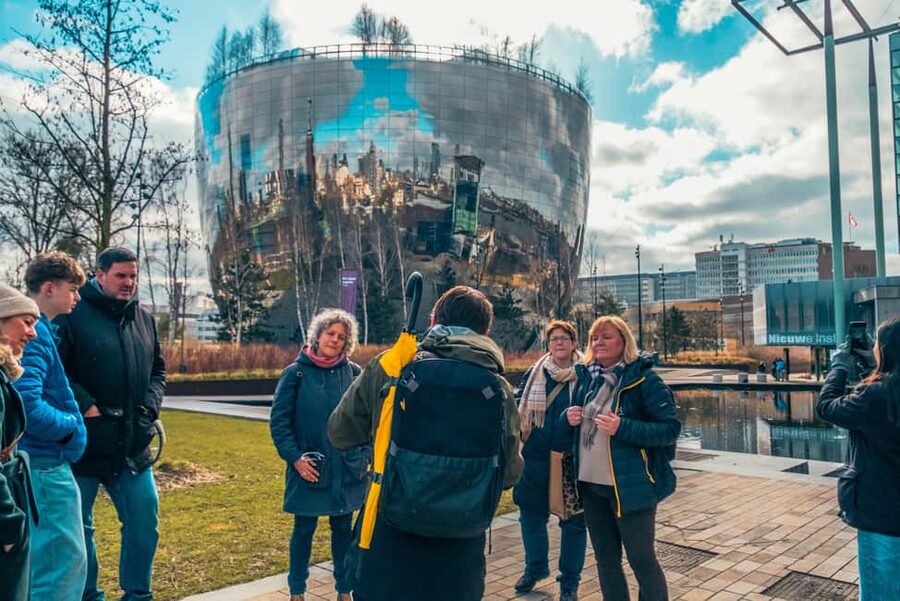
The Depot is one of Rotterdam’s most striking modern buildings. Even from outside, its reflective, rounded form makes a useful opening lesson in the city’s love of bold design. The guide uses this area to set up the relationship between art, architecture, and public space.
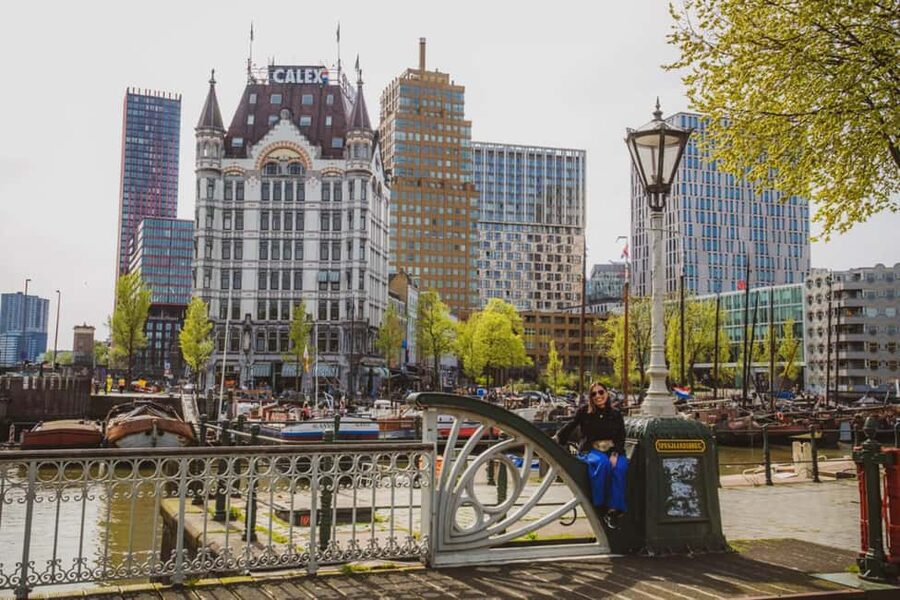
You then pass Veerhaven, a quieter harbor setting with a different feel from the city’s newer construction. This is one of the route’s useful contrasts. Rotterdam is not one continuous block of glass and steel. Older harbor districts, carefully planned streets, and grander historic buildings remain part of the city’s character.
The pace here gives you time to take photographs, but you will need to keep the group moving. The guide may stop to show an image or explain how an area once looked. Yoreh is also known for offering to take pictures and pointing out useful angles, a small service that is handy when you are traveling without someone to take your photo.
Erasmus Bridge and the city’s changing skyline
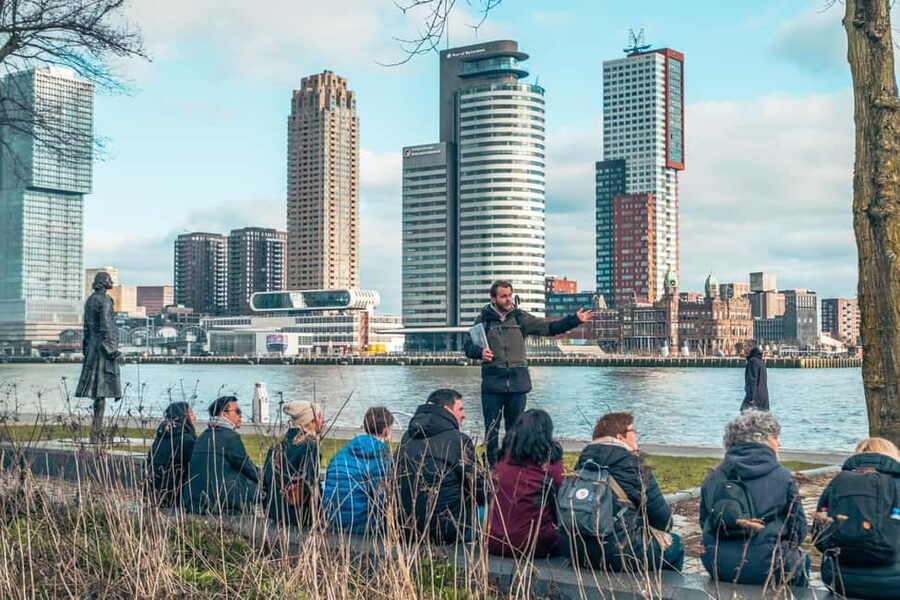
The Erasmus Bridge is one of Rotterdam’s essential sights, and the walk uses it to discuss both the city’s present image and its recovery after WWII. Its tall white pylon has earned it a famous nickname, but the more useful point is what the bridge does: it links parts of Rotterdam and gives the city a strong visual symbol.
You pass the bridge rather than spending the whole tour crossing or touring it. That keeps the walk moving and lets you see how the bridge relates to the river, port, and skyline.
This is also one of the better places for photographs. The guide gives advice on viewpoints, and the open setting offers broad views across the water and toward the towers. If you are interested in city design, pay attention to how the bridge frames newer buildings on one side and older waterfront areas on the other.
The route does not treat architecture as decoration alone. You hear about current projects and possible future developments, which adds a useful layer. Rotterdam is still changing, and the guide connects visible buildings with plans that may shape the city later.
Same city, a different century:
- Amsterdam Food and Cultural Tour with Tastings
★ 5.0 · 4,315 reviews - Rotterdam: Kinderdijk UNESCO World Heritage Entry Ticket
★ 4.6 · 1,477 reviews - The Hague: Hop-on Hop-off Heritage Tram Tour
★ 4.5 · 1,311 reviews - Amsterdam: Dutch WWII Resistance Museum Entry Ticket
★ 4.7 · 951 reviews
Leuvehaven and the Maritime District
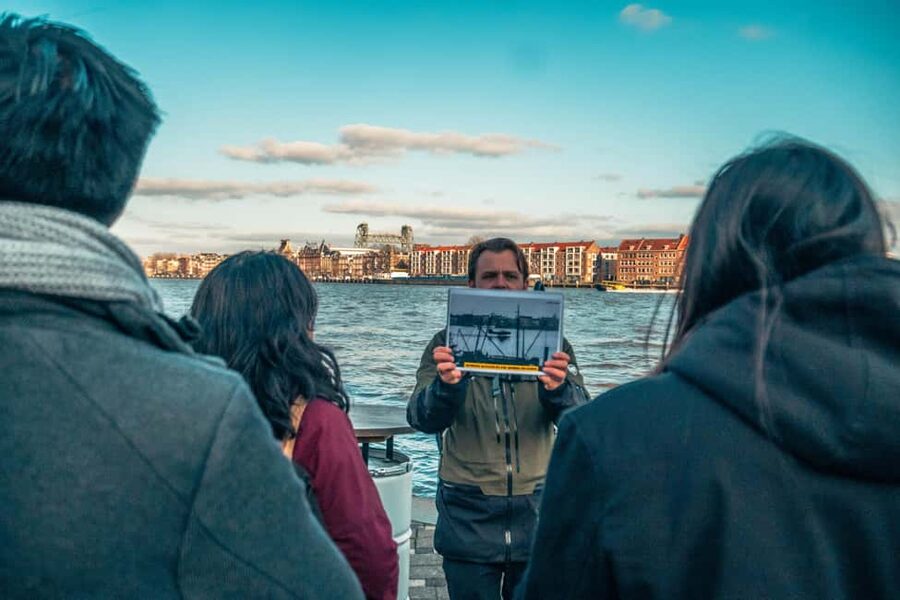
At Leuvehaven, the walk turns toward Rotterdam’s maritime past. This area helps explain how the city became a port power, rather than simply asking you to admire ships and waterfront views.
The Maritime District and Shipping Quarter add working-city context to the tour. Rotterdam’s identity grew from trade, transport, warehouses, docks, and the people who depended on them. You get a clearer sense of why the city’s architecture often feels practical, large-scale, and open to change.
The guide’s image sheets are particularly helpful during these historical sections. Old photographs and maps let you compare the present street with earlier versions of the city. That is more effective than hearing a list of dates, especially in a place where war and reconstruction altered the center so dramatically.
There are sitting opportunities at selected points, and the route includes a restroom break around the halfway mark. Still, you should expect to stand for extended periods. If your feet, hips, or back cause problems, this is not the easiest way to see Rotterdam.
Old Harbor and the Cube Houses
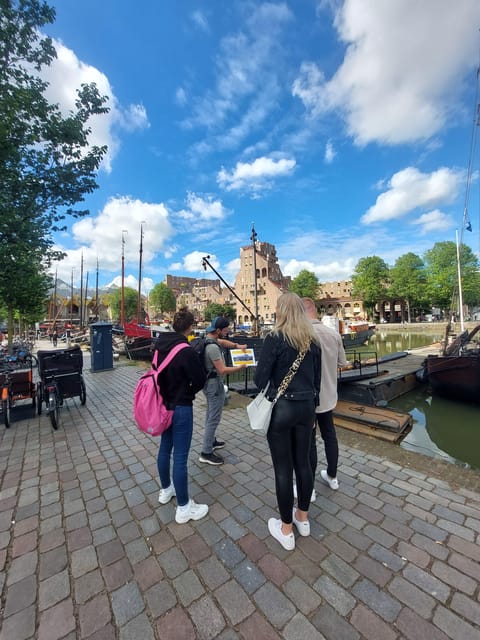
The Old Harbor is where Rotterdam’s past and present sit close together. You see a historic harbor setting alongside some of the city’s most famous modern architecture, a combination that sums up Rotterdam better than any single building can.
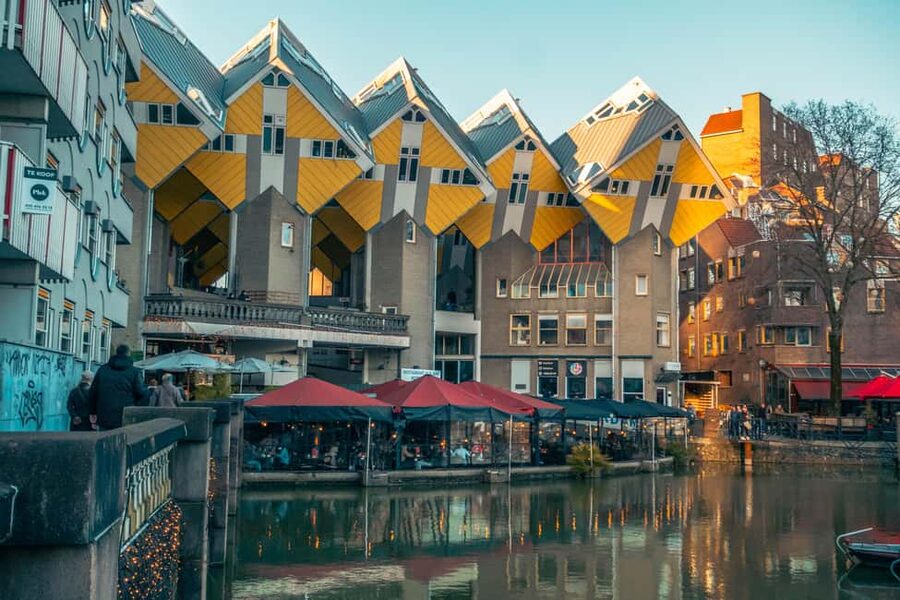
The Cube Houses are the visual star of this part of the walk. Their tilted forms are fun to photograph, but the guide gives you more than a quick photo stop. You learn how the design works as housing and why the buildings became a symbol of Rotterdam’s willingness to experiment.
You walk through the Cube House area, but the tour does not include a visit inside one of the homes. If you want to see the interior, you can do that afterward, with the entrance only about a minute away. I like this arrangement because you get the neighborhood context during the tour and can decide later if the interior visit is worth your time.
This is also an area where the tour’s brisk pace matters. The Cube Houses are easy to photograph from several angles, and you may want to linger. You can take pictures, but the group needs to finish on time, so save some close study for after the walk.
Finishing at the Markthal
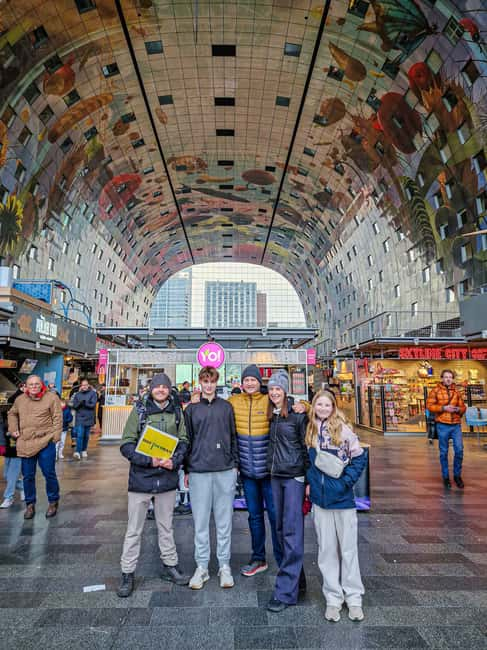
The Markthal is the final stop and one of the most rewarding places to end a walking tour. Its huge interior artwork has led to comparisons with the Sistine Chapel, though the subject here is food, produce, flowers, and market life rather than religious painting.
The guide explains the building and then gives suggestions for eating inside. This is more useful than simply being released at a famous food hall with no plan. By the end of the walk, you may be ready for lunch, and the Markthal gives you plenty of choices in one place.
Ending here also makes practical sense. You can eat immediately, continue toward the Cube Houses, or use the central location to plan the rest of your day. The tour turns a landmark into a working stop, not just a photo backdrop.
A stroopwafel is provided partway through the walk, with other small Dutch food touches possible depending on the day and season. The break is modest, but it helps during a route that can stretch to three hours.
The guide style and visual material

Yoreh is the main name connected with this experience, and the strongest part of his approach is the combination of enthusiasm and preparation. He carries A3-sized photographs, maps, and other visual material showing Rotterdam before, during, and after major changes.
That matters because much of Rotterdam’s story is difficult to picture from the street. A photograph of the prewar center can make the destruction and reconstruction far more understandable. Images of future plans also show that the city’s story is not finished.
Yoreh’s English is described as fluent, and his approach includes humor, personal memories, restaurant suggestions, museum ideas, and help with photographs. Elmer also leads some departures and has received praise for answering questions and giving a clear account of the city’s past.
The small-group format gives you room to ask questions and, in some cases, shape the discussion around your interests. The tour may still run with only one booking, which is useful for solo visitors who worry that a low-season departure could be canceled. That also means the cost may feel more like a private walk if the group is very small.
Price, pace, and practical value
At $48 per person, this is not the cheapest way to walk around Rotterdam. You can see the Cube Houses, Markthal, and Erasmus Bridge independently for little or no admission cost.
The value comes from the connections between those places. A good guide turns separate sights into one story, adds historical images, explains architecture, and gives you practical suggestions for the rest of your stay. If you are planning to visit museums, restaurants, and viewpoints afterward, that advice can save time and help you choose well.
The 3-hour option offers the stronger value if you want more than a quick introduction. The 2-hour option is enough for a first look and may suit a tight schedule, cruise stop, or visitor who prefers a lighter walking day.
Wear supportive shoes and dress for changing weather. You may walk stairs, although stairs and steps can be avoided for wheelchair users when needed. The route is wheelchair accessible, and the restroom is accessible, but long periods of walking and standing remain part of the outing. It is not recommended if you have serious back, hip, or foot problems, or if you are highly pregnant.
City events or extreme weather can slightly change the route and timing. The guide aims to finish within two or three hours, but a flexible attitude helps.
Who should book this Rotterdam walk?
I would choose this tour early in a Rotterdam visit. It gives you a map in your head, explains the city’s unusual appearance, and leaves you with ideas for museums, food, shopping, and photo locations.
It suits adults interested in WWII, city planning, architecture, port history, and local stories. Families can enjoy it too. The guide’s humor and visual material helped keep children interested during the full 3-hour route, but younger children must be comfortable walking several kilometers.
It is less suitable if you want long indoor visits, a slow photography tour, or a short transfer between landmarks. It is also not ideal for anyone who cannot walk or stand for extended periods, even though accessible route adjustments are available.
Should you book it?
Book it if you want Rotterdam explained rather than simply photographed. The strongest reasons are the local perspective, the WWII context, the old-to-new architecture, and the practical help at the end.
Choose the 2-hour version for a solid orientation. Pick the 3-hour version if you want the city to make sense, especially if Rotterdam’s modern buildings initially leave you cold. Bring good shoes, keep your schedule open enough for a steady walk, and plan to eat at the Markthal afterward.
FAQ
How long does the Rotterdam walking tour take?
You can choose between a 2-hour and a 3-hour tour. The shorter version gives you an overview, while the longer walk provides more detailed stories and more time with the city’s architecture, history, and future plans.
What sights are included on the route?
The walk passes the Depot Boijmans Van Beuningen, Veerhaven, Erasmus Bridge, Leuvehaven, Maritime District, Old Harbor, and Cube Houses. It includes a visit to the Markthal, where the tour ends.
Does the tour enter the Cube Houses?
The walk goes through the Cube House area, but entering a Cube House is not included. You can visit inside afterward, about a minute from the route.
Who leads the tour?
The tour is led in Dutch or English by a local Rotterdam guide. Yoreh is the main guide described for the experience, and Elmer also leads some departures.
How much walking is involved?
The route covers about 5 kilometers and roughly 11,000 steps. You should expect a brisk pace, stairs or steps in some areas, and longer periods of standing.
Is the tour wheelchair accessible?
Yes. Steps can be avoided along the route, and an accessible restroom is available. The tour still involves extended walking and standing, so consider your personal comfort and mobility.
What is included in the tour?
The price includes a professional local guide, small-group service, visual photo material, sitting opportunities at selected stops, toilet breaks, Dutch stroopwafels, photo-location tips, and suggestions for where to eat in the Markthal.
Just added around the Netherlands
- Amsterdam: Luxury Canal Cruise with Historic VR Experience★ 5.0 · 305 reviews
- Amsterdam Walking Tour: Urban Legends & History with local guide★ 5.0 · 39 reviews
- Amsterdam: Anne Frank and World War II Walking Tour (TOP RATED)★ 4.5 · 72 reviews
- Small Group Tour to Nazi WWII concentration camp from Amsterdam★ 5.0 · 112 reviews
- Amsterdam 3 hrs Bike Tour – live guide En/Fr/De/Nl/Sp★ 4.5 · 138 reviews
- Guided Walking Tour Amsterdam – Legends, History & Ghost Stories★ 5.0 · 28 reviews
- LGBTQI+ History Tour of Amsterdam★ 5.0 · 123 reviews
- Amsterdam Haunted History and Ghost Walking Tour★ 5.0 · 47 reviews
Netherlands History Tours, compared.

Amsterdam: Life of Anne Frank and World War II Walking Tour
Read our review →
Rotterdam: Kinderdijk UNESCO World Heritage Entry Ticket
Read our review →
Amsterdam: Dutch WWII Resistance Museum Entry Ticket
Read our review →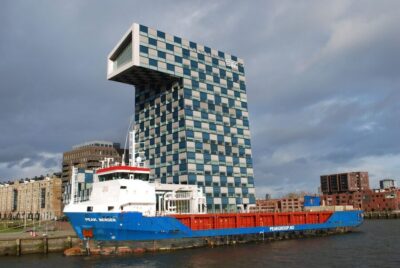

Oranjehotel World War II Prison Entrance Ticket
Read our review →
Amsterdam: Haunted History and Ghost Walking Tour
Read our review →Browse the lists this tour appears in