
Review · AUSTRALIA
Sydney Convicts, History & The Rocks 2.5-Hour Walking Tour
Sydney’s colonial story begins in uncomfortable, gripping fashion: prisoners, soldiers, sailors, Indigenous communities, rum dealers, and ambitious governors all shaped the same small harbour settlement. This 2.5-hour walk follows that story from Customs House and Circular Quay into The Rocks, where sandstone walls and narrow lanes still hint at the rough early town.
I like the way the tour links famous sights with overlooked details, including abandoned slums, old cellars, convict-cut stone, and heritage buildings you could easily pass without noticing. I also like the guides’ teaching style. Bec uses a folder of historic images, while Max, Pete, and Alex are known for clear explanations, humour, and thoughtful answers.
The main consideration is the walking itself. Stairs are unavoidable in parts of The Rocks, large bags and strollers are not allowed, and the tour is not suitable for people with mobility impairments. You should also be ready to walk in rain, heat, or other changeable weather.
Key points to know before you book
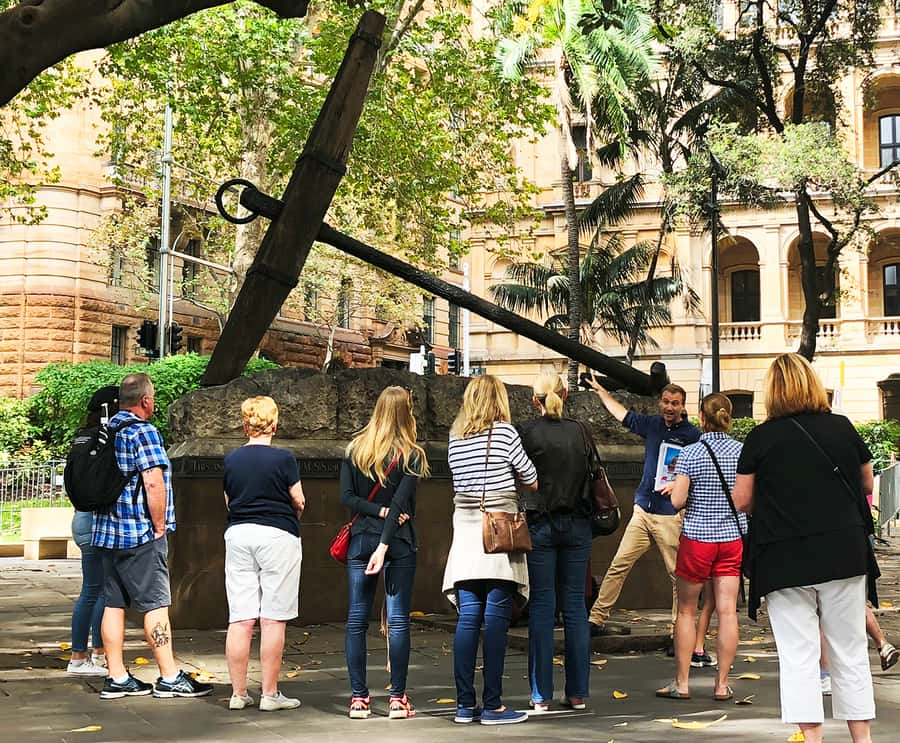
- The route begins at Customs House and finishes at Argyle Cut, giving you a useful introduction to central Sydney before reaching The Rocks.
- The stories go beyond convict punishment, covering Indigenous history, rum trading, street gangs, architecture, commerce, and daily life.
- Historic interiors add real value, with entry to places such as Customs House and the Argyle Stores.
- Guides use different ways to explain the past, including historic images, personal stories, humour, and answers to group questions.
- The pace suits a serious history walk, but you need comfortable shoes and enough mobility for stairs and uneven streets.
- At $36 per person, the tour offers a good-value introduction to Sydney’s origins, especially early in your stay.
Starting at Customs House, where Sydney’s story takes shape
Meet your guide outside Customs House, on the right-hand side when you face the building. This is a practical starting point near Circular Quay, with easy access to trains, ferries, and central Sydney. Arrive ready to walk rather than expecting a seated museum talk.
The first part lasts about 15 minutes and focuses on Customs House. The building gives the tour an immediate sense of place, since customs, shipping, trade, and government all mattered to the young settlement. You also get entrance into historic buildings during the walk, so the experience is not limited to looking at façades from the pavement.
This opening section helps you get your bearings. Instead of beginning in The Rocks with a jumble of old lanes, the guide sets up the wider story of Sydney as a port and colonial outpost. I find that useful because it explains why the harbour mattered so much to the people arriving here, whether they came in chains, in uniform, or seeking commercial opportunity.
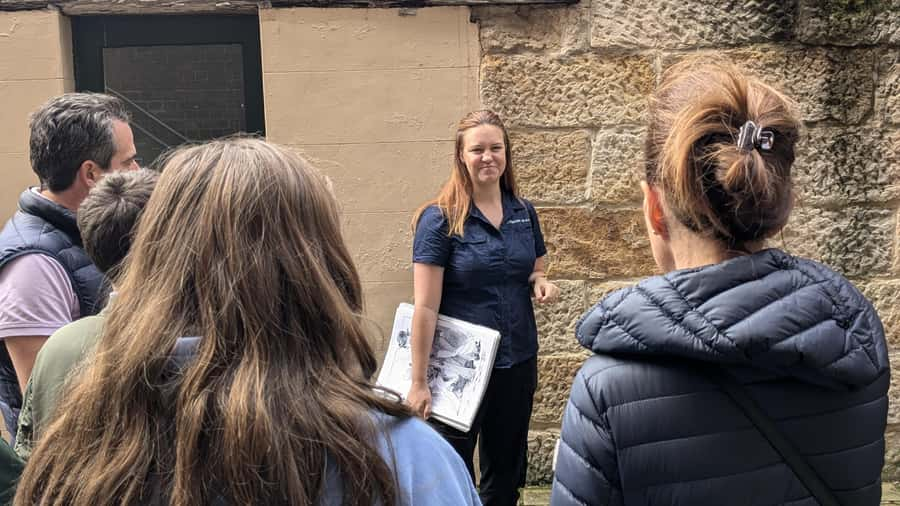
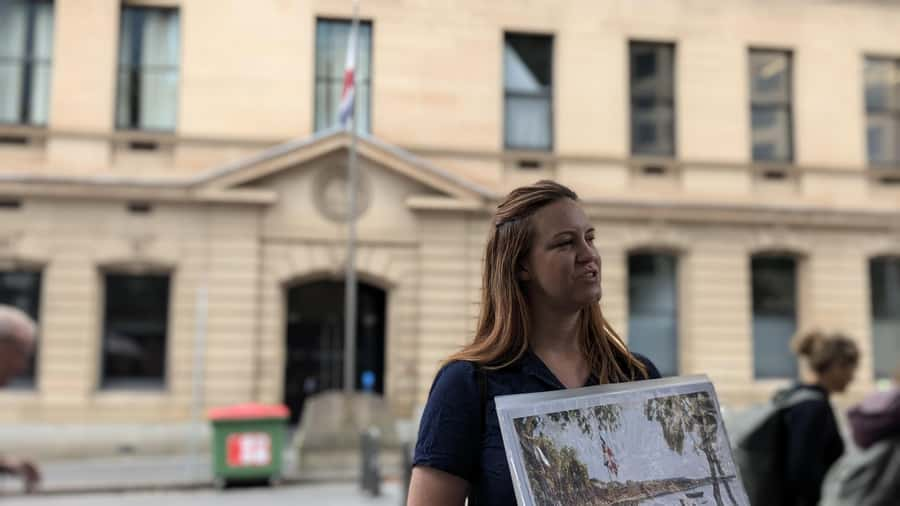
The guides make a strong difference. Bec, also referred to as Rebecca, is praised for keeping groups together, checking that everyone can hear, and finding shade when stopping to speak. She also uses an A3 folder of pictures, a simple but effective aid when discussing people and buildings that no longer look as they once did.
More History Walking Tours in Australia
- Ultimate Melbourne Walking Tour: History, Laneways & Culture
★ 5.0 · 1,451 reviews - Sydney: The Rocks 90-Minute History Walking Tour
★ 4.7 · 1,092 reviews - Discover Perth Walking Tour: History, Art, Local Insights + More!
★ 5.0 · 458 reviews
Circular Quay and the first settlement’s working waterfront
From Customs House, the group moves through Circular Quay. This section takes about 25 minutes, including guided stops and walking. You are still in one of Sydney’s most visited areas, but the tour encourages you to look past the ferries, harbour views, and modern traffic.
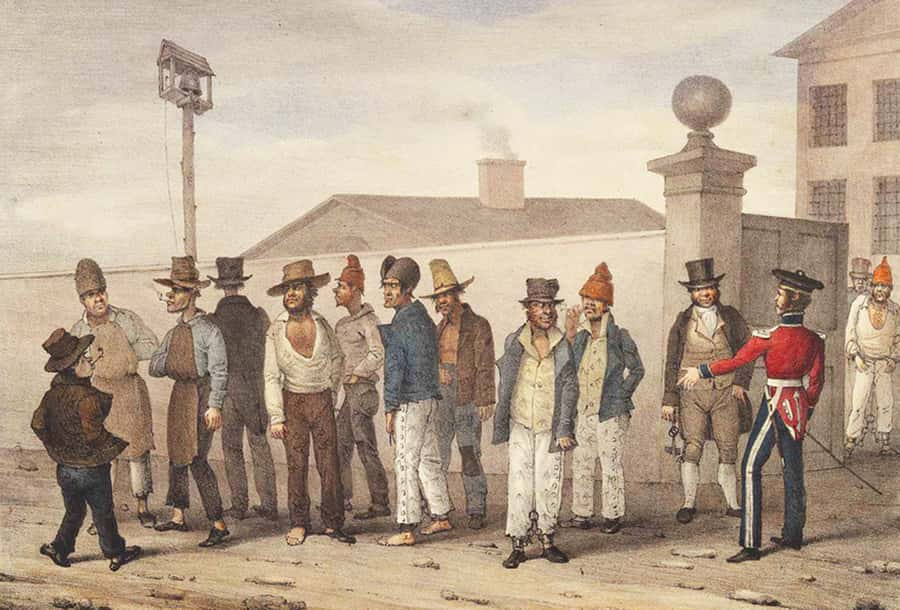
Here, the guide connects the waterfront to the arrival of transported prisoners, soldiers, and sailors. You hear about the process of criminal transportation to Australia and its immediate effect on the Indigenous population around the turn of the 19th century. That context matters. A convict story told only through colourful tales of thieves and rum misses the fact that Sydney was established on Aboriginal land and that colonisation brought major disruption to existing communities.
The tour handles several strands at once: punishment, labour, trade, authority, and survival. The early settlement was not simply a prison full of criminals. It was also a military outpost, a supply problem, a place of forced labour, and a growing commercial centre.
I like this part because it gives you a better way to read Sydney’s central waterfront after the tour. Buildings and streets become evidence of changing power. You begin to notice who controlled goods, who controlled movement, and who had the freedom to make money.
Macquarie Place Park and an ambitious governor
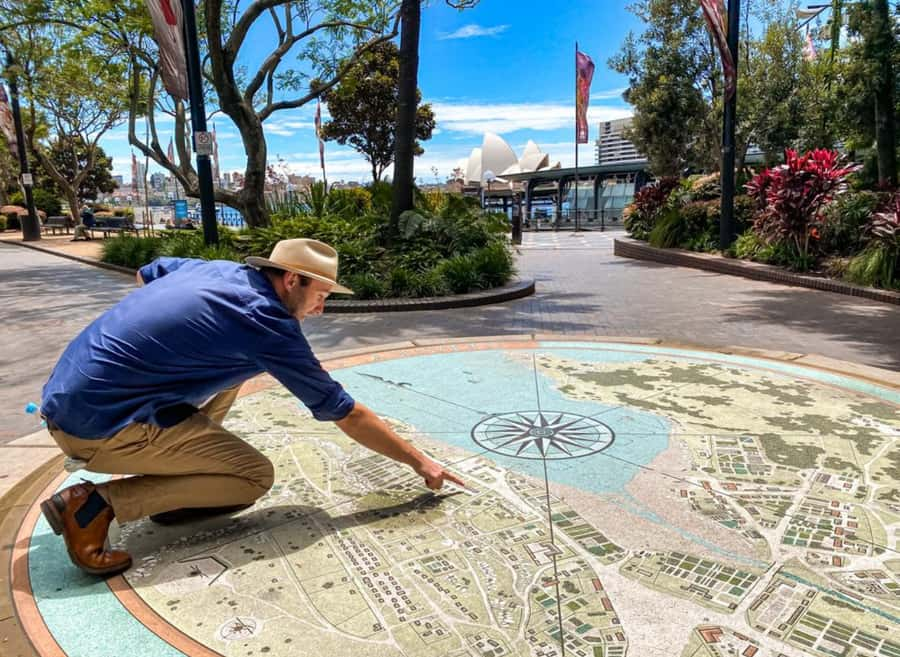
The route then reaches Macquarie Place Park for roughly 20 minutes of guided sightseeing and walking. This stop introduces the ambitions of Governor Lachlan Macquarie, who wanted the settlement to look more like a respectable town rather than a temporary prison camp.
That ambition leads to one of the tour’s more unusual stories: a convict architect connected with the colony’s buildings and design. The tale challenges the simple division between respectable settlers and convicted prisoners. Some convicts had valuable skills, and the colony depended on those skills even while its legal system punished them.
This is where the architecture becomes part of the argument. Georgian and Victorian buildings are not just attractive old structures. They show how Sydney tried to create order, status, and permanence. The guide explains how buildings worked, who used them, and what their design reveals about the people who commissioned and occupied them.
Max is particularly praised for explaining colonial history without rushing the detail. That matters at a stop like this, where it would be easy to list dates and names without showing why they mattered. His style, along with the approach of guides such as Pete and Bec, appears to favour stories that connect individual lives with larger changes in the city.
Entering The Rocks through old lanes and sandstone walls
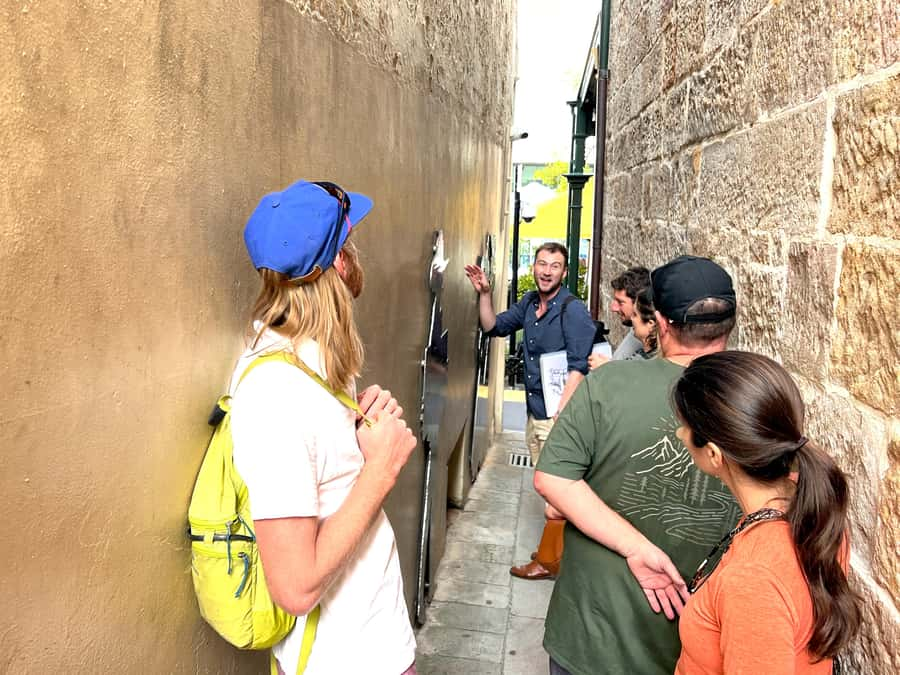
The largest part of the tour lasts about 75 minutes in The Rocks. This is the heart of the experience, and it is where the walk becomes most physical and atmospheric. You move through narrow lanes, cobbled sections, sandstone buildings, ruins, and older corners that are easy to miss on your own.
The Rocks can feel polished today, with restaurants, shops, and harbour visitors. The tour pulls your attention back to its earlier life as a rough quarter near the water. You hear about abandoned slums, hidden corridors, enormous cellars used for spirits and stores, and convict-cut sandstone.
The physical remains help the stories land. A cellar suggests storage and trade. A worn stone wall suggests labour. A narrow passage hints at how tightly packed the old neighbourhood could be. The guide does not need to turn every location into a dramatic scene. The value comes from showing how ordinary-looking fragments fit into the settlement’s development.
The tour also discusses notorious rum dealers and street gangs. Rum was not just a drink in early Sydney. It could be used as a form of exchange, and the trade helped shape local power. These stories add colour, but the better point is that official rules and everyday commerce did not always match. The young colony had limited supplies, weak systems, and plenty of people trying to control access to goods.
You may hear about an extraordinary teenage girl who rose from chains to wealth by mastering Sydney’s economy. This story gives the tour a welcome change of focus. Convict women are often reduced to background figures, yet this account shows how one person could use intelligence, opportunity, and commercial skill to change her position.
Same city, a different century:
- Puffing Billy Railway: Heritage Steam Train Journey
★ 4.6 · 1,195 reviews - Morning World Heritage Cruise on the Gordon River from Strahan
★ 5.0 · 1,193 reviews - Strahan: World Heritage Cruise on Gordon River with Lunch
★ 4.8 · 1,143 reviews - Experience History onboard The Mary Valley Rattler
★ 5.0 · 963 reviews
Architecture, cellars, and the stories behind ordinary buildings
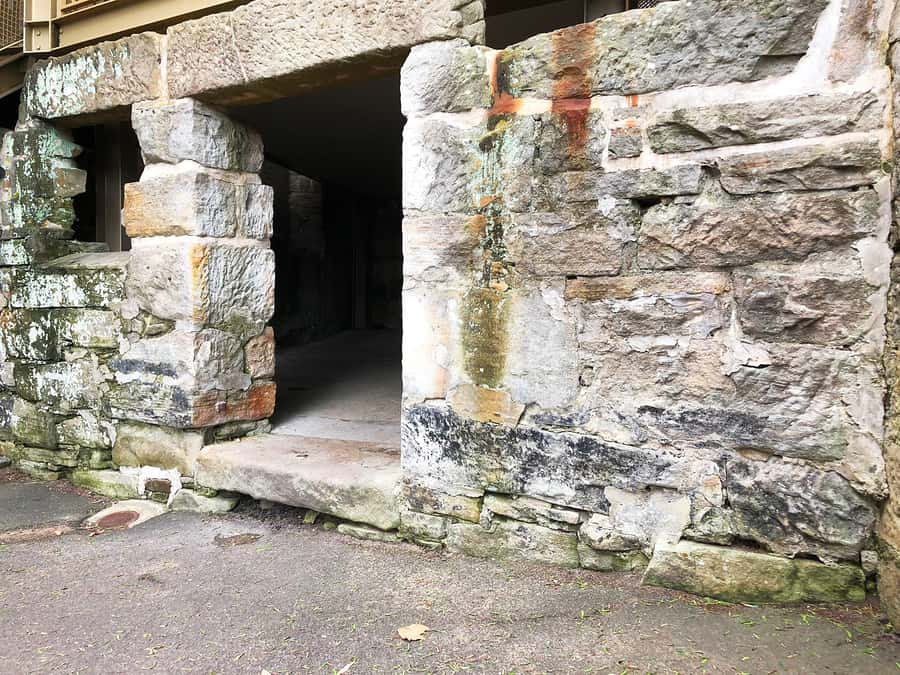
One of the strongest features here is the attention to interiors and construction. The tour includes entry into places such as the Argyle Stores and Customs House, along with access to historic buildings where possible. That is more useful than a walk that only points at façades.
The guide explains how sandstone was cut and used, how heritage buildings functioned, and what may be found behind the public face of the area. You might pass a building many times without considering its cellar, storage areas, corridors, or earlier purpose. The tour trains you to look below street level and behind restored walls.
The architecture also shows that The Rocks was not one unchanging neighbourhood. Georgian and Victorian features point to different periods and ambitions. Some structures were built to support trade and administration. Others reflect crowded housing, hard labour, and the daily pressures of a port town.
The experience is strongest when the guide connects these details to people. Pete is praised for adapting his explanations to the interests of the group, including work backgrounds such as bricklaying and media. That kind of conversation can make a stone wall or construction detail more meaningful than a standard speech.
What the guiding is like over 150 minutes
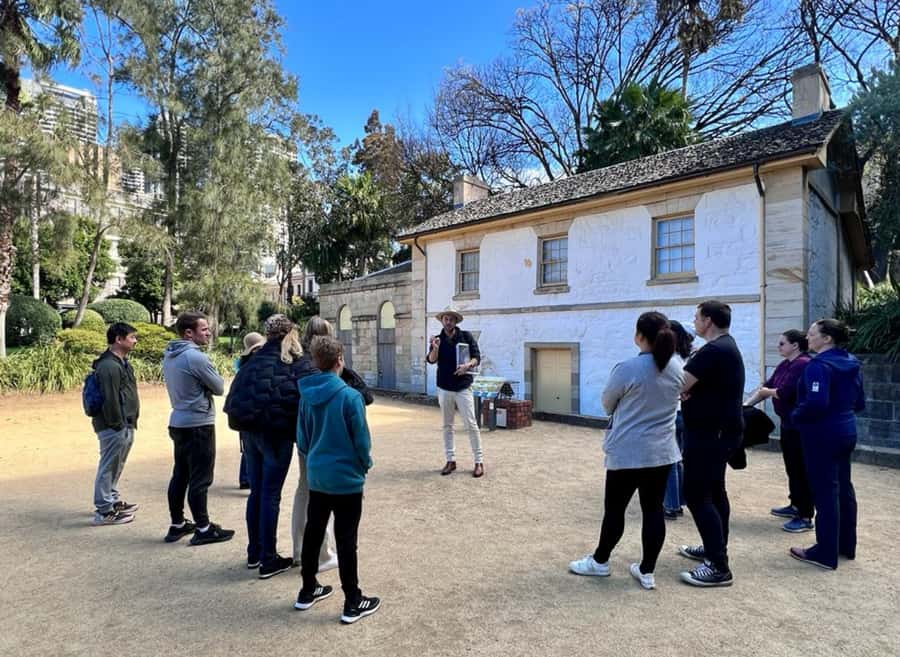
This is a live English-language tour, and the guide carries much of its value. The subject is serious, but the delivery is not stiff. Max is frequently described as funny and passionate, while Bec is praised for energy, preparation, and clear explanations. Pete is known for drawing people into the discussion and making the walk feel interactive.
You should expect a lot of information in a fairly short period. The walk covers the first settlement, transportation, Indigenous history, architecture, commerce, rum, gangs, and individual lives. If you prefer a slow stroll with only a few facts, this may feel dense. If you enjoy stories and want a strong foundation for exploring Sydney, the amount of material is a major benefit.
The group dynamic also matters. Guides make an effort to keep people together and ensure they can hear. That is especially important on busy streets or near open waterfront areas. One guide continued through a heavy downpour, so you should not assume light rain will cancel the walk.
Bring a water bottle and wear shoes you can comfortably use for 150 minutes. An umbrella or raincoat is sensible because the tour continues in wet or wild weather. Shade can be found at some stops, but you should still prepare for sun and heat.
Is $36 a fair price for this Sydney walk?
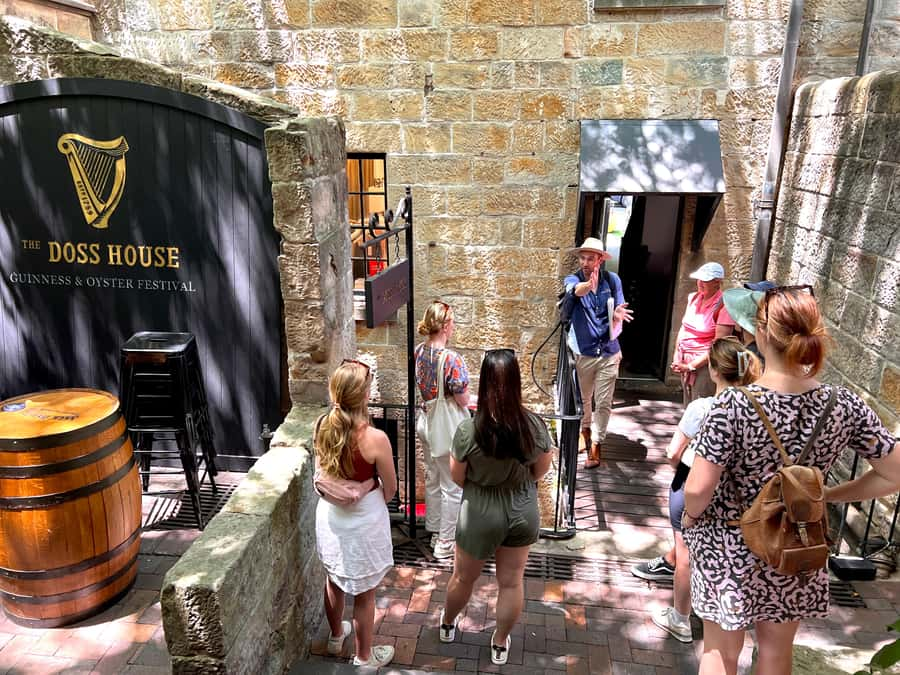
At $36 per person, I consider this good value if you want more than a general orientation walk. You get 2.5 hours with a local historian, access to historic buildings, and a route that covers Customs House, Circular Quay, Macquarie Place, and The Rocks.
The price is especially reasonable for visitors who would otherwise pass through The Rocks without understanding its older layers. You are paying for interpretation, not just movement between landmarks. The guide helps you notice ruins, stonework, cellars, and building details that may have little meaning without context.
It also works well for locals. Several guides clearly enjoy filling gaps left by school lessons and showing familiar streets in a new way. If you already know the main sights, the tour’s value comes from the less obvious stories and the chance to ask questions.
The main limit is that the tour ends at Argyle Cut, not back at Customs House. That is not a problem for most people, since you finish in The Rocks, but you should allow time afterward if you have a booking elsewhere. The exact starting time can vary, so check availability when planning the rest of your day.
Who should take this tour?
I would choose this walk early in a Sydney visit. Afterward, you can return to The Rocks, Circular Quay, and the older central streets with a better eye for what you are seeing. It is also a good pick for Australians who want a fuller account of early settlement than a quick sightseeing loop provides.
History fans will get the most from it, especially if they like social history rather than a list of governors and construction dates. The tour also suits anyone curious about how forced migration, Indigenous displacement, labour, trade, and architecture shaped the city.
It is best for people aged 14 and older because the themes include crime, punishment, transportation, colonial power, and adult concepts. Families with younger children may find the material too serious, and baby strollers are not permitted.
People with mobility impairments should not book this particular experience. Stairs and the layout of The Rocks make access difficult, and anyone needing special assistance should contact the operator before booking. Aboriginal and Torres Strait Islander participants should also note that the tour may include names and images of deceased people.
Should you book the Sydney Convicts, History & The Rocks walk?
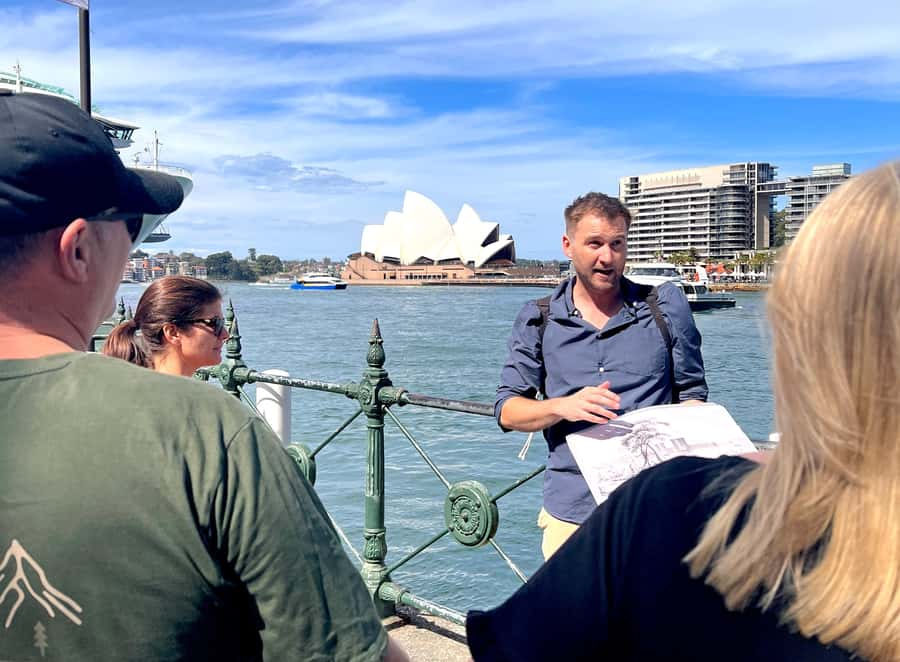
Book it if you want Sydney’s origins explained through real places rather than presented as a string of dates. The best parts are the sharp local stories, the historic interiors, the Indigenous context, and the attention to details such as cellars, sandstone, alleys, and buildings you might otherwise ignore.
I would skip it only if you want a very light sightseeing walk, cannot manage stairs, or prefer to explore at your own pace without a guide. For most visitors with an interest in Sydney’s past, $36 buys a well-paced, useful introduction that will make the rest of The Rocks easier to understand.
Free cancellation is available up to 24 hours before the start, and you can reserve now and pay later. Those options make it easier to fit the walk into a changing Sydney schedule.
FAQ
Where does the Sydney Convicts, History & The Rocks tour start?
The tour starts outside Customs House. Meet your guide on the right-hand side when facing the Customs House building.
Where does the walking tour finish?
The tour finishes at Argyle Cut in The Rocks.
How long does the tour last?
The tour lasts 150 minutes, or 2.5 hours.
What language is the tour in?
The tour is conducted in English with a live guide.
Is the tour suitable for children?
The experience is most suitable for people older than 14 because it includes adult themes and concepts connected with crime, punishment, transportation, and colonial history.
What should I bring and wear?
Wear comfortable walking shoes and bring water. The tour continues in wet or wild weather, so take an umbrella or raincoat. Large bags, luggage, pets other than assistance dogs, and baby strollers are not allowed.
Just added around Australia
- Authentic Indigenous Cultural Tour Including Scenic River Cruise★ 5.0 · 88 reviews
- Cairns History Walking Tour★ 5.0 · 52 reviews
- Entry Ticket at Historic Village Herberton★ 5.0 · 114 reviews
- Self-Guided Ngilgi Cave Ancient Lands Experience★ 4.5 · 154 reviews
- Hinterland Heritage Wine Tour★ 4.0 · 28 reviews
- Albany’s Historic Whaling Station Admission Ticket★ 4.5 · 86 reviews
- 7 Day Adelaide to Uluru Adventure and Cultural Tour★ 5.0 · 52 reviews
- Port Arthur Historic Site Ghost Tour★ 4.2 · 173 reviews
Australia History Tours, compared.

Ultimate Melbourne Walking Tour: History, Laneways & Culture
Read our review →
Puffing Billy Railway: Heritage Steam Train Journey
Read our review →
Morning World Heritage Cruise on the Gordon River from Strahan
Read our review →
Strahan: World Heritage Cruise on Gordon River with Lunch
Read our review →
Sydney: The Rocks 90-Minute History Walking Tour
Read our review →
Experience History onboard The Mary Valley Rattler
Read our review →
Snorkel & Dive the Reef: Sustainable, Scientific & Cultural Tour
Read our review →
Derwent River Historic Harbour Cruise From Hobart
Read our review →Browse the lists this tour appears in