
Review · CHARLESTON
Take a History Tour with an actual Historian – Cooper!
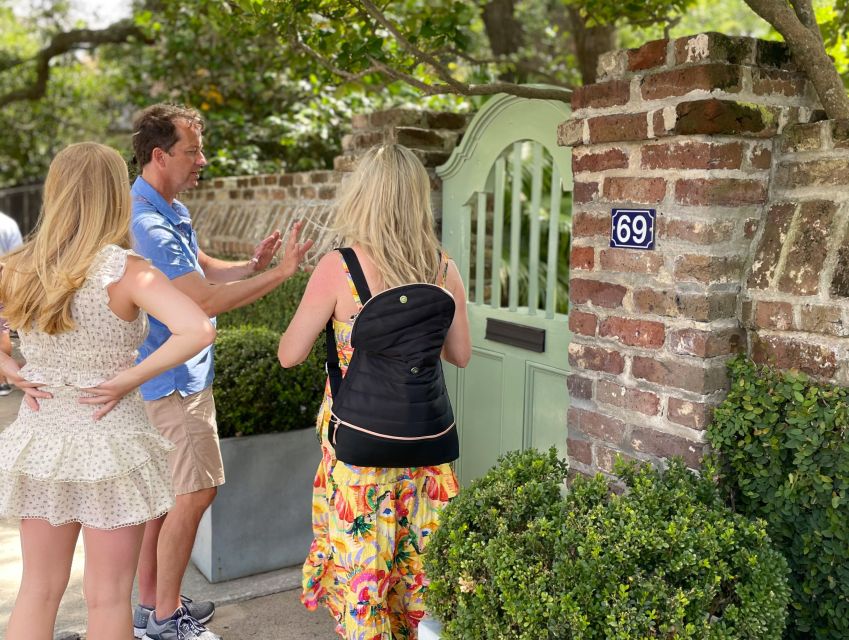
Charleston’s past makes more sense when you connect its streets to its harbor, economy, architecture, and painful social history. This 150-minute walk with Cooper, a PhD historian who teaches history, begins with conversation, then turns the city itself into the classroom.
I like the way the tour explains overlooked details between major sights, and I like its honest treatment of slavery and Charleston’s complicated past. The main consideration is pace: you need to walk for two and a half hours, and the tour is not suitable for children under 10 or people with mobility impairments.
Key points
- Starts with your interests: The opening conversation helps shape the subjects and stories covered on the walk.
- Begins at the harbor: You learn how Charleston’s geography helped make it a major colonial port.
- Walks along the original seawall: The route includes a seawall built in 1680, one of the South’s oldest surviving structures of its kind.
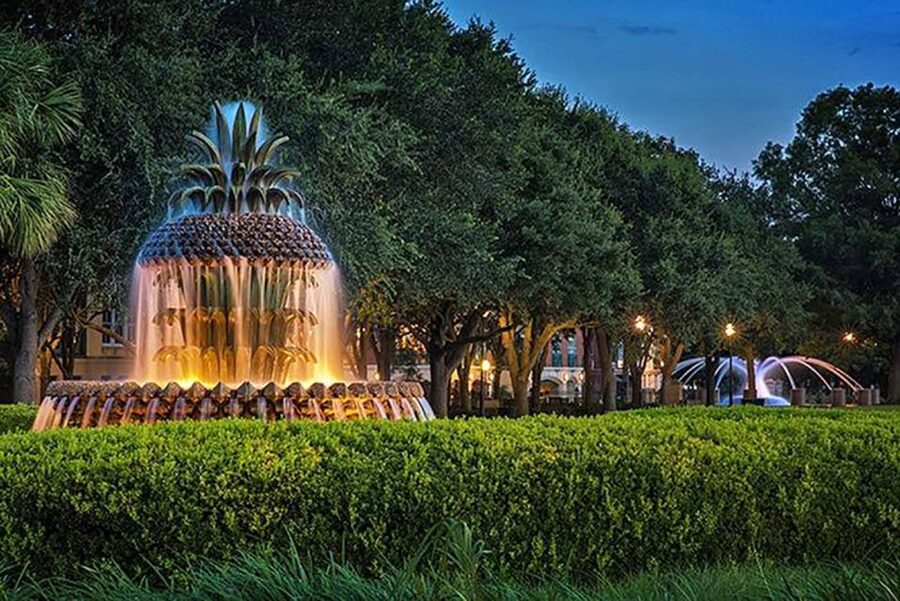
- Explains the Pineapple Fountain: You get the real story behind one of Charleston’s best-known symbols.
- Connects buildings to society: Colonial homes, churches, courtyards, fortifications, and streets all become part of a larger story.
- Keeps history lively: Cooper uses humor, questions, and context rather than a long list of dates.
Why this Charleston history walk feels different
Many city walks move from landmark to landmark, offering a short explanation before hurrying on. This one takes a slower, more thoughtful route. The starting conversation asks what interests you about history, then uses that answer to give the walk a clear purpose.
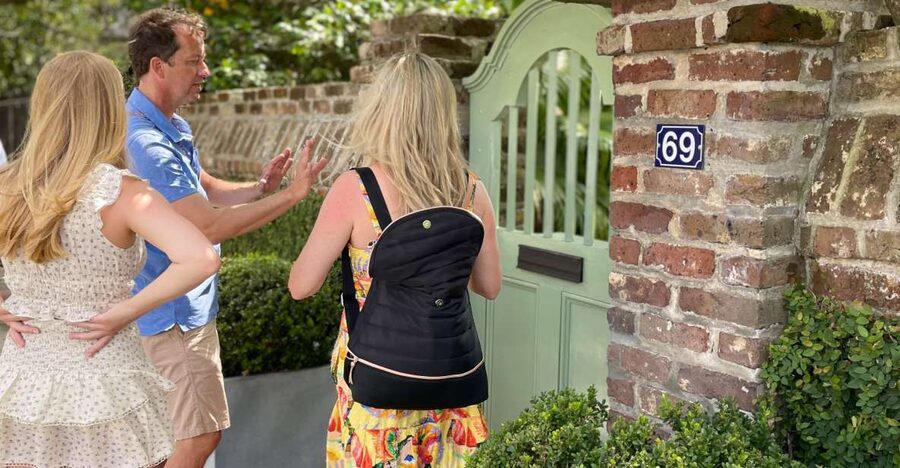
That matters in Charleston. A pretty building can tell you about wealth, trade, religion, defense, race, or social ambition, but only if someone points out the clues. Cooper’s approach is to show you what sits between the famous stops: architectural details, old boundaries, traces of fortifications, and small signs of how the city changed over 350 years.
The tone is lively rather than academic. You get facts, but also the reasons those facts matter. Several people who took the walk praised Cooper’s humor, personal comments, storytelling, and ability to answer questions without losing the thread of the tour. One particularly useful feature is his habit of explaining Charleston in context, instead of asking you to remember isolated dates.
I would choose this tour for a first or second day in Charleston. It gives you a working map of the old city and helps you notice more during the rest of your stay.
More History Tours in Charleston:
- Charleston’s Old South Carriage Historic Horse & Carriage Tour
★ 5.0 · 10,023 reviews - Historic Charleston Guided Sightseeing Walking Tour
★ 5.0 · 6,216 reviews - Charleston Horse-Drawn Carriage Tour: Explore Historic Charleston
★ 5.0 · 3,561 reviews
Starting at Charleston Harbor
Meet directly across from the Harbor View Inn at Waterfront Park, beneath the street sign for Concord and Vendue Range. Look for the Chucktown Tours logo.
The harbor is a smart place to begin because Charleston’s story starts with geography. From the waterfront, you can see why this location supported trade and helped the settlement grow into a major colonial port. The opening discussion links the water, the city’s economy, and its position along the coast.
You will also hear how Charleston developed under the English crown. The story reaches back to King Charles I, the Carolina settlement, and Charles Towne, founded under King Charles II. These names are not treated as loose background trivia. They help explain how royal ambitions, colonial settlement, and trade shaped the city’s early identity.
This opening may feel more talk-heavy than a standard walking tour. That is deliberate. You begin with context before the route gets busy with buildings and street corners. If you want a tour that starts moving immediately, this may feel slow for the first few minutes. If you like knowing why a place matters before seeing it, the approach works well.
Walking the 1680 seawall
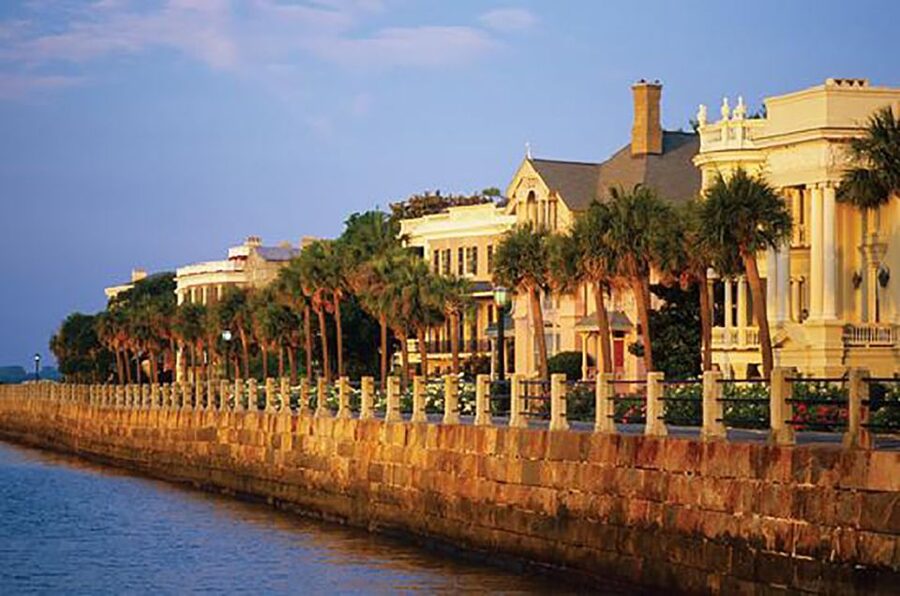
The route begins along Charleston’s original seawall, built in 1680. It is one of the oldest surviving structures of its kind in the South, so this is more than a waterfront stroll.
The seawall helps you see Charleston as a working port and a defended settlement. Instead of looking only at the water, you learn to read the edge of the city: where the built environment meets the harbor, how defenses fit into daily life, and how old construction survives beneath the modern city.
This is also where the tour’s promise of overlooked details becomes practical. Cooper points out architectural traces, fortifications, and layers left by centuries of change. You are not simply told that Charleston is old. You are shown how its age remains visible.
Waterfront Park also provides one of the tour’s most recognizable stops, the Pineapple Fountain. The fountain is often treated as a cheerful Charleston photo stop, but Cooper explains the real story behind its design and meaning. That added context gives the symbol more weight than a quick snapshot would.
Because the tour takes place rain or shine, plan for the weather rather than hoping for ideal conditions. Waterfront walking can feel exposed on a hot, wet, or windy day. Comfortable shoes and water are sensible choices, even though they are not listed as formal requirements.
White Point Gardens and Charleston’s defenses
From the waterfront, the walk continues toward White Point Gardens. This area offers a useful bridge between military history and ordinary city life.
You will learn about its role in Charleston’s defense and how the space functioned across different periods. The value here is the connection between public space and security. White Point Gardens is not just a pleasant green area. It helps explain how Charleston protected itself, organized its waterfront, and used central spaces over time.
The route then moves toward Meeting Street. That change in setting is important. You go from harbor views and defensive structures into the historic district, where homes, churches, streets, and private courtyards reveal how residents lived.
The walk is not built around entering a long list of interiors. Much of the experience comes from observing exteriors and hearing what they reveal. That makes the tour efficient, but it also means you should not book it expecting a house museum visit or a series of indoor admissions.
Same city, a different century:
- Charleston Harbor History Day-Time or Sunset Boat Cruise
★ 4.5 · 2,788 reviews - Hidden Alleyways and Historic Sites Small-Group Walking Tour
★ 5.0 · 2,335 reviews - Charleston: Daytime or Sunset Historic Harbor Cruise
★ 4.5 · 1,352 reviews - Charleston historical walking tour with a Professor of History at The Citadel
★ 5.0 · 1,284 reviews
Colonial homes and the social life of Meeting Street
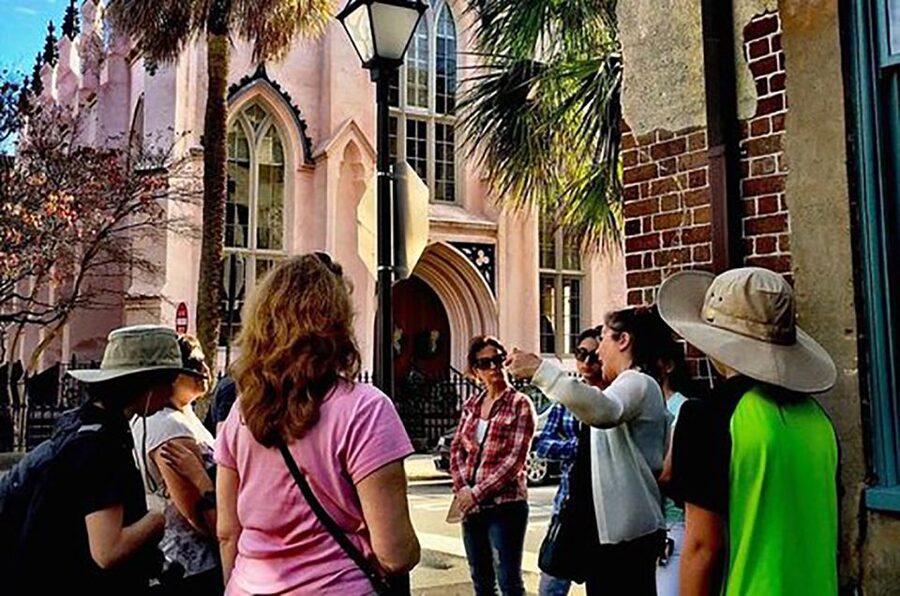
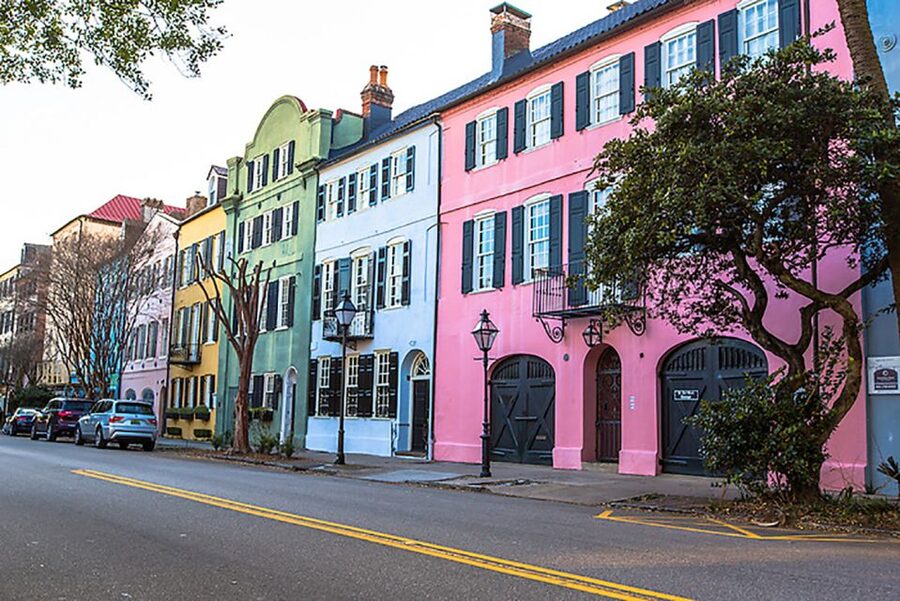
Meeting Street brings Charleston’s colonial architecture into focus. You will see elegant homes and learn how architecture reflected social position, local conditions, and the city’s changing fortunes.
Cooper connects visual details to larger questions. Why were homes designed in certain ways? What did their placement say about wealth and status? How did trade and labor support the people who built and occupied them? These questions keep the architecture from becoming a parade of attractive facades.
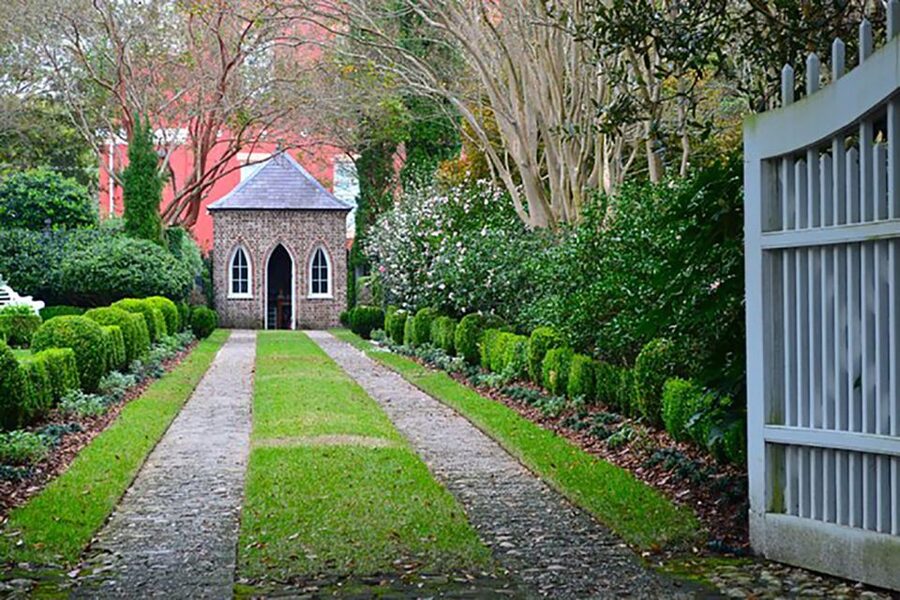
The route includes streets dating to the early 1700s, historic churches, and courtyards that can be easy to miss when you walk through the district alone. Some stops may be familiar from photographs, but the explanation helps you see them differently.
Past participants singled out the tour’s ability to make buildings and streets memorable. Stories have included links to important figures, steps associated with George Washington, and the childhood home of Stephen Colbert. The exact mix of details can depend on the group’s interests, but the larger point is clear: Cooper uses specific places to make Charleston’s past feel human.
You should also expect a fair amount of conversation. The guide welcomes questions and adjusts the discussion around what fascinates the group. That is a strength if you like an interactive walk. It may be less appealing if you prefer a tightly scripted route with no pauses for discussion.
The city’s difficult history, handled plainly
A Charleston tour that skips slavery is not telling the full story. This experience addresses it directly, with an effort to provide context instead of spectacle.
You will examine the differences between rural and urban slavery, Charleston’s particular laws, and the complicated position of free people of color, including the fact that some free people of color owned enslaved people. That last subject can be uncomfortable, but it is part of the city’s documented social history and deserves careful explanation.
The goal is not to turn suffering into a dramatic performance. The discussion aims to show how law, commerce, race, status, and personal choices interacted in Charleston. This makes the subject harder, but also more useful. You come away with a clearer sense of how the city developed and who paid the price for its prosperity.
The tone may not suit someone seeking a light sightseeing stroll with only amusing stories. Charleston’s history includes wealth and beauty, but also exploitation and unequal freedom. I appreciate that the tour makes room for both sides rather than polishing the city into a simple old-world postcard.
Colonial streets and the old walled city
As the walk continues, you reach streets laid out in the early 1700s and the location of Charleston’s original walled city. This portion helps tie together the earlier discussion of defense, trade, and settlement.
The old wall is not merely a line on a map. It shows how the town once defined its limits and protected its core. The surrounding streets then reveal how the settlement grew beyond those early boundaries.
Historic churches and courtyards add another layer. Churches point to Charleston’s religious and civic life, while courtyards offer glimpses of how dense urban buildings could be arranged behind the street frontage. You may find that the most useful moments are not the grandest ones, but the brief explanations of how a street corner or building plan fits into the city’s growth.
This is the part of the walk where the opening conversation pays off. Instead of hearing disconnected facts about a seawall, a house, a church, and an old boundary, you can place each one in the same story: Charleston forming, expanding, defending itself, and changing through three centuries.
How Cooper teaches history
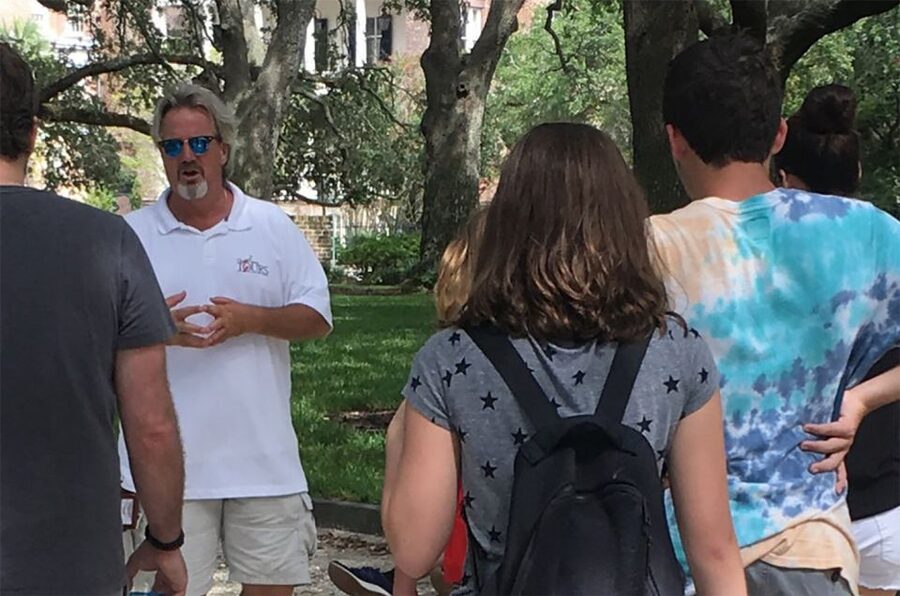
Cooper’s role is central to the experience. He is described as a PhD historian who teaches history, and the strongest praise focuses on his ability to make complex subjects easy to follow without making them dull.
His style combines explanation with humor. Several people found him entertaining, charismatic, and easy to understand. Others valued the way he answered questions and adjusted the tour to their interests. One person who had visited Charleston many times still found the walk worthwhile because it offered a new way to read the city.
That combination is important. Academic credentials alone do not guarantee a good walking tour. A guide must also manage time, explain clearly, and notice when the group needs a lighter moment. Cooper appears to bring those skills together.
Do not expect a dry lecture. You also should not expect every minute to be a joke. The tour deals with serious subjects and asks you to think about how Charleston’s economy and culture were built. The humor helps keep the walk approachable, while the historical detail gives it substance.
Is $45 a fair price?
At $45 per person, this tour sits above a basic free or tip-based city walk, but the price buys more than a list of landmarks. You get 150 minutes with a historian and history teacher, a route through several major parts of the old city, and a discussion shaped around your interests.
The value is strongest if you want context. If you only need a quick orientation or a few good photo locations, a shorter and cheaper walk may do the job. But if you want to understand how the harbor, seawall, colonial streets, architecture, defense, slavery, and social life fit together, the extra time and specialist guide make the price easier to justify.
The tour also works well as an investment in the rest of your Charleston visit. Take it early, and later walks through the historic district should carry more meaning. You will know what to look for instead of simply passing attractive buildings.
The 150-minute length is both an advantage and a limit. It gives the guide time to develop ideas, but it requires stamina. There is no waiting for latecomers, so arrive at the meeting point early. Street parking is limited to two hours in Charleston, except on Sundays and holidays when street parking is free, so a car parked nearby may not be practical for the full tour.
Who should book this walk?
I would recommend it to adults, older children, history-minded couples, curious first-time visitors, and anyone who enjoys asking questions. It is especially useful for people who want more than architecture photographs and prefer a guide who can explain social and political context.
It also suits repeat visitors. If you have already seen Charleston’s main streets, the focus on overlooked details and lesser-noticed connections can give the city a fresh angle.
The tour is not suitable for children under 10. It is also not suitable for people with mobility impairments. The route takes place outdoors and continues in rain or shine, so think carefully about heat, rain, and your comfort with a long urban walk.
English is the only stated tour language. If you need another language, this is not the right choice.
Booking details worth knowing
You can cancel up to 24 hours before the tour for a full refund, and you can reserve now and pay later. Starting times vary, so check availability for the date you want.
Meet across from the Harbor View Inn at Waterfront Park, under the Concord and Vendue Range street sign. Look for the Chucktown Tours logo, and do not cut it close. The group cannot wait for late arrivals.
Should you book the Cooper history tour?
Book it if you want Charleston explained by someone who can connect the harbor to the homes, the seawall to the old city wall, and beautiful public spaces to the harder history beneath them. Cooper’s humor, clear storytelling, and willingness to shape the discussion around your interests are the main reasons to choose it.
Skip it if you want a short, quiet photo walk, an indoor museum experience, or a route designed for young children or limited mobility. For most adults who want a serious but friendly introduction to Charleston, $45 is a reasonable price for two and a half hours of useful context.
FAQ
How long does the Charleston history tour last?
The tour lasts 150 minutes, or two and a half hours.
How much does the tour cost?
The price is $45 per person.
Who leads the tour?
The tour is led by Cooper, a PhD historian who teaches history.
What language is the tour in?
The live tour is conducted in English.
Where is the meeting point?
Meet directly across from the Harbor View Inn at Waterfront Park, beneath the street sign for Concord and Vendue Range. Look for the Chucktown Tours logo.
What places are included on the walk?
The route includes Charleston Harbor, the original seawall, Waterfront Park, White Point Gardens, Meeting Street, colonial homes, historic churches, courtyards, colonial streets, and the location of Charleston’s original walled city.
Does the tour explain the Pineapple Fountain?
Yes. The tour includes the story behind the Pineapple Fountain and its meaning in Charleston.
Is the tour suitable for children?
The tour is not suitable for children under 10.
Is the route suitable for people with mobility impairments?
No. The experience is listed as unsuitable for people with mobility impairments.
What happens if it rains or I arrive late?
The tour takes place rain or shine, and the group cannot wait for latecomers. You can cancel up to 24 hours in advance for a full refund.
Just added around Charleston
- Charleston’s Historic Pubs, Taverns, and Taprooms Tour★ 4.5 · 33 reviews
- Small-Group Tour: Charleston Old Walled City Historical Walking Tour★ 4.5 · 283 reviews
- Charleston’s Strong Women of the South History Tour★ 4.5 · 27 reviews
- Private Sunset Sail BYOB Dolphin/History Tours on 43ft Mystique★ 5.0 · 42 reviews
- Sip History In a Secret Speakeasy Cocktail Class★ 5.0 · 40 reviews
- Sip History in The Sun Cabana Covered Cocktail Class★ 5.0 · 332 reviews
- Charleston History and Hops Tour: Bar and History Walk★ 5.0 · 316 reviews
- Private Walking Tour of Historic Charleston★ 5.0 · 38 reviews
Charleston History Tours, compared.
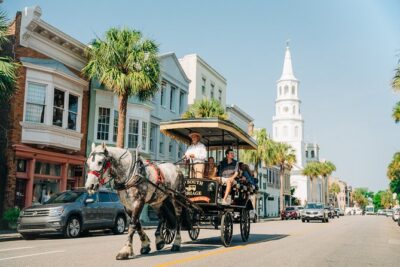
Charleston’s Old South Carriage Historic Horse & Carriage Tour
Read our review →
Historic Charleston Guided Sightseeing Walking Tour
Read our review →
Charleston Harbor History Day-Time or Sunset Boat Cruise
Read our review →
Hidden Alleyways and Historic Sites Small-Group Walking Tour
Read our review →
Charleston: Daytime or Sunset Historic Harbor Cruise
Read our review →
Charleston historical walking tour with a Professor of History at The Citadel
Read our review →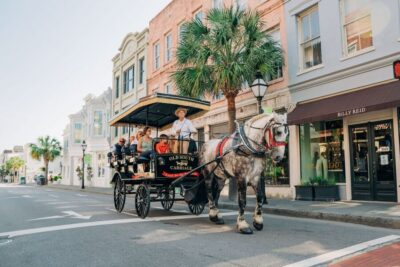
Charleston: Historical Downtown Tour by Horse-drawn Carriage
Read our review →
Undiscovered Charleston: Half Day Food, Wine & History Tour with Cooking Class
Read our review →Browse the lists this tour appears in