Review · USA
The Sacred Ground of 1963: Birmingham’s Civil Rights Struggle
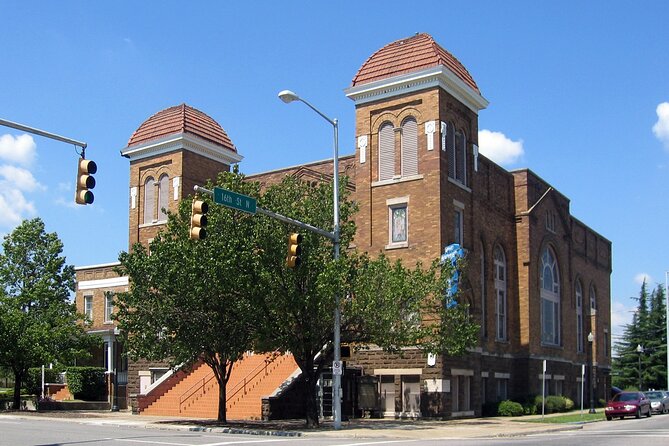
Birmingham’s Civil Rights story comes into focus when you walk the actual streets where it unfolded. This tour links Black-owned businesses, segregated theaters, protest sites, churches, and the A.G. Gaston Motel, giving you more than isolated plaques and dates. The painful center is 16th Street Baptist Church, where four girls were killed in the 1963 bombing.
I like two things especially. First, the tour is led by Wilhelmina, a Birmingham native whose personal connection gives the history a human voice. Second, the route connects Civil Rights events to everyday Black life, including hotels, music venues, restaurants, and the former business district. The main consideration is time: at about an hour to an hour and a half, the tour offers a strong overview, not a slow, museum-level examination of every site.
Key points to know before you book
- Walk through Birmingham’s former Black business district: Learn how segregation helped create a city within a city, including the Chitlin’ Circuit and Black-owned hotels.
- Hear local perspective from Wilhelmina: Her firsthand connection to Birmingham adds family, neighborhood, and personal context to the public record.
- Visit the emotional core of the movement: Kelly Ingram Park and 16th Street Baptist Church bring the events of 1963 close to hand.
- See music and culture alongside politics: Eddie Kendrick Memorial Park and the Carver Theater connect Birmingham’s Black history with the Temptations and jazz.
- Expect a compact downtown walk: The route covers many sites quickly, so wear comfortable shoes and arrive ready to keep moving.
- Pay attention to communication: A few past bookings involved late cancellations or difficulty reaching the operator, so confirm the tour before setting aside your day.
Why this Birmingham walk matters
Birmingham is often introduced through the famous images of 1963: children facing police dogs, demonstrators filling downtown streets, and the firebombing of the 16th Street Baptist Church. Those images matter, but they can make the city’s Black history seem limited to one season of protest.
This walk widens the frame. You begin with Black contributions to Birmingham’s founding and then follow 20th Street through the places where Black residents worked, stayed, ate, worshiped, entertained themselves, and organized. That approach matters because the movement did not appear from nowhere. It grew from established neighborhoods, businesses, churches, civic groups, and families.
I also like that the tour does not treat Civil Rights history as a museum subject sealed off from present-day Birmingham. The route passes through downtown streets and surviving buildings, along with sites that have changed or disappeared. You get a sense of both what remains and what segregation erased.
The cost is $65 per person. That is a fair price if you want a focused introduction and a guide who can connect the sites in a clear human story. It is less appealing if you prefer to spend several hours inside museums or read displays at your own pace. The tour includes outdoor commentary and free admission to most stops, while admission to the 16th Street Baptist Church is not included.
Other history tours people book around the USA:
- History and Hauntings of Salem Guided Walking Tour
★ 5.0 · 14,564 reviews - Charleston’s Old South Carriage Historic Horse & Carriage Tour
★ 5.0 · 10,023 reviews - Beneath The Streets Underground History Tour
★ 4.5 · 8,006 reviews
Starting at 20th Street and 3rd Avenue North
The meeting point is listed as 285 20th Street North, at the corner of 3rd Avenue North and 20th Street. From there, the group heads down 20th Street toward 4th Avenue North.
The opening section looks at Black contributions to Birmingham’s founding. That is an important beginning because it challenges the easy version of the city’s past, where Black residents appear only as victims of segregation or protesters against it. Here, you start with work, enterprise, and community building.
The route then moves into the 1926 Red Line zoning laws. These laws formalized racial separation in Birmingham and shaped where Black residents could live, work, and conduct business. Your guide uses the street itself to explain how those rules affected daily life.
You also learn about the Palm Leaf Hotel and the Chitlin’ Circuit. The Chitlin’ Circuit was the network of venues where Black performers could safely find work during segregation. These stops help you see Black Birmingham as a cultural center, not simply a place reacting to white political power.
The downside is that this part covers a lot in about 15 minutes. If you want a full architectural or business history of the district, you will need more time elsewhere. For a short introduction, though, it gives the rest of the walk a useful foundation.
Eddie Kendrick Memorial Park and Birmingham’s music story
Eddie Kendrick Memorial Park honors a local founder of the Temptations. The stop takes about 10 minutes and adds a musical thread to the tour.
That change of subject is welcome. Birmingham’s Black story includes churches, marches, businesses, and political organizing, but it also includes performers and popular culture. A memorial to Kendrick reminds you that local talent traveled far beyond Alabama and helped shape American music.
The park also connects to the remains of Birmingham’s former city within a city. Depending on the route and timing, you might stop at Nelson Brothers and Green Acres. These places help show how Black commerce worked under segregation. Businesses served local needs, created jobs, and gave residents a measure of independence in a system built to restrict it.
The tour does not spend long at any one location. I would treat this stop as a bridge between the commercial history of Black Birmingham and the cultural life that grew from it, rather than as a standalone music tour.
Carver Theater and the Prince Hall Masonic Lodge
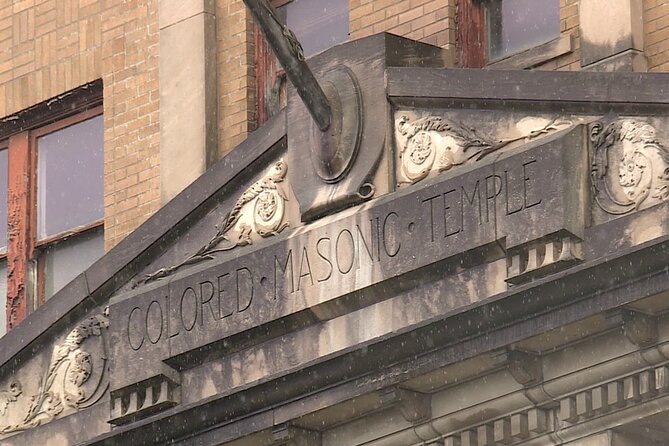
The Carver Theater is one of the most interesting cultural stops. It was one of Birmingham’s leading Black theaters and is now connected with the Jazz Hall of Fame. You also see the Prince Hall Colored Masonic Lodge.
The theater shows how entertainment spaces could become important community institutions. During segregation, Black audiences were often shut out of white venues or forced into separate facilities. Black theaters provided a place to see films, hear music, and gather with neighbors on terms shaped by the Black community itself.
The Masonic lodge adds another layer. Fraternal organizations played a major role in civic life, especially when formal institutions excluded Black citizens. The combination of theater and lodge gives you a quick look at culture, business, mutual support, and public life.
Allow about 10 minutes here. That is enough for an explanation and a look at the buildings, but not enough for an extended visit inside. If you are especially interested in architecture, jazz, or fraternal history, note this stop and return to it independently if time allows.
Same city, a different century:
- Big Island in a Day: Volcanoes Waterfalls Sightseeing and History
★ 5.0 · 6,569 reviews - Boston: Freedom Trail History Small Group Walking Tour
★ 5.0 · 6,450 reviews - Historic Charleston Guided Sightseeing Walking Tour
★ 5.0 · 6,216 reviews - Charleston Horse-Drawn Carriage Tour: Explore Historic Charleston
★ 5.0 · 3,561 reviews
Kelly Ingram Park, where protest history becomes physical
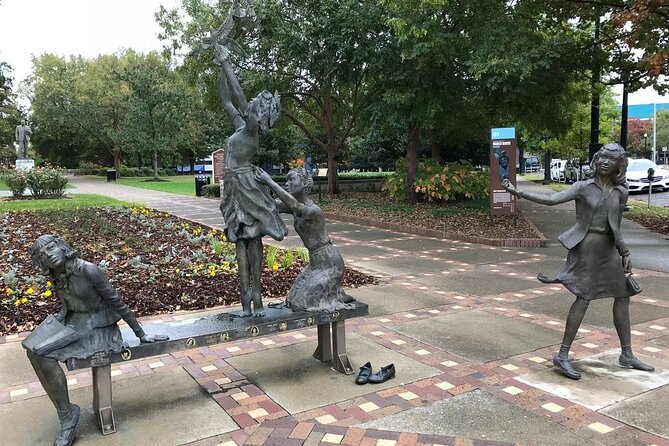
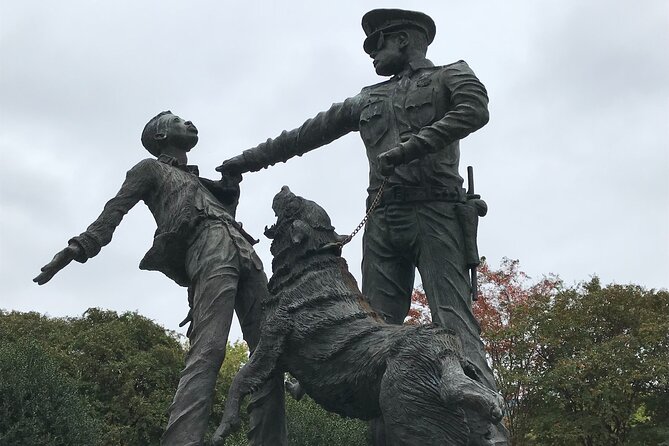
Kelly Ingram Park is the emotional center of the outdoor portion of the walk. The park contains sculptures depicting the Civil Rights struggle, including the violence faced by young demonstrators. It also served as an assembly point for the Southern Christian Leadership Conference and other movement groups.
This is where the events of 1963 become easier to picture. You are no longer hearing only about marches and confrontations in the abstract. The sculptures, paths, and nearby buildings place those events in a real public space.
The stop lasts about 15 minutes, which gives your guide time to explain the park’s role and point out key features. You may want to slow down here, even if the group is ready to move on. The setting calls for attention, not a quick photo and a glance at the next attraction.
Kelly Ingram Park is also useful for visitors who already know the basic story. The park can refresh familiar facts by tying them to specific locations and symbols. I would not expect the tour to replace a full museum visit, but it gives you a strong framework for understanding the surrounding historic district.
16th Street Baptist Church and the four girls
The 16th Street Baptist Church is the most sobering stop. In 1963, a racially motivated bombing killed four young girls: Addie Mae Collins, Denise McNair, Carole Robertson, and Cynthia Wesley. The church became one of the defining sites of the Civil Rights era.
The tour allows about 15 minutes here. Admission to the church is not included, so check the practical details before you arrive if you want to go inside. The outdoor stop still carries considerable weight because the church is directly tied to the story you have been following through Kelly Ingram Park.
This is not a place for hurried commentary. The value comes from understanding the church as both a house of worship and a meeting place central to Birmingham’s Black community. Its role in the movement was not accidental. Churches provided trusted leadership, meeting space, communication networks, and a place to organize.
Some visitors have found the church or its related museum closed during their visit. Because schedules can change, leave room in your plans if seeing the interior is important to you. The walking tour itself continues even if you cannot enter.
The A.G. Gaston Motel and Black enterprise
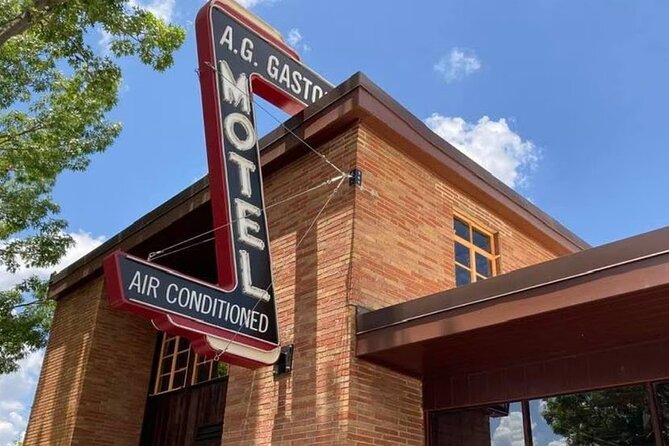
The A.G. Gaston Motel gives the tour another important shift. Built by African American businessman Arthur George Gaston, the motel opened in 1954 and offered first-class lodging and dining to Black visitors in Birmingham.
The building tells you something simple but important: Black business owners created services because segregation denied Black customers equal access elsewhere. The motel was not only a place to sleep. It represented economic power, dignity, and self-reliance.
The motel also connects directly to the Civil Rights campaign. Its role in Birmingham’s movement history makes it a valuable stop after the church and park. You can see how protest leadership depended on ordinary infrastructure: somewhere to meet, eat, rest, and plan.
The stop lasts about 10 minutes. You will not get a full tour of the motel, but you will understand why this building matters and why Black entrepreneurship belongs in the same story as marches and court battles.
Lyric Theatre and the limits of integration
The Lyric Theatre is the final listed stop. It is Birmingham’s only surviving theater that allowed mixed audiences, although those audiences were still segregated.
That detail captures the awkward limits of change. A venue could admit both Black and white customers while still placing them in separate sections or enforcing separate rules. Integration was not a single switch flipped from off to on. It came in uneven steps, often with restrictions that preserved racial control.
At about 10 minutes, this is a short closing stop. It also brings the tour back to culture and public life after the heavier material at the church and motel. You finish with a reminder that theaters, music, and shared public spaces were part of the struggle over who could belong in Birmingham’s civic life.
The tour returns to the meeting point at the end. Since the route is on foot and includes several stops, wear comfortable shoes. A moderate level of physical fitness is expected, and poor weather can lead to a cancellation or a new date.
Wilhelmina’s personal approach
The guide can make or break a short history tour. Wilhelmina receives particularly strong praise for her local connection, clear explanations, patience with questions, and willingness to discuss difficult or controversial subjects.
She is described as a Birmingham native who brings more than textbook information to the route. That matters here because the tour asks you to connect public events with daily life. A guide who understands the city from the inside can explain why a hotel, theater, park, or church mattered to local residents.
You should also expect conversation rather than a tightly scripted lecture. One past participant wished for a more sequential presentation, and that is a fair caution. Personal stories and open discussion can make the walk more memorable, but they may also mean the chronology is not always perfectly neat.
If you have questions, ask them. The tour’s strongest feature is its human scale, and the guide’s ability to respond thoughtfully appears to be a major part of the experience.
Timing, group size, and practical value
The advertised duration is about one hour to one hour and 30 minutes. That makes this a good first activity in Birmingham or a useful choice if you have only a few hours downtown. You cover a lot of ground quickly, so it helps to treat the tour as an orientation rather than the whole Civil Rights experience.
Groups can reach 30 people. That is small enough to remain manageable but large enough that you may need to stay close to the guide, especially near busy streets. The ticket is mobile and the tour is offered in English.
The price of $65 is easiest to justify if you value interpretation. Most stops have no separate admission charge, and the main purchase is the guide’s time and ability to connect the locations. If you plan to visit the Civil Rights Institute or other paid attractions separately, this walk can serve as a useful introduction before you enter them.
There is also a practical caution. A few bookings have involved last-minute cancellations, missed departures, or delayed responses about refunds. The stated policy allows free cancellation up to 24 hours before the start, with a full refund. If weather looks poor or your schedule is tight, confirm that the tour is operating and keep your booking messages handy.
Who should book this walk?
I would recommend it most strongly to first-time visitors, people interested in Black history, families introducing older children to Civil Rights history, and anyone who wants local context before visiting Birmingham’s museums.
It also works well for visitors who usually skip guided tours. The route is short, active, and focused on real places rather than a long indoor presentation. You can ask questions, see the major downtown sites, and continue exploring on your own afterward.
You may want a different plan if you need a highly detailed chronology, guaranteed access inside every building, or a long museum-style experience. The tour moves quickly, and the most important sites deserve more time than the schedule allows.
Should you book The Sacred Ground of 1963?
Book it if you want a compact, serious introduction to Birmingham’s Civil Rights story and appreciate learning from a local guide. The route’s best feature is its range: zoning laws, Black business, music, theaters, churches, protest, and the A.G. Gaston Motel all fit into one walk.
I especially like that the experience does not reduce Birmingham to one tragic event. It shows the community that existed before 1963 and the institutions that made protest possible. Just keep your expectations realistic: this is a brisk overview, not a full-day study tour.
Confirm the departure, allow extra time for the church if you want to enter, and wear comfortable shoes. With those points in mind, the $65 price is reasonable for a thoughtful first look at the city’s most important Civil Rights sites.
FAQ
Where does the tour begin?
The tour begins at 285 20th Street North in Birmingham, at the corner of 3rd Avenue and 20th Street North.
How long does the walking tour last?
The experience lasts approximately one hour to one hour and 30 minutes.
What sites are included?
The route includes Birmingham’s former Black business district, Eddie Kendrick Memorial Park, Carver Theater, Kelly Ingram Park, 16th Street Baptist Church, the A.G. Gaston Motel, and the Lyric Theatre.
Is admission to 16th Street Baptist Church included?
No. Admission to 16th Street Baptist Church is not included in the tour price.
Who leads the tour?
The tour is led by Wilhelmina, a Birmingham native who provides local context about the city’s Black history and Civil Rights events.
What happens if the weather is poor?
The experience requires good weather. If it is canceled because of weather, you will be offered another date or a full refund. You can also cancel up to 24 hours before the start time for a full refund.
Just added around the USA
- Red Rocks Amphitheatre Historical Walking Tour★ 5.0 · 74 reviews
- 1-Hour Segway Tour of Cheyenne Cañon Art, History and Nature★ 5.0 · 36 reviews
- Colorado Springs – Guided Walking Ghost / History Tour★ 5.0 · 168 reviews
- Ancient Landscapes Private Geology Hike at Garden of the Gods★ 5.0 · 31 reviews
- Village Food Tours Lunch & History Tour★ 5.0 · 80 reviews
- 2.5 Hour Kayaking with Manatee and History Tour in Tarpon Springs★ 5.0 · 24 reviews
- Safety Harbor Ghost Tour★ 5.0 · 60 reviews
- Historical Bicycle Tour of Dunedin★ 5.0 · 44 reviews
USA History Tours, compared.
History and Hauntings of Salem Guided Walking Tour
Read our review →
Charleston’s Old South Carriage Historic Horse & Carriage Tour
Read our review →
Boston: Freedom Trail History Small Group Walking Tour
Read our review →
Historic Charleston Guided Sightseeing Walking Tour
Read our review →
Savannah History and Haunts Candlelit Ghost Walking Tour
Read our review →
Tour of Historic Fenway Park, America’s Most Beloved Ballpark
Read our review →