
Review · USA
Williamsburg: The Patriots Historical Walking Tour
Colonial Williamsburg makes the American Revolution feel close enough to touch, and this tour gives you the plot in a brisk hour. You walk from the reconstructed Capitol to Palace Green, passing the Raleigh Tavern, the original Powder Magazine, Peyton Randolph’s house, and the Courthouse where the Declaration of Independence was read aloud.
I like the clear timeline, which keeps the political story from becoming a jumble of names and dates. I also like the route’s mix of original and reconstructed buildings, plus the chance to ask questions as you go. The trade-off is simple: one hour gives you a strong framework, not a full visit to every building or exhibit.
- The route follows Duke of Gloucester Street from the Capitol to Palace Green.
- The original 18th-century Powder Magazine connects local events to Virginia’s move toward rebellion.
- Lonnie Sandifer leads the tour, with a reputation for thoughtful pacing, shade stops, and lively explanations.
- The Capitol and Raleigh Tavern are reconstructed, while the Powder Magazine is original.
- The tour ends near Bruton Parish Church, modern shops, restaurants, and the Art Museums of Colonial Williamsburg.
- The $25 price buys orientation and context, without the need to wait in lines or choose the right buildings on your own.
A one-hour route through the story of revolution
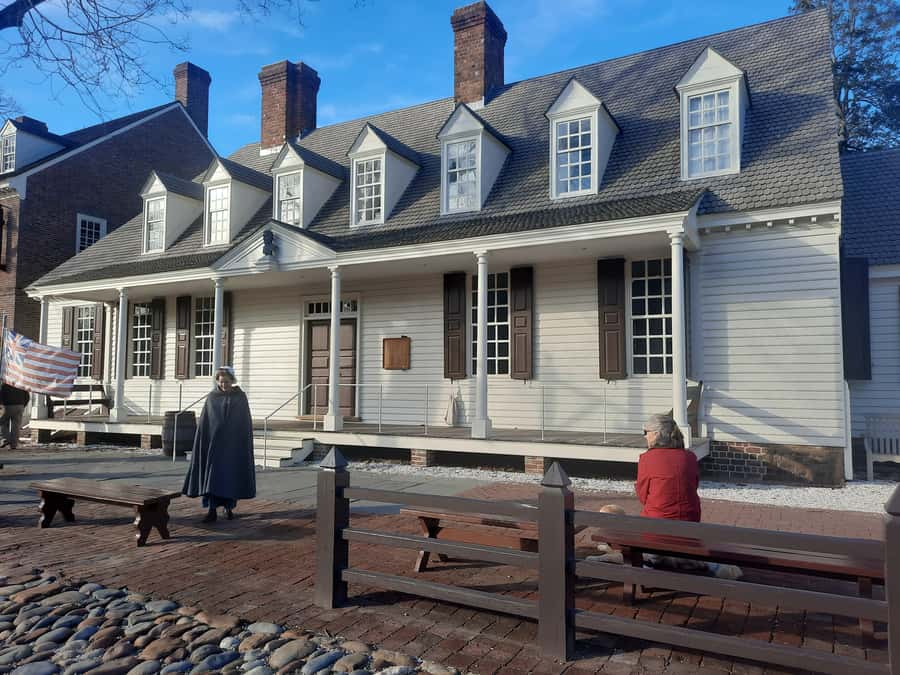
Colonial Williamsburg can be confusing on a first visit. Its streets look old, but many buildings are reconstructions. Some interiors require separate admission or have limited hours. A short walking tour helps you understand what you are seeing before you spend the rest of your day exploring.
This tour focuses on the 1770s and presents events in order. That matters because the road to independence was not one sudden decision. It involved local disputes, fear of government power, resistance to royal authority, and a growing willingness to act outside the rules.
You meet the guide at the west entrance gate of the reconstructed Capitol Building on East Duke of Gloucester Street. The tour is in English and lasts one hour. Lonnie Sandifer is the guide named for this experience, and his style includes frequent questions, practical pacing, and attention to shade and rest stops.
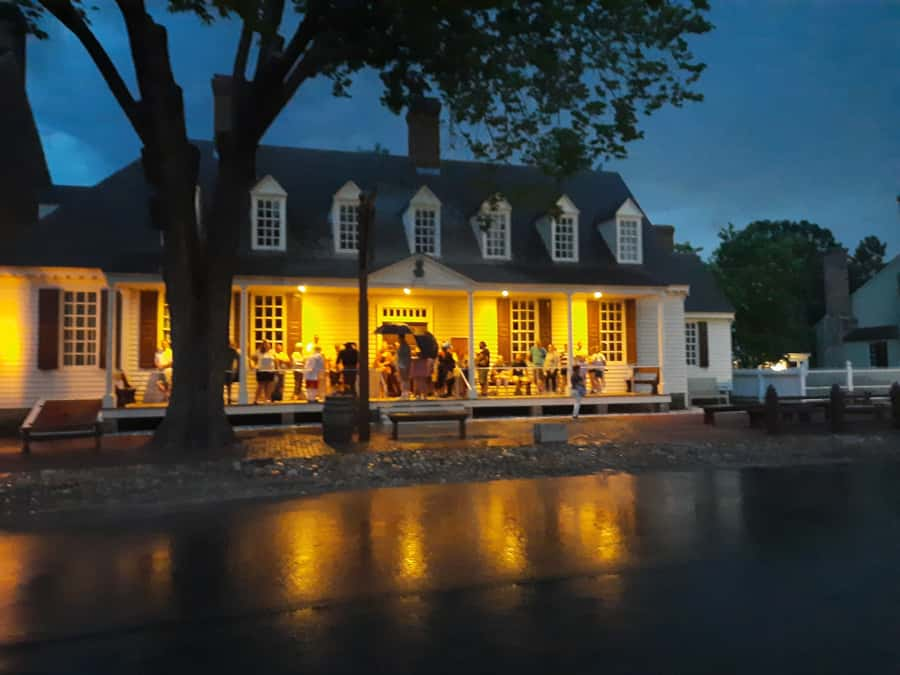
The walk is wheelchair accessible, though you should still expect to spend the hour outside on historic streets and public paths. It runs rain or shine, so bring clothing suited to the forecast. Summer heat can be serious, while wet weather changes how comfortable the hour feels.
Starting at the reconstructed Capitol Building
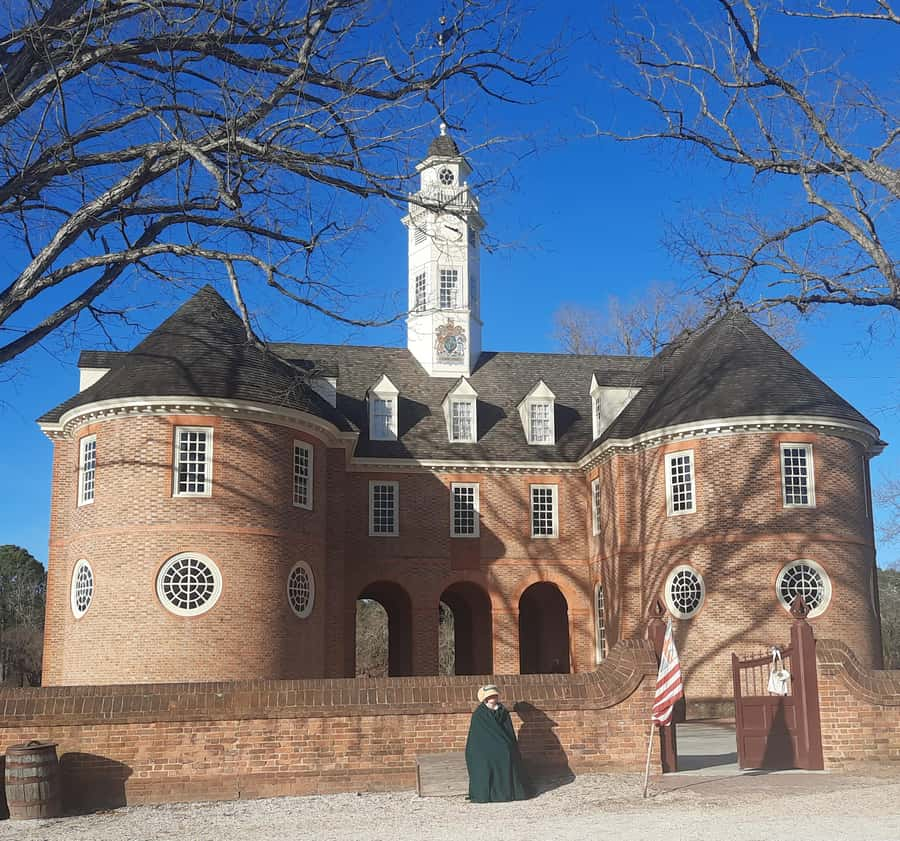
The Capitol is the right place to begin because it puts political power at the center of the story. Here, you learn about the creation of the first elected body in the New World and the later creation of Colonial Williamsburg itself.
The building you see is reconstructed, so the guide’s explanation matters. You are not simply looking at old walls. You are learning how the site functioned, why it mattered, and how the restoration of Williamsburg shaped the modern experience.
I find this opening useful for families and first-time visitors because it gives the tour a firm starting point. The guide can explain how colonial government worked before the story turns toward rebellion. That context helps you follow later discussions about royal authority, local resistance, and the actions of Virginia’s founders.
Do not expect a full interior visit or a long examination of every room. The value here is the overview. In one stop, you get the political setting for the rest of the walk.
More History Walking Tours in the USA
- History and Hauntings of Salem Guided Walking Tour
★ 5.0 · 14,564 reviews - Boston: Freedom Trail History Small Group Walking Tour
★ 5.0 · 6,450 reviews - Historic Charleston Guided Sightseeing Walking Tour
★ 5.0 · 6,216 reviews
Raleigh Tavern and the private side of politics
The next stop is the reconstructed Raleigh Tavern. Taverns were not just places for food and drink. They also provided room for conversation, private meetings, organizing, and political maneuvering.
The tour describes the tavern through espionage, subversion, and intrigue. Those words point to an important part of the revolutionary story: public speeches were only one piece of the action. People also exchanged information in less formal settings, tested ideas with allies, and worked out how to resist authority.
This stop should appeal to you if you like the human side of history. A formal building can explain government, but a tavern helps explain how people talked, argued, and planned. It gives the political story a social setting.
Because the Raleigh Tavern is reconstructed, you should treat it as a carefully made interpretation rather than an untouched survivor. That is not a flaw, but it is worth knowing. The tour is strongest when it explains both the colonial past and the work that went into recreating Williamsburg for the public.
The original Powder Magazine and the move toward rebellion
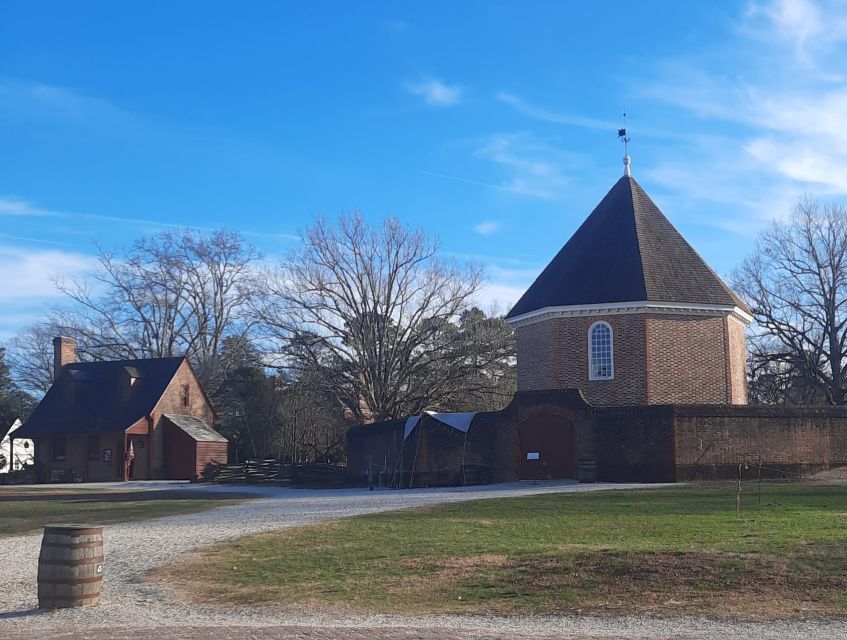
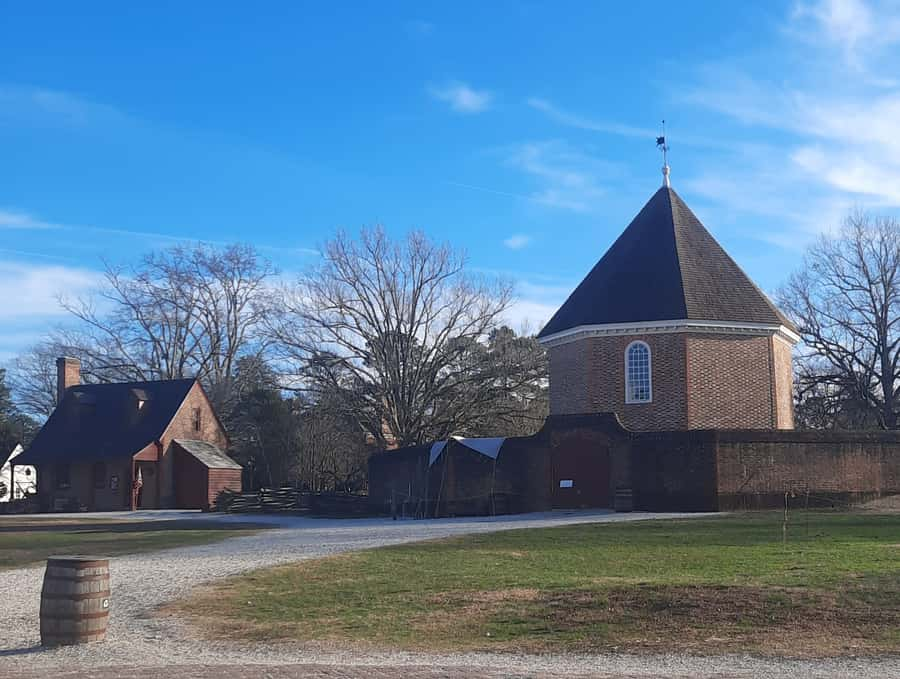
The original 18th-century Powder Magazine is the route’s most direct physical link to the colonial period. Its importance comes from the events connected to arms, authority, and the growing conflict between Virginia and the government.
Here, the guide explains the incident that set Virginians on a path toward rebellion. The building gives that discussion a sharp focus. Questions about who controlled weapons, who could issue orders, and how communities responded to royal decisions were not abstract matters. They could produce immediate fear and anger.
I especially like this stop because it shows how revolution often begins with a local dispute rather than a grand speech. The Powder Magazine gives you a place to connect political ideas with practical power.
The stop also shows why a guide can save time. If you walked Colonial Williamsburg without preparation, you might pass the building without knowing why it matters. In a short visit, that kind of missed context is common. This tour puts the explanation in front of you at the right moment.
Peyton Randolph and the public reading of independence
As you continue along Duke of Gloucester Street, you pass the Peyton Randolph House. Randolph served as president of the First and Second Continental Congresses, making the house an important reminder that Williamsburg was tied directly to the wider movement for independence.
The route also passes the 1770 Colonial Williamsburg Courthouse. You see the steps where the Declaration of Independence was read to the citizens of Williamsburg. That detail gives the national story a local setting. A famous document was not only debated by distant leaders. Its words had to be carried into towns and heard by ordinary people.
This section works well as a bridge between private political planning and public response. The tavern suggests behind-the-scenes activity. The courthouse steps suggest the moment ideas reached the wider community.
You should not expect to spend a long time inside either building. The tour is a moving overview, and the guide uses the route itself as the teaching tool. If you want detailed architectural study or interior interpretation, plan additional time after the walk.
Same city, a different century:
- Charleston’s Old South Carriage Historic Horse & Carriage Tour
★ 5.0 · 10,023 reviews - Beneath The Streets Underground History Tour
★ 4.5 · 8,006 reviews - Big Island in a Day: Volcanoes Waterfalls Sightseeing and History
★ 5.0 · 6,569 reviews - Charleston Horse-Drawn Carriage Tour: Explore Historic Charleston
★ 5.0 · 3,561 reviews
Palace Green and the royal governor’s role
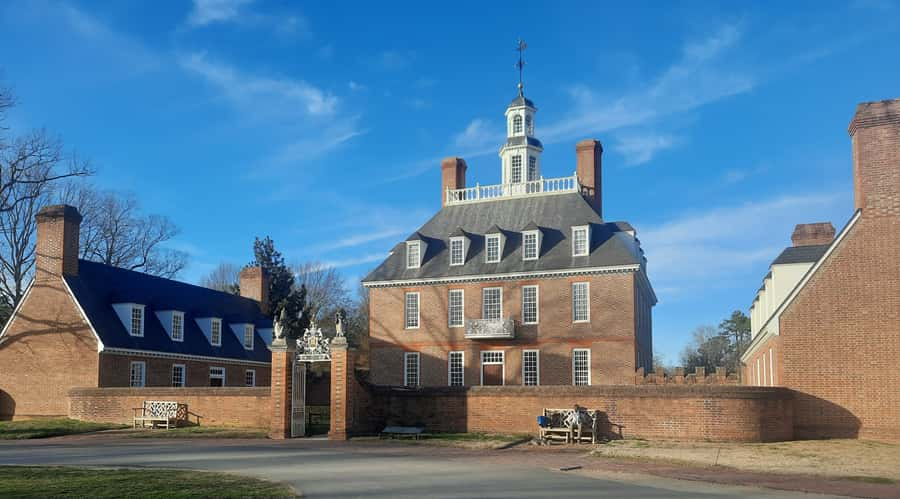
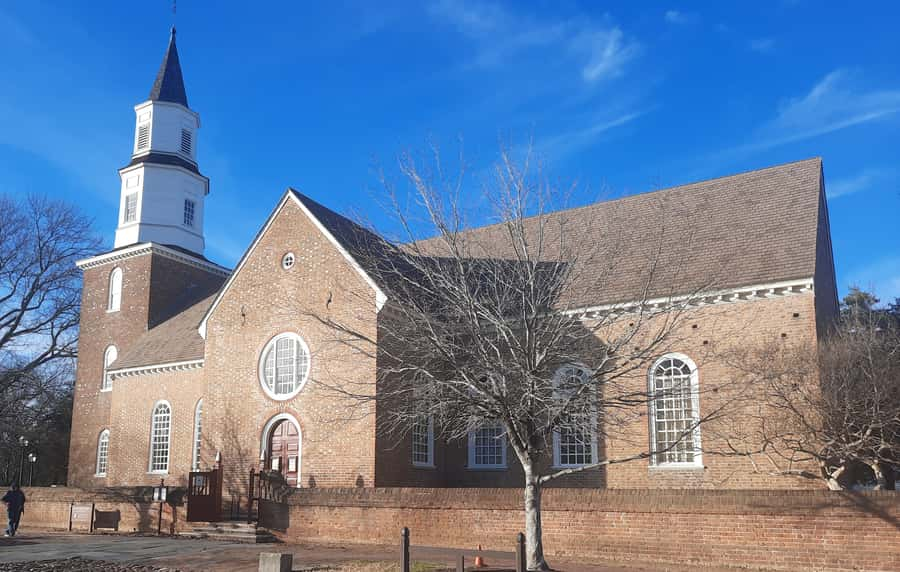
The tour concludes on Palace Green, between the reconstructed Governor’s Palace and Bruton Parish Church. This is a strong ending because the setting brings royal authority, religion, and colonial public life together.
The Governor’s Palace helps explain how Virginia’s royal governor pushed people toward rebellion. The point is not simply that one official caused the Revolution. Rather, you hear how the governor’s actions and attitudes added pressure to an already uneasy political situation.
The palace is reconstructed, so again, the guide provides the historical framework that the building alone cannot supply. From the green, you can see how Colonial Williamsburg arranges its public spaces to show the relationship between government, church, and community.
Bruton Parish Church adds another layer. Many of the founding fathers worshiped there while visiting Williamsburg. The church is open to the public at the church’s discretion, so do not treat entry as guaranteed during your tour. Still, ending beside it gives you an easy next stop if the doors are open.
What makes Lonnie Sandifer’s guiding style useful
A one-hour history walk can easily become a list of dates. Lonnie Sandifer’s approach, as described for this tour, is more conversational. Questions are encouraged throughout, which lets you ask about the buildings, the people involved, or the restoration of Colonial Williamsburg.
His pacing also matters. The route includes several stops, and the strongest guiding keeps the group moving without turning the walk into a race. Accounts of his tours describe attention to shade and rest stops, a real advantage during hot Virginia weather.
I would book this tour early in your Williamsburg visit if you want help sorting out the site. It gives you a map in your head: the Capitol for elected government, the tavern for political activity, the Powder Magazine for the spark of conflict, the courthouse for public news, and Palace Green for royal power.
It is also a good fit for mixed-age groups. Children may not follow every political detail, but the route includes buildings, intrigue, weapons, public readings, and a royal governor. Adults can ask more detailed questions without needing a separate lecture.
The $25 price and what you receive
At $25 per person, the tour costs less than a full day of exploring with broad admission, but it also offers less access. You are paying for a focused explanation and a carefully chosen route, not entry to every historic building, museum, or program in Colonial Williamsburg.
That can be a good value if you have only a few hours or if you do not want to spend your first day guessing which buildings matter most. The guide covers information that could otherwise require several days of visiting the right sites, waiting for openings, and piecing together disconnected explanations.
The value is strongest for first-time visitors, families, and anyone interested in the American Revolution more than decorative architecture alone. If you already know Williamsburg well and have read extensively about the 1770s, you may prefer to explore independently.
The tour does not include parking or transportation to the area. You need to arrange your own arrival at the Capitol west entrance gate. Afterward, you are close to modern shopping and dining areas, as well as the Art Museums of Colonial Williamsburg, so the walk fits neatly into a larger day.
Practical details before you book
The meeting point is in front of the Capitol west entrance gate at 37.27148127277172, -76.69388646348916. Arrive with enough time to find the gate and identify the guide before the scheduled start.
The tour is offered in English with a live guide. It is wheelchair accessible, and it takes place rain or shine. Since the route is outdoors, comfortable shoes and weather protection make sense, though no special equipment is listed as included.
You can cancel up to 24 hours in advance for a full refund. The reserve-now, pay-later option also gives you some flexibility while you finalize your Williamsburg plans.
The one-hour length is both a strength and a limit. It is short enough to fit before lunch, after arrival, or ahead of an afternoon museum visit. It is not long enough for a detailed look inside every stop, so use it as an introduction rather than your entire Colonial Williamsburg plan.
Who should book this walking tour?
I would choose this tour if you want the political story first. It is especially useful when you are visiting with children or relatives who need a clear explanation of why Williamsburg matters.
It also suits you if you want a local guide rather than an audio guide or a self-guided walk. The chance to ask questions can change the experience, particularly when a building’s importance is not obvious from its appearance.
You may want a different option if your main goal is interior access, costumed interpretation, hands-on demonstrations, or a full-day Colonial Williamsburg program. Those interests require more time than this one-hour route provides.
Should you book the Patriots Historical Walking Tour?
Book it if you want a compact, sensible introduction to Colonial Williamsburg and the Virginia road to independence. The route has a strong beginning and ending, the stops are tied to specific events, and Lonnie Sandifer brings the material together with clear explanations and room for questions.
The main limitation is scope. You will not see every attraction or receive a full day of historic programming. Still, at $25, this is a practical first step that can keep you from wandering past important buildings without understanding them. For a short visit, a family outing, or the first hour of a longer Williamsburg day, I think it is a smart buy.
FAQ
How long is the Patriots Historical Walking Tour?
The tour lasts one hour.
How much does the tour cost?
The price is $25 per person.
Where does the tour meet?
The guide meets you in front of the Capitol west entrance gate on East Duke of Gloucester Street in Williamsburg, Virginia.
Where does the tour end?
The tour ends on Palace Green between the reconstructed Governor’s Palace and Bruton Parish Church.
Is the tour offered in English?
Yes. The tour has a live English-speaking guide.
Is the walking tour wheelchair accessible?
Yes, the activity is listed as wheelchair accessible.
Does the tour run in bad weather?
Yes. The tour takes place rain or shine.
Is parking included?
No. Parking and transportation to and from the area are not included.
Can I cancel the tour for a refund?
Yes. You can cancel up to 24 hours in advance for a full refund. You can also reserve now and pay later.
Just added around the USA
- Red Rocks Amphitheatre Historical Walking Tour★ 5.0 · 74 reviews
- 1-Hour Segway Tour of Cheyenne Cañon Art, History and Nature★ 5.0 · 36 reviews
- Colorado Springs – Guided Walking Ghost / History Tour★ 5.0 · 168 reviews
- Ancient Landscapes Private Geology Hike at Garden of the Gods★ 5.0 · 31 reviews
- Village Food Tours Lunch & History Tour★ 5.0 · 80 reviews
- 2.5 Hour Kayaking with Manatee and History Tour in Tarpon Springs★ 5.0 · 24 reviews
- Safety Harbor Ghost Tour★ 5.0 · 60 reviews
- Historical Bicycle Tour of Dunedin★ 5.0 · 44 reviews
USA History Tours, compared.
History and Hauntings of Salem Guided Walking Tour
Read our review →
Charleston’s Old South Carriage Historic Horse & Carriage Tour
Read our review →
Boston: Freedom Trail History Small Group Walking Tour
Read our review →
Historic Charleston Guided Sightseeing Walking Tour
Read our review →
Savannah History and Haunts Candlelit Ghost Walking Tour
Read our review →
Tour of Historic Fenway Park, America’s Most Beloved Ballpark
Read our review →
Oahu: Mauka Warriors Luau Honoring Polynesia’s Forgotten History
Read our review →Browse the lists this tour appears in