
Review · USA
Gettysburg: Licensed Guided Battlefield Horseback Tour
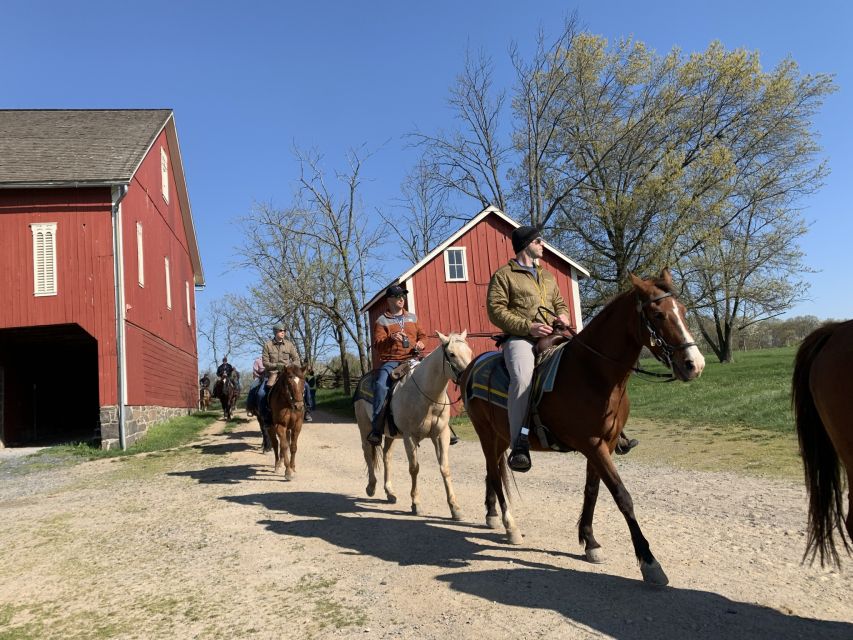
Gettysburg makes more sense from the back of a horse. You move at the pace of the soldiers and officers who once crossed these fields, with time to see how roads, farms, slopes, and open ground shaped the battle. I especially like the Virginia Monument stop and the broad view toward Little Round Top from Spangler Farm. The cannonball hole at Trostle Farm gives the fighting a startling, physical presence.
I also like the careful support from the outriders. They help with saddles and stirrups, check on riders during the trip, and keep the horses moving in a calm line. The main consideration is scope: two hours covers only a small part of Gettysburg Battlefield, so you may want a separate car tour or museum visit afterward.
Key points to know before you ride
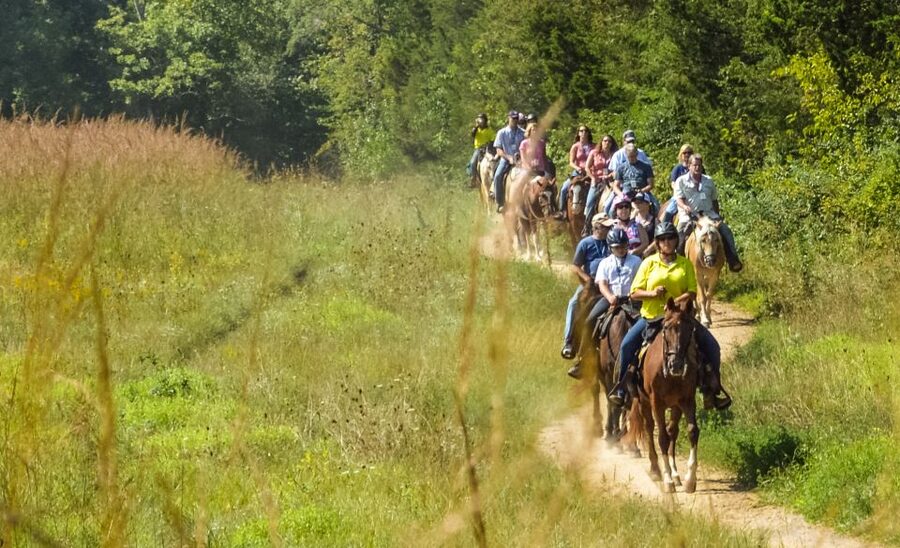
- Ride through real battlefield terrain: The route crosses Gettysburg National Military Park, farms, roads, wooded sections, and open fields.
- Hear the battle explained on the spot: A licensed Civil War guide provides live narration, with English audio available through headsets.
- See Little Round Top from Spangler Farm: The wide view helps you understand the ground that shaped the battle.
- Visit the Virginia Monument: This is tied to General Robert E. Lee and the return of his troops after Pickett’s Charge.
- Look through a cannonball hole: Trostle Farm’s barn still shows a large opening made during the fighting.
- Expect calm horses and active support: You do not need previous riding experience, but you do need to follow instructions and wear closed-toe shoes.
Why horseback is a useful way to see Gettysburg
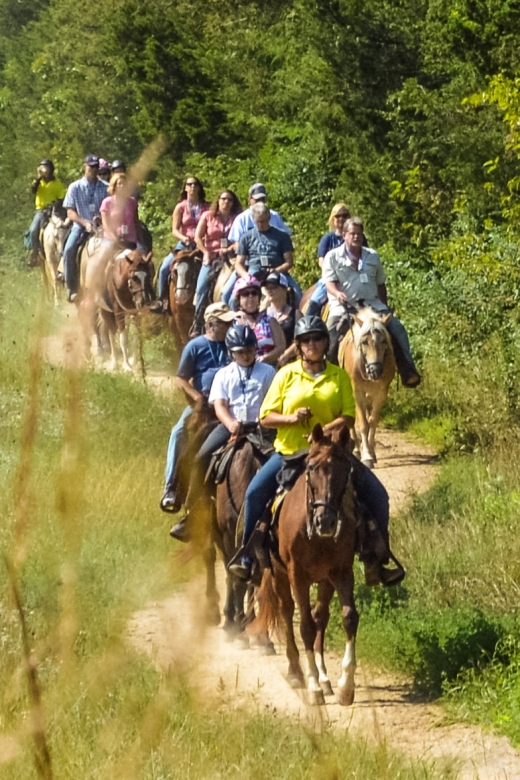
A car tour covers far more ground, and walking lets you stop whenever you wish. Horseback riding offers something different. You travel slowly enough to take in the field, but you also move through areas that are not part of a normal foot visit.
The horse changes your sense of distance. A farm that looks close on a map takes time to reach. A road that seems simple from a car becomes more meaningful when you follow it at a walking pace. You start to see why commanders cared about ridges, orchards, fences, and open approaches.
The experience also gives you a small sense of the practical problems faced by mounted officers and soldiers. You are not recreating combat, of course, but you are using the same basic form of transportation in the same broad setting. That physical connection adds value for anyone who finds battlefield interpretation easier when it is tied to place and movement.
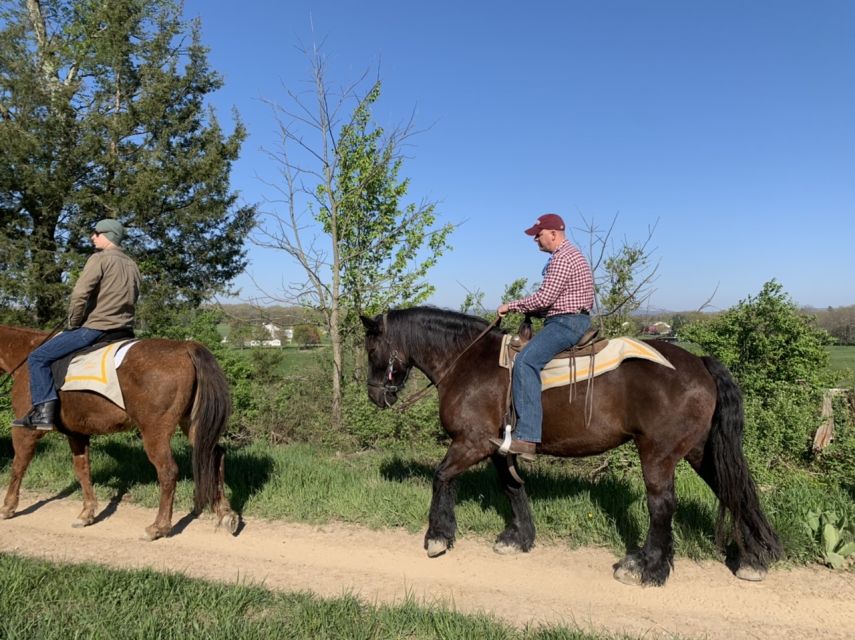
You should expect a guided trail ride rather than a fast horseback excursion. The horses are trained to remain in line and stop when the group stops. That makes the trip approachable for first-time riders, though experienced riders may wish the route were longer or reached more of the park.
More Battlefield and Military History Tours in the USA:
- 2-Hour Gettysburg Battlefield Guided History Bus Tour with a National Park Guide
★ 4.5 · 2,201 reviews - Gettysburg Battlefield Self-Guided Driving Audio Tour
★ 4.5 · 910 reviews - Gettysburg: Horse-Drawn Carriage Battlefield Tour
★ 4.8 · 896 reviews
Meeting the horses at McMillan Woods Campground
The tour begins at McMillan Woods Campground, not in the center of Gettysburg. Build in enough time to find the meeting point and get settled before the ride begins.
The staff assigns horses, helps you with the saddle and stirrups, and gives basic riding instructions. You will sign a risk form before setting out. The horses are described as calm, friendly, and well trained, and the staff pays close attention to comfort and safety.
You do not need horseback experience for this ride. Still, you should listen closely during the introduction. The horses generally stay in line, but you remain responsible for following directions and handling yourself sensibly in the saddle.
An outrider or several outriders accompany the group throughout the ride. This is one of the strongest practical features of the experience. They watch the line, assist riders, and check the fit of equipment. A midway check helps catch problems with a saddle or stirrups before discomfort turns into a real issue.
The horses are also treated as working animals rather than simple props. Staff members prepare them for the conditions, and reports from summer rides describe care such as fly spray, sunscreen, and hay during hot weather. That matters to anyone who cares about animal welfare.
Following the route through Gettysburg National Military Park
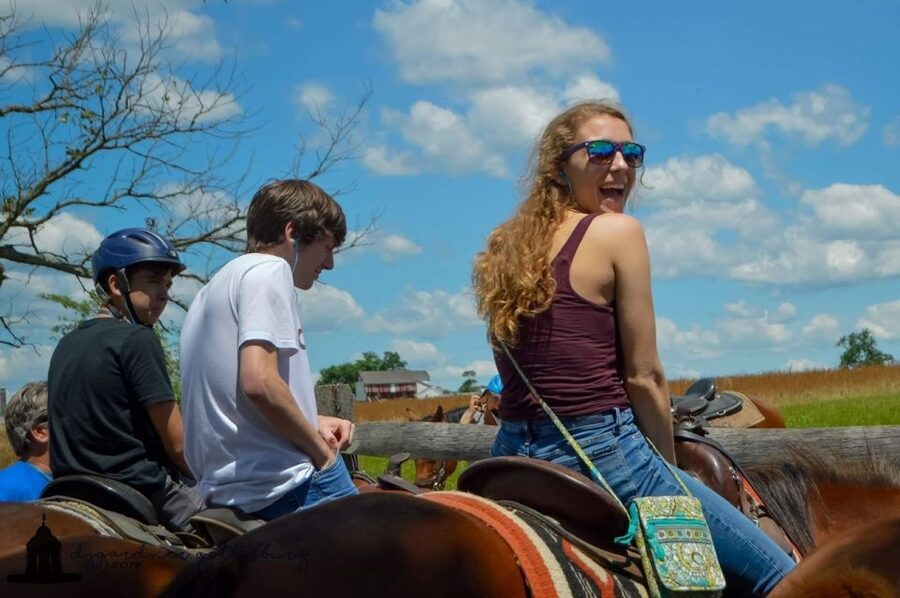
Once mounted, you ride into the park with the guide narrating the setting and the battle. The headsets are useful because they let you hear the explanation while the horses keep moving. On a large group ride, that can make the difference between following the story and missing half of it.
The guide explains the actions of soldiers and officers, but also brings in the lives of local residents. That broader view keeps the tour from becoming only a list of troop movements. Gettysburg was a community as well as a battlefield, and the farms and roads around you help show that.
Guides have included Andi and Truman, both praised for clear storytelling, strong command of the subject, and a sense of humor. The exact guide depends on the day, so you should not book around a particular person. Still, the quality of the narration is a central part of the experience.
If a live guide is not available, a professionally recorded narration by Civil War commentators is provided. That gives you a backup, though a live guide can respond to the pace of the group and add more natural explanation.
The Virginia Monument and Pickett’s Charge
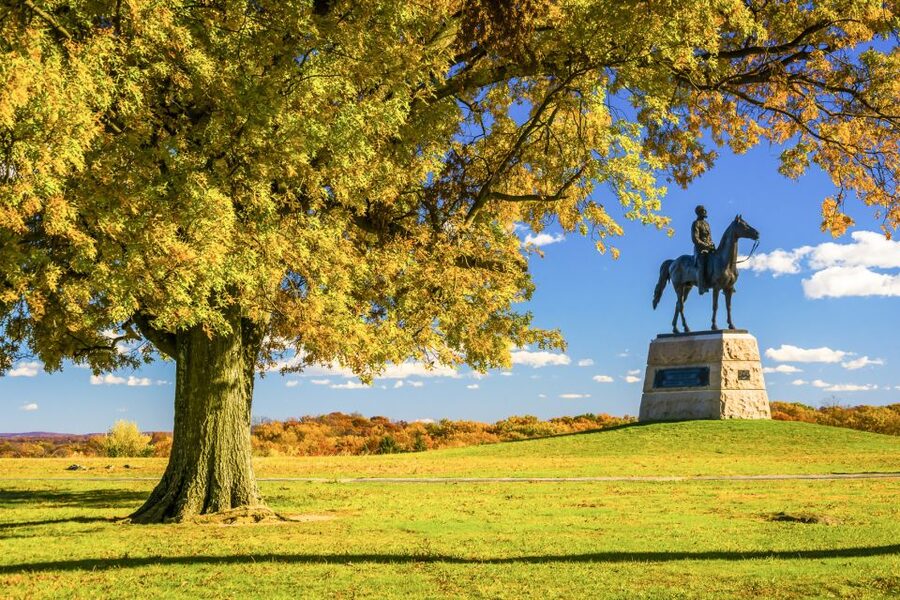
The ride reaches the Virginia Monument, one of the key points connected with the Confederate attack known as Pickett’s Charge. General Robert E. Lee waited here for his returning troops after the assault.
This stop works best when you pay attention to the ground around you. The monument is not just a marker to photograph. It helps place Lee within the sequence of events and gives you a fixed point from which to consider the route taken by the troops.
The horse’s slow pace gives the guide time to explain the setting. You can look across the open ground and think about how exposed an advance would have been. The tour does not turn the event into a simple heroic tale. Its value is in showing the physical problems faced by men moving across this terrain under fire.
If you have already studied Gettysburg, this portion will likely add location and scale to what you know. If the battle is new to you, the guide helps prevent the site from becoming a blur of names and dates.
More Horse Riding Days in the USA:
- Charleston’s Old South Carriage Historic Horse & Carriage Tour
★ 5.0 · 10,023 reviews - Charleston Horse-Drawn Carriage Tour: Explore Historic Charleston
★ 5.0 · 3,561 reviews - Charleston: Historical Downtown Tour by Horse-drawn Carriage
★ 4.8 · 1,009 reviews - Beaufort’s #1 Horse & Carriage History Tour
★ 5.0 · 913 reviews
Spangler Farm and the view toward Little Round Top
From the Virginia Monument, the route continues toward Spangler Farm. Here, you get wide views toward the Peach Orchard and Little Round Top in the distance.
This is one of the most useful stops for understanding Gettysburg. The named places can seem disconnected when you see them one at a time from a road or in a book. From Spangler Farm, you can connect several parts of the battlefield in one view.
Little Round Top is especially important because its position affected the Union defense. Seeing it from a distance helps you understand how commanders used high ground and how movement across open areas could expose troops.
The view also gives the ride one of its most pleasant pauses. Gettysburg is a serious place, but the farms and fields are peaceful now. You can take in the scenery while the guide explains what happened there. The contrast between quiet countryside and violent history is part of what makes the visit so affecting.
Weather will shape this section. On a clear day, the views are broad and easy to read. On a hot, rainy, or misty day, visibility and comfort may suffer. The tour runs rain or shine, so dress for the forecast rather than for an ideal photograph.
Crossing Emmitsburg Road to the Union side
The route crosses Emmitsburg Road and moves onto the Union side of the battle. This change is more than a change of direction. It helps you follow the battle from different positions and see how the same terrain looked to opposing forces.
Emmitsburg Road is one of the route’s useful reference points. Roads organize the battlefield, and crossing one makes the shift in perspective clear. The guide can connect the physical route with the military movements that took place around it.
You should not expect to cover every major point in Gettysburg National Military Park. Some riders wish the trip made a complete loop or continued farther. The ride turns back rather than providing a full survey of the entire battlefield. That is the main limitation for anyone hoping to replace a full park tour with horseback riding.
For a first visit, I would treat this as one part of your Gettysburg day. Pair it with the auto tour or another visit that covers locations beyond the horse route. The horseback ride gives you access and perspective, not total coverage.
Trostle Farm and the cannonball hole
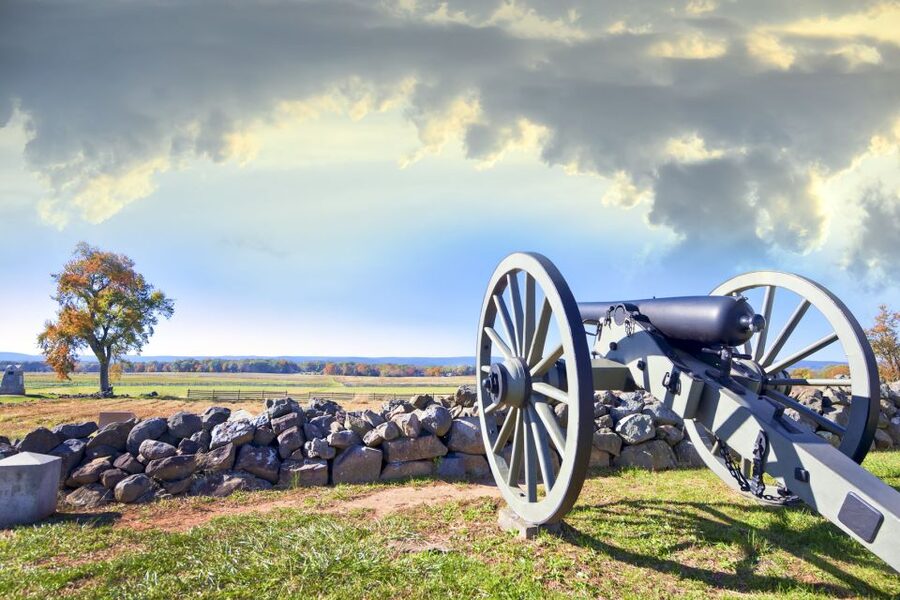
At Trostle Farm, you see the barn with a large cannonball hole in its side. This is the kind of detail that can stay with you longer than another monument or battlefield sign.
A cannonball hole is direct evidence. It shows that the barns and homes were not distant backdrops to the battle. Farm buildings were caught in the fighting, and local families lived close to the danger. Looking through the opening connects the military story with the people and property in its path.
The stop also reinforces the guide’s explanation of how the battlefield functioned as farmland. You are not touring an empty military training ground. You are moving through a working rural area that became the setting for a major battle.
This part of the route is especially worthwhile for children and teens because it gives them a clear visual anchor. A large hole in a barn is easier to understand than a long explanation about artillery positions. The guide can then build from that concrete detail into the wider story.
What the ride feels like in practice
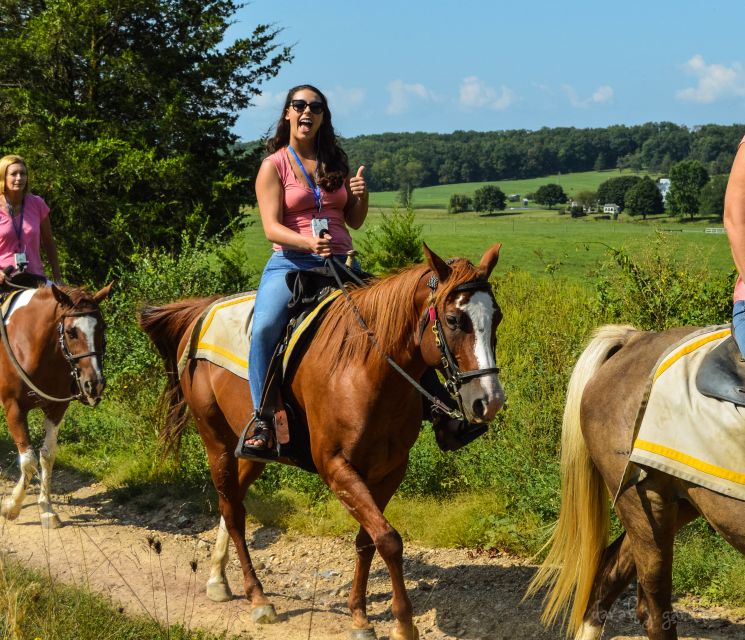
The horses travel in a line at a controlled pace. That makes the ride accessible, but it also means you will not choose your own route or set your own speed. You are part of a group, and the horses follow the structure of the tour.
Some riders have not been on a horse for years. The support staff helps reduce that worry, and the horses are selected as steady trail animals. You may still feel saddle soreness after two hours, especially if you are out of practice. Wear clothing that allows movement and offers protection from the weather.
Closed-toe shoes are required. Do not arrive in sandals or other open footwear. Weather-appropriate clothing is essential because the activity takes place outdoors in rain or shine.
The tour is not suitable for children under eight. Riders under 18 must wear helmets, and anyone 15 or younger must be accompanied by a parent or guardian. The listed weight limit is 250 pounds, or 115 kilograms. The activity is also not suitable for pregnant people, people with mobility impairments, people with visual impairments, or people with pre-existing medical conditions.
The ride is in English, with English audio support. If you need another language, this is not the right choice based on the information available.
Is $144 a fair price for two hours?
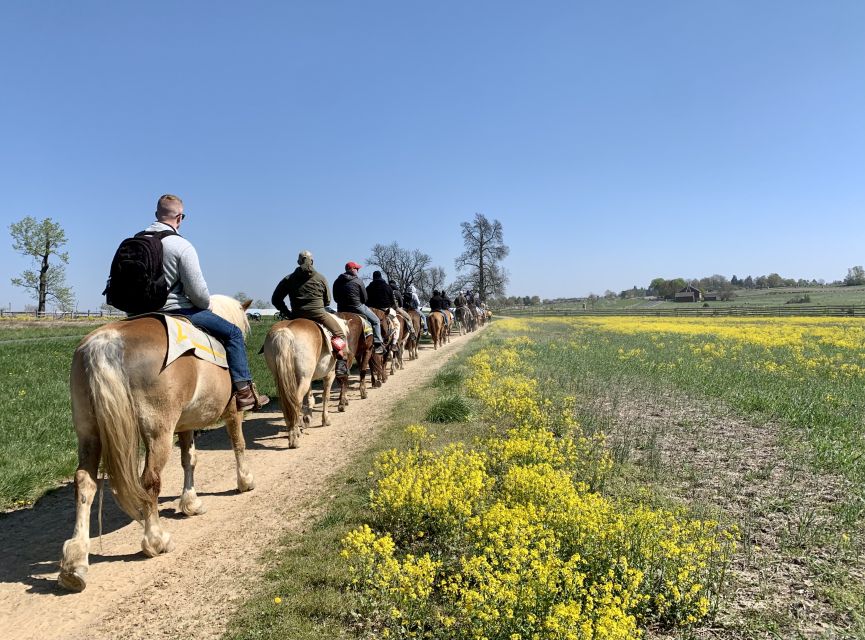
At $144 per person, this is not a cheap trail ride. You are paying for more than time in the saddle. The price includes the horse, outrider support, and a licensed battlefield guide, along with the access and interpretation that make the route meaningful.
The value is strongest if you want a personal, unusual way to understand Gettysburg. The horse gives you a view that a standard vehicle tour cannot provide, and the guide turns the ride into a history program rather than a simple outing.
The value is weaker if your main goal is to see as much of the park as possible. Two hours covers only a limited route, and you will not get a complete tour of every important site. A car-based visit may offer more battlefield coverage for less money, while a walking tour may give you more freedom to stop and study details.
I would consider the price reasonable for a special activity, particularly if horseback riding and Civil War history are both high priorities. For a family, the cost adds up quickly, so decide whether the horse itself is central to your plans. If it is, this is more likely to feel worth the money than if you simply want basic battlefield information.
Free cancellation up to 24 hours ahead and the option to reserve now and pay later make planning less risky. Still, check the weather before you commit. The tour runs in poor weather, and a wet ride can be memorable but uncomfortable.
Who will enjoy this Gettysburg horseback tour?
This is a strong fit for:
- First-time riders who want a calm, guided introduction to horseback riding.
- Civil War enthusiasts who want to connect historical events with actual ground.
- Families with children aged eight and older who can follow instructions.
- Campers staying near McMillan Woods Campground.
- Repeat visitors looking for a new view of Gettysburg.
- Riders who care about seeing animals handled with patience and care.
It is less suitable for anyone who dislikes group rides, needs a flexible pace, or wants to cover the entire battlefield. It is also a poor choice if rain, heat, or cold will make two outdoor hours unpleasant for you.
The tour works particularly well for a mixed group. An experienced rider can enjoy the horses, while a beginner can rely on the staff and steady pace. The history keeps the ride engaging for people who might not normally book a trail ride.
Should you book the ride?
Book it if you want Gettysburg to make physical sense. The views from Spangler Farm, the Virginia Monument, and the cannonball hole at Trostle Farm give you more than a scenic ride. They show how terrain, roads, farms, and distance shaped the Battle of Gettysburg.
Do not book it as your only battlefield visit if you want broad coverage. Use the two-hour ride as a focused experience, then add the auto tour or another park visit to reach more sites.
For most suitable riders, this is a memorable use of two hours and a distinctive way to approach the park. The well-trained horses, attentive outriders, and guides such as Andi and Truman add real value. If the $144 price fits your budget and you are comfortable riding outdoors in any weather, I would book it.
FAQ
Where does the Gettysburg horseback tour meet?
The meeting point is McMillan Woods Campground in Gettysburg, Pennsylvania.
How long does the horseback tour last?
The tour lasts two hours.
Do I need previous horseback riding experience?
No. Previous experience is not required, and the horses are described as calm, well trained, and easy for many first-time riders to handle.
What locations does the ride visit?
The route includes Gettysburg National Military Park, the Virginia Monument, Spangler Farm, the views toward the Peach Orchard and Little Round Top, Emmitsburg Road, and Trostle Farm.
What should I wear?
Wear weather-appropriate clothing and closed-toe shoes. Open-toed shoes are not allowed.
Can children join the tour?
Children under eight cannot join. Anyone under 18 must wear a helmet, and participants aged 15 and under must be accompanied by a parent or guardian.
What happens if the weather is bad?
The activity takes place rain or shine, so you will be exposed to the day’s weather conditions. Dress accordingly.
Just added around the USA
- Red Rocks Amphitheatre Historical Walking Tour★ 5.0 · 74 reviews
- 1-Hour Segway Tour of Cheyenne Cañon Art, History and Nature★ 5.0 · 36 reviews
- Colorado Springs – Guided Walking Ghost / History Tour★ 5.0 · 168 reviews
- Ancient Landscapes Private Geology Hike at Garden of the Gods★ 5.0 · 31 reviews
- Village Food Tours Lunch & History Tour★ 5.0 · 80 reviews
- 2.5 Hour Kayaking with Manatee and History Tour in Tarpon Springs★ 5.0 · 24 reviews
- Safety Harbor Ghost Tour★ 5.0 · 60 reviews
- Historical Bicycle Tour of Dunedin★ 5.0 · 44 reviews
USA History Tours, compared.
History and Hauntings of Salem Guided Walking Tour
Read our review →
Charleston’s Old South Carriage Historic Horse & Carriage Tour
Read our review →
Boston: Freedom Trail History Small Group Walking Tour
Read our review →
Historic Charleston Guided Sightseeing Walking Tour
Read our review →
Savannah History and Haunts Candlelit Ghost Walking Tour
Read our review →
Tour of Historic Fenway Park, America’s Most Beloved Ballpark
Read our review →
Oahu: Mauka Warriors Luau Honoring Polynesia’s Forgotten History
Read our review →Browse the lists this tour appears in