
Review · LISBON
Lisbon: Street Art and Historical Walking Tour
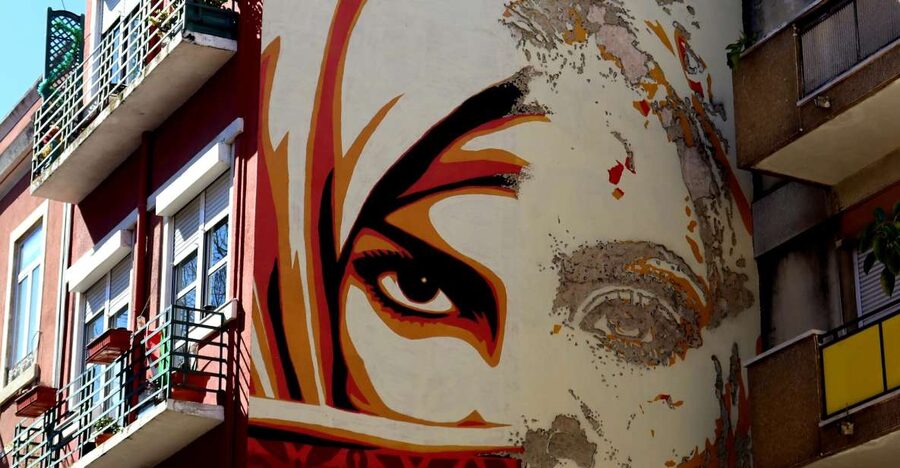
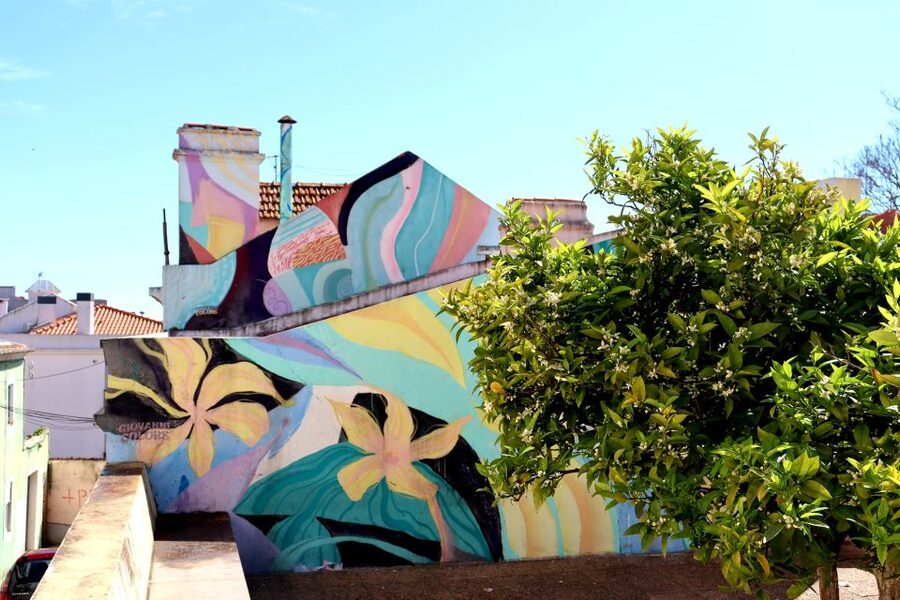
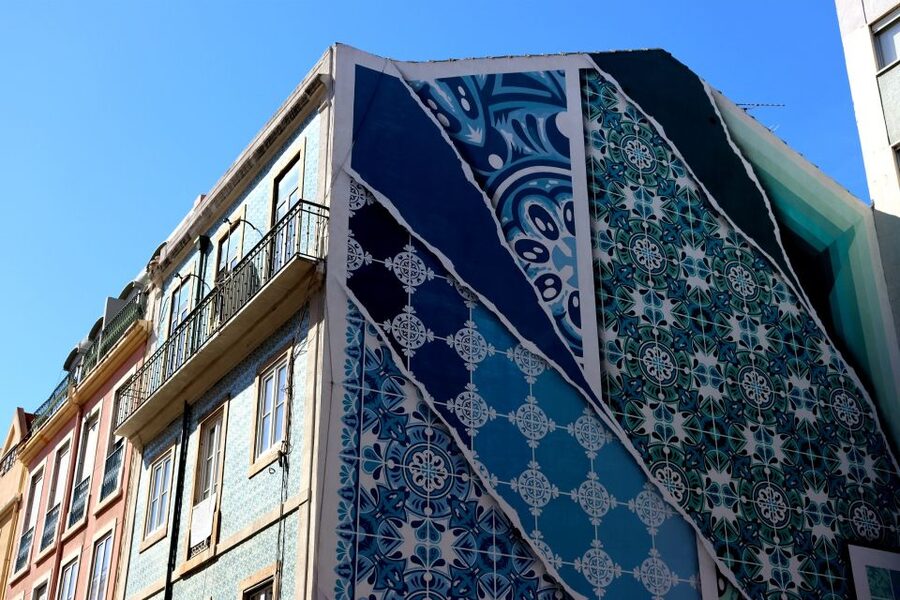
Lisbon’s street art is not confined to one gallery or a single painted wall. It is spread across steep lanes, old neighborhoods, and lookout points, where work by Vhils, Nomen, Odeith, and Gonçalo Mar appears beside centuries-old buildings. This three-hour walking tour connects those works with the city that produced them.
I like the way the tour combines street art with Alfama, Mouraria, and Graça, rather than treating graffiti as an isolated attraction. I also like the small group limit of eight, which gives guides such as Rui, Andriy, and Andre room to explain an artist’s politics, methods, and place in Lisbon’s culture.
The main consideration is the terrain. Lisbon is hilly, sidewalks can be uneven, and the tour is not suitable for people with mobility impairments. Wear proper walking shoes, and remember that meals, drinks, and hotel transport are not included.
Key points to know before booking

- Begin at Miradouro da Graça: The meeting point gives you a fine first look across Lisbon before the walk begins.
- See more than painted walls: Guides connect works by Vhils, Nomen, Odeith, and Gonçalo Mar with Portuguese history, politics, and city life.
- Walk through three old districts: Graça, Mouraria, and Alfama offer a more local setting than Lisbon’s main postcard stops alone.
- Expect memorable viewpoints: Miradouro da Graça and Miradouro Portas do Sol bring rooftops, the Tagus, and São Jorge Castle into view.
- Small groups make a difference: With no more than eight participants, you can ask questions and keep close to the guide.
- Plan for hills and rough paving: The route includes city slopes, cracks, and protruding stone tiles, so comfortable shoes are essential.
Starting above Lisbon at Miradouro da Graça

The tour begins beside the church at Miradouro Sophia de Mello Breyner Andresen, better known as Miradouro da Graça. The address is Calçada da Graça, 1100-265 Lisboa, and the church is the useful landmark to look for.
This is a smart starting point. You get your bearings from high above the city before walking into its older quarters. From the lookout, you can see Lisbon’s rooftops and broad city views, with the Tagus and the 25 de Abril Bridge visible in the distance. São Jorge Castle also helps you understand how the city rises and falls around its historic center.
Your guide uses this opening view to explain Lisbon’s layout and cultural past. That matters because the street art makes more sense once you see the neighborhoods as living parts of the city, not just backdrops for photographs.
The tour is led in English by a licensed local guide. Rui is especially associated with this route, and Andriy and Andre have also led it. The guide can change, but the important feature is the local perspective. You are not simply handed a list of artist names. You hear about the people behind the work, the city’s politics, and the reasons public walls became a place for expression.
More History Walking Tours in Lisbon
- Lisbon: History, Stories and Lifestyle Walking Tour
★ 4.8 · 10,902 reviews - Lisbon: Private Dark History Walking Tour with Drinks
★ 4.8 · 387 reviews - Lisbon Essential Walking Tour: History, Stories and Lifestyle
★ 5.0 · 316 reviews
Reading Lisbon’s street art beyond the surface
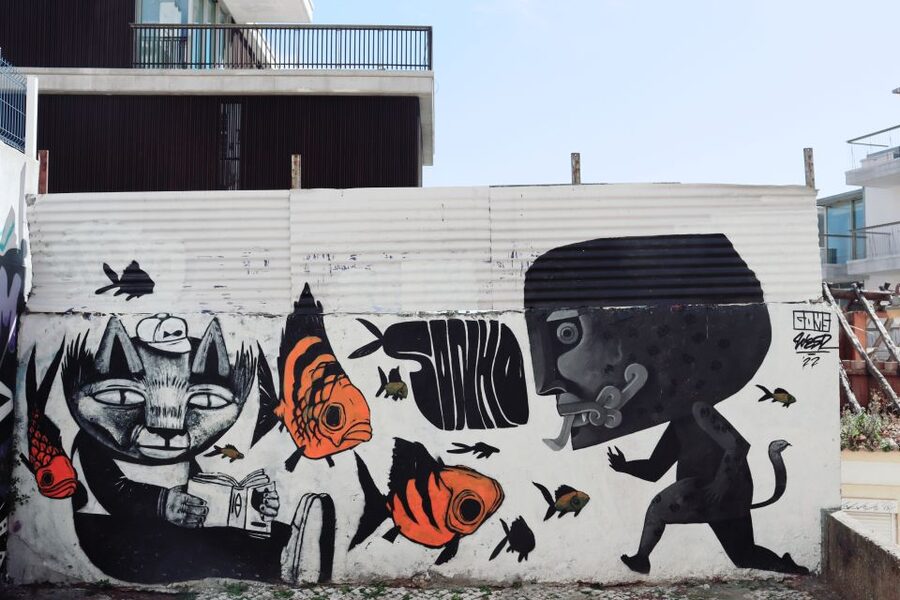
Lisbon’s public art rewards a slower look. A quick photograph may show color, scale, or a striking face, but a guide can point out the artist’s technique and explain how the piece fits into the city’s art scene.
Vhils is known for work made by removing layers from a wall rather than only adding paint. Nomen, Odeith, and Gonçalo Mar are among the other local and international names you may encounter. The exact works can change because public art is not fixed in the way a museum collection is, but these artists are part of the tour’s focus.
I find the political and personal context especially useful. The most praised guides, particularly Rui, do not stop at saying who made a piece. They discuss artists’ lives, ideas, and motives, along with the wider history of Portugal. That turns a wall into a starting point for understanding Lisbon.
You do not need to be an art specialist. The route works for someone who already follows urban art, but it also suits anyone who simply wants to understand what they are seeing. The guide explains enough to give you a framework without burying the walk under academic detail.
The best approach is to ask questions. With a group of eight or fewer, you have a fair chance to ask why a particular wall was chosen, how public art is accepted in Lisbon, or what distinguishes one artist’s method from another.
Graça and Mouraria: art in working neighborhoods
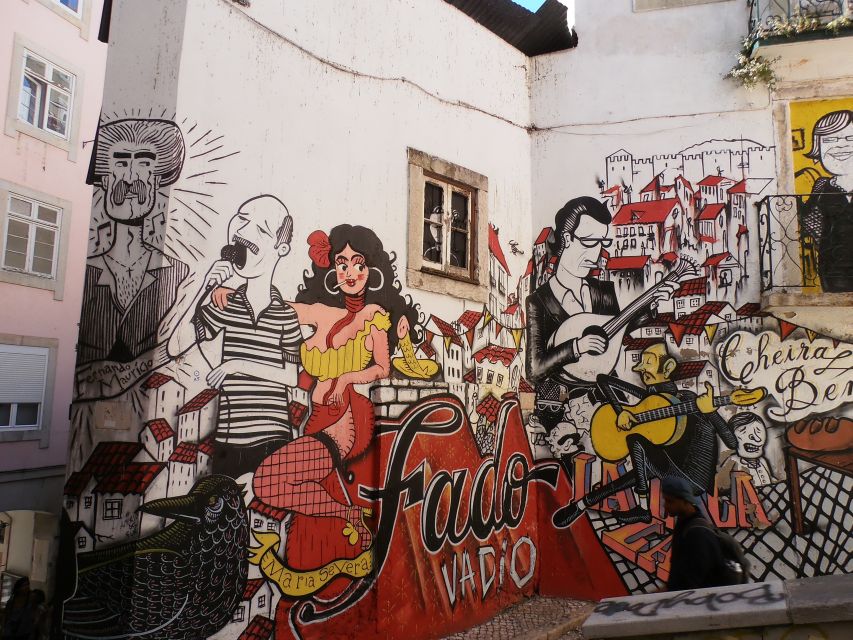
From Graça, the route moves toward the eastern side of Lisbon and through Mouraria. These districts are important because they show a side of the city that can be missed if you only follow the main routes between Baixa, Praça do Comércio, and the castle.
Mouraria has a strong connection to Lisbon’s working-class and multicultural life. The tour uses the streets to talk about daily life as well as art. You may pass walls that look rough at first glance, then discover that the surface has been chosen carefully by an artist or altered as part of the work.
This is also where the walk feels less polished. Sidewalks may have cracks, and some paving stones project unevenly. A past participant specifically praised the guide’s attention to traffic, broken pavement, and stone tiles. That is a useful detail for anyone who tends to look upward at murals while forgetting to watch the ground.
The route can include uphill and downhill sections, though one account described the three hours as mostly downhill. You should still expect Lisbon’s usual slopes. The practical lesson is simple: use shoes with a firm sole, keep your hands free when possible, and do not schedule a demanding activity immediately afterward if you are sensitive to hills.
Mouraria also gives the guide a chance to connect street art with the city’s changing identity. Lisbon’s public walls can reflect local concerns, outside influences, neighborhood pride, and the tension between old buildings and newer creative work. That conversation is one of the reasons this walk offers more than a standard sightseeing loop.
Miradouro Portas do Sol and the view toward São Jorge Castle
One of the strongest visual moments comes at Miradouro Portas do Sol. This lookout opens across Alfama’s tiled roofs and the river, making it an ideal place to pause and connect the city’s physical shape with its past.
São Jorge Castle is a major landmark from this part of the route. You do not enter the castle as part of this tour, but you get a useful outside view and hear about its role in Lisbon’s cultural heritage. The castle helps explain why the surrounding neighborhoods developed on hills and why the old quarters still feel so different from the newer parts of the city.
The lookout is also a good reminder that this is not only an art tour. The viewpoints are built into the route, so you get a mix of wall art, old streets, city history, and wide views. If your partner or family member is less interested in graffiti, this range may keep the walk engaging for them.
Portas do Sol can be busy, and a lookout is not a private viewing platform. The value here comes from having a guide explain what you are seeing and then lead you into nearby streets where the atmosphere changes quickly.
More History Walking Tours in Portugal
- Historic Walking Tour Through Lisbon’s Oldest Neighborhood
★ 5.0 · 233 reviews - Lisbon: 3-Hour The Slave Trade – An Historical Walking Tour
★ 4.9 · 179 reviews - Lisbon: Historical Walking Tour with Jeronimos Monastery
★ 4.5 · 71 reviews - Lisbon: Jewish History in Portugal Guided Walking Tour
★ 4.6 · 52 reviews
Alfama’s lanes and the city beneath the postcard
Alfama is one of Lisbon’s most recognizable districts, but a guide can help you notice details that are easy to miss when you wander alone. Its narrow lanes, slopes, and old buildings create a strong contrast with the open views from the miradouros.
The tour takes you off the most obvious sightseeing path and into smaller parts of Alfama and Mouraria. That does not mean every street will feel untouched or quiet. It means the focus shifts from checking off monuments to seeing how people live among them.
The guide’s commentary is valuable here. You learn what to see and do elsewhere in Lisbon, as well as how the neighborhoods fit into the city’s cultural story. The walk is conversational rather than a simple march from one mural to the next.
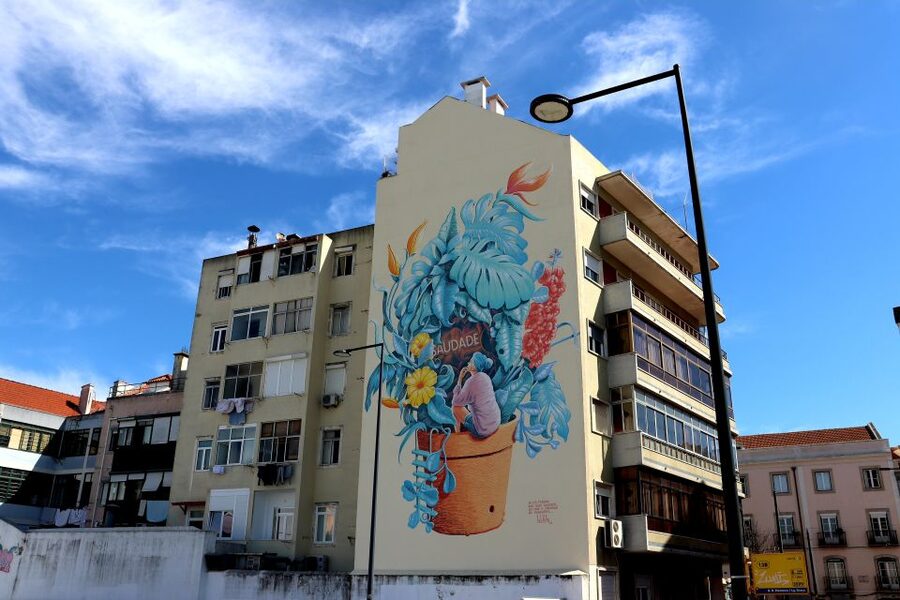
The setting also gives street art a different meaning. A large work beside modern urban buildings has one effect. A piece placed near old stone walls, tiled facades, and narrow residential lanes has another. The contrast is part of the appeal, and it gives you a better sense of how Lisbon allows old and new forms of expression to share the same streets.
What the small group adds to the walk
The maximum group size is eight people. That is small enough for a guide to keep everyone together on narrow pavements and busy crossings. It also makes it easier to hear the commentary without standing directly beside the guide.
Rui has been praised for being patient, personable, and attentive to safety. Those qualities matter on a walking route where the guide must balance art discussion with traffic, paving, and group pace. You are free to look at a mural, but you also need clear instructions when the route crosses a street or turns into a tight lane.
A small group does not guarantee a private tour. You may still be joined by people with different interests and walking speeds. The benefit is that the guide can adapt the discussion. One group may focus on technique, another on politics, and another on Lisbon’s history.
The tour is offered in English. If you need another language, this particular activity is not the right match based on the stated details.
Is $35 a fair price for three hours?
At $35 per person, the tour offers solid value if you want both interpretation and orientation. You are paying for three hours with a local guide, a small group, access to several neighborhoods, street art context, and some of Lisbon’s best free viewpoints.
You are not paying for food, drinks, admission tickets, or hotel pickup. That keeps the price clear, but you should budget for your own refreshments and arrange your way to Miradouro da Graça.
The value is strongest for a first or second day in Lisbon. The opening lookout helps you understand the city, and the guide can suggest what to see later. You also get an introduction to districts that may feel confusing if you first visit them alone.
If you only want a quick collection of mural photographs, $35 may feel unnecessary. You can see public art without paying for a tour. The fee earns its keep through the explanation: who made the work, why it matters, and how it connects to Lisbon’s culture.
Practical details that affect your choice
The walk lasts three hours, and starting times vary, so check the available schedule when booking. Meet by the church at Miradouro da Graça rather than expecting a hotel pickup.
Wear comfortable shoes. This is not a suggestion to ignore. Lisbon’s paving can be uneven, and the route includes hills, streets, and lookout areas. The activity is not suitable for people with mobility impairments.
Bring water if you need it, since drinks are not included. You may also want sun protection in warm weather, though the supplied details do not specify how much shade the route offers.
The booking terms are useful if your plans are still shifting. You can cancel up to 24 hours before the activity for a full refund, and the reserve-now, pay-later option lets you hold a place without paying immediately.
Who will enjoy this Lisbon walk most?
I would choose this tour for anyone who likes art but wants more than a gallery visit. It is also a good fit if you want a guided introduction to Graça, Mouraria, and Alfama before exploring them independently.
It suits couples, solo visitors, and families with older children who can handle three hours on foot. The small group makes it easier for solo participants to join a conversation, while the viewpoints give non-art specialists plenty to enjoy.
History fans may like the way the guide links public art to Portugal and Lisbon. City photographers will appreciate the changing views, though the tour is not designed as a dedicated photography workshop.
I would hesitate to book it for anyone with limited mobility, a strong dislike of hills, or a preference for indoor attractions. I would also avoid it if you want a relaxed ride with little walking. This is a street-level tour, and the pavement is part of the deal.
Should you book this street art tour?
Book it if you want to see Lisbon through a local guide’s eyes, especially if the mix of public art, viewpoints, and old neighborhoods appeals to you. The strongest reasons are the small group, the thoughtful artist context, and the route through parts of the city that can be hard to interpret on your own.
Rui, Andriy, and Andre are names connected with the guiding team, but the guide may vary. The quality of the walk depends partly on how much you engage, so bring questions and give yourself room to look closely.
Skip it if you need step-free access or want a tour centered on major interior monuments. For most able walkers, though, $35 is a sensible price for three hours of art, views, and useful Lisbon context.
FAQ
Where does the Lisbon street art tour meet?
Meet by the church at Miradouro Sophia de Mello Breyner Andresen, also called Miradouro da Graça. The address is Calçada da Graça, 1100-265 Lisboa, Portugal.
How long does the tour last?
The tour lasts three hours. Starting times vary, so check availability for your chosen date.
What language is the tour offered in?
The live tour guide speaks English.
Which Lisbon neighborhoods does the route visit?
The route includes Graça, Mouraria, and Alfama, with stops at viewpoints including Miradouro da Graça and Miradouro Portas do Sol.
Which artists might I see represented?
The tour includes work by artists such as Vhils, Nomen, Odeith, and Gonçalo Mar. Public art can change, so individual pieces may vary.
Is hotel pickup included?
No. Hotel pickup and drop-off are not included, so you need to reach the meeting point at Miradouro da Graça.
Is food included?
No. Meals and drinks are not included in the price.
Is the tour suitable for people with mobility impairments?
No. The activity is not suitable for people with mobility impairments. Comfortable walking shoes are recommended because the route includes Lisbon streets, hills, cracks, and uneven paving.
More Street Art Walks in Lisbon
- Naples Spanish Quarters Walking Tour Street Art, Folklore & Sweet
★ 5.0 · 797 reviews - Naples: Street Art & History Tour in the Spanish Quarters
★ 4.9 · 540 reviews - 3-Hour Atlanta Beltline Food, Street Art and History Tour
★ 5.0 · 345 reviews - 2-Hour Food, History and Street Art Tour of Ponce City Market
★ 5.0 · 159 reviews
Just added around Lisbon
- Lisbon: Historical Walking Tour with Jeronimos Monastery★ 4.5 · 71 reviews
- Lisbon Sunset Sailing – Small Group (max 10) Wine & History★ 4.8 · 41 reviews
- Lisbon: Private Historic Tour by Eco Tuk Tuk★ 5.0 · 78 reviews
- Lisbon with Tukxi: Historical Secrets by Tuk-Tuk★ 4.8 · 96 reviews
- Lisbon: Private Guided Tour of Historical Center by Tuk Tuk★ 4.7 · 67 reviews
- Lisbon: Tuk-Tuk Tour Historical Alfama old town private tour★ 4.7 · 30 reviews
- Lisbon: Jewish History in Portugal Guided Walking Tour★ 4.6 · 52 reviews
- Lisbon: Sunset Sailing with Portuguese Wine and History★ 5.0 · 270 reviews
Lisbon History Tours, compared.

Lisbon: History, Stories and Lifestyle Walking Tour
Read our review →
Lisbon: Fado Show and Wine inside Medieval Walls
Read our review →
Lisbon: Daytime or Sunset Boat Cruise with History and Wine
Read our review →
Explore Lisbon by Tuk Tuk: History and Viewpoints
Read our review →
Private Tuk Tuk Tour Through Lisbon’s Historical Streets
Read our review →
Lisbon Highlights – Private Tour with Van and Local Guide
Read our review →
Templar Tour Convent of Christ & Almourol Castle from Lisbon
Read our review →
Lisbon Sunset Sailing with Portuguese Wine and History
Read our review →Browse the lists this tour appears in