
Review · LISBON
Lisbon: 3-Hour The Slave Trade – An Historical Walking Tour
Lisbon’s grand plazas, churches, and Age of Discovery monuments are usually presented as symbols of exploration and national pride. This walking tour adds the harder story: how Portugal helped create the Atlantic slave trade, how enslaved Africans lived in Lisbon, and how slavery helped shape the wealth and power you see in the city today.
I like two things right away. First, the tour takes place in ordinary streets and famous public spaces, so history is tied to places you can actually see rather than delivered as a classroom lecture. Second, Rui Fernandes brings an African perspective and connects the subject to economics, politics, religion, colonialism, and present-day Portugal. The main drawback is that three hours of serious history can feel demanding, especially if you want a light sightseeing walk.
- Starts in Alfama: Meet at Largo do Chafariz de Dentro, in Lisbon’s oldest district.
- Led by Rui Fernandes: Expect an African guide with training in history, political science, and economics.
- Small group format: The experience is advertised as limited to six people, though some booking information lists up to eight, so confirm the current limit.
- A wider story: Topics range from Iberian slavery and the Atlantic trade to Brazil, African colonies, abolition, and liberation movements.
- Built-in pause: The three-hour walk includes one coffee and WC break, often with time for a pastry and questions.
- Easygoing pace: The route is described as mostly flat or only gently uphill, but comfortable shoes still matter.
Why Lisbon Needs This Walking Tour
Portugal’s role in slavery is often pushed to the side when Lisbon is introduced through tiled façades, seafood, viewpoints, and maritime adventure. This experience puts that history in the center of your sightseeing day.
In the first half of the 15th century, Portugal began the process that developed into the Atlantic slave trade. Over roughly four centuries, between 12 and 14 million Africans were sold into slavery and transported across the Atlantic to the Americas. The numbers are difficult to grasp, so the walk uses Lisbon itself to give the subject a physical setting.
You are not simply told that Portugal took part in the trade. You are shown how the city’s streets, institutions, religious buildings, commercial activity, and imperial story connect to it. That makes the subject harder to dismiss as distant or abstract.
I see this as a history tour first and a sightseeing tour second. You will see central Lisbon, but the purpose is to understand what happened in and around those places. If you want a cheerful introduction to the city’s top attractions, choose a standard city walk. If you want a fuller picture of Portugal, this fills a major gap.
Beginning at Largo do Chafariz de Dentro

The meeting point is Largo do Chafariz de Dentro, a square in Alfama. This is a useful starting place because Alfama is Lisbon’s oldest district and provides a direct connection between the city you see today and the layers of its past.
From here, the guide leads you through a mix of back streets, main avenues, public squares, churches, monuments, and buildings. The exact sequence can vary, but the structure is clear: each location helps explain a part of the story.
Rui uses places and visual material to make difficult subjects easier to follow. You might look at a street name, a building’s former use, an architectural feature, or a monument and then hear how it relates to Portugal’s overseas expansion and the lives of enslaved people.
That method works better than a long speech in one square. You keep moving, and each stop gives the next subject a physical anchor. At the same time, you should expect a lot of listening. The walk is not built around entering a long list of attractions.
More History Walking Tours in Lisbon
- Lisbon: History, Stories and Lifestyle Walking Tour
★ 4.8 · 10,902 reviews - Lisbon: Private Dark History Walking Tour with Drinks
★ 4.8 · 387 reviews - Lisbon Essential Walking Tour: History, Stories and Lifestyle
★ 5.0 · 316 reviews
From Iberian Slavery to the Atlantic Trade
The first historical section covers the origins of slavery in the Iberian Peninsula. This matters because the Atlantic trade did not appear out of nowhere. The guide places Portugal’s later actions within earlier systems of enslavement and medieval Iberian history.
The focus then shifts to the birth of the Atlantic slave trade and Portugal’s part in it. Prince Henry the Navigator is included in the story, along with the Age of Discovery and the economic forces behind overseas expansion.
This is where the tour earns its price. The subject is not reduced to a simple tale of brave explorers or a list of dates. You are encouraged to consider the commercial, religious, political, and moral arguments used to support the system.
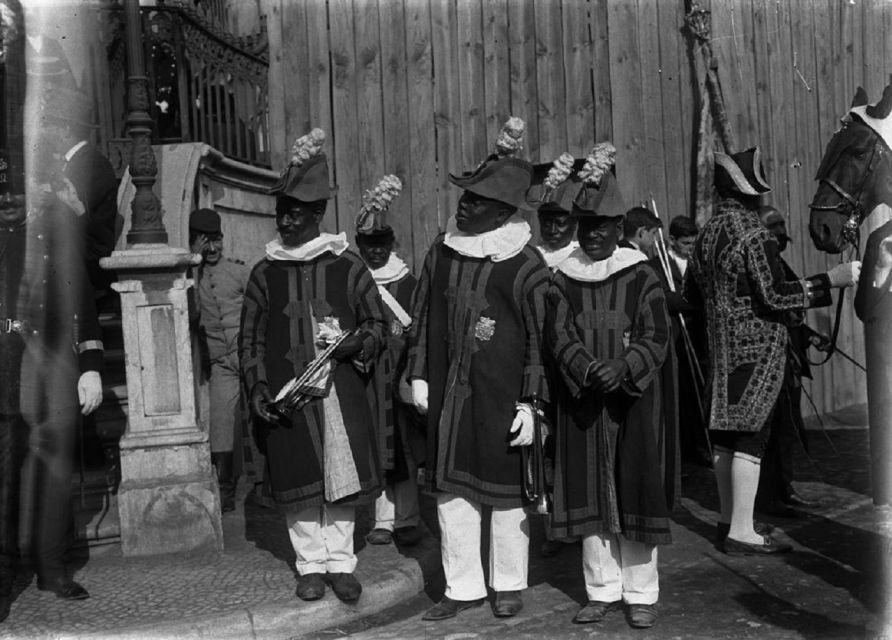
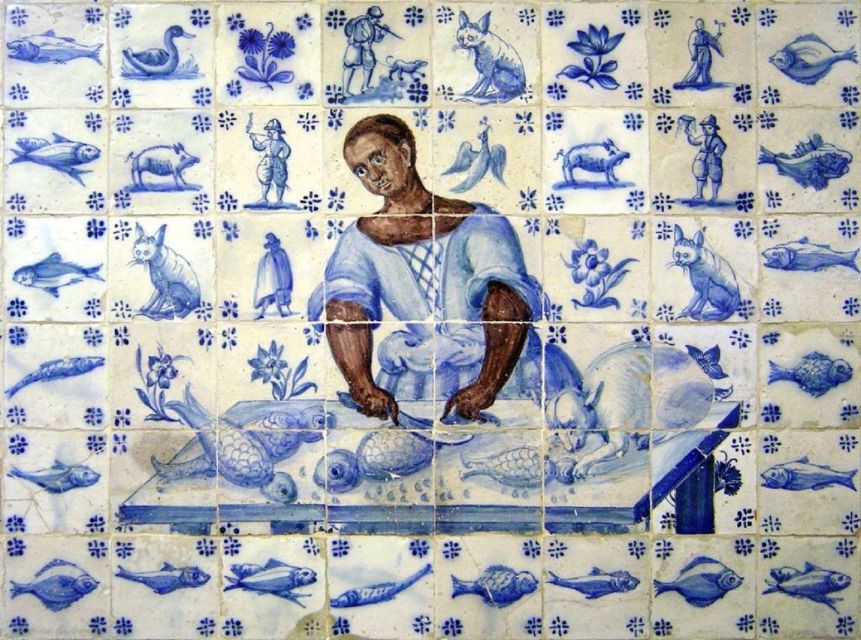
I appreciate that the walk also explains how slavery operated in daily life. The story is not only about ships crossing the ocean. It includes the people forced to live and work in Lisbon, the way they were treated, and the social structures that made exploitation possible.
The guide’s academic background in history, political science, and economics helps tie those parts together. You get the human story, but you also hear how trade, power, and institutions allowed the system to continue.
Reading Lisbon’s Monuments Differently

Lisbon’s monuments can look very different once you know what they leave out. The tour does not ask you to ignore the city’s art or architecture. Instead, it asks you to place those achievements beside the labor, money, and violence connected to Portugal’s empire.
That makes the route useful even if you have already visited many of Lisbon’s major sights. A church or public square may not be new to you, but its connection to slavery, commerce, religion, or colonial power may be.
One of the strongest features is the attention to details that are easy to walk past. A street name, a former building function, or the location of a public space can help reveal how enslaved Africans were part of Lisbon’s urban life.
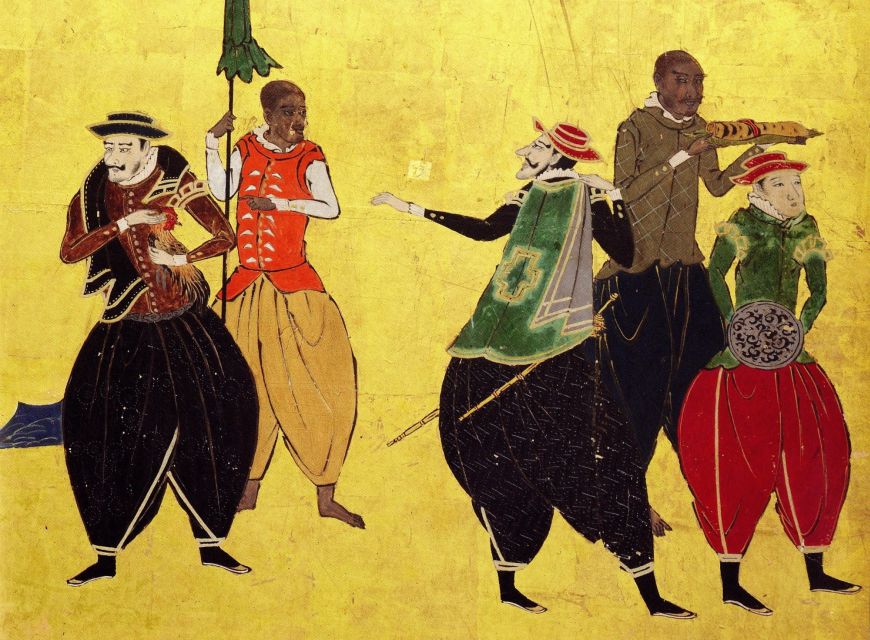
Rui also uses relevant images during the walk. These give you a clearer sense of people and events that cannot be understood from modern buildings alone. The visual material is especially helpful when the discussion turns to daily life, the wider Atlantic world, or places that no longer look as they once did.
Do not expect every stop to be a dramatic monument. Some of the most useful moments may happen beside an unremarkable street or building. That is part of the point: history is not limited to places marked with a large plaque.
Brazil, Africa, and Portugal’s Changing Empire
The tour reaches beyond Lisbon and explains the importance of Brazil. Brazil was central to Portugal’s colonial economy, and its connection to slavery helps you understand why the Atlantic trade mattered so much to Portuguese power.
The discussion also covers Portuguese colonies in Africa. This extends the story beyond the earlier period of maritime expansion and shows how colonial rule continued to shape relations between Portugal, Africa, and Brazil.
You will also hear about the abolition of the slave trade in Portugal. That is an important distinction. Ending the trade did not instantly end slavery, colonial control, racism, or the economic systems built around forced labor.
The final historical subjects include African nationalist movements and the struggle for liberation. This gives the walk a longer timeline than many city tours. You move from the beginnings of Portuguese involvement in Atlantic slavery to the colonial period and the political fights that followed.
I find this broad reach valuable, but it also explains why the tour can last three to three and a half hours. There is a lot to cover. If you want every topic treated in depth, you may still leave with questions. That is not a flaw so much as a sign that the walk deals with several centuries and multiple continents.
More History Walking Tours in Portugal
- Historic Walking Tour Through Lisbon’s Oldest Neighborhood
★ 5.0 · 233 reviews - Lisbon: Historical Walking Tour with Jeronimos Monastery
★ 4.5 · 71 reviews - Lisbon: Jewish History in Portugal Guided Walking Tour
★ 4.6 · 52 reviews - Lisbon: Street Art and Historical Walking Tour
★ 4.9 · 42 reviews
The Guide Makes the Difference
Rui Fernandes is the central reason this experience works. He is described as an African guide with a background in history, political science, and economics, and his delivery is a major part of the tour.
You can expect clear English, a measured pace, and regular chances to ask questions. Rui also makes an effort to include everyone in the group, including remembering names and giving people room to speak.
That matters on a subject that can quickly become either too academic or too emotional. Rui’s approach is serious and direct, but the format allows you to ask about details, context, and links to modern Portugal.
The guide also brings personal connection to the subject, including references to his own family history. That can make the discussion feel more immediate, while the broader historical material keeps it from becoming only a personal account.
I would book this specifically with the expectation that the guide will shape the experience. The route is important, but this is not a self-guided map with a set of facts at each stop. The questions, explanations, and conversation are a large part of the value.
A Small Group and a Useful Break
The tour is designed for a small group. The stated limit is six participants, although another part of the booking information gives eight as the maximum. Ask for the current group size if that matters to you.
A small group makes a real difference here. You can hear the guide more easily, ask questions without interrupting a large crowd, and stay close together in narrow streets. It also lets Rui adjust the pace and respond to the interests of the people present.
The walk includes one coffee and WC break. In practice, this gives you a chance to sit down, recover, and discuss what you have heard. The break has included a café and pastel de nata, though the precise stop may vary.
The pause is welcome because the subject requires concentration. It also prevents the three hours from becoming one long stretch of standing and listening.
Bring comfortable shoes. The route is described as mostly flat or only gently uphill, but Lisbon’s older streets can still be hard on your feet. Pets are not allowed.
Is the $35 Price Fair?
At $35 per person, this is reasonably priced for a three-hour small-group tour with a live guide and a coffee break. You are paying for subject-specific research, local interpretation, and a format that gives you time to ask questions.
The value is strongest if you care about history, colonialism, African diaspora studies, or getting beyond the usual Lisbon story. A standard sightseeing walk may show you more attractions in less time, but it will probably not give this subject the same attention.
The price is less compelling if you mainly want photographs or a quick introduction to Alfama. You could spend three hours seeing more of Lisbon’s usual highlights elsewhere. This walk asks you to spend that time thinking carefully about what those highlights mean.
Hotel pickup and drop-off are not included. You meet the guide at Largo do Chafariz de Dentro, so plan your own way there. You can ask Rui for advice about public transportation and other places to visit during your stay.
Free cancellation is available up to 24 hours before the start, and you can reserve now and pay later. Those terms are useful if your Lisbon schedule is still shifting.
Who Should Book This Experience?
I would choose this tour if you want a serious, place-based history lesson and you are willing to give it most of an afternoon. It is especially suitable for:
- People interested in Portugal’s role in the Atlantic slave trade
- Visitors who want the history of Lisbon presented from an African perspective
- Students and history enthusiasts
- Families with older children who can handle a long discussion
- Anyone who feels that the usual Age of Discovery story is incomplete
- Repeat visitors who have already seen Lisbon’s main sights
The walk can suit different backgrounds because it leaves room for questions. It is also handled with care for people with a personal or family connection to slavery.
I would not choose it for very young children, people looking for a relaxed food walk, or anyone who dislikes difficult historical subjects. The pace may be gentle, but the material is not light.
Should You Book the Lisbon Slave Trade Walking Tour?
Yes, if you want to understand Lisbon beyond its scenic surfaces. This is one of the more focused ways to learn about Portugal’s role in slavery, the lives of Africans in Lisbon, the importance of Brazil, and the long reach of Portuguese colonialism.
Book it early in your stay if possible. The guide’s advice about public transportation, food, shops, and other parts of the city can help with the rest of your visit.
You should also leave room afterward to think about what you heard. The walk does not offer a tidy version of Portugal’s past. That is its value. It gives you a more honest way to read Lisbon’s streets, monuments, and national story.
FAQ
How long is the historical walking tour?
The advertised duration is three hours, though the experience may run closer to three and a half hours depending on questions and the pace of the group.
Where does the tour meet?
You meet the guide at Largo do Chafariz de Dentro, a square in Lisbon’s Alfama district.
Who leads the tour?
The guide is Rui Fernandes, an African guide with a background in history, political science, and economics.
What language is the tour conducted in?
The tour is conducted in English.
How many people can join the tour?
The experience is described as a small group limited to six participants. Another set of booking information lists a maximum of eight, so confirm the current limit when booking.
What subjects are covered?
The walk covers slavery in the Iberian Peninsula, the start of the Atlantic slave trade, the Age of Discovery, the daily lives of enslaved people in Lisbon, Brazil, abolition, Portuguese colonies in Africa, and African liberation movements.
Is a break included?
Yes. One coffee and one WC break are included during the walk.
Is hotel pickup included?
No. Hotel pickup and hotel drop-off are not included. You make your own way to the meeting point.
What should I bring?
Wear comfortable shoes. The route is described as mostly flat or only gently uphill, but you will still be walking for about three hours.
Can I cancel for a refund?
Yes. You can cancel up to 24 hours in advance for a full refund. Reserve now and pay later is also available.
More Three-Hour Tours in Lisbon
- Berlin: 3-Hour World Heritage Cruise to Potsdam
★ 4.5 · 1,569 reviews - Edinburgh: 3-Hour Historical Walking Tour in Italian
★ 4.7 · 734 reviews - Pompeii Private Tour with an Archaeologist and Skip The Line – 3 hours
★ 5.0 · 564 reviews - 3-Hour Porto Jewish Heritage Walking Tour with Local Guide
★ 4.5 · 396 reviews
Just added around Lisbon
- Lisbon: Historical Walking Tour with Jeronimos Monastery★ 4.5 · 71 reviews
- Lisbon Sunset Sailing – Small Group (max 10) Wine & History★ 4.8 · 41 reviews
- Lisbon: Private Historic Tour by Eco Tuk Tuk★ 5.0 · 78 reviews
- Lisbon with Tukxi: Historical Secrets by Tuk-Tuk★ 4.8 · 96 reviews
- Lisbon: Private Guided Tour of Historical Center by Tuk Tuk★ 4.7 · 67 reviews
- Lisbon: Tuk-Tuk Tour Historical Alfama old town private tour★ 4.7 · 30 reviews
- Lisbon: Jewish History in Portugal Guided Walking Tour★ 4.6 · 52 reviews
- Lisbon: Sunset Sailing with Portuguese Wine and History★ 5.0 · 270 reviews
Lisbon History Tours, compared.
Lisbon: History, Stories and Lifestyle Walking Tour
Read our review →
Lisbon: Fado Show and Wine inside Medieval Walls
Read our review →
Lisbon: Daytime or Sunset Boat Cruise with History and Wine
Read our review →
Explore Lisbon by Tuk Tuk: History and Viewpoints
Read our review →
Private Tuk Tuk Tour Through Lisbon’s Historical Streets
Read our review →
Lisbon Highlights – Private Tour with Van and Local Guide
Read our review →
Templar Tour Convent of Christ & Almourol Castle from Lisbon
Read our review →
Lisbon Sunset Sailing with Portuguese Wine and History
Read our review →Browse the lists this tour appears in