
Review · LISBON
Lisbon: History, Stories and Lifestyle Walking Tour
Lisbon’s story comes alive best on foot, and this tour links the city’s big turning points with its steep lanes, grand churches, and everyday café life. You move from 16th-century Bairro Alto to Alfama, with a tram ride and a pastel de nata stop breaking up the hills.
I like the clear route through several different parts of town, and I like that guides such as Paulo, Ricardo, Beatrice, and Anna bring personal knowledge and humor rather than reciting dates. The main drawback is the terrain: three hours of hills, steps, and narrow streets can be tiring, and a crowded or delayed tram may change the plan.
Key points
- Bairro Alto to Alfama: See two historic districts with very different personalities.
- São Pedro de Alcântara viewpoint: Look across Baixa toward the Tagus and south bank.
- A classic Lisbon tram ride: Travel uphill toward Portas do Sol as part of the tour.
- Churches with real historical weight: Visit São Roque, Carmo, and Lisbon Cathedral.
- Coffee and pastel de nata included: A useful, tasty pause in the middle of the walk.
- Strong guide lineup: Paulo, Ricardo, Beatrice, Anna, João, Lucia, and others are praised for clear storytelling and local insight.
A three-hour introduction to Lisbon’s oldest stories
At $29 per person, this is a compact way to get your bearings before spending several days in Lisbon. The route covers Bairro Alto, Chiado and Baixa, the hill around the castle, and Alfama, so you see more than one district without committing a full day.
The tour is not just a parade of photo stops. Its useful thread is change. You hear how Lisbon grew, how the 1755 earthquake altered the city, how religious buildings shaped its streets, and how the Carnation Revolution of 1974 ended nearly 50 years of dictatorship.
I especially like this mix of grand events and small details. A guide might explain a church’s goldwork, then shift to local customs, fado, saints’ festivals, coffee, or the practical business of living on Lisbon’s hills. That gives you a better sense of the city than a list of monuments alone.
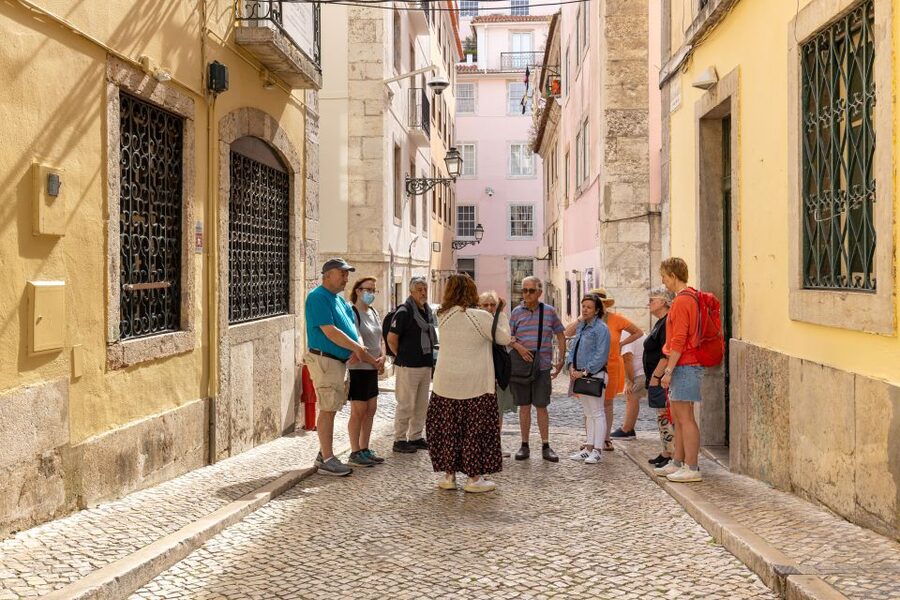
The operator offers private and small-group options. Group size matters here. On a steep, crowded route, a small group makes it easier to hear, ask questions, and stay together. Several guides, including Ricardo and Beatrice, are praised for taking time with questions and adjusting their pace to the group.
More History Walking Tours in Lisbon
- Lisbon: Private Dark History Walking Tour with Drinks
★ 4.8 · 387 reviews - Lisbon Essential Walking Tour: History, Stories and Lifestyle
★ 5.0 · 316 reviews - Historic Walking Tour Through Lisbon’s Oldest Neighborhood
★ 5.0 · 233 reviews
Bairro Alto and the city after the 1755 earthquake
The tour begins in Bairro Alto, a district dating from the 16th century. Its name means upper neighborhood, and its position above the lower city helps explain why the route quickly becomes a walk through Lisbon’s hills.
This is a good starting point because Bairro Alto is not only an evening entertainment district. The guide uses it to explain how Lisbon changed after the earthquake of 1755. Families from Baixa and nearby districts moved into or helped renew this higher part of the city, giving it a new role in the city’s growth.
You will want comfortable shoes from the first few minutes. Lisbon’s paving can be uneven, and the route includes inclines and steps. The pace is generally described as relaxed, with regular stops for views and explanations, but relaxed does not mean flat.
That balance is one of the tour’s strengths. You are not expected to march from landmark to landmark. The guide can pause to explain a street, building, or event, which also gives you time to catch your breath and take photographs.
São Pedro de Alcântara gives you the first wide view
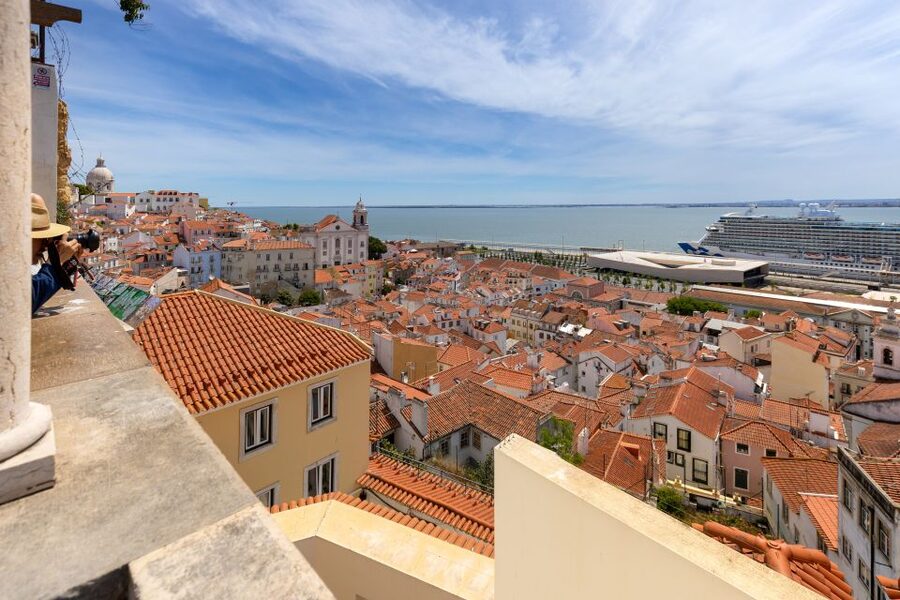
At the Garden of São Pedro de Alcântara, the city opens up. From this viewpoint, you can look over Baixa and across toward the south bank of the Tagus River.
This stop helps you understand Lisbon’s shape. The capital is spread over a series of hills, and the viewpoint lets you see how the lower central districts sit between higher neighborhoods and the river. After walking through tight streets, the open view is a welcome reset.
I would pay attention to the guide’s orientation here. This is the kind of place where a quick explanation can save you time later. You may recognize streets, rooftops, and major buildings as you explore the city on your own.
It is also a natural photo stop, so expect the group to pause. If you are hoping for a quiet, empty overlook, timing and crowds may work against you. The value is the view and the explanation, not solitude.
São Roque reveals Lisbon’s decorative side
The Church of São Roque has a plain, restrained exterior, but the interior is far more elaborate. Built by the Jesuits, it contains gilding, tiles, and paintings associated with Mannerist and Baroque styles.
That contrast makes the visit worthwhile. From the outside, you could easily walk past without guessing what is inside. The guide helps you look closely at the decoration and understand why the church is treated almost like a museum of religious art.
This is also a good example of the tour’s broad approach. You are not only hearing about kings, earthquakes, and revolutions. You are seeing how faith, art, and wealth shaped Lisbon’s buildings.
Because the tour moves through several districts in three hours, the church visit is part of a wider route rather than a long museum session. If you want detailed art-historical analysis of every chapel, you will need more time elsewhere. If you want a useful introduction and a guided look at the major details, this stop fits well.
More History Walking Tours in Portugal
- Lisbon: 3-Hour The Slave Trade – An Historical Walking Tour
★ 4.9 · 179 reviews - Lisbon: Historical Walking Tour with Jeronimos Monastery
★ 4.5 · 71 reviews - Lisbon: Jewish History in Portugal Guided Walking Tour
★ 4.6 · 52 reviews - Lisbon: Street Art and Historical Walking Tour
★ 4.9 · 42 reviews
Carmo connects Gothic ruins with the 1974 revolution
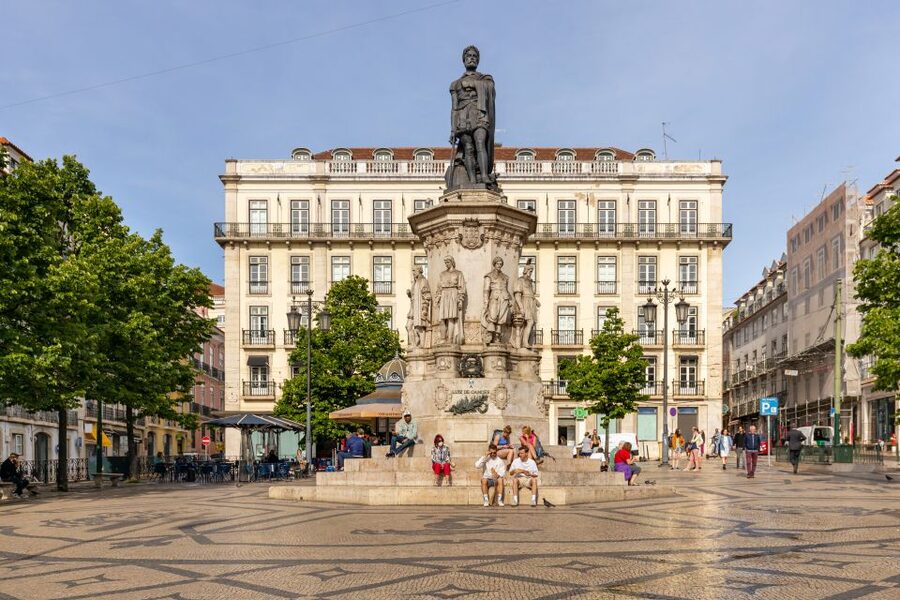
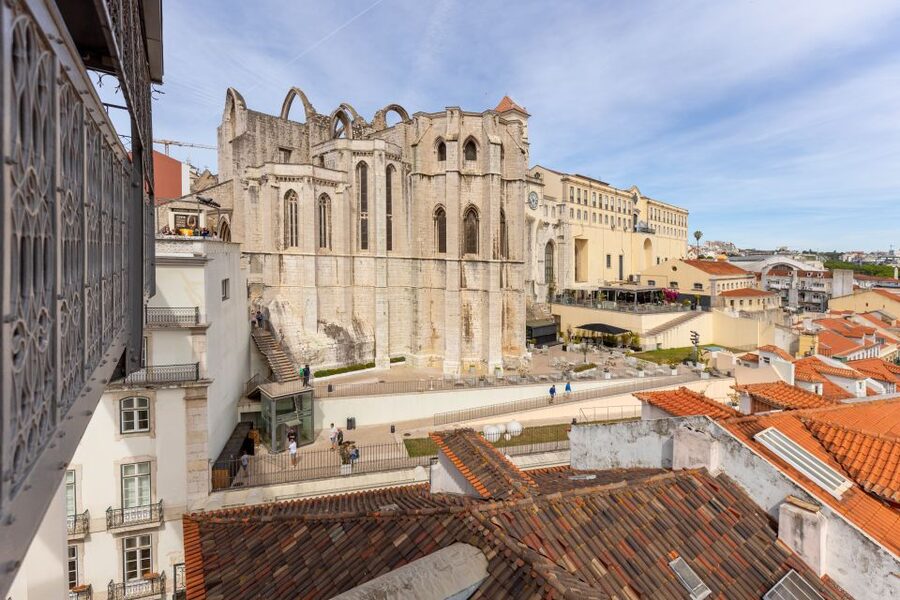
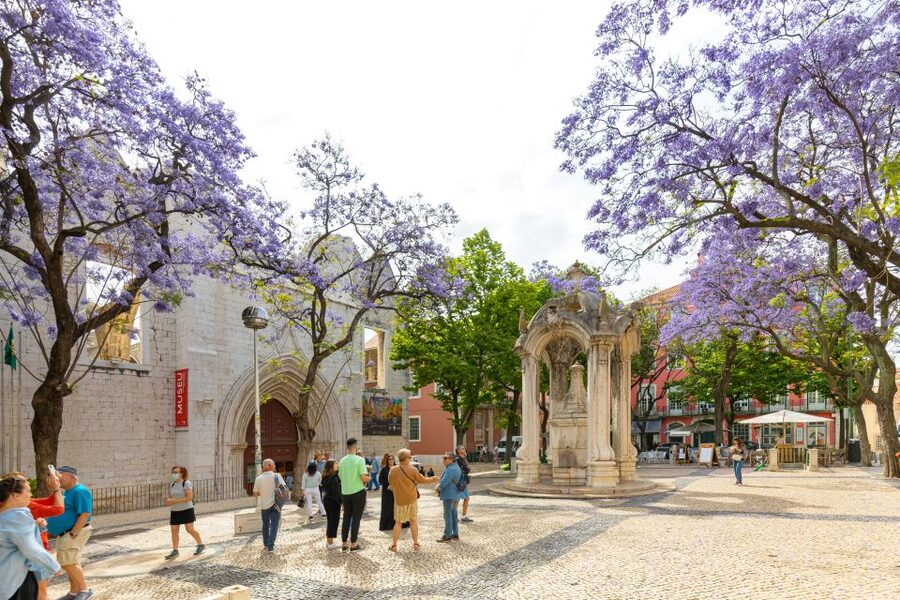
The route then heads downhill toward Carmo Convent and Church, important examples of Lisbon’s Gothic architecture. The site also carries modern political meaning: the Carnation Revolution began here in 1974.
That revolution ended almost five decades of dictatorship. The stop gives your guide a chance to connect old stonework with Portugal’s recent past, and this political context is one of the more valuable parts of the experience.
Several guides are praised for explaining the revolution in a personal and engaging way. Paulo, in particular, has been able to speak about growing up in Lisbon and experiencing the period as a child. That sort of first-hand family and local perspective can make a major historical event feel less remote.
The Carmo stop also illustrates why a guide helps in Lisbon. You can admire the architecture on your own, but the meaning of the place is easy to miss without context. I would treat this as a key stop, not just a quick photograph.
Santa Justa and Baixa show the city rebuilt
A little farther on, you reach the Santa Justa elevator, a tall Gothic Revival landmark in the center of Baixa. It is one of Lisbon’s most recognizable structures and provides one of the city’s best viewpoints.
The tour does not promise a separate extended ride on the elevator. Instead, you see the monument as part of the walking route and take in the surrounding attractions of Baixa. That distinction matters if riding Santa Justa is a personal priority.
Baixa is the heart of central Lisbon, and the area helps tie together the earlier earthquake discussion. After the disaster, the lower city was rebuilt in a more ordered plan. The streets here feel different from the twisting lanes of Alfama and the elevated streets of Bairro Alto.
This change of character is one reason the itinerary works. You see several versions of Lisbon in a short span: planned central streets, high neighborhood lanes, and old hillside passages. I would use the tour to note places you want to revisit later, rather than trying to explore every shop or square in detail.
The tram ride adds local texture and a needed break
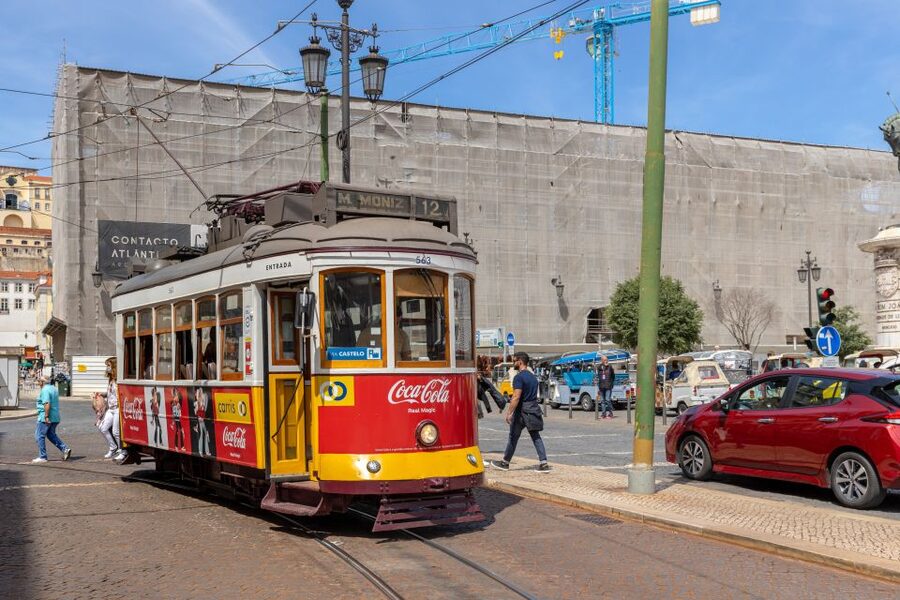
After a short break, the group takes a tram uphill from the castle area toward Portas do Sol. The ride is brief, but it adds something a purely walking tour cannot: a taste of the city’s everyday public transport and a chance to see the hills from inside one of Lisbon’s iconic cars.
The tram is also a practical pause. Three hours on foot can feel long, especially on a warm day or when the route is crowded. Sitting or standing aboard the tram gives your legs a break before the final walk through Alfama.
You should keep your expectations sensible. Lisbon trams are working transport, not a private sightseeing vehicle. They may be crowded, delayed, or affected by service problems. One guide, Anna, handled a broken-down tram and heavy rain by changing the plan and keeping the group positive. That kind of flexibility is useful in a city where weather, traffic, and transit can disrupt a neat schedule.
The tram ride may be especially appealing if you have never used one of Lisbon’s historic routes. It is a small part of the tour, but it helps the experience feel connected to ordinary city life rather than staged only for sightseeing.
Portas do Sol frames Alfama and the Tagus
At Portas do Sol, you get another major outlook. From here, the view takes in the Monastery of São Vicente de Fora, the National Pantheon, the clustered streets of Alfama, and the Tagus.
This is a good moment to notice how different the city looks from each hilltop. São Pedro de Alcântara gives you a view toward Baixa and the south bank, while Portas do Sol opens the eastern side of the old city and the river.
The guide’s explanation matters here because the view contains many landmarks at once. You can identify the monastery and pantheon, then see how Alfama spills down toward the water. Take a few minutes for photographs, but also listen for the neighborhood’s social and cultural story.
The tour’s repeated viewpoints are not redundant. They show you how Lisbon’s hills shape movement, neighborhoods, and daily life. You begin to understand why a short distance on a map can involve a serious climb.
Alfama brings together fado, festivals, and narrow lanes
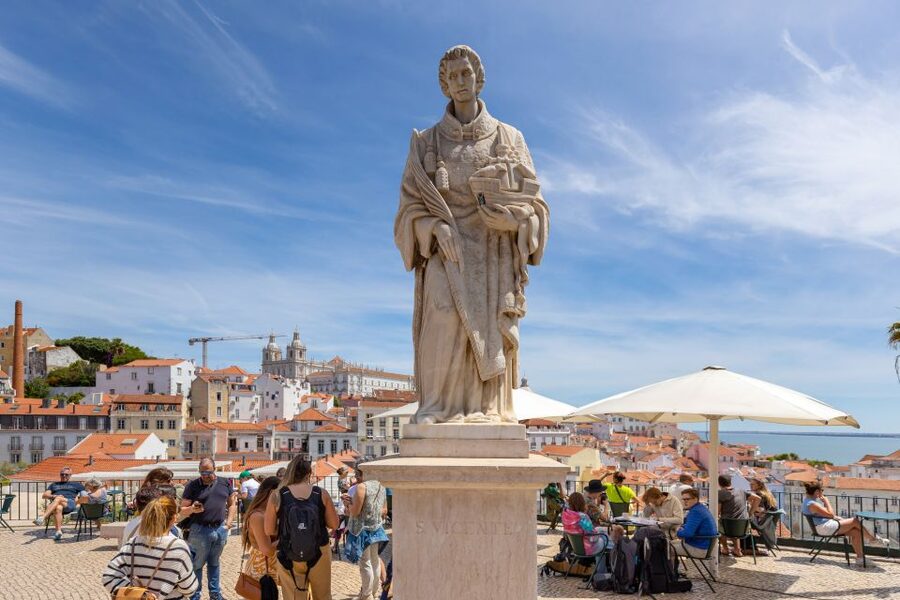
Alfama is one of Lisbon’s oldest and most traditional districts. Its narrow streets stretch between the hill and the Tagus, creating a part of the city that feels very different from the wide, planned streets of Baixa.
This is the section where the tour shifts most clearly from monuments to lifestyle. Alfama is linked with fado houses and the popular festivals of the saints, especially the celebrations connected with St. Anthony.
A guide can help you understand how those customs fit into local life rather than presenting them as decorations for visitors. You will hear about music, neighborhood traditions, and the way people use these streets and gathering places.
The lanes and steps are scenic, but they can also be awkward for anyone with limited mobility. One useful detail from the experience is that guides have adjusted their pace for older members of a group and allowed plenty of stops. Still, you should not assume the walk is effortless. If hills are a concern, ask about the exact meeting point and group option before booking.
Alfama is also a place where you may want to return independently. The three-hour route gives you an introduction, but it cannot cover every lane, church, or fado house. That is a feature, not a failure: you finish with a clearer idea of where to spend more time.
Lisbon Cathedral closes the historical loop
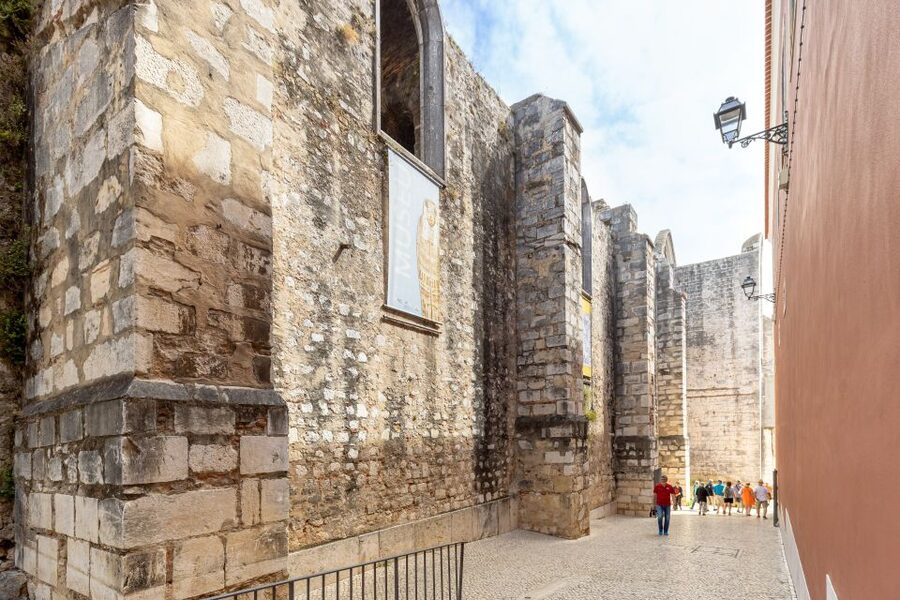
The tour ends at Lisbon Cathedral, built in 1150, only three years after Christian forces retook the city from the Moors. The building has changed over time, so its appearance combines several architectural styles.
This is a fitting final stop. The cathedral links Lisbon’s medieval past with the older layers of the city around Alfama. It also reminds you that the capital’s story is not one neat period followed by another. Buildings were altered, repaired, and reused as the city changed.
Ending here gives you a fixed landmark in the old quarter. Depending on your plans, you can continue exploring Alfama, return toward Baixa, or use the cathedral area as a reference point for later sightseeing.
The stop is mainly an exterior and historical part of the route as described. If you want an extended interior visit, confirm how much time your selected option allows.
Coffee and pastel de nata make the history easier to digest
Coffee and cake are included, usually described in the experience as a coffee and pastel de nata stop. Some guides have also adapted the snack for dietary needs, including a vegan alternative in one case.
This is more than a free extra. A short café break gives the group time to rest and gives the guide a relaxed setting for local suggestions. The tour is also a useful chance to learn how to order a small strong coffee, often called a bica, as one participant specifically appreciated.
The stop does not turn the tour into a food walk. You should book it for the city history, districts, and guide rather than expecting a full tasting program. Still, the pastry and coffee add real value to a $29 experience, especially when combined with the tram fare and a three-hour guiding service.
What the $29 price really buys you
At $29 per person, the tour offers solid value if you want orientation, history, and transport in one outing. You receive a live guide, a walking route, a tram trip, coffee, and cake.
The strongest part of the value is the guide. Lisbon has many attractive buildings, but the earthquake, Moorish period, dictatorship, Carnation Revolution, fado, and saints’ festivals can seem disconnected without explanation. A good guide links those subjects and answers questions as you go.
The experience is available as a private or small-group option. A private booking may suit families or groups that want a more personal pace, while a small group can keep the price reasonable and still make it easy to hear the guide.
The main limitation is coverage. You see many areas, but you do not get long visits inside every church or monument. Think of this as a well-built introduction, not a specialist architecture tour or a full-day exploration.
Who will enjoy this walk most
I would recommend it to first-time visitors who want to get their bearings early in a Lisbon stay. The route introduces the main central districts and gives you practical clues about where to return later.
It also suits solo visitors. One participant described the tour as a good way to meet people, and a small group gives you a natural setting for conversation without requiring a separate social activity.
History fans will appreciate the range, from medieval Lisbon and the Jesuits to the 1755 earthquake and the 1974 revolution. Food-focused visitors will enjoy the coffee and pastry, but should not mistake this for a culinary tour.
The tour is less suitable if you want a flat route, long museum visits, or a very slow pace. Lisbon’s hills are part of the point. Guides may make frequent stops and adjust plans, but the route still requires walking.
Rain and transit can affect the experience. Bring sensible shoes and be ready for changes if the tram is delayed or the weather turns wet. The guides have shown they can adapt, but no city walk can promise perfect conditions.
Should you book the Lisbon History, Stories and Lifestyle Walking Tour?
Book it if you want a well-priced first look at Lisbon that combines major sights with local stories. The route is broad, the tram ride adds character, and the coffee and pastel de nata keep the three hours from feeling like a nonstop history lecture.
I would be especially happy to book with a small group option and schedule it near the beginning of a Lisbon visit. Guides such as Paulo, Ricardo, Beatrice, Anna, João, Lucia, and Raquel have received strong praise for humor, patience, clear explanations, and love of the city.
Skip it if you already know central Lisbon well or want to spend most of your time inside monuments. For everyone else, especially first-time visitors who do not mind hills, this is an efficient and personable way to see how Lisbon’s neighborhoods, politics, architecture, and daily habits fit together.
FAQ
How long does the Lisbon History, Stories and Lifestyle Walking Tour last?
The tour lasts three hours.
How much does the tour cost?
The listed price is $29 per person.
What areas of Lisbon does the tour visit?
The route includes Bairro Alto, São Pedro de Alcântara, Baixa, the Carmo convent and church, the Santa Justa elevator, Portas do Sol, Alfama, and Lisbon Cathedral.
Is a tram ride included?
Yes. A tram trip is included, with the route described as traveling uphill from the castle area toward Portas do Sol.
Are coffee and cake included?
Yes. Coffee and cake are included, with the stop often featuring a pastel de nata.
Which languages are available?
The live guide may speak Portuguese, Spanish, Italian, German, French, or English. Language availability can depend on the option booked.
Is the tour private or shared?
Private and small-group options are available.
Is hotel pickup included?
No. Hotel pickup and drop-off are not included.
Can I cancel for a full refund?
You can cancel up to 24 hours in advance for a full refund.
Does the tour require a lot of walking?
Yes. It is a walking tour through Lisbon’s hills and narrow streets, with stops and a tram ride along the way. Several parts of the route may include inclines or steps.
Just added around Lisbon
- Lisbon: Historical Walking Tour with Jeronimos Monastery★ 4.5 · 71 reviews
- Lisbon Sunset Sailing – Small Group (max 10) Wine & History★ 4.8 · 41 reviews
- Lisbon: Private Historic Tour by Eco Tuk Tuk★ 5.0 · 78 reviews
- Lisbon with Tukxi: Historical Secrets by Tuk-Tuk★ 4.8 · 96 reviews
- Lisbon: Private Guided Tour of Historical Center by Tuk Tuk★ 4.7 · 67 reviews
- Lisbon: Tuk-Tuk Tour Historical Alfama old town private tour★ 4.7 · 30 reviews
- Lisbon: Jewish History in Portugal Guided Walking Tour★ 4.6 · 52 reviews
- Lisbon: Sunset Sailing with Portuguese Wine and History★ 5.0 · 270 reviews
Lisbon History Tours, compared.

Lisbon: Fado Show and Wine inside Medieval Walls
Read our review →
Lisbon: Daytime or Sunset Boat Cruise with History and Wine
Read our review →
Explore Lisbon by Tuk Tuk: History and Viewpoints
Read our review →
Private Tuk Tuk Tour Through Lisbon’s Historical Streets
Read our review →
Lisbon Highlights – Private Tour with Van and Local Guide
Read our review →
Templar Tour Convent of Christ & Almourol Castle from Lisbon
Read our review →
Lisbon Sunset Sailing with Portuguese Wine and History
Read our review →
Lisbon: Live Fado Show in Historic Alfama with Port Wine
Read our review →Browse the lists this tour appears in