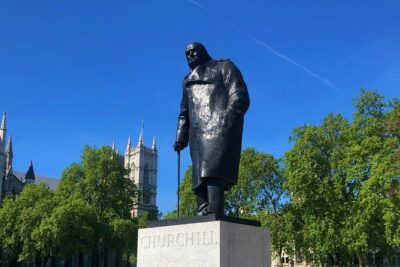
Review · LONDON
London: Winston Churchill and London in WWII Walking Tour
London’s wartime story comes alive in the streets around Westminster, where Churchill’s War Rooms sit below the ordinary business of government. This walking tour links the RAF Monument, Big Ben, Westminster Abbey, Whitehall, Downing Street, and the Cenotaph through the pressure of the Second World War.
I like the way the tour pairs grand landmarks with the less polished side of the conflict: air raids, civilian life, military decisions, and the personalities behind the headlines. I also like the guides’ storytelling. Nathan, Richard, Francis, Babs, Rosie, and others have been praised for humor, biographies, and small details that make the period feel personal. The main drawback is time. At 1.5 hours, the tour can feel short, and it is more of a standing talk with a walk between stops than a long, strenuous hike.
Key points at a glance
- Begin at the RAF Monument: Meet beside the Boadicea and Her Daughters statue outside Westminster Station, then start with the Battle of Britain.
- See Westminster through wartime eyes: Big Ben, Westminster Abbey, Whitehall, Downing Street, the Cenotaph, and the Ministry of War all gain a WWII setting.
- Expect strong storytelling: Guides such as Nathan and Richard are especially good at mixing Churchill’s public role with pilots, officials, and ordinary Londoners.
- Finish at the Churchill War Rooms: The guide leaves you outside the underground headquarters, where you can continue independently with a separate ticket.
- Choose shared or private: A group tour costs $39 per person, while a private option gives your party more control over the conversation.
- Plan for pavement and standing: Comfortable shoes matter, large bags are not allowed, and the tour is not suitable for wheelchair users or people with mobility impairments.
Starting beside the RAF Monument
The meeting point is outside Westminster Station, by the Boadicea and Her Daughters statue at the top of the stairs from Exit 2. Follow signs for Exit 2, Victoria Embankment, then look for the guide holding an orange Urban Saunters sign.
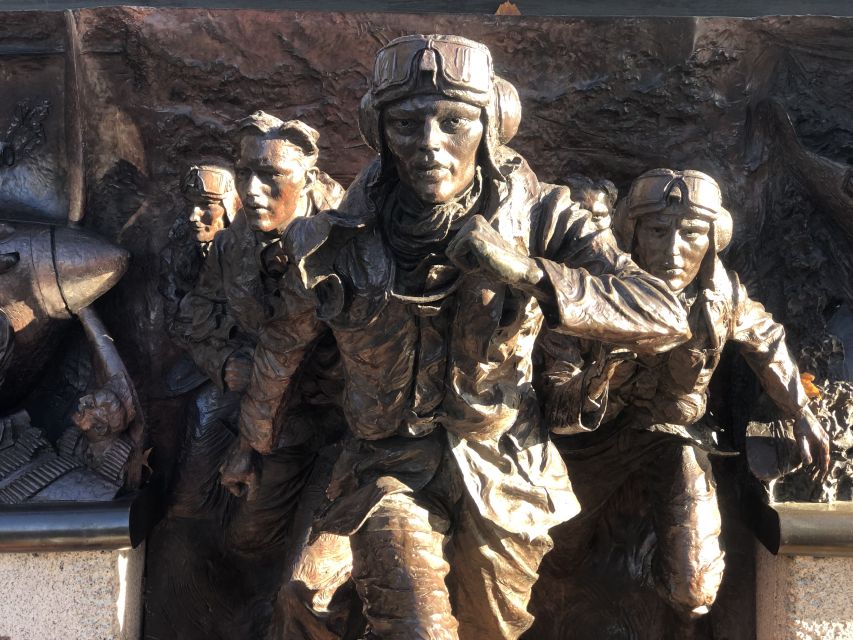
This is a useful starting place. You are not dropped into Churchill’s story at the middle. Instead, the tour opens with the Monument to the RAF, which honors the people who took part in the Battle of Britain. That gives your guide a natural way to explain the military danger facing Britain and the strain placed on London during the war.
You will also get an early sense of the tour’s approach. This is not only a parade of famous buildings. The subject is how government, armed forces, and ordinary people operated under pressure. The guides are expected to explain the period in person, not simply point out plaques and dates.
Give yourself a few minutes to find Exit 2. Westminster Station has several exits, and the instructions are specific for good reason. Once you are above ground, the statue and orange sign should make the meeting spot clear.
More History Walking Tours in London
- London: Historic Pubs of Central London Walking Tour
★ 4.9 · 1,065 reviews - WW2 London Walking Tour & Churchill War Rooms Entrance Ticket
★ 4.5 · 933 reviews - London: Soho Music and Historic Pubs Walking Tour
★ 4.9 · 836 reviews
Big Ben and the Houses of Parliament under wartime pressure
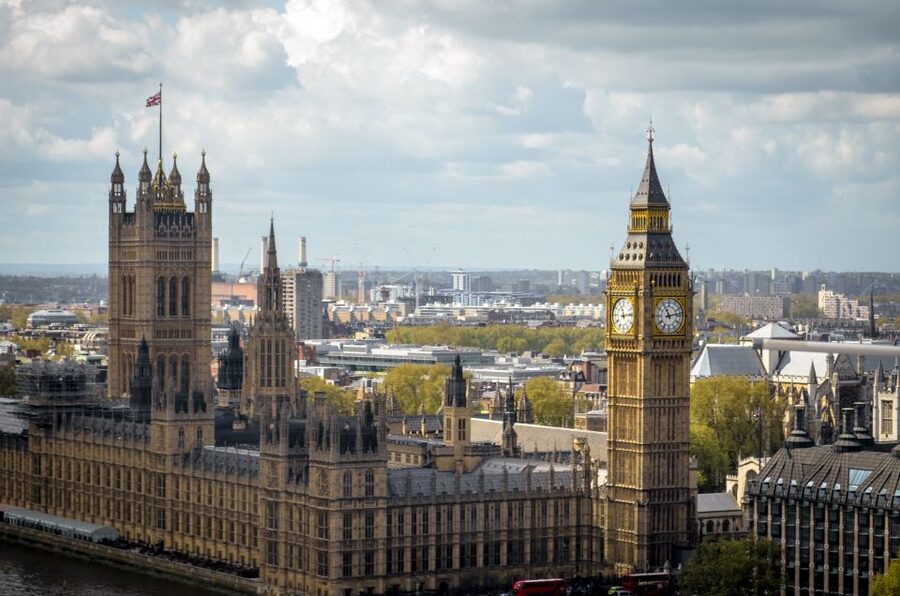
From the river side of Westminster, the route moves toward Big Ben and the Houses of Parliament. These sights are familiar to almost everyone visiting London, but the WWII angle changes what you notice.
Your guide explains how the area functioned while Britain was at war. The Houses of Parliament were not just a dramatic backdrop for photographs. They represented the national government continuing to work through bombing, military setbacks, and uncertainty.
The value here is the setting. You are looking at the same political district associated with wartime decisions while hearing about the people who made them. Churchill’s role comes into focus as part of a wider system of ministers, civil servants, military leaders, and citizens.
Do not expect to enter the Houses of Parliament or climb Big Ben. Entrance tickets to named monuments are not included, and this is an outdoor walking tour. The reward is the guide’s interpretation of what you see, rather than access to the interiors.
The walking itself is manageable for many visitors, but the format involves stopping to listen. If you prefer constant movement, you may find the pace slow. If you enjoy history explained on location, the pauses are useful.
Westminster Abbey and the human scale of the war
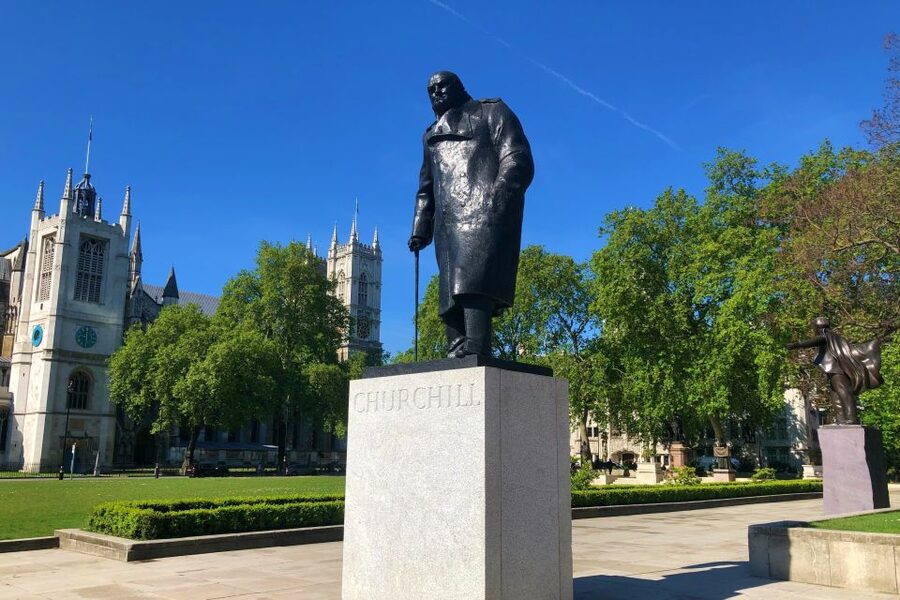
Westminster Abbey is another major landmark on the route. Its importance here is not limited to architecture or royal ceremonies. The building helps place wartime Westminster in its larger national setting, alongside the institutions and traditions Britain was trying to protect.
A good guide can use this stop to connect public symbols with private experience. The supplied tour information specifically points to life for millions during WWII, and the strongest guide style described by past participants includes stories about pilots, citizens, and people who are often left out of standard accounts.
That focus is one of the tour’s best features. You will hear about Churchill, but you should also expect the story to include individuals and daily life. Several guides have been singled out for adding biographies and anecdotes rather than sticking to broad military facts.
As at the Houses of Parliament, the tour does not include entry to Westminster Abbey. You see the building from the outside and hear its wartime context. If you want to visit inside, treat that as a separate plan and allow extra time.
Whitehall, the Cenotaph, and the machinery of government
The route continues through Whitehall, one of London’s most important government streets. Here, the tour shifts from symbols of national identity to the practical business of running a war.
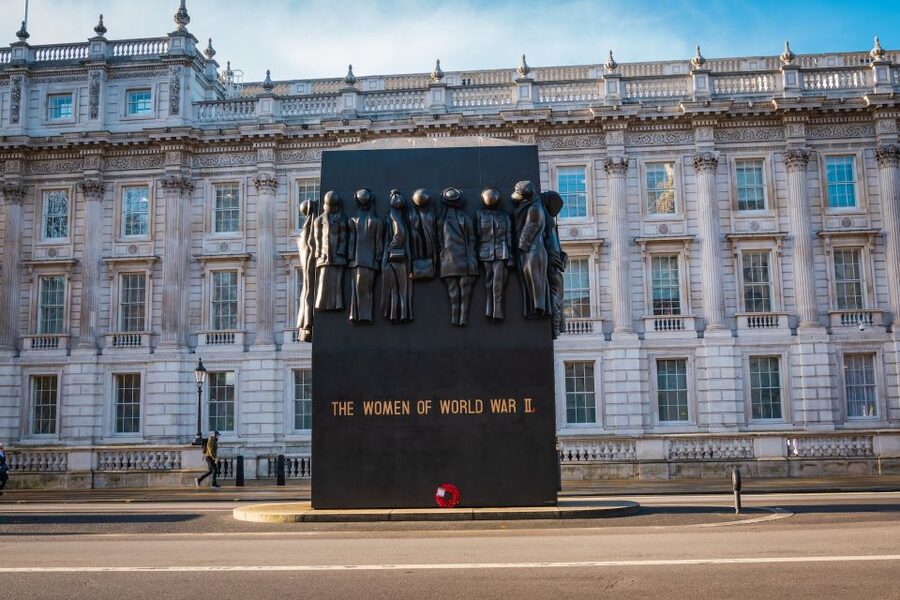
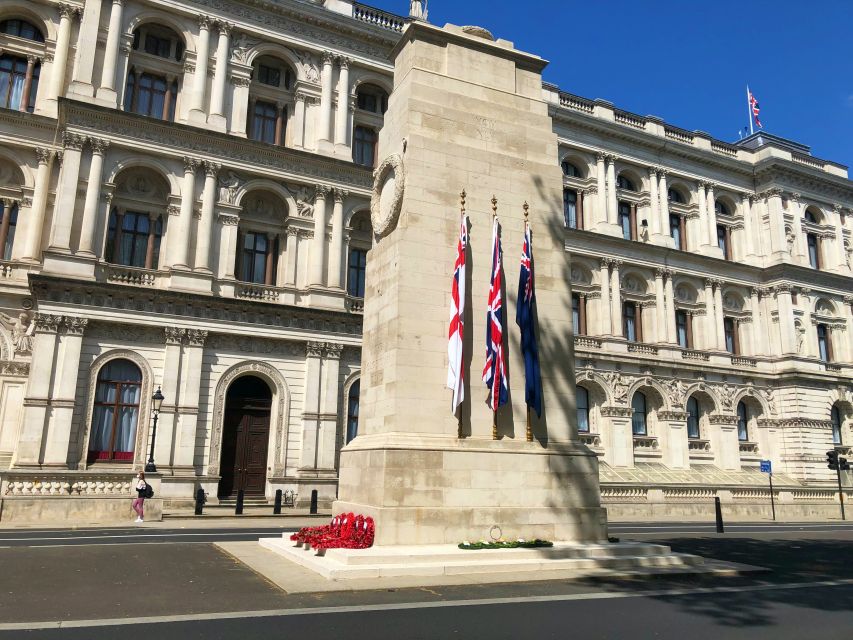
You will see the Cenotaph, the Ministry of War, and other government buildings. The Cenotaph connects the Second World War with Britain’s wider memory of military loss. Whitehall, meanwhile, gives the guide a place to discuss how decisions moved through departments and officials.
This portion is especially useful if you want more than a Churchill biography. The tour places him in a working government, surrounded by military planning, administration, communication, and public pressure. You get a clearer idea of why Westminster mattered beyond its postcard views.
One review described the experience as more of a talking tour than a walking tour. That is a fair expectation. The route covers several landmarks, but much of the value comes while you are standing still and listening. Wear shoes that are comfortable for pavement, but do not assume you are signing up for a long-distance walk.
More History Walking Tours in the UK
- Royal Historic Pubs Walking Guided Tour in London
★ 5.0 · 803 reviews - London in WW2 Walking Tour with Churchill War Rooms Visit
★ 5.0 · 721 reviews - Private Group: Historical Pub Walking Tour of London
★ 5.0 · 660 reviews - London: Royal Historic Pubs Walking Tour
★ 5.0 · 536 reviews
Downing Street and Churchill’s public image
At 10 Downing Street, the tour brings Churchill’s leadership into a more personal frame. This is the famous address associated with the prime minister, but the guide’s job is to show more than a photo stop.
Expect stories about Churchill’s character, wartime decisions, and the way he became a symbol of British resistance. Richard has been praised for bringing Churchill to life through descriptive stories and anecdotes, while Nathan is repeatedly noted for mixing Churchill’s public role with the experiences of people outside the usual textbooks.
That balance matters. Churchill is easy to turn into a polished legend. A walking tour can be more useful when it shows the person, the politician, and the leader under pressure without making every story sound like a slogan.
You will not enter 10 Downing Street. Security and access mean the view is from outside, but the location still works well because the guide can connect the address to the decisions made during the war.
The Cenotaph and the cost behind the speeches
The Cenotaph offers a quieter part of the route. It is a place to pause and consider the cost of the conflict rather than only its famous speeches and victories.
The strongest comments about this experience focus on the way guides make history personal. Francis, for example, has been praised for keeping the group moving without rushing and for giving details that help turn dates into human stories. Babs has been praised for passion, and Rosie for combining humor with clear explanations.
That style is important at a memorial. The subject is serious, but the tour does not appear to treat solemnity as a reason to become dull. British humor may appear, yet the point remains the people affected by the war.
If you are bringing a teenager, this format may work better than a formal museum lecture. One family found the material engaging for a 15-year-old, and another parent joined with a 10-year-old military history enthusiast and found the tour rewarding. Still, younger children who need constant activity may not enjoy the standing portions.
Finishing at the Churchill War Rooms
The tour ends outside Churchill’s War Rooms. This is a smart finish because the underground headquarters give you a chance to continue the subject while the streets and buildings are still fresh in your mind.
The War Rooms were the strategic bunkers used by Churchill and his cabinet during WWII. The rooms are presented as a preserved wartime command center, and the separate museum visit provides more detail than a short outdoor tour can cover.
Admission is not included, so add the entrance cost to your budget. The tour price is $39 per person, which is reasonable if you value a lively guide and want the main Westminster sights tied together by one subject. It is less convincing value if you only want quick facts or expect admission to the War Rooms to be part of the package.
I would strongly consider visiting the War Rooms after the walk if your schedule and budget allow. The walking tour gives you the political setting and stories. The museum then gives you the underground rooms and preserved working environment. They complement each other, but they are separate experiences.
How the guides shape the experience
The guide matters a great deal here. The subject can become a list of dates, names, and bombings unless the person leading it can tell a clear story.
Nathan has been particularly praised for his command of WWII history, his wit, and his ability to discuss both Churchill and ordinary citizens. Richard brings broad knowledge of London and England, with a style that combines detail, personal touches, and British humor. Francis is described as clear and well paced, while Babs and Rosie have been praised for energy and enthusiasm.
You cannot necessarily choose a particular guide when booking. The practical point is to expect a live, personality-led tour rather than an audio guide. If your guide is especially engaging, the 1.5 hours may pass quickly. Several comments describe wanting more time, which tells you something about the format: the tour can leave you curious rather than fully satisfied on its own.
Some departures are listed as lasting between 1.5 and 3 hours, while the included guided walk is described as 1.5 hours. Check the exact time offered for your date before booking. A longer option could make more room for questions and stories, while the shortest version will feel brisk.
Shared group or private walk?
The shared group option is the better value for most visitors. At $39 per person, it gives you a guided introduction to wartime Westminster without the cost of arranging a full private experience.
A private tour makes more sense if your group has a strong interest in military history, Churchill, or London government. You may be able to shape the conversation more easily, although the supplied details do not promise a custom itinerary or a specific guide.
For a first visit to London, the group format also works well because the route includes several major sights. You can orient yourself around Westminster while learning why these places mattered during the war.
Do not confuse private with fully flexible. The route and inclusions still need to be checked at booking, and entrance to the monuments and War Rooms remains separate.
Practical planning for a smooth visit
Wear comfortable shoes. The route uses city streets, and even a short walk can be tiring if you spend much of it standing in one place.
Leave luggage and large bags behind. They are not allowed on the tour, so plan around your hotel or another suitable storage option.
The meeting point is beside Westminster Station, making public transport the simple choice. Hotel pickup and drop-off are not included, so you need to reach the statue yourself.
The tour is offered in English with a live English-speaking guide. It is not suitable for wheelchair users or people with mobility impairments. The route includes outdoor pavement walking and standing, so you should consider your comfort before booking.
Free cancellation is available up to 24 hours in advance for a full refund, and you can reserve now and pay later. Those policies help if your London schedule is still changing, but the main planning decision is the timing. A reported 9 a.m. departure felt too early for one person, so check the start time before committing.
Who will get the most from this tour?
I would recommend it to anyone interested in Churchill, the Battle of Britain, wartime London, or the way governments operate during a crisis. It also suits you if you like seeing famous landmarks while learning the stories behind them.
It works particularly well for families with older children and teenagers who enjoy military history. The guide’s anecdotes and humor can make the material easier to follow than a museum label or textbook.
You may want something else if you need step-free access, dislike standing, or want to enter several monuments during the walk. You should also think twice if your main goal is a full visit to the Churchill War Rooms, since that ticket is not included and the walking tour only finishes outside.
Should you book the Westminster WWII walking tour?
Book it if you want a short, focused introduction to wartime Westminster led by a real storyteller. The best part is the connection between places you may already plan to see and the people who worked, fought, governed, and endured there during WWII.
At $39, the value is strongest when you treat the tour as a guided history walk, not as an admission package. Add the Churchill War Rooms separately if you want the full experience, and choose a departure time that leaves room for questions rather than rushing to your next sight.
Skip it if you need full accessibility, want a long walking route, or expect to go inside Westminster Abbey, Parliament, Downing Street, or the War Rooms as part of the price. For everyone else, this is a lively way to give familiar London landmarks a sharper wartime meaning.
FAQ
Where does the London WWII walking tour begin?
Meet by the Boadicea and Her Daughters statue outside Westminster Station, Exit 2. Follow signs for Exit 2, Victoria Embankment, then take the stairs to street level. The guide will hold an orange Urban Saunters tour sign.
Where does the tour finish?
The walking tour finishes outside Churchill’s War Rooms. You can continue into the War Rooms afterward, but the entrance ticket is not included.
How long does the tour last?
The included guided walking tour lasts 1.5 hours. Available activity times are listed from 1.5 to 3 hours, so check the exact duration when selecting your departure.
Is admission to Churchill’s War Rooms included?
No. Entrance to Churchill’s War Rooms and other named monuments is not included in the tour price.
What should I bring?
Bring comfortable shoes. Luggage and large bags are not allowed on the tour.
Is the tour accessible for wheelchair users?
No. The experience is not suitable for wheelchair users or people with mobility impairments.
More WWII and D-Day Tours in the UK
- Portsmouth: The D-Day Story Entry Ticket
★ 4.8 · 201 reviews
More WWII and D-Day Tours in London
- London: Westminster WW2 Tour & Churchill’s War Rooms Ticket
★ 4.5 · 925 reviews - London: London in WW2 and Churchill War Rooms Entrance
★ 4.9 · 669 reviews - London: Churchill’s Life & WW2 with Tour of War Rooms
★ 4.2 · 52 reviews - London: Churchill War Rooms & WW2 Westminster Private Tour
★ 5.0 · 34 reviews
Just added around London
- London: Medieval History Walking Tour from The Tower★ 4.9 · 318 reviews
- London: Witches and History Bankside Walking Tour★ 4.8 · 223 reviews
- London: Historic London Pub Walking Tour★ 4.8 · 94 reviews
- London: Hot Tub Boat Guided Historical Docklands Cruise★ 4.6 · 62 reviews
- London: Jack the Ripper Tour with Historic Pub Stops★ 4.8 · 360 reviews
- London: Churchill War Rooms & WW2 Westminster Private Tour★ 5.0 · 34 reviews
- London: Historic Pubs, British Ales & Classic Dishes★ 4.9 · 36 reviews
- London: British Museum Tour with Archaeologist Guide★ 4.9 · 68 reviews
London History Tours, compared.
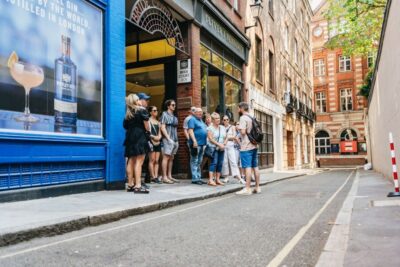
London: Historic Pubs of Central London Walking Tour
Read our review →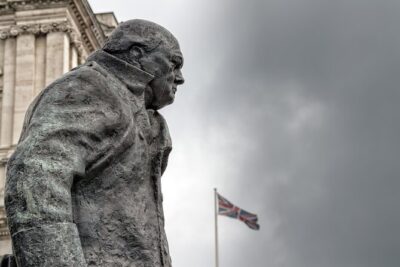
WW2 London Walking Tour & Churchill War Rooms Entrance Ticket
Read our review →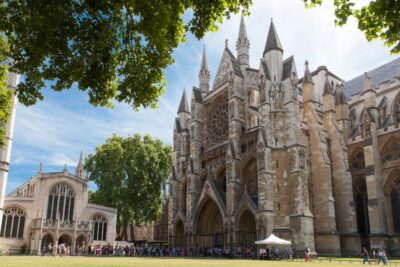
London: Westminster WW2 Tour & Churchill’s War Rooms Ticket
Read our review →
London: Soho Music and Historic Pubs Walking Tour
Read our review →
Royal Historic Pubs Walking Guided Tour in London
Read our review →